

turboplanner
-
Posts
24,363 -
Joined
-
Last visited
-
Days Won
159
Content Type
Profiles
Forums
Gallery
Downloads
Blogs
Events
Store
Aircraft
Resources
Tutorials
Articles
Classifieds
Movies
Books
Community Map
Quizzes
Videos Directory
Posts posted by turboplanner
-
-
Sorry mate, can't send any, we're in the middle of one of the biggest droughts in our history, it's extending from Western Queensland, down through Western NSW, the Riverina and Victoria.
The good managers de-stocked about six months ago, and the bad ones have exhausted hay supplies throughout the area and are posting photos of dying lambs and blaming greedy city people, government spending on defence etc; the bottom line being we should pay for their negligence. A B Double full of cattle from the Riverina was bailed up by one of the Vegan pressure groups, and one of their spokeswomen bleated about the cruel conditions they were subjected to (a fully compliant stock transport vehicle) on their way to be killed....."and they probably didn't have names!" I explained that from the left was Daisy then Bill, then Spotty etc. I found out later the truck they'd bailed up in Melbourne was not on its way to the abattoirs, but taking stock to the western district where they will be agisted until the drought breaks.
-
 1
1
-
-
How do you know that?I have always found CASA people to be good, just trying to keep us all safe. The CASA people I have no time for are at the top and just working a big money sink to do in a poorer way what FAA does.-
 1
1
-
-
If they're working on it now it should be OK; most of the mechanical/electrical will be above a metre, and I've heard of many boat engines saved by a fast scour out. I feel for them; spent a week on Fraser Island in a Nissan 720 4x4 - 1.8 litre diesel with big tyres. It ran on top of the soft sand, but just the same the beach was hard to read; like a billiard table for ten minutes, then you were on full throttle to get through or the creek was twice the depth of the last one.Only 3 months old......like new..... (for now...)
-
 1
1
-
-
You didn't understand what I said; there were two or more lists. I don't have any access to the internal CASA management system, but in the normal sphincter-sensitive atmosphere of a large organisation, I would have expected the DAS to be asked to ground aircraft, and the DAS to say something like "You're absolutely SURE of your facts" and two qualified Engineers respond with "yes we are; we've been through the records twice, and we need to act"I watched the video. If Skidmore had been certain he would have said "No, we removed those causes" (removed the non mechanical engine failures). What he said was "we would have done that" implying he thought they would have but didn't know for sure.To be put on the spot in a Senate Estimates Committee Meeting, which has nothing to do with Aviation Safety decisions, and asked a question outside the purpose of an Estimates Committee, by leave of an increasingly irritated Chairman, with a Senator throwing in the Dorothy Dixer of fuel exhaustion, flat tyres etc. ranking at the level of the clerk who listed an an endless belt as a weekend with a sailor, things that even Senators would know was absurd as a cause of an engine-failure, I can quite understand the mind of the DAS spinning, and going back to his two engineers reassuring him that their statistics were firm, and making the statement he did.
-
Not necessarily; the question which was asked was based on a list provided by an employee of RAA which included such nonsense as running out of fuel, and I think, a flat tyre, not even engine related. The CASA person who had made public that list, which he was entitled to do, was not an Engineer or Manager, but a Public Relations Person and the public discussion on a PR kite was passed from person to person, and repeated on this site hundreds of times. All this time, one site member, who had the names of the two engineers who went to RAA and collected their data, kept that quiet. I would expect the line management who briefed Skidmore to have briefed him on the data collected by the engineers, in which case the DAS would not be wrong.Skidmore got set up by one of his underlings to tell an untruth to a Senate inquiry. It is on video. When asked about the Jabiru restrictions and whether some of the alleged engine failures were due to running out of fuel and did they take this into account he said "we would have". Dumb answer and AFAIK, wrong. -
Time to join today's era; a lot of regulations will be more complex in many fields.Amazing. I couldn't understand that gibberish at all.
Depends what Part 149 is intended to do.Seems like it would be vastly easier for CASA to write some regs suited to the "not standard" aircraft like ultralights, gliders and balloons and leave it at that. The "not standard" aircraft need slightly different regs suited to their characteristics (note that no helicopter meets fixed wing standards, hence they have their own airworthiness requirements and pilot requirements). Gliders and ultralights fly like any fixed wing aircraft hence at most a logbook entry orendorsement like retractable landing gear, constant speed prop etc.The 1999 Safety Regulations I previously mentioned more or less said "Motor Car Act 1958 plus it's mandatory to comply with all the safety codes you told us were either voluntary or bullsh!t; oh and don't forget you'll be keeping those codes up to date and writing any new ones YOU think necessary to protect yourself."
It did take them 10 years to get to that point, but they made a clean break and so far have kept their sticky fingers out, except to add Chain of Responsibility, which has now been extended to design.
The FAA that was is not the FAA that is; it has moved for similar reasons we have and is different today. The last time someone wailed about the evil CASA vs the Golden FAA, I went looking for the regulation and it was almost word for word with ours; not surprising since both countries comply with ICAO standards. There's noting wrong with comparing CASA with the FAA, but better to check the latest FAA documents first.The FAA manages this without fuss or bother and their advocacy organisations have not been suborned by the FAA, unlike CASA's undermining of our organisations.
See my post #22 above, and there will be a lot more coming - like alcohol interlocks.As for the serial flouters, whatever regs are in existence will not stop them. Isn't it amazing that criminals don't obey the law!
We've already gone beyond that by ensuring the people he harmed are recompensed.Fortunately aviation is very Darwinian and if we want to apply peer group pressure we should stop saying what a great bloke and pilot Bloggs was and how he "died doing something he loved" when he does something utterly stupid and kills himself and others and tell the truth that he was a dumb f___ who made himself and the rest of us look bad. The thought of people saying that at your funeral might get a few people's attention. -
I mentioned in #19 that CASA's task with Part 149 could be very complicated, with decisions having to be made on what to prescribe, and therefore retain liability for, then what to hand over to the self administering pilots, for which they are liable, then work out what to do to stop the serial rule flouters taking advantage and hitting a legitimate GA or RPT flight, sometimes reassuming some of the liability they had handed off, the result doesn't have to be pure words which in the finish NOBODY understands.
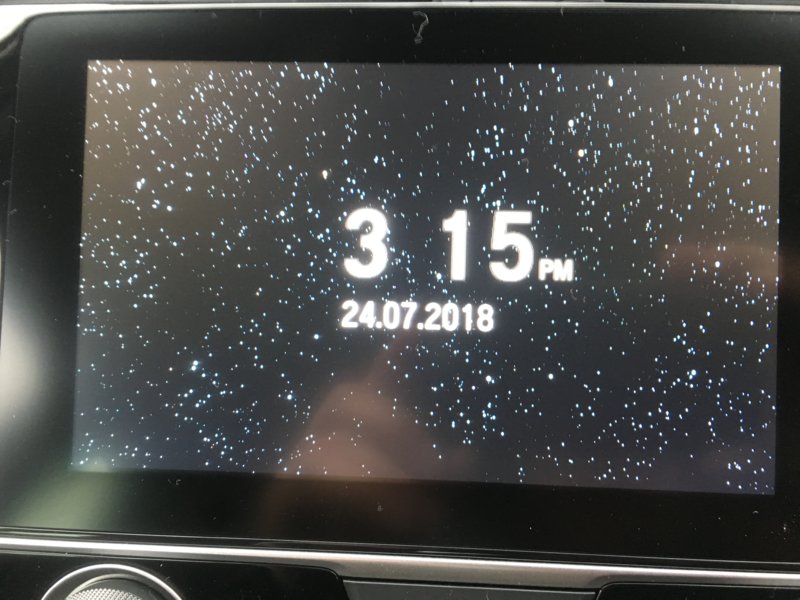
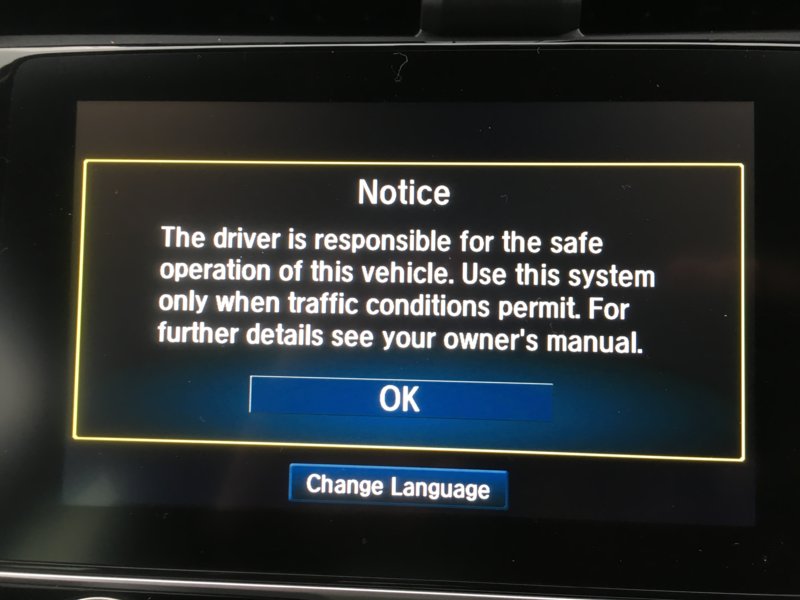
The automotive industry is using some lateral thinking with Infocentres/Navigation panels, where you can now use the gps in several ways, including visual navigation while entering a restaurant name, while telling Siri to text someone etc.
This is the Honda system, but I understand is in the process of being adopted across the board.
When the engine starts, the first panel comes on, inviting you to agree to the terms of use. It stays on for a minute, then reverts to a clock - about the same information as your upmarket 1953 Morris Oxford provided.
No complicated regulations or rules - simple!
-
Living in a place where runway excursions never happen; that could be paradise!
-
Good points Kasper; the treatment of you when you tried to do something about it, and the lack of support from the members was disgusting.
The situation can still be fixed by people of determination, skill and goodwill, but it's a much harder process.
It's interesting that most of the people who relentlessly pushed for the change, and repeatedly rebutted any sane arguments against it appear to have fled the scene.
-
2
-
-
That's about my take on the current industry Octave and I'm looking forward to being able to hire brand new GA aircraft like we used to be able to do. When you look at the Moorabbin figures I quoted, that location just needs a couple of entrepreneurs like Bib Stillwell and Arthur Schutt and it will start to buzz again.
I'm not sure we aren't just being trolled away from the subject matter of this thread.
-
 1
1
-
-
If no one addresses the issues and corrects them, yes that's what will happen. Not so long ago Victoria's premier gliding facility was under threat, needing a major effort from its participants.When the snags have been removed, Part 149 will be in force and it will be too late.
The cry on the GA forums for the past decade has been about the scarcity of job opportunities; looks like it has turned around.I saw the ABC news segment on the pilot shortage. What do they expect?
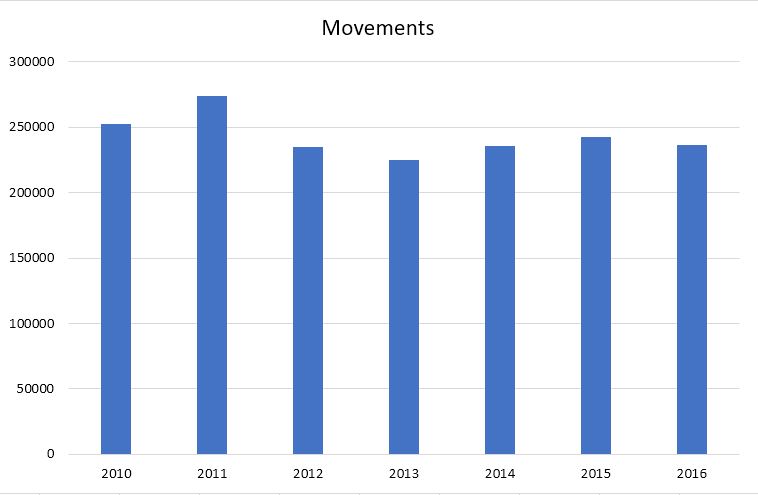
I just made a quick check of the annual movements at Moorabbin; pretty stable, about 650 movement a day; a lot of rural would be quiet because of drought conditions though.Aviation in this country has been made so expensive and difficult so fewer people are doing it, airfields look like WW2 prison camps complete with barbed wire and demands to see your documents. Pilots are all treated as potential terrorists. Not a friendly atmosphere. As a result of fewer people doing it, the infrastructure doesn't get replaced when it reaches end of life (Avgas bowsers).
Contact them.Air "Services" won't NOTAM unavailability. It would be nice if that actually was announced on the area frequency that we are forced to endure listening to, just like weather changes.
Historically the career path has been: CPL > GA Instructor to build hours and experience > Regional airlines or charter to build more commercial experience > RH Airline seat > LH Seat, over a span of many years. What you are saying looks like the normal pattern faster until any shortage is filled.Regional airlines are now poaching GA flying instructors which cuts off the supply of new pilots, makes getting an AFR more difficult etc etc. We really are swirling down the toilet bowl.
Always check for yourself out in the workplaces; sometimes strategic statements are made.All predictable and predicted by such as Dick Smith, Boyd Munro and others.
We've arrived at the subject of this thread; what are your thoughts?Meanwhile RAAus blows its horn about creating 10,000 new pilots. -
Keith, I think this fits better into the thread "New Regulation for sport and recreational aviation (Part 149)Have a read of this?Who is dragging the chain?
KP.
DAS DIRECTIVE
Records Manager - D15/462765
01/2016
DAS Directive No. 1/2015 1 of 3
DAS DIRECTIVE – 01/2015
Development and Application of Risk- Based and
Cost- Effective Aviation Safety Regulations
Date of Directive: 29 May 2015
Directive No: 01/2015
Issue No: 2
Date Revised: 28 January 2016
Directive
This Directive reaffirms CASA’s commitment to ensure that regulatory changes are justified
on the basis of safety risk and do not impose unnecessary costs or unnecessarily hinder
participation in aviation and its capacity for growth.
It also extends the principles underlying this commitment to the application and
administration of the regulations by CASA, to the fullest practicable extent consistent with the
interests of safety.
DAS Directives
01/2015
DAS DIRECTIVE
Records Manager – D15/462765
01/2016
DAS Directive No. 1/2015 2 of 3
Guiding Principles
Development of Aviation Safety Regulations
• Aviation safety regulations must be shown to be necessary. They are to be
developed with a view to addressing known or likely safety risks that cannot be
addressed effectively by non-regulatory means alone.
• Consistent with CASA’s obligations under the Civil Aviation Act and other
Commonwealth laws and Government policies, every proposed regulation must be
assessed against the contribution it will make to aviation safety, having particular
regard to the safety of passengers and other persons affected or likely to be affected
by the activity involved.
• If a regulation can be justified on safety-risk grounds, it must be made in a form that
provides for the most efficient allocation of industry and CASA resources.
Regulations must not impose unnecessary costs or unnecessarily hinder levels of
participation in aviation and its capacity for growth.
• Aviation safety regulations should conform to the framework for the classification of
aircraft operations, and align with other standards and practices, adopted by the
International Civil Aviation Organization (ICAO), unless differences are necessary to
address particular features peculiar to the Australian aviation environment and
those differences can be justified on safety-risk grounds. On the same basis, the
aviation safety regulations should be consistent with international best practice, as
reflected in the standards and practices of other leading aviation countries.
• Recognising that international standards and practices vary, CASA will align its
regulations with those that effectively address identified safety risks in the most costeffective
manner.
• Where it is appropriate to do so, aviation safety regulations are to be drafted to
specify intended safety outcomes. Where known or likely safety risks cannot be
addressed effectively utilising an outcome-based approach (in whole or in part), more
prescriptive requirements will be specified.
• In developing aviation safety regulations, CASA must consult appropriately with
industry in an open and transparent manner ensuring that all communication is clear,
timely and effective.
• Subject to the applicable drafting requirements, CASA will strive to ensure aviation
safety regulations are drafted as clearly and concisely as possible.
• Where practicable, aviation safety regulations should be developed within a three-tier
framework, comprising the Civil Aviation Act, the Civil Aviation Safety Regulations
and Manuals of Standards.
• Supportive advisory and guidance materials, including other acceptable means of
compliance with regulatory requirements, will be promulgated and disseminated in
conjunction with new and amended regulations, having regard to the time when
compliance with new or amended regulations will be required.
DAS Directives
01/2015
DAS DIRECTIVE
Records Manager – D15/462765
01/2016
DAS Directive No. 1/2015 3 of 3
Application of Aviation Safety Regulations
• In accordance with the Civil Aviation Act, the safety of air navigation is the most
important consideration for CASA in performing its functions and exercising its
powers.
• Consistent with that obligation, the principle of legality and the explicit requirements of
the civil aviation legislation in any particular case, CASA must always have regard to
all relevant considerations when exercising discretionary powers, including the cost
and other burdens involved in the application of regulatory requirements.
• This cannot and does not mean that CASA must demonstrate that, in exercising its
discretionary powers under the regulations in any given case, it has adopted or will
adopt a course of action involving the lowest cost to, or least adverse impact on, the
person or persons affected by that action.
• What it does mean is that, where a person who is or will be affected by CASA’s
exercise of discretionary powers under the regulations convincingly demonstrates,
on evidence, that:
- the same safety outcome contemplated by the applicable regulatory
requirement can be achieved on another, more cost-effective and/or otherwise
less onerous basis;
- the person is able and willing to adopt and give meaningful effect to that
alternative approach to compliance;
- the alternative approach proposed can be implemented fully and effectively in
a timely fashion, having regard to the interests of safety;
- the adoption and implementation of such an alternative approach by CASA
would not involve unreasonable additional oversight or administrative
responsibilities on CASA’s part; and
- no other persons would be adversely or unfairly affected by the adoption of
that alternative approach,
CASA will entertain a reasonable proposal for the adoption of another approach and,
in the absence of good reason not to do so, CASA will adopt such an alternative
approach.
Signed
Mark Skidmore AM
Director of Aviation Safety
Date: 28 January 2016
I sort of confirms what I was referring to there, and how difficult it is to plot a path that works, when you have a complicated operating system.
The creating 10,000 pilots thing is really about whether an RAA statement is true or not.
Even the Part 149 thread is currently not getting traffic on the regulation, but what a Spin Doctor said, and various peoples' opinions on that, CASA in general etc. so it's not worth putting much effort into trying to help to remove snags until everything settles down, and Part 149 can be looked at in terms of your posting.
While it seems complicated at first, once the issues are charted and a go/nogo approach is used, you can get a pathway.
-
Technically nothing at all; legally a prarallel path.What does the Victorian transport legislation have to do with aviation regulation?Same as comparing RAA and GFA; different parameters, different issue but both needing to come grips with self regulation and its responsibilities.
-
The Victorian transport legislation was relatively easy. It was an elected government stepping away from checking and conducting the registration process, and handing over responsibility for the design and compliance to the people directly involved.
In this case there’s a semi autonomous Safety Body between the elected government and the users.
It still would have been easy if RA aircraft had stuck to paddocks and below 300 feet, but now they operate in legislated airspace, so there are implications for CASA, Airservices, ATSB etc to deal with, so any attempt to hand off liability to the members of a SAO while at the same time actually legislated for it, is necessarily very complex.
-
You picked it; worth studying, but, like the guy who flew an Ultralight, a lucky exception rather tan a mundane trip repeated daily for years in all weather without an accident, which is the target you set.
-
1
-
-
Once you go down that path you get s reputation for being dodgy, and come under surveillance. Whoever came up with the 100,000 hours is easily discredited by analysis.Mike, some things that are obviously true can be better off unsaid. I reckon the exaggeration of hours flown falls into that category.Look what happened to Dick Smith when he said that Australia needed an affordable aviation safety policy. Obviously true when you consider the alternative of an unaffordable policy. But the wrong thing to say out loud. -
CASA+Part 149What documents RAAus/GFA or part149? Examples please. -
The US does that, and it's irritating because often they have to convince legitimate passengers who have booked and paid and arrived early. You're sitting there with five minutes to departure and the staff are calling for volunteers to get off and take the next flight and get a reward of $100.00 cash, then $200.00, then "the plane's not going until another three get off etc" It's a disgusting process.They cut seat prices to sell tickets so need high load factors (like 100%) to cut even. Best way to fill is to cancel earlier flights. They may have scheduled it knowing it won't go. If your flight has connections to overseas flights you are in a real bind. Missing a connection en route is a real problem. If you book with a mob that only goes somewhere every second day, you must be a chronic Gambler.These operators operate RPT..REGULAR PUBLIC TRANSPORT and publish schedules. That's part of the description. Schedule means a timetable not a wish list..Back where Turbo is referring they used to be accused of overbooking flights to cover the inevitable "no shows" They probably did and when the no shows showed, there was not enough seats. 85 % used to be considered a good load factor. That also gave some flexibility for last minute hopefuls getting on but the race to the bottom is what people want as far as prices, it's just buy the cheapest "ALL Airlines are as safe as each other". Sure Pigs fly too.. But World Airlines had a magic year last year with an almost impossible nil deaths. That does not mean all rules were observed universally. People operating in the SYSTEM know what goes on.
I suggest you make a more calculating choice of Airline and not go for "apparent" lowest price either. If you use the cheapest you will keep on getting less service than is available for a slightly higher price . Some airlines look after you when you get stuck somewhere. If you divert to someplace where "Whoopee Airlines" has no staff stationed .. why would you expect them to be able to move the plane around quickly and provide a "normal " level of customer service? The crew run out of hours and what then? Who pays for fuel,signs out the Plane ? Perhaps the Captain does. so there you go. Nev
The Cut - price model here is different.
-
The other class of aircraft I didn't mention because of cost is the single engine turbine, like the Cessna Caravan. Cost for these is in the $1.25 to $1.7 milion mark, but for someone wantin to range from Tasmania to Queensland, hiring is a possible alternative.
-
1
-
-
There is the theory and there is the practical when the engine stops. More than one have kept on pulling the stick back until they simply stalled in from over 1000'; it should all come together during training.The FAA agree about the risk and need for pilots determining it themselves https://www.faa.gov/news/safety_briefing/2016/media/SE_Topic_16-01.pdfAlso where to aim on the landing space... then more flaps or slipping to drop in earlier. No doubt you all know this.-
1
-
-
It might pay to examine the documents.Turbs, the next time the leadership takes any notice of what the members think will be the first.A while back a GFA President was heard to say "we can't have proper elections because the wrong people may get in". Tells you all you need to know.I doubt the Part 149 and implications thereof have been much discussed with the membership who will be paying the bills. CASA is mandating that certain jobs be filled etc, etc all of which will cost heaps and result in complete inflexibility.
The organisations which used to be member organisations will continue to be merely CASA subcontractors and incapable of being advocacy organisations under threat that their certification as a Part 149 organisation will be taken away.
CASA has already said that under Part 149, if the GFA ceases to be able to do its Part 149 obligations, GLIDING WILL CEASE will cease until another organisation is approved by CASA. I presume the same will apply to RAAus.
Now these organisations can go broke, be sued into oblivion, the Board can flee under the threat that their personal assets are on the line and nobody is willing to replace them, fall below a viable number of "members" (watch the GFA over the next ten years), be diddled out of large sums of money (already happened) which threaten continued operation etc. Look at how long it has taken ELAAA to get CASA approval. How many years has it been? CASA is in no hurry for anything and no gliding or ultralight flying will suit them just fine.
Any accidents occuring during this time will be by illegal operations, which also suits CASA.
The correct way to do regulation is as facthunter says, is by education and per pressure. Also by having a clear set of CASA rules (CASA can consult on what they should be) which anyone can operate to and delegations for those who will issue airworthiness certificates, maintenance qualifications and pilot licences etc. These delegates are then carrying out a CASA function and covered by CASA liability. JUST LIKE THE REST OF GA.
As I said the "leadership" of the organisations see Part 149 as cementing the positions of their organisations and protecting them from competition. They have long ago forgotten why the organisations are there.
-
Which by inference means the members of those organisations are happy to go along with it?It is designed to place a moat around the existing RAAus and GFA, the leadership of which organisations are too stupid to realise they are being lumped with onerous responsibilities and liabilities. -
We may be about to take the long road to find out.What's six lives compared to the millions in rental revenue for the shareholders? -
Jetstar and the other cut - cost airlines were never set up for the rich, famous, and busy like you.I wouldn't book jetstar for a holiday, being stuck in an airport is not a fun way to spend your holidays

Reverse tricycle.
in AUS/NZ General Discussion
Posted
I'd suggest this was someone's idea for low level surveillance, flying and landing nose down on the mains, and settling on the rear wheel later, which gave the aircraft stable crosswind solo taxying on battlefield landing sites. Based on the configuration dying out, it probably wasn't a success. Around that time the USAF tried many weird designs, including a vertical take off fighter that sat on the ground, like a rocket, on four tiny wheels. Just imaging what it would be like stopping a big fighter in mid air, getting it to drop tail low, then reversing in a downwards curve on to a landing pad.