

turboplanner
-
Posts
24,360 -
Joined
-
Last visited
-
Days Won
159
Content Type
Profiles
Forums
Gallery
Downloads
Blogs
Events
Store
Aircraft
Resources
Tutorials
Articles
Classifieds
Movies
Books
Community Map
Quizzes
Videos Directory
Posts posted by turboplanner
-
-
....from eating bats, or did you just pick it up in a flea market at the.......
-
 1
1
-
-
Turbo wishes to reassure the thousands of upset fans of the NES who have been phoning all XXXXXXX night that is is not imprecated in this oriental people-bending operation called Chinese Thousand Talents Program. A lilttle digging quickly showed it was another sock puppeteering exercise by a well known serial pest of Chinese extraction, i.e. he was stuck at birth and had to be extracted. Salty, OT, and b knew nothing of the posts in their name, or of the multi-identities which have infiltrated WF over the past few months with a matching set on Date which currently are arguing amongst their invented selves.
However, he can advise that he has found records indicating Cappy is funding the SP.
-
.....and bull went on for twenty minutes about conquest after conquest, but Turbo knew that bull was only 11 at the time and would sneak under the Drive In fence and watch his older brother.....................
-
........the horse and buggy days when all you needed was a blanket and a quicke check to ,make sure the horse hadn't moved forward; the ground was the place to be in those days, even if you.......
-
STOP PRESS 2 - In fact, when the Judge said "The Prisoner in the dock will now rise", 42 people in the gallery stood up.
-
Downunder, Elaborate ?, like an electric motor driven supercharger ?
That's what he meant.
-
 1
1
-
-
I never worry about engine failure in the glider. And after 20 years of worry about where I would go if the engine stops ( and it never has) then I'm getting less worried. It is still nice to have a glide to a paddock though and I get angry when prohibited unused airspace above me stops me flying at a safe height in the Jabiru. Why am I the voice in the wilderness about unsafe low altitudes forced on us without good reason?
Because we know the story. I’m the one in the Qantas/Jetstar and several times have come in so low I could tell if Popeye’s Captain had a moustache.
-
Two-engine planes have the second engine for emergencies. Electric power makes sense to me for a second engine, there to assist take-offs and be there for emergencies. The main thing about safety following an engine failure though is altitude. The difference between being initially at 5,000 ft compared to 1,000 ft is enormous, just work out the difference in sq km of land to find a landing place. Don't forget that the last 300ft is only good for lining up the "landing". But ten minutes of electric power sure could help to find a better crash site, even starting from low.
I agree about weight being a problem. Personally, I would choose to have the extra power rather than a parachute on the plane. But that's just me.
In the meantime, I'm hoping that good maintenance makes the plane sufficiently reliable that it will not turn into a glider.
The whole idea of the 45kt stall assumes you are not going to crash, you, if you ace it are going to touch gound at 45 kts and that speed will quickly decay if you hit a rut or catch a wing, so you are then left with what solid object is in front of you and that won't be an impenetrable forest if you don't fly over pand you can't land on. When you think that through and apply the intentions of a forced landing it beats dropping a passenger to carry a spare engine or relying on a BRS.
-
2
-
1
-
-
In the C172 & PA28-181 I used to run full rich till at cruising altitude (depending on the day & hemispherical, anywhere from 4000 to 10,000) & then lean till the engine began to lose power. I'd then wind it in till it ran smooth & regained rpm again & leave it there till I was descending to land. I never did any checks but always used less than my planned burn which was based on the manual.
This is around the bottom threshold for GA and the first experience of leaning the mixture for pilots; While there's nothing to prevent mixture control being added to a Recreational Aircraft, it's really getting into GA territory, and what kgw has posted is good for understanding the principle of optimising mixture for altitude by leaning the mixture.
With it comes responsibilities. You need checks to remember to go to full rich before you descend from altitude and cause problems to the engine at lower altitudes. The two aircraft mentions are good practice for getting used to high altitude engine management.
The next step up usually comes with a Constant Speed Prop, and then you need to pay very close attention to the settings required by the manufacturer because they are not all the same.
-
1
-
-
Turbs, you said " legal" and "safe" as if they were the same thing. Is this what you really think?
I went back a few posts and couldn't find the "legal"; can you tell me which post # I might have used the wrong word.
-
You just can't leave some off my stuff alone. If you read carefully what I post and understood it , you wouldn't write such irrelevant responses. You and I are in different worlds on a lot of this. Not everyone has your particular approach to these problems and clearly your experience is limited in some areas. Nev
I'm going pretty much straight from the syllabus, that's why I took the trouble to post. People think they don't have to do the W&B calculations.
-
.Also I don't accept the criticality at high weights being specifically a C of G issue for all planes The empty Wt v/s all up Wt ratio is much the same right across aviation except for a few different ones (about 55%)
The Weight part of weight an balance is whether the aircraft at the flight planned phase of flight is within the All up weight.
(a) There's MTOW
(b) The MTOW is reduced by a set of calculations for surface, grade and altitude of the airfield and outsided air temperature
© Quite a few airctraft have a lower undercarriage capacity than MTOW, so the flight plan has to include the time when you can land again. No point taking off at MTOW for a field a short distance away because you'll collapse the landing gear, so an emergency stop might mean flying around and burning off fuel until you are light enough to land.
The Balance part of W&B is the calculation for
(a) reserve/flight fuel mass
(b) baggage/freight mass
© people mass
(d) any other mass which is not part of the empty aircraft mass
The balance calculations are not guessed because the net result is a combination of how far they are from the datum and each individual mass.
WHERE the loads are carried is more important. If you get far from the balance point, the effect of any weight , or wt change will be more. Fuel located far away will change the Cof G in flight perhaps by a large amount.
This is one of the reasons you don't guess. In general terms aircraft with fuel tanks in the fuselage will perform differently during the flight because their "moment" arm is usually longer than a wing tank.
There are combinations of heavy passengers and full or empty tanks which the mind's eye deson't pick up but a ten second cal will.
re some RAAus types that are near impossible to load outside the range. They have to be 2 place side by side or single place.If the fuel tank is on the datum there will be no change in flight, and if the person/people are on the datum you are not getting the cantilever multiplier, and the calculation here is more to decide whether you have to drop a passenger or some fuel before the flight.
In some cases the Ultralight designer has placed the seats so it doesn't matter if the pilot doesn't calculate, and so might specify a particular seat for the pilot if he's solo, but W&B calculations will still optimise your flight.
Tandems always get complicated for obvious reasons.This is because of the person further away from the datum, so best to calculate.
The operator /pilot must KNOW their plane .NevThat would have worked some years ago, but since Endorsements ceased, you will be pointed towards an aircraft you have never flown without any training, except in some cases being told to rear the POH. If you do your full P&O checks including W&B, you will know the airctraft is within its envelope before you start the engine, so this is not an issue as far as W&B is concerned.
-
............qwerty. qwerty had been "away" for a few years after a flight which could be best be described as wayward, having started on a Wild Chicken farm strip, a beatup of Scottsdale, and with Tasmanian Police in their HQ Holdens in hot pursuit down the Tasman Highway, a beaching in the St Patrick's River near the Myrtle Park Camping & Recreational Ground.
When the Police waded out, qwerty explained that they's been there all day fishing but a tell-tale colourful smear started to appear heading downstream and the cop, after yanking his hand back and saying "XXXX!" triumphantly said "The engine's still hot" The judges didn't buy qwerty's explanantio0n that he'd been sitting on it to keep it warm for a take off and it all went downhill from there. Now here he was .................
-
Back to CoG and W&B and competency.
Given that LSAs etc have MTOWs often 2x their dry weight, it would seem that there are a few gaps to be filled in the RAaus PC and GA RPL, IMO. The POH handbook certainly spells it out but there seems to be a disconnect with what is actually being done in the field. I was reading through various silly-bus , and there isn't much discussion on the potential of lost of control aspects of CoG errors.
Overweight but CoG right on the money is one thing, CoG errors leading to instability and LOC is another. Which brings me to another question: If permissible CoG range reduces to an infinitely small range at MTOW , what happens beyond MTOW ? Example, say permissible CoG range 100mm at 500kg, permissible CoG range is 1 mm at 600kg (MTOW), what happens BEYOND MTOW? given that you cannot have negative permissible CoG range. no such concept. But something must happen. does the aircraft begin to need a bigger tailplane to compensate for the fore weight ? and so becomes a bit nose down in behaviour (lowering AoA, lift etc). Given that available lift is coming into this then height (pressure and temperatures) aspects would also become relevant. (but they always were).
a good question for you doyans me thinks.
Glen
The problem we have in RA is just getting pilots to understand their obligations for the base aircraft in normal operations without the complexities.
It will be interesting to hear your reactions after the touch and feel control modualtions that will fill out the picture for you happen at Cowra.
-
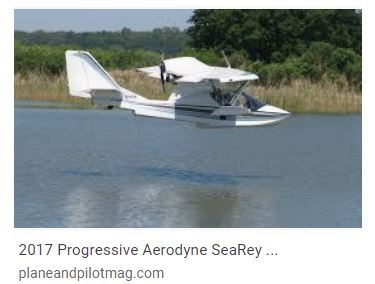
"....digressing on to my favourite subject XXXXXXXXXX or adding tomato sauce, whichever came first". Cappy then went on with a long confession of his life, from stories of fighting in the Punjab to Jabbing in the........ but they were interrupted by a well known whining and grinding sound and a SeaRey cut an arc across Arthur's back and hlided up to the jetty, thumping into it. At the controls was .................

-
You cannot see the fuel level in the Wing tanks on my J170.
Since I am the only Pilot, and am hangared, I always know my fuel state, but still have 3 ways of checking.
Analogue float gauges at the Wing Roots
Electrical sender gauges on the Panel in front of me
and
A JPI Fuel Scanner instrument which is very accurate within a couple of Litres at each refuelling.
The first 2 items were standard equipment when the Aircraft was built at the Factory.
I didn't do any trips in the J170, but found the panel gauges would move into a position and sit there, and you'd look back later and they would show something else, sometimes less, sometimes more, but not always related to fuel burn. Three Jabs were the same. We had a dipstick, but on one occasion the aircaft wasn't quite level and I dipped the high tank then realised my mistake when it was on the level. the 170s drained themselves partly when they were parked on a slope overnight, and I found the small flat tanks difficult to judge with the dipstick because of the slopes.
Dies the JPI Fuel Scanner make up for this?
-
.........Hells Angels patches for which I had to eat a raw bull's heart without............
[We've just checked and as far as we can find out this does not refer to OUR bull's heart - MOD 5 "The Nice Mod"]
-
You can scale up from this at 1:10
I broke quite a few springs and found that less tension was batter than more, but mine were running very hot at around 10,000 rpm.
-
In flight training, volume is limited and instructors can only train one person at a time.
We have about fifteen million people to choose from and we once had the knowledge of how to use students to teach students and so coped with exponential expansion.
-
silent; he was a West Australian, and they were like frogmounts'sat there all day turning their heads from side to side, checking that no South Australians crossed the border.
"They're DISEASED!" said ...........
-
.........river, ripples on the top and no bottom, but .................
-
.......could shrink back, which he always did when it was his time to pay.
The both looked out the window at Arthur who was quietly .......
-
Skippy, all of that might be true but this thread is about risks and your liability and gives examples of developments which can affect us all.
For example #300 is important for everyone who flies or for that matter supplies aircraft, and other examples show the details of how some cases played out.
Knowing how those situations are likely to affect us is very helpful for us going forward, regardless of the business policy.
-
For OK, shows what cantilever is and does.
-
 2
2
-
The Never Ending Story
in Aviation Laughter
Posted
........Nobushi, who has taught me Japanese, because ........