

turboplanner
-
Posts
24,363 -
Joined
-
Last visited
-
Days Won
159
Content Type
Profiles
Forums
Gallery
Downloads
Blogs
Events
Store
Aircraft
Resources
Tutorials
Articles
Classifieds
Movies
Books
Community Map
Quizzes
Videos Directory
Posts posted by turboplanner
-
-
.which was supposed to be a triangle but there were none in stock.
Turbo was able to fix the blowout in hours, after sitting in on Cappy, and finding he would be going through the manual, closing it when a student asked a question, giving a long-winded answer based on his time in the Khyber Pass, then going back to the beginning of the manual.
The amazing part was that none of the students noticed - they all spoke Mandarin and ......
-
1 hour ago, Captain said:
AS A COMMUNITY SERVICE WARNING TO STUDENT PILOTS: Below is one of TFTAOSI's favorite scams, where they sell all of
thiscrapthese Learning Aids as a location in which to sit to study all of the bookwork in order to assist Students to obtain their AUF licenses in half the time ...... so just 300 hours instead of the 600 hours that TFTAOSI usually take for each Student.
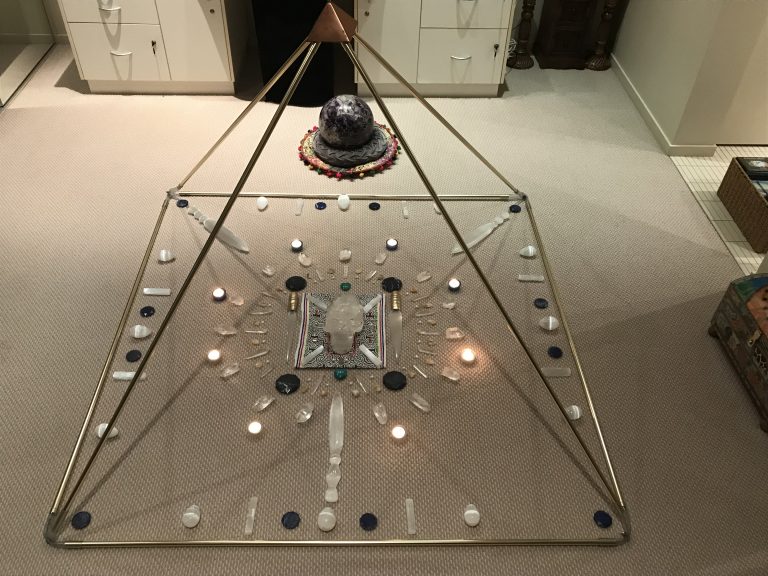
Explanation: Turbo respectfully explains that this is an exploded view of a Blue Head laid out within a rectangle.
-
12 minutes ago, MattP said:
I thought the in command bit was pretty clearly defined both in training and in the regs. Personally it was re enforced by my instructors many times regardless of being at ctaf, tower etc.
Also afaik there are no raa regs per say, casa let them administer their patch as a raao under the casr's.
Before RAA, we flew to prescriptive regulations; if we breached them we were fined.
RAA was give exemptions to some of those regulations so RA fly under exemptions and the rules of the self administering body.
On top of that, based on State Regulations, if you do something that might have a reasonably forseeable risk, it's your responsibility to eliminate it. So, as an example forget to put the fuel cap on, and don't pick it up in your preflight checks.
12 minutes ago, MattP said:Either way not sure that anyone's passengers take flight with us under the belief we're only 35% responsible for their lives.
That could be any figure; a judge decides that based on the evidence. If, for example you phone ahead, check the ERSA etc, land correctly, then slam into an obscured trench across the runway (which also didn't have white crosses etc) and someone is badly injured, the judge might find the airport owner 100% responsible.
-
 1
1
-
-
33 minutes ago, facthunter said:
I'm giving you the facts. I don't make the rules. If you think about it, It can't be otherwise. Nev
The facts you gave us for the Jab nosewheels were correct for the Airservices/CASA layers.
That's exactly as you say, the PICs could have called up and refused the runway, so no issues with that at all.
However I asked about the Public Liability layer, which these days applies to everything we do.
In not refusing the runway, a reasonably forseeable risk occurred, and the PICs had the responsibility to eliminate it, so they opened themselves to being sued if anyone had been injured.
-
3 minutes ago, facthunter said:
The responsibility rests with the PIC for choice of runway. (or the safety of any other clearance) Even at a Controlled aerodrome with Tower and ATC the runway "offered" should be refused if it's considered operationally unsuitable by the Pilot. A good example of this was Avalon Airshow in the early 70's when (3)Jabiru's landed downwind and damaged their nosewheels. The examination of the circumstances concluded the pilots should have required a change of runway IF it wasn't OK. '
That is the situation with all clearances, legally. Whether it was reasonable to expect People unfamiliar with control procedures to BE confident enough to do that was another matter and I strongly expressed that view. at the time to the authorities in person. The PIC is the "Master of the Vessel" in an absolute safety consideration aspect. The ONLY time that doesn't apply is in a Highjack situation, where the security people take over everything and start shooting. Nev
In the context of flying responsibility layers Airservices/CASA standards/RAA exemptions and rules/public liability, where do you think the duty of care rests in Public Liability?
-
1
-
-
3 minutes ago, spacesailor said:
What about ' metres per second ',
IT IS Metric !.
spacesailor
I'm going for dollars because it's motivational; when you've only got two dollars left you better push the nose down or give it full throttle.
-
 2
2
-
-
3 hours ago, djpacro said:
The next level up at a non-controlled aerodrome is a certified air/ground radio service (CA/GRS) per https://www.casa.gov.au/sites/default/files/2021-08/advisory-circular-139-d-02-guidelines-certified-air-ground-radio-services.pdf
"2.1 Operated by CA/GRO (Certified Air/Ground Radio Operator)"
Fits the requirement for a Responsible Person
"2.2 CA/CRS (Certified Air/Ground Services).......voluntary"
The service is documented ready to go.
In terms of Public Liability, "Voluntary" or "Guideline" indicates it's a good idea to have one unless you are protected by something else.
I looked at Garfly's CTAF with Unicom, and that also appears to have been set up to cover duty of care responsibilty for communications with aircraft.
-
3 hours ago, Garfly said:
I would say so:
"AIP GEN 3.4
Universal communications (UNICOM) is a non-ATS communications service to improve the information normally available about a non-controlled aerodrome.
My comments relate to the layers of responsibility we fly in:
1. RAA regulations
2. CASA and Airservices regulations
3. Duty of care
Just looking at CTAFS with Unicom, I would suggest:
3 hours ago, Garfly said:- aerodrome information
Would allow Unicom to advise much the same as ATIS
3 hours ago, Garfly said:- general weather reports
CASA has specifications on this, but a change of runway or dity runway can be advised within the aerodrome informnation section.
3 hours ago, Garfly said:- basic information on traffic.
This is also permitted
3 hours ago, Garfly said:The UNICOM operator is solely responsible for the accuracy of any information passed to an aircraft, while the use of information obtained from a UNICOM is at the discretion of the pilot in command.
It looks like CASA has already decided the Responsible Person, and covered the Unicom person.
3 hours ago, Garfly said:The CAA in NZ spell it out this way (AC139-12)
NZ is not applicable to this discussion because they have a liability scheme whereas we in Australia are responsible directly for our actions.
"A UNICOM service is a basic aerodrome information service: it is not an Air Traffic Service."
An ATIS broadcast is aerodrome information.
Pilots of both IFR and VFR aircraft retain full responsibility for the operation of their aircraft.
Pilots need to decide on their acceptance or rejection of the information provided, the use of the information, and for the continuing safety of their aircraft.
RPT Pilots, Operational requirements - don't have to accept it.
SUMMARY
It would seem for a CTAF with Unicom that the Responsible Person has already been nomiated and Runway Changes could be broadcast just as ATIS does "Information Alpha, Bravo, Charlie etc.
-
35 minutes ago, Flightrite said:
Oh brother, spare us!
...from a 3/4 page report in plain English?
-
1
-
-
1 hour ago, RossK said:
You are saying the Shep pilot's not completely at fault, yet that's not what the Chamberlain report suggests, if you think it does, go back to year 9 comprehension and try again.
The Chamberlains report clearly says the Pilot was just 35% at fault.
1 hour ago, RossK said:The council got slugged 65% for putting the Ferris wheel in the way, the pilot 35% for his airmanship. This is for damages to another party, not the pilot.
Correct: the Plaintiff sued the Council and the Pilot,
However, note the decision was NOT just based on the Ferris wheel, but also on THE OPERATION OF THE AIRSTRIP which you omitted to mention - that is the subject we were discussing.
The decision was spelled out in the Chamberlains link earlier"
"DECISION
The Supreme Court of New South Wales found that the risk of harm was clearly foreseeable and ought to have been known to the local council.
The local council was negligent in the approval of the festival, the location of the Ferris wheel and the operation of the airstrip.
Damages were awarded in the total sum of $1,513,023. The council successfully cross claimed against the pilot, with his contribution assessed at 35%."
This section of the decision relates to the Pilot's suit against the Council, which we were not discussing because it's not relevant.
"The Pilot’s claim against the council, however, was unsuccessful, and the court held that the harm suffered was the materialisation of an obvious risk of a dangerous recreational activity, as found in s 5L of the Civil Liability Act."
1 hour ago, RossK said:The Old Bar pilot got nothing because he was at fault for his own injuries for mishandling the go-around - "the harm suffered was a materialisation of an obvious risk of a dangerous recreational activity, as found in s 5L of the Civil Liberty Act".
Nothing to do with the comparison I posted and explained - This relates to the suit against the Council by the Pilot.
1 hour ago, RossK said:Even though the council put the Ferris wheel in the way - in the obstacle clearance splay of the runway, they were not held accountable for any harm the pilot incurred - because, I'll say it again, from the reference you sourced, "the harm suffered was a materialisation of an obvious risk of a dangerous recreational activity, as found in s 5L of the Civil Liberty Act".
Nothing to do with the comparison I posted and explained - This relates to the suit against the Council by the Pilot.
[Not related to a comparison of downwind landing/takeoff operations between the two Airfields, but maybe very interesting for RAA pilots, the Judge's decision to award nothing to the Pilot quoting S5L.
We've discussed the label on the instrument panel several times in relation to Liability to a passenger who would not be expected to understand the difference between the safety of an airliner or RA aircraft, but the Pilot's qualifications may have had an impact on the case. Not saying it did, but I'll have a look at the transcrsipt.]
1 hour ago, RossK said:The Shep pilot is in the same position, he is 100% responsible for any harm he incurred due to the activity he undertook, not the council, duty manager, responsibe persons or anyone else you want to blame.
The Ferris wheel Pilot was found to be only 35% responsible injuries to the Plaintiff for his decision to land on the downwind runway as spelled out in the above Report statement.
The Old Bar pilot got nothing because he was at fault for his own injuries for mishandling the go-around "the harm suffered was a materialisation of an obvious risk of a dangerous recreational activity, as found in s 5L of the Civil Liberty Act".
Nothing to do with the comparison I posted and explained - This relates to the suit against the Council by the Pilot.
Even though the council put the Ferris wheel in the way – in the obstacle clearance splay of the runway, they were not held accountable for any harm the pilot incurred – because, I’ll say it again, from the reference you sourced, “the harm suffered was a materialisation of an obvious risk of a dangerous recreational activity, as found in s 5L of the Civil Liberty Act”.
Nothing to do with the comparison I posted and explained - this relates to the suit against the Council by the pilot.
The Shep pilot is in the same position, he is 100% responsible for any harm he incurred due to the activity he undertook, not the council, duty manager, responsibe persons or anyone else you want to blame.
As we saw in the Chamberlains report both the Pilot and Council shared responsibility, 65% Council, 35% Pilot.
-
2 hours ago, RossK said:
Chamberlains said;
The Pilot’s claim against the council, however, was unsuccessful, and the court held that the harm suffered was the materialisation of an obvious risk of a dangerous recreational activity, as found in s 5L of the Civil Liability Act.
This is despite the council putting a Ferris wheel in the obstacle clearance splay of the runway!
Your use of the Old Bar incident is just a distraction and despite how much you argue it, is irrelevant here.
If a pilot chooses a runway with a 15kt tailwind and ploughs into the fence at the end, it's not the councils fault, duty managers fault, responsibe persons fault or anyone else you want to lay the blame on.
Runway choice, decision to land/take off is always going to be pilots responsibity, not some person on the ground.
I've already mentioned once that my reason for posting the Chamberains summary related just to the similarity of a pilot choosing to land on a downwind runway, and their report on how the judge viewed his breach of duty of care; in particular in choosing not to use the Duty Runway which was in use, and landing on the downwind runway, and deciding to go round, and not being able to make altitude he had an accident.
In the Shepparton case the Pilot chose to take off on a downwind runway and had an accident.
So far in this thread:
- According to a witness the pilot has said it was all his fault.
- Several people have blamed bad training or operating skills
- Chamberlains reported that in the Ferris wheel accident the Judge found the duty of care breach by the Council at 65% and by the pilot at 35%
You can flog the pilot in the Shepparton case if you want, doesn't worry me, but I'm on his side; I wouldn't necessarily blame him 100%.
Of course there's no point in comparing the total Ferris wheel case with this one because that case is a lot more complicated and in some areas different however, if you want to be thorough you have to look at all aspects.
Since then the RAA Accident and Incident report has been published, saying "At take=off partial power loss was experienced and resulting in loss of control" which agrees with what the media reported, so that's an additional factor.
-
2 hours ago, aro said:
This isn't how CTAFs work.
If the traffic is students under the supervision of the CFI, this sounds OK. Otherwise it's basically unauthorised air traffic control.
I understand what you are saying but ultimately, anywhere, someone has the duty of care if there is a forseeable risk (in relation to that risk)
Is circuit control prohibited in CTAF regulations?
-
28 minutes ago, Old Koreelah said:
That “whisky compass” trick sounds like a second last resort for those of us without AH or any instrument training.
(Letting go all controls sounds sensible if you were trimmed properly.)
I have a GoPro mount on my canopy. Next time I go flying I’ll point it at the compass and do some turns to see how reliable it might be if suddenly enclosed in soup.
For a PPL you have 2 - 3 hours under the hood to learn how to rely on instruments and completely disregard what your body is telling you, because the fluid in your eardrums is pushed around by gravity in the turn, so you are turning but your body is telling you, you're straight and level, so you bank to make your turn when you are already at 30 degrees and you're into a spiral dive, and from there your senses won't help you recover.
At the end of my under-hood training I was getting very clever, listening to the instructor calling base etc, eyes glued to the four instruments, and conducting perfect turns. I was quite confident I could take it all the way to the roundout.
I had a very good instructor; he pulled the hood off me about halfway down final, I zoomed up to 500 feet and went off line, pulled the throttle off and sank too much,WOT and one wing down to climb again, finally managed a rough round out and very ordinary landing. Good lesson about how little control I really had.That wasn't worth a certificate, but showed me there was no short cut to an IFR rating.
You don't have those instruments, but today's flight rules which require a minimum forward distance from cloud give you plenty of time to make a VFR turnaround, and that's way better than struggling out in marginal conditions and perhaps losing control, or your sense of direction to lower ground.
Prior to that the primary regulation was a minimum distance standard to cloud above you. Where that fell short was when the weather pattern was misty and the cloud was solid above you. You were already in "cloud" but you could see a couple of Nm ahead but you were really flying into the gradient, and if you didn't turn around fast enough you were in cloud. I've asked several times over the years for exerienced pilots to tell us what the Net Forecast would be for that condition or how to identify it, but there has never been an answer, so it's clearly a matter of being in the wrong place at the wrong time.
-
1
-
 1
1
-
-
1 hour ago, onetrack said:
However, the photo, as with many curious photos, is not what it seemed. Despite the photo appearing to indicate a group of men weeing into a dam - this was most certainly not the case.
The men had all lined up, holding their cameras low to get the full scene, to get photos of bulls excursion off the top of dam wall with his Tyro. The Tyro, unfortunately is lying upside down, well below the mens feet, on the steep slope of the dam inner wall, and out of sight of the cameraman.
Bull luckily escaped from the prang with only scratches, and now has his words ringing in his ears ... "Hey fellas! Watch this!" - as attempted a takeoff from the top of the dam wall. But he failed to take into account the narrow width of the dam wall - and those nasty castle-rampart style blocks.
Once he got the Tyro rolling, and whilst still well below V1, the cross wind that he thought was only minimal, became much stronger as he approached the centre of the wall. The crosswind pushed him off centre - his left wing hit one of the blocks - and the Tyro cartwheeled over the wall, and fell upside down on the slope of the inner wall.
The men watching the daring takeoff all rushed to the edge of the dam wall to see if bull was O.K. - the media were looking for a great photo op - and the rest is history. Of course, then there was the next little episode, where bull was trying to explain away why...........
........his ASI was marked in dollars. "I tried Knots" he said but I kept getting tied up in knots. "I tried MPH, but thought that was ridiculous because I'd never even taken a mile to land".
Then, going over to the machine, "when you're sitting in here, you need a logical prompt to stop you from stalling. Dollars rang the bell for me. When I'm coming in low and slow and I;ve only got two dollars on the clock, I know its time to push the nose down, or ........................."
-
1
-
-
41 minutes ago, peterg said:
I know there are a few lawyers (not the bush variety) who visit this site and offer no comment even to refute bizarre scribblings - it doesn't take much thought to understand why.
You should have read more carefully. Chamberlains, who wrote the report are lawyers.
-
Turbo remembered that day. He had flown in a load of Bluehead parts in the beaver and was about to join the group for a BBQ when he noticed them standing in a line at the edge of the dam. This would be a good photo for the families to remember.
-
48 minutes ago, Garfly said:
Okay, fair enough ... but I have never heard of a person being "in charge" of operations at an uncontrolled airport in Australia; whose job includes checking pilots for runway choice against W/V and the like. It would be a practical and legal nonsense. To be 'responsible' is not necessarily to be 'in charge'. I'd hazard a guess that a council's runways had a comparable legal status to its public roads. No flag folks (or white crosses) needed until or unless a particular hazard exists.
"Responsible person" is probably a better word.
There's no job description and no relation to legality of roads etc.
If you're the responsible person you have to identify any risks and remove them. You have to decide whether to set out the white crosses or call a Duty Runway or change - Prescriptive legislation is gone permanently. It might sound daunting if you missed the changes in the 1980s but the starting point is an assessment of the reasonably forseeable risks.
48 minutes ago, Garfly said:The Old Bar ferris-wheel accident - 10 years ago already - was a very special case (and not only legally). The report - attached - is a fascinating read. By the way, it was mentioned above as involving a 'downwind landing'; the tailwind component at the time of that accident was no more than 3Kt and was not noted as a contributing factor by the ATSB.
A downwind landing is a downwind landing even if it's only 3 kts. On this occasion the Duty Runway at which other aircraft were landing into wind was a different runway, so there was an obvious choice.
I only mentioned this case because it involved a similar landing, and someone other than the Pilot was found to be 65% responsible.
My point is that the choice of runway is relevant to the Shepparton case, so we should not be condemning the pilot just yet.
The 51 page assessment by the ATSB was based on the reasons ATSB investigate and I don't disagree with any of it.
The link I posted is Chamberlains Lawyers summation of the case where a Judge decided who was responsible and awarded $1.5 million to a Plaintiff splitting the responsibility 65% to the Council in relation to their duty of care and 35% ($525,000) in relation to his duty of care.
ATSB and the Court were looking at different aspects of what happened for different reasons.
https://chamberlains.com.au/local-council-sued-following-aircraft-collision-with-ferris-wheel/
48 minutes ago, Garfly said: -
5 minutes ago, RossK said:
Your posts in this thread begs the question;
"have you ever flown at local CTAF airfield?"
Well it doesn't beg the question, because unlike the old prescription era when there had to be a law for everything or it was every man for himself, Public Liability applies everywhere, even if you give a glass of water to a thirsty friend, but yes I've flow into many CTAFs, and in particular did my training on RAA airctaft at one where the CFI controls the circuit. I must have been lucky because he was anal about not taking off or landing downwind. We usually had no more than three in the circuit and he could sense the sightest change, on one occasion getting all three of us to do the 180 direction change.
-
12 hours ago, Garfly said:
Before embarking on deep legal research that I'm ill-suited to interpret I'd prefer to find an answer to my simple layman's question. A supplementary one is this: what does it mean to be a person "in charge" of a publicly available, council owned non-controlled airport? And why is that person liable for anything a pilot does?
I’ll give you a simple but historiallly factual one.
In the mid-1980s Waterslides became popular at Council owned pools and people built Waterslide Parks. People were allowed to jump on whenever they wanted to (the equivalent of a pilot making his own decisions), and a rash of back injuries started to occur. Given that paraplegics are awarded multi millions to pay for their ongoing needs and quadriplegic payouts currently are around $13 million, within a very short time these places were virtually uninsurable, some authorities banned them and others just locked them out of bounds. Many of them were dismantled for scrap.
Virtually all the injuries occurred when a person had come to a stop in the pool at the bottom and was hit by a following slider. That was a reasonably foreseeable risk, so the Councils etc had had a duty of care to ensure it didn’t happen, hence the big insurance losses.
Someone came up with the idea of putting one person up on the tower and another at the pool. When the slider had vacated the pool he waved a flag and the top person allowed the next slider down. The injuries disappeared, and the waterslides became popular again. Today it’s electronic with barriers preventing the top slider from starting until the pool is vacated.
The person in charge of a publicly available Council owned airport does the same job in principle as the flag men; identifies reasonably foreseeable risks and eliminates them. The term "non-controlled" is a CASA term denoting the CASA level of the airfield in a number of areas. The two functions are different but occurring throughout the day’s flying from the airfield.
-
1 hour ago, Old Koreelah said:
I believe anyone can add a Public Notice to an airport entry in OzRunways.
Might be worth adding a Sea Breeze warning.
Yes, that's a reasonably forseeable risk.
-
.......flying buddies, and we know what that means. They flew to Queenstown, Strathgordon, Kingston, and Lake St. Clair, and Lou fell in the lake.
They flew to Geeveston, Kettering, and Eaglehawk Neck, and were standing next to the dozens of tourists staring at the neck, when bull said "If that's its neck, it must have been a big bastard Ay." and no one understood him.
They flew to Melton Mowbray, Interlaken and Lake Leake and were standing there leaking into the lake when Lou said ".............................
-
1
-
-
......complaints from the Captains about the long flights and nearly running out of fuel looking for a speck in the ocean.
Finally in frustration the Scheduling Manager yelled "XXXX you!, if you didn't scratch the paint and put dents in the aircraft all trying to be XXXXXXX first into the parking bays we wouldn't have a problem, and anyway thousands of XXXXXXX sailing ships hit Tasmania and all they had was a wildly swinging compass and a length of XXXXXXX rope with knots in it.!"
The Pilots quickly subsided because ..........
-
1
-
-
1 hour ago, Garfly said:
Before embarking on deep legal research that I'm ill-suited to interpret I'd prefer to find an answer to my simple layman's question. A supplementary one is this: what does it mean to be a person "in charge" of a publicly available, council owned non-controlled airport? And why is that person liable for anything a pilot does?
If a Council puts a sign up on a paddock saying XXXXX Airport and invites the public in, if there's a reasonably forseeable risk the Council has a duty of care to eliminate that risk. They could do that through a Club which appoints an Airport Manager or Airport Safety Manager who then assess the potential risks during the operating period. The Council could then Audit the Club on a regular basis.
If, for example they found someone had put a Ferris wheel on the runway, they would have a duty of care to put a white cross on thr runway to close it, or advise inbound aircraft. The incoming pilot is still making his own decisions but is in a better position to make safer decisions.
That is a simple hypothetican answer, not legal advice. If you're interested or unsure you have to do the reading.
-
54 minutes ago, kgwilson said:
At an uncontrolled aerodrome the rules regarding right of way, taxiing, runway in use etc apply but it is up to individual pilots to make decisions on whether they follow any specific rule.
Yes but the pilots are also required to comply with State law. The Judge spells it out in the link I provided.
It's the same as you are allowed to pass another car on a highway whenever you choose, but you are also bound not to exceed the speed limit.
Light plane crash at Ball Bay, north of Mackay Qld 24/12/2021
in Aircraft Incidents and Accidents
Posted
Police first most likely