djpacro
-
Posts
2,962 -
Joined
-
Last visited
-
Days Won
16
Content Type
Profiles
Forums
Gallery
Downloads
Blogs
Events
Store
Aircraft
Resources
Tutorials
Articles
Classifieds
Movies
Books
Community Map
Quizzes
Videos Directory
Everything posted by djpacro
-
Which schools at Moorabbin? Lilydale? What are your objectives once you complete your training?
-
Gloves - touch screen suitable
djpacro replied to Blueadventures's topic in Aircraft General Discussion
I bought some leather/nomex touchscreen gloves at Oshkosh a few years ago. Good to see they are available in Australia now. https://www.sisleyclothing.com.au/product/sisley-nomex-flying-gloves-with-touchscreen-technology/ -
History - Art Scholl lost while filming for Top Gun
djpacro replied to red750's topic in Aircraft Incidents and Accidents
A bit more info here https://aviation-safety.net/wikibase/39520 Big cameras in those days. A thought: the change in moments of inertia would also be significant and more important than the cg change. Aerodynamic effects of the camera installation is another consideration. -
Follow through from 61.007 to get the definition of registered aircraft that applies to Part 61. http://www6.austlii.edu.au/cgi-bin/viewdoc/au/legis/cth/consol_reg/casr1998333/s61.007.html I agree, 61.400(3) nails it with respect to RAA aircraft. As for a USA registered aircraft - see FAR 61.3 (a) : "..... a pilot need not hold an FAA pilot's license to fly an N registered aircraft outside the United States . A pilot may operate an aircraft within a foreign country using a pilot's license issued by that country. " But just my opinion, CASA will happily explain.
-
Follow the path of the definitions in the regulations - CASA's definition of registered in Part 61 means registered per Part 47. So anything required to be done must be done in a CASA registered aeroplane, unless it speciifically says otherwise (such as experience requirements for a CPL). But don't take my opinion - ask CASA, they happily answer questions like this via a form on their website.
-
True, CASA's priorities for safety promotion are listed here Safety promotion sponsorship program | Civil Aviation Safety Authority (casa.gov.au) They seem to think that LOC-I is not an issue worth addressing. Back when I started instructing (part-time) many years ago other instructors palmed off their advanced stall lessons in the Cessna 150 to me. These days I do a lot of spin endorsements for flight instructor trainees for several flight schools. Too many cannot tell me the correct technique to recover from a stall in a turn. (I also teach some to be spin and aerobatic flight instructors plus UPRT.)
-
Same money elsewhere will get a Piper Arrow dual. Seems like he doesn’t like to do much work.
-
Someone will have to ring Oasis again and ask.
-
It does seem to be the right rate for a Piper PA-28.
-
You spoke to them, not me. I guess that he simply answered the question that you asked.
-
NOPE. At Moorabbin a Sling 2 is $364 to 368 dual. Foxbat $328 dual. Also a Jabiru and Gazelle for training there.
-
Same here, new transponder with ADSB-out so fitted a Ping although I could’ve retained the SkyEcho. Of course, I use AvPlan. it works well.
-
Yes indeed. I lived in Wyoming USA for several years and flew a 172 (along with other types) from an airfield at 6500 ft elevation with summer temperatures up to 30 deg C. Illuminating.
-
THE RIGHT WAY UP DOWNUNDER! with Rich Stowell BRISBANE, AUSTRALIA 28 JUNE - 2 JULY 2024
-
Rich will be hosted by Strike Aviation Training | Learn to Fly at Caboolture Airfield from 28th June until 2nd July. I will post the link to the webpage with details when I get it.
-
Me too, I left after Andrew’s display in the Extra - the heat affected his performance too. Even then it took ages to get out of the car park. Quite a few people there, especially with that weather, so they would’ve been happy with their publicity. I would’ve flown in if the weather was better and I’d have offered red750 a seat.
-
I heard a rumour that Rich Stowell is visiting Australia soon for some seminars and flight training.
-
Someone happened to catch it on video.
-
Try this Collision with terrain involving DHC-1, 'Chipmunk' VH-UPD near Coffs Harbour, NSW on 29 June 2014 | ATSB
-
I don't see any of that in the report? Nowhere do I see a mod to the stick grip however there is mention that harness may restrain positioning of the stick.

-
Parlous State of Spin Knowledge and Training
djpacro replied to djpacro's topic in Student Pilot & Further Learning
Not altogether, there's a wealth of information from NASA's GA spin research around the '70s which contributed significantly. I don't know what you mean about eroding "the original certification requirement"? I see some significant differences between CAR3 and FAR23 (the versions that applied to many aircraft around today). The latest FAR 23 is different again. I'll have a look for that older spin material, thanks. -
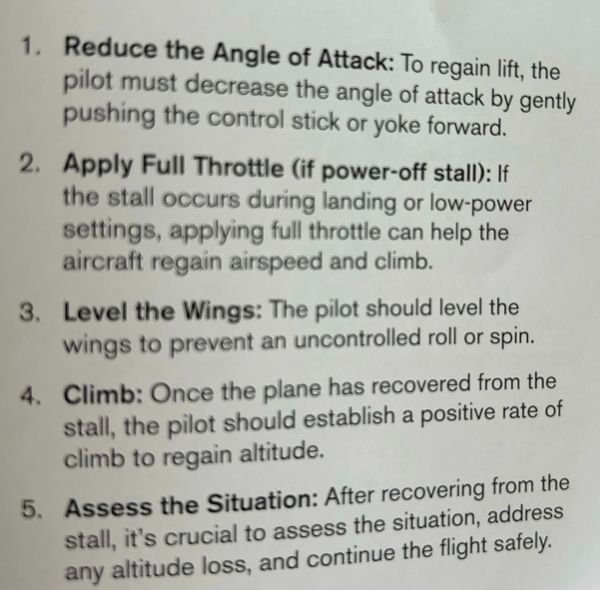
A recent USA AOPA article is relevant: https://aopa.org/training-and-safety/air-safety-institute/accident-analysis/flight-training-accident-report CASA issued AC61-16, Spin avoidance and stall recovery training , about 4 years ago which is consistent with Figure 5-10 of the Airplane Flying Handbook. However, the CASA Flight Instructor Manual has not been revised per ATSB Investigation AO-2017-096 of 22/5/2019. In the USA: Not so per the Australian Transport Safety Bureau AR-2020-047 Aviation Occurrence Statistics (rates update) 2010 to 2019 (the latest data): To repeat: in the USA flight instruction safety has improved whereas in Australia it has worsened. From Issue 107 of SportPilot Magazine we have this: Fine as far as it goes however, I didn't see any guidance on the use of rudder. It states to "level the wings" without explaining the technique. Better to stick with the FAA's Figure 5-10 and associated text of the Airplane Flying Handbook.
-
Parlous State of Spin Knowledge and Training
djpacro replied to djpacro's topic in Student Pilot & Further Learning
If one believes CASA's Flight Instructor Manual one would believe that the recovery method from an incipient spin is different from a fully developed spin. Identify when one is no longer in an incipient spin and suddenly the recovery action is different. See my extract from Cessna's Spin Booklet above, repeated here: "During this incipient phase, spin recoveries in those airplanes approved for intentional spins are usually rapid, and, in some airplanes, may occur merely by relaxing the pro-spin rudder and elevator deflections. However, positive spin recovery control inputs should be used regardless of the phase of the spin during which recovery is initiated." The test pilots and engineers who write the bits ablout spinning in flight manuals follow FAA AC 23-8C FLIGHT TEST GUIDE FOR CERTIFICATION OF PART 23 AIRPLANES which defines the spin: No mention of the word "incipient" at all in that document. When the word "spin" or "spinning" is used in the AFM or POH then it simply means "a sustained autorotation" and use the method in that AFM/POH for spin recovery. That is especially important for types not approved for intentional spinning as they have only been tested for recoveries from a spin of up to one turn. Picking up that Cessna statement again: "During this incipient phase, spin recoveries in those airplanes approved for intentional spins are usually rapid, and, in some airplanes, may occur merely by relaxing the pro-spin rudder and elevator deflections." "may occur" ... well, of course, the spin behaviour is changing all throughout the incipient spin phase so don't expect that to work at the instant just prior to the established fully developed spin. However, it is a good technique for aerobatic pilots, in a type approved for intentional spins, at the onset of autorotation to centralise the controls and close the throttle. -
Parlous State of Spin Knowledge and Training
djpacro replied to djpacro's topic in Student Pilot & Further Learning
I noticed this site promoting CASA's Flight Instructor Manual. One would expect CASA’s Flight Instructor Manual to be a reputable source of correct information on spinning however ATSB Investigation AO-2017-096 of 22/5/2019 found otherwise. When that ATSB report was issued “CASA has advised the ATSB that they have taken the following safety action …..” i.e. they reviewed the above text in the Flight Instructor Manual but took no action so they must believe it to be correct. -
Parlous State of Spin Knowledge and Training
djpacro replied to djpacro's topic in Student Pilot & Further Learning
One of the gems is Cessna's booklet which was published back in the '70s to counter misinformation about spinning. About time that it was promoted again. https://mikeklochcfi.files.wordpress.com/2018/03/cessna-spin-manual.pdf It has much general information (obviously a lot of information speciific to the Cessna so be careful about generalising) too with information such as: "For the purpose of this discussion, we will divide the spin into three distinct phases. ..... Here, in the entry phase, recovery from or prevention of the spin is as simple as normal stall recovery since, in fact, at this point that's all we are really faced with. .... During this incipient phase, spin recoveries in those airplanes approved for intentional spins are usually rapid, and, in some airplanes, may occur merely by relaxing the pro-spin rudder and elevator deflec- tions. However, positive spin recovery control inputs should be used regardless of the phase of the spin during which recovery is initiated. .... Due to the attitude of the airplane in a spin the total motion is made up of roiling and usually pitching motions as well as the predominate yawing motions. Movement of the airplane flight controls affects the rate of motion about one of the axes. Because of the strong gyroscopic influences in the spin, improper aerodynamic control inputs can have an adverse affect on the spin motion. .... Some of the additional factors which have (or may have) an effect on spin behavior and spin recovery characteristics are aircraft loading (distribution, center of gravity and weight), altitude, power, and rigging. Distribution of the weight of the airplane can have a significant effect on spin behavior. The addition of weight at any distance from the center of gravity of the airplane will increase its moment of inertia about two axes. This increased inertia independent of the center of gravity location or weight will tend to promote a less steep spin attitude and more sluggish recoveries. Forward location of the c. g. will usually make it more diffi- cult to obtain a pure spin due to the reduced elevator effectiveness." I mentioned that effect of moment of inertia in another thread. Pilots get to determine weight and CG but, as Cessna stated above, the increased moment of inertia is independent of weight and CG. eg fuel in outboard wing tanks vs inboard wing tanks. However, we usually deal with small changes in weight and CG associated with a large change in moment of inertia. Pilots have been be caught out with small ballast weights added near the tail to adjust CG with no consideration given to the moment arm squared and the big increase in moment of inertia. What some pilots (or the accident investigators) have observed to be the result of a small CG change was actually caused by a change in moment of inertia. NB: the USA FAA supported this booklet with their bulletin to all flight instructors back then.