


skippydiesel
-
Posts
7,613 -
Joined
-
Last visited
-
Days Won
73
Content Type
Profiles
Forums
Gallery
Downloads
Blogs
Events
Store
Aircraft
Resources
Tutorials
Articles
Classifieds
Movies
Books
Community Map
Quizzes
Videos Directory
Posts posted by skippydiesel
-
-
2 hours ago, kasper said:
Skippy - Except that plastic fantastics have three issues that going forward will become more of an issue:
1. issues on the material istelf - many of the simpler constructions can absorb moisture and are subject to weight variations over time and despite anything you do UV is a concern that has to be managed
Absorb moisture ?? - certainly be a problem for all those glass boats out there. I doubt that a well constructed plastic aircraft is going to absorb moisture.
UV - there are are very good UV protection paints available now. The Stewart System is one that I have experience with, there are many others. Choose the right paint system and this "problem" is negated.
My feeling is, given the corrosion issues with metal aircraft (especially those operating near salt water) are susceptible to, plastic is by far the preferred construction material.
2. issues on repair - harder to spot some damage in a composite constrcution and can be very complex to repair - the repairs often add weight as well
True to a degree - the problem is that the outer skin can "bounce back" hiding the damage below, however the pilot would know that he/she had made contact with a solid object and investigate accordingly - I dispute that the repair would necessarily be complex or weight inducing
3. environmental - as younger people who on average are more concerned with environmental issues move into the rec aviation owning group do not overlook the fact that he core materials in many composites are not environmentally friendly and the manufacturing processes go create unrecyclable waste.
Also true to a degree. However aluminium and its alloys are incredibly energy hungry to produce. Someone much cleverer than I ,might work out which of the two materials is the least damaging to our environment but for sure plastic and aluminium both have their problems
Aluminium airframes and wooden airframes do not share all of these or to the same extent ... and there are current ways to address some of the environmental impacts of metal/wooden airframes that plastic fantastics just cannot currently address.
Wood metal and fabric are still attractive materials and can produce an airframe at lower cost than plastics
I love wood, metal & plastic- my ideal aircraft would be one using plastic/wood/metal in its construction.
All three materials have their strong /weak points. Example : many LSA aircraft use epoxy impregnated wood main spares - you get the strength/lightness/flexibility of wood with a moisture resistant coating. Many props have wood cores, covered in plastic, resulting in a vibration absorbing/ moisture/abrasion resistant finish. The Alpi Pioneer range have plastic skins over wood - terrific! The last time I checked engines, fuel tanks, electrical systems, exhausts, many undercarriages - all made of metal.
Don't forget, that an aerodynamically efficient airframe will demand less hp/fuel to deliver given performance targets - this means less pollution over its service life. Plastics can deliver extraordinarily efficient airframes.
Back to the Luscombe - I have always admired the shape of vintage aircraft of this type (straight tail Cessna's too) but for those of use who value efficiency, both in operating (litres/hour) and in maintenance (minimal), such throwbacks are elegant museum pieces that can only be operated by those who have very deep pockets.
-
 1
1
-
-
Great looking aircraft! Looks alone may sell them but I cant help feeling that reserecting the "dead" is an evolutionary hiccup when you consider that there are so many fantastic plastics out there that will perform so much better on less fuel and with lower airframe maintenance concerns
-
What of the price - the unit shown, with a single sensor is $900 with two sensors &1260
Is this a good price or not ??
-
Very neat installation IBob.
Airbox -Did you make/design/have made up/supplied with kit ?
-
8 minutes ago, Old Koreelah said:
No idea, Skip. I formed the base obituary fiberglass over the plaster cast of my buckside, then lined it with a layer of foam rubber.
It’s still comfortable, but I have only actually sat on it for only about 250 hrs over decade or so.
Sounds like you suffer from numb bum 😆
250 hrs is pretty good - if the foam has maintained its shape (not compressed/crumbled)
-
23 minutes ago, spacesailor said:
Hi, if you have a ' return line ' from your carbie, you will need two senders,
spacesailor
Possibly - the computer head has the facility to accept a second sender (check out the address I posted)
In my, admittedly limited experience, calibrating a single sender system for the whole of flight consumption pretty well accommodates the return fuel line
You need to know the capacity of your tank(s). Fill the tank to a known point. Set computer to number of litres in full tank. Go fly (best a long flight). On return, re fill tank to same level, taking care to measure amount added. This gives the fuel consumed for the whole flight - compare this figure with the computers read out and adjust up/down accordingly. Repeat. You end up with a very accurate fuel used/remaining and an acceptable fuel flow rate in flight.
-
2 hours ago, IBob said:
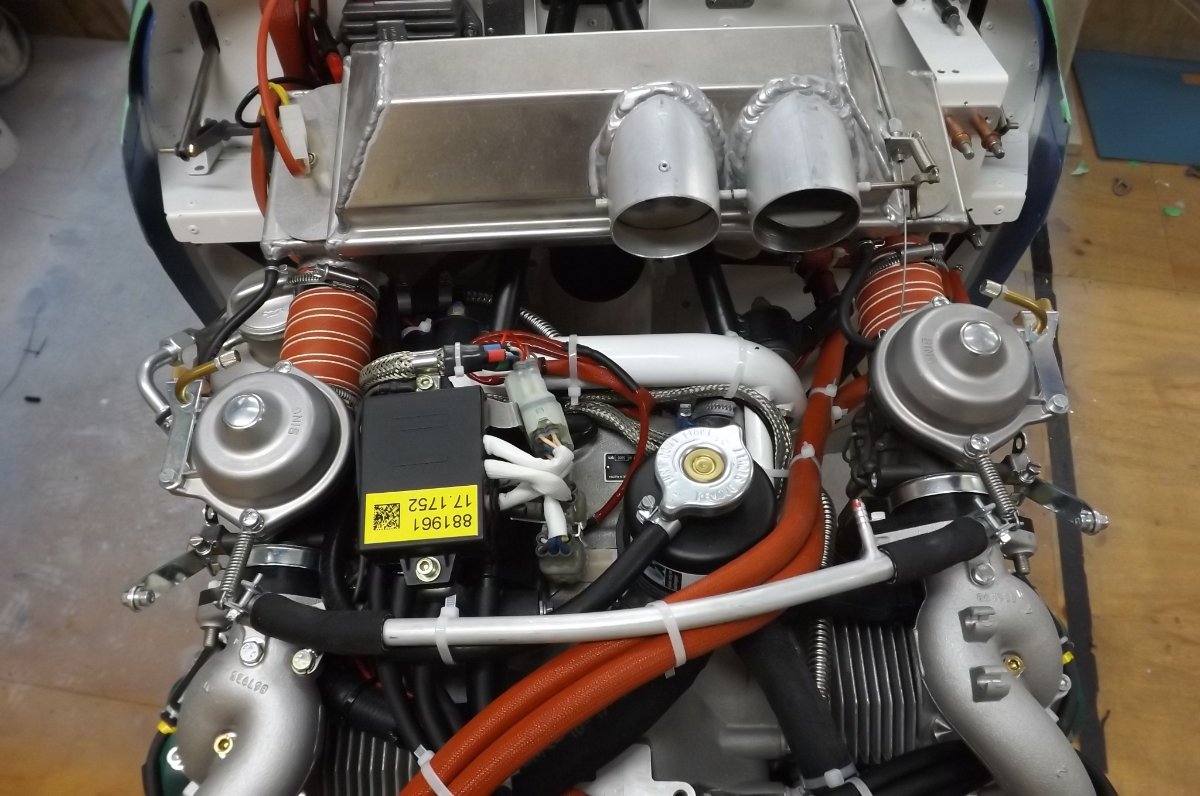
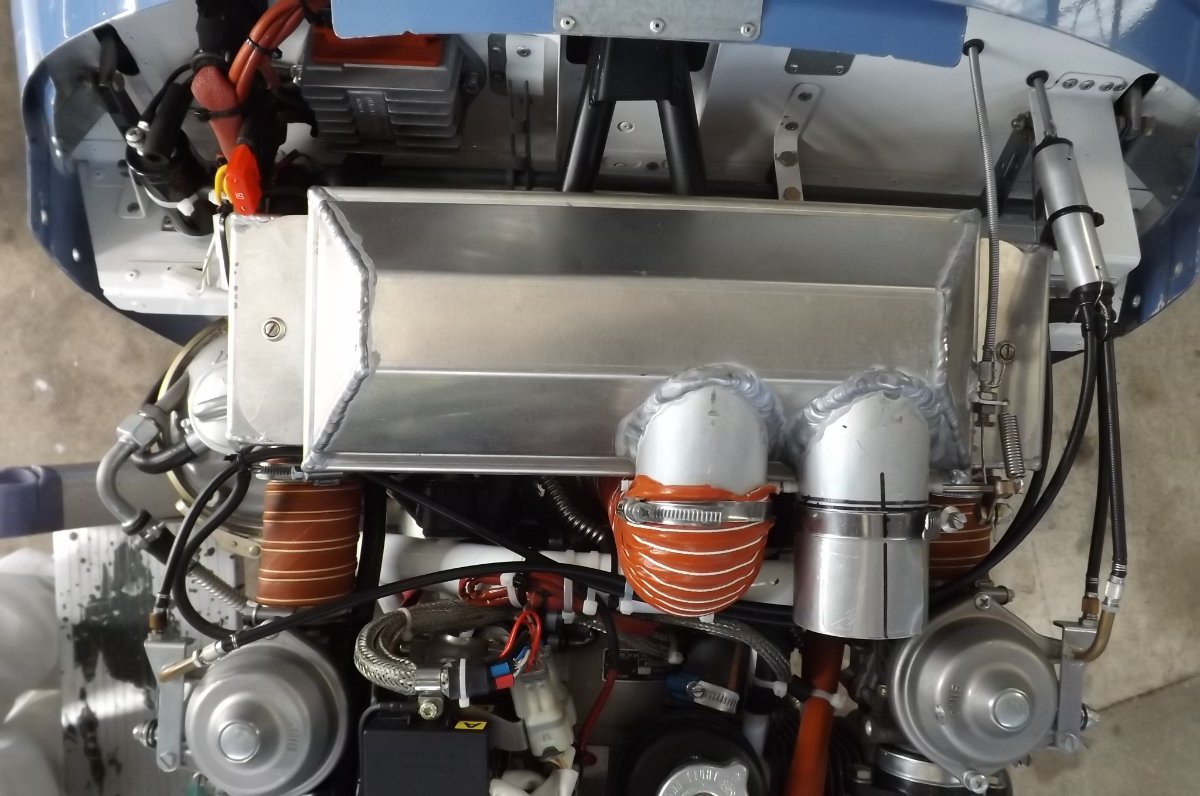
As a side comment here, the Savannah, which has an air box with temperature probe, has a NACA scoop in the cowl top for cold air.
This works fine in normal flight, but not so much in a hard climb, where I was seeing rising airbox temperatures indicating that air was being drawn from under the cowl via the 30mm gap between cowl scoop and airbox inlet.
I was able to correct this with a simple aluminium extension clamped to the airbox inlet (while still leaving a small gap to drain rainwater while parked).
Nice set up ! -
Do you have carbie heat ?
Can we see some more photos - from each side, cowl on showing air scoop/inlet - inside of cowl to see air delivery set up
-
12 hours ago, Old Koreelah said:
I made mine very comfortable by mounding it to my butte (sat in pile of gravel, lined it with glad wrap, poured in plaster to make cast of backside) then adding 20mm of foam.
I suspect some people concentrate on making their seat light and comfortable and forget about the secondary function: protecting your spine in a crash. Mine has a lumbar support and the whole thing sits on polystyrene blocks to absorb crash impact.
Some wrap-around rally car seats seem to give excellent protection, if they can be made light enough.Hi OK -
The foam you used to fill the buttock mold ??
AND
How durable is the foam in service ??
I am contemplating purchasing one of the pre shaped automotive foam base & back (see link) - trimming to fit the aircraft and like you having a lair of polystyrene - when satisfied with the result, getting a professional upholstery person to make the seat covers to make a aesthetically pleasing finish (possibly in old English sports car leather type) and to enhance durability.
I am hoping for some recommendations regarding the upholstery service provider
-
Haven't purchased one yet - am impressed by the sender design and the range of capability of the computer head
-
3 hours ago, Thruster88 said:
Your engine will lose 3% of its rated power with a 10°C increase in temperature. From our BAK we know that each 1°C increase raises density altitude 120 feet, at 8000 feet a naturally aspirated piston engine produces about 75% of its sea level rating.
Sooo what of my second question ?
-
We all know that cool air at the carburettor intake delivers more oxygen to the combustion chamber, than warm/hot air, and greater power output.
Many Rotax 9 motivated aircraft deliver warmed, by passing through the radiator(s) and or over the top of the engine, air to the carburettors.
Most, if not all, of the above systems are not fitted with carbie heat - I know on my Zephyr, in cruise, the air entering the filters is approximately 10 degrees above ambient, the benefit a reduced risk of carbie ice but at what engine performance cost?
Some aircraft have dedicated (cool) engine air delivery systems, so as to maximise engine performance - many of these are fitted with a carbie heat facility.
My questions are:
- What reduction in engine performance might be expected from, say a 10 degree, above ambient air temperature ??
- Is the added complexity and some weight, of a dedicated cool air delivery system (with carbie heat) worth the effort/cost ??
-
Hi all,
1. Looking for a reputable seat maker (for kit aircraft), - any recommendations for the Greater Sydney, Southern Highlands, Woolongong, areas ??
2. Has anyone used/adapted any of the automotive shaped seat foam replacements , that can be purchase from a number of supplier eg https://seatsrus.com.au/shop/foam-replacement ???
-
 1
1
-
-
Hi all,
Anyone had experience with Sintex fuel flow computers ? https://www.scintex.com.au/products/engine-fuel-flow-meter-pulse
-
Without any doubts an iconic aircraft. Cant help feeling the propaganda message was being applied with front end loader and pile driver (normal for the area I suppose)
-
 1
1
-
-
33 minutes ago, kgwilson said:
You will be able to get an antenna length chart for VHF on the web Then cut the antenna to the length in the middle of the frequencies you use most of the time. Measure from the ground plane to the tip. Worked for me.
SWR meter - very handy for antenna tuning. Antenna length can be adjusted for your particular transceiver/antenna combination - no she'll -be -right -mate generalisation
-
Hmmmmm _ I wonder if any of our UK/European members know of this manufacturer and would care to comment ??
-
3 hours ago, Yenn said:
Kiwi at the start of this debate you mentioned maintenance, no mention of engine maintenance. I think you will find that airframe maintenance does not allow extending the hours or date past that authorised by the annual.
As a glass fantastic flier his airframe maintenance should be minimal (I am not suggesting that there is none)
-
1
-
-
Ethereal! - dont look like they would handle any sort of wind.
-
Come on! there must be quite a few pilots out there flying behind Rospeller systems.
-
43 minutes ago, Thruster88 said:
Like you I have never heard of rospeller before today. Engine failure is one thing, propeller failure is next level scary shite. I guess the market spoke. Happy to be proven wrong.
I am actually quite intrigued - the are fitted to quite a few European aircraft - so far I have come across 3 for sale & one where the associated LAIM told me his aircraft is fitted with a 3 blade Rospeller variant, on a Rotax914 (he thinks they are great).
They appear to have quite a robust KISS type pitch variation system utilising the Rotax 9 hollow prop shaft.
They are still in production - have recently come out with a new blade shape.
My guess is that most, if not all propeller manufacturers, have had "issues" at some stage in their history. What matter most is that they have learnt & applied and their products are now reliable.
-
1
-
-
4 hours ago, Thruster88 said:
What did they do about the blade retention issue, design appears unchanged?
As I said erly 2000's - anything of note since then ??
If the design is unchanged, may be they had a material/build issue - now hopefully resolved with no further problems ???
-
I am checking out LSA level aircraft for sale.
I am particularly interested in those with good cross country performance.
In this process I have come across the Rospeller propeller system, that I have not heard of befor. All the aircraft, so fitted have in flight adjustable's.
The Rospeller web site offer 2 & 3 blade system and would appear to focus on Rotax 9 series engines.
It would appear that these props have been around for about 30 years or so, which would suggest a degree of reliability/good reputation.
Mr Google, dated erly 2000's, has some reference to failures, but nothing since.
I would be grateful for any feed back on the Rospeller propeller systems
-
As the bulk of routine maintenance is engine related I suggest you refer to the makers instructions on the matter.
Rotax (9 series) allow +/- 10 hrs - Personally I would never make it cumulative, again my personal preference is to always service on the relevant number eg 100, 200, 300 hrs etc. If a "catch up" is required for some reason, I will do a short interval to get back on track/schedule.
-
1
-
-
18 minutes ago, kgwilson said:
Pickles are dreaming or they think they are selling to gullible idiots but sometimes these exist. I've been to real auctions for cars where a couple of bidders raise the price well beyond what they originally wanted to pay by getting caught up in the process. I've bought stuff at live auctions including 2 houses and also sold houses by auction & the bidding process works fairly much the same as described by OT except that when you are the highest and the reserve has not been met they halt the auction & have a yarn to the seller then come back to you to try to get you to increase your offer if the seller won't budge. If you say no then they will then restart the auction and call for more bids. If none come it is passed in & negotiations begin between you & the seller & their auctioneer.
They can also be unscrupulous and say there is another bid higher than yours and begin the auction with an auctioneers bid (but not announcing it as such which is not legal) to try & get you to go up. This happened to me when bidding on a house but I didn't take the bait & walked out only to be chased down the road by one of the auctioneers staff to ask if I'd be interested in negotiating. I really liked the property but had set my price so said no & as I drove home kept kicking myself for not going that little bit extra to secure it. A few hours later I got a call from the agent saying the owner had agreed to my price. All they were thinking of was their commission & browbeat the seller into accepting. Make no mistake Auctioneers are interested in only one thing, themselves.
I have never had to pay a buyers premium even on line but that seems to be an increasing trend so you have to factor that in when bidding. It's an absolute ripoff in my opinion & I won't even participate if that is part of the process. We recently needed a mower for the airfield & there were several offered through Grays Online & gave them a miss due to the high sellers and buyers commissions plus GST on the whole lot. Bought one privately from another airfield and I reckon we saved heaps.
I agree - ALWAYS know your max price befor you start bidding NEVER go that little bit more, likely you will regret going there.
-
1
-
Luscombe reborn as LSA
in AUS/NZ General Discussion
Posted
That is the accepted wisdom however most of the very many Jabs that dwell close to me, live their resting lives in the elements. The only obvious effect seems to a dull finish - no cracking, bubbling or other signs of decay.
10% agree - all aircraft should be undercover when not flying.
Its not just UV its wind damage, rain & insect infiltration (especially metal aircraft) as well as the sun "cooking" exterior & interior.