


skippydiesel
-
Posts
7,619 -
Joined
-
Last visited
-
Days Won
73
Content Type
Profiles
Forums
Gallery
Downloads
Blogs
Events
Store
Aircraft
Resources
Tutorials
Articles
Classifieds
Movies
Books
Community Map
Quizzes
Videos Directory
Posts posted by skippydiesel
-
-
-
Hate to be a "wet blanket" however in this case I feel communication technology has, not only moved on, it has actually delivered a big step up in safety and efficiency, that should transcend acquisition price.
The ability to listen in on one channel and communicate on another, gives the pilot the ability to hear/monitor the big picture, while communicating with the "target" Pre select frequencies, then flip/flop when desired and if desirable store them for future quick access's.
I fly from the Sydney Basin, in an airspace being used by three training airfields - At different stages of the flight, I find it very useful to be able to able to monitor the "target" circuit, while on Area frequency and visa versa.
When returning from a Nav I can obtain AWIS/ATIS on standby and listen in without going off Area.
In turbulence, I can make mistakes on selecting the next frequency but if I do this on the standby channel, I do not compromise listening out on the existing frequency.
All of this makes for greatly enhanced safety, reduced work load and increased efficiency.
I suggest you rethink your communication strategy
-
 3
3
-
-
I say! Joly Good Show - What!
-
Danny mate - being able to listen out on a second channel (with flip/flop) is one of the best safety and communication efficiency investments I have ever made.
-
Yah! I am with those thinking composite.
In my mind (or whats left of it) compost constructed is the use of different materials to create the whole ie metal, wood, fabric and of course plastics.
Again in my mind using the best material for the job/application and not being wedded to one/two is what we should be aiming for - so why not a geodetic metal cockpit safety frame with plastic skin ? Why not a flexiable laminated wooden spar covered in water proof epoxy ? Whats wrong with using fabric - fantastic stuff used in the appropriate places. I have never believe safety must involve/result increased weight, that is just an excuse by lazy designers.
-
1 hour ago, spacesailor said:
Most of those Sydney airports are Under the Badgeries Creek airport umbrella.
And probably will cease all operations shortly.
spacesailor
I prefer optimism - The Oaks will survive somehow - I may be wrong but I think its the last privately owned active airstrip, open to the flying public, in the Sydney Basin. Rumour has it, that being a 2nd WW training strip, it is under some sort of heritage listing. True no lasting protection against cashed up developers but this and the propensity to flooding, at its north end, may make them think twice.
-
Yes I did a search but was not satisfied with the result -
Your comments/thoughts will be of immense interest on "best bank for the buck"
This is a for Rotax 912 ULS (100hp) application.
I have been using an SSB, Part Number RB16CL-B, for about 7 years - very happy! https://superstart.com.au/ (still goes to 14.2V on the trickle charger)
CCA: 385, Amp Hour: 19, Weight 6.6 Kg
Way more power than the Rotax recommended battery specifications and in a lighter package to boot - couldn't be happier.
BUT
Have been looking into a replacement aircraft, currently fitted with an Odyssey PC 680 - CCA: 170, Amp Hrs: 16 & Weight: 7 kg.
Both SSB & Odyssey are of Absorbed Glass Matt construction and can be mounted in any position.
With the exception of length,the Odyssey is slightly smaller and heavier, than the SSB but at 16 Ah & 170 CCA, is way less output than the SSB.
Clearly both batteries can "do the job".
The SSB is cheaper, apparently more powerful & has a good service life (I probably should retire mine to lawn mower duties) BUT is it overkill in the power department?
What, if any, are the practical/operational ramifications in using a more powerful battery, than specified by Rotax ?
Note: Battery to starter cable lengths are as short as possible. Cable diameter is appropriate for application and all connections (including earth return) are "good"
-
2 hours ago, cscotthendry said:
Just recently did the 5 year rubber replacement on mine too. Yes, I did the fuel lines and I used fuel injection hose on most of it. My system has several different size lines, including some 5mm stuff. I had to take what I could get locally for that.
The real PITA was the coolant hoses. I had to go through the same exercise I did when building the Nynja, finding the right diameter hoses with suitable bends.Sounds similar to my Zephyr 6-8 mm, in the main . I used Holden Gemini coolant 1" hoses with one coolant system rated plastic elbow joiner. All hoses & joiner from Gates - no problems
-
40 minutes ago, jackc said:
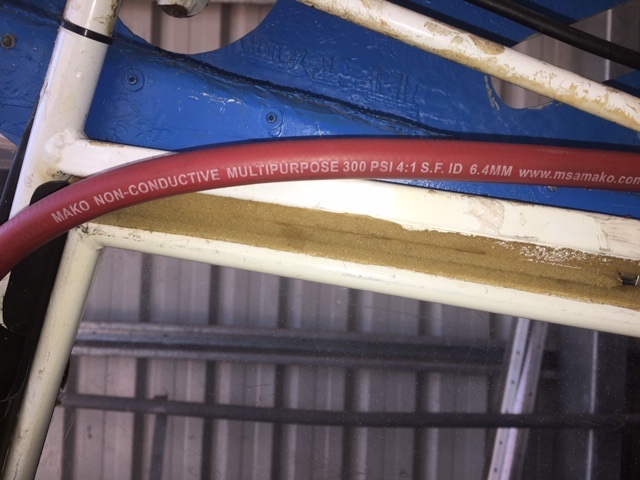
Just had my Rotax 5 year rubber replacement done, does this also include all aircraft fuel lines too?
only some of mine it appears were replaced with this hose?
Not sure IF is the correct hose?
Reason I ask is I had same type 500psi rated hose on my old ‘77 Landcruiser that runs 98 unleaded.
It lasted 18 months and ruptured near the carby, nearly causing an engine bay fire.
so I am wondering IF I should redo my Rotax dual lines?

All engine related rubber should be replaced at the 5 year interval. This includes all fuel lines/hoses to/ from tanks.
Cant comment on the illustrated hose - The claimed pressure rating is way more than adequate but that has little to do with is suitability as a Rotax aircraft engine hose.
I use Gates products for coolant and fuel. I prefer the Fuel Injection (FI) hose to the regular carburetor grade. Both are acceptable. The FI has a higher heat/fire rating and a lower permiability but does cost more (only a few dollars extra to do my whole system). I also prefer the FI hose clamps as they appear to give a more even 360 pressure compared with a regular worm drive hose clamp.
Gates products are available through your local Repco auto store.
-
 2
2
-
-
As I said erlier its not just landing wear/damage, its every other component that moves and is subject to wear from use.
Every time a student gets into the aircraft he/she, opens & closes the canopy/door, compresses & moves the seat, clips on the belts, switches on the master to energies the radio to obtain ATIS/clearance, does the controls correct and so on - this could be 8 times a day and it hasn't even started yet. Then you start to think about multiple/day start up, taxi, run ups, the circuit cycles, engine heating/cooling, landings, side loads, brakes, on & on
Compare that with the typical private aircraft - probably averages out as 24 times a year (max)
A school aircraft, that has any age on it, probably has more wear/tear in 12 months of active duty than the average private aircraft will get in several "lifetimes" - if you dont get one for a very very favorable price, you will probably regret the purchase down the track.
-
1
-
-
On 21/03/2021 at 12:21 PM, Thruster88 said:
...........................The Cessna constant speed version, the xp172 only lasted 3? years in the market place.
Too many years ago, I obtained my Constant Speed/Retractable Undercarriage endorsements in a Cessna 172. From aged/defective memory, it also had a 180 hp engine, significantly more powerful than the 6 & 4 cylinder variants I had flown previously . It seemed a big step up at the time, was about 10 + knots faster than its best fixed pitch/undercarriage sibling, had autopilot and other than an intermittently defective radio, was very nice (whatever that means) to fly. It cost a bit more to hire but then it was a real aircraft and worth every cent.
-
 1
1
-
-
22 hours ago, Bruce Tuncks said:
On my old Jabiru, the fuel gauge consists of a scale stuck to the outside of the translucent fuel tank. Accurate and reliable... BUT at low fuel, it is very hard to read.
I have been thinking of arranging for a raised U tube ... one side connected to a tube which went from the top of the tank to the bottom. the other side to the top of the tank. To read it, you would use a squeeze bulb which pumped air into the long tank tube, until the U tube stabilized on account of blowing bubbles from the tank bottom. The stable reading would show exactly the level of fuel above the bottom of the long tube.
This U tube could be anywhere you liked.
I would love to hear any comments/criticisms. it is not often that I want to know the fuel left in the tank, but gosh sometimes you REALLY want to know.
The other possibility is a sender stuck onto the outside of the tank which reads the prescence of liguid on the other side. You could have one at say 10 liters and another at 5 for example.
Yep! Ye old sight /level tube is about as KISS as you can get. They can work very well in high wing aircraft (as long as the tube remains clear and there is a background that will highlight the fuel.
Low wings and or tank in fuselage systems dont seem to be compatible - the sight tube is sometimes in the foot well - dark & hard to see. Possibly worse, behind the pilot, necessitating a high degree of flexibility to obtain a view - usually accompanied by the aircraft making a steep dive/climb turn - tad unnerving.
-
1
-
-
51 minutes ago, NT5224 said:
Wow that's really strong money for aircraft that have been punished in the training circuit. I guess they have been maintained (because SOAR obviously did everything by the book), but still...
Perhaps people think they're getting a better bargain at an auction, but is that really true?
Alan
A "bargain" is very much a subjective concept ie if the buyer is happy, he thinks he got a bargain HOWEVER i would suggest a more realistic approach - the price you pay should include ALL possible replace/repair eventualities. Only then will you be able to look back(passage of time) and say your purchase price was/not a bargain.
-
On 21/03/2021 at 12:21 PM, Thruster88 said:
I have posted a few examples before of aircraft that have a fixed or constant speed option such as the Tecnam p2010, a 130knot aircraft. The numbers show only a small improvement in takeoff to 50 feet and slightly higher climb rate. Top speed not much difference. The Cessna 172 and piper Cherokee continue today with a fixed propellers. The Cessna constant speed version, the xp172 only lasted 3? years in the market place.
Hardly the whole story:
a. Hight speed - An in flight adjustable (IFA) will not improve on a fixed pitch optimised for this phase of flight.
b. Take off/Climb - An in flight adjustable will not improve on a fixed pitch optimised for this phase of flight.
An in flight adjustable will give you good performance in all phases of flight from short field take off to high speed cruise - this is a simple fact that can not be disputed.
The down side of an IFA are: Greater weight , Cost & Complexity (construction and management) - the converse is true of fixed pitch.
In the real world, most fixed pitch propelled aircraft owners have selected the propeller pitch angle that will best suit the range of activities anticipated for that aircraft - this is a COMPROMISE decision and will mean that the aircraft will have underwhelming performance (below its optimum) outside the selected range.
The aircraft T88 has exampled are generally optimised for high speed climb - that is take off distance will be good (safe) climb out good (safe) and cruise acceptable but not fuel efficient. They can be optimised for take off with further compromises and of course for high speed cruise but then take ground role will be extended (possibly unsafe) climb out will be anemic (possibly unsafe).
Airframe characteristics must also be taken into consideration - a draggy airframe can not be made to exceed its potential, at a given engine power (T88's examples are all pretty draggy) a heavy airframe will have a longer ground run and climb out, for a given engine power - this is just physics.
I like to illustrate what can be done with just a 100 hp Rotax/IFA , meticulous attention to airframe build/detail by using mention Robin Austins amazing aircraft (http://www.worldrecordplane.com/)
For most RAA and lighter end of GA (sub 180 hp) the flexibility delivered by an IFA is hard to justify on economic grounds alone. If you have a need/desire to optimise your aircrafts FULL flight envelope you will have to have an IFA (& bugger the cost)
-
7 hours ago, Yenn said:
I found that when I built the RV4 that the sender which is the same as KGWilsons could not be accurate at empty. before it reached that stage the float was on the bottom and there was still about an inch of fuel there and also because of the dihedral, there was even more inboard of the float. I calibrated the gauge for in flight level and on ground level, then hardly ever used it. Not having a good fuel gauge forces you to keep tabs on fuel use with the dipstick and you get a quick indication if anything changes.
Sooooo! Is the moral of the story that the lever type sender, is not the best for this application ?/
This lends weight to my ill informed observation that the "Tube" and "Reed Switch" type of senders have the "look" of systems less impacted by fuel movement/slop and may in fact, when suitably specified (length) be able to indicate true levels from empty to full.
-
9 hours ago, kgwilson said:
Fuel gauges are notoriously inaccurate whether they are in a motor vehicle or anything else. Depending on damping you get variable readings with changes in pitch, bank and yaw. Wing tanks are terrible to try and gauge as they are long and shallow.
A gauge will give you an indication, that's all. When I built my aircraft I put in an automotive VDO gauge with an adjustable float on an arm similar to a ballcock arrangement and set it to show empty when empty, full when full at 1/2 when actually half full. Then I just added fuel on level ground 5 litres at a time and recorded the position of the indicator against the quantity till full at 100 litres & stuck the chart on the panel next to the gauge. So that gives me a pretty good guess of how much fuel I have when flying straight and level. The indicator did not even start to move till I got 15 litres in (there is a 4 litre sump before any fuel gets to the bottom of the tank) and due to tank shape the gauge marks were completely inaccurate.
I also have 2 wing tanks which I use on long trips to transfer fuel to the main fuselage tank & know how long it takes to transfer the 35 litres in each to the main. As it transfers I see the gauge indicator go up. When a wing tank is empty the Facet electric transfer pump starts to clatter & I can actually hear it.
My calibrated dip stick is the only real accurate indicator and then just knowing the fuel burn is probably the most accurate measure when flying.
A good fuel flow gauge will tell you how much you have used but my setup & method is good enough for me. My legal reserve is 12 litres but I have never got anywhere near that as I always want a minimum of 20 litres left, and almost always more.
Ditto - except that I calibrated my gauge, by sticking an arc of paper to the face and marking the 10 L increments as indicated, as I filled the tank, using an accurate measuring jug.
As luck would have it, my gauge turned out to be remarkably accurate & consistent (checked regularly over time) - I still only used it as an indication of fuel level and to facilitate in flight fuel transfers.
-
On 16/03/2021 at 2:39 PM, derekliston said:
I have two Flightline 760s with which I am happy so far, around four years!
hu Derek - o argument but out of interest - why two radios?
Does this mean you have one channel active and are listening out on three?
-
Thanks IBob - the one that I had heard about is the Belite Fuel Probe, being sold by Aircraft Spruce https://www.aircraftspruce.com/pages/ep/fuelsender/belitefuel10-05866.php
I agree with all the points you have made - cant see how it would work reliably in a small fuel tank
-
Just heard about a fuel sender that operates on head pressure - anyone know anything about this?
-
Thanks T88 - you reminder of this incident, as with all completely avoidable fuel exhaustion incidents, is welcome but what of my fuel level monitoring system ?? I would like to learn a lot about this.
-
In short I dont know if a header/collector tank would be appropriate to the aircraft I am considering - it has a single large fuselage tank, located behind the sets (similar to a small Jab) in the shape of a rectangular inverted U. Primary fuel supply drawn of the bottom of one leg of the U, while the other acts as a reserve (KISS).
My very provisional concept is to mount a fuel level sender through the top surface, on the reserve side.
Without the benefit of others experience, I am favoring the Tube first and the Reed Switch type second, as they have the "look" of systems less impacted by fuel movement/slop
-
Personally I like to use several systems for fuel remaining - total -L/H x time elapsed, dipping the tank, fuel computer and fuel gauge. I never feel comfortable even getting close to my fixed reserve (45 minutes). There is no gauge in the aircraft I am considering, so would like some advise on gauge/sender types that others have experience with.
-
Has no one fitted/replaced a fuel gauge/sender in their aircraft ?
-
Attention Brain Trust - would very much appreciate your recommendations (Make & type) for a fuel gauge & sender kit. The gauge just seems to be a question of choosing the style & matching (Ohms) it to the correct sender. My difficulty is selecting an appropriate type of sender - ALAS Lever Arm Adjustable - Reed Switch (come in variose lengths to suit tank depth) and Tube (others??)

Trailers for Trikes
in Trikes and Microlight Aircraft Usergroup
Posted
Why not, "gut" an old caravan, cut the back wall off, build a tailgate/ramp and install - you have an almost instant covered trailer ??
True! there may be a little more required but its an idea.