


skippydiesel
-
Posts
7,611 -
Joined
-
Last visited
-
Days Won
73
Content Type
Profiles
Forums
Gallery
Downloads
Blogs
Events
Store
Aircraft
Resources
Tutorials
Articles
Classifieds
Movies
Books
Community Map
Quizzes
Videos Directory
Posts posted by skippydiesel
-
-
2 hours ago, RFguy said:
In absence of a finger strainer, looks easy to get that first orifice clogged up to me.
We are still talking about fuel systems ???😁
2 hours ago, walrus said:Hi Skip, looks good but I don’t have a choice. Fuel injected Rotax with a high pressure Rotax filter - about 46psi.
Okay - observation - most fuel filters are placed before the high pressure section - how come yours is under pressure ?? (not that 46 psi is that high)
-
22 minutes ago, onetrack said:
I have had those inline filters on vehicles block up to the point whereby the engine stopped completely, and not a skerrick of fuel would get through, even though the filter looked O.K. I would not use one of them on an aircraft engine in a million years.
Well I have been using them for almost 900 hrs - never had a blockage and thanks to filtering all fuel into aircraft, almost 0 material on gauze. I replace them at 100 hrs because they are cheap. I usually blow out the used ones and re use them on my land based engines.
How can "the filter looked O.K" and be blocked?. You put contaminated fuel into the system, or have a fuel system deterioration (gaskets, hoses, etc) of course they will block - if they didn't they would not be doing their job.
You have to remember that all filters "job description" involves getting blocked. That what they are there for . That's why you inspect (those that can be inspected) and replace if needs be and at specified intervals.
Getting a blocked filter is not the fault of the filter, its the fault of the person who used contaminated fuel or an internal material break down of the fuel system. .
-
7 hours ago, walrus said:
‘Call me old fashioned but I am always mindful of the blood and lives that have been expended over the last hundred years in learning how to design, build and fly light(ish) aircraft and I will not and do not deviate from established good. design practice.
The purpose of the finger strainer is to increase the surface area through which fuel can flow to reach the fuel outlet. Mine have a surface area about two square inches. In other words, you need an awful lot of large chunks of gunk to block a finger strainer, much more than would be required than to block your usual AN6 line.
‘’A good filter system has a (corse) filter, then a medium filter (the gascolator screen), then a fine filter in order to trap the maximum of contaminants without clogging up and lines and fittings should be sized appropriately.
‘’As for Savannah fuel caps and gaskets, I just shake my head. Don’t ever use silicon sealer or silicon baffle material(that’s the red stuff) or teflon tape. anywhere in any fuel system. Those products have killed a lot of people used that way.
Skippy, with respect, I think plastic in line filters belong in lawn mowers, but then my aircraft is probably twenty pounds overweight for thinking like that 😛
All good points Walrus - must admit I hadn't thought about the benefit of a large surface area course "finger" filter -. You made a good point there however I am still concerned about the inaccessibility/inspection aspect of an in tank filter.
"I think plastic in line filters belong in lawn mowers," - dont think i actually suggested a type of in line filter but now that you have, the discussion broadens;
The "plastic" Hengst gauze filters I use are actually specified for a wide range of European diesel engines. I first came across them in Mercedes diesel cars. Since then I have seen them used in a lot of European LSA class aircraft. True I have used them on mowers but only after they have done 100 hrs in the aircraft.
In case you are interested;
Hengst H102WK

Hengst H103WK
-
2 hours ago, Thruster88 said:
Good post. Hope the Savannah has finger strainers in the tanks. Lots of gotchas in the LSA, experimental world.
If "finger strainers" are what I think they are, in tank strainer, filtering the fuel going out of the tank, I would suggest they are a hazard in themselves.
In tank strainers/filters are not usually easy to access or service. They are subject to fuel "sloshing" during ground opps and when turbulence is encountered. This can lead to partial/total, temporary/ permanent blockage. Blockage = engine loss of power or even failure.
The alternative is an in line filter system that can be easily viewed/inspected and serviced - in my mind the preferred way to go.
-
I assume you re using ULP - this fuel can/does discolour with age. The longer you leave it the darker it gets.
-
 1
1
-
 1
1
-
-
On 28/05/2021 at 7:50 AM, planesmaker said:
Skippy those last few paragraphs appear to protect you as much as the seller, normal contract stuff.
Your research and inspection of said aircraft is to be commended, not many go to the effort you have done. A more honest aircraft of the type would be hard to find and I doubt there is anything hidden in the logbook. Seller, I believe answered all your questions as honestly as he could. However if you put yourself in the sellers shoes, would you want the buyer to be able to sue you for anything he might find wrong? He is selling a home built aircraft after all. This is why you must do a thorough inspection and research prior to buying to ensure you are happy with the purchase, which you have done. The contract seems to be standard legal document.
Hi Planesmaker - I should like to add to my earlier response to your comment above:
I thank you for your kind words - and apologist for my demands on your valuable time - your patience, good humour and unfailing quiet curtesy, is something we should all aspire too.
This is my first and hopefully last, exposure to an aircraft sales "broker" - they may not all be the same and I may have unwittingly stumbled on the worst of his species, however I have found his performance to be something akin to a caricature of a particularly inept second hand car sales person, as might be portrayed in a "soapy".
Your statement "The contract seems to be standard legal document." in my view seeks to legitimise what I see as an almost whole bogus document ie not worth the" paper" it is written on and unlikely to be "legal" in any sense at all.
I have presented a draft Aircraft Sales Agreement to the seller. It is a much simpler, plain English, document than the brokers. It is essentially a, description of the aircraft, acknowledgment of payment and transfer of title - he can modify it as he pleases, use it or not - I have often used something similar in my many vehicle/machinery transactions (never had a problem). Yet to receive any response at all.
The phrase "as is where is" pretty much covers/removes any potential for belated complaint/law suits. As long as the vendor has not documented unsubstantiated claims for the item (aircraft) or hidden a known or should have known, safety issue that later causes injury/death, there is little chance of being sued.
-
1 hour ago, planesmaker said:
Skippy those last few paragraphs appear to protect you as much as the seller, normal contract stuff.
Your research and inspection of said aircraft is to be commended, not many go to the effort you have done. A more honest aircraft of the type would be hard to find and I doubt there is anything hidden in the logbook. Seller, I believe answered all your questions as honestly as he could. However if you put yourself in the sellers shoes, would you want the buyer to be able to sue you for anything he might find wrong? He is selling a home built aircraft after all. This is why you must do a thorough inspection and research prior to buying to ensure you are happy with the purchase, which you have done. The contract seems to be standard legal document.
I have no doubts about the seller or his aircraft - this is about the "broker" who I have lost all patience with. I have written to the seller, expressing my desire to complete the sale with him, should he choose to do so - yet to hear back.
Regarding the so called contract: Below are the 3 most disturbing paragraphs but not the only ones (my comments in red):
Warrenties
Except as provided otherwise in this agreement, this Aircraft is sold "as is". There are no warranties, either express or implied with respect to merchantability or fitness applicable to the Aircraft or any equipment applicable thereto this is a 16 year old kit aircraft, even the mention of warranties is ridiculous - should be removed including warranties as to the accuracy of the Aircraft's logbooks, made by Seller or agent. this is very disturbing - the aircraft Log Book is a legal document any suggestion of falsification is concerning. I dont believe this is a legally applicable statement - remove Buyer agrees that no warranty has been expressed or implied by Seller or agent and that Buyer has inspected the Aircraft and understands that it is being purchased "as is." Buyer hereby expressly waives any claim for incidental or consequential damages, including damages resulting in personal injury against Seller". This last sentence is at variance with Australian law which holds the vendor liable for any undisclosed known or should have known defects which subsequently lead to injury or death - must be removed. This attempt to undermine Au law is despicable
Seller's Inability to Perform
If the Aircraft is destroyed or in Seller's opinion damaged beyond repair, Seller shall promptly notify Buyer. On receipt of such notification, this Agreement will be terminated and the Seller shall return to Buyer all payments made in accordance with this Agreement, and Seller will be relieved of any obligation to replace or repair the Aircraft. (b) Seller will not be responsible or deemed to be in default for delays in performance of this Agreement due to causes beyond Seller's control and not caused by Seller's fault or negligence.
This whole paragraph is is in opposition to common sense & law - the buyer (not the seller) has always has the right to reject a good/service that he/she has reason to be dissatisfied with - this is usually followed by a claim for full refund of moneys.
Waiver
Either party's failure to enforce any provision of this Agreement against the other party shall not be construed as a waiver thereof so as to excuse the other party from future performance of that provision or any other provision.
This is "gobbledy gook" - if it suggests what I think it does, that is should the seller or buyer fail to follow through on the agreement then the agreement stands for the other (see below)
Severability
The invalidity of any portion of the Agreement shall not affect the validity of the remaining portions thereof.
This statement invalidates the whole agreement. An agreement where a "portion" is invalid is no longer an agreement and must be abandoned or renegotiated
-
1
-
-
FYI: Few more suspect paragraphs from the vaunted Aircraft Sales Contract;
Seller's Inability to Perform
If the Aircraft is destroyed or in Seller's opinion damaged beyond repair, Seller shall promptly notify Buyer. On receipt of such notification, this Agreement will be terminated and the Seller shall return to Buyer all payments made in accordance with this Agreement, and Seller will be relieved of any obligation to replace or repair the Aircraft. (b) Seller will not be responsible or deemed to be in default for delays in performance of this Agreement due to causes beyond Seller's control and not caused by Seller's fault or negligence.
Waiver
Either party's failure to enforce any provision of this Agreement against the other party shall not be construed as a waiver thereof so as to excuse the other party from future performance of that provision or any other provision.
Severability
The invalidity of any portion of the Agreement shall not affect the validity of the remaining portions thereof
-
33 minutes ago, IBob said:
Skippy, the traditional fix here seems to be tape across the face of the radiator...though I did see a S Island build recently where they looked to be incorporating the oil cooling into the coolant circuit with some sort of plate heat exchanger, so requiring only one radiator.
My preference (at this stage) would be for a ground-adjustable blind on the radiator that I can set without lifting the cowl. The trick would be coming up with something secure, durable and rattle-free. I haven't given the design much thought at this stage............
I remember radiator blinds (both the shutter/louver type and the rollup/down type) on the cars & trucks of my youth - they certainly work and can be quite simple in operation. I think some Russian aircraft also had them fitted.
Remember - controlling exit air can be the most effective way of reducing/increasing cooling efficiency.
-
31 minutes ago, IBob said:
Skippy, I agree with you entirely when it comes to KISS: I made a living (though sadly not a fortune) specing and programming deliberately low tech high reliability automation.
And it's part of why I didn't fit the oil thermostat yet.
The other part is that I'm pretty sure if the unit failed, it would fail closed (as it's operated by some sort of capsule containing a wax that expans when heated). Which is the opposite of what you'd want.It's a Mocal OT/1-92 automotive unit.
Next time the lid is off the factory Savannah here, I'll get details of the unit the Italians are fitting.
I have often contemplated installing an oil thermostat - I come out of my "day dream" when I remember that they probably have the most benefit in really cold climates - this is not what we have in most of Australia. I do fit a fixed winter cowl exit flap/reducer in winter & remove it when day temps are consistently trending north of 25C
At one stagger I designed and fabricated a cowl flap (opened/closed by linear actuator) - had great fun - never fitted it.
The truth is, I usually realises at some stage in my fantasise, that I now fly RAA and the beauty of these aircraft is their light weight and relative simplicity - why spoil a good thing?
-
 1
1
-
-
39 minutes ago, RFguy said:
Surely Sean you should add to that comment, "In my opinion, .... "
IAgreed !
-
I love "fiddling" with engines/mechanical things and am not against oil/coolant thermostat's, cowl flaps/louvers and bigger radiators etc BUT you are talking about an aircraft here - Everything you contemplate should have a Cost Benefit Analysis done on it.
In this context Cost = weight & complexity and Benefit = the hoped for improvement in performance.
In general KISS is the way to go - the more complex a system, the more potential for something to go wrong.
Sure we all get satisfaction from fitting that extra gizmo but sometimes the satisfaction is the only real benefit.
-
From my reserch (there is a web site) Rospeller do not make the propeller blades - they make the hub/IFA/CS system. A similar arrangement to Airmaster Propellers (NZ).
Also, it appears, from the same web site, they are still selling new units.
-
12 hours ago, RFguy said:
On three rotax installs I know, and one I know really well, the stock oil cooler is insufficient for aussie hot days. (OAT 38+, long climbs MaxAUW )
The cooling ability becomes very sensitive to cowling design and neg pressure with the marginal cooler.
Well its part of the pilots responsibility to manage the impact of weather on his/her aircraft .
When hot weather (above 30C) is forecast, I arrange to depart at first light.
For my personal comfort, I prefer to land every 2 hrs (max 3).
So the second takeoff is still in the cool of the morning.
The last landing in potentially 40+C is perfectly doable and by then (somewhere between 10:30 & 13:00,) I am due for bit of a feed, a drink and a walk.
If another departure is planed/desirable, a short hop after 16:00 hrs usually sees temperatures down again. If not, leave the next morning.
I rarely fly more than 4-5 hrs in a day - 6 hrs is big for me - so rather than fight the elements (bigger oil /coolant radiators) I just work around it - seems to pan out rather well.
-
I would council sellers to be very very cautious about engaging a "broker" ;
At sub $200k asking price the broker isn't even going to bother to reserch the aircraft, he/she is selling, so all questions will be referred on to you - might as well not pay the fee & do the job yourself.
The broker is going to inflate the asking price, just in the off chance there is a gullible buyer out there. So what you say if I gets my dosh . In reality there are not so many gullible buyers and your aircraft will spend many week/months being advertised with only the occasional "tyre kicker" to break the monotony.
Then your precious aircraft will have a reduced sign placed on it and spend another long period hoping for that buyer.
Likely another reduction befor the "one real buyer" appears and then he/she will bargain the price down, lower than you would have accepted, if he sale had been conducted more professionally - you could have achieved a quicker better result yourself at less cost.
I know of one broker who frequently appears to ask at least $15-20K over market trends - I doubt he gets anywhere near this as "his" aircraft seem remarkably slow to sell.
From my admittedly small experience (hope there will be no more) - the broker is an unnecessary hindrance, to what should be a relativly simple, short negotiation. He/she will come up with all sorts of BS about contracts, pre purchase deposits, etc to "protect" the vendor/buyer, as if any of this is actually necessary and in any way actually provides a meaningful service - dont do it!.
-
Gentlewomen & Women - the "Contract" does closely resemble something you might get from a second hand car dealer - but this is not a car and my willingness to tolerate such shenanigans is way way less. I have bought & sold a lot of vehicles & equipment in my life and been fortunate, until now, to have had very limited exposure to charlatans like this broker.
Further I have made a point of including the owner/vendor in all correspondence - I have contacted him directly and suggested we finalise the sale (as already agreed) without further reference to the "broker" ( he will still have to pay the brokers fee). I have even prepared a draft sales contract for his use/modification - he has yet to respond & if under the thrall of the broker may not do so.
-
1
-
-
Thanks for all that IBob.
For the same engine (Rotax 912 ULS) I find it quite intriguing that there are so many variations on installation/fit out eg your oil cooler looks to be almost three times the size of the one fitted to my aircraft. Yours is in a forward position directly in the air blast from the prop. Mine is mounted low on the firewall/engine bulkhead, in the exit airflow from the cowling - works perfectly. Your coolant radiator looks to be the same size as mine but is mounted at an extreme angle to what I would imagine the air flow (in /out) to be.
-
10 hours ago, onetrack said:
The first three sentences are fairly standard contract wording just outlining that neither the buyer nor his agent has expressed or implied any warranty. Fair enough.
But the last sentence needs to be crossed out, because it goes much further than "no warranty expressed or implied", and is trying to quash your legal right to sue, if you find something has been seriously and illegally misrepresented. If it was me, I'd be crossing out the last sentence, but agreeing to the previous three.
When you buy secondhand equipment/machinery items, it is extremely rare for it to come with a warranty, unless it is required by law.
But you have every legal right to sue if you later discover you have been lied to, cheated, or have been sold something with a substantial misrepresentation of facts or figures - that the owner/agent knew about.
Hi 1track - that was just one paragraph out of three pages - every sentence, even whole paragraphs that I rejected, I did so with explanation. I even rewrote the document putting it into plain english and removing all contradictory, superfluous, unintelligible (to me) sections. Result "Contract" stands as is . Signing condition of sale - so no sale
-
IBob - congratulations on what looks to be a very nice/clean set up.
Questions:
- Its a bit hard to see but why such a big oil cooler?
- It looks like you have used some form of "corrugated" metal hose for part of the radiator cooling system - please give your rational ? product name? supplier?
- Whats with the cut down muffler ?
-
2 hours ago, facthunter said:
Unless the broker had been the owner, realistically how can HE be made responsible for documents that are not in any way prepared by him and I would be concerned if he had. Put yourself in his/her position. . The aircraft owner /operator has sole responsibility for those logbooks. IF they can't be relied on, the sale price should be suitably adjusted. Nev
Hi Nev - the owner of the aircrafts, Vendor and the purchaser , Buyer are signing the contract - not the broker.
The broker is unlikely to have any responsibility for the aircraft or its sale, UNLESS it can be shown he has improperly advised the vendor (his client) such that laws are broken or the vendor is (financially) disadvantaged.
I can only speculate as to the brokers motivation - that is that he seeks to increase his standing/importance,(control?) by creating a level of mistrust between vendor/buyer that can only be "managed" through his bogus Aircraft Sales Contract.
-
1
-
-
2 minutes ago, spacesailor said:
If there,s a chance of logbook etc being False, isn,t that a criminal event, & if you sign anything likethat, On your resale, wouldn,t you be liable as well,
( my Delice had to be checked for speedo rewinding ).
spacesailor
I believe that the aircraft Log Book(s) are legal documents - falsification deliberate omission is therefore against the law.
I am not convinced that you can actually sign this away or the obligation of the vendor to disclose all known defects that may result in injury/death
-
As PIC it is your decision, on which runway to land (not ATC or airfield operator/owner). However you might need a very good reason for ignoring their advice/instruction, especially if your decisions results in an incident.
-
2
-
-
1 hour ago, spacesailor said:
THEN
Put a Big RED line through it and return, for their correction.
You don't have to accept everything in a contract.
spacesailor
Tried that - broker playing "hard ball" - if I dont sign, then no sale - so I guess it may be no sale, as I have no intention of compromising my principals on this.
-
Just guessing but you may have a damaged high tension (HT) lead.
By securing the lead(s) in place with the home made "square" grommet you may have reduced/eliminated arcing at a break.
Just a thought!
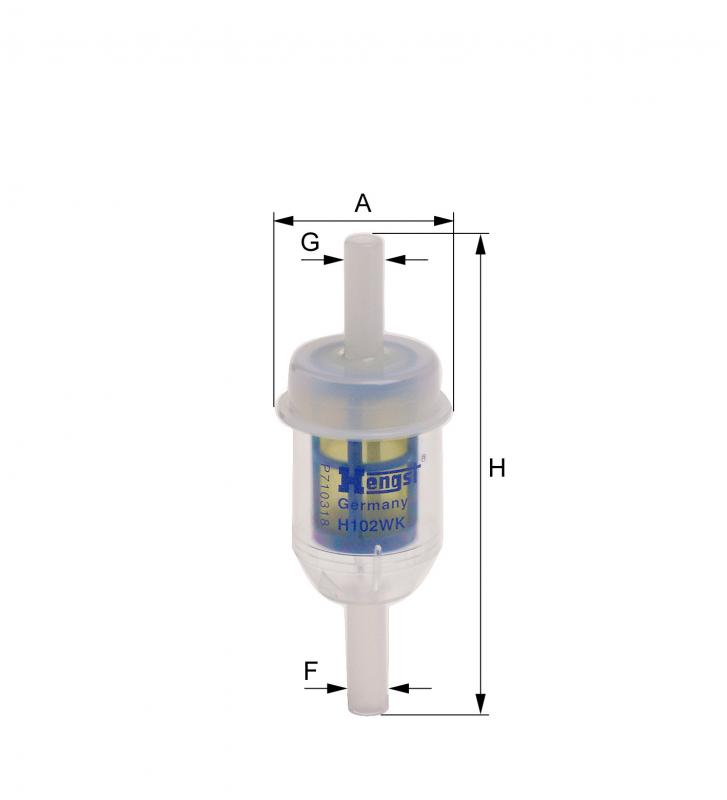
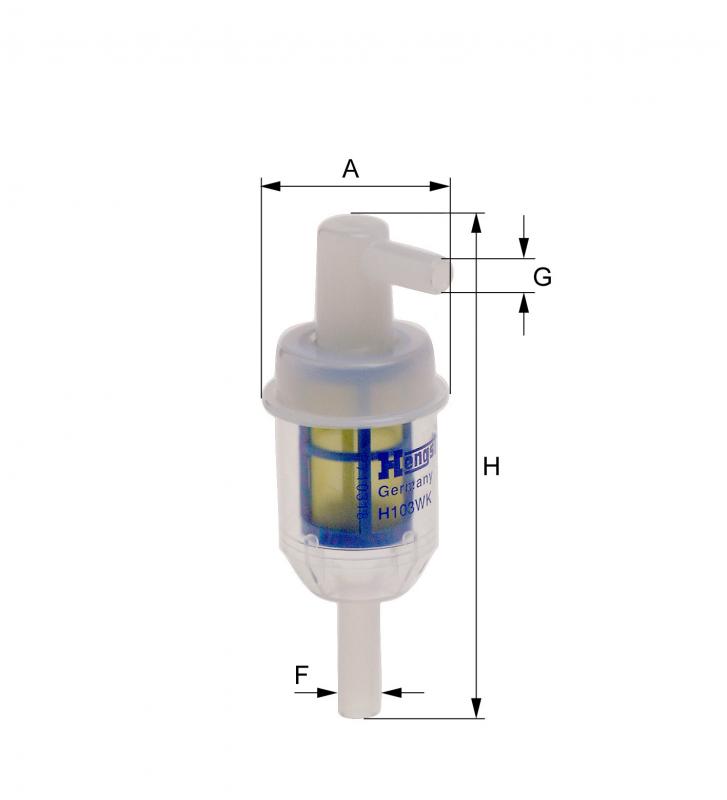
Not Fuel-proof!
in AUS/NZ General Discussion
Posted
I would guess that the Rotax filter is not a serviceable item ???
If the aircraft is "factory" built it might be against the rules however you could put one of my Hengst filters "in line" on the "suction"side, as a "rock" filter . In the diesel applications, this is where they fit in the system.
’"A good filter system has a (corse) filter, then a medium filter (the gascolator screen), then a fine filter in order to trap the maximum of contaminants without clogging up and lines and fittings should be sized appropriately"
Having a transparent casing, makes it is easy to see (pre-flight inspection) if there is any build up of foreign objects on the filter - either clean or replace