


skippydiesel
-
Posts
7,613 -
Joined
-
Last visited
-
Days Won
73
Content Type
Profiles
Forums
Gallery
Downloads
Blogs
Events
Store
Aircraft
Resources
Tutorials
Articles
Classifieds
Movies
Books
Community Map
Quizzes
Videos Directory
Posts posted by skippydiesel
-
-
15 hours ago, Thruster88 said:
Having coarse filters before a fine, 70 micron, filter will do nothing to reduce the risk of the fine filter blocking ...................................
I don't understand your logic here Thruster.
Progressive fuel filtration (course to fine) is a common strategy in very many ground based applications. The course pre filter (often referred to as the"rock" filter) removes larger fractions, preventing them from being caught by the finer second filter.
This goes some way to addressing concerns about a batch of contaminated fuel blocking the engines only fuel supply leading to engine failure. It would be a rare situation indeed where all/most of the contaminants would pass through the rock filter and block the fine.
The overall effect of progressive filters is that of increasing the total filtration area.
-
 1
1
-
-
2 hours ago, Thruster88 said:
It is a good looking filter in terms of easy servicing and security.
One slight down side to the finer mesh, 70 microns, is increased chance of blockage. Gunk smaller than 120 micron, 0.12mm, would surely pass through the carburetor without causing a jet blockage?
I plan to have a 150 micron "rock collector" inline before the Gascolator. This should remove most, if not all or the larger bits before the fuel enters the gascolator/70micron.
I will also carry a spare rock collector.
At this stage the rock collector could be a Hengst H 102 WK, a Baldwin BF 17850 or a Baldwin BF 7863.
I already have the Hengst H 102 WK & Baldwin BF7863.
The Baldwin filters are 150 micron. Waiting on Hengst to tell me what their filter is.
Both Baldwin filters have a larger capacity & filter area than the Hengst.
I have used the Hengst filters for about 11 years - found them to be excellent. Previously I had a Hengst on each tank (x2) + one on separate boost pump fuel supply).
New aircraft , 3 tanks, only has a single filter - the gascolator - located after the boost pump & before the mechanical (Rotax). I am not happy with this arrangement and will , at some time in the near future, introduce a filter for each tank
-
1
-
-
Thanks guys - ACS have advised that the part number I am using is just for the top (cap) of the gascolator and that the whole thing is a 10580. The HP is for high pressure - definitely not mine
Two filter screens available - the standard 120 micron and a finer 70 micron.
I think the only way to be sure that I have the 70 micron will be to purchase a new one.
-
My new aircraft is fitted with an ACS Gascolator 10584 - I am trying to work out what size (filtration) the screen is.
Could be 120 Micron OR 70 Micron (the later being the preferred). Any suggestions as to how to find out?
Strangely the ACS 10584 does not appear on the Nett, just the 10580 (which looks identical)- I assume my gascolator has either been superseded or I have the numbers wrong - what think you?
-
Straight from The Rotax Forum (with love?)
-
and the pilot must be current
-
14 hours ago, RFguy said:
The best mod appears to be a smaller diameter master cylinder (to get more pressure at the cost of travel ) . I am not sure how much 'stretch' is in the plastic lines. I don't know the material/pressure. There was one Jab I saw a pic of in the USA that had the brake lever split into left and right ( two master cyls ) - full Matco upgrade. Again, there is a limit to what arms and hands can do compared to feet, and or brake boosters.
Cant say I did an exhaustive market search, however when I did the refurbishment on my Zephyr & got to doing up the brakes, I asked for short samples from a number of different small bore, "plastic" hose /line suppliers. The one I chose had very little "give" in the walls while maintaining sufficient flex to move with the undercarriage. The combination of high quality brake line & a smaller bore, hand operated, master cylinder radically changed the performance of the stock disk brakes. We went from just about holding for ignition checks, at 3000 RPM (on a very good day) to holding at 4000 RPM every time (wet grass not included)..
-
No experience with Savannah systems .
C172 Electric Flaps - slow as - always had to glance back to check position (could be because I didn't trust the staged flap positions). Otherwise worked well.
ATEC Zephyr manual flaps - great! The low wing tends to fly on in ground effect but you can dump/lift flap when mains a foot or so off ground & wing stops flying - very handy when conducting short field opps.
I don't thing electric flaps would be fast enough to do the above.
-
10 hours ago, turboplanner said:
You’ve strayed a bit wider than I was talking about. You are correct for the initial design, but once that is working and you just change the disk ratio the equation is simple.
Fair enough Turbs however what I am trying to say is there may be options (cheaper?) to try before throwing the old ("initial design") brakes system out
EG
Change of brake pad material (if such option available).
Replacing oil/brake fluid contaminated pads.
Change of master cylinder to one offering potentially greater brake pressures.
Even removing the "glaze" from discs can sometimes restore/improve brake efficiency.
Replacing the brake fluid (on a regular basis) - its amazing how many people cant remember when/if their brake fluid has ever been changed.
It seems a lot of pilots find brake fluid changes so challenging, they are willing to put up with air/water in the system - both of which degrade performance significantly.
Using the correct fluid is a big plus
ETC ETC
-
Onetrack - does the Infinitum Battery Desulfator also charge the battery?
I use one of the multi stage battery chargers - seems to do the trick. I am annoyed if I get less than 7 years out of a lead acid battery
-
 1
1
-
-
I repeat -
"What I don't get is the lack of comment on aircraft handling, noise/vibration, fuel consumption, comfort, visibility, etc, etc - the range is wide, ultra stable - to turn you head and it goes that way, enough noise/vibration to loosen your teeth - almost glider quite/smooth, gas guzzlers - ultra economy, flying broom sticks- luxury seating, etc etc........................................"??????
OR
Do none of my fellow pilots consider such matters to be of any significants when it comes to finding the aircraft that they feel most as one with?
-
Turboplanner;
I don't think its quite as straightforward as you suggest - calliper clamping pressure, brake pad material, disc design/material, all play a part in brake efficiency, not just circumference and bigger pads/callipers.
I am old enough to remember the introduction ( to mass produced cars) of brake boosters on drum brakes and then front disc brakes and later still disk brakes all round.
I am not up with current motorcycle brake technology & no recollection of boosted brakes in this application and yet they can easily lock up a large circumferential wheel from a relatively small circumference drum/disk.
-
1
-
-
Kasper - I think I know what you are saying ...............????????
-
It seems to me that many/most aircraft in this category have difficulty/cant remain stationary during a full or near full engine RPM run up.
So I would speculate that this poor brake performance would also be true at landing speeds.
I would go further and guess that relying on braking performance for stooping will get the pilot into a looooot of trouble.
All this means that RFguy & Turbs concerns are merely a question of poor brakes becoming slightly worse (due to larger tyre circumference /principal of moments) and a good pilot would not be relying on them anyhow.
-
1
-
-
Oh well! that's why we post thees things - to get the real facts. Bit disappointed.
-
1
-
-
-
45 minutes ago, djpacro said:
I think you'll find the rule is operational not aircraft certification.
Its likely to be both.
- RAA does not allow aerobatic manoeuvres
- Many small sport aircraft are designed to specifications that either would not allow aerobatics or have not been so tested.
-
I recon Nev is on the money - if the tyre fits the manufacturers rims, have sufficient clearance to structures and they meet the same standard as the OM ones you wont have a problem. Tyres are much like any other consumable - as long as your selection meets/exceeds specifications you should be right.
-
 1
1
-
-
Two wheels at the front is the ONLY way to have a 3 wheel vehicle - anything else is close to suicidal.
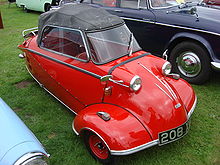
My Father regaled me with the fun that he had with his Morgan 3 wheeler and I have always liked the look/concept of the Messerschmitt .
I am told that the Can Am is actually very stable (perhaps compared with other 3 wheelers) & will accelerate most cars
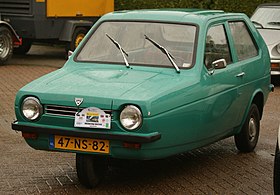
The Poms had the Reliant Robin (single wheel at the front)- I am told the drivers be cane very adept at flipping them back into their wheels

-
Interesting responses -
Without actually counting it seems to me that low & slow is favoured by the most "votes". Not really my thing but might be fun if we ever get nice fine weather again (Australian E coast)
I get the wind in your hair/fly's in your teeth group, as I was a keen bike rider in my younger days - no desire to go that rout any more, although I might try one of those nifty Can Am 3 wheelers (crying out for a full body option, as in the Messerschmitt car)
What I don't get is the lack of comment on aircraft handling, noise/vibration, fuel consumption, comfort, visibility, etc, etc - the range is wide, ultra stable - to turn you head and it goes that way, enough noise/vibration to loosen your teeth - almost glider quite/smooth, gas guzzlers - ultra economy, flying broom sticks- luxury seating, etc etc........................................
-
11 hours ago, jackc said:
If you used a Turtle Bladder? It’s a portable installation, not a permanent mounted one? does this violate anything when fitted to a 24 reg aircraft?
.
Just speculation ; Assuming the Turtle will be "plumbed" into the factory fuel reticulation system the answer would be Yes to the "violation"
-
1
-
-
"FUN" - this will be as different for each pilot as their own personality differs from everyone else.
In my view (Australasian Agent) you would be hard pressed to find a more exciting (RAA class) aircraft to fly than the ATEC Faeta - there are now several of these (factory built) aircraft in WA. A fantastic combination of STOL (30 kn stall), high speed cruise to 134 knots, all in a quiet ,finger tip response, Rotax powered airframe.
-
1 hour ago, facthunter said:
All this amounts to "Houston, we have a problem". When every decent motorcycle is injected why use 2 crude carburettors on this motor? The location is wrong from the flow pulsing and heat. Inject and it's fixed. Nev
All true Nev.
Unfortunately, for the extra dollars demanded, the "fix" is the Rotax 912S/iSc Sport & the 915/916 iSc at many many thousands of dollars more than the carb versions.
"You gets what you pay for" and for most sport pilots (at least in Australia) the carburettor variants deliver the best bank for the buck.
If you really want the extra fuel econamy & freedom from the potential for carb ice, one of the aftermarket fuel injection systems may be the way to go but then this is only applicable to "experimental" aircraft and probably wont achieve any significant improvement in power - so hard to justify for those doing less than a few hundred flying hours /year.
-
1
-
1
-
-
4 hours ago, BrendAn said:
my oil cooler is on the side with a scoop feeding it air. my oil tank is behind the passenger seat with hoses around 2 mt long.
Wow!
Fuel Filtration
in Engines and Props
Posted · Edited by skippydiesel
I think we can all agree that sub 70 micron contaminants are very unlikely to cause carburettor jet blockage. Do you think the same of a 120 micron filter?
If you reread Thrusters statement he is talking about filter blockage (not carburettor blockage).
Thrusters comment is valid - a fine filter, will trap more contaminants, than a courser - that's why you design a system with in line progressive filtration.