
kgwilson
-
Posts
4,894 -
Joined
-
Last visited
-
Days Won
142
Content Type
Profiles
Forums
Gallery
Downloads
Blogs
Events
Store
Aircraft
Resources
Tutorials
Articles
Classifieds
Movies
Books
Community Map
Quizzes
Videos Directory
Posts posted by kgwilson
-
-
The US dept of Justice has fined Boeing USD 2.5 billion citing the Max fiasco deception, coverup and half truths. Calhoun who was recently stripped of his role as Chairman due to shareholder pressure had this to say.
“I firmly believe that entering into this resolution is the right thing for us to do — a step that appropriately acknowledges how we fell short of our values and expectations. This resolution is a serious reminder to all of us of how critical our obligation of transparency to regulators is, and the consequences that our company can face if any one of us falls short of those expectations.”
He has been in this and is fully complicit up to his neck for years and would have been biting his lip hard to make that statement. The money is to be split as penalty of USD 243.6 million, compensation to airline customers of USD 1.77 billion and USD 500 million to the crash victim beneficiaries. Boeings share price which fell from $440 to $95 had rebounded to $230 but now is just over $200.
-
 1
1
-
 1
1
-
-
When I built my aircraft I decided to install auxilliary wing tanks to supplement the 100 litre main fuselage mounted tank for long trips or the ability to get back from somewhere where fuel was unavailable. I put in a L/R/Off selector valve and a 4-6 PSI Facet fuel pump to pump the fuel via a T connector in the main fuel line where it feeds into the main tank and feeds the engine (before the filter and main electric fuel pump) at the same time. I did tests for how long it took to empty each 35 litre wing tank & also found that when the tank was empty the pump made a loud clatter which I can hear with the engine running. I do not have gauges in the wing tanks and while flying watch the main gauge going up while the auxilliary pump is on.
I usually run the aux for 10 minutes each side which will transfer about 1/2 of the fuel in each tank.
-
The Jabiru 3300A will not windmill either at least not at 80 knots. It may in a dangerous high speed dive but I am not going to try this unless I have to. Like JG I have always known the performance difference because I have done plenty of purposeful dead stick landings which is why I advocated the switching the engine off on down wind at 1000 feet abeam the threshold and then turning immediately on to base to test it out. Thanks for the test values. These will vary by aircraft and of course any headwind. FH your theory does not pass scrutiny for many high performance aircraft either though it may for some heavy aircraft with large diameter props. My 60 inch prop is 800rpm at idle on the ground and at 60 knots is about 1000 - 1050rpm meaning there is less friction due to the air flowing past the blades at 60 knots but there is still 800rpm producing thrust that wouldn't be there is the prop was free spinning.
-
Wow you actually found a fine day to do it.
-
1
-
-
My GA BFRs were never an issue and in 30 years never had to do a cross country (or a flight plan) although as the years progressed some theory stuff got introduced which was good as it highlighted things that had been put to the back of the memory. The CFI knew how much XC flying I'd done as it was all in the club aircraft so in his opinion there was little point and kept the cost down.
I have done my 5th RA BFR recently and as I now have my own aircraft and fly around 50 hours a year it was really just going through the motions. This time I flew a Jab 160 for the first time ever (previously it had been J170 & J230s) because in my plane I have a centre stick and a left hand throttle plus no brakes on the right. The only issue was on a crosswind landing as it reacted quite differently to mine and I needed a decent wing down approach which I don't need in mine when a crab and rudder kick works in all but very strong crosswinds. Otherwise it was just ticking the boxes.
The only issue with BFRs is when an instructor milks the hours to get more money. This happened in training a lot in the past but with a lot of this being called out in forums like this I think it has reduced a lot. I hasn't happened to me though.
-
I take a little longer to warm my 3300A & don't start to move till the CHT temperature is at the start of the green zone but before the oil temperature gets to 50 deg. After taxi the oil will normally be at 40 deg or more before I do the runup. I always wait till the temperature reaches 50 deg before applying full power for takeoff and by the time I get to 500 feet the temperature is about 70 deg eventually settling around 90 deg. Original Jabiru operating instructions were 50 degrees before applying full takeoff power but in the latest update this has been reduced to 40 degrees.
My engine has got better with age. I used to top up the oil a couple of times during run in on mineral oil for the first 25 hours and also for the next 50 hours with W100 plus. Also when pulling the prop through compressions were a little uneven. Since then everything has smoothed out & I do not top up at all between 25 hourly changes and the oil remains relatively clean, the only disadvantage of which is, it is hard to see the level on the dipstick. I am just doing another 50 hourly and annual at present & got the least amount of condensate out of the oil catch bottle (about 15 ml) ever.
As I see it the moral of my example is ensure adequate cooling, operate and maintain your engine as per the manufacturers recommendations and you will be rewarded in spades.
-
1
-
 3
3
-
-
It's usually only passengers that get sick. Best then to be the pilot.
-
1
-
-
The fins were removed from the 2200 engine but have been retained on the 3300. Overheating was an issue with early Jabirus mainly due to the airflow having too small an exhaust area and a fibreglass lip kit was produced to assist with sucking exhaust air out. The accepted minimum is 3 times exhaust area to intake. The original Jab oil coolers were thin and small and attached to the sump so not as efficient as they could have been. When i installed my 3300A engine I spent quite some time working on cooling and there is an excellent, if very technical paper created by NASA in the 80s on cooling or air cooled aero engines.
I installed a fairly large 7 row Positech oil cooler at the bottom of the firewall with a separate and sealed from the rest of the engine NACA intake and exhaust. The exhaust for the engine air is over a metre wide & 50mm high with a suction lip for 70% of the width. The result is that the engine runs cool even on 35 -40 degree days but in very cold weather I need to cover part of the oil cooler with some gaffer tape. The possible problem side is that the oil lines from the filter to the cooler are a metre long so need a lot of firesleeve.
-
2
-
1
-
-
I recently did my BFR in a Jabiru 160. All the speeds (Rotate, Approach Best Glide) are about 65 knots indicated & climb out at 70 knots. The high stalls I did had the ASI back to about 35-40 knots & landing I didn't look. I found it easy to fly but with me at 75kgs & a 110kg instructor the performance was shall we say leisurely at about 100 fpm and 70knots. The stall speed would have to be 45 knots or less in the landing configuration or it could not be registered with RA-Aus.
-
2
-
 1
1
-
-
Without all of the control augmentation the Max is not a stable aircraft. They have sorted the MCAS and other control systems out now and it has been approved to fly. This does not resolve all of Boeings issues though. The "Profit before Safety" culture is Boeings Archilles Heel. They are finding issues with the 787 and 777 relating to the quality of components and even in the earlier 737NG. Boeing employees blew the whistle 10 years ago and the SBS Doco showed this up. As expected back then, the whistle blowers were sacked & with the power and money of the Boeing organisation everything was pushed under the carpet. I wonder if that Doco was ever aired in the US.
David Calhoun who was Chairman of the Board replaced the embattled CEO Dennis Muilenberg to be Chairman of the Board, President and CEO in December 2019. This seems to be uniquely American to be able to hold all 3 of the top roles in an publicly listed company. Boeings share price went from $440 to $95 in a year. Eventually shareholder groups revolted & just last month Calhoun lost the Chairmans role. This can only be good for the organisation as the Board should always have an arms length relationship with the company's operations. During this time when they are selling little except military aircraft to the US government it is a good time to modify their behaviour but with Calhoun still commanding the top 2 roles in the operations of the company I wouldn't expect much change.
-
2
-
-
I was a bit of a madman in my younger days, basically bullet proof but I came unstuck & I almost gave up flying. I had been to the national hang gliding comps and saw some of the daredevils looping & figured I could do that but didn't want to try it with a large audience. Once back home I started to do wingovers to 90 degrees & then a bit more till I was getting way past vertical. The feeling was exhilarating but I pushed the boundary too far & in an almost loop stopped upside down & fell on to the crossbar. The glider had assumed a falling leaf configuration & I got my feet out of the body harness & while hanging on to the inverted A frame walked out on the crossbar. The glider began to turn faster & then flipped back up the right way & I just went down & landed. I'd lost about 2000 feet during the ordeal & it wasn't till some time later I really started to freak out. Why didn't I think to throw my parachute? I didn't fly for months afterwards & couldn't get the feeling of panic out of my head.
A mate who was the CFI of the Aero Club owned a Yak 52 & He said to me one day why don't you come up & see what aeros are all about. I did and was blown away. I never ever tried aeros on my own or with an instructor but that flight restored my confidence no end for reasons I can't explain. That was over 40 years ago & I still love to fly, just not aerobatically.
-
2
-
1
-
-
When I switch the Jab 3300 engine off at 60 knots the prop stops. It may windmill at higher speeds but I've never checked. I also check the ASI frequently on takeoff, climb out & slowing to approach speed & all the way to the threshold. Never look at it again once over the fence.
-
In the other thread https://www.recreationalflying.com/topic/37047-should-we-learn-to-glide-powered-aircraft/page/2/?tab=comments#comment-498403 I advocated (twice) turning the engine off abeam the threshold when on down wind at 1000 feet and immediately turning on to base. There were posts of this not being legal etc but my reasoning was that as an ex hang glider pilot with over 1000 forced landings without power it is the only way to determine how your aircraft will glide when you have an actual engine failure. You will easily have enough height to make the runway unless you are flying a brick. And, as I said in that thread also and now confirmed here your genuine glide performance will not be as good as it is with an idling engine.
-
A lot of aircraft have the panel too high, probably to give them more space for all of the instruments. Now with glass you don't need so much panel real estate. The top of my panel is just the extension of the fuselage and my aircraft has a long nose. I never lose forward reference straight ahead except when on a steep climb out & it seems obvious to me to look out the side to make sure I am still straight especially if there is a good crosswind at takeoff.
-
Very sad to see the loss of yet another fellow aviator. Sincere condolences to his family and friends. The impossible turn is demonstrated to be possible by many when planned to be done. When there is an engine failure for real the mind reacts differently. There is no ability to go full throttle if things begin to go pear shaped. In those few seconds from decision to stall what is going through the pilots mind no-one will ever know. Sadly it has taken a number of very experienced pilots. I have experienced it successfully from around 400 feet as demonstrated by an instructor and I remember at the time thinking I'd never attempt that and would rather "fly as far in to the crash as possible". I have never attempted it myself and never will.
-
1
-
2
-
-
Obviously the equipment at one of these stations requires calibration or perhaps both of them do. Then you can buy very cheap weather stations these days with flash looking screens, anemometers, rain gauges thermometers, hygrometers, and wind direction indicators etc all wireless. I had one and it rarely agreed with what the local BOM site said in terms of barometric pressure & the rain gauge was hopelessly inaccurate.
I have a Thomen altimeter I bought in the 1970s when I was hang gliding. It has a Swiss jewelled movement and I calibrate it every year or 2 and it is amazingly accurate. All the Chinese have done with electronics is make them cheap and crap.
-
1
-
1
-
-
Mine used to till I put this on the panel😁

-
2
-
-
I think there are a lot of ex GA pilots now flying RAA aircraft. For some it was the difficulty and cost of getting the class 2 medical. For others like me it was a choice because I was getting older and thought that one day I may not pass. I am still heathy and reasonably fit & not overweight & reckon I'd still pass but I have no need to. If CASA had followed the rest of the English speaking world with the RPL as it was implemented in those places being a way to allow ageing GA pilots to continue to fly on a self declaration, 1 passenger, no night or IFR flying I probably would still have a current PPL.
As it is I don't have the need to fly into CTR when there are so many interesting places to go & things to see where there isn't any. I built my plane, do all my own maintenance & have transited CTR on occasions by request and being given permission. The whole GA/RA variable exemptions stuff is ridiculous & full of anomalies. E.g. Flying in CTR is illegal at 1 minute to 5pm and legal at 5 pm, Gliders are on the VH register etc.
-
2
-
-
Opinion.
RA-Aus should be scrapped & responsibility returned to CASA with one time VH rego & no ongoing fees
All single engined aircraft under 1500kg deemed recreational unless used commercially
All pilots required to have a PPL, self declared medical under 70 with endorsements as per PPL.
Amateur builds as per current SAAA requirements
Maintenance by owner for amateur builds & as per current L2/Lame for factory builds
Simple & logical but not doable with the current ridiculously complicated legislation & head in the sand regulator.
-
3
-
1
-
-
What I have noticed is that when I cut power to idle and set up best glide the tacho rpm is about 1000 -1100 rpm. On the ground not moving idle rpm is 800 or thereabouts. The air pressure at 65 knots means that the idling prop isn't doing any work and is allowing the idle speed to increase by helping the blades to turn. When backtracking even if there is no wind, once I get the aircraft rolling on the bitumen to 15-20 knots or so if I pull the throttle it will keep going all the way to the end of the 1000 metre runway losing hardly any momentum.
-
1
-
-
Adjusting the throttle idle takes a bit of time. After I built and tested my aircraft I thought I'd got it right but hadn't & when I pulled the throttle to idle, with a bit more force the engine would stop. I did a few dead stick landings and adjustments before I got it right.
-
Well the Drifter still pulls the women (or is it the pilot). Whatever it's more than money that talks.
-
1
-
-
If the paper gasket you made works why bother paying for one from the manufacturer. You used to be able to buy gasket paper material in different thicknesses. Maybe that is not the case now. I made all sorts in my younger days & they worked well & only had to be replaced when I pulled things apart again. Then RTV was invented & that solved lots of gasket issues (not for petrol areas though).
As FH stated the Bing choke is a separate by pass system with its own jet and not a butterfly airflow choke normally seen. If the throttle is not at idle even open a little bit it will not work. The choke will supply a rich mixture for idle running and it reduces the tendency to flood the engine. If the engine doesn't start then a lot of people try to use throttle and end up flooding the engine.
A comment on starter clutches. I am on my 3rd. The first began to stop engaging when the pinion was grinding at the edges of the ring gear but not fully meshing. A new one fixed the problem but the old one which I still have looks in perfect condition and works when I fire it manually. It just won't work when installed. I thought it must have something to do with the sprag clutch but that seems to work properly as well. The second one failed because the pinion was only pressed on to the shaft with out a keyway or spline like the first one. The one I have now has the pinion splined onto the drive shaft. Most modern cars have a pre engage mechanism to lessens the sudden clash of gears and high torque. This used to cause worn or broken teeth on ring gear in 4 or 6 places & mechanics sometimes removed the ring gear and shifted it around a bit on the flywheel so it engaged in a different spot. The Jabiru starter clutch was originally a Honda as many motorbikes use this type of starter because they are smaller and lighter. Now its a clone as the Honda genuine articles are expensive. All starters put stress on the crankshaft bolts and these have been known to shear. Jabiru had 6 x 3/8 cap screws loctited in originally then they moved to nordloc washers with higher torque & now with the Gen 4 engine there are 3 dowels and 3 cap screws to improve torque shock. Lycomings & other engines with the starter at the front have a much larger flange on the crankshaft to absorb the torque.
-
1
-
1
-
-
For recreational aircraft and other light aircraft you should only be concerned about best glide. In gliding circles this is known as L/D or lift over drag ratio. It is the number of units you move forward in still air to the number of units you move towards the ground due to gravity. For most recreational/light aircraft the value is somewhere between 8 and 12 to 1. High performance gliders have an L/D of 60:1. The VSI or Vario will tell you how many FPM you are going down. Your POH will list this value as speed in knots with no power. A glideslope however you define it is irrelevant as the wind direction and strength is always a factor.
I still maintain the best way to work out how your aircraft really glides is to turn the engine off at 1000 feet on downwind abeam the threshold and then turn immediately on to base and set the best glide value as specified in the POH. When approaching final you should be quite high but this depends a bit on whether you do tight or cross country circuits. You can then set the flap for a touchdown 1/3 of the way down the runway & S turn or sideslip if you are still high. If turning the engine off doesn't sit well with you pull the power to idle at the same place and adjust your approach as described. I have about 2000 forced landings without power, all when flying hang gliders and 99% of the time landed exactly where I planned to.
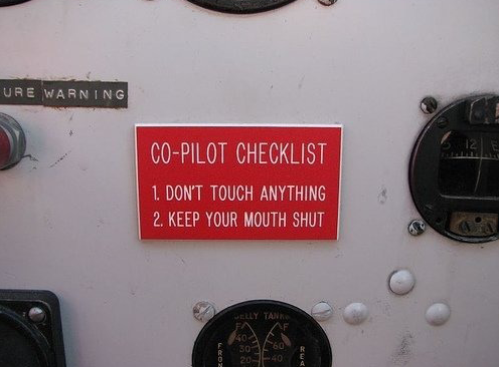
Boeing 737 Max due to resume passenger flights.
in Aircraft General Discussion
Posted · Edited by kgwilson
Mercs & BMWs alike are quality vehicles that cost a lot of money. They also require a lot of maintenance to ensure they keep running and this must be done by factory certified technicians (They do not have mechanics any more) and the cost is eye watering. My Japanese Mitsubishi new in 2012 has now been round the clock twice. 2 batteries and 3 sets of tyres plus oil and filters is everything I have had to spend on maintenance. They also had the confidence to give me a 10 year drive train warranty. I could have bought another new one for less than it costs for the Merc maintenance in that time.