
kgwilson
-
Posts
4,894 -
Joined
-
Last visited
-
Days Won
142
Content Type
Profiles
Forums
Gallery
Downloads
Blogs
Events
Store
Aircraft
Resources
Tutorials
Articles
Classifieds
Movies
Books
Community Map
Quizzes
Videos Directory
Posts posted by kgwilson
-
-
15 minutes ago, jackc said:
Looks like a big purchase of new charts coming up?
You can download all charts from Airservices as well as Ersa free. If you have an Ozrunways or Avplan subscription that software does it for you or if you have the free nav system, Airmate you tick the ones you want and the system downloads and installs them all.
-
 1
1
-
-
Who knows what the real proposal is. Height classes are all expressed in feet above mean sea level.
-
 1
1
-
-
I would be interested to find out how many of the 3243 strong RA fleet have Transponders. I didn't install one mainly due to cost & I haven't needed it anyway & still transit CTR & always advise No transponder. If I put Airservices Email address into my Spot contacts I can press the check in button & they get my Lat/Long immediately & I can tell where I am from any number of devices like my phone and tablet. The perceived need to lower Class E is just that. It seems that they come up with some sort of dreamt up safety scale & decided that 8500 feet doesn't meet it even though they have zero evidence of any problems whatsoever.
The big problem at present is the Ballina MBZ which has now been extended to 15NM after a CASA review and a close encounter between a Jabiru and A320. The issue they should have but didn't address is the clogged up frequency as Ballina, Lismore, Casino and Evans Head share the same one and overtransmits are common and were partly the cause of the near miss. The excuse is it will interfere with a proposed instrument approach at Lismore which is just bollocks IMO.
-
2
-
-
I can't understand why we continue to depend on imperial measurements in aircraft when everything else is metric. Why Jabiru use AN when Australia is metric I don't know other than they export quite a few engines to the US. Even the US went metric but some President I believe declared in unamerican & it never progressed. Everything is expressed in fractions as well. Pain in the proverbial. Anyway I have purchased unusual length AN bolts from Hawker Pacific so you could give them a try.
-
1
-
-
I agree there was no reason he should have been denied class C access but for unplausable reasons they did. Coastal at 1000 though was offered and that meant visibility once he'd descended to that height. Descending into IMC as happened I cannot fathom at all.
-
1
-
-
This requires little debate. The minimum requirement for the cooling exhaust area to be at least 3 times that of the intake is a well proven fact for ensuring adequate airflow through the engine area. Combine this with plenums that direct that air to all of the cylinder heads equally well and enough around the cylinders and other peripherals, then measure it and voila problem solved. The report commissioned in 1981 (40 years ago) by NASA covered it in intimate detail. See attached.
-
39 minutes ago, Garfly said:
I was wondering if he might have been reluctant to descend at all; towards the east or the west, since he was, apparently, cruising in the clear above a 'broken' (up to 7/8) layer which extended out to sea and all around. Maybe the western option looked safer at the time.
From the ATSB report:
"The top of the broken low cloud layer was approximately 3,000 (±1,000) ft AGL"

From the ATSB report:
"The graphical area forecast for the accident region [showed] ...
• broken stratus between 1,000-2,000 ft
• broken stratocumulus between 2,000-4,000 ft
• scattered cumulus between 4,000-9,000 ft
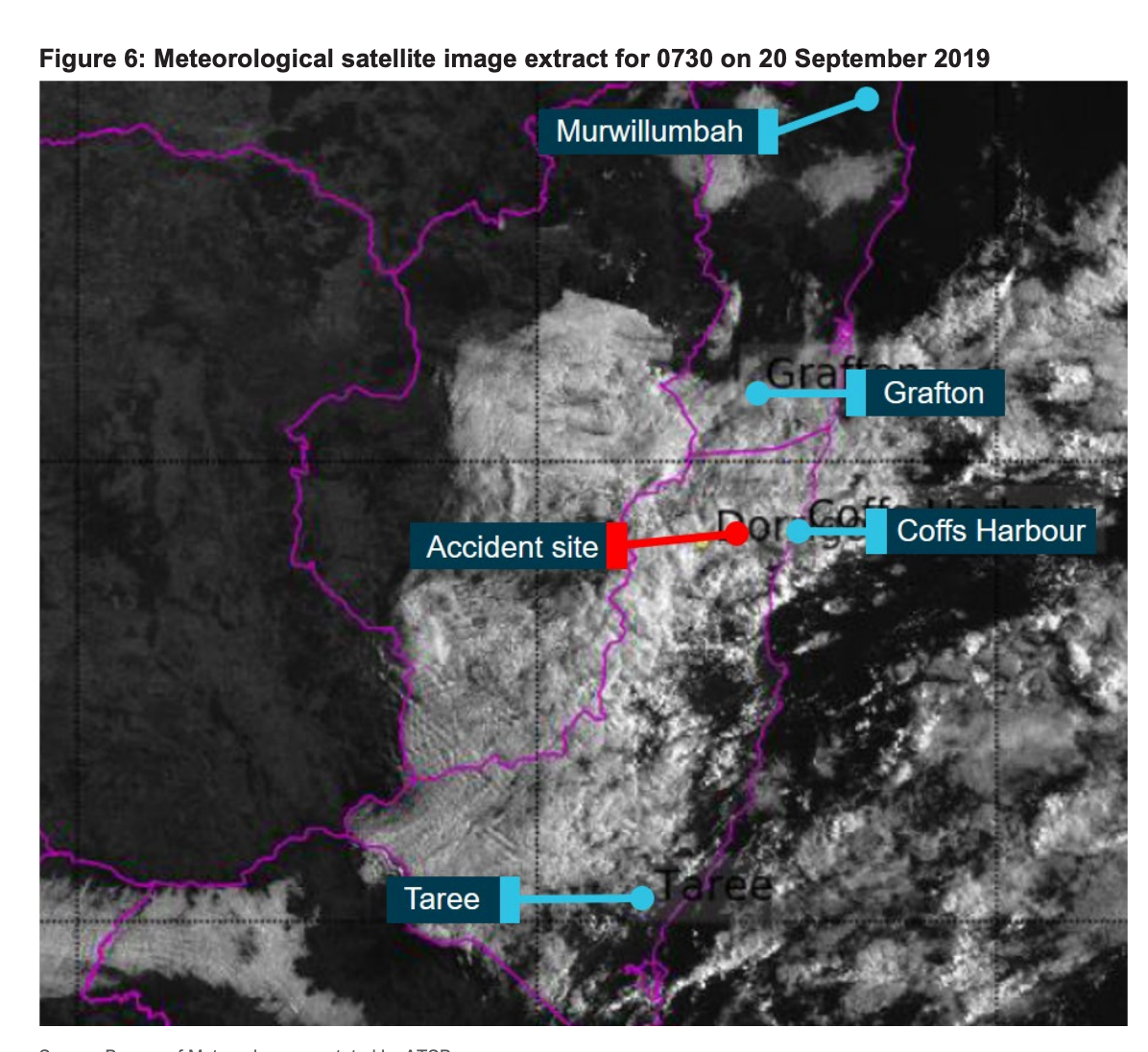
Satellite images for the area just prior to the accident time showed generally clear conditions between Murwillumbah and Grafton. South of Grafton and throughout the area encompassing the high terrain west of Coffs Harbour, the images showed extensive cloud coverage. Further along the intended route towards Taree, the cloud coverage reduced near the coast, but persisted inland."
He probably was over broken cloud. I left home at Corindi Beach at 7:30am and the cloud was 6-7 Octas but there were plenty of holes to descend through. I arrived at South Grafton at about 8:05am & there were still blue patches but it did appear to be thickening. The plane was already prepared, fuelled etc so I made my call to Quirindi & got airborne at 8:30am. There were still blue holes but fewer of them.
He'd been flying over clear ground pretty much all the way from Murwillumbah & his mindset was on getting class C clearance. I'd have taken the coastal any day of the week even turning around to find a hole to go down through. For whatever reason he chose to go inland staying in class G though clipping class C on the way. At that stage there was cloud ahead and to both sides as far as his horizon & without knowledge of how far away there was clear sky to the ground the risk level immediately jumped a lot.
I had no such problem. I knew it was crystal clear at Quirindi. The cloud gave way to clear sky by the time I passed Walcha but it was 8/8 cloud to the South and East horizons from 8500 to 9000 feet.
-
 2
2
-
-
When the Mooney was refused Class C & given the coastal 1000 feet option he was about 4000 feet above the Pacific Highway near Grafton. All he had to do was turn left and begin descent following the main road to Woolgoolga arriving there at 1000 feet & then track down the coast. Simple and safe.
-
1
-
1
-
1
-
-
The one RAA are promoting is ridiculously oversensitive IMO. It starts detecting at 9ppm which is less than normal household levels. Then from 9-24ppm Alarm level 1 activates after 1 minute (30ppm is considered a safe working environment). 25 to 49 is Alarm level 2 which activates after 1 minute. (50ppm is considered normal exposure for up to 8 hours). The highest level is Alarm level 3 which is 50ppm or more and the alarm sounds continuously & the red light flashes continuously.
All this does is make you paranoid about CO that is not dangerous until you get to 2-300ppm & even then you have to be exposed for 2-3 hours for any noticeable issues and after the exposure has gone you return to normal rapidly with no after effects.
-
1
-
1
-
2
-
-
I have never been denied clearance coastal at 1000 or below. Just call at a reporting point eg Red Rock provide normal info & request coastal transit. Technically illegal for RA but they don't ask for your PPL status (I do have PPL but not current) even when RPT is around. You may get asked to orbit till one comes or goes but that's it.
The rules though should change. ATC are being helpful, responsible & promoting safety even if they are technically breaking the law. If I was heading to say Kempsey & called at Red Rock & they said Nah go via class G & it was clear down the coast, no RPT around (normal) & cloud inland with tops in the cloud I'd either have to take the risk or go back.
-
He was offered a very safe and direct route, coastal at 1000 feet but refused. The decision was his to fly inland in class G over rugged terrain and then descend into IMC conditions. Defies all logic.
-
2
-
-
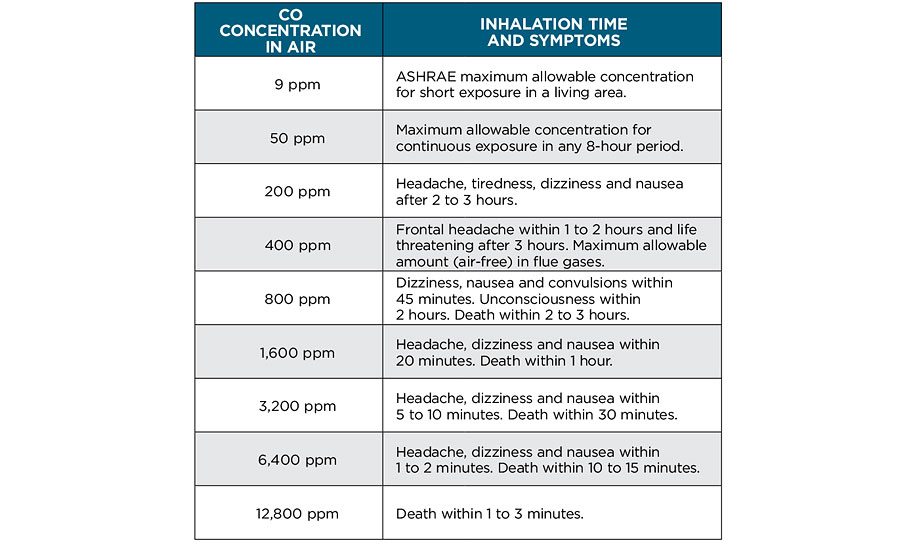
The LED screen is instant. Why make a screaming noise when the level is so low it is not harmful. Under 50ppm is considered safe. CO is found in normal households at about 18ppm but increases when there is combustion like gas stoves etc.
Occupational rules now state that the level should not exceed 30ppm for 8 hours continuously to be considered a safe working environment. You should not be exposed to 70- 150ppm for more that 4 hours. The chart below shows exposure times.
-
1
-
-
This one cost $16.00 on Ebay & works really well. It takes 2 x AAA batteries and has a piercing alarm 85dB at 1 metre. To test the alarm just press the speaker for 1 second. It is small & compact & I have velcoed it on to the panel. A green LED flashes every 30 seconds to indicate it is working & this turns red when CO is detected. The LED screen starts displaying at 30ppm & the alarm will go off in 60-90 minutes at 50ppm, 10-40 minutes at 100ppm & within 3 minutes at 300ppm. I do get low CO contamination of about 40-60ppm when at full power climbing out for a couple of minutes, then it goes off when I level out & reduce power.
-
1
-
-
No. The oil stays relatively clean between 25 hourly changes. I do not top up between changes. Each oil change I use 3 quarts of Aeroshell W100+. My leakdowns are all 75/80 or better.
-
-
Topend at 1000 hours is the right amount. If the cooling has been poor that will contribute to a much reduced headgear life and even oval cylinders. The hottest cylinders in my engine are Nos 3 & 4 but not by much. Are there any baffles in the plenums? I glassed in these to aid with forcing the air down. I use the old style with the plug leads on the outside as the newer ones are too tall for my top cowl. My engine runs cool all the time even on a prolonged climb.
-
I flew down to Parkes from South Grafton that morning and passed about 30NM west of the crash site at around 9:00am. On takeoff cloud was low and broken at about 1000 and as I climbed and flew south west it continued to build. Cloud cover past Nymboida was 8/8 with tops about 6-7000 and it was getting worse at the time & there were lenticulars at 10-11,000. I knew it was clear from Tamworth but overcast in all directions when I passed Armidale though there were aircraft in the circuit there at the time. I left at 8:30 but If I'd left my departure any later I probably would have had to turn back.
Yes the pilot should not have been flying without a valid licence & yes he should have been aware of the weather and had maps etc and why did he refuse the 1000 feet coastal route. We will never know the answers but why did ATC refuse the 6500 route through class C when there was no conflicting traffic. The response in the report are pretty vague. 6500 would probably have been adequate at the time but not a couple of hours later.
-
2
-
2
-
-
Indonesian airlines have never had good reputations. In 1975 there was an internal airline called Merpati & they were cheap. I don't thing they exist any more. The word amongst backpackers was never to fly on any of their aircraft. They had chooks, ducks, pigs etc accompany people in the cabin. I thought Indian Airlines were bad when I flew from Jammu to Srinagar in a clapped out Fokker Friendship in 73 & vowed never to trust a 3rd world airline again. I flew to Medan from Singapore & then went by bus & boat through Sumatra & Java & to Bali. By then I didn't trust Garuda either & waited a week to get a Qantas flight to Darwin.
-
1
-
1
-
-
Animals certainly do get used to aircraft after a while. Kangaroos normally move off a bit. Early morning and late afternoon is their favourite time to be near or on the strip. In the mornings I will taxi down the full length of the strip and they move away & then just keep on eating when I take off. We had some sheep turn up at one stage. They are totally indifferent. Couldn't care less about aircraft and just wandered across the runway whenever they felt like it.
-
2 hours ago, Bruce Tuncks said:
I can see the argument in favor of hand propping, but could you actually do enough to make a difference? It seems to take a long time using the starter before oil pressure comes up.
This is the technique I use after a layup... crank with the mags off until oil pressure comes up. I would do this every time but I don't want to wear out the starter system. It is a quite an indirect way to just operate the oil pump, but it sure adds no complexity. It is turning the engine over dry, but there are no combustion forces.
I would prefer a small and light add-on electrical oil pump but his is probably not necessary.
I get oil pressure almost immediately after cranking the engine with the mags off. I usually only do this after an oil change to fill the filter and then re-check the oil level. When starting if you do not have oil pressure within 10 seconds there is a problem somewhere, most likely at the oil pump. As soon as I look at the pressure gauge after startup I have pressure. When cold it is around 200 kPa & once the engine has reached operating temperature it sits around 350kPa.
-
Hangar Owners can bring their dog(s) to our Aerodrome but they must be kept under control. Control varies among dog owners. When I take my dog to the aerodrome he wanders about checking all the smells and then settles down in the shade next to or in the hangar. He is quite happy just to watch aircraft taxi along & keeps well out of the way. Anyone who has an unruly dog is requested to keep it on a lead or if it chases cars or aircraft to take it home & not bring it back. Kangaroos are out biggest problem followed by various birds including Wedgetails, Ibis & occasionally flocks of Corellas.
-
1
-
-
During a BFR the PIC is the Instructor so if you crash the instructor has failed. Other than that you cannot fail a BFR but the instructor can decide not to sign you off until you have improved on some aspect he is not happy with so will advise some additional training and another check flight.
-
3
-
1
-
 1
1
-
1
-
-
The latest Jabiru manual JEM002-8 dated 22 May 2019 has these instructions. Note that full power should not be applied until the oil temperature has reached 40deg C. The earlier manual stated 50deg C. 15deg C only applies for the mag check. I warm my engine up for a bit longer and always wait till the oil is at 50 deg C before takeoff. CHT is always above 100 deg C by the time the oil temp is at 50 deg.
5.3 Warming Up Period
• Start the warming up period with the engine running at 1200 RPM for around 1 minute.
• Continue at 2000 RPM depending on ambient temperature, until oil temperature reaches 15°C (59°F).
• Check the two ignition circuits at 2000 RPM
Note: Engine RPM should not drop by more than 100 RPM when 1 ignition is turned OFF.
WARNING
DO NOT apply full power until CHT reaches 100 °C (212°F)
DO NOT apply full power until Oil Temperature reaches 40°C (104°F)
DO NOT allow cylinder heads to rise above 180°C (356°F) during ground running.5.5 Take-Off
• Ensure all temperatures and pressures are within limitations before applying take-off power.
• Climb with the engine at maximum continuous power.
• Observe Oil & Cylinder Head Temperatures & Oil Pressure.
• Max RPM at Full Throttle is 3300 RPM-
1
-
-
There was extensive discussion and tests done during the Max issues surrounding runaway trim. There is a procedure for dealing with it but pilots found that once it had occurred turning the manual trim wheels required herculean effort & even with both pilots trying to turn them it took too long and the aircraft would likely have crashed. There were videos produced of this at the time. I'll have a hunt for them.
-
2
-

Lowering Class E between Melbourne and Cairns
in AUS/NZ General Discussion
Posted
Does everything but not cheap at $5,320.00 for the TS0ed model & $4,433 for the non TSOed option.