
kgwilson
-
Posts
4,894 -
Joined
-
Last visited
-
Days Won
142
Content Type
Profiles
Forums
Gallery
Downloads
Blogs
Events
Store
Aircraft
Resources
Tutorials
Articles
Classifieds
Movies
Books
Community Map
Quizzes
Videos Directory
Posts posted by kgwilson
-
-
In the Airservices proposal Transponders are mentioned only once (where it actually isn't one at all) and that is under changes needed when they say —" Increase use of low powered non-TSO ADS-B transponders to maximise infrastructure investment". In other words a SE2. The fact remains that now you do not require a radio or Transponder in class E if your aircrafts electrical system won't support these and they rabbit on about the US experience below.
- Delivery of the AMP will ensure closer alignment to the International Civil Aviation Organisation (ICAO) system and proven United States practice of airspace management.
In the US you don't require a radio or transponder in class E under 10,000 feet. You also don't need a licence or pilot certificate for a basic rag & tube with no instruments & they fly in class E all the time.
Transponders are old technology and reading between the lines, not all that subtly either, they are pushing SE2 as it is a CASA approved portable device.
An ADSB in/out device will be way better at 1500 feet than a transponder as nearby traffic will know where you are and vice versa. A transponder probably won't even be seen by Airservices in hilly terrain like around Coffs Harbour at 1500 feet & if it is, because you do not require ATC clearance they won't know who you are anyway. Then if they see other traffic squawks it will increase their workload dramatically when they have to contact that traffic.
The transponder mandatory rule must go. They are encouraging ADSB so maybe that will become a requirement. If so it is a far better option. The fact remains though that 1500 AGL is too low but we have yet to be told where where all the high and medium density class G areas are.
-
 1
1
-
I put my 10 point submission to RA-Aus & the new CEO actually replied that they would be used in his submission. That is a first. One of my points was getting rid of the Transponder requirement as at 1500 feet in many circumstances ATC will not get the signal & it will increase their workload. Airservices proposal does not mention Transponders once but mentions ADSB several times. If they insist on ADSB in/out I suggested it be subsidised 50% by them. They could do a bulk deal with Uavionix & get them for probably $3-400 anyway so cutting out all the middle men & retailers it would not cost them much at all if anything.
-
1
-
-
I am the only person who has ever flown my aircraft from the first test flight. That is the way it will stay unless I sell it. End of story.
-
2
-
 2
2
-
-
Well I've made my submission of 10 major points to RA-Aus & will wait a few days to make a full detailed submission to Airf***ing Services. I wonder when CASA are going to get in on the act. At present they will be keeping their heads down dodging the Flak.
-
What Airservices propose and what eventuates are 2 different things if it happens at all. The proposal may be 1500 feet AGL but it will have to be expressed as all other height limits are as Height AMSL so in one of the so called medium or high density Class G areas, they are going to have to pick a height, probably the highest part of the proposed area, add 1500 feet to it and set that as xxxx feet AMSL for the Class E boundary. You can't have an airspace boundary with contours.
-
1
-
-
6 minutes ago, jackc said:
Make a submission to RAA on your thoughts as I have, like many others.
We need to make a united effort to get CASAs plan junked.
They need to come up with something more logical and workable.
Submissions addressed to: [email protected]
Jack,
This proposal is from Airservices, not CASA. AFAIK CASA have had no input yet but in the end they are the ones that have to approve and regulate this.
-
 1
1
-
-
I'd keep it and fly it on condition. Having a glass panel won't make you a better pilot & you won't be spending money you will never recoup.
-
1
-
2
-
 1
1
-
-
56 minutes ago, SSCBD said:
BFR and Flying Instructors
But all is not equal with instructors. I know of and have personally trained and approved these new puny gods and CFIs.
Some are good some are not so good. They only pass as they themselves have passed a set of standards given in the book. (some i would not fly with or send students to.
These brand new shinny deer eyed gods that need time to actually be able to develop skills themselves to teach at a higher level.
Then you get the old bastard types that just know you have stuffed up before you have done it - like watching a slow train wreck.
These are the ones you need to fly with. That may and should push your skills or say your a dead man if you keep that up.
Learn form these types - seek them out. Everyones ego needs to be shaken, not stirred now and then.
FLY SAFE.
This happened to me when I was on a Navex in a C150 & we had to cross a mountain range to get to the next aerodrome & the CFI gave me a hypothetical of cloudbase, weather, fuel endurance, fading light, other aerodromes closed etc so the only option was to fly up a valley & through a saddle. As a student I was pretty busy & had all the extra stuff about an exit strategy as well. I thought I was doing OK till he yelled "BANG YOU'RE F***ING DEAD" & then explained what I'd done wrong. I've never forgotten that lesson & it kept me in good stead when I eventually got my Mountain Rating. He was a fantastic instructor but a terrible administrator & lost his CFI role & I was really quite chuffed to be able to offer him a job with my company. I flew Aeros with him in his Yak52 a few times. He was the best I've ever had in the right hand seat.
-
1
-
-
I will be making submissions to both RA-Aus & Airservices. AFAIK there have been no safety issues that have given rise to this brainfart, they have not even specified where the medium and high density Class G areas are, nor considered RA & GA operations at all especially arrivals at non controlled aerodromes which are a minimum circuit height of of 1500 feet is required for high performance aircraft & 1500 feet is the arrival height for everyone else except trikes, Gyros & powered chutes.
I will be happy with the proposal if they delete the transponder requirement and give every GA/RA aircraft owner in Australia a free Skyecho 2 or equivalent, otherwise it is just bollocks and will reduce safety heaps.
-
2
-
-
The Skyecho 2 has its own certified internal GPS. If the current proposal is pushed further a less costly option would be to require ADBS out on all aircraft in Class E as a minimum. After all you can enter class E now without a Transponder if your aircraft does not have an electrical system capable of driving one, and you don't even need a radio..
This communication from Ra-Aus was received yesterday.
Airservices Australia ‘Lowering of Class E on the East Coast’ proposal
You may be aware that Airservices Australia (Airservices) is currently consulting on a proposal that would see a significant reduction in the lower limit for Class E airspace between Cairns and Melbourne. Released to industry last week, this proposal was communicated to industry via a Fact Sheet published on the Airservices Engagement and Consultation website and also publicised via the Aviation State Engagement Forum (AVSEF) website.
RAAus CEO, Matt Bouttell and Head of Flight Operations, Jill Bailey, attended a ‘webinar’ hosted by Airservices today to gain greater understanding of the proposal given the impact this would impose on our members that operate in affected areas. See here for the Airservices presentation.
In summary, this proposal is part of a broader Airspace Modernisation Program being developed by Airservices that seeks to lower the base of Class E controlled airspace between Cairns to Melbourne from a lower limit of 8500 FT AMSL to 1500 AGL and replace the existing Class G uncontrolled airspace. There are some key elements we need to be aware of:- Australian Class E airspace has the mandated requirement for a serviceable transponder to be fitted to any aircraft operating in the airspace unless the aircraft does not have an engine driven electrical system capable of powering a transponder, and a serviceable VHF radio capable of ‘Continuous two way’ communications. Members are encouraged to refer to CAO 20.18 and AIP ENR 1.4 for specific information.
- Analysis of our aircraft fleet indicates less than 30% of aircraft operating in the affected geographic area are currently fitted with a transponder.
- Should this proposal go ahead, there is likely to be insufficient equipment available in addition to a shortage of qualified personnel to fit this many transponders by December 2021.
- This proposal introduces not only an inconvenience but significant risk to pilots who do not have a serviceable transponder or radio in their aircraft. Pilots will be required to ‘skirt’ under or around this newly classified Class E airspace.
- Airservices do not know how many VH-registered aircraft this also affects as this data is unavailable. Likewise our sister organisations, Gliding Federation of Australia, who will possibly be required to fit equipment to towing aircraft (gliders are exempt from the requirements as noted above) and Sport Aviation Federation of Australia, who have a presence of aircraft in affected areas, who will also be required to fit equipment to operate in reduced lower limit Class E airspace.
- CASA are responsible for regulating the airspace in Australia and therefore will need to take all consultation feedback into consideration prior to approving it. And it’s important to note that at this stage this is a consultation rather than fait de accompli.
- RAAus is unaware of any safety case presented to industry to increase the amount of Class E airspace which effectively ‘shuts out’ a large percentage of RAAus operators and training schools – and an unknown number of pilots in GFA, SAFA and VH- registered aircraft, due to the equipment requirements.
- RAAus is concerned the duration of consultation phase is not sufficient to provide assurance that equitable access to airspace for all users has been considered.
- There has been no information communicated at this time that there is any awareness of the cost this proposal imposes on industry, nor recognition of the requirement for a Regulatory Impact Statement to be provided by Airservices and/or CASA to justify to Government that this proposal's cost to industry is reasonable. Members are encouraged to refer to the Office of Best Practice Regulation. for more information.
RAAus does not support this proposal at this time and we assure members that we will be working collaboratively with our members, Airservices, CASA, Government and other industry stakeholders to work through the issues and encourage the launch of a transparent airspace strategy development forum, or similar, so that Australia’s airspace is fit for purpose and does not ‘leave people behind’.
RAAus is encouraging members to respectfully provide your views on this proposal in two ways. Firstly, please provide an email to RAAus directly via [email protected] by 10 February 2021. Your feedback will assist us with developing an organisational response to the consultation. RAAus also encourages you to lodge your own constructive submission to the Airservices consultation which can be done by emailing [email protected] by 15 February 2021.-
1
-
1 hour ago, facthunter said:
Not neglecting the excellent work but it's clear the faster aircraft types have less issues with cooling on a Jab. engine installation and I've always found increasing climb speed to have a significant effect. (Done BEFORE the temps get too high).. Hot air rising. Yes it does but the effect in a confined area of minimal height is pretty miniscule. A tiny bit of pressure difference will do much more. Instead of "oily belly" you'll have oily windscreen. if you vent upwards. Nev
I agree with that. The slowest I ever climb out at is 70 knots. Mostly I climb at 80 knots as this gives the best rate and angle of climb combination with distance travelled.
-
1
-
-
On 26/01/2021 at 4:32 PM, kgwilson said:
It is the standard Jabiru setup with a shroud around the exhaust before it enters the muffler & scat hose to the airbox so the air hot or cold is always filtered unlike Lycomings where hot air is unfiltered.
I told a lie there. It is the standard Jabiru setup but all 6 exhausts go into the muffler and there is a hat shaped piece welded on to the back of the muffler with air entry at each end and an outlet in the middle where the scat hose sucks hot air into the airbox when carb heat is on.
-
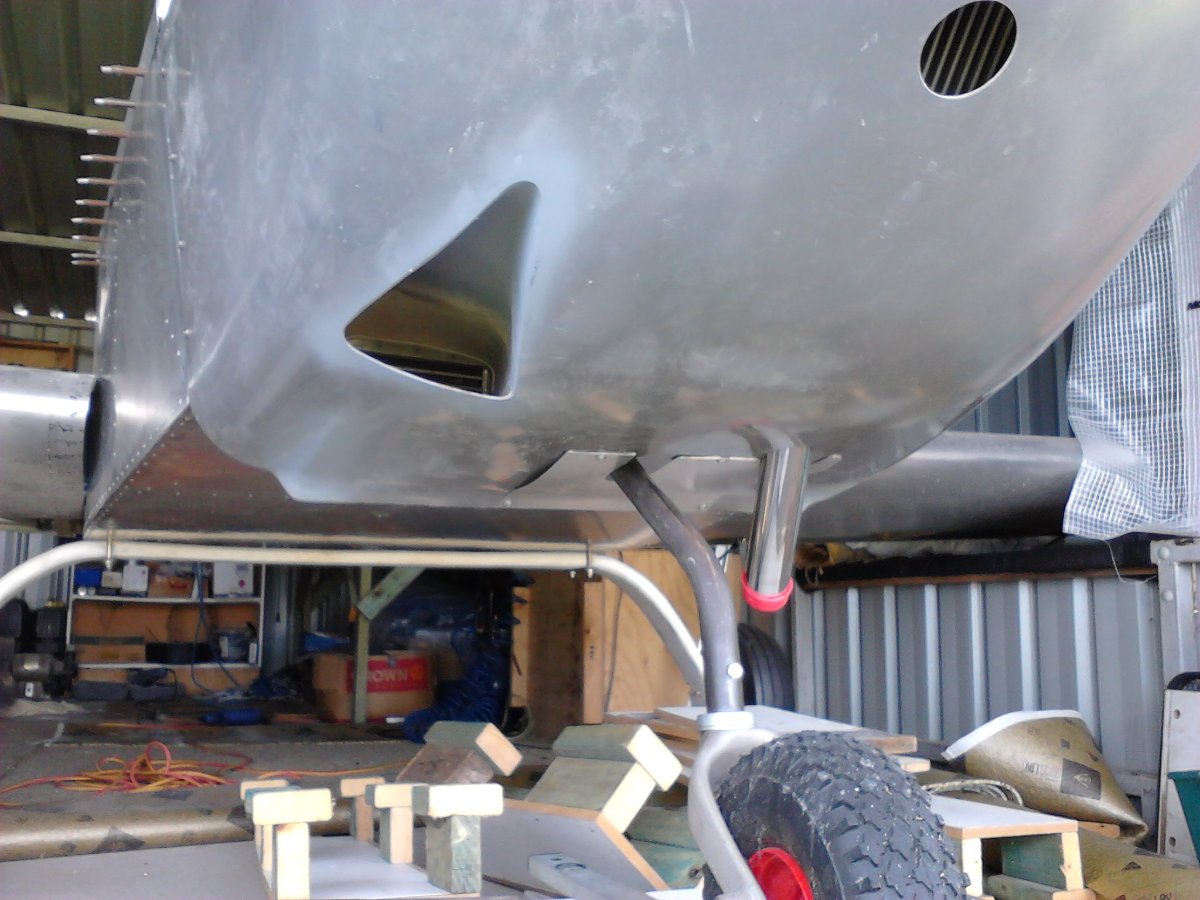
There is no constraint as my oil cooler is on the firewall with it's own duct so the 50mm hole is only 20mm from the sump as in this construction photo.

-
1
-
1
-
-
Personally I think you are overthinking the whole process. My Gen 3 3300A has always run cool even on the hottest days and sustained climbs at full power. I use exclusively Mogas.
What I did
- Installed a large 7 row Positech oil cooler on the Firewall with a sealed NACA ducted airflow direct to it with its own exhaust.
- Installed the standard old style Jabiru Plenums with moulded intakes glassed to the front to fit my Intake nacelles. The Jabiru idea of having a dam wall at the front to direct air upwards causes more problems than it solves with eddies restricting the airflow.
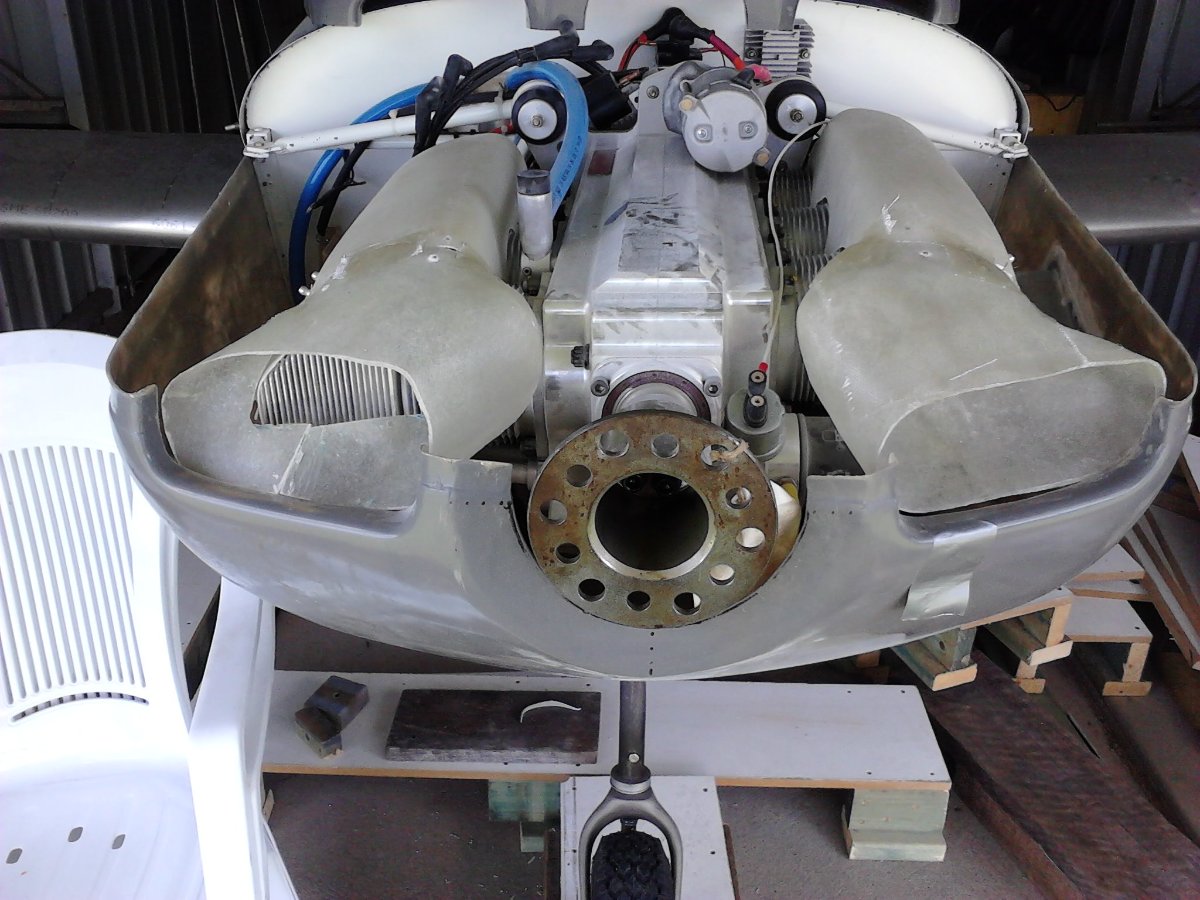
- The intake nacelles and moulded plenum intakes are sealed and smoothly shaped to maintain good laminar airflow into the Plenums so air cannot go anywhere but into the plenums. There are no spark plug cables to disrupt the airflow and each plug cap has a tight fitting O-ring so no air can escape there.
- The moulded plenum intakes curve around to be directly in front of the cylinders and a 25mm hole also allows airflow across the block.
- Each plenum has glassed in vanes to deflect air downwards between the cylinders. 16mm shaped pool fence aluminium tube is glassed in to direct cool air on to the coils.
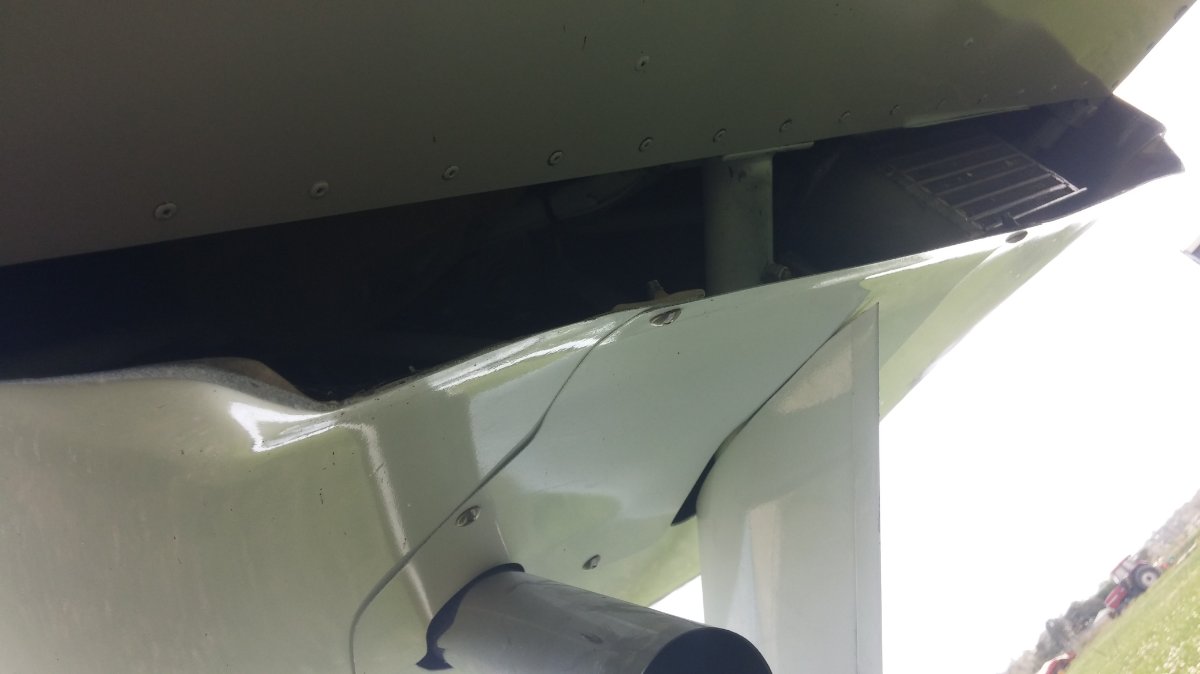
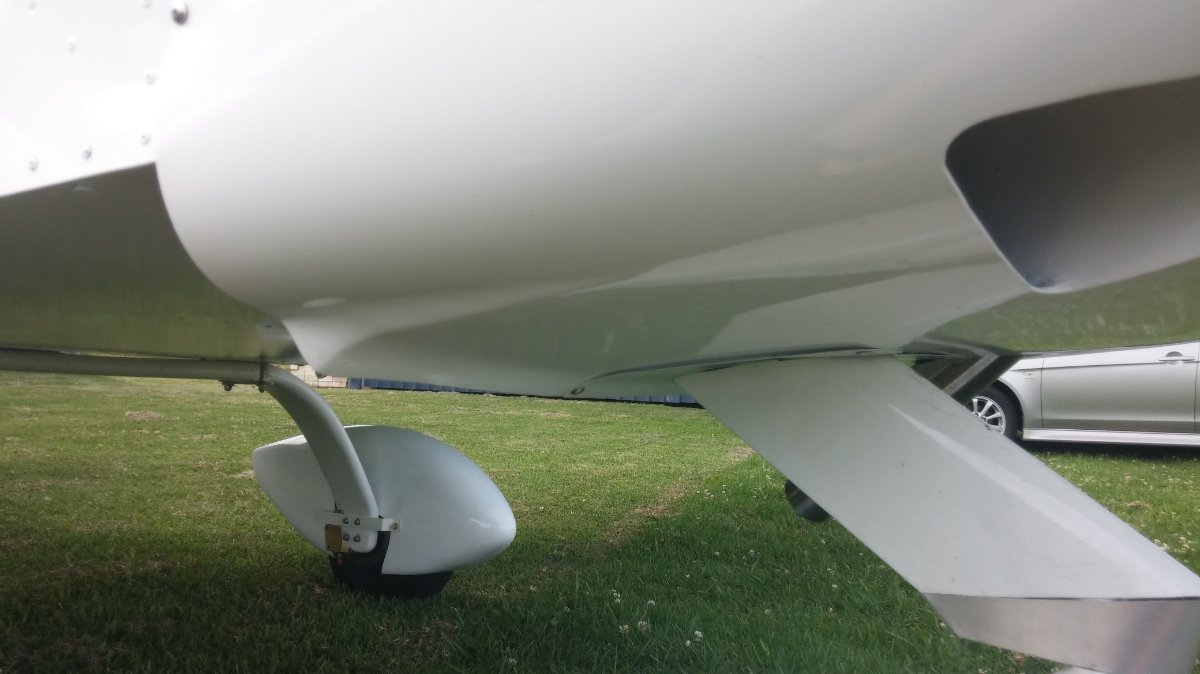
- A 1.2 metre wide air exhaust with a bottom cowl lip for 1 metre to create suction.
- A 50mm diameter hole in the lower cowl directly in front of the sloping sump ribs.
- The nose leg and exhaust pipe have a close fitting cover screwed onto the bottom cowl to reduce turbulence.
Photo 1 shows the air exhaust & lip with the cover around the exhaust & noseleg
Photo 2 shows the oil cooler NACA duct and suction lip
Photo 3 shows the moulded intake nacelles during the build
-
2
-
8 hours ago, Old Koreelah said:
That might not fix the problem.
You’d be surprised how many drivers don’t have a license or never did.
True like the dickhead who killed those kids in Wellington recently.
-
1
-
-
8 hours ago, Old Koreelah said:
KG where does your carb heat draw its hot air from?
I wrapped my whole muffler but it’s not really hot enough to achieve the rapid temperature rise expected of a proper carb heat setup. Even with a hot engine, it takes about minute for the intake air to rise to 50C, so I’ve got in the habit of opening the CH valve as a precaution well before icing is likely to occur.
I didn’t want to wrap a hot header pipe to supply hot air because most of the time that pipe would have no cooling and thus conduct extreme heat back to the head.
It is the standard Jabiru setup with a shroud around the exhaust before it enters the muffler & scat hose to the airbox so the air hot or cold is always filtered unlike Lycomings where hot air is unfiltered.
-
1
-
-
I spoke to a bloke a long time ago who said he just did what he liked. His philosophy was that the other driver does not want to die & will take appropriate action. All it needs is for the other bloke to have that self same attitude & 2 idiots are gone. Thankfully there are not many of these but we do have some appalling drivers in this country that should not have their licence.
-
The engine will have to be hot to get any carb heat use change. I had to go around when an aircraft cut in front of me on base & I instantly went full power but the engine would not develop any extra power & ran rough. Carb heat off & power was instant.
-
I've run my Gen 3 on Mogas since new and it has stayed clean. I have only used Avgas a few times when I've been away as that's all I could get without going in to town and back. I had a few early problems that I thought may have been the fuel but one was airflow and the other was the balance tube came off between the carb & airbox. Simple fixes and it has run like a swiss watch ever since.
-
1
-
1
-
-
And change from Avgas to Mogas 98.
-
Until there is a rule specifying ADSB in/out will suffice OVER a Mode A/C/S transponder a Skyecho 2 may not be enough. At about $900 though it is relatively affordable even though the chipset costs under $25.00
-
1
-
-
Tracking is simple and cheap. My Spot tracker cost $180.00 and there is the $200.00 annual subscription. It tracks my GPS location every 5 minutes and anyone I give access to the web site can see this. I can also put in a number of Email addresses for messages to go to when I do a Check in, when I have landed or when ever I need assistance. The SOS feature is the same as having a PLB.
-
1
-
1
-
-
That would explain excessive deposits. It is hard to tell but are the pistons valve relief models?
-
What fuel has been used for the engine?
What do people "really think" of BFR's in RAA A. Helpful or B. Waste of Time and Money ?
in AUS/NZ General Discussion
Posted
That also is true for GA instructors (in my experience)