nomadpete
-
Posts
912 -
Joined
-
Last visited
-
Days Won
6
Content Type
Profiles
Forums
Gallery
Downloads
Blogs
Events
Store
Aircraft
Resources
Tutorials
Articles
Classifieds
Movies
Books
Community Map
Quizzes
Videos Directory
Everything posted by nomadpete
-
Tasmania doesn't show up on GOOGLE earth either - it's never been out from under the cloud long enoughfor them to get a photo of it. Peter
-
I, for one, am thankful for Mark's contribution to the running of our organisation. It's not a job that anybody could do for ever. He lasted over a year and that is a lot better than some in a 'poisoned chalice' role, and we are better off thanks to his energy and work. Thanks, Mark
- 111 replies
-
- 11
-

-

-
Well, nobody has yet discovered the inscription that tells us exactly what the pharoh really asked for ! My bet is that he actually made a modest request. Then the design committee took it from there........... And they came up with THE PLAN..........
-
I first encountered it when it came as a test text on a teleprinter back when Telecom/AOTC/Telstra started churning along its tortured pathway to privatisation. It must go back through the ages - maybe Aristotle wrote it?
-
Turbs, That just sounds too modern to contemplate. We are having trouble dragging ourselves into the last century, let alone trying to get into the 21st one.
-
You're in Taz aren't you? If it's just started raining, wait a minute or two - it should all change completely by then. Pete (moving to Franklin)
-
Very interesting Thanks for posting. Those photos indeed present a terrifying prospect.
-
Not a bad thread - seems to have been popping up for years! Just re-registered my Yamaha XV1100 (she who must be obeyed calls it the Viagra) I've always said that riding helps me to fly co-ordinated when I get to the field. (and she fell for that line) Just to add to the concept, I find bikes and planes go well together (so I keep telling her) and also that Glider pilots often have sailing in their lives...... So these groups are usually cash deprived but have a great time keeping that way!!! Peter
-
If you have verified that all crimped connections are low resistance, and the box is well grounded, then it follows that you should have charge coming out. However, the input voltage seems a bit low to me. Unloaded, at 2000rpm or so, you should expect maybe excess of 20volts AC coming from the charge coils. When you replace it, make sure it is located somewhere in airflow as these regulators dissipate quite a lot of power and if they are allowed to get hot it will shorten their life a lot.
-
Hey John, That is an absolutely great resource. I heard that there is something called "the hundred dollar hamburger" (in the USA maybe?) and we really need to know where we can head off to instead of just flying around in circles. Especially a list of B&B's that we can take the 'storm-n-strife' to on the weekend. Is there any way that it could be set up so we can add to it as we discover new places? Just the thing to keep the 'Recreation' in RAAus.
-

The BAC TSR2 - The untold story - Documentary
nomadpete replied to donaldson1's topic in Aviation Videos
Well, rail infrastructure sure helped the USA......... but that was back in the 1800's. Are we that far behind? -
iPad Explodes - caution users
nomadpete replied to Admin's topic in Instruments, Radios and Electronics
Dafydd, If you intend to go with a linear voltage regulator, please get some advice on cooling. The heatsink required to cool your 18watts (in still air) is quite large. Whilst the linear regulator is a great way to smooth the pulses out (as long as pre-filtering prevents any spikes exceeding the regulator's max input spec), you will find that the same pulse suppression can be achieved with a normal good quality switched mode design. Also, the switch mode unit is available 'off the shelf' with all that suppression built in. Well, at least that is true if you buy a quality unit. I have not yet seen data on the Jabiru or Rotax regulators. However, the Rotax 912 coils that I replaced were a three phase type branded Ducati. "Normal" motorcycle regulators ( and I expect that Ducati would design their coils to suit this) rely on a 'short circuit' type regulator. I have tested these on motorcycles. NOT in ROTAX. These work by triggering a SCR to short each coil when the terminal voltage reaches 14 volts. It does this each cycle of the output voltage. So you get pulses of 14 volts going to the battery and the battery 'holds over' until the next pulse of 14 volts. Any excess power is dissipated in the coils themselves. I have put a oscilloscope across it and there are spikes of about 20 volts superimposed on the switching instants. You will find that any good automotive plugin device should not be bothered by this. I am aware that other small engines use single phase of the same concept, and similar regulators. Note that this is not a true switch mode regulator. Maybe it could be called a shunt regulator. If a true switch (series) mode regulator was employed, the potential generator coil voltage could spike much higher when the regulator pulses off. I would expect that the coils would have to be designed with better insulation to withstand this. Also there would have to be a spike suppression of some sort, but that is just an assumption. Pete PS don't use cigarette lighter sockets -
Hey, where's the "CYNICAL" button? Turb, you have my sympathy. BTW, thanks for all those times when you do research for us. It's nice to be able to anchor a discussion with facts.
-
A big THANK YOU to those who are working at bringing us the transparency that we asked for. It ain't perfect, but we are on our way to better times.
-
If max crosswind in POH is exceeded is insurance void
nomadpete replied to DrZoos's topic in Aircraft General Discussion
So, if the POH has listed 'demonstrated' numbers which leave the choice up to skill level of the PIC, is it still possible to have a problem claiming on insurance if you break the aero at or below those numbers - If you come to grief then you have proven that you, the PIC are clearly 'Not yet Competent' to land under the prevailing conditions (regardless of what the xwind number is). Note that our pilots certificate is not a certification of competence to land in a crosswind of 'X' knots in 'Y' aircraft type. Is it possible that the insurer could deny payout due to the claimant not being competent? Pete -
Attitude indicator? Wow, what will they think of next? What sizes do they come in? I want one of those for my wife.
-
Congratulations Ross. I am not in your area but I support you and wish you well anyway. Pete
-
Speaking of Bees Did You See The Jab Bee Catcher
nomadpete replied to DrZoos's topic in AUS/NZ General Discussion
Aah, Beeswax! The world's best moisture proofing ! -
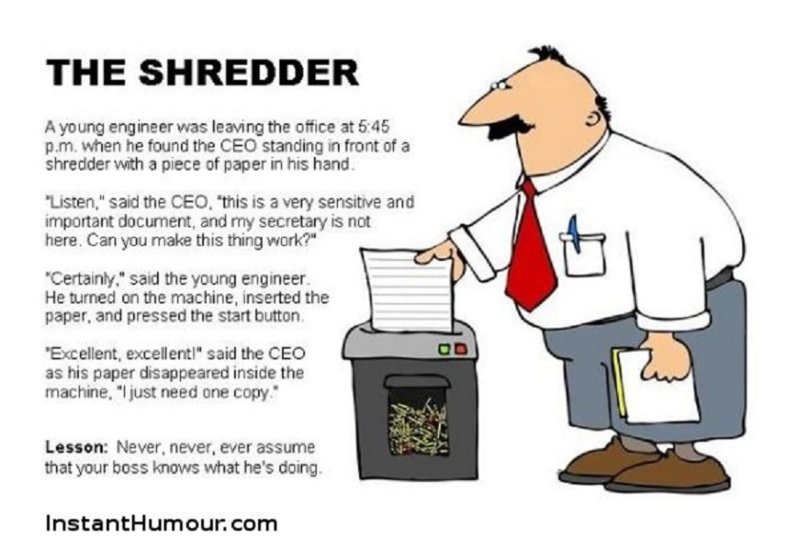
Sometimes it is better to have management where knowledge exceeds ego....

-
Kaz, So well said. You got me salivating. I need a fix. Right now. Pete
-
Dafydd, My interpretation of that is that we are not required to carry markings under the wings at all. And we are only required to carry 150mm+ markings on the side ? Or did I miss something there? If that is so, then it follows that there is little need to send in a photo of the wing, with the next registration renewal? Pete
-
Yup. She did !
-
And they are hoping that next week's spot landing competition is as much fun as the last one
-
More Hidden Treasure: now in Oakey
nomadpete replied to fly_tornado's topic in AUS/NZ General Discussion
Back in the early 70's I "almost bought" a new '42 WLA Harley from a chap who was assembling them from crates of parts that he had bought at auction. Then I thought to myself "Who, in their right mind, would spend that money on a dangerous, poorly braked, non-suspensioned, gutless heavy bike?" Instead, I went out and spent my $450 on a quick Japanese bike which had suspension AND brakes. Hindsight: " Who, in their right mind, would pass up the opportunity to spend $450 on an investment that would grow to maybe $30,000 now?" -
Maybe you just needed to discharge the hairs on your leg !