

nomadpete
-
Posts
912 -
Joined
-
Last visited
-
Days Won
6
Content Type
Profiles
Forums
Gallery
Downloads
Blogs
Events
Store
Aircraft
Resources
Tutorials
Articles
Classifieds
Movies
Books
Community Map
Quizzes
Videos Directory
Everything posted by nomadpete
-
Dead Stick Landing - meaning? I think the term 'Dead Stick Landing' harks back to the early days of aviation when they discovered that if the fan up front stops, the loss of airflow over the control surfaces results in loss of tactile feedback through the control stick. It felt dead and unresponsive. Hence - Dead Stick Not about the dead wooden prop. PeterT
-
AVGAS or MOGAS Gents, You have discussed the main (and very important) issues from the perspective of the motor. But what about the fuel tank? As soon as you put MOGAS into a fiberglass fuel tank there is the possibility of getting a batch of MOGAS which has some ETHANOL in it. From presonal experience, I can assure you that although I always purchased Premium unleaded for my ROTAX, the day came when my (factory built) fuel tanks developed pinholes in them. They had been fine for the first 13 years of use. Either they had a slow degredation, or they had a recent contamination of something not compatible with the resin. I vote for the Ethanol being the cause. Even the latest "Ethanol resistant" epoxies are subject to loss of strength when exposed to E10 fuel. I have serious concerns about the fuel tank issue since there are many aircraft with composite tanks. PeterT
-
Hi Boyd, Unfortunately Lightwing 0645 is not currently flying. The wings are stripped and I am getting new fuel tanks fabricated from alloy. The old tanks both developed leaks - some were holes through the back face of the tanks. I suspect e10 caused them. Also there was signs of repair around some of the through fittings. Anyway, to get to the point, you mentioned that you made some video of your big trip in her. What chance I could get a copy of it? Thanks again for doing the delivery run when I bought her. regards, Peter Thomas
-
I have read some contributions in one of these forums, which talk about Jabs developing a almost uncontrollable rising nose when doing a 'go around'. The description went something like this: Landing with full flaps, and when full power applied to do a go around, the nose comes up and is very hard to keep level, and airspeed started to drop. One person reported actually having to reduce power in order to get the nose down. One Answer: The Jab has a very effective servo type trim system which relies on airspeed to get its power. The more airspeed, the greater the trim force. So the the trim, which was correct for the quiet descent, will suddenly give a strong nose up force as soon as the throttle is opened up. It is likely that the above 'problem' could be instantly corrected by reaching across and RETRIMMING. Hopefully this will reassure those who have been worried. PeterT
-

Motor Gliders - thoughts?
nomadpete replied to nathan_c's topic in Gliders and Soaring Aircraft Usergroup
Nice to see that somebody has a soft spot for the humble K7. I went solo in one. Had a lot of fun in it out at DDSC. As you said, not fast but fun to fly and they can work weak thermals that the new high speed plastic gliders cannot. PeterT -
Wow somebody stirred up the hornets nest here! It is some time since I flew gliders at Caboolture, but when I did, the rule was that the gliders landed on the grass beside the working strip. If the wind changed, the pie cart was moved because it is obviously not sensible to work a contra direction nor to land down wind. In my experience, gliders are more tolerant of cross wind than powered planes. Quite often whilst operating out of Jondaryan (west of Toowoomba) we were limited by the crosswind rating of the tug, not the gliders. Caboolture is indeed a busy place on week ends. We desperately need more places to operate all forms of recreational aviation from. We also need to present a united front as recreational aviators, no matter whether we have motors or not. Please take the time to drop into the "other camp" and have a chat. It will break down the barriers and also aid understanding, which will eventually lead to less conflict in the air, and better safety for all. A few words spoken politely is not too much to ask. I'm not just preaching to the power pilots, the glider folk should visit the power club. It would be great if the gliding club would host a introductory flite program for power pilots so they could empathise with our needs, and also if the power flying schools could do the same for glider pilots. As an example, the Darling Downs Soaring Club used to occassionally host a BBQ for the Oakey Air Base staff and take them for TIF's for free just to let them know how we operated. It broke down the barriers. After all we were operating in a military control area and on week days could not fly without their permission. I'm not excusing the obviously unprofessional behaviour of some Caboolture GC pilots. Just looking for a positive spin. PeterT
-
Thanks Ross. I will look the Sonex up. God bless Google. Peter
-
I drove through the area yesterday, close by where he set the Yak down. My thoughts were on what it would look like from the air. Lots of tiger country there. Hills and forest. From 2500' AGL he would not have had much time to select his paddock. Also, when the noise stops unexpectedly, there is a credibility gap before the trained responses kick in. He did very well indeed. PeterT
-
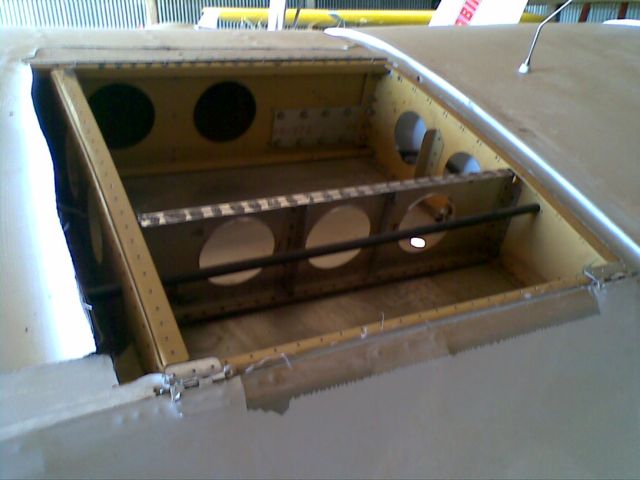
Yes, sadly these tanks are an integral part of the wings. They sit between the top skin and the bottom skin and you couldn't slide a tank in from the wing root due to the root rib.... pic shows tank with top skin removed. My only option is to build alloy tanks and rivet them to the top skin just like the old glass ones.

-
Ask your trusty insurance broker. My Lightwing costs around $2k for $48k cover. It also d3epends significantly on your pilot hours. PeterT
-
For an affordable introduction to unusual attitudes, try a visit to your local gliding club. Before you go solo, you are trained in recovery from fully developed spins, etc. It also gives you a slightly slower rotation,etc which gives you a better oportunity to come to grips with why the world is turning and why it is so suddenly went from under you to above you. Gliding won't be breaking the bank and gliders are allowed to do aerobatics (with the right training and endorsements of course). I think an Trial Instructional Flight would give you exposure to some aerobatics so long as you had a chat with the instructor first. PeterT
-
Survey on recreational pilots' perceptions of glass cockpits
nomadpete replied to Admin's topic in AUS/NZ General Discussion
My only experience with a glass cockpit was not at all reassuring. As a result of this experience, combined with a lifetime of working with electronics, I would only consider a glass cockpit when it was fully duplicated, along with a fully redundant power supply. I know that I could land my aircraft without an ASI, altimeter, tachometer, and all the less important indicators, but it qould be intimidating to be halfway to somewhere and have to complete a cross country trip into a strang place without these instruments. My experience was in a new aircraft with a glass cockpit. Just as we rotated to take off, the screen had a glitch and the operating system had to be rebooted. Sure, we could get along without the rolling map, but what worried me was that the PIC had to start entering commands on the touch screen to get it all going again. A couple of minutes later he proudly showed me the system working again. But we had gone quite a long way with no instruments and the PIC's head down, staring at a blue screen during those couple of minutes. Not a good feeling, I must say. One glitch and you've lost the lot. PeterT -
Fuel Quality and Fiberglass tanks
nomadpete replied to nomadpete's topic in AUS/NZ General Discussion
Well, I cannot be sure which brand - I have used a couple over the time. So I don't know who to blame. Anyway, since it takes time (usually) before such things as leaks occur, it is impossible to nail it down to a particular tank of fuel. There is also the other problem of an immediate fuel blockage which could be caused by a fuel contaminant or incompatibility. I am concerned about our safety in the long term. Maybe it is simply best to go back to avgas and do the Rotax maintenance more often. I have heard reports of carby damage to small engines (mowers, motorcycles, etc) which has stopped them. So the risk is always there when you use mogas. Thanks OZZIE for the link. Will check it out. Was trying to stir up any info about the mogas problems, since the fuel giants are not likely to be much help! PeterT -
I recently had a problem with fuel leaking from holes in my fiberglass fuel tanks. It transpired that there were small holes developing in them. Close examination of the inside of the tanks revealed some soft spots of about 3mm diameter, as well as the pinholes that went right through. The soft spots were dark in colour and this colour vanished when the fuel had evaporated. These tanks are over ten years old, but why did they leak? I have been using mogas, and it is possible that I had accidentally got some fuel with e10 in it. I go out of my way to avoid that stuff but maybe some servo operator just did not tell me the truth. The problem is this: How can we be sure that the fuel companies won't put some additive into their fuel which will cause a chemical problem with our fuel tanks or fuel system? Note that even so called fuel resistant epoxy may not actually be fuel PROOF! Check out this web article. Allow that it mostly refers to polyester fiberglass, but note that they did some tests on specifically ethanol resistant epoxy and it did not look good. BoatUS.com - Seaworthy Magazine Does any body know if there has been any objective research done on fuel effects on GRP? PeterT
-
Thanks Ross for the comment on surface tension, but the size of the fuel line should not be a problem. It is 5/16 I think. However there is a level section of the pathway up near the tank and I assumed that was the cause. Anyway, it was not a great problem, if I noticed that one tank was going down (standard crosscountry check), and the other one staying full, it was a simple matter to turn off one for a little while. All part of inflight fuel managenent. Still trying to figure out where to put a header tank. Even a small one would make a difference. ALW did caution me not to mess with the fuel system. Biggest issue though is about the really serious hazard of new fuel chemistry eating away at our fuel tanks or other parts of our fuel systems. Check out this site for some analysis. I know it is a boat site and that might be heresey to mention in these forums, but they did some real analysis on so called 'fuel resistant' epoxy. And that is the product that we are hoping will keep our composite aircraft in the air. Go to website for full page BoatUS.com - Seaworthy Magazine
-
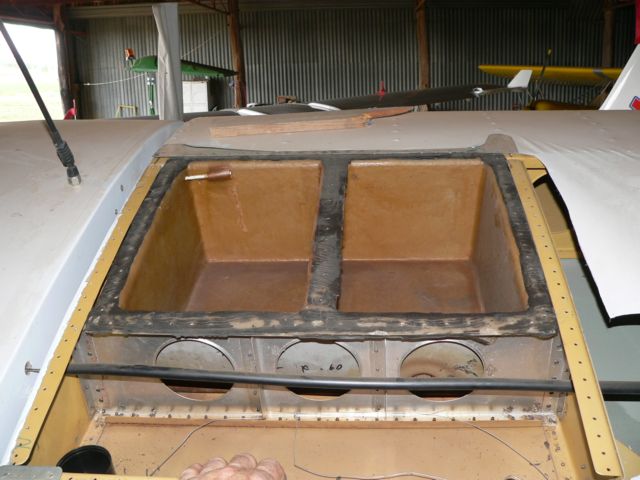
Maj, That's curious, I was not aware that ALW used alloy tanks. I assumed that since mine are glassed, then they all would be. The construction is a moulded 'handbasin', and that is pop rivetted (and glued) under the top skin of the wing. So the tank sits between two alloy skins of the wing root torque box. I still have not figured how those twin outlets work - the way I see it, as soon as one pickup sucks air, then the other one cannot suck fuel? I do get an air lock sometimes and that stops one tank from flowing until I shut off the other long enough to suck the airlock through. The whole fuel flow process seems to be more complex than it first appears. Many other a/c use a small header tank to make up for the occasional gulp of air. Peter
-
My GA-912 developed leaks in both fuel tanks. The most dramatic was three pinholes half way up the aft face of the tank. The largest hole was almost 3mm diameter. Was this a result of a chemical reaction from the fuel? Has anyone heard of similar problems with any aircraft? Has anyone heard of anyone installing fabricated alloy tanks to replace fiberglass ones? Anyone who knows Lightwings would appreciate how much work is involved in replacing the integral fuel tanks. Safe flying, Peter