cscotthendry
-
Posts
2,131 -
Joined
-
Last visited
-
Days Won
22
Content Type
Profiles
Forums
Gallery
Downloads
Blogs
Events
Store
Aircraft
Resources
Tutorials
Articles
Classifieds
Movies
Books
Community Map
Quizzes
Videos Directory
Everything posted by cscotthendry
-

Light aircraft crash at Heck Field 27/01/26
cscotthendry replied to red750's topic in Aircraft Incidents and Accidents
Brendan: there you go. You're comparing apples to oranges. As I and others have said, aircraft engines operate under completely different conditions to car engines. Car engines are designed to spend their life at 30% throttle OR LESS. Aircraft engines are designed to operate at 75% throttle OR MORE. Comparing mileage done by a car engine to the reliability required for an aircraft engine is a non sequitur. Besides which, the repercussions of engine failure in a car is totally different to an engine failure in an aircraft. Just ask the people this thread is about … oh, tnat's right. You can't because they're dead. If they had been in a car it would have been a completely different outcome. -
Light aircraft crash at Heck Field 27/01/26
cscotthendry replied to red750's topic in Aircraft Incidents and Accidents
Yes, modern car engines are built to closer tolerances … and that is a problem for using them in aircraft. Recently there has been a multi-manufacturer spate of auto engine failures due to closer tolerances and resulting lighter weight oils that make these engines very critical of manufacturing debris. They are failing due to debris that requires microscopic inspection to find, that is left as a result of the manufacturing process. These are new engines failing with as little as 30,000 miles in use in cars. But I'll repeat: Car engines are NOT designed with any consideration for use in aircraft and IMO have no business in any airplane. From what I have seen, people use car engines in airplanes to save money. How much is your life (or your passenger's life) worth? Again, just sayin' but if you have to pinch pennies to fly, you can't really afford to own an airplane. -
Light aircraft crash at Heck Field 27/01/26
cscotthendry replied to red750's topic in Aircraft Incidents and Accidents
And they benefit from inherent stability with the weight suspended below the wing, so no need for much dihedral for stability. They also benefit from extra ground clearance to the wing, which is very helpful in an outlanding. They also benefit from better view of the ground from aloft. IMO, I can stand on the ground and look up at clouds all day, but to get up high and see the “god's view” of the world is why I fly. Also, I sunburn very quickly here in Oz, so I naturally prefer to have a “roof” over my head. Just my 2¢. -
Light aircraft crash at Heck Field 27/01/26
cscotthendry replied to red750's topic in Aircraft Incidents and Accidents
No matter how you look at it, automobile engines and aircraft engines are designed for different purposes. Aircraft engines are designed from the ground up, to operate at 75% throttle (or more) for most of their operational life. Auto engines are designed for 30% throttle (or less) for most of their life. IMO, modifying car engines for flying is painting lipstick on a pig. And comparing the miles done with an engine in a car, to the potential reliability in an aircraft is misguided at best. Additionally, low wing aircraft with bubble canopies are death traps. If you have to put an aircraft down on rough ground, there's a good likelihood it's going to end up on its back. There have been many outlandings where the occupants of these types of planes survived the crash and died in the post-crash fire because the plane was upside down and they couldn't get out. I'm not claiming that's what happened here, but I've never liked that configuration, on safety grounds. Flying is totally unforgiving of failures and mistakes. Why increase your chances of dying, just to save some $$$. -
Two helicopters collide on the Gold Coast 02/01/23
cscotthendry replied to red750's topic in Aircraft Incidents and Accidents
On Monday, I did a lap of Moreton and Straddy. There were these same helis flying out of Tangalooma resort. On at least three occasions, I heard one of the helis step on other radio transmissions. That all occurred within a ten minute period. It was quite clear that the pilot of the heli couldn't hear the other aircraft's transmission, before he keyed up to make his own broadcast. I can tell you that I was keeping a very keen eye and ear on these cowboys as I flew overhead of them. -
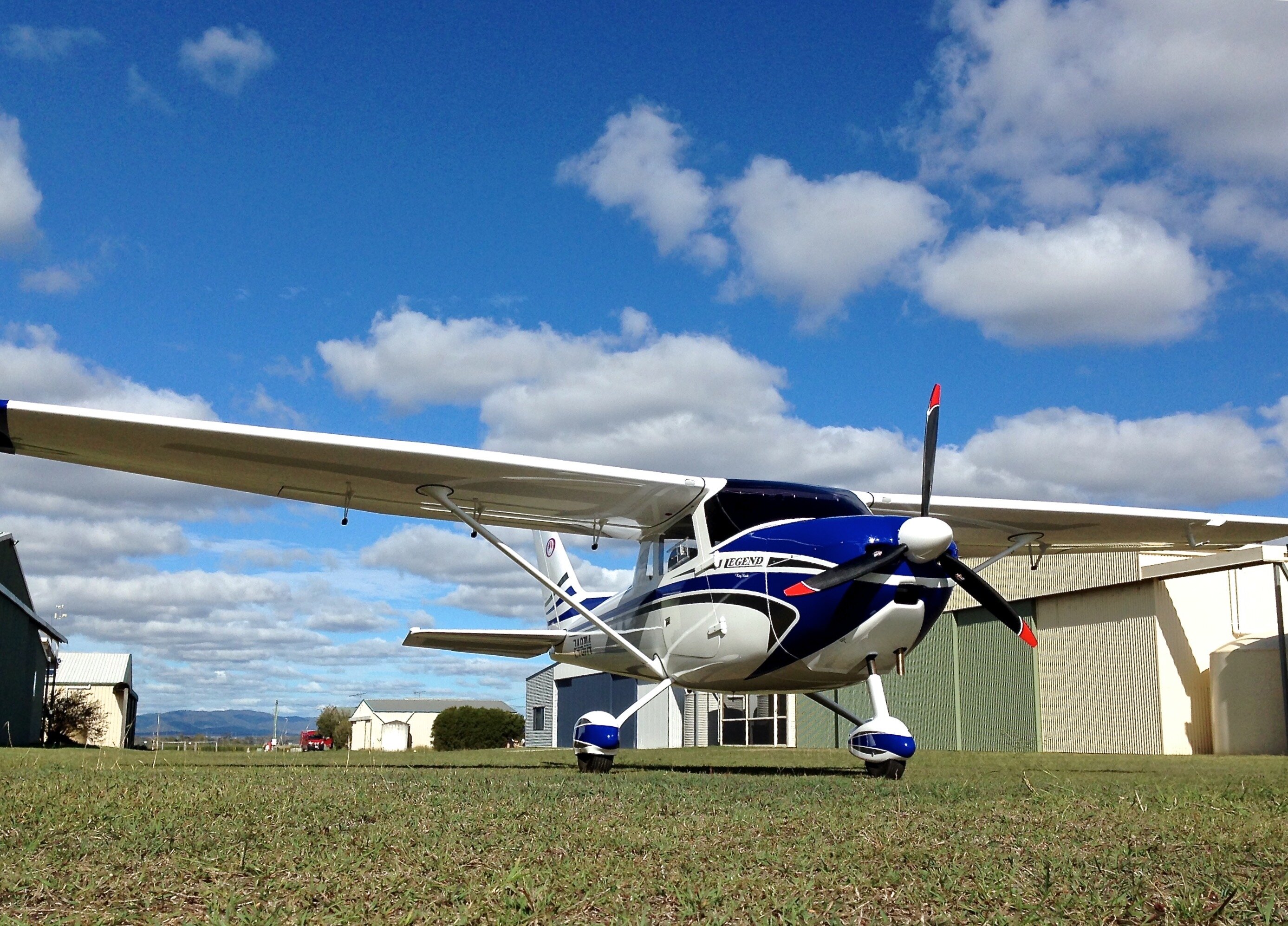 2015 Aeropilot Legend 600 LSA For further details, see the ad in the PDF file or contact Scott on 0438127488 Sale Ad.pdf
 -
800 feet is definitely illegal in the UK fo drones. But going by the numbers, the airliner was at 750’ at more than 5 klm from the end of the runway. Can any of the airline pilots here tell me if that's a normal approach?
-
Another great trip vid • RV12 takes off for a big lap
cscotthendry replied to Garfly's topic in Trips/Events/Seats
Thanks for sharing, Gary! And thanks for the plug for our series👍 -
Hi Keith. Thanks for the invite. I'm currently near Manchester, heading next out to Wales. Eventually we're heading down South and we'll try to engineer a pass through your way. Scott.
-
G'day UK fliers. I'm touring in the UK and would welcome a catchup if schedules and timing permit. I'm currently in Barnsley heading for Wales and then South to eventually make our way to Reading. Any takers?
-
Circuit Issues at uncontrolled aerodromes
cscotthendry replied to kgwilson's topic in Aircraft General Discussion
I would never attempt something like that, especially in such a busy circuit. But I do regularly communicate with other traffic, in the circuit and elsewhere. -
Or a similar situation that happened to me: You key up the transmitter to make your Joining call at the same instant another plane does. Neither of you hear the other's call and you end up at the same point in the circuit. I had joined the circuit at Gympie, made a joining call and heard no other radio calls and neither did my pax who is a commercial pilot. Just as I was about to key the TX for my Base call, I heard "Gympie traffic, Jabiru xxxx turning base for 14." and a second later a Jabiru popped out about 20 feet below me and turned base!
-
LOL The 146 was four vaccuum cleaners flying in formation. But seriously, I always wondered at the design decision that equipped such a small aircraft with four engines.
-
 Sum Ting Wong. Double post
 -
Victor 1 at 80 knots https://youtu.be/RgKlpDKuoC0?si=ma8On83oZDXSMMVn
-
I'll third that, call on joining and on base … but for everyone's sake, Base call WITH intentions. Also, while I'm on a rant, will people please give an ETA to circuit when doing their 10 mile inbound call! Please don't make the rest of us have to calculate if we're going to be in conflict with a trike or a RV rocket ship. It's easy enough to get your GPS or EFB to show you a circuit ETA so you don't have to do maths in your head, which BTW you SHOULD be able to do for your aircraft from when you did your Nav training.
-
Preston Beach W A Accident 16th April
cscotthendry replied to Rotorwork's topic in Aircraft Incidents and Accidents
This was investigated by RAAUS and ATSB with input from the manufacturer. I'm beginning to see from some of the posts here what the RAAUS people warned me about wild speculation about crashes. -
Preston Beach W A Accident 16th April
cscotthendry replied to Rotorwork's topic in Aircraft Incidents and Accidents
Yes, the pilot is a very experienced pilot and also a friend of mine. He claimed that they lost longitudinal control and then pulled the chute. My contention is that once you deploy the chute you could end up on a building, in powerlines or a lake. In the pics that I have, the H.Stab was still attached to the aircraft even after a devastating impact with the ground. In spite of that we have to take the word of the people aboard the aircraft that it was uncontrollable. I'm satisfied that the pilot would not have pulled the chute if he thought the aircraft could have been safely landed. He loved that airplane and so did his wife. -
Preston Beach W A Accident 16th April
cscotthendry replied to Rotorwork's topic in Aircraft Incidents and Accidents
As it turns out it wasn't a structural failure. A loose tailplane mounting caused loss of longitudinal control and they pulled the chute. The manufacturer's opinion (and mine after viewing the crash pics) is that the vertical fin was broken off by the parachute straps. It appears that just before touchdown, the chute snagged a large tree and yanked the plane out of the air. It looked like as the aircraft slewed round, the parachute straps raked across the tail breaking it off. 600kg of aircraft and pax on one end of the straps, a huge gum tree on the other end and the poor little tail in the middle. Something had to give! And that IMO is one of the major drawbacks of recovery chutes. Once you deploy it, you totally lose control of where you're going to end up. They could have ended up in the middle of a dam or a lake, or on top of someone's house etc. -
Preston Beach W A Accident 16th April
cscotthendry replied to Rotorwork's topic in Aircraft Incidents and Accidents
The feedback I've had so far is that is could be related to a SB issued by the manufacturer concerning the H stabilizer mounts. But I'm a bit puzzled how that relates to the V fin breaking off the way the picture shows. I've included the pic from the newspaper article.
-
How we teach stalls
cscotthendry replied to cscotthendry's topic in Student Pilot & Further Learning
I'm very wary of formulaic rules like “Stall Stick Position means it's stalled, otherwise it's not.” There are too many variables in flying to make formulaic assessments like that. And I guess, that comes back to my point. Pilots are taught implicitly, that the aircraft is stalled when the nose is pointing at the heavens and the controls are back in your chest, because that's how it was in training. And the corollary to that is that if the nose isn't pointing way up in the sky and I don't have the stick back in my crotch, then the aircraft's not stalled. Which is what I think the other poster was claiming. That's almost always going to be followed by confusion and a loud BANG! -
From what I've heard, the side door on a low wing is a double edged sword. Apparently, if the door pops open in flight it disturbs the airflow over the wing and can be a hazard at low (near stall) air speeds. That is for doors that open forward. I don't know about gull wing doors. But with gull wing doors, you're back to being trapped in a flip over.
-
What the H*ll has LGBT got to do with electrical principles? That's as specious as the "High voltage electrical current" you objected to. Disconnecting the alternator from the load causes the voltage across the induction coils in the alternator to rise past the breakdown voltage of the diodes. This causes current to flow backwards through the diodes and can cause them to fail.
-
Peter Dinklage could ...🤣
-
How to hold nylocs from spinning
cscotthendry replied to Bruce Tuncks's topic in AUS/NZ General Discussion
I'm guessing from the question that putting a spanner on the nut is not possible? But you didn't mention that. If that's the case, I wonder how they were done up in the first place.