T510
-
Posts
348 -
Joined
-
Last visited
-
Days Won
7
Content Type
Profiles
Forums
Gallery
Downloads
Blogs
Events
Store
Aircraft
Resources
Tutorials
Articles
Classifieds
Movies
Books
Community Map
Quizzes
Videos Directory
Everything posted by T510
-
The story of the Optica planes. YHOX gets a mention too!
T510 replied to flying dog's topic in Aviation Videos
There are 2 on the register, VH OPI and VH BMC. Both owned by C. Waterhouse -
I'm hoping the family take the not so subtle hints I have been dropping and I get a Garmin D2 Mach 2 for my birthday. Alternatively if I get a decent bonus this year I will buy one myself https://www.garmin.com/en-US/p/1373810/pn/010-02905-30/

-
Your response is laughable, especially the random capitals. Thousands of aircraft have been safely flying all over the world for decades on automotive fuel. Just because IOR release AVpulp at 4 airports in NSW and Vic you carry on like PULP is no longer suitable and should be avoided at all costs. If we all bought in to your negativity and wild theoretical situations were we might lose OUR house we would give up flying straight away. You always say don't shoot the messenger, I am not, it is the message I have an issue with. Comments like "Auto fuel is made of anything they want to Put in it.. " is laughable and complete misinformation. The petroleum industry is highly regulated and for good reason
-
I'm with you on this one Skip, apart from IOR's marketing material there seems to be very little technical data supporting their clams. I can't find a specific standard for AvPULP, it appears to be made to the usual fuel industry PULP standard but with claims of "superior aviation specification additives". The only advantage I see to AvPULP is the convenience if you happen to be at one of the 4 airports that have it available.
-
After 55 years in the business of repairing gauges I would expect Howard have a pretty good idea of how to calculate their lead times. It's not that hard. Given they have just relocated I would expect there may be some delays but it's not hard to indicate that to your customers. All that said I will still keep using them when required.
-
Spreading misinformation again Nev, maybe you should check the regs before you comment. If you have an RA-Aus pilot certificate An RA-Aus pilot certificate is equivalent to an RPL. To get a CASA-issued RPL: complete application form 61-1RTX Recreational Pilot Licence and send it with evidence (the form tells you what to provide and how to submit it) do the flight review for your aircraft rating. Your category rating, aircraft class rating and design feature endorsements will transfer across. You will also get a recreational navigation endorsement if: your certificate authorises you to do cross-country flights you've done at least 25 hours flying time, including 20 hours dual and 5 hours as pilot-in-command. Taken from the CASA website here; https://www.casa.gov.au/licences-and-certificates/pilots/pilot-licences/getting-recreational-pilot-licence-rpl#Addingendorsements
-
That's disappointing, It's understandable that they are busy but they could at least give you an accurate timeframe.
-
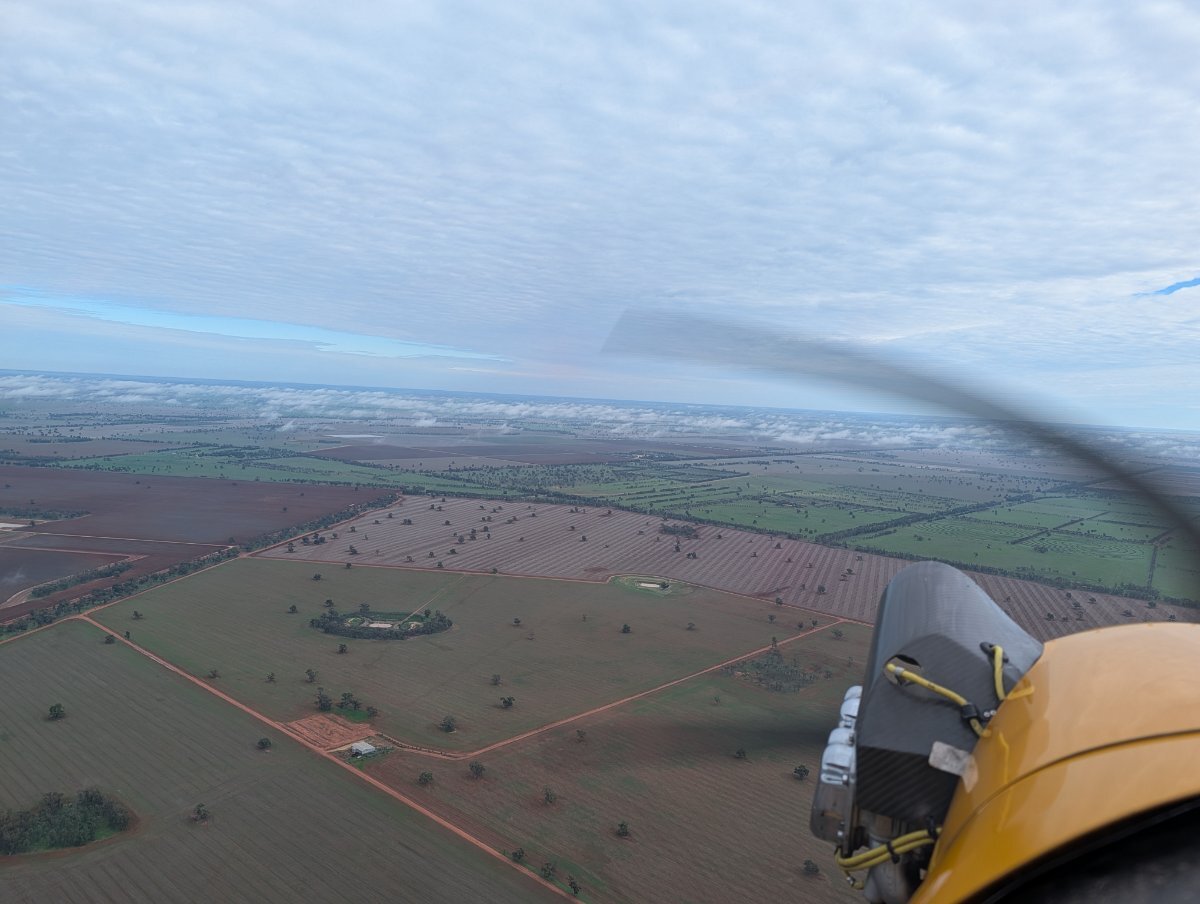
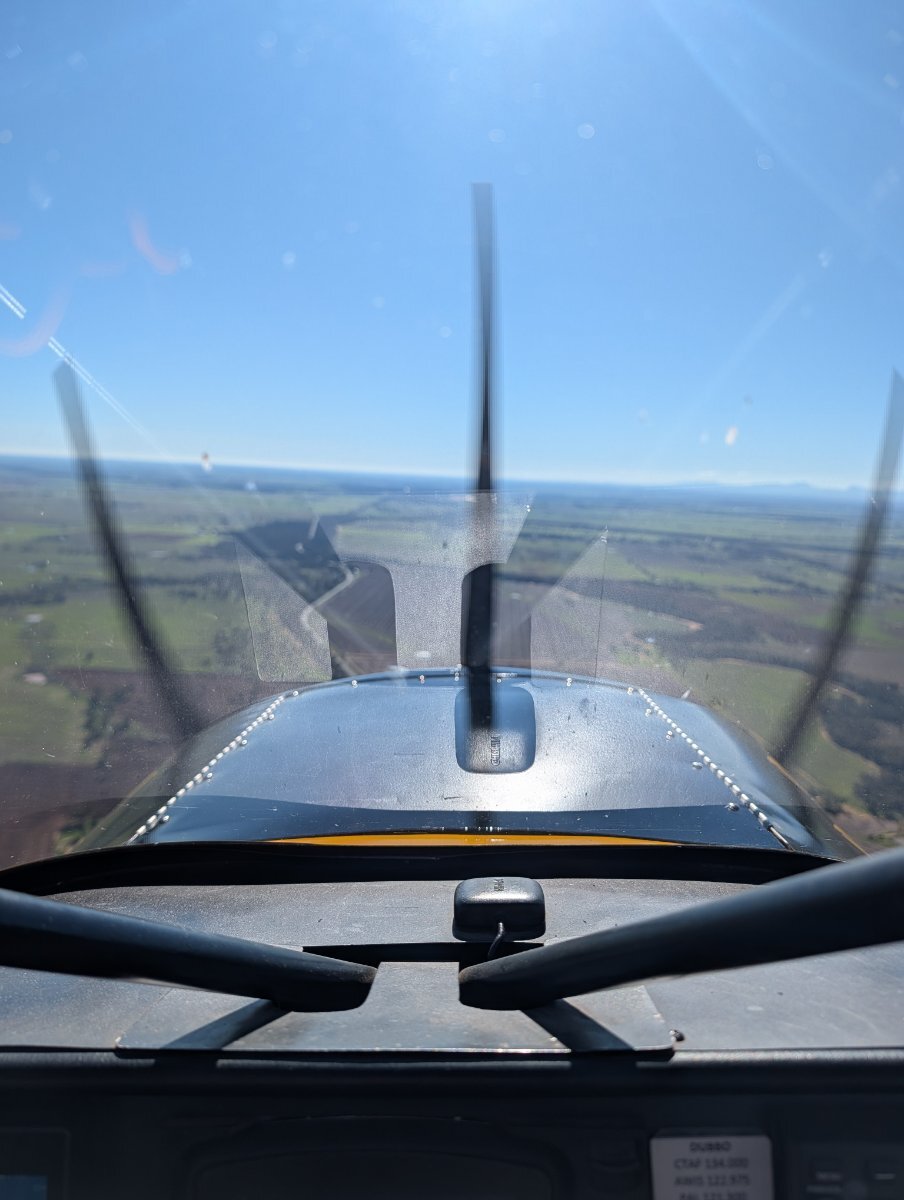
Hey Del, I drive 10 hours to train with Wings out West in Dubbo. I wanted to learn in taildraggers and they are one of the few remaining schools that offer the option with their Legend Cubs. They also give you the opportunity to land "off airport" as they have a range of local properties they are allowed to operate out of. I found this a huge advantage when doing practice forced landing training as I was actually landing, rather than aborting the exercise at 500ft like a lot of training schools do. My experience has been great, Dan, the CFI, and Coops are great instructors. I found their teaching style works well with the way I prefer to learn. I took a week off work and did all my theory training and 18 hours of flight training in that week. I used the Bob Tait books and Pilot Practice Exams for my theory and studied for a couple of months before heading up for the week of flying, theory and the theory exams. I was doing 2 x ~90 minute flights a day and found that to be my personal limit to keep improving whilst under instruction. How I did it wouldn't work for a lot of people so it is important you find the best methods that work for you. A lot of people find it hard to absorb and process more than one 60 - 90 minute flight a day. One thing I found very helpful was daily debriefings with a mate who started his RPC path a year before me. I am currently getting all my endorsements sorted out on my RAAus RPC before I transfer to a RPL under CASA. It is one of the most challenging and rewarding things I have done and I highly recommend it.
-
How did you go with this Brendan?
-
Phil Unicomb Aviation is north of Cessnock, have only heard good about him. I'm still in the early years of my entry in to recreational aviation. Can't give any advice on taking it on as a profession.
-
Could be a low oil pressure light sender, only way to be sure would be to trace the wire back to the other end, or unplug it and see what stops working
-
RAA MEMBER AND SUBSCRIBER NEWSLETTER 2 July 2026
T510 replied to skippydiesel's topic in AUS/NZ General Discussion
Interesting to see they give a JASO standard alongside the Rotax RON 424 standard "JASO MA is a Japanese standard for four-stroke motorcycle oils. It certifies that the oil has the correct frictional properties to prevent clutch slippage in bikes with shared engine, gearbox, and "wet" clutch systems, and contains minimal friction modifiers" Does that mean other JASO MA standard oils are compatible? -
RAA MEMBER AND SUBSCRIBER NEWSLETTER 2 July 2026
T510 replied to skippydiesel's topic in AUS/NZ General Discussion
How does an oil become "not suitable anymore" when it was suitable from 1989 when the 912 series was released. Obviously different 912 models and derivatives may require different oil grades but if you have been using brand "x" oil for 20 years with no issues it begs the question how it becomes no longer suitable and why is a change required. A change in the SportPlus4 formula (if there was one, I don't know) doesn't make previously suitable oils no longer perform at the level required. -
RAA MEMBER AND SUBSCRIBER NEWSLETTER 2 July 2026
T510 replied to skippydiesel's topic in AUS/NZ General Discussion
I'm with Skip on this one. I don't think it is appropriate behavior from RAAus. Regarding oil standards, they are well established and have been around for over 100 years. Rotax originally specified a high-quality 4-stroke motorcycle or aviation oil with an API classification of "SG" or higher because the engine features an integrated gearbox. They also stated gear additives are required, but no friction modifiers should be used. Plenty of Rotax's are around that have been running oil that meets that requirement without destroying themselves. While SG is now obsolete, any modern API SP, SN, SM, SL, or SJ motor oil is a direct equivalent to the obsolete API SG rating. Current API classifications are fully backwards compatible with earlier classifications. -
I'm a big fan of the RV15 but I would be hesitant to order a wing and tail kit when the fuselage kit is yet to be released. Here's hoping they keep getting more robust as a company, I hate to see any kit manufacturer fail.
-
There's a pdf in this thread with engine /gearbox numbers
-
CASA Urgent Airworthiness Directive/Rotax Engines
T510 replied to skippydiesel's topic in Aircraft General Discussion
It's described as an approved method in the Rotax document if I read it correctly -
CASA Urgent Airworthiness Directive/Rotax Engines
T510 replied to skippydiesel's topic in Aircraft General Discussion
In the Rotax service bulletin it says "Labor time A labor credit will be provided for work performed by a technician with current applicable iRMT rating. To apply for labor credit, contact your ROTAX® Authorized Distributor or their independent Service Centers." Also "Any possible support by BRP-Rotax will be provided on request by ROTAX® Authorized Distributors or their independent Service Centers. Exchanged parts must be returned FCA (Free Carrier) and/or proof of scrapping parts must be provided to ROTAX® Authorized Distributors or their independent Service Centers. This exchange program and cost sharing is valid until June 23th 2027. Up to this date limited reim-bursement of costs can be applied for. Shipping costs, downtime costs, loss of income, telephone costs etc. or costs of conversion to other engine versions or additional work, as for instance simultaneous engine overhauls are not covered in this scope and will not be borne or reimbursed by ROTAX®." -
Do what Nev says, not what Nev does and I am sure you will be fine. No point trying to discuss anything with him, he knows best and everyone else is wrong.
-
Couple of big days training to complete my XC endorsement. Great fun flying around doing touch and goes at a whole lot of different airstrips. Really enjoyed the theory, doing planning on paper and using OzRunway. Got to say I prefer navigating with out following the magenta line. I just ended up using OzRunway as a digital map and working off my flight plan notes, landmarks and the time.
-
So if you don't turn 56 this year, you haven't built a Viper, spent time in the Army and live in Canberra you had better not comment. But it's ok to talk about your pets licking you in a thread about landing fees...... Try for a bit of consistency Nev.
-
I don't see it as off topic. It's about building planes and getting your licence, just not specific to 56 year olds. 2 out of 3 is hardly off topic compared to what usually happens here
-
Pick the method that works best for you. Everyone absorbs and retains information differently. It's not something that can be generalised. For some people, they learn better over a long period, other people will not retain the information from lessons from 12 months earlier. Especially if they are not using it often. I found studying the theory for a couple of months followed by a week of flying, theory and the theory exams worked best for me. I was doing 2 x ~90 minute flights a day and found that to be my personal limit to keep improving whilst under instruction.
-
Baz, I took a week off work and did ~18 hours of flying and all my theory. Was a great experience and worked well for the way I learn. I used a combination of Bob Tait books and Pilot Practice exams to get through the theory. Flying is one of the most challenging and rewarding things I have done.
-
I started at 49, went with Wings out West in Dubbo as I wanted to learn in tail draggers