

Ian
-
Posts
519 -
Joined
-
Last visited
-
Days Won
11
Content Type
Profiles
Forums
Gallery
Downloads
Blogs
Events
Store
Aircraft
Resources
Tutorials
Articles
Classifieds
Movies
Books
Community Map
Quizzes
Videos Directory
Everything posted by Ian
-
Diesel engines can generally run on waste oil vegetable oil or biodiesel. Biodiesel is similar in viscosity to dino diesel so is a drop in replacement in most cases. Running on pure vegetable oil generally requires a preheater and there are more issues associated with residuals. Biodiesel is created by the transesterification of vegetable oils using methanol/ethanol and a catalyst like sodium hydroxide (NaOH). Basically you mix the ingredients and the lighter alcohols replace the heavier glycerols in the vegetable oils making it less viscous and lowering the cloud and pour point. However the cloud point and pour point remain higher than traditional dino diesel which is an issues for planes. The source oils or fat is the key determinant on the cloud and pour point with tallow and solid fats creating having higher pour points than biodiesel made from oils like canola. It's also a better solvent than traditional biodiesel so it will dissolve all the deposits that have built up over the years which tend to then clog fuel filters etc. So you need to replace filters after the first tank of biodiesel. It may also dilute your engine oil if your engine relies on a burn off process to clean your particulate filter. This is because it doesn't vapourise quite as well as diesel and car manufacturers were too cheap to put a separate injector into the exhaust system and instead activate engine injectors on the exhaust stroke to initiate the particulate burn process. More biodiesel ends up on the cylinder wall and then into the sump as a result diluting the oil. It may also react with gaskets, hoses and seals which were fine with diesel, however most European and Japanse engines made since the 90s are made from materials that don't react. On the bright side it has much better lubrication properties than traditional diesel so injectors, engines, etc last longer. Testing in the US found that it was used as an additive to traditional diesel it performed better than the commercially available additives. There have been a number of studies which support this so adding biodiesel to your dino diesel is likely make your engine last longer. https://www.sciencedirect.com/science/article/pii/S1876610215013879 As for aircraft use, there have been a number of studies on various biodiesel blends or pure biodiesel fuelstock in turbine engines and it appears to be a workable solution. Economically not so much with the current price of oilseed crops. But it is significantly cheaper than hydrogen. Basically if you live in a reasonably warm climate (most of Australia), run diesels and have access to waste vege oil it's an option.
-
One thing that's surprising is that the power/weight ration of the Guiberson engine 0.781 kW/kg is better than the Austro Engine 0.67 kW/kg. The BSFC of the Guiberson was 232 g/kWh however I couldn't find any specific mentions of the BFSC of the Austro engine however based upon the figures in the wikipedia article are 221 g/kWh and 200 g/kWh at full power and cruise respectively if my calcs are correct. The Junkers Jumo 204 two stoke diesel operated at 211 g/kWh which is pretty good for a two stroke of WW2 vintage with a power/weight of 0.74 kW/kg. It makes you wonder how these these engines would run with a modern common rail injection system. You can compare that to 275 g/kWh for an O-235. Also remember that this is in grams with heavy fuels being about 12% denser than AVgas. ie 0.262 L/kWh for the Junker vs 0.370 L/kWh for the Lycoming. Effectively this means about a for every litre of diesel fuel you'd burn 1.4 litres of AVgas at the same power output. Food for thought especially if you run on biodiesel.
-
There's a good body of knowledge in this area. I was aware of the Guiberson however I didn't realise that Caterpillar redesigned the R-1820 which is interesting. Thanks for the mention of Chaz, I found a link to his plane. The drive to innovate appears to be alive and well in NZ. http://nzcivair.blogspot.com/2015/07/charlie-kennys-jodel-d-150x-zk-ccd-has.html The subaru engine appears to use a simple offset gearbox. However as many can attest reduction gearboxes are hard work. With an opposed engine like this they might have been tempted by a planetary gearbox however they're difficult to get right as well.
-
Does anyone know of a project to put an auto diesel in an experimental plane or if this has been done successfully anywhere. The dedicated aero engines just seem to be too expensive for the market. Whenever I see a jetfuel tanker my mind wanders and starts going down the path of wouldn't it be nice if I could just use that fuel or diesel.
-
I think that electronics generally will be more reliable and lower maintenance than IC vehicles. However I suspect that they won't age particularly well. By that I mean that I don't think that 30 year old teslas will ever be a thing. I've got an music amplifier that about 12 years old which I've replace a few diodes in already however it's behavior is becoming increasingly erratic. I guess I'll buy a new one. Engines made of cast chunks of metal will age better but have higher operating costs. Parts will still rust but they'll be discrete and replaceable. Electric planes might be able to meet a few niche roles like flight schools with or short intra city commute roles. However the energy density's just not there and is unlikely to ever be there unless you go the nuclear option. For those with an interest in nuclear technologies the Aircraft Nuclear Reactor experiment was a demonstration of the first MSR which is finally being considered as a reactor technology. I'm not sure if I'd like flying reactors though. Anyway which the recent political machinations the whole climate denial debacle should be in the back seat for a while while the Liberals go through grapple with the realization that they represent and don't lead the people. If you only represent a minority that's the number of seats that you'll have.
-
The best part of this is when the persons experience of this practice is queried.
-
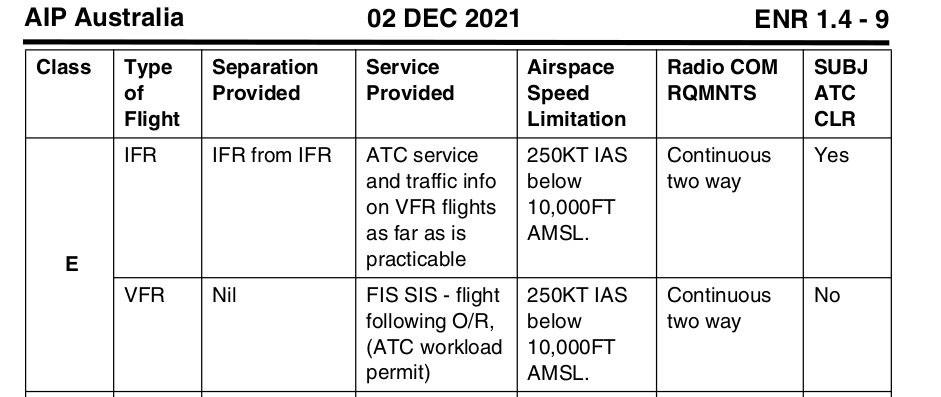
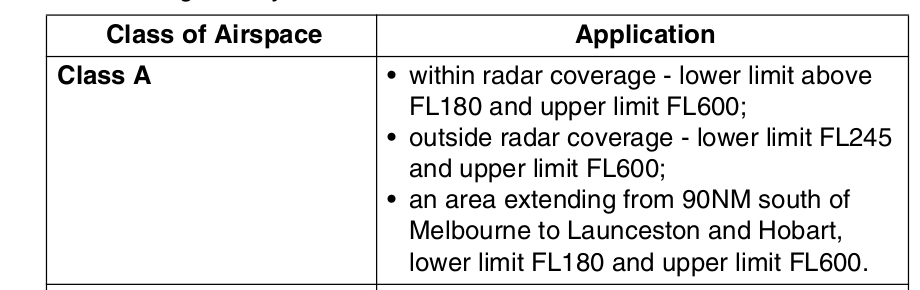
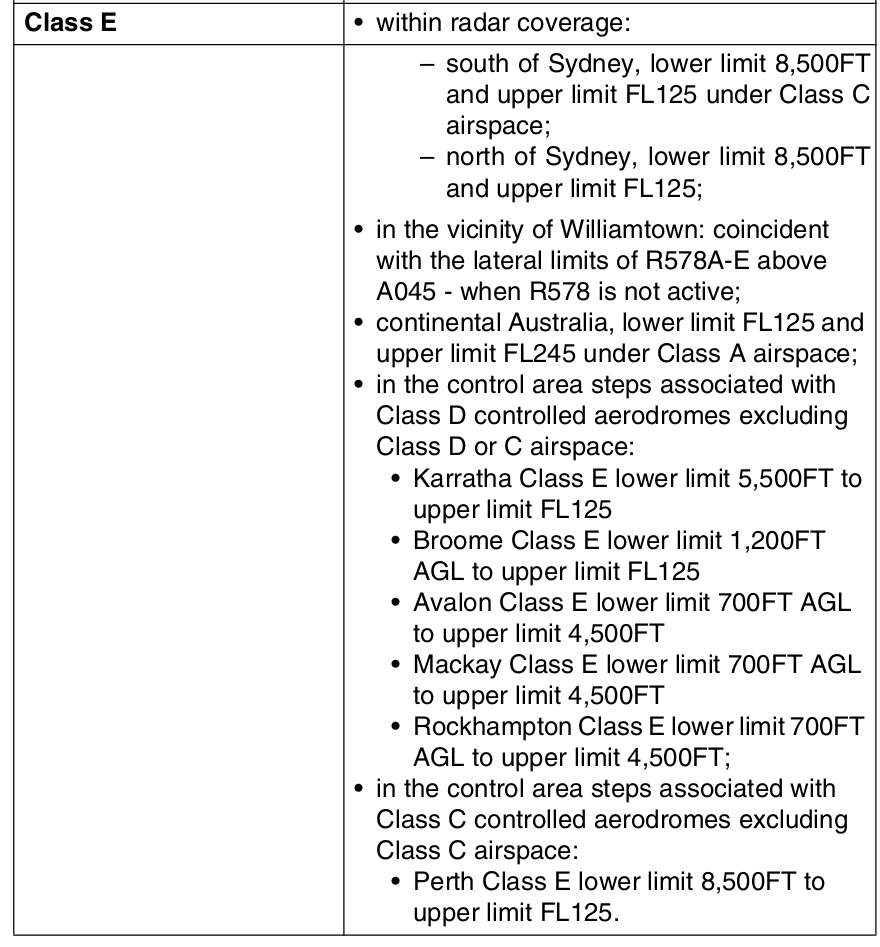
Clear as mud without a map of radar coverage. 😉 However the AIP ENR 1.4 provides a more detailed version of the current CASA pdf extracts below. I couldn't find any reference in AIP ENR 1.4 relating to FL210 so is this a rule of thumb or a defined ceiling? So, aside from the practical limit, you could in theory, VRF to FL245 outside radar coverage zones. (If you had a definition of what the radar zones are, for example do they change during rain periods) If practicability is an issue you could of course do VFR on top at FL245 of invisibly wispy cloud. Of course you might want oxygen and a mask as canulas aren't rated at that altitude. Not saying that this is gospel however it would be nice to set a few bounds. As more zones decommissioned due to ATSB the non-radar areas may expand. One other thing that was of interest is that the boundary is regarded as existing in the less restrictive airspace.

-
Hi Facthunder, Would you know where this is codified/legistlated? So even if you're in class E airspace at FL 230 you must be IFR, or is the CASA document out of date? Also what happens above 60,000 are you VFR again?
-
Just a question about the current state of the airspace. This PDF has the following. Above FL245 outside radar coverage, Above FL180 within radar coverage Whereas Airservices provides the an airspace definition on here which states that class A is from 18000-60000 feet. I suppose the key question is which is correct and are the radar boundaries accurately defined?
-
The history of lead in fuel • a Veritasium video
Ian replied to Garfly's topic in AUS/NZ General Discussion
I suspect that there has been a combination of causes. AVGas is a significantly higher margin product that mogas so of course even through the market it comparatively small it's worth fighting for. The engine makers didn't want to do more design and testing. The most profitable route was to keep pushing existing designs. Existing infrastructure, legally once you put leaded fuel into a system it's difficult to change. Lead poisons a range of sensors and catalysts which modern engines rely upon. This has made it easy to justify keeping two systems. Individual bias, change is hard and there is always the desire to keep doing what you've been doing. About 1 in 5 planes requires some form of modification to run mogas. The lucky owners have been vocal about ensuring that others subsidize their design choices. The hands on management appeals to me too. But I'd also like to have decent sensors to tell me when things aren't right. -
The history of lead in fuel • a Veritasium video
Ian replied to Garfly's topic in AUS/NZ General Discussion
It's not your imagination, 91 octane E0 Mogas has 3%-5% more BTUs/gallon than 100LL. Lead deposits from 100LL can reduce power, though. https://generalaviationnews.com/2011/03/16/10-mogas-myths/ So when you're flying into the unexpected headwind on a long water crossing you might wish that you had a tank full of mogas rather than avgas. One hypothetical that I've thought about was if you had to buy some low octane fuel when avgas wasn't available could you just retard the throttle until you were at altitude as you're effectively lowering the compression. Wouldn't it be nice to have a fully instrumented engine which could run on cheap fuel, detect knock, inject MW-50 and retard ignition as required. -
The history of lead in fuel • a Veritasium video
Ian replied to Garfly's topic in AUS/NZ General Discussion
The transition should have been implemented long ago. I'm actually on the airports side on this one. There's been more than enough time for an orderly transition and the science behind lead toxicity isn't going to get better. In fact is has been growing worse over time. The bad news is that any plane that can only run on leaded fuel is worth less. So consider whether STC etc The lead crime hypthesis is an interesting one. https://en.wikipedia.org/wiki/Lead–crime_hypothesis -
The history of lead in fuel • a Veritasium video
Ian replied to Garfly's topic in AUS/NZ General Discussion
Children in and around Broken Hill are being subject to environmental lead loadings which are likely to lead to mental retardation and behavioral issues. https://www.phrp.com.au/issues/march-2022-volume-32-issue-1/blood-lead-levels-among-broken-hill-children/ https://theconversation.com/toxic-playgrounds-broken-hill-kids-exposed-to-poisonous-dust-32325 The US now places recommends children have below 3.5 μg/dL. https://www.cdc.gov/mmwr/volumes/70/wr/mm7043a4.htm?s_cid=mm7043a4_w Piston Engines generally work just fine without TEL. An estimated 80-83% of the US GA fleet could run on mogas. https://generalaviationnews.com/2012/07/12/new-study-shows-autogas-can-power-80-of-piston-aircraft/ For the other 17% it might be time to look at proven measures such as MW 50 That's why I think that mogas is actually the GA fuel of the future. In a world looking to phase out fossil fuels the likelihood of creating an entirely new fuel stream to address a decling GA fuel market is pretty unlikely. I wouldn't invest in that business plan. For starters given a choice between $2/L and $3/L to do the same job it's not a difficult choice, most people will follow their wallet. -
There are a number of issues with the ASIC Card beyond their basic utility value. Their fundamental role was to reduce terrorism style attacks and it about as effective as requiring people to wear a T-shirt saying "I'm not a terrorist". The card is only valid for a short period of time compared to other credentials. Passports are valid for 10 years and licences for 5. The cards are just bits of plastic and don't conform to baseline security standards compared to other Government or commercially endorsed identifiers no secure element, no machine readable component. They have a holograms however these aren't great security and can be forged relatively easily If there's a requirement for security checks to be done, CASA should provide a proper electronic license rather than a paper based one which has a simple colour coded symbol affirming that you have undergone a security clearance and are suitable to have airside clearance. The real flaw in ASIC is the fact the crew of a foreign aircraft are exempt. So someone with a uniform and a cardboard ID is off the hook. Effectively the crew of a charter aircraft can wander around the airport while it's parked in the airport. So if someone chartered a foreign plane they could effectively claim that they don't need an ASIC as long as they were performing an operation. I think that the term half baked applies. From the act, Aviation Transport Security Regulations 2005 3.05 Crew of foreign and state aircraft etc Despite regulation 3.03, the following people need not display an ASIC in a secure area: (a) a person who is a member of the crew of a foreign aircraft (other than a state aircraft) that is engaged in a regular public transport operation or a charter operation and who: (i) is in the uniform of the aircraft operator; and (ii) displays appropriate identification issued or authorised by the aircraft operator;
-
With hydrogen fuel the logistics at airports would be a huge issue. For example KLAX used about 50M Barrels a year which is about 26 million L a day. Currently at LAX there are multiple airport feeds from offsite storage allowing multiple fuel companies to distribute fuel via an underground fuel network which is pumped into planes There also need to be the ability to unload fuel, hydrogen especially would need to be offloaded to keep it cool. The whole system would need to operate at cryogenic temperatures in all sorts of weather conditions. You'd also need to operate this system in parallel with existing fueling systems for a significant period of time. But the challenge would be the handling of a potentially explosive mixture compared to a relatively inert one in the quantities required in close proximity to thousands of passengers would be difficult. So you might force refuelling to be conducted in an area away from passengers. It just sounds hard and dangerous. More likely that a synthetic carbon neutral fuel will be developed which can use the same infrastructure.
-
Hi, I was wondering if you could tell me anything about currandooley airstrip and what's currently out there?
-

G'day Ian, as you maybe aware, I sold my Thruster last year. It was based at Currandooley. Place is owned by the Osbourne family and I had a good relationship with Brian. He is now well into his 80's and has passed management to his son Luke who, unlike Brian, has no interest in aviation. I now fly with Tumut aero club which is as good an old country mob as you'll get. I think Currandooley air strip has a fairly short future. Shame because of the lack of suitable alternatives in the area. There is still aviation on the site, John Gough is a contact. He lives nearby in Wamboin. Cheers Don
-
-
LPG is a plane could be interesting. Refueling might be an issue. There have been a few turbine engines over the years converted to run on it.
-
Some Japanese car companies, especially Toyota are doubling down on non-battery technologies even though the rest of the market appears to have moved on. https://www.guideautoweb.com/en/articles/61894/toyota-chief-scientist-s-latest-remarks-on-evs-fuel-controversy/ But the fuel isn't liquid, it's a compressed gas with the same volume penalty. So about a couple of million dollars of infrastructure per vehicle, the investors must be really lining up for this opportunity. Hydrogen is just a difficult technology which is glossed over by people who see it being made by solar panels and water. I keep thinking that I'm missing something here but I haven't found it yet. It appears to be mostly marketing hype, and when you dig a little deeper it appears to be the fossil fuel companies pushing the Hydrogen pipe dream by creating a niche that requires more of their product. One day you'll be able to use green hydrogen but in the meantime here's a bucket of brown hydrogen.
-
I suspect everyone who's alive now will be dead before fusion can be implemented profitably. If you want to go Nuclear there are many simpler avenues to explore which look quite attractive. There's a nice brief by a former fusion scientist. Not very optimistic unfortunately. https://fusion4freedom.com/former-fusion-scientist-on-why-we-wont-have-fusion-power-by-2040/
-
https://energycentral.com/c/ec/effect-intermittent-renewables-electricity-prices-germany Solar is actually very cheap and profitable up to a point of about 15% penetration. This is the argument presented in the above link which has a significant degree of rigour in its study of the German market. As the cost of solar and other renewable sources drops this figure will be profitable at slightly higher percentages however past that point of penetration you require increasing subsidies. The costs and efficiencies associated with large power stations and transmission has changed over time and is changing again as different costs come into the system. Some existing power stations aren't particular good at load following. As soon as there's a price on carbon emissions those transmission losses become even more expensive and a distributed architecture might make more sense. I don't think that the term flagging growth in electric vehicles is the right term worldwide. Possibly Australia's 1% showing, it could be the tax system which sees a tax of 33% on a Tesla compared to 5% on a 4WD might have something to do with it. Unless something changes dramatically FCEVs have lost the market. It appears that battery vehicles have won and the people pushing the alternate technologies have lost. On another note Hydrogen can be used as a diving gas although it has a signficant risk profile.
-
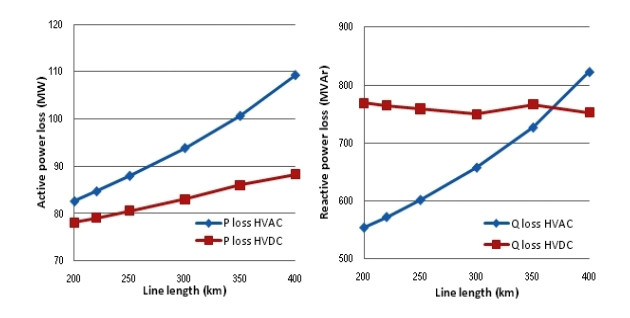
Haven't you just repeated what was stated on the first line. I think that we're saying the same thing. Also, from a mathematical perspective, in terms of losses isn't the cascading loss pretty much the same as the loss when sending the power direct as AC power loss is pretty much linear with HVAC? See graph below. Basically it's far more efficient, and generally cost effective to spool up local power. The national grid provides stability in a crunch however it does it inefficiently giving you time to spool local power. Otherwise you have a Texas style event which is far more expensive. The graphs below compare AC and DC However if power is very cheap (think Solar) you don't care as much about losses it becomes more reasonable, however the capacity of the links themselves are costly, about 1 Billion for the HVDC link between France and the UK. So basically even with very cheap power a long way away you still have an issue. Anyways this is a way away from airplane fuels and whether Hydrogen is a good or bad fuel. Personally I think that Hydrogen is a pretty silly fuel for plane for the following reasons. It is expensive. It is volumous, the only possibility is cryogenic storage. Energy density/Volume is low. It burns in very low concentrations, great inside an engine but a bit of a bummer with leaks and sparks. Modern turbines burning kero type fuels was seen as a huge advantage. It is difficult to contain, it permeates a number of metals causing issues and it is very difficult to stop leaks. However I may be wrong.
-
Generally you want to generate power near where you consume the power. If you're storing the power you want it near where you consume it, because if you have 30% transmission losses your battery or generators need to be 30% larger if they're remote. The costs associated with these project is mind boggling, the solar project to supply Singapore with 20% of it's power is 30Billion, Singapore has about 5.6 million people and no heavy industry. The project consist of solar panels, some battery storage and a High Voltage DC link. That's up there with NBN's cost across Australia. It's effectively 1.2 million people for 30B. Australia used at least 265,232 gigawatt hours (GWh) in calendar year 2020, and people generally want more power. If we add vehicular transport to this you can assume that we'll need another 50% additional Has anyone actually looked at the identified sites in this study? Below are proposed storage areas in the Araluen Valley near Canberra. Given the environmental/ownership and community issues associated with development on this scale does anyone actually think that this is feasible? People complain when a plane or drone flies overhead, let alone a gigalitre of water perched above their properties.
-
If your requirement is that it needs to be carbon neutral then you have some hard decisions. It's a bit like being diagnosed with cancer, you can pretend it's not an issue and the consequences are pretty bad. Treatments are also pretty bad but better than the alternative. Anyone with half a brain goes down the treatment path. The key point that you're missing is that to lower carbon emissions electric cars are amongst the easiest deployable solution. Planes, concrete and steel are not so easy. The policies of all the major Australian parties are pretty dumb and I'm really struggling to identify a party where their policies are based on sound science rather than hand waving. I don't like ideologues which further limits the choice. Assuming direct carbon capture from the atmosphere you end up with a premium of about $1/L, this doesn't assume storage costs or plant costs. If the above premise of zero Carbon emissions is true, at a fundamental level, either electric cars are going to become cheaper, petrol cars will become more expensive. The concept that the status quo can remain is akin to Steve Jobs meditating to cure his pancreatic cancer, he later said that he regretted not adopting conventional treatments earlier. There is also a lot of infrastructure work such as how the power grid will scale to replacing the oil distribution networks and questions as to where that power will come from. I'm not sure if most people actually grasp the scale of this problem and how ineffectual the proposed solutions which revolve around intermittent power are. Renewable power is cheap up as a top up power source, the costs and risks associated with making it your primary source are very high. Below is a study of German electricity prices and the impact of renewables. https://energycentral.com/c/ec/effect-intermittent-renewables-electricity-prices-germany At a fundamental level people need to pay for plant costs, if you build a source of electricity that can supply power when solar and wind aren't running you'll make people pay for a return on your investment. If this is only in the windows when the sun's not shining and the wind doesn't blow times you just make them pay more when they really need it, so you end up paying for both. Some salient points considering that Europe is further down this path than Australia. We should learn from them. The cost of power in France is about half the cost of power in Germany and their emissions are lower. The largest exporters of power in Europe are France, Sweden and Norway. The greenhouse emissions per capita of European countries https://www.greenmatch.co.uk/blog/2019/10/greenhouse-gas-emissions-by-country While Germany is pro renewables no-one wants additional renewables in their back yards and their deployments have stalled due to litigation. The key question is what do these countries have in common and can their successes be applied elsewhere? For example Australian is flat and dry so hydro isn't an option. Snowy Hydro2 is a bit like loaves and fishes.
-
Yes it does, compressed air or pumped hydro is cheaper storage. And batteries are just way more efficient. https://www.spglobal.com/marketintelligence/en/news-insights/latest-news-headlines/hydrogen-technology-faces-efficiency-disadvantage-in-power-storage-race-65162028 https://theconversation.com/hydrogen-cars-wont-overtake-electric-vehicles-because-theyre-hampered-by-the-laws-of-science-139899 https://www.volkswagenag.com/en/news/stories/2019/08/hydrogen-or-battery--that-is-the-question.html Battery electric vehicles have basically won the race. All urban transport will go this path. Current solar systems have about a 15:1 return on embodied energy over their lifetime. So lets allow for a 20:1 ratio in the future. With hydrogen having a round trip efficiencies of 18-46% that implies a system energy return of less than 10:1. This doesn't allow for commercial realities like profit etc when you're trying to balance your budget. Then on top of this you're going turn it into Ammonia with the inherent inefficiencies of this process. If you wanted to make hydrogen efficiently and economically I'd just be using high temperature nuclear with a direct thermal process such as the Iodine Sulfur process. That way you can make it in your backyard so to speak. I suspect a number of countries with steel making industry will realise this rather than buying expensive NH3.
-
New Aussie Turboprop engine (200 HP) introduced at Sun 'n Fun
Ian replied to Garfly's topic in AUS/NZ General Discussion
Yes not as thermally good as a cylinder however if you read the NASA paper on their engine they achieved fuel consumption better than any of the current turbines or reciprocating engines in a lighter package, yes a cylinder is better however it's overall efficiency that counts. All engine design is a compromise, look at the valves in a cylinder head. The sleeve valve engine was used by the British in ww2, it provides better volumetric efficiency at the expense of complexity. Standard reciprocating aircraft engines are a bit shitty and don't seal particularly well either, just look at the amount of oil they burn and the amount of piston slap that is deeded acceptable. Actually the seals on the rotary operate best at higher RPM, it's the low throttle times where the engines typically struggle so constant high throttle should be a boon for them. One of the reasons to the poor efficiency of turbines is that they have no seals. In a nutshell, the power to weight of a rotary is significantly better than a normal piston engine, even with the efficiency compromise of a flat combustion chamber, NASA managed to get fuel economy out of the engine that significantly beats any of the existing reciprocating or turbine engines (0.375). If you read their analysis they compared diesel, turbine and rotary engine for their potential as a next generation engine design for aircraft and from an engineering perspective decided that the rotary showed the best promise from a weight, vibration, cost and fuel consumption perspective. That's why they spent money on it development. However development pretty much stopped when some of the associated military contracts were cancelled and the commercial sponsors changed tack.