

Admin
-
Posts
9,322 -
Joined
-
Last visited
-
Days Won
110
Content Type
Profiles
Forums
Gallery
Downloads
Blogs
Events
Store
Aircraft
Resources
Tutorials
Articles
Classifieds
Movies
Books
Community Map
Quizzes
Videos Directory
Posts posted by Admin
-
-
Thanks guys for your "very" valid comments...it is so bloody hard to try and keep as many people as possible happy and I always have the feeling that I am getting pulled in all different directions which in itself causes a huge amount of uncertainty why results in constant switching back and forth. What you have said is a very valid point and so much so that I will give both of you a ring and have a chat as there are some other reasons, strategic, for the change which will come to light in due course.
PLEASE, if any one else has comments like this on anything to do with the site then speak up so I can gauge your thoughts and do what I can to help!
-
I shall reconsider my cost per hour to have an interesting log book

-
In the Aircraft Pilots Media Section:
http://www.recreationalflying.com/threads/first-flight-on-tap-for-tecnam-four-place-single.32335/
-
In the Aircraft Pilots Media Section, listen to Richard Bach, Jonathan Livingston Seagull author talking about flying low and slow:
http://www.recreationalflying.com/threads/podcast-richard-bach-on-flying-low-and-slow.32327/
-
-
Not only could you put twin time in your log book but also jet time...at say $100 - $150 and hour...that would be an impressive log book for a recreational aviator even though it would need ga reg, still recreational
-
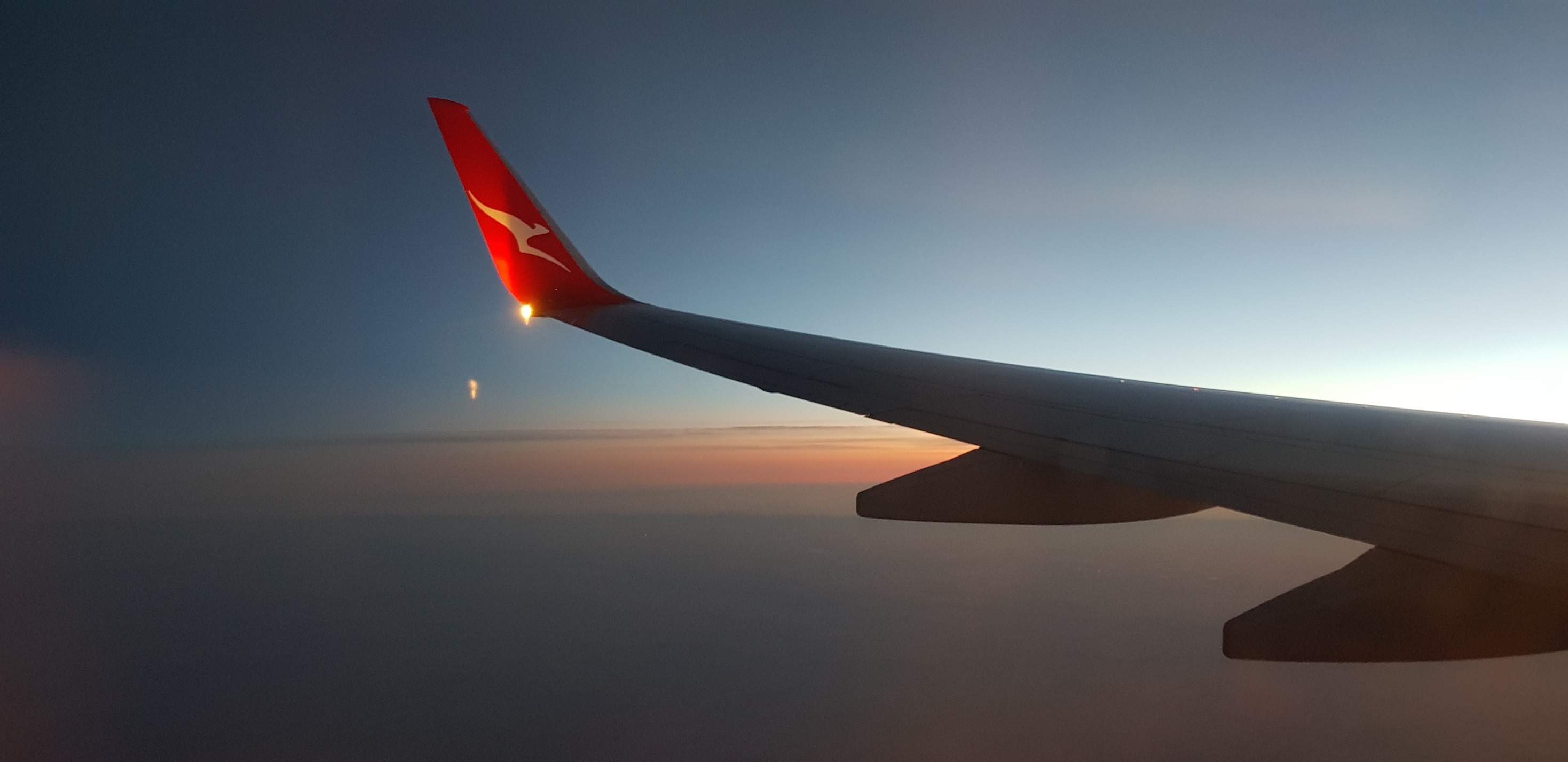
Great shot there...would be good as a screen wallpaper
-
 1
1
-
-
The ATSB has released it final report on the tail scrape of the Emirates A340 at YMML
http://www.recreationalflying.com/threads/airport-near-miss-blamed-on-human-error.32305/
-
David, a PM has been sent
-
December 2011
From the Director of Aviation Safety
John McCormick
It has been a busy end to 2011 for CASA, with the draft regulations for a number of key parts of the Civil Aviation Safety Regulations being published, as well as a raft of other activities. I understand everyone has a lot on at this time of year, while looking forward to a break, however I would really appreciate people across the aviation industry taking a little time to look at these proposed new rules and providing feedback. The release of draft regulations is the final step in the making of these new rules and while CASA believes the proposals are right, we value your input. The new regulations will be on the books for many years, so please do not miss your opportunity to provide feedback now. There is more information on the draft flight crew licensing and flight training regulations in this newsletter, as well as links to the details on the CASA website.
While getting new regulations in place is a big job, managing the transition to new rules is an equally large task. Earlier in 2011 we successfully introduced the new maintenance suite of regulations and work on transition for the affected sectors of the aviation industry has been underway since then. The first task was to convert the more than 7000 licences held by licensed aircraft maintenance engineers and this was achieved in June this year. Our focus then turned to the transition of maintenance organisations, maintenance training organisations and regular public transport operators covered by the new regulations. I am pleased to say a number of these organisations have already made the transition to the new regulations, although many more remain to be converted. CASA is providing support and guidance to the organisations that are affected so that we can achieve our goal of completing the transition to the new rules by the middle of 2013. During the year ahead this work will be a major focus for CASA, along with planning for the transition to the new operational regulations including flight crew licensing, flying training and other regulatory parts.
On behalf of all at CASA, I wish everyone in aviation a safe and happy Christmas and New Year. For many people in aviation the holiday time is a chance to fly, and for those of us who are taking to the skies, please plan your operations carefully and put safety first. It is a sad fact that the holiday period often sees a spike in general and recreational aviation accidents, so please take care. Finally, I would like to thank people right across Australian aviation for their support, feedback, encouragement and constructive criticism during 2011. Keep it coming!
Best regards
John F McCormick
Your views wanted on new flying training rules
Proposed new rules covering flying training for single pilot operations will simplify administrative requirements and reduce compliance costs. CASA has released a draft of Part 141 of the Civil Aviation Safety Regulations which sets out the proposed flying training rules for recreational, private and commercial pilot licences, ratings and endorsements. These rules will not cover training for air transport pilot licences, multi-crew pilot licences or multi-crew aircraft type ratings – this training will be covered by a separate regulatory part. In a briefing document which sets out the key features of the proposed new Part 141, CASA says some compliance costs will be eliminated because flying training organisations would not be required to hold an air operator's certificate. Instead, flying training organisations covered by the new rules would hold an authorisation to conduct training in aircraft or flight simulator training devices. This change would also reduce the administrative burden for both training organisations and CASA. The proposed new rules introduce a requirement for training organisations to have a safety management system or a quality system. CASA will provide guidance material to assist in the implementation of these systems, which will promote the safety of aircraft operations and maintain the standard of flight training activities.
The aviation industry is being asked to comment on the Part 141 draft by 17 February 2012.
Still time to comment on draft new licensing rules
People across the aviation industry are being urged to spare a little time to have their say on the proposed new regulations for flight crew licensing. Comprehensive draft regulations covering flight crew licences, ratings and authorisations have been published, with the comment period to close in early February 2012. The new package of rules, known as Part 61 of the Civil Aviation Safety Regulations, is important to all pilots, flying training organisations and air operators. The proposed rules are aligned with International Civil Aviation Organization (ICAO) standards and the licensing system will be competency based. Under the draft rules the aircraft endorsement system for pilots would be simplified through the adoption of the ICAO system of aircraft type and class ratings. There would be a change in terminology from aircraft endorsements to aircraft ratings and the multitude of endorsements currently required for single pilot aeroplanes would be replaced by four or six class ratings. Design feature authorisations would continue for all aircraft class ratings.
Licences, ratings and endorsements would be permanently valid, subject to the demonstration of competency and recency. The flight crew licence would specify all ratings and endorsements issued to the holder, with the final format of the actual licence document to be determined. The proposed new rules introduce a new recreational pilot licence, which would have a minimum age of 16 years. The minimum age for a student pilot licence would be lowered to 15 years. A recreational pilot licence would align with the privileges offered by current recreational aviation certificates and may be extended with additional training for navigation, radio use and flight in controlled airspace. The medical standard for a recreational pilot licence would be in line with the private motor vehicle drivers licence medical standard, certified by a general practitioner.
Find out more about new pilot licensing rules and comment before 3 February 2012.
Safety seminars reach thousands
More than 5000 people attended 120 safety seminars run by CASA across the nation during 2011. These seminars were aimed at everyone in the aviation community and were held in regional centres and capital cities. The seminar program will continue in 2012, with a new focus on two key issues. They are aviation resources on the internet and human factors. As everyone knows, the internet has a wealth of official and unofficial information on aviation, but the key is understanding where to find the official information you require. The aviation resources on the internet seminar will explain how to find information on the official web sites most people in aviation need to use – CASA, Airservices Australia, Bureau of Meteorology and Australian Transport Safety Bureau. During the seminar there will be detailed explanations of how to find training materials, information, advice and regulations, as well as how to lodge reports and forms.
The human factors seminar will explain how an understanding of human performance is important to the safety of all aspects of aviation operations. There will be a focus on the major elements that make up the study of aviation human factors and a demonstration of how this can be applied in a practical way to everyday operations. People attending this seminar will be provided with resources so they can research in greater detail the aspects of human factors relevant to their operations. This topic is vital as human factors is fast becoming a major safety focus for both CASA and the International Civil Aviation Organization. A wide range of other topics, from airmanship to glass cockpits, are also covered by the safety seminar program. Requests for seminars and bookings are now made on line at the CASA web site and all seminars are free.
Find out more about the seminar program and organise one in your area in 2012.
Timetable set out for new aircraft navigation systems
The aviation industry will be given up to five years to retrofit existing aircraft with new navigation and surveillance equipment such as automatic dependent surveillance-broadcast (ADS-B) and terrain collision avoidance system (TCAS) II version 7.1. CASA's Director of Aviation Safety, John McCormick, made this undertaking in a recent speech to the Australian Strategic Air Traffic Management Group. Mr McCormick set out a timetable for the next steps in the phased upgrade of aviation navigation and surveillance. He said CASA was giving priority to completing the development of new requirements, while maintaining normal consultative processes. Standards for mode S transponders have been prepared and comments by the aviation industry have been analysed. In early 2012 a notice of proposed rule making will be issued to allow final comment on the proposals to mandate ADS-B equipment for new instrument flight rules capable aircraft from 2014 and TCAS II 7.1 equipment for new turbine aircraft greater than 5,700 kg from 2014.
In relation to fitting ADS-B and TCAS II 7.1 to existing aircraft, CASA has received 25 responses from the aviation industry. Decisions on this issue and the development of a notice of proposed rule making are planned for the second quarter of 2012. Mr McCormick said: "I should note that for such significant equipage retrofits of existing aircraft – as distinct from newly registered aircraft – wherever possible CASA will always endeavour to provide industry with a minimum period of four to five years from publication of a mandate to the compliance date. We recognise that there are equipment purchase costs, installation design requirements and limitations on the number of available avionics engineers to undertake installations." Mr McCormick said as a result of consultation CASA had decided to put on hold for at least four or five years any ADS-B requirements affecting aircraft operating to the visual flight rules in class E and G airspace.
Read John McCormick's speech on the future of air traffic management.
Fresh advice on pilot maintenance
Updated guidance on the maintenance activities that can be carried out by pilots on class B aircraft has been issued by CASA. The class B aircraft category covers aircraft that are not involved in transport category operations or in commercial operations under an air operator's certificate. In general terms this means the category covers aircraft in private operations. A revised civil aviation advisory publication sets out 22 maintenance activities that can be carried out by pilots. These include removal or installation of landing gear tyres where the aircraft does not have to be completely raised on jacks, servicing of landing gear wheel bearings, replacement of side windows in unpressurised aircraft, upholstery repairs, replacement of seat belts and harnesses, replacement of bulbs, replacement of batteries, changing oil and air filters and replenishing hydraulic fluid. Pilots are told they are responsible for making sure they are able to comply with instructions from manufacturers before undertaking any of the maintenance tasks. CASA strongly recommends pilots should seek guidance from an appropriate licensed aircraft maintenance engineer on correct practices and procedures. Once maintenance is completed details must be entered into an aircraft's log book or maintenance release.
Get the full details on pilot maintenance for class B aircraft.
Last chance to get services before holiday shutdown
There are only days left to organise any regulatory services you may need from CASA over the Christmas-New Year holiday period. CASA will be closed for normal business from Friday 23 December 2011 until start of business Tuesday 3 January 2012. Regulatory services such as medical renewals, aircraft registrations and air operator certificate variations will not be processed during the Christmas-New Year shutdown. All offices, including the CASA Licensing and Registration Centre and the Permission Application Centre, will be closed. If you believe you may need regulatory services over this period you must act now. Contact the relevant area within CASA immediately so that your service request can be addressed.
Naturally, CASA will have staff available over the holiday period to assist with urgent aviation safety matters. The best way to contact CASA will be through the switchboard telephone number – 131 757 – and follow the prompts. Foreign air operators who require assistance over the Christmas period should contact CASA through Dean Robertson, team leader, international operations, by phone on + 61 7 3144 7400 or mobile +61 435 963 446 (mobile number 0435 963 446) or through the International Operations email address.
Full Christmas-New Year shutdown details.
Answers to class D airspace review
Detailed responses to recommendations for changes to class D airspace at ten aerodromes with air traffic control services have been released by CASA. Six issues were covered in a report commissioned by CASA into class D airspace at Albury, Alice Springs, Coffs Harbour, Hamilton Island, Hobart, Launceston, Mackay, Rockhampton, Sunshine Coast and Tamworth. These issues related to standardising the dimension of class D airspace at these aerodromes, the possible introduction of class E airspace outside tower hours, monitoring public transport aircraft movements and improvements in recording traffic, standardisation of control area steps and ensuring a consistent approach to the delivery of air traffic control services. CASA broadly supported the recommendations in the report, although a number of differences were noted. While acknowledging the standardisation of the dimensions of class D airspace and control areas steps is important, the dimensions depend on many factors that are often unique to each location. Where aerodrome users do not believe control areas steps meet aircraft operational requirements, they are encouraged to submit an airspace change proposal to CASA's Office of Airspace Regulation. In terms of the delivery of air traffic control services, CASA's response said: "should CASA determine that the existing service provided by Airservices is not appropriate and is contributing to an unacceptable level of risk then steps would be taken to rectify the issue".
Read the response to the class D tower report in full.
Get the facts on what CASA's doing
Did you know that during the last financial year CASA conducted 10,645 alcohol tests on people in the aviation industry in safety-sensitive roles? Or that over the same period there were 7927 drug tests carried out on aviation personnel? These are just some of the facts set out in CASA's 2010-11 annual report. Facts and figures in the report show that at 30 June 2011 there were 14,362 aircraft on the Australian civil aircraft register. A number of these are operated commercially on 851 air operator's certificates and are maintained by 736 organisations with certificates of approval. During 2010-11 CASA issued 25,259 medical certificates and 7884 aeroplane flight crew licences. In total over the financial year CASA processed about 90,000 applications for various regulatory services, with the Service Centre taking more than 82,000 phone calls. There were also 33,815 visits to CASA's on-line eLearning system, while 20,660 candidates sat for flight crew licensing examinations. During the financial year 39 show cause notices were issued against licences and certificates, with 15 suspensions and 20 cancellations. A total of 135 infringement notices were also issued. Thirty two matters were referred to the Commonwealth Director of Public Prosecutions and 18 prosecutions were finalised. CASA obtained 11 convictions and one matter was acquitted.
Find out more facts and figures about CASA's performance in the 2010-11 annual report.
Use the right frequency at Lake Eyre
The requirement for radio broadcasts in the Lake Eyre region has been renewed. CASA put in place a designated area for broadcast requirements in late 2009 after Lake Eyre started filling with water and there was a significant increase in sight-seeing air traffic. With rain having continued in the catchment area and water levels high, commercial and private air traffic continues at greater than normal levels. An instrument issued by CASA on 1 December 2011 requires broadcasts on 127.8 MHz in the designated area. In general terms this centres on North and South Lake Eyre – from Lake Gregory in the east to Mt Margaret in the west and Lake Pantoowarinna in the north to Tarlton Knob mine in the south. The broadcast requirement applies up to 5000 feet above mean sea level. Pilots must broadcast their aircraft callsign, position and level, as well as the intentions for the flight. Pilots taking off or landing from within the designated airspace must also use the area frequency. It is important all pilots operating in the area use the designated frequency to alert local traffic and reduce congestion on surrounding area frequencies and the frequencies for William Creek and Maree aerodromes.
View the Lake Eyre broadcast instrument.
Airspace reviews: military aerodromes, Point Cook
Two new airspace studies have been released by CASA's Office of Airspace Regulation. One looks at the safety benefit of introducing class E terminal airspace and associated class E steps at a range of military aerodromes when air traffic control services are not provided. The other reviewed the airspace above Point Cook aerodrome in Victoria. A total of 13 military aerodromes were included in the class E study, although the report concentrated on Curtin, Learmonth, Scherger and Woomera as there are public transport operations outside tower hours at these locations. The study found while there is no surveillance of aircraft at these locations when military air traffic control is not available, the cost of introducing surveillance would be prohibitive.
In addition, the introduction of class E airspace in the vicinity of the military aerodromes would create significant delays for instrument flight rules aircraft as they would have to be separated procedurally in the absence of surveillance. It was determined the benefit of making any change would be limited and instead a watch should be kept on activity levels and incident reports. The Point Cook review determined the current procedures in use at the aerodrome are appropriate, even though movement numbers are relatively high at about 80,000 each year. No public transport operations currently use Point Cook and if this changes the review says additional air traffic management services must be considered.
Read the military aerodromes class E study and comment.
View the Point Cook airspace review.
-
Now this is my kinda plane:
-
-
This would be an interesting course...In the Media Section:
http://www.recreationalflying.com/threads/aging-gracefully-flying-safely.32250/
-
I have added a specific Chat Room for the AWPA that you can use...just select it from the available rooms in the Aircraft Pilots Chat Room...let me know if there is anything else this site can do to help the AWPA
-
1
-
-
Santa' FAA exam.
Santa Claus, like all pilots, gets regular visits from the Federal Aviation Administration, and it was shortly before Christmas when the FAA examiner arrived.
In preparation, Santa had the elves wash the sled and bathe all the reindeer. Santa got out his logbook and made sure all his paperwork was in order.
The examiner walked slowly around the sled. He checked the reindeer harnesses, the landing gear, and Rudolph's nose. He painstakingly reviewed Santa's weight and balance calculations for the sled's enormous payload.
Finally, they were ready for the checkride. Santa got in and fastened his seatbelt and shoulder harness, and checked the compass. Then the examiner hopped in carrying, to Santa's surprise, a shotgun..
"What's that for?" asked Santa incredulously.
The examiner winked and said, "I'm not supposed to tell you this, but you're gonna lose an engine on takeoff."
-
3
-
-
The Video and Audio is now working in the Chat Room so if you have a webcam and not too fast on the keyboard, then this is the solution for you.
Users in the chat room that are using a webcam or mic will have a little icon of a webcam next to their username in the right column of the chat room.
To see and hear another user that is using a webcam, all you need to do is click that little webcam icon next to their name and you will start to see/hear them...hope you find it useful. There will be a need for some small tweaks on the video latency but I will need to know if there are any problems over a few days of usage...enjoy getting together with like minded aviators around the clubroom table in the Aircraft Pilots Video/Audio/Text Chat Room.
I will start working on the One To One Instant Chat feature now and will advise when that is ready for use.
-
.gif - only animated gifsCool! So we can whip up some short low-res vid with Windows Movie Maker and use it? What formats are supported? -
-
Hi
I just used the Registers page that is on this site under 'Pilot Tools" on the main menu and entered six in the VH rego lookup and see that it is still registered. Have a look at the page:
http://www.recreationalflying.com/pages/pilottools__registers/
As a footnote, I will be adding more Pilot Tools in that section of the site soon so if any one has any ideas of what Pilot Tools you would like to have then please let me know...thanks
-
The Chat Room is now licensed and working for up to 100 users at a time. What is left to setup with it is:
- Video and Audio
There are 170 video games installed in the chat room and working
There is a new Gifts and points system which is yet to be setup and activated...more on how you can use this later
Once the Chat Room is all setup and working properly, I will start on the One To One Instant Messenger feature for you to use in having instant chat between other online users and Aircraft Manufacturers/Agenets/Pilot Supplies and Services Representatives when they are online as well
All this is being setup in a way that we can also, hopefully, introduce the Television Station that I have been wanting to do for a couple of years...but again, to do this I need help...not enough hours in the day so if anyone wants to become the Aircraft Pilots Station Manager then please let me know
-
augh shucks...thanks guys...just trying my best for EVERYONE!
Above all, I hope this resource helps in some way
-
Hey all, dare I say this but let's see what happens...with the move to the new server etc, you can now have animated avatars...I am sure you will agree though that we will just have to watch user comments on whether they become distracting or not and hopefully they will be tasteful
...just thought you may like to know about the extra feature we now have here at Aircraft PilotsFor example:
http://www.recreationalflying.com/threads/newbie-with-dreams.32103/
-
Girls, if you want to have your own forum please just let me know...perhaps a forum for AWPA?
-
2
-
-
Hi Domus
are you still in Italy...if so, please tell us a bit about flying around your area

 ...just thought you may like to know about the extra feature we now have here at Aircraft Pilots
 are you still in Italy...if so, please tell us a bit about flying around your area
What does your avatar tell us about you.
in Site Announcements
Posted