FlyBoy1960
-
Posts
878 -
Joined
-
Last visited
-
Days Won
6
Content Type
Profiles
Forums
Gallery
Downloads
Blogs
Events
Store
Aircraft
Resources
Tutorials
Articles
Classifieds
Movies
Books
Community Map
Quizzes
Videos Directory
Everything posted by FlyBoy1960
-
There is no duty on aircraft or aircraft parts. They are exempt. About the only thing in an aircraft that will get duty applied if it is imported on its own is fabric like seat coverings or aircraft covers but if they are reported as part of a total shipment they are like the rest of the shipment exempt. If you were charged 5% duty then this was incorrect and you are actually able to go and claim it back by contacting your customs broker who incorrectly applied the EIN code when doing the importation.
-
This is close but not correct. GST and/or customs are levied on the day that the shipment is exported from the first foreign location so if for example your shipment left England on 1 January then the exchange rate used in the calculation for any duty (which doesn't apply to aircraft) and GST is applicable on the exchange rate calculation on the 1st January not on the day it arrives into Australia. It is been like this for as long as I have been involved with importing before I retired last year.
-
It would help if you told us the airframe ?
-
In his defense, he has been there for about 6-7 years or maybe longer. He gets no wage of $$ from RA-Aus and is basically a volunteer. He has been to our airfield several times so he is investing a lot of his home time to the job. That has my support versus people we never see.
-
You can't at the moment ! Just another reason to live in paradise (Queensland)
-
I would just leave it alone and stop making all of the changes. Every time major changes are made more people seem to drop off
-
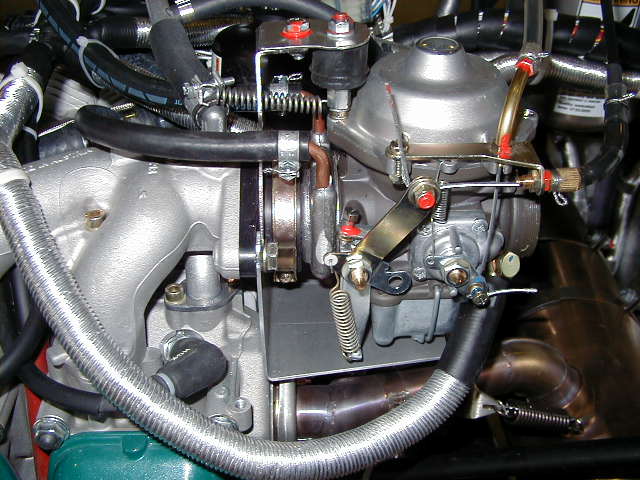
I knew I had a photo of it somewhere, this was taken roughly 2004 but I forget which aircraft it was on. If you look closely at the photo and I am sorry that I don't have an enlarged copy you will see a heating ring which operates on hot water from the radiator between the carburettor and the carburettor mount. Thinking back now this has the carburettor stabilisation bracket which I sent photos of a week ago when we were talking about the Savannah carburettor throttle linkage. Also notice the drip tray on the bottom of this photo just made out of a piece of stainless steel sheet. It had an angle on it so if fuel overflowed it would go away from the engine towards the side of the cowling. This was on a very early sting aircraft imported into Australia which I helped assemble at the airfield. Just walking past to be in the right spot that the right time. I don't know if they are still using them because I have not seen another sting in maybe 15 years

-
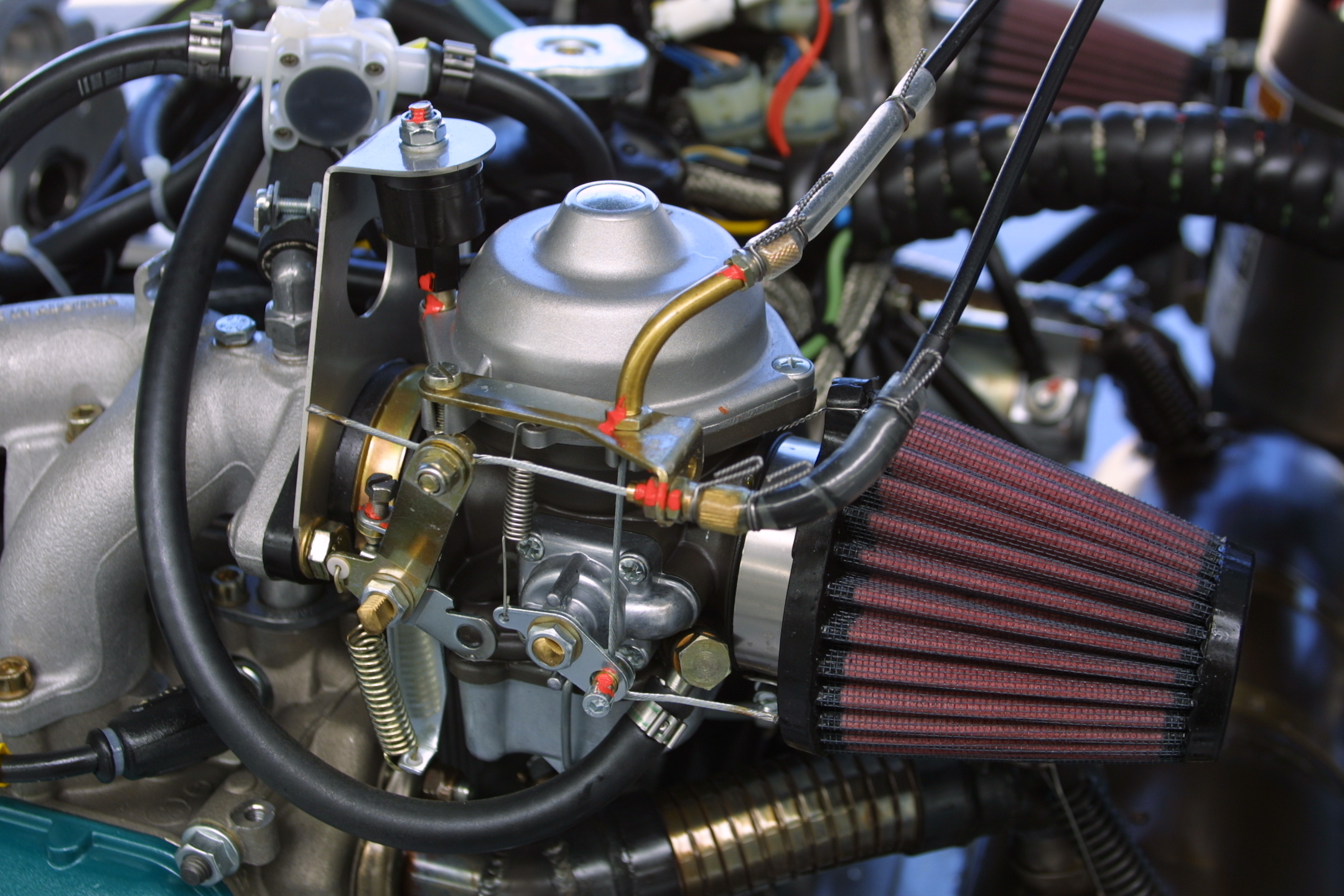
Your rating a lot of weight a long way out from the carburettor mount. The only thing that attaches the carburettor is the rubber boot and the makeshift spring which can and can't work once it has been stretched a few times. It was just a suggestion that as you are adding the additional weight out the back you are going to put more load on the carburettor boots and as you know these have a history of cracking, the more vibration and load out the back the more load you will be putting on the boots. Why not eliminate this area of failure and stabilise the carburettor completely. A lot of the carburettors are now using bigger air filters which in themselves are heavier. The small air filters are robbing horsepower so I was told. I will be really interested to see how it works out over time, you'll probably find Rotax copy it ! One of the things I'm just thinking about from memory one carburettor sits further back than the other carburettor so the one that sits further back is going to be subjected to more vibration and harmonics. My memory is slowly coming back as to why the aircraft had these brackets. The clamp which attaches the carburettor to the rubber boot never used to have a spacer that would prevent over tightening so over time people would continue to tighten this clamp until the clamp itself was touching and this would pop the carburettor off, usually on start up but sometimes on shutdown and sometimes midflight. Rotax decided to add the spacer to the clamp so people couldn't over tighten this clamp anymore and this was introduced after a fire and fatality on the ground which was a result of one of the carburettors coming off an aircraft in the Czech Republic and catching fire and then exploding. This is why the manufacturer went to these carburettor brackets. I still can't remember what brand of aircraft it was but this might come back to me the more I think about it
-
I don't know if this picture is any use to you but the only thing I would be worrying about that could upset this system you are proposing is if you start to get some vibration happening especially because you are putting a little bit of extra weight on the backend of the carburettor which could make the intake manifold more vulnerable to cracking. I don't remember what aircraft this photograph was taken from but it shows how they made a simple bracket that stopped any carburettor movement whatsoever. This may be a necessary addition to the whole system you are designing to stop any vibration or harmonics entering the installation you are completing.
-
Is it just me, or do the rest of you think this would be a reportable incident. Any carbon monoxide coming back into the cabin/cockpit area is unknown danger, to say I just open a couple of events and try and push it out the back is not really acceptable. I am pretty certain the regulators would be very interested in following up these statements listed in post number one
-
Try Incident Kolb Flyer SS PU-OOO, 25 Jul 2020
-
Its not just CASA that is highlighting problems with this model, its happening all over the world with other CAA's. A few that have crashed in AU have had chutes if i remember correctly so the comments about weight and balance are really not valid. Anyway, the aircraft should NOT be registered that it is that far out of balance that it can affect the flying performance and characteristics. The piper sport (sport cruiser or whatever name they go by now) has just ceased manufacture and gone into bankruptcy again, I think it is the third time this has happened. There seems to be something generically wrong with this design and all of the clones that are having these problems. The real issue here is that (in my opinion, from the outside) is not that the aircraft is or, is not dangerous to fly, the real issue here from what I see is that the manufacturer is refusing to properly validate their compliance. They claim that the aircraft has been tested thousands of times for spin characteristics but they can't produce the documentation or proof according to CASA and they tried to get the Tail-wheel aircraft through the spin approvals by using data from the nosewheel so the Tail-wheel aircraft was never tested but they stated that it did comply when in fact it was never tested. I think this is the real problem for CASA, they (the manufacturer) are just declaring things as being safe or in compliance with the regulations that they have nothing to back it up and the manufacturer is just giving them the bird. I was speaking with a guy at the airport yesterday and he was telling me about Cirrus how they couldn't meet the requirements for spin recovery so they added a parachute and managed to sneak through the certification. He said that no aircraft would ever be allowed to do this again and if the FAA had their time again they would not approve the aircraft until modifications were made so that it would recover from a spin. The problem does not just exist with LSA, the problem also exists with certified aircraft. Another thing that just came to memory that he mentioned to me was that icon got a whole heap of dispensations which allowed a heavier takeoff weight than approved in LSA. This was apparently because they needed the extra weight to make their design completely spin proof but if I remember correctly more than a few have crashed very shortly after takeoff as a result of a stall/spin. Just my two cents worth, none is expert opinion just information gained from around the traps
-
Is it Bert Hinkler ?
-
Do Manufacturer’s ever have sales?
FlyBoy1960 replied to shajen's topic in AUS/NZ General Discussion
It happens all the time, usually around airshows, especially Oshkosh Yes, you should see what deals can be done or thrown in, i am sure. If you cant do it yourself there are professional purchasers around that can do all the negotiation for you. Having said that i dont think there is the sales volume and commissions in selling aircraft. Remember the manufacturer needs to be there to support you years into the future and they cant do this unless they can make a profit. -
I am thinking we all have the wrong Bert ? Perhaps Bert is fictitious, a figment of said imaginations ? I will vote Bert for Prime Minister ! If we can ever work out who said Bert is ?
-
Who the hell is Bert ? A legend no doubt but there are a lot of Bert's in Australia ?
-
Pro Tech Merlin ( from the Czech Republic )
FlyBoy1960 replied to Phil Perry's topic in UK/Europe General Discussion
The problem is now, all the sport cruisers in Australia now cant be used for training i am told. They all have to become experimental -
Pro Tech Merlin ( from the Czech Republic )
FlyBoy1960 replied to Phil Perry's topic in UK/Europe General Discussion
And another one gone SPORTCRUISER https://www.novinky.cz/ekonomika/clanek/vyrobce-letadel-czech-sport-aircraft-jde-do-insolvence-40329429?fbclid=IwAR0SSt_b8PtBzOhOojUmX4IdhYZLMefXo-CdMyWgyWC2rG5ZtraxgtMuMlw#utm_source=facebook&utm_medium=sharebt&utm_campaign=web -
Pro Tech Merlin ( from the Czech Republic )
FlyBoy1960 replied to Phil Perry's topic in UK/Europe General Discussion
Chip Irwin, the man behind it from the USA is a crook. A member of our club brought one, paid in full, was shown shipping documents and it never came, he got onto the CBP and they said the export was falsified and they are chasing him also. He has started legal action in the USA but he is about 50th in the que apparently. Do your own research to find out more, he put Sportcruiser into bankruptcy also. Take a wide birth of this man ! -
The parent company of Rotax, and the manufacturer of our aircraft engines has just decided to discontinue manufacture of Evinrude outboards. Evinrude outboards have been around for more than 100 years and are a huge part of the BRP group who also owns Rotax. The customer base for outboard engines must be thousands of times more than our aircraft engines. Does that mean with all of their latest cost-cutting that BRP will see the need to trim Rotax as well ? And in particular aircraft engines. I sincerely hope not.
-
Thats an old list with a lot missing ?
-
100 hp rotax
-
I will ask him tomorrow and see if he knows. I "thought" i heard it went to the USA some time back. Cheers
-
" There used to be the option to subscribe to Sportpilot separately but as it is now included with subscription that is probably not an option any more " I am sure i read you ONLY get the FIRST COPY free
-
Kitfox trip diary (interesting new US video)
FlyBoy1960 replied to Garfly's topic in AUS/NZ General Discussion
That was fantastic ! I love videos like this.