
onetrack
-
Posts
8,089 -
Joined
-
Last visited
-
Days Won
101
Content Type
Profiles
Forums
Gallery
Downloads
Blogs
Events
Store
Aircraft
Resources
Tutorials
Articles
Classifieds
Movies
Books
Community Map
Quizzes
Videos Directory
Everything posted by onetrack
-
.......losers are just quitters, no-one quits in the Turbine group or in any Turbine operations! - they keep going until they win, or they're dead!" Despite this morale-boosting pep-talk, Turbine always seemed to have problems getting drivers, pilots, and employees in general. Being strapped into Turbine test aircraft with bolted-in-place body restraints, seemed to discourage a lot of people from taking on the Turbine test pilot positions. However, Turbo was always there, beside the test pilot, with more pep talks. "You make this thing fly, or you don't come back", was one of his favourite sayings. Accordingly, there were a lot of Turbine aviation designs that didn't come back. Whether this was due to............
-
I have never seen just the ends available, they only come complete with wiring. They're more correctly called thermocouples, although they're often described as probes. Use "thermocouple" or "EGT probe" for search terms. https://www.aircraftspruce.com.au/search/search.php
-
Which one of the old blokes is Skippy? 😄
-

The Surprising Flaws in 18650 lithium -Ion Batteries
onetrack replied to skippydiesel's topic in AUS/NZ General Discussion
The old adage is still just as applicable today as it ever was - you get exactly what you pay for. You buy cheap Chinese product, you're going to be lobbed with lots of shortcuts in the construction. My feeling is that sodium ion batteries are soon going to replace lithium ion batteries in many applications - including EV's. https://cleantechnica-com.cdn.ampproject.org/v/s/cleantechnica.com/2026/01/29/researchers-improve-sodium-ion-batteries-almost-4x-with-thin-layer-of-activated-carbon -
Two seat Spitfire coming to Australia
onetrack replied to Marty_d's topic in AUS/NZ General Discussion
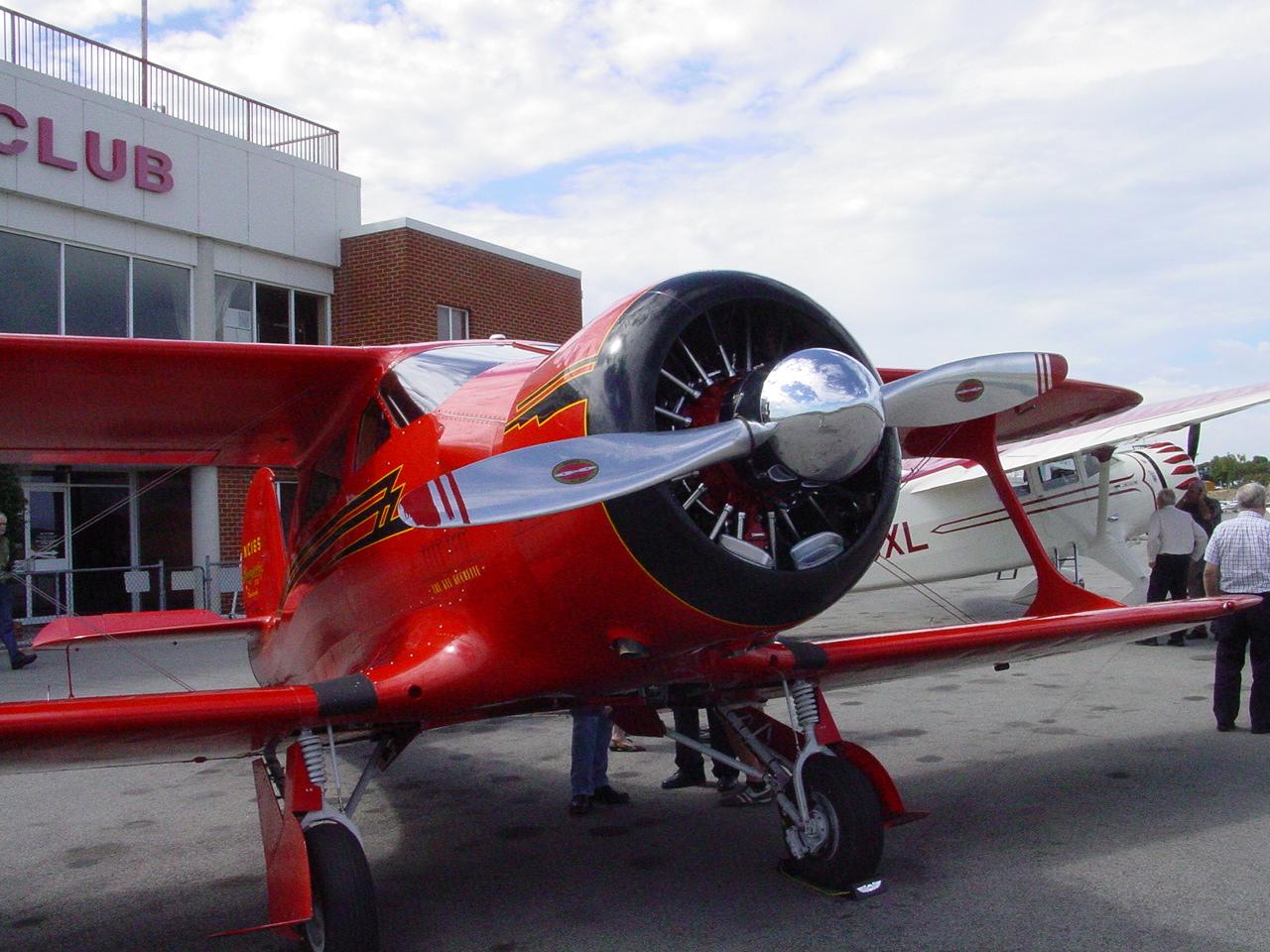
I'd have to agree that the real pleasure in a Spitfire must be in actually flying it - not as a passenger. But my choice would be a Beechcraft Model D17 Staggerwing - pure luxury and total comfort, a classic Art Deco design, and a lovely-sounding and exceptionally reliable R-985 Wasp Junior up front. I just want someone else picking up the fuel tab and maintenance costs. -
Do you really think they got to cruise speed and kept it up, on only 21HP? Seems like a major and constant tailwind would have been a factor in the delivery flight.
-
Thruster, do you have any confirmation of this fuel consumption figure? Seems like it's a figure that defeats physics. The quoted fuel consumption figure has been 2.2 US gallons/hr, the quoted aircraft speed is reported as 100mph - that means, approximately 9 hrs flying, on just 12 gallons? That's just 1.33 US gallons/hr. I was having trouble believing the quoted fuel consumption of 2.2 U.S. gallons/hr, but then I realised their V-twin engine is only 1288cc and 42HP. However, 1.33 U.S. gallons/hr seems to be stretching the bounds of credibility.
-
Well, Skippy - at least you did admit you were guessing. 2.2 U.S. gallons/hr is 8.327L/hr. A bit of a difference to your "guess". Yes, 782 Nm is 900 statute miles, so you got that right. I would have to opine that 8 hrs in the cockpit of any small aircraft would be very tiring. However, no-one has specifically stated that any pilot has spent 8 hrs non-stop at the controls of a Spirit SE-1. And the reason is - the SE–1 has a no-reserve range of 4 hours and 400 miles (640 km). So, there were obviously two stops on the delivery flight. Let's just examine the reasons for the effusive response to the appearance of the SE-1. 1. This is a company that is actually delivering a completely new-design recreational aircraft - not video promises with slick imaging, and no production for a decade - if at all. 2. It's tiny. I saw someone ask, "When do they bring out the adult-sized version?". Maybe that was you. It's tiny by design, and to fulfil the companys aim of filling a gap in the market for a cheap, fun little aeroplane. 3. It may be open cockpit - but that's all part of the fun of cheap recreational flying, isn't it? It's a snug cockpit, so you're not going to be blasted in your face mercilessly, for 8 hrs, with a 120kt wind blast. I've flown in a R22 with no doors, and that WAS uncomfortable - especially when no-one advises you that the trip is going to be doorless. 4. The cockpit IS snug. But it's 25 inches (635mm) wide. That's 5 inches (127mm) wider than either the pilot or the passenger gets in a C172. It's a full 8 inches (203mm) wider than the average budget airline economy seat. 5. The polished finish is not only to promote a "vintage" look - it saves weight, thanks to no paint, it keeps costs down, and it's slippery. 6. It's an aircraft designed to appeal to pilots who just want to go for a casual fly at lower speeds, lower cost, and with a "fun factor". It doesn't equate to a noisy, rough-riding Harley-Davidson. 7. The interest and demand for this little beast is quite substantial, and it fills the gap in recreational flying that the Morris Mini-Minor did in motoring. A product that is cheap, tiny, and ideal for a lot of people, who have no need to go hundreds of miles in one flight at high speed, and to endure high running costs, accordingly. Meet the Spirit SE-1, the retro light sport aircraft turning heads AEROSPACEGLOBALNEWS.COM Introducing the SE-1: Spirit Engineering’s new “shiny” single-seat light sports aircraft from Colorado
-
Spirit Engineering has sold 18 of these little beasts already, and are struggling to fill the orders flooding in. https://www.facebook.com/photo/?fbid=26384305904505092
-
Skippy, you're not going to have very much elevator authority at low speed. The machine quite likely tipped on its nose at very low speed, just the last few metres, along with the hard braking.
-
Light aircraft crash at Heck Field 27/01/26
onetrack replied to red750's topic in Aircraft Incidents and Accidents
Blueadventures - The aircraft in this crash was VH-registered and the ATSB have commenced an investigation. According to Angus Mitchell, there is good video available of the aircraft takeoff, and it is obvious the engine was not producing full power on takeoff and in the early stages of flight. -
Light aircraft crash at Heck Field 27/01/26
onetrack replied to red750's topic in Aircraft Incidents and Accidents
There is a constant and recurring furphy and urban legend, that Subaru built an aircraft engine, and couldn't sell enough of them, so Subaru put it into their cars. It is a line of total BS and bar talk, that hasn't a skerrick of truth in it. The urban legend is always "backed up" by producing photos of Fuji FA-200 Aero Subaru aircraft, which were manufactured by Fuji Heavy Industries, owner of the Subaru brand and manufacturer of the Subaru cars. The true story is - the Fuji Sangyo company was formed in 1946, amidst the wreckage of Japanese industry, by managers and engineers from the Nakajima Aircraft company, which had built radial aircraft engines for the Mitsubishi Zero. In the takeover of control of Japans direction by the U.S. after WW2, the Japanese were banned from producing any aircraft or aviation equipment. So the managers and engineers from Nakajima Aircraft Co formed Fuji Sangyo, and started producing the Fuji Rabbit scooter. In 1950, the Japanese Govt, under "anti-zaibatsu" legislation, broke Fuji Sangyo up into 12 smaller companies. The "anti-zaibatsu" legislation was anti-monopoly legislation, designed to stop major vertical integration of industries, to prevent major industrial power blocs. In 1953, the managers and engineers from Fuji Sangyo amalgamated 5 of the smaller subsidiaries of the company into Fuji Heavy Industries, registered Subaru as a brand name, and FHI started down the path of manufacturing Subaru cars. The major lineup of early Subaru car production was small cars, that used in-line engines. The managers and engineers selected the flat four Boxer engine design for the Subaru cars (starting in the early 1960's), simply because they liked the engine layout. The flat four has lower vibration levels than upright inline engines. In 1968, FHI decided to manufacture the Fuji FA-200 Aero Subaru light aircraft, in the hope of cracking into another potential source of income. Around 275 Fuji FA-200's were built, before Piper and Cessna went on a major sales and production drive, to ensure that the Fuji FA-200 would fail to get a start in the light aircraft market. It is a regularly ignored fact, by the urban legend spreaders, that the Fuji FA-200 used a LYCOMING engine as its power plant - not a Subaru engine. There was no "Subaru aircraft engine" to put into the Fuji FA-200. The Subaru flat four Boxer engine is a car engine, and has always been designed as a car engine. Anyone who claims that it has "aviation heritage" or was designed as an aviation engine, is simply spreading a major lie. https://en.wikipedia.org/wiki/Subaru -
Light aircraft crash at Heck Field 27/01/26
onetrack replied to red750's topic in Aircraft Incidents and Accidents
Subaru's are full of Nissan parts, built under sub-contract to Subaru. Nissan employees are unhappy employees, because Nissan has carried out multiple forced mergers with multiple suppliers and subcontractors, and those employees never ever wanted to work for Nissan. And Subaru reliability is nowhere near as good as it should be. Their diesel engines broke crankshafts by the dozen in the late 2000's, before they carried out a crankshaft redesign that seemed to fix the early problems. Subaru EJ25 problems involved regular head gasket failures, ring problems, piston failures, seal failures, bearing failures and timing belt failures. In comparison, numerous Honda and Toyota engines are virtually bulletproof, but they rarely lend themselves to modification to fit into aircraft - apart from the Viking/Honda aircraft engine conversions. And of course, many Subaru aircraft engine conversions are also carried out with used car engines. Not an engine I'd like to fly behind. -
Gee, the co-pilot praying doesn't give you a lot of confidence!! 🫣 A least it's very favourable weather, and they've got a nice long runway. But the lining up is certainly tricky.
-
Possibly the first $1M kit for homebuilt aircraft, on offer?
-
.....mud got into everything - including Cappys Drifter. In fact, the mud was so permeating. Cappy complained that the controls of the Drifter "felt like stirring a stick in a bucket of mud". When Turbo politely informed Cappy, that he really was operating the joystick with 300mm of mud on the floor, Cappy said, "But...........
-
Engine maintenance training by Jabiru and Rotax
onetrack replied to Blueadventures's topic in Engines and Props
And the poppet valve problem solved, too! I understand the reliability of the Junkers-Jumo 205 was quite good, once initial design problems were sorted. Any problems with the 205 were more likely related to the Germans inability to acquire numerous strategic metals that were critical for high performance engines. Add in the possibility that some Jumo 205's suffered from internal sabotage, and it would have been interesting to see where the 205 could have ended up with full access to all critical metals, design improvements, and overall materials improvements. The Rootes TS3 copied the Jumo 205 design with substantial success, but noise levels and emissions were always a problem. -
No. 6 looks like a Prince Charles landing effort! (remember he came close to writing off a Queens Flight BAE146?)
-
In rural and remote regions in the interior of Australia, savage, sudden wind gusts from willy-willies or mini-tornadoes, would be a major threat to hangar doors, that weren't substantially secured and reinforced. You need doors that can resist a minimum of 150kmh or 42m/s wind speeds in these regions, as these wind events can be very sudden, very destructive, and appear with virtually no warning. I've had caravan annexes in mining camps totally destroyed by these events, and even seen caravans overturned with willy-willies or mini-tornado events.
-
That crane stabiliser incident could have cost you millions if it had killed someone. In Perth, a number of years ago, a woman standing on a central median strip was killed by an extended stabiliser on a crane truck driving down Stirling Highway. She had her back to the oncoming truck, and never even saw what hit her. If an insured event like that happens, with the cost running into huge figures, you would find the increased cost of premiums in the next renewal period would possibly make your business unprofitable. It pays to do regular assessments of accident risk potential to reassure your insurance company that you have a good handle on the risk potential. I trust you fitted highly visible warning lights in the truck cabin for stabiliser extension, and carry out regular checks to ensure they are working. One thing that annoys me, is drivers running around with emergency lights flashing, and they have no idea they are on - thus showing they have no cabin indication of the warning lights being on - or if there is, it is being ignored. You have to slow down to 40kmh for flashing lights, and when someone has them on for no reason, it is infuriating, and could potentially cost you a traffic infringement fine.
-
You have to weigh up what your losses may be, in a worst-case scenario, coupled with the premiums outlay over the many years, before you actually make a claim, to make a decision about insurance. In the case of huge potential losses, such as being sued, or losing your home or a large shed full of expensive toys, you can't really do without insurance. But there are many items, such as lower value vehicles, where the cost of insurance is outrageous. I refuse to finance the losses of people who are careless about their vehicle losses, so I no longer fully insure my Hilux. It costs $1000 a year to comprehensively insure it, and I've owned it for 9 years, without indulging in any vehicular loss. Plus, the companies want you to pay $1000 excess to start with, so that adds more financial burden to any claim. I know I've made the correct decision for the conditions and risk profile that I operate under.
-
Nuevo y novato con un saludo cordial desde Murcia-España
onetrack replied to BUHOSAVAGE1953's topic in Just Landed - Welcome
Hello Buhosavage1953 - Please note, this forum language is English. Please use the English language in your posts, or you may be ignored. Hola Buhosavage1953: Ten en cuenta que este foro está en inglés. Usa este idioma en tus publicaciones o podrías ser ignorado. -
Here is another option, a little more expensive than the dome shelter. Shipping Container Roof Kits | PodRoof Australia PODROOF.COM View our range of kit configurations and options
-
I'm wary. You could get sucked into that BBQ, pretty easily!
-
I guess that one is only certified to land on grass? 😄