


red750
-
Posts
8,146 -
Joined
-
Last visited
-
Days Won
73
Content Type
Profiles
Forums
Gallery
Downloads
Blogs
Events
Store
Aircraft
Resources
Tutorials
Articles
Classifieds
Movies
Books
Community Map
Quizzes
Videos Directory
Posts posted by red750
-
-
Unfortunately I can't see them, I've been kicked off Facebook again. I read on reddit that this is fairly common. They quote some nonsense about breaching "Community Standards" (on Facebook???) but the common thought is, if you don't buy stuff advertised on FB, they don't want you. They keep details like your IP address, internet connection, etc, and now they require video facial ID, to prevent you opening another account under a different name.
I thought Marty's photos were OK. Seen a lot worse.
-
 2
2
-
 1
1
-
-
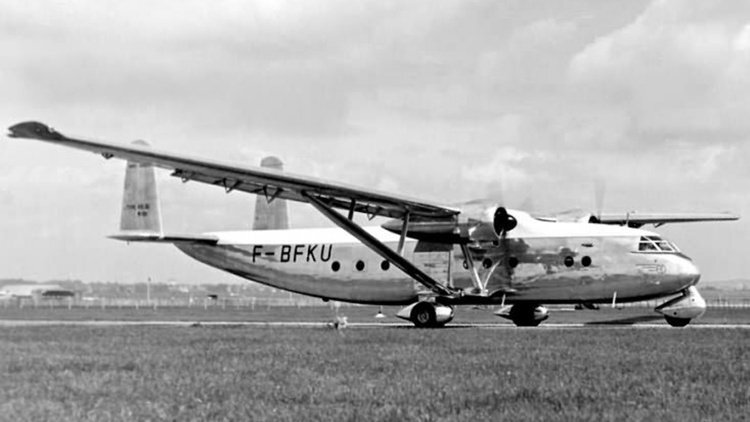
The Hurel-Dubois HD.321 was a high-wing, twin-engine tactical transport aircraft developed in France as an upgraded, elongated version of the HD.32, featuring more powerful Wright Cyclone 982-C9 engines (1,525 hp each) and a single vertical stabilizer. Although Air France ordered 23 units in 1955 to carry 44 passengers, the order was canceled in favor of the Vickers Viscount, leaving only two HD.321 aircraft built for the French Air Force.
These two aircraft served primarily in tactical transport, aerial cartography, and special operations roles, including extensive testing in Algeria in 1956 and clandestine flights for the SDECE (French intelligence) beyond the Iron Curtain until 1967.

-
Top 10 Worst Planes of WW2 | Flite Test
WWW.FLITETEST.COM
Here is a shortlist of, quite simply, the very worst planes used during World War 2.-
2
-
-
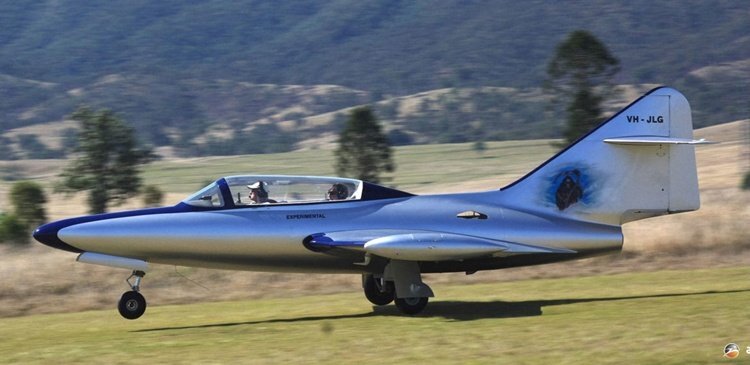
Gross JG-2 (Credit: aeropedia.com.au)
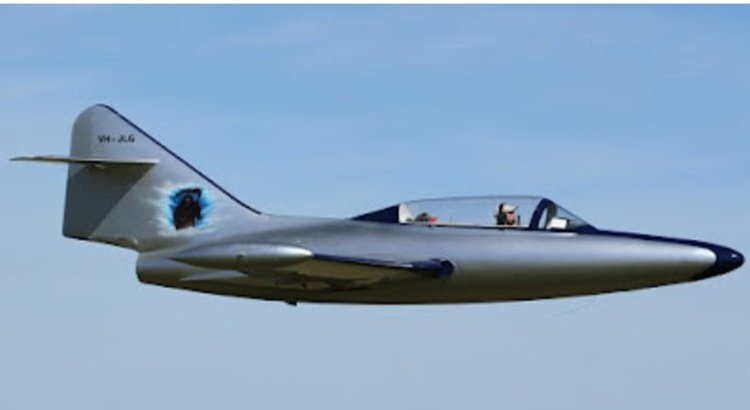
The Panther was a two-seat experimental jet project that was constructed and developed in Queensland by John Gross. After designing and building the JG-1, a 15 metre sailplane (VH-KYI – c/n GFA/HB/113) he decided to build a 75 per cent scale replica of the Grumman F9F-2 Panther Korean war era United States Navy (USN) carrier-borne jet aircraft. The first successful US Navy jet fighter of the 1950s, the Panther went on to achieve its first ‘kill’ against a Mikoyan & Gurevich MiG 15 on 9 November 1950.
The JG-2 took seven years to design and build and made its first flight in February 2006. It is constructed of fibreglass with a balsa-wood core and some carbon for strength. It was registered VH-JLG (c/n 1) to its designer / builder on 23 November 2005. Engine was a modified General Electric J-58, having a compressor diameter of 25.4 cm (10 in) and weighing 122.4 kg (270 lb). The aircraft was painted silver overall with dark blue markings.
The engine that was installed commenced life as the J-58-8F providing 932 kw (1,250 shp) in the Kaman Seasprite helicopter in US Navy service and when it was decided to replace the engine with a new type many were removed and sold, some being converted to turbojets for aircraft and others being placed in racing boats.
Following a series of 40 test flights the JG-2 was described by the owner as “a safe and forgiving aircraft”. On one occasion was flown from Queensland to Cowra, NSW for a Sports Aircraft Association aviation event, making two fuel stops on the way. At max throttle it used 500 litres (110 Imp gals) of fuel per hour; whereas at 370 km/h (230 mph) at 85 per cent power it used 200 litres (44 Imp gals) per hour.
Gross JG-2 prototype VH-JLG (c/n 1) taking off at Watts Bridge, QLD (David C Eyre)
-
5
-
 1
1
-
-
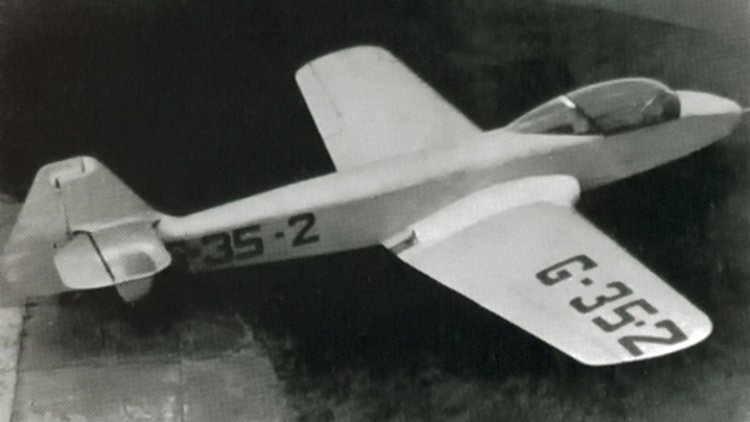
The Miles M.100 Student was built as a lightweight trainer as a private venture by F.G. and George Miles with development started in 1953. Although not specifically a Miles product, it was promoted as a British Royal Air Force trainer but failed to enter production.
Building on the company's experience with the M.77 "Sparrowjet", the M.100 Student was a two-seat, side-by-side, all-metal jet trainer. The M.100 prototype was powered by a 400 kgf (882 lb) thrust Turbomeca Marbore turbojet and flew for the first time on 15 May 1957. Miles had hoped to secure an RAF order, but the contract went to the Jet Provost. The Student was proposed for several training programmes, but without success.
G-APLK, the sole aircraft, was allocated XS941 when developed in the Mark 2 version as a prospective Counter-insurgency type. It was tested by the Royal Air Force but was not accepted and therefore did not go into production.
-
1
-
-
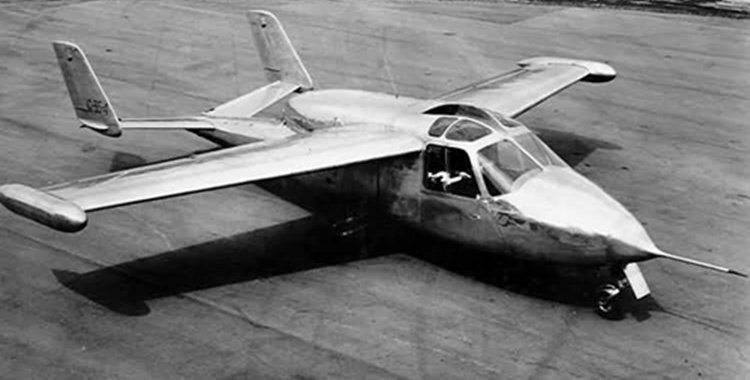
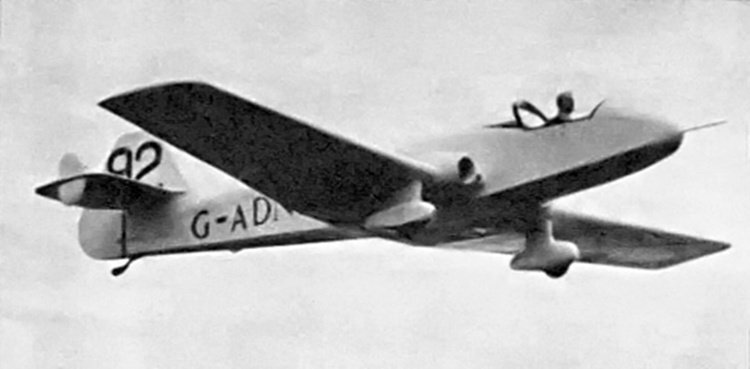
The Miles M.77 Sparrowjet was a twin-engined jet-powered racing aircraft built by the British aircraft manufacturer F.G. Miles Limited. It was a one-off conversion, involving the fitting of Turbomeca Palas turbojet engines to the prototype Miles Sparrowhawk, enabling the aircraft to achieve higher performance than could be achieved with its conventional piston engine arrangement.
The Sparrowhawk had been a racing aircraft developed and produced in small numbers by Miles Aircraft during the 1930s. During the late 1950s, the owner of one such aircraft, Fred Dunkerley, requested that Miles look into converting the type to use jet propulsion for greater performance. During December 1959, the company received the aircraft to perform the extensive modification programme; in addition to the installation of French Palas turbojets, the original piston engine was eliminated while the forward fuselage was entirely replaced and rebuilt with the cockpit in a more forward position. The conversion took almost three years to perform.
On 14 December 1953, the completed Sparrowjet conducted its maiden flight. While the aircraft proved to be capable of speeds in excess of 200 mph, it was noted to accelerate somewhat slowly. Its owner quickly put it to use as a somewhat unique racing aircraft for the era, a factor which likely aided the Sparrowjet in multiple victories, including the SBAC Challenge Cup on 21 May 1956, and the King's Cup Race on 13 July 1957, the latter in which the aircraft had reported attained a maximum speed of 228 mph (367 km/h). However, the Sparrowjet was heavily damaged by a hangar fire while being stored at RAF Upton during July 1964, ending its racing career.
Only one Sparrowjet was built.
-
1
-
-
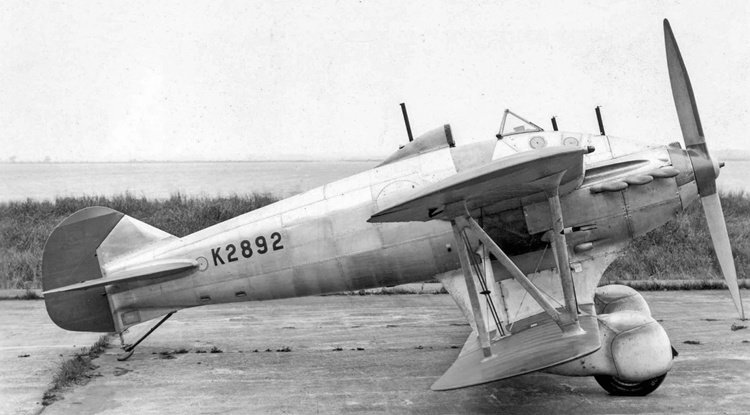
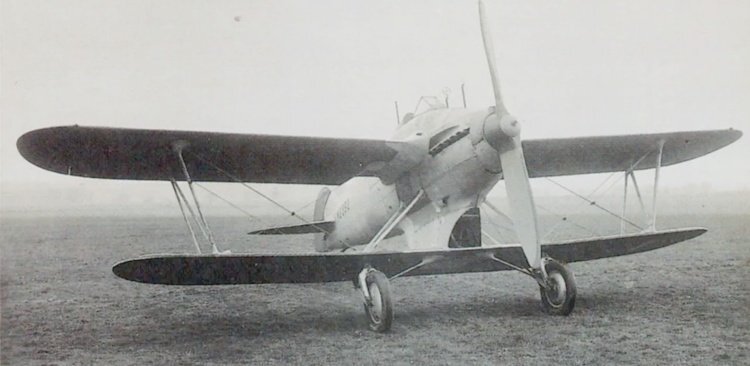
The Blackburn F.3 (also called the Blackburn F.7/30) was a British single-engined fighter aircraft produced in response to Air Ministry Specification F.7/30.
Following the release of Air Ministry Specification F.7/30 for a single-seat day and night fighter, eight companies proposed twelve designs and three, including Blackburn Aircraft, received contracts to produce a prototype. Blackburn's design, the F.3, was a single-bay biplane of unequal wingspan and with an unusual configuration, the upper wing being mounted approximately halfway up the stressed-skin fuselage and the lower wing about two feet below it, the gap being occupied by an enclosure for the condenser of the evaporatively-cooled Goshawk III engine. The undercarriage was attached to the front spar of the lower wing, with diagonal struts transmitting the landing loads to the fuselage longerons. The wheels were fitted with spats but these were later removed. Four Vickers machine-guns were fuselage mounted, two in mid-position on the fuselage and the other two on either side of the top of the condenser housing.
Taxiing trials of the F.3 began on 20 July 1934 but the combination of a short fuselage and a high centre of gravity made it difficult to manoeuvre on the ground and the engine suffered from cooling problems. Further development was stopped when, after an inspection revealed damage to the rear fuselage resulting from the taxiing trials, the Air Ministry withdrew support for the project since the aircraft would have been too delayed to take part in the trials. Following evaluation of F.7/30 designs an order was placed for the Gloster Gladiator.Only 1 was produced, but it never flew.
-
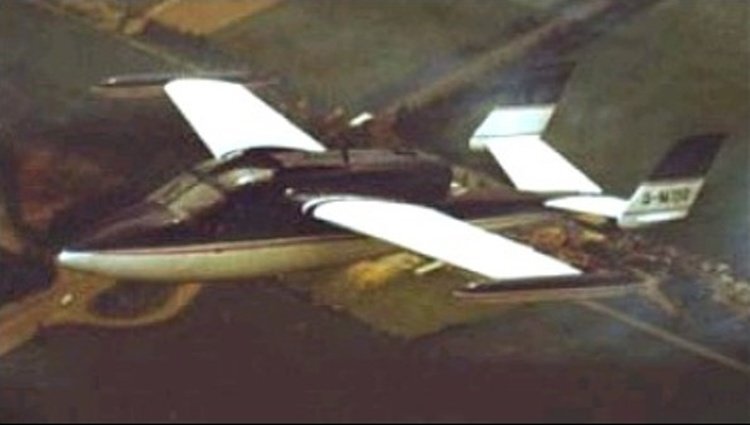
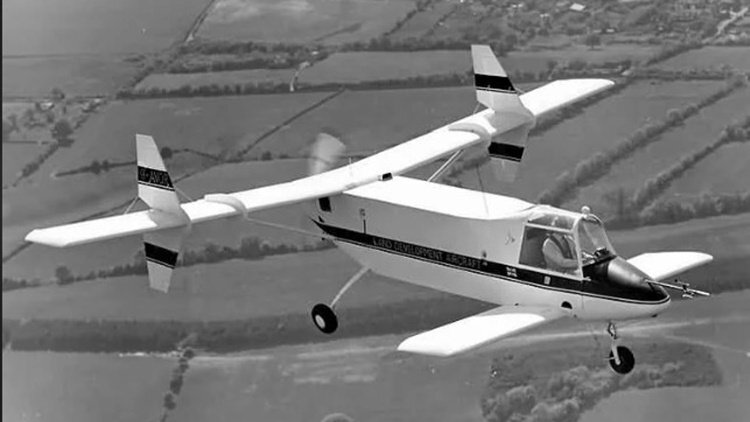
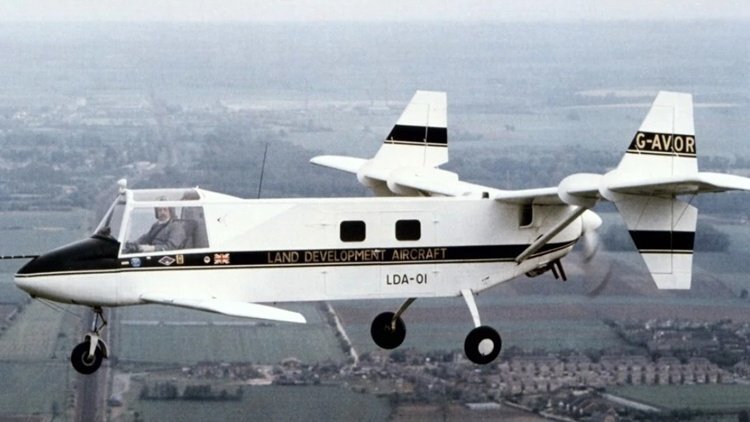
The Lockspeiser LDA-01 ("Land Development Aircraft") was a British seven-tenths scale research and development tandem wing aircraft, which was designed and built by test pilot and engineer David Lockspeiser to prove a concept for a low-cost utility transport.
The LDA-01 was a single-seat tandem-wing monoplane, fabric covered with metal construction. The foreplane had a common design to the separately made port and starboard wings of the main plane, giving it half the area. The intention was to reduce the number of spare parts needed by re-using the same wing component interchangeably in each location. The main wings were mounted at the rear-end of the box structure fuselage and the fore wing was attached underneath the front. The fuselage was fitted initially with a four-wheeled landing gear and was designed to be fitted with a detachable payload container to allow easy conversion between roles. The landing gear was changed later in development to a more conventional tricycle configuration. It was powered by a rear-mounted pusher engine. The LDA-01 G-AVOR first flew on 24 August 1971 at Wisley in Surrey, under the power of an 85 hp (63 kW) Continental C85 piston engine, but was later refitted with a more powerful Lycoming O-320 engine.
The aircraft (which by this time had been re-registered G-UTIL), and had been renamed the Boxer 500, was being modified to planned production configuration by Brooklands Aerospace at Old Sarum Airfield when it was destroyed in a fire on 16 January 1987.
-
4
-
-
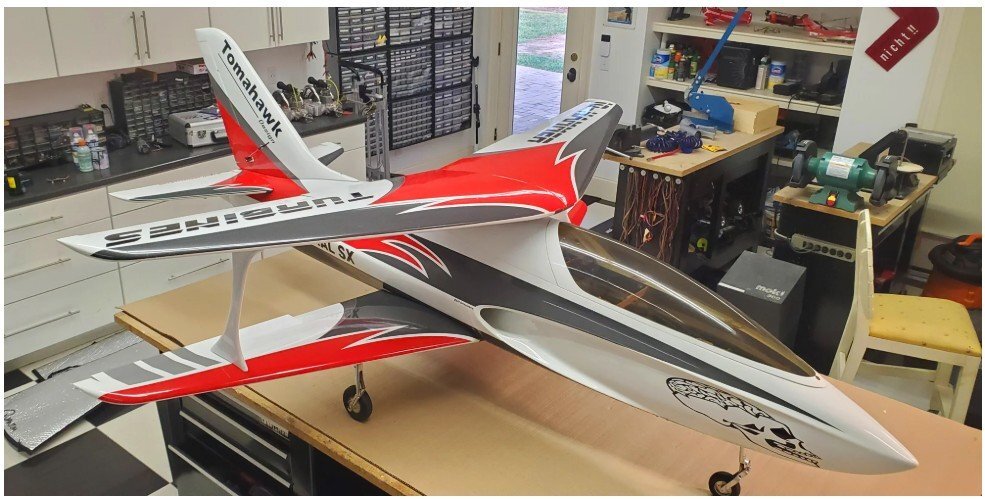
Tomahawk Quantum/Mono Biplane/LowWing Jet combo - 2 Jets in 1! With IQH180+
https://www.aeroscale.shop/products/tomahawk-mono-biplane-jet-combo-2-jets-in-1
On Youtube:
-
1
-
-
1 hour ago, danny_galaga said:
I will NEVER fly a retractable aircraft. I look at all these really talented and seasoned pilots screwing up, and I just know it'll happen to me.
I flew Piper Arrows and Bonanzas, never had a problem.
-
1
-
-
Hi Jesse,
Welcome to the forum. Just so you know, this is an Australian based forum despite having a .com URL, but we are open to all aviation people from around the globe and have members from many nations. While comments are predominantly Australia centred, we have members in America, Europe, Africa and so on. Feel free to join in the conversations.
Cheers,
-
2
-
-
The company responsible for the highly criticised BOM website wins a $16 million tender to build a new climate data website for the government.
Technology company Accenture Australia, which was also contracted for BOM's $96 million redesign, has been tasked with building a "platform service" for the Australian Climate Service over the next three years.
Read more:
Company that built highly criticised BOM website wins $16m contract for new site - ABC News
WWW.ABC.NET.AU
The company responsible for the highly criticised BOM website wins a $16 million tender to build a new climate data website for the government.-
2
-
1
-
-
A light aircraft carrying seven people crashed into shallow waters in Roebuck Bay near Broome, Western Australia, on Thursday, March 19, 2026, shortly after taking off from Broome Airport around 11:25 a.m. The plane, a Cessna 441 Conquest, experienced a loss of engine power soon after departure and went down in the mangrove-fringed area known as Fisherman Bend.
All seven people on board — two pilots and five passengers — survived the crash. One individual sustained minor head injuries and was airlifted to hospital, while the others were treated at the scene and also taken to Broome Hospital with non-life-threatening injuries. Emergency services, including marine rescue, police, and St John Ambulance, responded swiftly, with one person being winched from the wreckage by helicopter.
The Australian Transport Safety Bureau (ATSB) has launched a formal investigation into the incident. Investigators are examining the wreckage, recovering flight data, and interviewing crew, passengers, and witnesses. The aircraft was en route to Mungalalu Truscott Airport, a key hub for the oil and gas industry, located about 620 km northeast of Broome.
-
1
-
2
-
-
No further off topic posts or I will lock the thread.
-
2
-
-
What has all this to do with experimental and one off aircraft. I started this topic as an adjunct to the aircraft profiles to let you see unique aircraft that did not warrant a full profile. Take your other discussion somewhere else.
-
2
-
 2
2
-
 1
1
-
-
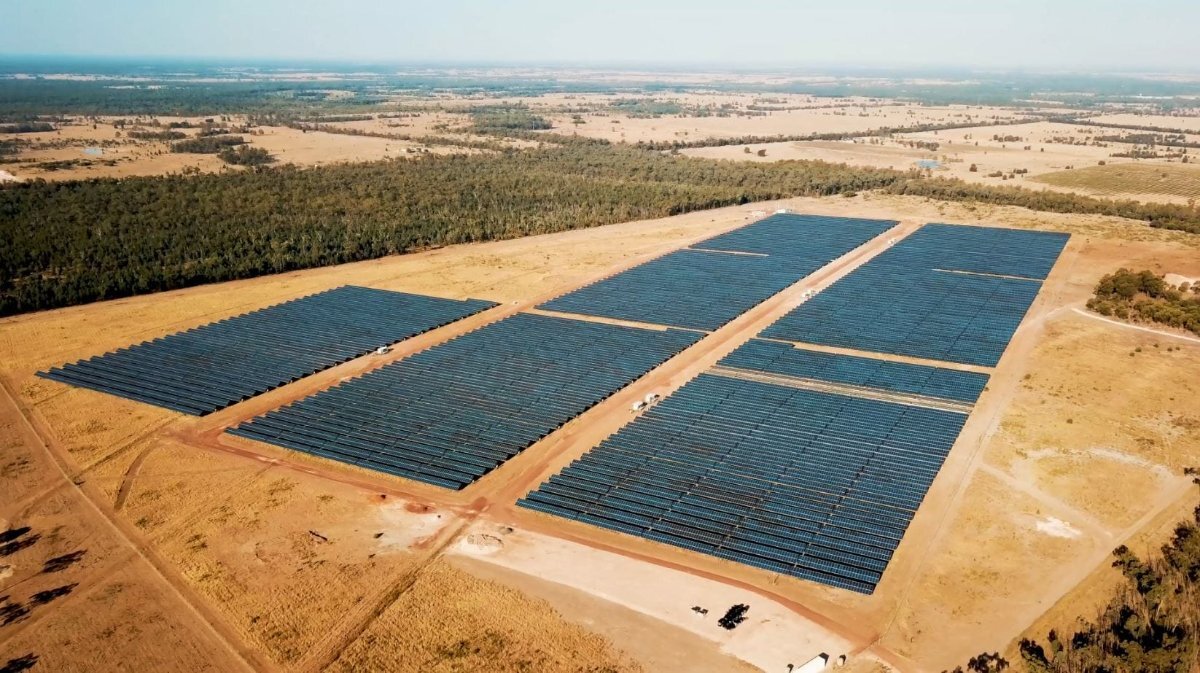
Possibly through solar farms like this one, with approximately 61,000 solar panels covering 73 hectares.
However, this topic is for aircraft which were experimental, one off's which never made it into mass production. There is a topic on Social Australia for electric vehicles.
-
5
-
2
-
-
Wingspan: 6.60 m (21 ft 8 in)
Height: 2.50 m (8 ft 2 in)
Wing area: 11.90 m2 (128.1 sq ft)
Aspect ratio: 3.7
Empty weight: 1,700 kg (3,748 lb)
Max takeoff weight: 2,500 kg (5,512 lb)
Fuel capacity: 850 kg (1,870 lb)
Powerplant: 1 × General Electric CJ610-6 turbojet, 13.5 kN (3,000 lbf) thrust prototype; production aircraft 12.75 to 17.65 kN (2,870 to 3,970 lbf) turbojet / turbofan
PerformanceMaximum speed: 1,100 km/h (680 mph, 590 kn)
Maximum speed: Mach 0.9
Stall speed: 165 km/h (103 mph, 89 kn)A bit heavy, and stall speed is a tad high.
-
1
-
 1
1
-
-
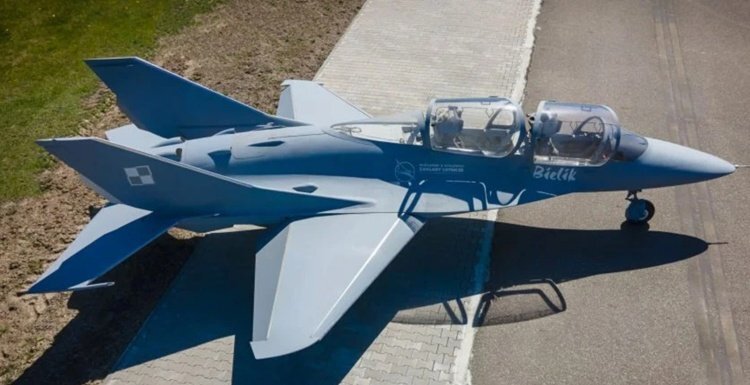
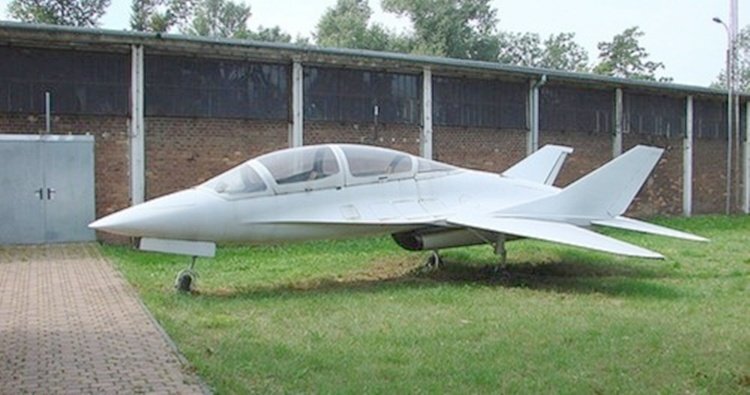
The Margański & Mysłowski EM-10 Bielik (English: white-tailed eagle) is a low-cost Polish military training aircraft prototype, built by Margański & Mysłowski Zakłady Lotnicze, and first flown on 4 June 2003. The single-engine aircraft has a composite (mostly carbon fibre) fuselage with a light-alloy aft section, and the pressurized cockpit is fitted with ejection seats.

-
2
-
-
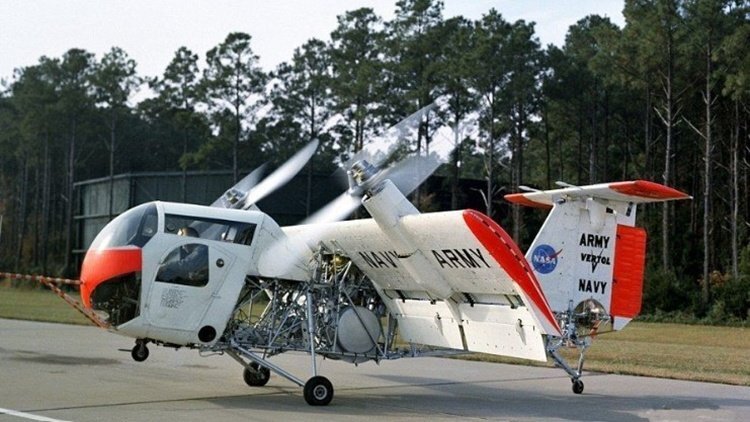
The Vertol VZ-2 (or Model 76) is a research aircraft built in the United States in 1957 to investigate the tiltwing approach to vertical take-off and landing.
The aircraft had a fuselage of tubular framework (originally uncovered) and accommodation for its pilot in a helicopter-like bubble canopy. The T-tail incorporated small ducted fans to act as thrusters for greater control at low speeds.
Ground tests began in April 1957 and on 13 August, the VZ-2 took off for the first time in hover mode only. On 23 July 1958, the aircraft made its first full transition from vertical flight to horizontal flight. By the time the test program ended in 1965, the VZ-2 had made some 450 flights, including 34 full transitions. The aircraft has been preserved by the National Air and Space Museum in storage at the Paul E. Garber Preservation, Restoration, and Storage Facility. Only the one prototype was produced.
-
2
-
-
-
1
-
-
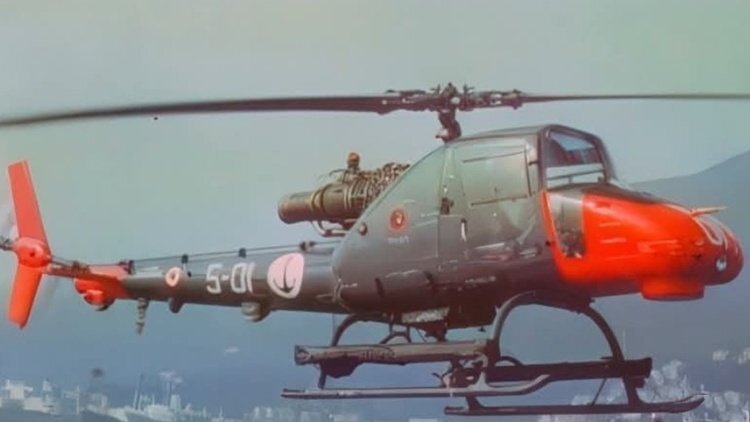
The Agusta A.106 was a single-seat light helicopter designed to provide an anti-submarine warfare (ASW) platform for the Impavido-class destroyers of the Italian Navy. The aircraft was provided with a sophisticated electronics suite by Ferranti for autostabilisation and contact identification. Two torpedoes could be slung under the fuselage. The tail and two-bladed main rotor could be folded for shipboard stowage, and the skid undercarriage had fittings for flotation bags.
Two prototypes were built, the first flying in November 1965. A pre-production batch of 5 was cancelled by the Navy in 1973.
-
2
-
-
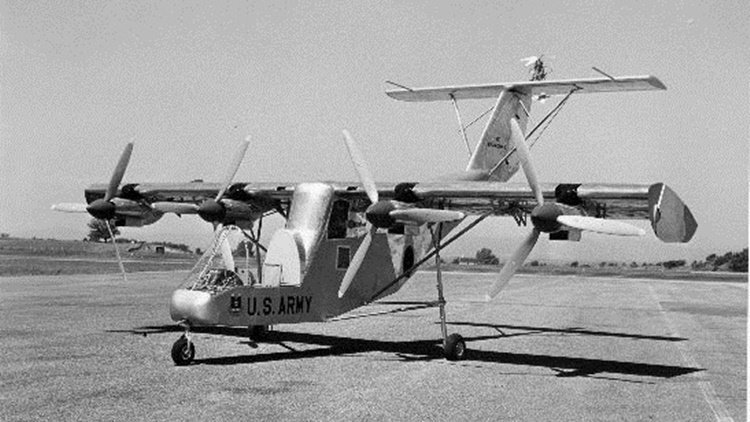
The Fairchild VZ-5 (or Model M-224-1) was an experimental VTOL aircraft built in the 1950s. The VZ-5 was designed by Fairchild Aircraft for research use by the United States Army.
The VZ-5 prototype was built as part of a series of experimental aircraft designed to study various designs for VTOL aircraft and solve problems related to vertical and short takeoff. The VZ-5 was an all-metal high-wing monoplane with a fixed tricycle undercarriage. The fuselage had an open cockpit for one pilot and a rear-mounted high-tailplane. The unusual aspect of the aircraft was that it had one General Electric turboshaft in the rear fuselage driving four propellers, two each mounted in nacelles on the leading edge of each wing. It also had two small four-bladed tail-rotors mounted above the tailplane for control. The wing had conventional trailing edge flaps and ailerons but it also had a section of the wing that could be deflected to act as a full-span flap. For a vertical takeoff two-thirds of the wing chord acted as a flap in the slipstream of the four propellers.
The VZ-5 was first flown tethered on 18 November 1959 but only had limited testing before the project was abandoned.
-
2
-
-
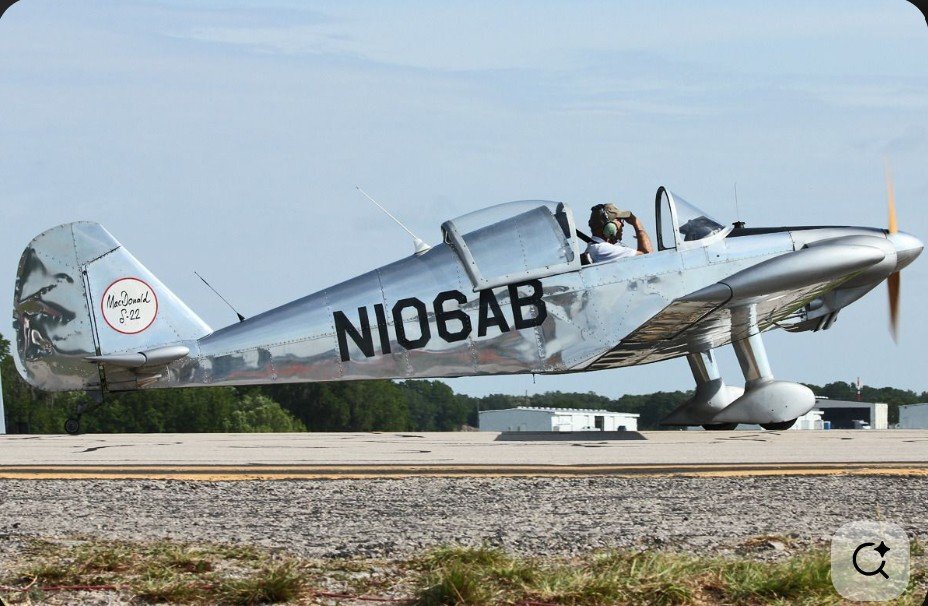
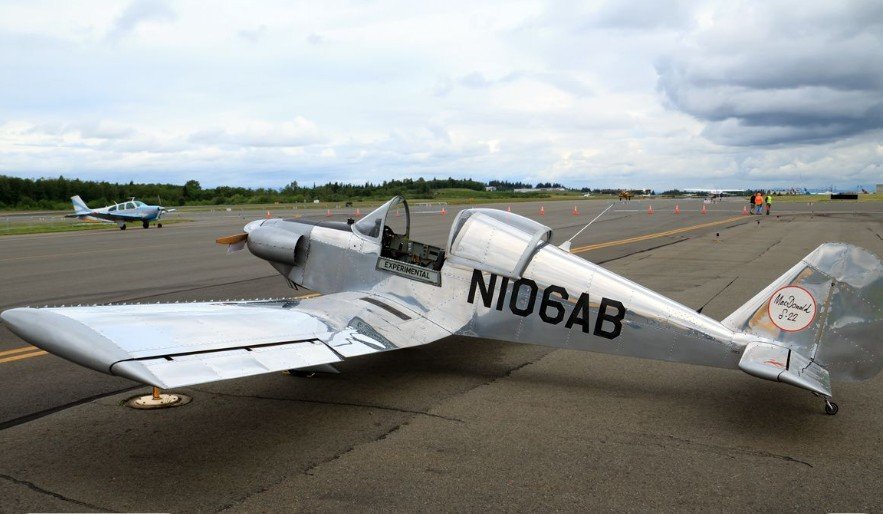
The MacDonald S-20 is a single-seat sport aircraft that was designed in the United States in the early 1970s and marketed for home building.
The aircraft is a conventional, low-wing cantilever monoplane with fixed tailwheel undercarriage and an open cockpit. Construction is of metal throughout, with a forward fuselage of welded steel tube construction, with the rear fuselage built up of aluminium bulkheads and longerons. The wings and tail are also of aluminium construction, and the entire aircraft is skinned in the same material. Pop rivets are used extensively to simplify construction.
The S-20 designation was applied to the prototype (registration N106AB), while aircraft built from the plans were designated S-21.
In 2009 and 2010 changes were made to the original design to add a cockpit canopy, engine cowling and electrical system, including an avionics bus and starter motor. Aircraft with these changes are designated S-22.
-
3
-
-
Here is a link to a large collection of photos of Aussie aircraft (and visiting international aircraft). Recent additions to the photostream are aerobatics and formation photos from the Great Eastern Fly-in 2014 but only recently uploaded. Click on the image to access the site.




Plane crashes near Shellharbour Airport 03/04/26
in Aircraft Incidents and Accidents
Posted
Plane crashes near Shellharbour Airport with 'funny echoes' heard moments before incident.
A pilot has escaped with minor injuries after he crash landed in a dairy farm near Shellharbour Airport.
I have no more details because I don't subscribe to the Illawarra Mercury.