

Dafydd Llewellyn
-
Posts
1,513 -
Joined
-
Last visited
-
Days Won
43
Content Type
Profiles
Forums
Gallery
Downloads
Blogs
Events
Store
Aircraft
Resources
Tutorials
Articles
Classifieds
Movies
Books
Community Map
Quizzes
Videos Directory
Posts posted by Dafydd Llewellyn
-
-
Blimey, where to start?Interesting, mine isn't a Skyfox, it's a VH exp but I've used some components from a CA22a so I'm very interested in any info on them, I'm getting a cruise of 80kias with a 912uls which puts me into the area your mentioning, the slightly higher cruise speed wasn't my aim but rather a much better climb and shorter takeoff .The type has gone through an interesting evolution , I've got a few hours in a eurofox and always wondered about the way the wings bend from the strut attach outwards, quite a bit, till I had a look at a wing with the covers off, absolutely no vertical rib in the spar ,and very lightly built , the fox spar on the other hand doesn't have anywhere the same movement .I have another fuselage that I'm keen to build another from, wider and longer in the cockpit, a bit more rudder area, and a different airfoil, Dafydd, I'm keen to hear what changes you would've done to the Skyfox to make it better, frankly I love the type and reckon with the time to develop further it could've been a great plane.
The original Skyfox certification was an exercise in shoehorning an aircraft that was really marginal in a number of areas, into the "box" defined by CAO 101.55 and BCAR S (preliminary issue). The manufacturer had largely spent his investment money and needed certification with the least possible modifications. So the end result was necessarily a compromise.
The main things that did not work properly and had to be changed were, from my recollection as the test pilot involved, firstly the aileron flutter - that was caused by the way the wing ribs were fretted out with rectangular lightening holes, which just about destroyed their beam strength. The fix was to glue 1 mm ply webs into the ribs that carry the aileron hangers - but it might not have been necessary to do that, had the lightening holes in the ribs been triangular, so the rib had the form of a Warren truss (no, not the political one). The ply webs work, but they prevent proper internal ventilation of the wing, and cause water traps in the trailing edge - which probably had a major part in the fatal Darwin crash (I was an expert witness on that case). The second issue was that the lift-strut tubes had to be connected to the wings further out than on the KF3, to control the upward bending of the rear spar due to the load transfer problem They got longer and a lot larger in cross-section. The original round cowl of the KF3 had enormous drag; the eventual cowl shape of the CA 21 cowl made it possible to meet the climb gradient requirement (just). The original idea of the Junkers-style ailerons was that they could also be used as flaps - that proved to be a complete failure. The "flap" lever on the KF3 became the trim lever on the 'Fox.
There are so many things wrong with the original wing design that it's really not worth fixing; it needs to be scrapped and a decent wing designed for it.
Bob and I looked at the possibility of coming up with an entirely new wing for it, using a better airfoil (less extreme camber) and conventional ailerons, and a proper spar and D-box, still fabric-covered - and with better fuel tankage. The torsional stiffness of a proper D-box would allow the use of a single lift strut. We called it the "Springbok" However it needed at least 20 owners to get together and form a group to order sufficient wings to make it worth-while for a manufacturer to tool up for them, and that's an impossibility with Skyfox owners, so that idea went nowhere. The original ailerons are excessively heavy; using conventional ones would save enough weight to get some more fuel in there. I suppose you could do this if you are building a -19 machine and you don't mind building proper wings for it. If you want to pursue that track, talk to Bob.
Otherwise, you're stuck with the wings. You can make the wings less worse by using an airfoil with less camber; I think we were looking at 4415, but I don't know whether that will work with the existing spars - and by re-designing the ribs to have a proper form of truss design. If you stay with the external-airfoil ailerons, at least use the developed version as fitted to the Gazelle, with the mods that were designed to correct the poor manufacture of the drive, and the problem of water absorption by the foam filling. And FFS use a better form of aileron hanger. Take particular care with wing drainage & ventilation.
The CA 21 had too small a vertical tail, and the thrust line was too low, so it went extremely nose-high in a power-on stall. Both those things were fixed in the CA 22 & 25; I'd leave well alone there.
The other major improvement would be sealing around the doors so that you do not get jets of air squirting out into the main airflow; they act as invisible dive-brakes.
-
 2
2
-
-
The CA 21 Skyfox started out as a licence-built Kitfox 3. However, it had a number of really nasty problems (e.g. aileron flutter) that had to be overcome before it achieved certification - in all, 35 major engineering changes. That information was fed back to Denny - part of the licence agreement - and was incorporated to some degree in the Kitfox IV and later; so it would be more correct to say that the Kitfox - after the Kitfox 3 - is a copy of the Skyfox - except that the Kitfox never had to address fatigue issues (since it's not certificated - at least as far as I am aware); and it never adopted the segmented aileron that was necessary to prevent the aileron circuit from locking-up at limit load. The later Skyfoxes (CA 25 & later) were not tied to Kitfox, but developed independently.Mine, along with most of them have been done, I have a B&R aviation tube in mine, although I've heard that if it's not done its hard( read near impossible) to get one made nor B&R are no longer. It's interesting that the aircraft is a Kitfox copy and yet the Kitfox doesn't seem to have any issues ,The failure at Bribie Island was aggravated by internal corrosion; however it showed up a design weakness. Denny may have used a heavier tube in that area in his later models - I don't know. However, anybody who flies either a Kitfox or a Skyfox that has the original high-camber wing, should be aware that the high camber causes the load on the wing to shift aft as the flight speed increases; at around 70 knots, the whole load is carried by the rear spar; and above that, the load on the front spar is actually downwards, and that download adds to the burden of the rear spar. So it's definitely NOT an aeroplane that one should try to get speed out of. Great for floating around; just don't fly it fast.
-
Yes, got it, thanks. I've just emailed back to you, the Engineering Order covering the manufacture procedure for the back-up tube. It's no longer of any commercial interest to either myself or B & R aviation, who were the manufacturer at the time. Whoever needs to use it will presumably need to get it approved for his aircraft serial number by a current CASR 21.M authority holder - but I suggest you check with RAA TM on that point.Hi DaffyddI've emailed you some info and the Engineering Order number details.Cheers
Mike
-
Correct. Unless there is sufficient "natural" stall warning - usually buffet due to the turbulence from the start of stalling at the wing root, hitting the tailplane - all the design standards for small aeroplanes require an artificial stall warning (and a red light is not considered sufficient). Usually, there isn't sufficient "natural" warning in all configurations. So it ends up with a hooter. You do learn to ignore it or to use it to confirm that you did achieve a full-stall touchdown.I now have a retro fit stall warning fitted.(skyshop) which works well. If a 24 aircraft is manufactured with a stall then its out of certification if one is not fitted. -
The reason why nobody will give a formal approval of anything other than a fixed-pitch wood prop., is that the wood prop is certificated in the course of the certification of the Skyfox or Gazelle. See if you can get a copy of a Type Certificate for any of the composite props (LOL). Without one, there's no way anybody will approve the use of one. I understand there's one model of Warp Drive prop that is accepted by the British PFA for use on an 80 HP 912 in a Trike; that's not likely to cut much ice with CASA. And yes, there has been a fatal of one of the Skyfox variants due to a non-approved propeller being fitted; I don't know whether it was a composite type - may have been a ground-adjustable wood type. Maybe things are changing, but there were no certificated composite props around when the Gazelle or its predecessors were undergoing certification.Hi RossHave you sourced a comment fromDaffad L. He may have some useful information.Cheers
Mike
A FP wood prop can be certificated under FAR Part 35 by a documented flight history of 50 hours, a specified portion of which is at maximum RPM, maximum power, in cruise or climb. That can generally be achieved in the course of the Type Certification testing. I'd suggest Maj takes a look at what is required by FAR Part 35 for a composite-bladed prop. before he tackles CASA; if he does, he'll see why there are so few certificated composite-bladed propellers around.
Fitting a non-standard FP wood prop also requires formal approval; and it involves flight testing to verify that the engine does not overspeed in climb at full power, or at Vne with the throttle shut. Also, the takeoff and climb performance needs to be checked, to ensure the performance data in the flight manual are still valid - or if not, to update the data. It means, in effect, a re-run of those parts of the original type certification flight tests. This is not a cheap process.
-
 1
1
-
-
I suggest you look at the CASA website, www.casa.gov.au under "airworthiness directives" - "under 5700". You'll find the CASA AD under "wing carry through" I think. It shows very clearly why the fuselage cross-member cracks; the design of the wing fold hinge at the base of the lift strut applies a substantial bending load to the fuselage tube; it's a piece of execrable detail design. That AD was to perform an inspection for cracking; it came out in 1996. The reinforcing strut, which helps react the bending load from the lift strut, was my design, and was later made mandatory by RAA. It was a result of the Bribie Island incident, and the aircraft stayed together solely because the bottom longeron on that side had previously been replaced with a much heavier-wall piece of tube in the course of repair following a landing accident. I don't have an electronic copy of the drawing or the Engineering Order still on file; I may be able to turn up a paper copy, but it would help greatly if you could look in the log book of a Skyfox (any model) that has the tube fitted, and tell me the Engineering Order number.I'd heard you mention that before, apart from the problem in the first instance the airframe held together till they got it on the ground. I find it interesting that the Kitfox makes the claim of never having an inflight break up, and is considered a very strong design, why has the skyfox had this issue, being overstressed is one thing,,,,maybe the reputation has grown out of proportion to the problem, I know after 8-90 hours in one I can't see why they've got the reputation they have, I love mine and reckon it's no harder to land than a Eurofox, and a third of the price ,Matty-
 2
2
-
-
They really should have their wing leading-edge ribs replaced with pressed-sheet ribs. However, they have a good useful load to gross weight ratio; quite uniquely useful as a bush aircraft, actually. There were about six of them, as i recall. I still have the drawings.Daffyd, there is a truly magnificent 0-360 conversion for sale at the moment. It has had a very expensive total rebuild that cost the owner a heck of a lot more than the $80k he has been asking for it.Kaz -
Here's an example of the J5G with Lycoming 0-360:hello I want to share a picture of our auster with lycoming o320 108 hp. The speed is around 100 mph.
-
1
-
-
Well, I've been looking at defects in GA aeroplanes and RAA flying machines as a professional engineer who had to sign for the design of over 3000 repairs under CAR 35, for 40 years, and from what I have seen there IS quite a bit to choose between them - and whilst I have had occasional maintenance defects in my own GA 'plane too, they in no way balance the faults that were discovered and fixed by maintenance. The strength of the GA maintenance system is that it is dealing with mostly aircraft types whose idiosyncracies are well known, so people know where to look for trouble. However, I've also seen it perform excellently with amateur-built aircraft, which are in my experience vastly more prone to have serious design defects.Are you saying that GA is safer than RAAus? If so what are you comparing. There are a lot of GA pilots who do less flying than RAAus pilots. Is this taken into consideration? Are you saying that GA maintenance is better than RAAus? The most likely time for a GA plane to have a maintenance defect is immediately after it has come out of maintenance. Are all the mechanical defects in RAAus accidents really mechanical or design or even poor airmanship.From what I have seen of RAAus planes and GA there is very little to choose between them.However, the GA aeroplanes are themselves mostly at least twice as old as the RAA types - a lot of them are around 40 years old now - and so they need a better class of maintenance than do most RAA aircraft, for that reason alone. As a result, the skill levels in GA maintenance should be very high - but the current persecution of GA maintenance orgs by CASA - I can only describe it as such - is rapidly destroying the skill base. I doubt the real situation in regard to maintenance has as yet really shown up in the statistics; the only reliable statistic is the fatality rate, and accident investigation as she is currently practiced is not good at providing valid statistical answers that go more deeply into the subject; however look at the defect reports data - there's quite a bit of it in the public domain.
GA statistics are likely to get worse, due to both the product liability litigation issues of the 1980s, which shut off the supply of replacement GA aircraft, so we have had to soldier on with the ones that were built before the lawyers went into a feeding frenzy; and due to CASA's counter-productive efforts on the GA maintenance industry. RAA statistics are likely to get worse, because the aircraft were built to such ridiculously tight maximum weight limits, and the design standards failed to address structural fatigue, and the lack of training in regard to maintenance issues such as structural fatigue. Also, the design of powerplant installations in many of the non-certificated RAA aircraft that I have seen, place far too much reliance on luck. It often seems that although the builder is ignorant of the fact that his design is defective, fortune favours fools - for a while. Overall, the entire picture is one of collective insanity, really.
So, the various factors that bear on the overall statistics differ considerably between GA and RAA - and both are changing, not for the better. But as an individual, you can do a lot by (a) Learning more about proven maintenance practices - and a starting point is FAA AC 43.13-1 - and (b) Understanding the inherent limitations designed into your aircraft. GA aircraft are mainly built of high-strength materials that are more corrosion-prone that the better lower-strength materials - and so are a lot of RAA aircraft, because that was the only way to get any useful load capacity because of the restrictive limitations. Lower-strength materials in thicker gauges have a lot going for them - but to use that approach, the category limits need to allow for a higher percentage ot the MTOW being structure. That hasn't happened yet; it's high time it did.
Also, as Bob has been pointing out, people need to understand the difference between the "commercial" strength of materials, and the "guaranteed minimum" strength. Aircraft materials cost more because of their quality control. Do you want to know that the average strength of the bolts holding your wings on is good enough - or do you want to know that THE bolt holding YOUR wing on is as good as it's supposed to be?
-
1
-
1
-
2
-
-
Ta, that's useful; I hadn't come across their anti-fog grade.Dont use the normal rainex on the inside. I tried and it does not stop fog at all in helmets or goggles. Get a propper defoggimg agent for inside like rainex antifog. But make sure you only used the specified amount or less. Too much and it obscures vision in my experience. Rainex anti fog works well from my experience. But i think if i was trying it in an aircraft i would only do a certain section of the screen. No use doing the whole screen and finding out the hard way. -
Rainex has been specified in the certification for several aircraft of my knowledge, as a means of ensuring rain does not obscure the windscreen. It was originally developed, as I recall, for precisely this purpose. It can also be used on the inside of the windscreen, to prevent misting. I've used it on my cars for decades; my son used it on an acrylic windscreen in his car in lieu of wipers, for a year or so - it worked very well. I consider it should be mandatory for driving at night in rain; and I've only good experience of it on acrylics.
-
As far as I can see, there is nothing in the rules that prevents the style of flying that the AUF was originally set up to cater for; all the rules do is ensure that the people who do that, start out with a modicum of proper training. That being the case, what's stopping anybody who wants to do that, from going right ahead? Nothing I can see. So if people are not doing that, the only reason must be that they don't want to.I could have it wrong but I thought the purpose of the thread was to try find out if there was any interest out there for affordable grass roots style flying of the type the AUF was originally set up to cater for. It certainly is a thing of the past these days and may remain a memory only, if that is the case I think RAAus will die a slow death.Historically, the large growth spurt of the movement occurred after CAO 101.55 was promulgated, which happened very shortly after the Lightwing appeared and things like Skyfoxes and Jabirus also turned up at FTFs. Yes, some schools hung on to their Drifters and Thrusters for quite a while afterwards, but I don't agree that they were what caused the growth spurt in the early '90s.
It therefore is most difficult to see why RAAus would "die a slow death" because only a small minority are interested in flying the early grass-roots type of aircraft; the logic doesn't follow. All these movements must grow or die; the pattern has been repeated many times. What the AUF started, is in the process of growing into a re-generation of the bottom end of GA. This was inevitable, and grumbling because one of the "stepping-stone" phases of it has passed into history is a complete waste of time. The RAAus will move on; already it has the J120, which is a vastly better basic trainer than ever the Cessna 150 was. So the present stage is just about where the bottom end of GA was in the 1960s, but with more efficient aircraft. If flying Drifters or Thrusters is your thing, good on you, just go quietly off into a corner and amuse yourself, whilst the rest of us pursue whatever it is we individually seek.
If you are trying to look into the crystal ball and see what comes next, that would be useful. I hope it's a better twist than what happened to the bottom end of GA as a result of the American Product Liability crisis. If anybody is interested in trying to guess which direction recreational flying is headed, and what needs to be done to allow this, apart from tidying up the current mess and getting sufficiently smart to not allow such a thing to happen again, that would be constructive. Crying in your beer over the sun setting on the CAO 95.25 era isn't.
-
1
-
 1
1
-
-
Well, syndicates are standard practice in GFA. In fact, for basic enjoyment, it would be had to beat setting up a syndicate to operate a self-launching glider.
-
Sharing the costs is certainly one way to keep it affordable - trouble is, the person who has the pleasure may not be the person who gets the pieces. But it's certainly one way to approach it.Nick, This discussion is not all about old rag and tube machines! It`s about (or should be) finding ways to keep recreational aviation,grass roots flying, alive.I don`t know what you mean by support from forums.Frank.
-
I thought this thread was about "How can the cost of recreational aviation be be made more affordable to more people ?" - and we were discussing the pros and cons of existing second-hand aircraft in relation to this? I assume the majority of people would want something they can put fuel in, pump up the tyres, and go flying. A heap of working bolts and rivets, with tired sailcloth, all of which require both money and time to fix before it's a "comfortable" flying proposition, is likely to be off-putting to the majority of would-be aviators, I think. If it were not, there'd be less of them in the "for sale" ads, n'est ce pas?. The dedicated tinkerer is not as prevalent now as he was, I suspect.who said that fun is all about economics? hell, if I was that worried about paying fir a hobby then I wouldn,t do it. Tube and fabric..2 stroke...slow and fun. sounds like a recipe for fun to me. Remember folks, this is meant to be a recreational activity, not a "whose got the biggest........activity. I do this for fun, what do you do it for?The thrill of simply getting airborne wears thin after not too long a time. A Drifter or a Gazelle is fine for just floating around on a nice day; but after the first hundred hours or so, one tends to want to see what's on the other side of the hill, so to speak - so you want to be able to go places. That gets difficult in something that carries only a couple of hours worth of fuel, and expensive if it burns, as somebody pointed out, 18 litres to go only 50 miles. That's why people either drift away from flying ultralights after a year or two, unless they can start to use the things for transport, or to fly aerobatics, or whatever.
-
1
-
-
I think you need to refine the definition of "longevity". Some airframes achieve longevity by the "George Washington's Axe" method - I would put the Drifter in this category as well as things like Austers, and most fabric-covered aircraft. Others achieve it by using materials that are corrosion-resistant and readily repairable; the Jabs tend to fall into this class - if you understand and have the capability for, the correct repair techniques. Others achieve it despite using corrosion-prone materials, by careful protection processes; most stressed-skin metal airframes are of this type, but with varying degrees of success.
However there are other factors to consider: How easy is it to inspect? This can be a major issue for many forms of composity construction; the transmitted-light method has its limitations. For metal structures, what is the life of the protection system? The economic life of the airframe is pretty much dictated by how good its original corrosion-protection system was - unless the manufacturer used 6061 alloy, which is vastly more corrosion-resistant than the higher-strength ALCLAD materials.
Does it have a finite fatigue life? Most structures do in reality, though it has not always been calculated and declared in the maintenance instructions. Be cautious where nothing is stated about the fatigue life of the structure; there's a generation of airframes out there for which the design standard did not require calculation of fatifue life.
A "GWA" class aircraft can be restored to as-new condition by extensive replacements - provided you can get them. The multiple-sleeving of the Drifter spars does present a difficult inspection problem, however. The process is always labour-intensive. What really matters is how frequently it is necessary; the Jab was outstanding amongst early ultralights in this regard - apart from the undercarriage legs.
A stressed-skin metal aircraft can be extensively restored by de-rivetting and replacing corroded panels - but that's a job that requires extensive experience of aircraft sheet-metal techniques, and may need extensive jigging if it gets past the superficial stage. It can easily cost more than the original purchase price of the aircraft. It gets very expensive if machined, heat-treated parts are involved, and impossible if a major forging is involved, unless you can find a replacement part. A corroded stressed-skin metal airframe is something to avoid, unless you're a fanatic restorer.
It is dangerous to generalise on composite airframes; some are practically unrepairable; others can be extensively repaired. Again, unless it's fairly superficial, it's a specialist exercise. The Jabirus have generally proven to be amongst the best in this regard - but there are parts of them that may not be repaired.
This subject needs a library of data to understand fully; the best single starting point is FAA Advisory Circular 43.13-1. However it's a minefield for a first-time aircraft purchaser. A prudent would-be purchaser should look up the Airworthiness Directives that exist for the aircraft types he's interested in; they can tell you quite a lot about which types to avoid. Also study the maintenance manual and the spare parts catalog, when you get to the short-list stage. The better these documents are, the easier will maintenance be, generally speaking. After that, go talk to somebody who specialises in maintaining that type of airfraft.
-
1
-
-
Well, you'd have to get an airworthiness approval to use anything other than the factory-supplied ones, so yes. I don't know whether they come pre-drilled or not; MS 20257 hinge is not pre-drilled.The other advantage of using Jab ones is that (hopefully) the holes are in the same place as the existing hinges, so the flock bed they sit on will be the right size and in the right place .... it all gets quite a bit harder if this is not the case :-(-
1
-
-
Good to know you have it in hand. BTW, the Piper PA 28-140 I once owned had piano hinge - but whilst they looked like the MS20257 variety, they appeared to have some sort of plastic -nylon? - bush between the aluminium and the steel pin. I've never been able to find them as a standard part; I guess they may be something Piper had made. Unbushed piano hinges that are exposed to slipstream buffet - e.g. the outboard elevator tab hinges - always generate black streaks due to the fretting between the aluminium and the steel. Back then, Lanotec hadn't been invented; if I had an aircraft with that sort of hinge on it, I'd be inclined to try some.Dafydd. As always, a sensible comment. I respect your views. I know about electrolysis. However .....This was done as a short term fix for about 6 weeks so we could get on with test flying. The relevant authorities are aware of it and of what/when happens next.The rudder hinges were replaced with new factory ones when I bought the plane a few years back. I now have some new hinges (aileron and elevator) from Jab that I bought at the same time as the new aileron cables. I'm sick of being an amateur mechanic, so they will be fitted by a LAME in about 4 weeks when I am over visiting family on your side of the pond. The original pins were indeed cadmium plated spring steel. The new pins look more like stainless (?) - they certainly aren't yellow. Factory parts and all that so one has to assume it's the right stuff ....
-
1
-
-
There's a place for welded steel tube - in engine mounts, the cabin structure, the odd space frame where one needs the bits inside to be readily accessible. It's too costly to use extensively. I'm quite fond of it, where it's appropriate; I had an aircraft welding licence for a decade, before it got too expensive to keep renewing. There's a place for rivetted aluminium, too; it's lighter than composite for a given stiffness. This makes it good for control surfaces, especially when they are mass-balanced. Given good tooling, it can be quite quick to build; I built a rear fuselage in it - it took a week, much of which was learning time, and weighed 35 lbs., and the structure was not skimped - there's a reason it has been around for so long. Use for single-curvature parts. It's also lightning-resistant - tho that's not a concern for ultralights. Not hail-resistant in thin gauges. There's a place for composites; with clever design, it's possible to come up with an indefinite-life wing, for instance - and they cain't be beat for double-curvature or complex shape parts. However, most of the composite designs one sees are decidedly ordinary; you can't tell from the glossy exterior. English wheels are for craftsmen - not for production. I've just re-covered a set of Blanik control surfaces, in Poly-Fiber. Very satisfying, and good for the karma - but far too labour-intensive for production. The best airframe will use a mixture of construction, each where it suits best. There's no single magic answer; be very suspicious of anybody who claims they've found one.
-
1
-
-
Sure you do. Ask yourself why they are not selling.Hi Dafydd, from where I sit I see an over supply of aircraft in the raa mag and other places not selling too well and when they do it appears for less than the asking price. -
Sure - but the number of them in usable condition for a new-entry buyer is pretty limited - and Skyfoxes have a 4000 hour life, don't forget. As I said, the legacy of the early design standards has prevented the accumulation of a sufficiently large pool of suitable aircraft. That's history now. The reason Skyfox went out of business was that the damn thing was too costly to build, to compete with the early Jabiru. The early Jabs used 65 HP engines, remember? They've been upgraded because that was what was available. You could put one of the certificated 65 HP twins in an early Jab, I suppose, but nobody'd use it for training. It would be a dog on a hot day or away from sea-level. I really don't think that sort of aeroplane is desirable for a new entry purchaser; he's likely to leave it in the trees at the end of the strip. A bit of performance is cheap insurance. From my experience of them, the Jab airframe beats anything else hands-down for its manufacture cost. They'd be ideal for vacuum infusion, instead of the wet layup Jabiru used to use for them.Dafydd, you are talking about the next class up. I would agree that FRP sandwich gives a good strength to weight ratio, but there is a cost penalty, and space frame/rivetted aluminium or space frame/fabric can be made to perform at a much lower price. There are many Buyers in that class being priced out not by the airframe but the necessary replacement engines. 80 hp costs too much.The grass roots class needs a max 50/60 hp where the owner can replace pistons, barrels etc at a fraction of the cost. -
Look, the way to get cheap entry-level aircraft is NOT to build crap using commercial alloy tube & pop rivets, or any such approach. The only way that works, is to build quality products that are sufficiently durable that they are still viable when they get to their third owner. Forgotten your first car? I bet it was decidedly second hand - mine certainly was. I soon learned which makes & models were heaps, and which ones kept going. It's exactly the same with aircraft, only a greater percentage of them in recreational aviation were not built to last.
The reason for this is that the idiots who wrote the design standards did not make durability a prime requirement; if they had done so, we'd have a considerable accumulated pool of sound, entry-level aircraft by now. We've lost two decades through this bloody stupidity. That's water under the bridge - but FFS do NOT continue to make the same idiotic mistake. Stop looking for the mystical $10K off-the-shelf flying machine, and start refusing to purchase crap. Think of your resale value, instead. An early Jabiru with one of Ian Bent's engines in it would be about the best you could do in utility per dollar, with what's around currently. OK, if you're a Drifter fan, LOL - but it's not everybody's ideal flying machine.
Start pushing for a small weight increase with the added weight used to make it more durable, instead of using it to add bells & whistles. If people do this NOW, we'll have a decent pool of good third-hand aeroplanes in a decade. If you go the other way, all there will be in another decade is a lot of useless scrap tube & sailcloth, and people still looking for a cheap entry-level aircraft.
If you want recreational flying to grow, this is the ONLY way.
-
1
-
-
You can register it under CAO 95.55 as a .19 registered aircraft. Or you can do it under CASR 21.191 as a private amateur-built, VH registered. Go read CASA AC 21.4 and 21.10. Or read the RAA airworthiness manual. I was talking about factory-built aircraft - i.e. aircraft built for commercial sale. You cannot do THAT under the .19 registration class in CAO 95,55, nor under CASR 21.191. You got eyes; use 'em.So, where does that put the idea (my idea) of wanting to build something because I want to build it?I want to build a flyin' machine out of metal (I like to work with metal), that looks very 1930's, a sort of roughly scaled F4U. I don't want to make it because it's a practical economical aircraft, I don't want to mass produce or market it, I want to make one because I've always wanted one.-
1
-
-
By your logic, probabily spot on! By mine! You`re not.
Who will 'WE' be to look at all this experience and how do you propose to reach a final decission on what a personal aircraft with realistic design specification should be. Who will the manufacturers be and will they want to build this perfect aircraft. Furthermore, will anyone want it?
Frank
"We" is all the dedicated experts who expound their wisdom on this forum. And anybody else who wants to thump his scooner on the bar, I suppose. With such a plethora of wisdom, surely some consensus can be found? No? Then, if nobody can agree on what they want, you can hardly blame the manufacturers for not producing it, can you?
Sadly, yes; you can. So you'll get what you deserve.
Ta Ta.
-
1
-

Skyfox AD
in Skyfox/Gazelle
Posted
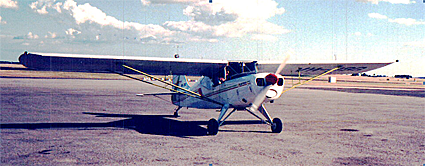
Matty, I suspect the reason many of these problems did not show up in the original Kitfox was that it had an enormous airspeed system error; the first thing one does in flight testing is to calibrate the airspeed system; and that immediately showed that the KF3 was really flying at about 70 KCAS when its ASI was showing about 83 KIAS - and the error got worse at higher speed. However, certification requires that one tests the aircraft to a flight envelope whose Vd is not less than 1.4 time Va - and Va is not less than twice the zero-flap stall speed - in knots CAS. This meant it had to be taken to 112 kts REAL airspeed, and I doubt most KF3s ever got there; they'd be showing about 130 kts IAS if they did; and with the original lift-strut attachment position on the wing, the wings would have screwed themselves off.
This ASI system error was mainly caused by using "cabin static" - and it showed that there was a lot of suction around the cabin door, which was reducing the pressure in the cabin (and thus causing the air leaks I mentioned). So the Skyfox got a proper static pressure system, which was very accurate. I strongly recommend that you calibrate your airspeed system ASAP; see CASA AC 21.40