bexrbetter
-
Posts
5,115 -
Joined
-
Last visited
-
Days Won
184
Content Type
Profiles
Forums
Gallery
Downloads
Blogs
Events
Store
Aircraft
Resources
Tutorials
Articles
Classifieds
Movies
Books
Community Map
Quizzes
Videos Directory
Everything posted by bexrbetter
-
Indeed, Youtube is a powerful free marketing tool as are forums and social media, and yet there's literally nothing on them. I have had an engine manufacturer let me know they are willing to put in an effort when (if) my plane kits take off, that's the sort of "get them out there" marketing you do.
-
Next Wednesday week. After lunch.
-
 Well someone's in trouble then for being overweight and wasting money. Don't ask me, I was busy looking at the flaps as requested at 0.47 seconds.
 -
Yes, he has glorious jeans and a star buck.
-
The MTOW doesn't make sense if it's 12g/8g and 100+hp up front.
-
Where is this Utopia you speak of? SSCBD, Risen telephoned, apparently you have stopped taking their calls?
-
near beaudesert...2 deceased
bexrbetter replied to Kyle Communications's topic in Aircraft Incidents and Accidents
Some you can, some you can not. Automatics obviously. Supposed to, I am not aware of all cars though. -
Nothing for nothing. You guys would be surprised at how cheap Qantas can be if you get onto their website, be flexible with dates and look for the cheap flights. Chengdu to Hong Kong to Brisbane under $400 for example, have seen under $300 a few times (one way).
-
near beaudesert...2 deceased
bexrbetter replied to Kyle Communications's topic in Aircraft Incidents and Accidents
No one is taught to press the start button down for 3 seconds sadly, bet most reading this don't know it applies to many electrical goods, your computer included. Apparently no one he was talking to in emergency services knew either, it went for some distance before it all came to a nasty end. -
near beaudesert...2 deceased
bexrbetter replied to Kyle Communications's topic in Aircraft Incidents and Accidents
They both walked away, that's the result that matters. -
Don't understand, you bought it through the Oz agent but you had to import it yourself?
-
near beaudesert...2 deceased
bexrbetter replied to Kyle Communications's topic in Aircraft Incidents and Accidents
The only way that can be possible is if the BRS attracted less than confident pilots who were destined for an incident one day anyway, regardless of craft type. Note that other safety features of the Cirrus are attractive to that pilot type as well, not just the BRS alone, and that the actual incident rate of Cirrus has been quite high, likely for those "Safest Plane" reasons. The real question is how many of those 'less than confident pilots' has the BRS saved. If I remember correctly the amount of chutes pulled is just under 100 for Cirrus. http://airfactsjournal.com/2015/02/fatal-cirrus-crashes-way-thank-parachute/ Also there's plenty of crashes to be used as case samples where a BRS would have likely changed the result. In this incident the pilot had time to start radioing in an emergency, I have to make a presumption that he would have had a similar time frame to pull a red lever. -
I've seen them mention in articles over here, the Chinese dealers I mean, not up to speed with it otherwise .. Jabiru Aircraft Bundaberg
-
Meh, used to it, they always know better. You can only offer to help. Even if they get there they will be scratching their heads as to why the production costs are no where near the difference they originally thought they would be when they started down this track. Cessna Skycatcher LSA anybody .... By manufacturing the aircraft in China, Cessna reported that it saved US$71,000 in production costs per aircraft produced. Cessna President and CEO Jack Pelton had originally indicated that Cessna was aiming for a price of under US$100,000 for the aircraft, which Pelton indicated would be a challenge to achieve. At that price point Pelton predicted that Cessna would be able to sell 600 of the aircraft per year. The 22 July 2007 announcement indicated that these price goals were not met. The first 1000 aircraft ordered were sold for US$109,500. The price was increased to US$111,500 in 2008 and US$112,250 in 2010. In November 2011 the company indicated that the price was being increased to US$149,000. Welcome to China. Brumby, I can advise you on some of your problems, and maybe make you aware of the money that you don't know should be yours, contact me, but it's not free this time, and only because you're Australian.
-
I went to the bank yesterday and got some Australian dollars, I only got .20 cents per Chinese RMB, last week I got .24 cents. I said to the Chinese Bank Teller, "Damn fluctuations", and he went beserk and screamed at me "No, F*ck you round eye!".
-
Not. Except maybe from me. Chinese have very little interest in developing new product, they would rather just invest in a current product and put it into production, which they then don't. It's complicated, just ask Brumby.
-
With Chinglish translation ... AD100 is a single ultralight aircraft developed by China University of Aeronautics and astronautics to meet the needs of the foreign market, in cooperation with US AI Dassault Limited (Adaso, INC.). May 1984, Nanjing University of Aeronautics and Astronautics (NAI) and the United States of America AI Dassault Co., Ltd. agreed to jointly develop, Nanjing University of Aeronautics and Astronautics undertook all the design and development The company is responsible for providing the latest information, equipment and sales in foreign markets. August 1985 completed the prototype flight test, designed to meet the United States FAR103 Department of the relevant provisions. AD100 single Super Light aircraft in November 1985 to participate in the United States Light Aircraft Expo in Los Angeles, 1986, respectively, in Shanghai, Nanjing held in the Foreign Trade fair and Beijing domestic civil aircraft reporting exhibition, was widely praised. May 1986, the Australian fitness Sports equipment company came to Nanjing to buy a AD100 aircraft. AD100 can be used for aerial photography, topographic surveying, forest protection, agricultural transportation and so on after proper modifications. The AD100 development AD200 (double seater) is scheduled to complete the prototype test by the end of 1986. Design features AD100 adopts advanced duck-style layout, fully enclosed cockpit and whole FRP composite body structure. AD100 can be easily decomposed into front wings, fuselage, two main wings and two small wings. Can be loaded into the supporting design of the special trailer. Trailers can be towed by a car or limousine and stored in a general home garage. AD100 shape novel, beautiful appearance, cabin comfort, open vision, simple operation, flight safety. The plane can take off on the dirt track or on the lawn. Wing: Cantilever type upper monoplane, relative thickness is 20%, leading edge sweep is 12 °. TAN type structure. Skin is a FRP honeycomb sandwich panel. The trailing edge is fitted with a pair of aileron flaps. When used as flaps, it can be 20° downward. As aileron use can be deflected 15 °. The wing tip is fitted with a composite small wing, which is both directional and directional, and the rudder deflection range is 25°. Front wing: straight wing full composite honeycomb sandwich structure. Elevator maximum lower 25°, maximum -5°, front wing and fuselage through three bolts connected. Fuselage: shell-shaped long circular section structure. The shell is made of honeycomb panels and aviation laminates. The fuselage equivalent diameter is 0.89 meters. The machine has a number of reinforced frames made of aerial laminates. Landing gear: first three points. The main landing gear for the overall arched FRP structure, with the fuselage reinforced box bonding, no metal connectors. The front landing gear is a metal welded structure that can be manipulated to turn and glide, linkage with the rudder and equipped with a front-wheel brake mechanism. Powerplant: Equipped with a Rotax-277 two-stroke single-cylinder piston engine, power 19.9 kw (27 hp), using a standard two-blade propulsion propeller. The middle part of the fuselage is equipped with a 19 litre tank. The cockpit is fitted with adjustable seats. The front and back of the seat is 200 mm. Open with adjustable vent. System: three-axis control system. Equipped with independent working flaps. The elevator and flaps are hard to manipulate, and the rudder is a soft type. Airborne Equipment: Equipped with general international instrumentation, but also equipped with the latest American life-saving umbrella, in case of emergency, can ensure that the crew and aircraft safely landing.
-
Well done George, hope you stick some updates on the Weedhopper build in our build thread occasionally.
-
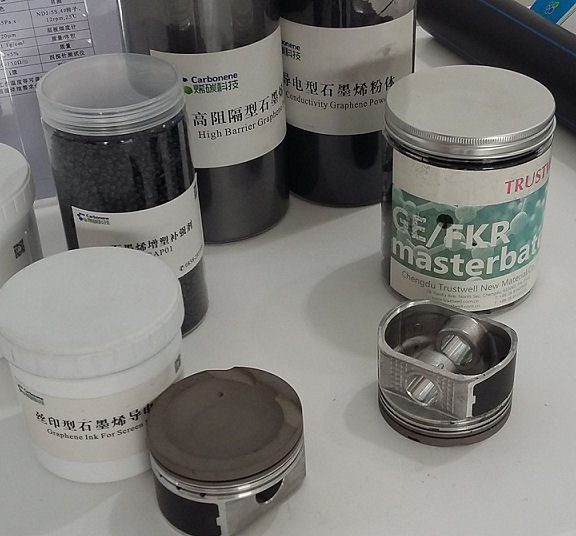
Oh and I was going through the local suppliers booths and came across the secret ingredient of graphene I believe!

-
Amateurs. Come to China and see what they get up to. Today was a perfect example, paid 220 RMB to get into the airshow today, that's about double normal for a show here. The main displays were placed either end of the 2kms runway, and they were charging for the bus (electric 9 seaters, eg; oversized golf carts) ride up to there, and then again back or you hoofed it.
-
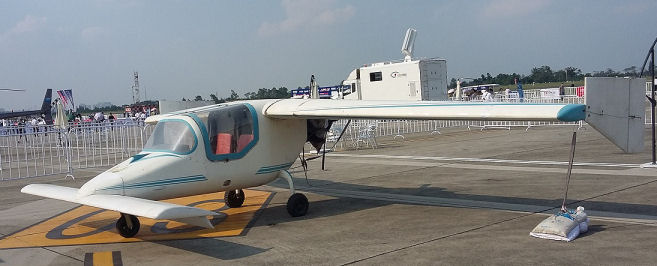
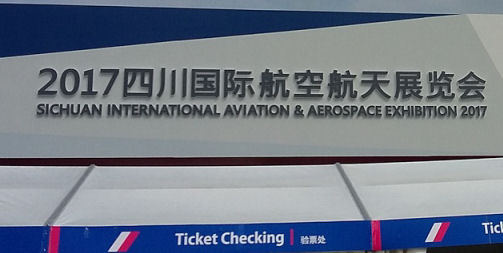
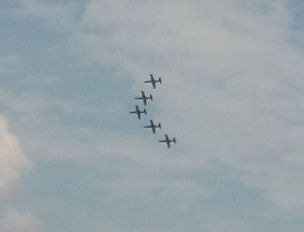
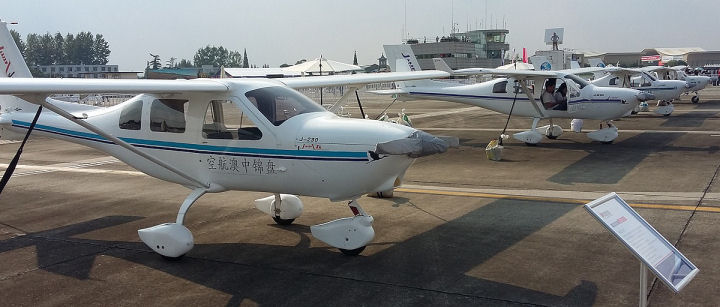
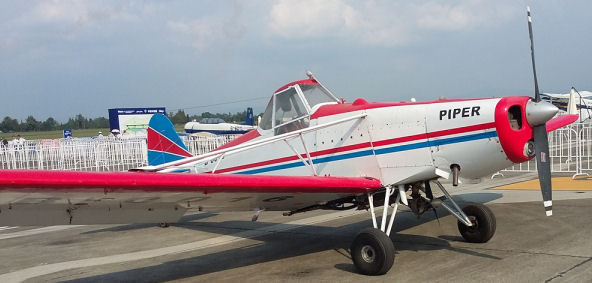
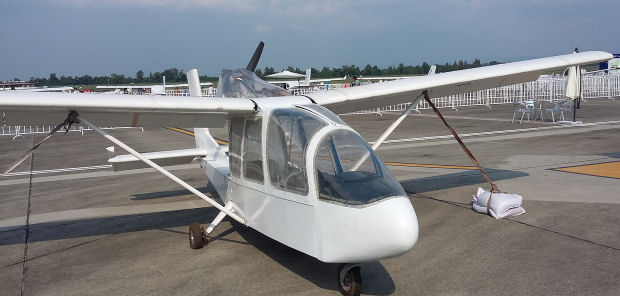
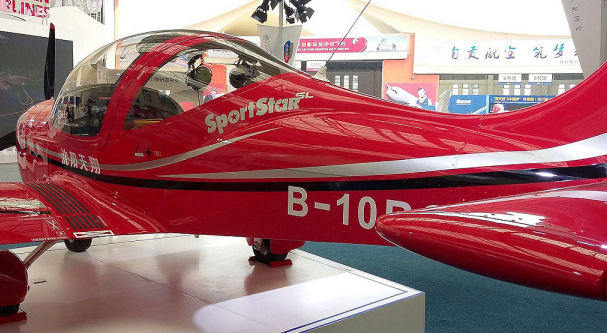
For aviation I am a little fortunate to be 15 kms away from the main flight training University in China. Although people are right to mention there is not many light aircraft to be seen in Chinese skies, I see Cessna 172 and twin engined somethings to the level of annoyance. Civil Aviation Flight University of China - Wikipedia Anyway, they have their first big show from Today 'til Tuesday (Public holidays start on Sunday) and I went today to miss the weekend crowd, I guess there was only about 200,000 there today ..... Except for the old aircraft from their years of training, it was utterly boring with the exception of the flying shows, Russian stunt pilots at their best, from multiple jets, to multiple piston, bi-plane dog fights and various solos. If you want to see action on the cheap, get yourselves here next year, if you want to see new models and accessories, forget it, although the old stuff is interesting. As far as I could find, Evektor were the only new planes on display, 3 of them. The Russians at it. A weirdo older pusher canard designed by a University in China. Was supposed to hit production but didn't, there's a story on the net somewhere, see if I can find it. Burt Rutan, eat your heart out! Another older Chinese attempt i believe. One of the Evektors. Some Chinese rubbish, they won't have a hope of selling these, just look at them! I took some videos, I'll go through them and see if anything interesting, I could not for the life of me see a damn thing on the phone screen due to the glare, i am surprised at how these pictures came out.
-
The XPB Stage 1 underway.
bexrbetter replied to bexrbetter's topic in Aircraft Building and Design Discussion
Sorry Guys, my Father in Law died 2 weeks ago, hasn't been a lot of fun of course, funeral etc, and now even more bad news down the track. You can't stop the life cycle but it certainly bites hard sometimes. China's on another holiday all next week, I'm in between factories, and the interim factory hasn't worked out well, was hoping to get into the new one this week before this holiday break, alas ... It's just one of those periods in life when nothing's working, we all go through them and it will be the past soon enough. Glad to get a laugh from you blokes occasionally. -
Gerin Varivol. Tunison Scout.
-
Not since they put the wire screens in and stopped hanging the meat outside.