

flyerme
-
Posts
1,596 -
Joined
-
Last visited
-
Days Won
20
Content Type
Profiles
Forums
Gallery
Downloads
Blogs
Events
Store
Aircraft
Resources
Tutorials
Articles
Classifieds
Movies
Books
Community Map
Quizzes
Videos Directory
Posts posted by flyerme
-
-
:ace:congrats,thumbs up
-
was and is my dream to be a ag pilot, but the cost$$$$$$$$$$$$$ was way out of reach,It's not a game for the faint hearted. Produces great pilots and big money if your good...........................................................................Maj...
-
looks like a pawnee? wonder what happened? poor bugger.
-
the quoted 6800 rpm is max which means RED LINE,all rotax up to 582 should have a max of 6300 rpm in climb out and ground run should be 6100-6200..some will say 6500 on climb out but according to Rotax (Austria) it all about the torque range,,anyway all seem to be within range,I max at 6200 on climb out and 6000 om ground running a 447 - b type 2:24 with a power fin ground adjust 56" x 10deg ..Corky450. 6300 flat out is what I get as well. Thank goodness someone else gets that, I was worried I couldn't get the quoted 6800 although everything seems to run ok. Is the e box a 3:1 ratio? -
well done John,and I like the fact your studying in-between.thumbs up mate all the best
-
flight today ,did 20 mins local flying,engines running nice ,plane seemed fine(awesome infact) and now ive received all the info I was after im satified with performance ,seems to be stacticly balaced in flight,as apposed to the dynamicly balanced thruster...so looking like all is starting to look good.will start some cross country flying soon,and will very dissapointingly sell my pride and joy "Thruster t83" to pay for the supercat.
-
 1
1
-
-
ha You sound exactly like my good friend and cfi who fav saying is "deal with it" and funny whilst happened I was constantly saying "Don't panic just keep flying...scary stuffThat happened to me many years ago flying around the old Salt Ash RAAF drop zone. Lucky i was flying an old and slow Stolaero. The fog did indeed appear almost instantly. I was heading back to the 2 square mile of drop zone flying about 50 feet above the swampy tea trees that surrounded the area. What do you do? Not much experience at the time. The old Hall ASI jams up with moisture so my main instrument was unreliable. My other only instrument was a ribbon for slip and skid. Crash comics were my main diet back then and all the stories i was recalling ended up in grief. Scared? You bet i was. Only thing i could think of was to select a power setting to keep the Stolaero in hands off trim, keep light on the stick and rudder and hope i was still headed toward the centre of that drop zone. No compass. Half mile to go would take a minute or so then go a bit more before slowly pulling power and decend with eyes wide open. Picked up the grass at about ten feet and put it down, switched off and thought about it. 10 minutes later the fog cleared and i found i was almost in the centre of the drop zone. Rule 1, don't panic. Rule 2, use fear for motivation, Rule 3, put bucket of luck in esky before leaving home. IE Sh#t happens. deal with it -
Found out he is the owner of design but NOT the designer.he just bought the rights,and then modified them,mine is based on the old plans the new plan has his modifacation,which is a bigger stablizer and more rearward c.g,,unfortunatly his not replying at present to emails? think he wants me to buy the plans and stop asking him questions? reminds me of the thruster cenareo... well if im going to lay claim to a design I would certainly be willing to help satify owners! ah the power of the dollar,,hmm
-
RESEARCHING STABILITY AND CAME ACROSS THIS...
Even though the horizontal stabilizer may be level when the airplane is in level flight, there is a downwash of air from the wings. This downwash strikes the top of the stabilizer and produces a downward pressure which, at a certain speed, will be just enough to balance the "lever." The faster the airplane is flying, the greater this downwash and the greater the downward force on the horizontal stabilizer (except "T" tails) (Fig. 17-25). In airplanes with fixed position horizontal stabilizers, the airplane manufacturer sets the stabilizer at an angle that will provide the best stability (or balance) during flight at the design cruising speed and power setting (Fig. 17-26).
If the airplane's speed decreases, the speed of the airflow over the wing is decreased. As a result of this decreased flow of air over the wing, the downwash is reduced, causing a lesser downward force on the horizontal stabilizer. In turn, the characteristic nose heaviness is accentuated, causing the airplane's nose to pitch down more. This places the airplane in a nose low attitude, lessening the wing's angle of attack and drag and allowing the airspeed to increase. As the airplane continues in the nose low attitude and its speed increases, the downward force on the horizontal stabilizer is once again increased. Consequently, the tail is again pushed downward and the nose rises into a climbing attitude.
As this climb continues, the airspeed again decreases, causing the downward force on the tail to decrease until the nose lowers once more. However, because the airplane is dynamically stable, the nose does not lower as far this time as it did before. The airplane will acquire enough speed in this more gradual dive to start it into another climb, but the climb is not so steep as the preceding one.
After several of these diminishing oscillations, in which the nose alternately rises and lowers, the airplane will finally settle down to a speed at which the downward force on the tail exactly counteracts the tendency of the airplane to dive. When this condition is attained the airplane will once again be in balanced flight and will continue in stabilized flight as long as this attitude and airspeed are not changed.
A similar effect will be noted upon closing the throttle. The downwash of the wings is reduced and the force at T in Fig. 17-24 is not enough to hold the horizontal stabilizer down. It is as if the force at T on the lever were allowing the force of gravity to pull the nose down. This, of course, is a desirable characteristic because the airplane is inherently trying to regain airspeed and reestablish the proper balance.
-
somthings are not covered,in raa.I had not come across or even thought of "fog overs".but their clearly out their so how do we deal with them? especially in the case of the" out of know where fog over"?
-
hmm No thanks,I hope never to see fog of any kind on the screen again... but a fog appearing from know where! now thats scarey..!!!!Wait until you experience flying along and fog developes from nowhere. It does not roll in it just appears almost instantly all around you. Can't wipe that off the windscreen. -
2 more flights since and not going well... Now thinking back to the 3 hours of circuit flying at wellington when purchaced,I noted to by standers that the weather was rough coming in to land. since while flying here at home the weather seems rough ussaully when I make my turn from base to final which is always a decending turn,the instant I pitch her down the air becomes turbulant and the approach very turbulant(plane bouncing up and down but worse it skids side to side in its yaw axis,when I level back out in round out she is smooth again and I put her down gently.Now I believed this to be turbulance from weather as it feels,but this mourning I did a test..I took of in my thruster,nice smooth DENCE air , approach made hands free (man she flies nice) then I took off in the supercat,on climb out felt good levelled felt reasonable with slight turbulance,(climbed to 600ft made a 180 and headed back to strip) then as I did my 180 decent turn with 10deg bank at 60knotts it became turbulant and air speed dropped to 45 I gave her throttle and pushed her down to get 65knotts levelled the wings continuing my decent at 65knotts the plane bounced and slipped all over the place and once again needing throttle inputs to keep her at desired speed of 55, once leveled out at round out she flies smooth again and flairs beautifully.. so conclusion is pitch instability, so looks like shell be pushed to back of hanger for a few weeks till I can get her to benalla AGAIN for a complete overhoual$$$$$$$$$$ bloody piece of shit, and as has been mention sevral times to me ,NO I am not going to sell it to some other poor bugger,unlike certain people willing to not only take a carrer pensioners money but willing to risk thier lives for a sale,,,,,you can not argue the evidence...
still waiting for the log book? -
,had a plan and 99% sure had fixed prob but still that 1 % chance it may accur again?,soloution:1= made airvent in front wind screen and made side air vet larger,2=put de fogger solution on winscreens prior to flight.3= put a terry towling glove on so I can put my left hand threw vent and clean front and side screen while sitting in normal position,..tested with breath and hair dryer and all good but still ,after somthing like that it plays on your mind.....also the plane is still in testing stage ,which everdently is not going well..but thats for another post.....Why would you make the decision to put yourself in a situation that you thought was seriously uncertain and likely to be very dangerous? Fix the problem, or have a plan for coping with it. You shouldn't have an anxiety level above the heightened awareness of what's going on around you, that one should have when taking to the air. Nev -
Yeh I must say,its made me a lil nervy taking off now... last flight had me sittin at end of runway burning fuel as plucked the courage to take off...please dont fog over...please dont fog over...
-
HA HA YEP!! and named my son Seth... after Seth Enslow... it was iether Seth or Orville?lol Now back to topic I dont want to high jack anyones thread.....Brought up on a diet of Krusty Demons no doubt. Nev-
1
-
-
Hey Pud,I came across this also a number of times from dif ferent sources,including bert flood inports,and tried it. DO NOT TRY IN AIR....Please do it on a ground test, first Your engine will more than likely die due to flooding and yes apply a small bit of choke at a time but almost gareenteed the engine will stop! let us know . take it easy pudAnother thought - yeah I know I do that too much sometimes!!I was reading in the CPS (California Power Systems) catalogue Mike Stratman's "The Proper Care and Feeding of the Rotax Engine" last night, and he mentions using the "enrichener" (choke) circuit for diagnosing problems with carburettors. Do you think it would be worth trying with my problem? I was thinking that I could fly along with my max 6200 revs and see what activation of the choke does. I'm thinking if the revs increased with activation of the choke it would indicate a lean condition, maybe caused by smaller than required main jets.Waddayareckon? Also, I'm thinking I'd just use a bit of choke rather than activate it all the way, yes?
If you want to read this article, it is called 'Tuning the Bing Carburetor Understanding the Mid Range'. Part 11.
Pud
-
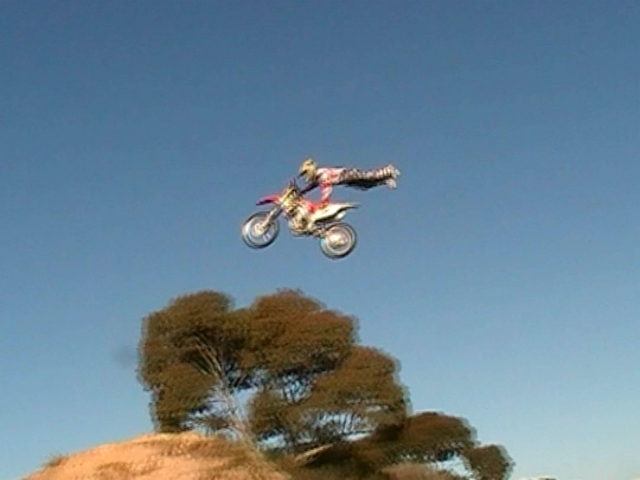
I recall a legal case against a local council in vic a few years back. A feller on a small property got his raa certificat bought a plane and built a strip on the only part of his small property useable .Not being a plane fan the next door nieghbour complained about the plane ,he first called the police who said theirs nothing they can do(correct) then he went and seen the council,,the council then sent a letter telling the pilot he could no longer opperate his plane from his small semi-rural srtip.. the neigh bour gets approval from council to build a shed along fence line dirrectly in line with strip.. so pilot takes them to court and wins,next door had to build els where and council was finned, why? well the ONLY organization that can say yay or nay is CASA...and for that matter you can put an AEROPLANe strip anywhaere you see fit..but if it where a helli..you gota get permission(and good luck) So why couldnt the nighbour put up his shed? well he could have if he had done before the strip was built but apparently first in...lol So it seems CASA are responcable for the air down low?,,no w heres somthing to ponder,Im an ex freesyle moto cross rider and used to practice at my semi suburban property, I would reach an average hight of 45ft and average distance of 80ft, now if I hit a plane whos responsable? heres a a pic of me 47ft high 85 long at home sherlock, yep thats the mound where one of my wind socks now sit,and trees at hanger.. crazy bugger:score 010:
-
1
-
-
hows it going? getting it sorted?Hi All, Took this plane to Temora at Easter and had a favourable reaction to it. I have made a 62" x 38 prop for it and tried it and got 80 lbs of thrust....was a bit impatiant as it was not sanded real smooth, and no clear coat. The old 54" prop gave 110lbs of trust. Next step is finish the prop and a line of white paint on the belts (thanks Andys) and see what I get then. And a tacho -
just a quick update ,after much work and replacing with very low hr engine(17 original hours) I very happy to say the thruster is back like new, very very awesome to fly...hands off in all fazes of flight. ,turns can be done with just ailerons and elevator or just rudder and elevator or aileron,rudder and elevatotor.. set approach and have no problem pouring a cupper on the way down,smooth hands free flying,,low ans slow..love love love it...
-
 1
1
-
-
what hight yo sittin at? awesome pics,love emGuys, Just two shots from a solo X-Country Training flight on Friday.Shot 1: Lake Eucembene looking towards the Main Range[ATTACH=full]17401[/ATTACH]
Shot 2: Lake Eucumbene Looking to the SE
[ATTACH=full]17402[/ATTACH]
I love the smooth cool air on days like these! Good fun indeed
Phil
-
I have same prob? Im pretty sure its my computer running slow.
-
damn.....Just got an email from thr owner of the rightd to the bobcat/supercat plans and here it is.
The trim tabs being bent down will give you an up elevator trim condition, the tabs will fly the elevator in the opposite direction of the deflection. Another thing to check is that your ailerons aren't drooped beyond the normal airfoil and acting like flaps.
On my Supercat built in 1994 and with over 720 flying hours, I did a couple of things beyond what was shown on the plans. One I added an electric elevator trim tab in the left elevator half, and the second thing that I did was to enlarge the horizontal stabilizer. Both of those modifications worked very well, and when I acquired the rights to the plans the larger stabilizer was incorporated into the plans.
I don't remember where your CG is, but I am flying with the CG at 14.8" aft of the leading edge of the wing and have been very happy with it there. Remember that my stabilizer is larger so it will allow a more CG, but I am still well within the recommended range.
Cheers,
Steve
-
just for the record..thank you so much everyone for all you help and advice....
fingures crossed..think were almost their:happy dance: -
I think I'll should be fine next flight now I have all the deflection correct,and just to test ive moved trimmimg tabs up 1/2 their travel to see the differenve?should need a little forward in cruise and need less back on approach? we will see? pitty we got wind all week,,,

 still waiting for the log book?

 fingures crossed..think were almost their:happy dance:
Flying safer and avoiding the avoidable accident!
in AUS/NZ General Discussion
Posted