pluessy
-
Posts
139 -
Joined
-
Last visited
Content Type
Profiles
Forums
Gallery
Downloads
Blogs
Events
Store
Aircraft
Resources
Tutorials
Articles
Classifieds
Movies
Books
Community Map
Quizzes
Videos Directory
Everything posted by pluessy
-
Bad fluctuating Oil pressure on a Rotax 912ULS
pluessy replied to Kyle Communications's topic in Engines and Props
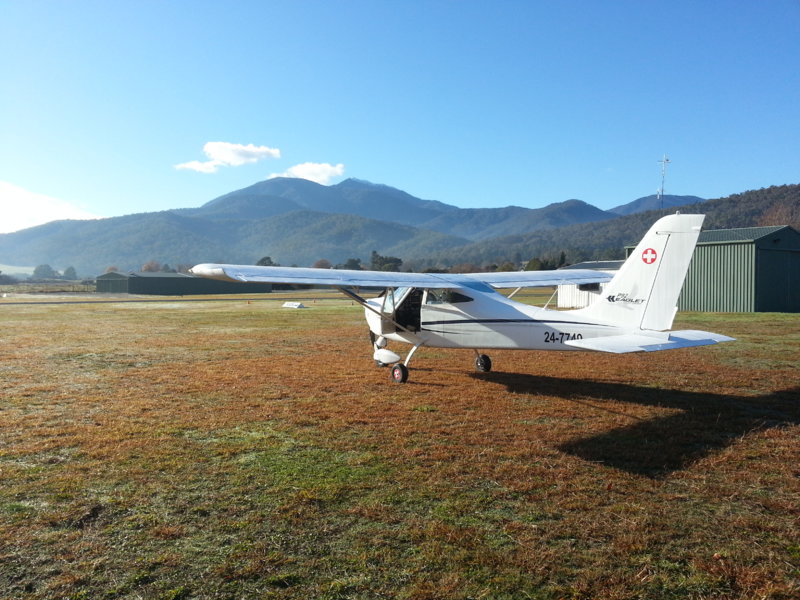
To my knowledge, the oil is not affected in this application. The life of the oil is too short, 50-100h max compared to a hydraulic system (several thousands of hours). The most likely component(s) to cause cavitation (vapour) are also not oil components but fuel! When my oil temps wouldn't come up to 80-90deg C, I had over 2% of fuel dilution in the oil (most of the time it is under 1%). Cavitation is caused by a small part of the fluid experiencing a local pressure that is below the vapour point eg forming a tiny vapour bubble. Speeding up a pump that already struggles to get enough fluid supplied is not the fix. The usual remedy is the reduce the suction loss (reduce pipe length, increase dia and replace/remove fittings with low-loss versions). If that is not possible, increase the source pressure (elevated reservoir or pressurising it). I have a Tecnam P92 and Tecnam, in their wisdom, is installing the oil cooler with the inlet/outlet fittings down (contrary to Rotax installation requirement). After every oil change, I'm cranking the engine with spark plugs removed until I have steady oil pressure. When cleaning out the tank, I also drain the lines and then use a vacuum pump (oil sample pump) to bleed the suction lines and oil cooler at the oil pump inlet. -
Bad fluctuating Oil pressure on a Rotax 912ULS
pluessy replied to Kyle Communications's topic in Engines and Props
There is a general misconception that the oil pressure relief valve REGULATES the oil pressure. All it does is LIMIT the maximum pressure at the location of the relief valve. Even the Rotax manual is wrong by saying "The oil pressure from 1.5 to 5 bar (22 to 72 p.s.i.) is controlled by the pressure relief valve (8). The surplus oil returns to the oil pump rotor via the channel (9)." The relief valve can't regulate the pressure below it's opening pressure. According to the Rotax manual that would be 5bar (the operations manual says max 7bar). Below the relief valve setting, the oil pressure is a function of volume (rpm), viscosity (oil temperature), pressure loss (filter, passages) and leakage (lube oil demand from all lube points). I had originally a thermostat fitted with very poor plumbing (90deg brass elbow, 180deg bend in the hose) and lower-than-ideal pressure and pressure fluctuations. Removed the thermostat and re-hosed the suction lines and now have rock-steady 4bar at 5,000-5,200rpm and 80-90deg oil temp. Oil temp control is not with an adjustable blank in front of the oil cooler (25-40% of the area summer-winter). The Rotax engine is the only engine I know of that has the oil cooler in the suction line. Any restriction will cause pump cavitation and erratic oil pressure, the relief valve is more likely a symptom rather than the cause. -
check out their history: 1400: abandoned VM 133 MK: abandoned JCV-360: abandoned
-
I can't compete with this sort of snow, Australia only had some mini snowfall at the start of this winter. This is on top of the highest mountain in Victoria, Mount Bogong at 1,986m (6,516'). I took off from Mount Beauty and climbed past Mount Bogong on my way back to Narrabri.

-
just commit yourself to 3 stubbies less in the fridge and use that free space for the glue Problem is the shipping from landing in OZ to your location.
-
I'm in the same boat, I have the Oratex foil but not ready yet for the covering. I did order the unmixed glue with the foil but that is now 5 years old!!! Now I'm working towards having all surfaces requiring covering completed before ordering the next lot of glue (and book some annual leave).
-
Cabin heater- dos/don’ts, pros/cons
pluessy replied to danny_galaga's topic in Aircraft General Discussion
air intake under the prop (round hole), then flex duct to the heat muff on the exhaust muffler, from there another flex hose to the valve on the firewall (bottom left on the P92). The flap directs the hot air overboard (out the bottom) when closed and through the firewall when open. Inside are a couple of smaller flex hoses directing the warm air to the 2 vents on the instrument cover and there is a small outlet in the feet area. Pretty standard for most aircraft. -
Cabin heater- dos/don’ts, pros/cons
pluessy replied to danny_galaga's topic in Aircraft General Discussion
Just returned from a short trip Narrabri-Glen Innes and back. It was 1-2deg at 7,500', so the heater was on all the time. Glad I have it. -
Just be aware that the required glue has a very short shelf life! It only comes in the pre-mix now and is good for max of 3 months at 25deg (Shelf-life 3 months at 25 °C (77 °F), short time (max. 24 h) allowance 30 °C (86 °F)). Don't order it in the middle of summer!
-
Cabin heater- dos/don’ts, pros/cons
pluessy replied to danny_galaga's topic in Aircraft General Discussion
I have used the cabin heat many times in my Tecnam, main reason is to keep the windscreen from fogging up early mornings with high humidity. The Tecnam has a small outlet at the feet and the main one at the bottom of the windscreen. By the time I have done the engine run-up, I have 2 small patches where I can see through and at lift-off, most of the bottom 1/2 of the screen is clear and the rest clears up within a minute or so. -
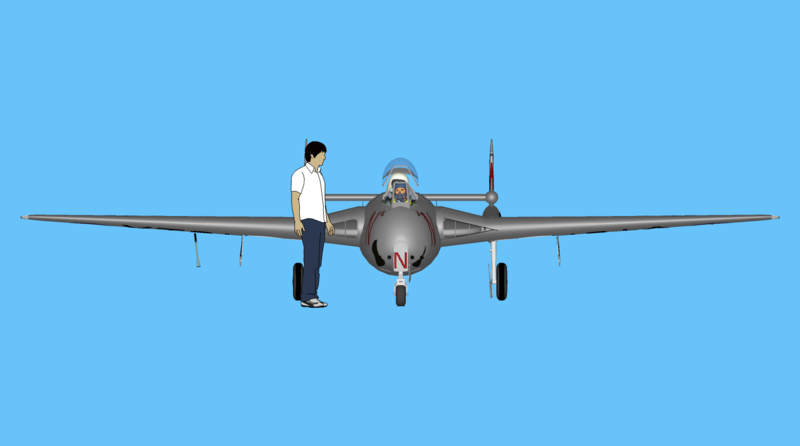
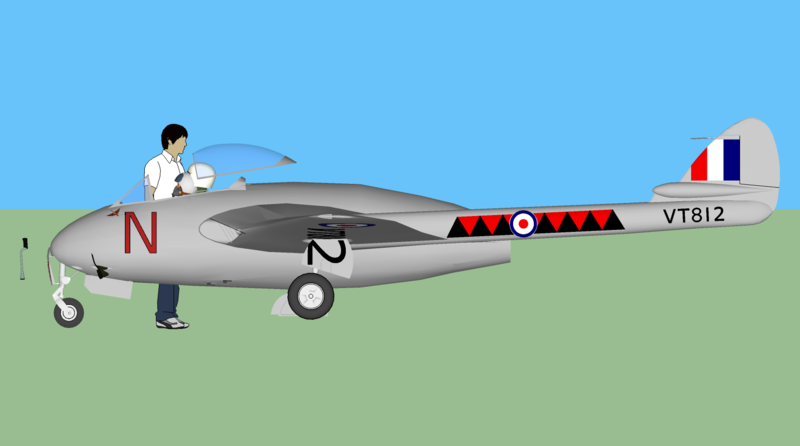
Thanks Mike, I'm aware of that. $150 for 100lt of fuel and $100 for the 4.5lt of oil! The PBS TJ80 is hopefully available with the same lube system as the TJ100 by the time I'm ready. Or AMT has the Nike with a separate lube system. I have a soft spot for the Vampire, sort-of grew up with them and they were the first jet fighters in both of my countries (CH and AUS). And it just looks good and has the right proportions for a scale replica.
-
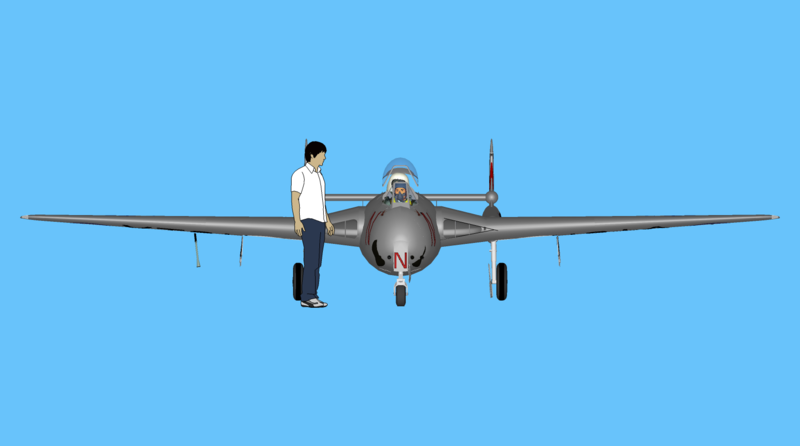
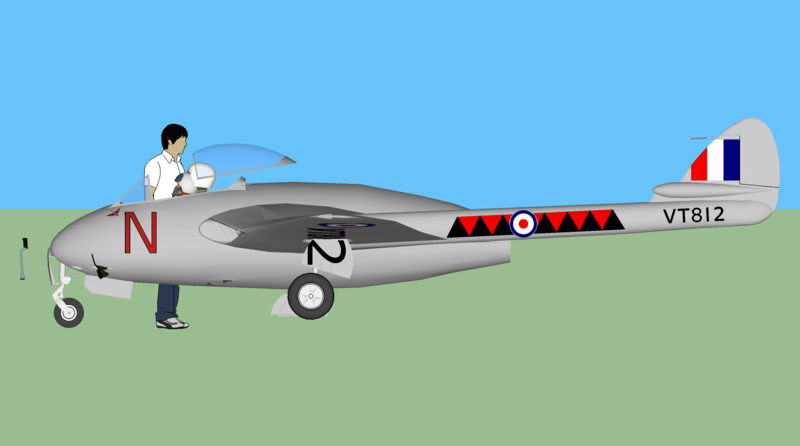
This is on my bucket list for retirement: a 2/3 scale DeHavilland DH-100 Vampire with a ducted fan or ~75kg mini jet. This would give it a similar thrust/weight ratio as the original. The 2/3 scale has about 10m2 wing area and should be possible with a MTOW of 300kg = 95.10. Only drawback is that 95.10 doesn't allow aerobatics:thumb down: I have a set of 1/5 scale model plans to start from. Any interest? Currently building a Spacek SD-1 Minisport to learn about the new foam/carbon/ply/timber construction techniques (130kg empty, 6m2 wing area, 33-35hp, 85-90kts cruise).
-
95.10 has 2 criteria: MTOW 300kg or less, max 30kg/m2 wing loading. The Spratt 103 meets both (250kg MTOW, 10m2 wing area). Use a Briggs 630cm2 (24-30hp redrive) or 810cm2 engine (28-30hp direct drive) and go for it.
-
close the flap. I built them for my single-seat plane, directing fresh air at the pilot.
-
Querstion - Which glasses for flying ?
pluessy replied to kodiak74's topic in Aircraft General Discussion
Forgot to mention that I use non-polarised glasses for just that reason when flying and driving. -
Querstion - Which glasses for flying ?
pluessy replied to kodiak74's topic in Aircraft General Discussion
I use general sunglasses with a reading lens in the lower 1/3 (no correction for the rest). Check out the internet, there are quite a few suppliers of sunglasses that can have different corrections (from 0 to x) in the main lens and an added reading lens at the bottom. As a trial, order some stick-on plastic lenses and put them on your normal sunglasses. You can also get safety glasses with the same reading lens built-in (from about 1.5 to 3.0) -
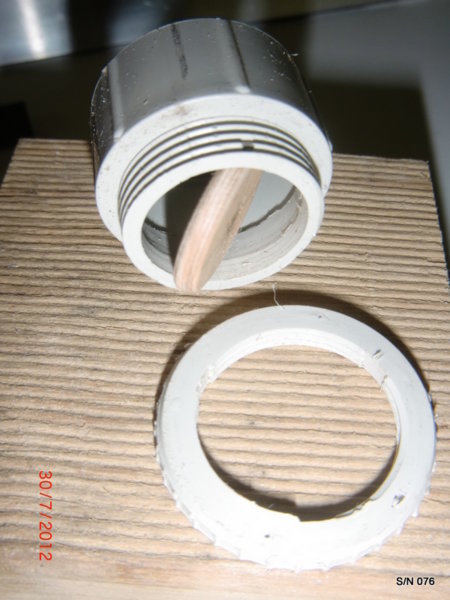
DIY vent, 32mm PVC screw adaptor. Redoing it with a thinner flap (2 x 0.8mm ply instead of the 3mm ply).
-
I use my own page, starts and finishes with the annual (RA-Aus) maintenance record, kept in the aircraft manual in the plane. Any in-between maintenance is recorded on the maintenance record and all flight details on the added page. At the end of the maintenance record period, they all go together in a binder at home. 24-7749 log page.pdf 24-7749 log page.pdf 24-7749 log page.pdf
-
Look at the specs for the MCR01 'VLA': The wing span and wing area of the 450kg version is far too small to carry 600kg and meet the LSA stall speed criteria (maximum stall speed in the landing configuration (Vso) of 45 knots CAS). Most LSA carrying 600kg have a wing span of 9m or more. Now add the bigger wing, stronger fuselage, undercarriage etc and your empty weight will be much closer to 300kg, like all the others. And the speed has come down to the level of a current very fast LSA (125-140kts on 80hp).
-
I have been playing with the design for a 2/3 scale Vampy for a while. I have the plans for a 1/5 model and would use similar construction materials and techniques as the Spacek SD-1 Minisport (building one as a training exercise), Pik-26 or MC-30 Luciole (foam/carbon fibre spars, foam ribs, ply skins, wood stringer/ply skin fuselage). The 2/3 scale is just big enough to accommodate the pilot and gives 10m2 of wing area, with 300kg MTOW fits in the 95-10 category. If built really light, it should come in under 180kg empty (the SD-1 is 120-135kg empty, MTOW 240/255kg). Engine: 85kg thrust jet (PBS TJ80) or 75-100hp air-cooled 2-stroke with ducted fan (Hirth 3002/3003). The 85kg thrust jet would give the 2/3 Vampy the same thrust/weight ratio as the original (taking off like a lame duck till they accelerate to a reasonable speed). Only problem with the real jet engine is they use 80-100lph of fuel!
-
there must be some problems in the network, Essendon is coming up now but East Sale and Moorabbin have no data on both platforms (apps).
-
there are times when some stations are off-line. doesn't happen very often.
-
get "AeroWeather light" (IOS) or "Avia Weather" (Android) for clear-text aerodrome weather. It's like ATIS on your screen.
-
Protective Cover for Bolly Prop - Optima 68in
pluessy replied to Xavier's topic in Engines and Props
I bought mine at Super A-mart, the cheapest football sock that I could find. Get 2 pairs and you have 1 spare, material stretches and breathes, just for UV protection
-
The idea of the Wideband sensor is to give you the mixture average. You will still need to measure each cylinder in the testing phase (re-jetted carb, throttle body injector etc) to work out the mixture distribution across all cylinders. Even in normal use, an engine that is very sensitive to excessive heat will need CHT and EGT on every cylinder to monitor the operating conditions of each cylinder. On certified engines, through lots of testing the critical cylinder(s) have been determined and they are the ones with the EGT/CHT probes fitted (pre-EMS). The Wideband signal can be used to check the mixture distribution by putting it through an oscilloscope. The response time is fast enough to measure each cylinder if located in the exhaust stream. It won't tell you which cylinder is rich/lean but the variation between them. Pull a plug lead off and you can see which signal changes.