


skippydiesel
-
Posts
7,613 -
Joined
-
Last visited
-
Days Won
73
Content Type
Profiles
Forums
Gallery
Downloads
Blogs
Events
Store
Aircraft
Resources
Tutorials
Articles
Classifieds
Movies
Books
Community Map
Quizzes
Videos Directory
Posts posted by skippydiesel
-
-
5 hours ago, turboplanner said:
That debate has already occurred within RAA and enough people said they wanted to retain it.
You sure of that?
It's one thing to wish for a magazine that actually represents the organisation/its membership, seeks to inform and strive for unbiased reporting and quite another to end up with something akin to a glossy "trash mag".
Sport Pilot is not fee. We pay for it. That it does not provide the expected service, is akin to fraud.
😈
-
 2
2
-
 1
1
-
 1
1
-
-
You are a troll !
The Stewart System does not override the ATEC system - I used a combination, as any sensible person would, IN CONSULTATION WITH BOTH ATEC & STEWART, using each as and where appropriate, to achieve an excellent outcome.
That's it I'm done with your ill-informed, selective out of context quoting, unfounded accusations, negative & destructive commentary.
😈
-
1
-
-
"The Stewart System does require rib stitching"
It is some years since I used this system (adhesive/fabric/paints) however I do not recall any requirement for stiching and I did not do so. It is likly that Stewart say to stitch were stitching required and not where not.
The Zephyr has relativly wide caps, on each rib and trailing edges to facilitate gluing - this may not be the case for a stitched system. In effect this makes every rib to rib, an almost self contained fabric over wood cell.
"The fabric-fabric join is the strong joint, and they have specifications for the overlap required at the leading edge etc"
Only the fabric covered control surfaces (later models had some/all? composite) were wrapped ie had an overlap, however the wings & horizontal stabiliser were not.
"The theory is that the fabric envelopes the whole wing, and the load is carried by the fabric joints. "
May be so for some aircraft, however the Zephyr had about half of the wing chord covered in plywood (later models may have had carbon fiber) and a large portion of the inner wing also fully covered in ply. This left an upper/lower wing "patch" in fiber.
The Zephyr was/is not the only aircraft to use this (no stitch) system - I recall seeing an aircraft at a NSW air show with the same concept (unfortunately forget the name)
"That's not to say you couldn't find an adhesive that gave you a good fabric to structure join. But I don't think the usual adhesives in these systems qualify, and it wouldn't be a standard practice."
I used the Stewart System (certified) which include their adhesives - what is this ".... standard practice"??
.😈
-
"...............under most aerodynamic (lifting) stress is the trailing edge"
This is about the potential for fabric separation from the underlying frame - not about wing lift. I will apologise only IF a genuinely knowledgeable person correct me on this.
-
On 12/12/2024 at 11:10 PM, red750 said:
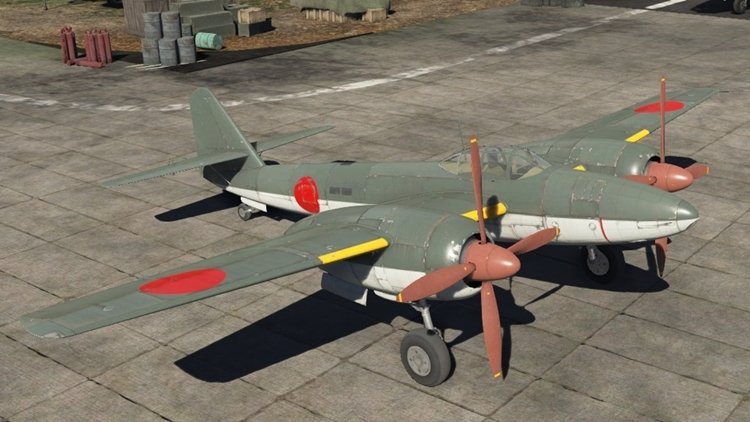
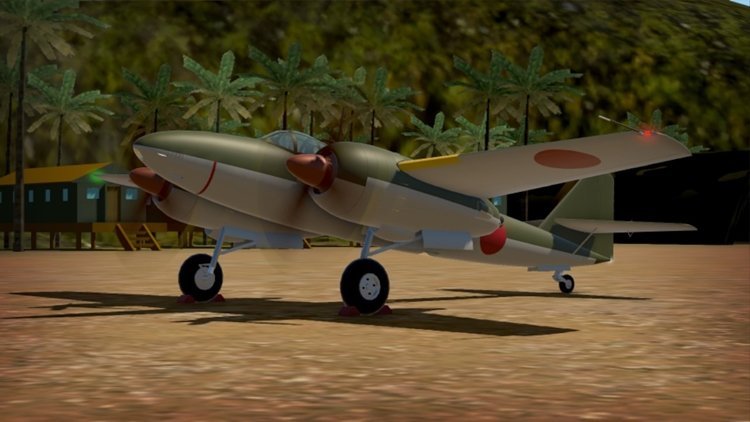
The Mitsubishi Ki-83 (キ83) was a Japanese experimental long range heavy fighter designed near the end of World War II. It did not reach production status.
The Mitsubishi Ki-83 was designed as a long range heavy fighter. It was designed and built by a team led by Tomio Kubo, designer of the highly successful Mitsubishi Ki-46. The design was a response to a 1943 specification for a new heavy fighter with great range. The first of four prototypes flew on 18 November 1944. The machines displayed remarkable maneuverability for aircraft of their size, being able to execute a 671 m (2,200 ft) diameter loop in just 31 seconds at a speed of over 644 km/h (400 mph).
The Ki-83 carried a powerful armament of two 30 mm (1.18 in) and two 20 mm cannon in its nose.
Despite the bomb-ravaged Japanese manufacturing sector, plans for the Ki-83 to enter production were underway when Japan surrendered on 15 August 1945.
Both the existence and performance of the Ki-83 were little known during the war, even in Japan. It was completely unknown in Allied military aviation circles – as demonstrated by the fact that the Ki-83 had not been given a reporting name. Most early photographs of the type were taken during the post-war occupation of Japan, when the four prototypes were seized by the United States Army Air Forces and repainted with USAAF insignia. When they were evaluated by U.S. aeronautical engineers and other experts, a Ki-83 using high-octane fuel reached a speed of 762 km/h (473 mph), at an altitude of 7,000 metres (23,000 ft).
Variants
Ki-83 experimental long-range heavy fighter, four prototypes built.
Ki-95 projected reconnaissance version, none built.
Ki-103 projected development, none built
Remarkable similarity to the British DH Hornet
-
Aro - I take it from your comments that your experience is the "traditional stitching/lacing" & doping system. This is a system that has been around since the dawn of aviation - nothing actually wrong with it, other than the time to do it & the exposure to some very nasty substances.
The new system (not so new anymore) is to glue the fabric in place. No lacing./ stitching and heat shrink the fabric to make a tight membrane - eg the certified Stewart System https://stewartsystems.aero/. (mainly waterborne solutions) As with any new technology there is a learning phase. From distant memory, I think the original fabric leading edge of 30mm worked just fine, until there was some human installation error. As a result (I think it was one incident) the width was increased to 50mm accommodate this error.
FYI: I am no expert however it seems to me, that the area that is under most aerodynamic (lifting) stress is the trailing edge, of the upper skin ie not the leading edge at all.
-
9 hours ago, aro said:
Very interesting. The fabric attachment doesn't sound like it meets the commonly accepted standards. Also interesting that they think the 10 year life limit is too long, since the failure occurred after 10 years 6 months.
Try not to make illinformed statements - where humans are directly involved in manufacturing/construction/fabrication, there can/will always be failures. We don't l hear much about it these days but there was a time when people referred to Monday morning/Friday afternoon cars - a bad purchase. This did not condemn the whole brand/model - people understood, as you don't, that humans are fallible.
The fabric attachment system is excellent. It relies on advanced adhesives (that have continued to evolve) and heat shrunk fabric - does not use stitching and doesn't need to.
The ATEC Zephyr has a very good safety record - was until production ceased, in I think 2022, after about 24 years, used mainly in the Eu , as a training, glider tug, personal transport aircraft. Also found in USA, Australia (about 12 aircraft) NZ. The Zephyr was replaced by the Faeta (2 models)
-
2
-
-
Kgwilson,
"I forgot to mention the other article on the future of aircraft batteries by the same author. He hasn't done much research at all. He seems to think the only viable technology is LiFeP04 and comparing phone and portable devices is just plain ridiculous."
Research?? I think you are being very generous in saying "...hasn't done much".
Seems to me that he has written these two articles from a very low level information base - nil. Best be fair, he has some terminology but no context and understanding.😈
-
Hi Garfly,
".....shot and sprung....."
Make stock feed?
I feel for you. In my youth, had ambitions to be a farmer - great lifestyle, if you are not working for the bank but sooo risky
I ended up taking the safe route and pretending to farm, using taxpayers dollars - refreshed every financial year.😈
-
Kgwilson,
"I also tuned the antenna to the main CTAF frequency."
I have almost nil understanding of electronics/radio frequencies etc however I do have a SWR meter, from memory the instructions, for antenna tuning, say to set the transceiver to the middle of the frequency band.
I guess the theory is that the antenna will have acceptable receive/transmit capacity over the whole range.
-
Leaving aside the RAA staff contributions, which tend to " motherhood statements" but do have nuggets of useful stuff as well.
I also acknowledge that every member/subscriber will have diffrentexpectaions ftom SP - cant satisft everyone all of the time ei it's a tough call being the editor of a magazine.
I expect an article on;
- An aircraft, to have all of its physical/handling/performance data and cost from basic (inc kit if available) to top-o-the line.
- Something like fuel, to be both factually correct and unbiased.
Further, since Mr Heath became Editor, the magazine seems to have become strongly biased towards the new Class G aircraft - (could this be because he flies an RV???) to the disadvantage of all the other class of RAA aircraft.
-
1
-
2 hours ago, kgwilson said:
I have ferrite chokes on all radio cables at the radio and headset jacks etc and my SE2 does not interfere with the radio at all no matter where I put it. The chokes there will filter out interference from other electronic devices and electro magnetic sources so if you don't have these it is a very cheap and effective solution. They only cost $12.95 for a pack of 2 from Jaycar and clamp around the cable next to the radio or headset socket etc. You may even find your radio performs better after installation as an added bonus.
https://www.jaycar.com.au/u15-ferrite-voltage-spike-protectors-noise-suppressors-pack-of-2/p/LF1294
What made you decide/invest in ferrite chokes in the first instance?
I ask because my transceiver delivers very clear communication in in & out. It's only the introduction of the SE2 that has resulted in this annoying clicking.😈
-
Hl Bosi72
Nice video and certainly something worth trying.
Small problem - The SK2 has no physical (wire) connection with any part .component in the aircraft😈
-
I am running a Trigg transceiver/intercom, into David Clark, noise canceling, headset - annoying background clicking.
Othered than experimenting with location (limited options in my case) has anyone come up with a fix?
-
3 hours ago, BrendAn said:
i would love to buy a jodel but i have the same concerns about wood as talked about here.
how do you inspect a wooden wing without wrecking the fabric. maybe a borescope type camera. and cut a few small sections which can be patched neatly.
Your greatest assurance with all aircraft is comprehensive records (log books) of how it has been maintained including any accidents. In my view comprehensive log books are worth every penny of a premium price.
We have been brainwashed into thinking metal & composites are the only way to go but all materials have their problems;
- Metal fatigues & currodes. Aircraft "living" near the sea, in areas of sustained humidity, need to be viewed with suspicion. Unfortunatly aircraft types/models known to suffer from metal fatigue have usually been involved in a crash - have AD on components like wing spares.
- Composites are supposed to be very hard to assess. Plastic can spring back after an impact, leaving little evidence of damage. Repairs can cover weakness/damage, rather than restore structural integrity.
- Wood, generally does not fatigue, can under certain conditions rot. Rot, even so called "dry rot", is caused by moisture, as the result of lack of protection, poor sealing/varnish - "Dry rot occurs when Serpula Lacrymans fungal spores settle on wood with moisture levels in excess of 20%. Timber that is not already damp prior to growth will not germinate dry rot".
Find your well maintained Jodel - it will be a beauty.😈
-
 1
1
-
Just back from another fly -
- Found that Kiwis observations at correct.
- If I turn me head, can receive or block the clicks.
- Putting my hand up close to the SK2 also blocks the interference.
- Touching the instrument panel , not sure
- Turning off my noise cancelling has some effect but this could be background noise drowning the clicks.
- I am going to try a foil shield next time round - I will try & place/ size it, so as not to block the SK2's function.
Seems odd that only you few respondents have come across this phenomena.😈
-
My sensitivity comes from you airing your incorrect and negative opinions in this "thread" which was my attempt to promote the sale of someone's aircraft - a posative act.
" ...helping..." ????? I dread to think what your idea of not helping is. Your opinion (which you could have expressed privately) has done nothing but undermine my efforts to assist another pilot/owner sell his aircraft. You have proven over & over again you neither know the aircraft in question or the rules around 19 construction & maintenance.
If I was in your shoes, I would be incredibly embarrassed and remorseful but no you plough on regardless of the damage you are doing.
- That you don't know about the weep holes speak volumes. Any aircraft that may retain water (however it gets in) must have provision to allow it to drain.
- As the builder you can nominate the Max TO weight - of course the builder should consider the factory/designers nominated weight but you don't have to adopt it.
- The whole point of being a homebuilder (19) is that it gives the flexibility to make modifications/customise your aircraft.
- Giving you the benefit of the doubt, it sounds to me that you are confused by some of the US rules around homebuits and or factory builds, either that or you are just trolling for the sake of your own amusement. Nasty!
No more! 😈
-
"The problem is condensation inside the wing drops down and runs to the trailing edge causing them all to rot out."
BS - If skin has been installed correctly there are "weep" holes all along the trailing edge. These with correct varnish of the wood frame, will prevent all but the most persistent water (as in a wing stored under a leaking roof). You really should get your facts straight before you put this sort of opinion into the public realm.
"Regardless of what the owner thinks he can do with the 19 registered aircraft he is incorrect. You must still follow the manufacturer's guidelines to the letter."
More BS - The builder IS the manufacturer. You are consistently mixing the rules of factory built and home built .
"If an aircraft is built following a certified or accepted design then you must follow the maintenance schedule regardless of the registration category. "
It just doesn't stop - The homebuilder (in Au) can do as he/she wishes. This does not mean that the aircraft will be passed as airworthy, when it has its final inspection before test flight but does imply a wide scope of modification and freedom to decide what goes in to the aircraft and how its maintained.
Here is a simple example - Rotax 912 engines (not certified), fitted to a 19 aircraft, have a recommended service/maintenance regime. What happens when the owner fails to maintain the engine according to Rotax advice NOTHING. The ramifications (see below) may be severe but it aint against any law.
Should an aircraft owner fail to maintain an aircraft in an airworthy condition, there may be insurance & liability consequences, in the event of an incident - this is a seperate debate.😈
-
8 hours ago, Kiwi said:
Yes, I get the same clicking sound in my Cherokee, but no interference in the Rans S6S or the Drifter. The funny thing is that if I touch the instrument panel above the intercom it goes away (until I move my hand).
This is with my Lightspeed headset, I haven't checked if I get the interference with the normal headsets.
Have you tried moving around the cockpit?😈
-
Hi Bosi72
"Since SE2 is light and portable, try moving it around until the interference is minimised, but it may never go completely away."
Done! - "...............moved it about a meter, from where I had it and the interference went away"
I seemed to have stumbled on the solution while at 5500ft however my interest/question is; have others had a similar experince?????😈.
-
1
-
-
38 minutes ago, Thruster88 said:
More work and cost for RAAus (members) amending the operations manual and syllabus and then getting it approved etc. Or anyone wanting a controlled airspace endorsement could go right now and get the RPL and the add on endorsement. The training will be required either way. A lot of schools now have aircraft with numbers and letters and instructors that can instruct in either type.
I stand to be corrected:
True anyone can go for their RPL and then use an RAA registered aircraft, to enter CTA. I am not sure why, I get the impression it may be a bit of a grey area. I know its done, have myself, I wonder what would happen if there was a serious incident, involving an RAA registered aircraft in CTA????😈
-
Blue,
"MY present aircraft is my build #19 and I follow manufacture bulletins and advice."
Commendable attitude - Good for you!
"I will not follow your apparent disregard for designer factory advice about care for wooden wing and covering."
Unfortunatly your commendable attitude/a tad "holier than thou" has led you to make an assumption & accusation that is totally wrong - I have not nor will I debate/list my maintenance activities, in an open Forum, for an aircraft that I no longer own. Nor will I do it for my current aircraft. I keep a detailed log book of all build, maintenance & repair actions undertaken (with photos). These records go with the aircraft and are not for public debate. 😈
-
It's actually happening!!
We live in hope but don't expect anything to happen fast - this is a Government bureaucracy.😈
-
Today was my first proper in flight test for my SE2. It worked very well indeed.
One small point - it seemed to be causing a minor radio interference (regular tapping sound). I know it was the SR2 because it stopped as soon as I pressed its off button.
I turned it back on, interference, unstuck it, moved it about a meter, from where I had it and the interference went away.
The first location was very close to my headset jack & my Dyon ADHARS module- ?
Dont recall any reference to radio interference/location in the install instructions.
Just wondering if anyone else experienced this???
Radio ID
in Instruments, Radios and Electronics
Posted
Where in your Cessna /Piper/Homebuilt?etc would this "text" appear?😈