


skippydiesel
-
Posts
7,613 -
Joined
-
Last visited
-
Days Won
73
Content Type
Profiles
Forums
Gallery
Downloads
Blogs
Events
Store
Aircraft
Resources
Tutorials
Articles
Classifieds
Movies
Books
Community Map
Quizzes
Videos Directory
Posts posted by skippydiesel
-
-
16 hours ago, Garfly said:
And, in some cases, much less, I guess.
Rarely! It's just human nature - the very experince that, say an ATPL holder has (lots of very specific training in type(s)/systems/crew resourcing/etc) the more likly they are to have difficulty undoing strongly established/ingrained reactions/expectations.😈
-
27 minutes ago, Moneybox said:
I'll only have 60L in the one tank. I've thought about a metal outboard motor tank that can be plugged in and jus flick the pump switch when needed but weight and balance come to play.
Should be good for an easy 3 .5 hrs endurance plus .5 hr reserve. Dont know what your cruise speed is however at 100 knots, thats 350 NM (648 km) in still air.
In general, the outboard motor tanks, I have seen, are the wrong shape and are relativly heavy.
If your existing duration/range is not enough, I think it likly that an aluminium auxiliary tank could be fitted behind the seat, subject to W&B. Shape of tank can be used to bring weight close to back of seats or as a raised floor in baggage area. Easy to rig up an inflight fuel transfer system (had one on my last aircraft)
-
I can't imagine carrying extra fuel, in cans/bladder, is illegal, unwise? perhapes. Aircraft have been flown across the Pacific with ferry tanks/bladders many times. Of course there may be negative insurance implications if a claim is lodged.
-
Transitioning from Commercial (ATPL), Military & GA to RAA may take, even the most experienced pilot, more than the 5 hrs allotted.
-
2 hours ago, Moneybox said:
I think squeezing all of the air out would eliminate the expansion problem if you just had perhaps half a bladder of fuel left. I've never tried it but I think it would have to reach boiling point to create more vapor.
I think I read somewhere, that a part full closed petrol container, will vaporise just enough fuel to fill the available space. If it then heats up, the pressure within will rise & it will bulge a (plastic) container.😈
-
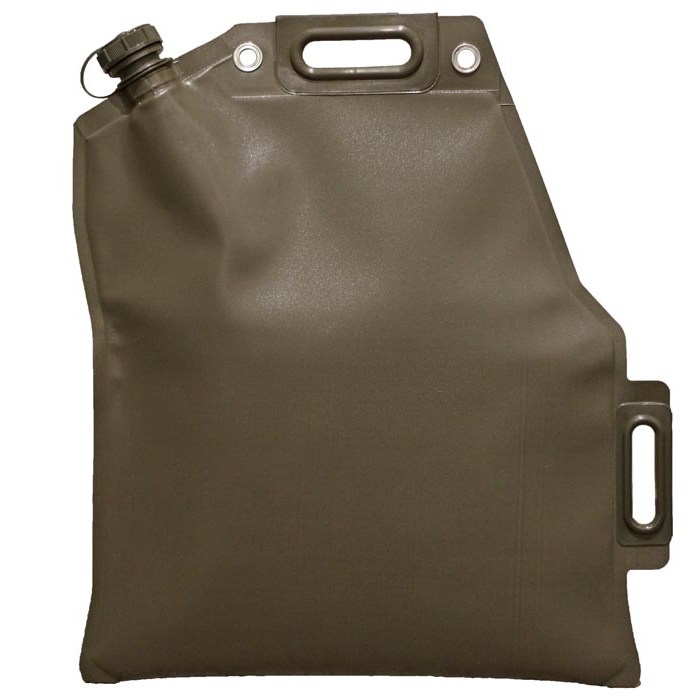
So far, I think we all agree that carrying fuel, in 20L fuel bladders, in the aircraft, is not a first choice idea.
I guess fetching just the right amount of fuel, from the servo, is always the goal, however I would rather err on the side of full tanks on TO, than under estimate. So as I pointed out, it's conceivable that when on an away from base/home trip, the bladders used to fetch/refuel the aircraft, may not be completely emptied into the aircraft tanks. Your practical options are limited:
- Donate the remaining fuel to some deserving individual.
- Carry the remaining fuel in the cockpit (most small aircraft do not have a separate baggage locker).
- Waste the fuel (don't much go for this).
On plastic "jerry" cans:
My experince with Bunnings Aerospace plastic "jerry" cans, now about 8 years old, is good.
So far; no splits, they don't leak and I don't carry/store them where fuel smells may impact on me.
I do not store them in direct sunlight but they must get pretty hot at times in the back of my covered ute.
Full containers, do not distort as much as part full, under the influence of diurnal temperature change.
When I empty a container, I try to remember to press in the sides and tighten the cap at the same time , creating a small vacuum. This seems to help maintain the original shape, as opposed to the bulging/distortion which can occur 😈
-
Hi FV,
May is still a long way off. Any chance you may repeat this notice a few times?? .😈
-
" I can recall seeing a video of a full bladder being drop tested onto concrete from something like 30m from memory, so they are pretty tough. "
I know that TurtlePac, Qld, were testing a lot of their bladders this way. I had a conducted tour of their facility some years back - very impressed!
Dont know who the manufacturer, of the two I have is. They look the same as the ones from SkyShop and I may have purchased them from the same about 10 years ago.😈
-
2 hours ago, rgmwa said:
.................... I would use them to carry fuel in the plane if I had no other option. Because they are flexible, they can cope with air pressure fluctuations.
Hi rgmwa,
Like you, I have no intention to carry fuel, in the aircraft, in the foldable bladder style BUT am interested in your experince/observations when you, on occasion, did;
- My interest is on the effect of reducing atmospheric pressure on a FULL & Part FULL bladder.
The reason for the question is, if I carry say 40 litres (2x bladders) from the servo and say use only 10 L out of one, leaving a full & 1/2 full. Then stow the two bladders in the aircraft and climb to 9500 ft - will all be okay or will one/both bladder(s) be affected to the point of rupturing????
😈
-
Wow!!
I guess SkyShop isn't making a financial killing on this product.
Is there no long distance flier out there, with experince in this/similar product/system????
It may be better, from a handling/weight perspective, to go with the 20L foldable bladders:

At $149.50 they are cheaper/liter capacity, than the bladder/ferry tank..
Are they safe to carry fuel in cockpit or are they just for getting fuel to the aircraft from service station?😈
-
Hi All,
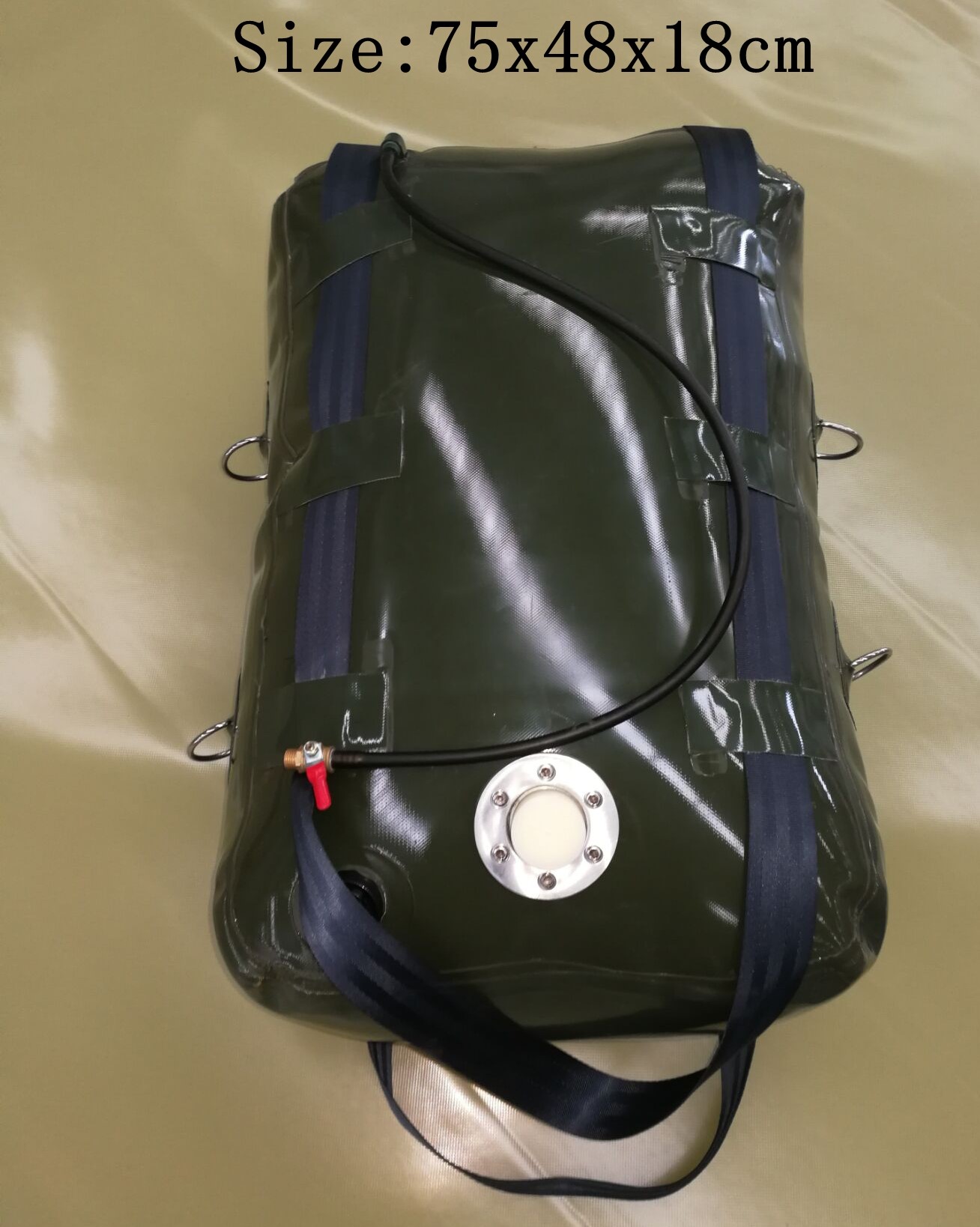
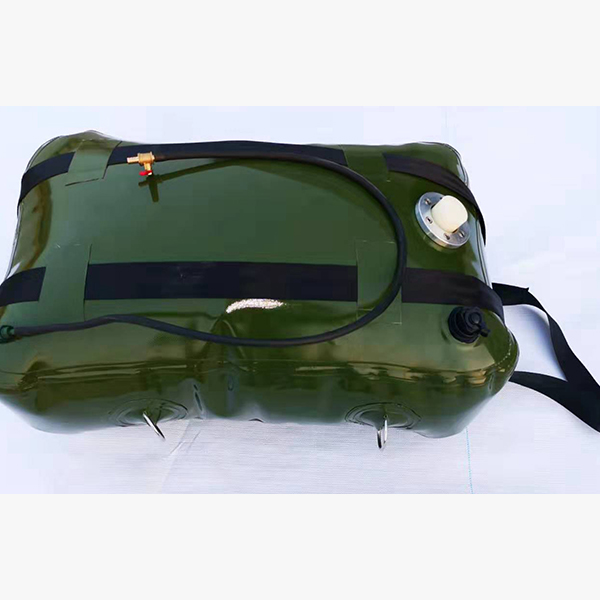
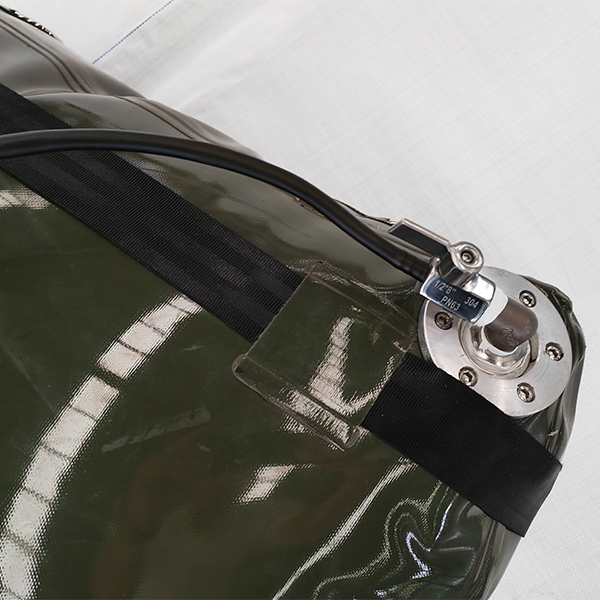
Anyone have any experience with this recently advertised SkyShop fuel bladder:
Fuel Bladder 65 Litre
Specially designed for temporary storage fuel, Diesel, avgas, Petrol, chemicals and other liquids.
$265
Probably made by TurtlePac, Qld. In my case it would have to sit on the passenger seat, but wondering how its filled ??- 65L of fuel is awful heavy to pick up & filling in situ may result in a fuel spill in the cockpit😈
-
8 hours ago, Moneybox said:
".......Odyssey battery ......."
All good choices/strategy, perhaps with the exception of the overpriced battery.
I have used motorcycle batteries for years. Found them to be reliable, cost effective and often more CCA's per kg (better starting) than the Odyssey range.SSB is my favorite brand for automotive batteries.
-
 1
1
-
-
Moneybox,
I fitted my last aircraft, an ATEC Zephyr, with small, highway tread trailer tyres (rated, to I think, 120kph), from memory 6 ply, about the size of a wheelbarrow tyre.
I know you already have the tyres, I am using the above as an example. I never found a substitute for the nose wheel tyre. I did find an Australian tyre importer, who was a lot cheaper than purchasing the same tyre from the aircraft factory.
Do your research and use the abundances of experince/common sense you have developed over a lifetime. Go OM where safety is critical, the rest can be what you are able to find in Au.
-
1
-
-
20 minutes ago, BrendAn said:
all this money you are trying to save is hard work. why don't you take your list to bunnings and see what they have.
912 powered bunnex😁
Its like this;
I am trying to keep up with all you LOADED $$$$ BIG BOYS, with very deep pockets, on a fixed income. Besides that, I get satisfaction from finding the best bang for the buck and passing my finding/experience on, to you lucky devils, in The Forum.😈
-
2
-
-
1 hour ago, IBob said:
I'm pretty sure someone commented here a while back on the latency or delay in some of these data sources.
As an example: where 90kts is about 150ft/sec, a 10sec delay will result in a 1500ft error in position reporting.
120kts and a delay of 30sec and the error is 6000ft, or 1 nautical mile.Being an electronic neophyte, I shouldn't comment however even I understand that the signals generated and appearing, on whatever electronic device you have, are not in real time.
Those who rely on these sorts of systems for separation, may get into real trouble (The Oaks incident?).
In small VFR aircraft, you can't beat the radio for situational awareness, followed by the dodgy MK1 eyeball.
In my mind, there is a real danger that pilots will get sucked in by the computer screen ,not communicate & look outside the cockpit.
-
1
-
 2
2
-
-
1 hour ago, BrendAn said:
The info I got would have come from an examination of the wreckage.
I read this, to say BrendAn has the information. Not an observation on how it may be derived.
-
1
-
-
54 minutes ago, BrendAn said:
The info I got would have come from an examination of the wreckage.
What information have you got? I think the investigators were still on site Wednesday possibly also yesterday.
-
1
-
-
There is a witness, a child (age?) who supposedly saw a wing tip to wing tip contact, between the two aircraft.
The relative location of the two crash sites, would suggest, if the child is correct, the aircraft may have been traveling in opposite directions.
-
5 minutes ago, Roscoe said:
So back to topic, the accident, from what i gather, the Cessna did not appear on flightaware or adsb exchange
AND as far as we know, at this time , in contact with The Oaks/Camden/Sydney
-
2 hours ago, djpacro said:
If only using the ADSB-IN function then this is much cheaper by the same manufacturer of the SkyEcho. PingUSB - uAvionix It works very well.
Contemplating purchasing a SkyEcho BUT have Mode S (OUT) would have to disable the SE OUT according to UAvionix;
"In addition, they must not be allowed to transmit when (a) in VFR flight at or above FL290; or (b) concurrently with a Mode S transponder that is also transmitting ADS‑B. An EC device may be operated in Australia concurrently with a Mode A/C, or a Mode S transponder (other than one that is transmitting ADS-B). UAT is NOT used nor permitted in Australia".
I would be financially better off with a "Ping" (IN) - the question is - will I get as good/much information from the Ping???
-
It would seem likly that the Jab was fitted with a SkyEcho (or similar) system (ADSB IN/OUT) - hence the availability of a track.
-
1
-
-
1 hour ago, Roscoe said:
Actually, Circuit height at Camden is 1300ft.
Aircraft are usually instructed to enter the Camden CTA at 1800 ft and then cleared for a visual approach. Their are notes on the chart regarding overflying the Oaks not below 2500ft.
The 182 may have been doing a practice forced landing or precautionary search procedure at the Oaks and not monitoring their CTAF 126.7 or had the volume turned down.
Thanks for that Roscoe, It's about two years since I flew at Camden & only remembered the inbound height.
The observation regarding the proximity of the two airfields and the potential for traffic inbound to Camden to conflict with The Oaks activity remains.
The "not below 2500ft" is insufficient - it should be not below 3000ft. Reason - aircraft inbound to The Oaks are often at 2500 ft, giving a 600ft circuit safety margin, to overfly prior to descending to enter the pattern.
Added to the above is the not so infrequent Camden bound aircraft at or below Oaks circuit height. There is no excuse for this as it's perfectly easy for most small aircraft to descent to 1800 ft by Mt Hunter
-
3
-
 1
1
-
-
Forgot to mention Camden & The Oaks on diffrent frequencies.
-
3
-
-
Of possible interest - The Oaks is a Camden airfield inbound reporting point. Camden's circuit height is 1800 ft. Descent to circuit height is usually required some distance to the east of The Oaks (MT Hunter).
On occasion aircraft overflying The Oaks, inbound to Camden, are well and truly on descent (low) over The Oaks.
-
3
-
Fuel Bladders/Ferry Tanks
in Aircraft General Discussion
Posted
You are possibly correct, in your assumption of little/nil change tank full/empty BUT in this case (aircraft W&B) you should not assume, it could be dangerous.
The data on your aircraft should be in your Pilot's Operating Handbook (POH). If not, could be on the maker's web site, or contact the manufacturer for the info, or Google its specifications.
If you have OzRunways, there is a section (Settings-Aircraft- W&B) where you can load all your W&B data. Then in flight planning , you go to W&B, put in your load weight & its distribution - the attached chart will then show you in/out of balance. If out of balance (or overloeded) you can then adjust location/quantities to get back in W&B.