skippydiesel
-
Posts
8,276 -
Joined
-
Last visited
-
Days Won
84
Content Type
Profiles
Forums
Gallery
Downloads
Blogs
Events
Store
Aircraft
Resources
Tutorials
Articles
Classifieds
Movies
Books
Community Map
Quizzes
Videos Directory
Everything posted by skippydiesel
-
ERSA is the pilots Bible of airfield conditions. ERSA is updated at least 4 times/annum - the information is as current as can be in a publication All pilots using Australian airspace are obliged to consult ERSA (amongst other official publications) when planning a trip. What I want is very simple, logical and I believe the minimum required by Australia Consumer Law - ALL airfields charging landing fees, lists/posts those fees in ERSA - not in some third party listing that may or may not be correct. I stand to be corrected - "Ozrunways, or similar," are not official documents. Useful? Yes! but do not carry the legal authority of ERSA😈
-
Give yourself the potential to save a few $$ - Check your sensor is working before, sending the Tacho for an expensive assessment😈
-
I admit to minimal knowledge in this mature, however I have always had the understanding that, in an aircraft, the POWER ON, IGNITION(s) ON and START (crank engine) should all be on separate systems ie not incorporated on one car like ignition system.😈
-
Its not clear what you are trying to achieve. Aircraft, unlike ground based vehicles, do not usually us a single (key) ignition switch as in system live/engine start all on the one rotting system. The usual arrangement, for a duel ignition system, is Ignition 1 & 2 armed/ON (could be via rotating (key style) switch or other system). Push button, or other momentary switch, to energise the starter motor/crank engine 😈
-
Not an electronics person; My gut feeling is that just connecting the tacho to power, on the bench, is not a diagnostic action. To find out if the tacho is working you will need to send a pulse/signal (as from the flywheel sensor). You will first have to assertion that the sensor (Hall Effect/Photo/Lazer) is working as expected - probably the easiest way is to temporarily wire in a "know to be working" tacho. If the loner tacho works, then suspect your tacho but first follow my advice (above) on making sure you have good connections😈
-
Just had occasion to investigate landing at Murwillumbah (NSW). This airfield/Council illistrate why we should not be paying a fee, when its not listed in ERSA. Note : I have no desire to discuss Murwillumbah as such - its failure to post the landing fee schedule, in ERSA, is typical of many airfields around Australia. We as private pilots need to make a stand - No Fee in ERSA, No Pay! From ERSA Murwillumbah (NSW) REMARKS 1. AD Charges: All aircraft 2. Pilot notes refer to Tweed Shire Council web site As instructed - Check out web site https://www.tweed.nsw.gov.au/community/events-venues/community-facilities/airfield "Landing fees The landing fees and annual fees are managed on behalf of Council by Avdata Australia. All information collected by Avdata is in accordance with Council’s Privacy Management Plan, NSW legislation and Avdata’s Privacy Policy. Please direct any queries to Avdata in the first instance at [email protected] or call 02 6262 8111." 😈
-
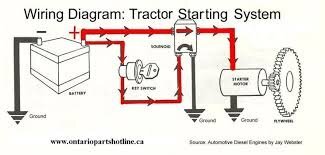
Not an electrician; A start solenoid is but a heavy duty electrical relay The engine starter solenoid should have 4 contact points; From battery posative(+) terminal (high amp/ thick wire To starter motor positive (+) terminal (high amp/ thick wire From start button/switch posative (+) wire that will energise the solenoid making a connection between battery & starter motor Earth (-) connection (this may be through the casing of the solenoid, through the mounting bolts . From the pic above, it looks like the red wire you have circled is the solenoid energiser (+) wire from your start button/switch Assuming your aircraft is all 12 Volts then this will be 12V "Yellow circle one that needs 12V to energize the solenoid, or a to be pulled to ground via the Start command " Not sure what mean - For electricity to flow (energise a system) it usually flows from + to -. There is no "..pulled to ground.." When you press the start button/turn the start key, you are making an electrical contact (command?). 12V electricity will flow down the wire to the solenoid and energises an electro magnet. The magnet moves a rod, which will close a contact in the high amp start circuit. The high amp circuit energises the starter motor which rotates your engine Engine starts You take finger off start button/switch and the system cuts of electrical energy No offense Steve ZK but this is very basic electrical understanding - might be an idea to consult with a friend, who knows how the system is supposed to work. I strongly recomend installing a dedicated earth (-) return circuit to your battery negative (-) terminal

-
First off - Check cables for continuity and the that all joins are clean & secure . Pay special attention to the earth (-) return. After the above, if it's still dead, you may need an electronics technician. Good luck! 😈
-
Great kids! I hope your family continue to enjoy flying with you. My wife pulled the plug after just a few flights & my children weren't really intersted. That is until one decided he would like Dad to pay for flying lessons. Had his PPL at 16 & his CPL at 18. Then decided being an electrical engineer delivered more reliable . Such is life!😈
-
Its not about the aircraft per say - The conversion (PPL- RAA) does not take into account the VH aircraft you may have been flying. Its abouts demonstrating, to an RAA Instructor, you have the flying skills (in a RAA aircraft) and the aeronautical knowledge. Most PPL's will have been flying Cessna's/Piper's etc not a VH equivalent of an RAA registered aircraft.😈
-
Its quite a few years since I converted from GA/PPL to RAA, so some things may have changed. I was required to do "human factors" as this had not been part of my PPL however you may already have done this as part of your training, so you may not be required to repeat this. As stated above, all your PPL ratings are recognised by RAA. Yes you will have to do minimum 5 flight hours and there will be some air knowledge questions to answer. If you want to add an endorsement (eg tail wheel) this is a good time & cost saving to do a combined conversion/endorsement. Note: Finding an RAA school offering tail wheel training may not be so easy. Word of caution - > 600 kg take off weight aircraft, take a little getting used to, especially in the landing phase . 😈
-
Voltage Regulator Failed
skippydiesel replied to skippydiesel's topic in Instruments, Radios and Electronics
Its not that vibration is THE problem, its poor quality soldering - according to Rotax Owner Forum member, who give detailed instructions on how to open, investigate & repair the Ducati VR.😈 -
Voltage Regulator Failed
skippydiesel replied to skippydiesel's topic in Instruments, Radios and Electronics
-
Voltage Regulator Failed
skippydiesel replied to skippydiesel's topic in Instruments, Radios and Electronics
Like you I put my Ducati VR on the cabin side of the firewall - it lasted about 150hr. I even had a cold air blast tube to help keep the heat down. There have been some very interesting observations on the Rotax Owners Forum - Heat does not seem to be the whole story - Vibration is credited, by many, as the real "killer". Some pretty negative commentary on the quality of the soldered connections = failure due to vibration. I haven't tried this - Apparently you can dig out the putty like filler and do a simple continuity/resistance checks on the connections you uncover. Resolder the faulty ones and your Ducati VR can be put back into service. 😈 -
Voltage Regulator Failed
skippydiesel replied to skippydiesel's topic in Instruments, Radios and Electronics
I have two problems with this; The horrific cost. The main benefit of FI is fuel consumption. Only high annual flight hrs (school?) are likly to see this pay off. Complexity. I like the reactive simplicity of the carby variant. 😈 -
Voltage Regulator Failed
skippydiesel replied to skippydiesel's topic in Instruments, Radios and Electronics
Its not so much a problem as annoying. Even the introduction of lever operation, of the carby's, is a step in the right direction. With levers operation you can have a single throttle cable, operating the carby's through the levers - probably never go out of balance😈 -
Voltage Regulator Failed
skippydiesel replied to skippydiesel's topic in Instruments, Radios and Electronics
One thing about Rotax 9's that I don't understand is why more reliable and/or effective components don't replace the following: Ducati Voltage Regulator - There would seem to be many, hopefully more reliable/durable systems, now available - why stick with the Ducati? The Bing 64 carburettors - Simple & reliable (to a point) yes but a fiddly to tune/balance and due to actuating cable changes, hard to keep in tune/balance? 😈 -
Voltage Regulator Failed
skippydiesel replied to skippydiesel's topic in Instruments, Radios and Electronics
"Ducati never made aircraft, and therefore, never designed an aircraft regulator." The Rotax 9 is mostly automotive in inspiration/origin. The brilliant part, is how its all combined to deliver a quite extraordinary power plant😈 -
Had one for about 18 months. One small problem - it doesn't like the cold. When it first happened, I thought it was CO alarming, only to find it had basically stopped functioning. Came good when the cockpit warmed up abit. This is my second Quell. They both look very similar but the first had replaceable batteries (part of annual) and didnt seem to be effected by the cold. This new one has a 10 year battery life, much lighter than the first. 😈
-
At least you are not calling them lobsters 😈
-
Voltage Regulator Failed
skippydiesel replied to skippydiesel's topic in Instruments, Radios and Electronics
No experince. Good looking unit with all that heat sink/cooling area. This may have been one of the units that are not available in Australia - so didn't do any research on them. The VR's with the best (on line) reputation are: CARMO CARR5115 MOSFET. (What I have.) Some mucking about with wiring. Smaller mounting "footprint" than the Rotax/Ducati, so will require fabrication of adapter mount, if you don't want to drill more holes. Does not need capacitor. Highly regarded Dutch manufacturer. Australian agent. Silent Hektik DE - Very highly regarded in Europe. Similar to CARMO, does not need capacitor. You will need a contact in Europe to purchase for you. Alternatively you may find a Euro motorcycle shop that will work with you. B&C PMR1C-14 regulator - Much loved by American pilot/owners. Probably the most expensive. Uses the recommended Capacitor. Plug & Play . Forgot to mention: If you are into fiddling & good with a soldering iron, you may be able to repair your Rotax/Ducati VR - go back through his threaded for instructions. 😈 -
Many Europeans considered crayfish a less desirable food to the lobster. I think it was WA that came up with the idea to call then Lobsters. The rest of the World calls them crayfish. As I understand it, the name lobster was conferred, to make them a more attractive marketing proposition - particularly to the Japanese, but also other Asian markets. The true lobster have massive claws - the lobstermen put strong rubber bands on the claws, for their safety and the rest of the catch. FYI: Commercially harvested lobster species seem to mainly inhabit the North Atlantic & associated seas. Crayfish are sometimes caught in the lobster pots' - In my childhood the crays, being of little value, were used as a bait fish for lobster pots. This has probably changed in the 50 or so years since. You can call a chook an eagle, if you want, but doesnt make it soar like one (even in WA)😈
-
That's a crayfish - True lobsters do not inhabit Australian waters. Calling a crayfish a lobster, is a marketing ploy.😈
-
The friends, family, work mates be lining up........... for a while (?months). If my experince is anything to go by, you will eventually find yourself all alone in that 4 seater.😈
-
"I am hoping for the increase to 3 passengers to actually happen." Why? Seems to me that its pretty well accepted (fact?) that once the initial excitement of the pilot being licensed to carry passengers and or the acquisition of an aircraft, it becomes rare for there to be more than the pilot on board ie the second seat is for that very occasional Pax, that may come along - Two Pax!!! Best purchase a lottery ticket.😈