fallowdeer
-
Posts
138 -
Joined
-
Last visited
-
Days Won
3
Content Type
Profiles
Forums
Gallery
Downloads
Blogs
Events
Store
Aircraft
Resources
Tutorials
Articles
Classifieds
Movies
Books
Community Map
Quizzes
Videos Directory
Everything posted by fallowdeer
-
Hi Jon. Yes my aircraft has the jury struts.
-
I have owned a VG of similar vintage since about 2013. The data plate stipulates a MTOW of 560kg. The strut attachments are doubled up in line with the modification introduced after the Norwegian crash. When I bought the aircraft the maximum legal takeoff weight was 544kg. This was simply the NZ regulatory maximum weight of 1200lb, converted to kilograms. Subsequent to the weight limit being lifted to 600kg, or 1320lbs I have felt comfortable operating the aircraft up to 560kg. I‘m not aware of 544kg appearing anywhere in relation to ICP’s “certification” and so in my opinion if your VG carries the double strut attachment (not to be confused with the 600kg upgrade you should be fine to go to 560kg. I’m assuming the data plate supplied by ICP and usually attached under the tail has 560kg on it. Peter
-
 I recall doing ASI less circuits in PPL training in about 1979 in PA38s. Can’t quite remember the numbers but something like 1700RPM, 70knts, and 500fpm descent all went together. So just a matter of setting power, trimming for the descent rate and so we must have the speed. Think of an equilateral triangle, we only have to get two sides and angles in place and the third sorts itself. Like someone previously said, a little understanding of what’s going on is more than a little helpful in having a happy long life as a pilot..
 -
Very long story. Part 103.207 (a)(2)(iii) which is about the issuing of flight permits states that the applicant for a permit to fly shall provide, amongst other things " A statement that any inspection, replacement, overhaul or other maintenance of the microlight aircraft or its engine or engine components that is considered mandatory by the manufacturer has been complied with..." This literal interpretation by the CAA of the relevant section of part 103 seems to be correct and has only recently been interpreted to mean that Rotax engines past calendar or hours are no longer airworthy. So the issue has been how to come up with a way to run Rotax engines on condition After lengthy and involved negotiations with the CAA by a consortium of various interested parties and groups a draft policy, rewrite call it what you will to enable these engines to be run on condition was reached, subject to ongoing monitoring of engine health. It is my understanding that the airworthiness division of the CAA and the various groups as above were in agreement over what had been written and the procedures to be followed to allow on condition. None what I believe was proposed was too onerous and was just things we should be all doing such as leak downs, temperature and pressure monitoring and recording oil consumption and so on. I have heard and I must stress this is only my opinion and rumour that the legal section in the CAA has raised some questions over over what has been agreed as above and that this has created a stumbling block. However from what I've heard a way to run Rotax engines on condition will eventually be arrived at in this country, it will just be a while till we get there. I certainly hope so. Peter
-
No engine run ups and magneto failure while hot
fallowdeer replied to nig71's topic in Engines and Props
I have a 912ULS with an air box temperature gauge. My SOP on shutdown is to park into wind if practical and open the oil filler/check flap to on top of the cowl to let as much hot air escape as possible. Heat is the enemy of electronics and those very expensive CDI boxes are sitting right on top of the engine and they're likely to get a whole lot hotter after shutdown. It's quite interesting seeing the air box temperature on a hot day after shutdown, it can go past 50 degrees C. My second consideration given this situation is if I start up again and the engine has "hot soaked" so I'm seeing temperatures in that range is to not take off till I see a drop in air box temperature below 40 degrees. Even though my installation has a fuel return I figure I'll be less likely to get a vapour lock if that temperature has fallen and I've definitely used up the fuel in the carb bowls and have started running on fresh slightly colder fuel. I might be over cautious here but there's not much penalty to wait a few minutes. Peter -
Whenever there's a conversation about fuel burn vs RPM in a Rotax the very first thing to clarify is (assuming ground adjustable propellor) what the wide open throttle setting is. Without similar WOT settings then one engine at 5000RPM is likely to be producing very different amounts of power compared to another engine also at 5000. Those who (erroneously, and I have seen a few) have their 912 pitched WOT at 5200RPM will clearly be putting out more power at 5000 than someone who is at 5000 but who has WOT at 5800. As an exaggerated example compare fuel used in any engine under load and then fuel used at same RPM but no load. This is why power charts have RPM and manifold pressure. Peter
-
Let's cut to the chase, basic physics and thermodynamics. A 912ULS pitched to wide open throttle at 5800rpm is developing its rated 100hp. At 5000rpm, with the same pitch on the propellor its developing around 65% power, 65hp obviously. A very good guideline for brake specific fuel consumption for a carburetted petrol aero engine is around .45lb/hp/hr. Or about 272gm/kw/hr if you prefer. So it follows that to develop 65hp for an hour you'll use .45 x 65 equalling around 29.25lb of fuel, 4.0 imperial gallons or so. If you like it in metric the numbers are 272gm x 49kw = 13.3kg, or 18 litres or so. Even if your engine is 10% more efficient in terms of BSFC then you'll still be burning around 15/16 litres per hour. While a particular 100hp 912 may be burning 12 or 13 litres per hour at a constant cruise setting then rest assured the power output is commensurately low. If I'm just mucking around in my 100hp Savannah, low power settings and lots of idle time yes my fuel burn is down in those sorts of ranges. But if I'm cruising at 5000rpm ( My prop is pitched to WOT is around 5700) then yes I burn in that range of 17/18litres per hour on a trip. There is no magic. Peter
-
Warbirds over Wanaka Runway Collision.
fallowdeer replied to paddo2002's topic in Aircraft Incidents and Accidents
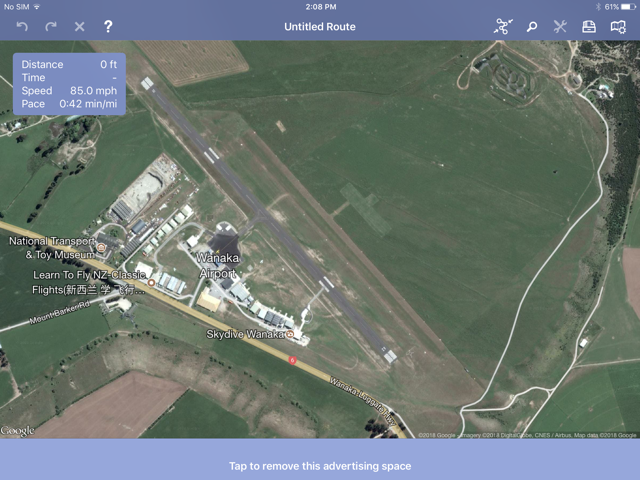
There is about 75 metres between the edges of the parallel vectors. -
Warbirds over Wanaka Runway Collision.
fallowdeer replied to paddo2002's topic in Aircraft Incidents and Accidents
The most relevant fact of all is that it seems that the aircraft was not landed on a recognised vector. There is a grass vector parallel to the sealed runway, obviously with a space between. It appears that the aircraft was landed in between the grass vector and the sealed runway.
-
Well I'll bite. No because a propellor is not a screw boring through the air. It's a wing creating lift. Think of a yacht, a well designed and trimmed sail can sail way faster than the wind speed.
-
Engine blows cowl on Air France A380
fallowdeer replied to red750's topic in Aircraft Incidents and Accidents
kgwilson. I know you've qualified your post by saying "this century" but Sioux City deserves to be mentioned in any discussion of uncontained failures. Peter -
Clarification of 19 and 24 Registration
fallowdeer replied to old man emu's topic in Aircraft Building and Design Discussion
Following this thread from over the ditch I'm truly impressed by how complicated your regulator has managed to make the management of recreational aviation. We only have two classes of microlight aircraft, Class One and Class Two with the primary difference being one or two seats. Any maintenance in the not for hire or reward microlight world can be done by any person (avionics and static system certification perhaps being an exception) with the proviso being the annual inspection which requires a LAME or Inspection Authority. An IA is an authority granted to an individual by the controlling Part 149 organisation. It doesn't require a formal aircraft engineering qualification but obviously does require a certain depth of knowledge and experience. It'd be interesting to calculate whether this more liberal regime has created a greater accident rate from maintenance failings. Personally I doubt it. And if it flies, no matter what it is or whether it's lifted by hot air or rotor blades or whatever or built by Joe Bob or Boeing it carries a ZK prefix. Seems a lot simpler over here.... Peter -
One of the overlooked advantages of the 912 is that an FAR 33 fully certificated version is available, the 912S. I'm not sure there is much difference in reality between the 912 S and the "uncertificated" version, the 912 ULS. Perhaps "undocumented" might be a better term. I reckon the parts would most likely come from the same bin and the extra cost is amortising the certification cost, and perhaps some extra parts testing. I'm sure the 915 will also eventually appear, if not already, in both versions. So in my opinion a 912ULS is as close as you can get to the standards of a certificated engine without it actually technically being one. Peter
-
Tyre Pressure for Rough, or Sand, Strips
fallowdeer replied to APenNameAndThatA's topic in AUS/NZ General Discussion
Hi John M Close, in the Ruamahanga near Papawai. Yep, 305kg plus another 30kg of fuel plus me equals about 420kg. Peter -
Tyre Pressure for Rough, or Sand, Strips
fallowdeer replied to APenNameAndThatA's topic in AUS/NZ General Discussion
Aero Classic 21/800 on the mains and 600x6 Condor nosewheel. Run the mains at minimum pressure that they don't rotate on the rims.
-
I always thought All Up Weight was technically the total weight of airframe, fuel, crew, load etc at any point in time. Often used interchangeably (if in error) with Maximum Takeoff Weight.
-
Agree with carrod01 don't want be reminded of the ones I usually work with about 2m long, black with a big zip.....
-
What did you learn to fly on?
fallowdeer replied to red750's topic in Student Pilot & Further Learning
PA38 in 1979. $33/ hr solo $36 dual. My little brown envelope pay packet had about $120 in it each week. PA28/180 was $48/hr. -
Yep, OAT and dew point are what I keep an eye on when considering carb icing. And of course OAT necessary for density altitude calculations. Peter
-
Hi Lyndon In conditions conducive to carburettor icing my suggestion would be to use the alternate warm air supply to maintain 20-24 degrees air box temperature. This is in line with the ICP Savannah VG flight manual. (Available online, Google it) Compared with traditional carburettor heat systems on Lycoming and Continental engines there appears to be less of a performance loss when using alternate air. For this reason in the wintertime I put a small (about 5mm) sleeve around the control wire between the knob and panel, thus keeping a partial supply of warm air at all times. This results in the air box temperature mostly staying in the range I want. As an aside a very experienced commercial helicopter pilot I know used to, when operating a R44 with carbureted engine, always flew with a trickle of carb heat on except when he needed maximum power. Peter
-
Yes
-
Hi Lyndon If you ever fly in places/conditions that are conducive to carburettor ice the simple answer is yes, it is worth installing the sensor to monitor air box temperature. Don't believe those who will say that Bing carburettors are immune to icing. Perhaps they are somewhat less susceptible than other types of carburettors but it can still happen My viewpoint is from personal experience, and experiences of one or two other pilots personally known to me. Peter
-
Hi Bob Yep will contact him. Well thanks again for yesterday. I flew this am, couldn't help myself...mountains and sloping paddocks... Then washed the plane, was pretty dirty. Helped Dave H with something on his plane then a Foxbat taxiied up to the hangar. Was Tony ZK-BIC from down south and another guy who had just bought the Foxbat and they were ferrying it from Taupo. So gave them my car to go into town and then home for me and more cataloging parts.....up to around 600 now..... Intend lining the box in black polythene. Peter
-
Hi Mark I'm highly impressed with your building ignition modules; dread the day when I have to replace one of mine. I like the idea of retrofitting the "soft start" feature, are you building that in. I'd hunted around a bit for one of the aftermarket Bullyhawk ones but they stopped making those a long time ago. Peter
-
Metroliner crash in Malta.
fallowdeer replied to Phil Perry's topic in Aircraft Incidents and Accidents
The wing loading and stall speeds of a Metroliner III (SA 227) and a Beech 1900D are very similar; I don't think the F104 comparison is too valid.