
Admin
-
Posts
9,328 -
Joined
-
Last visited
-
Days Won
110
Content Type
Profiles
Forums
Gallery
Downloads
Blogs
Events
Store
Aircraft
Resources
Tutorials
Articles
Classifieds
Movies
Books
Community Map
Quizzes
Videos Directory
Everything posted by Admin
-
 1.9.1 Accreditation of RA-Aus maintenance personnel Aircraft conforming to and operated in accordance with the Civil Aviation Orders CAO 95.10, CAO 95.55 and CAO 95.32 are exempt from those Civil Aviation Regulations listed in the CAOs. The exemptions include CAR Part 4A Maintenance so RA-Aus assumes responsibility for specifying the maintenance requirements for aircraft registered with the administration organisation and thus, has responsibility for accrediting suitably qualified and experienced individuals to conduct maintenance on RA-Aus aircraft. See the Technical Manual maintenance policy. Note that the 2007 Technical Manual section Accreditation of persons suitable to conduct maintenance currently states that RA-Aus pilots are automatically granted minimum qualification RA-Aus 'Level One Maintenance Authorities' but RA-Aus pilots are now no longer automatically granted RA-Aus Level One Maintenance Authorities with receipt of their Pilot Certificate. Practically all pilots-in-training do not own an RA-Aus aircraft nor do 60% of RA-Aus pilot certificate holders and those non-owner pilots have no need for any maintenance authority qualification. It is probable that, during 2015, all RA-Aus aircraft owners who hold a current Pilot Certificate and who elect to maintain Level 1 maintenance accreditation will be required to complete a syllabus of competency-based training and some form of examination to demonstrate sufficient knowledge of the required tasks before being granted Level 1 maintenance accreditation under revised rules. To facilitate maintenance, four levels of RA-Aus Maintenance Authority certification are available to members: Level 1 Maintenance Authority: aircraft owners must undertake a qualification test before performing the maintenance tasks for which they are judged competent and also to authenticate in the aircraft logbook the maintenance performed. They are qualified only on their own aircraft, provided the aircraft is not used for hire-and-reward e.g. flight training — or for glider towing. If the owner is not competent to perform a particular task and chooses not to undertake the necessary training, then that task should be assigned to a suitable Level 2 (or higher) holder or done under the supervision of the Level 2. If an owner-pilot does not choose to do any maintenance then level 1 qualification is not necessary and the owner must arrange for a competent Level 2 (or higher) person to perform and authenticate all maintenance, including the daily inspection. The trial online L1 Maintainer Authority Training and Assessment package comprises: A Study Guide to lead trainees through a series of questions and answers designed to provide them with a sound understanding of the privileges and responsibilities as an L1 maintenance authority holder. A range of reference materials are provided by way of links. Aircraft must be inspected and maintained in accordance with aircraft manufacturers' manuals. In some cases aircraft do not have such manuals, these aircraft must be inspected and maintained in accordance with acceptable aviation maintenance methods and practices. The FAA have produced a range of documents which provide guidance as to what are considered to be acceptable methods and practices. A link to this publication is also provided in the study guide. Assessment - when prospective L1s feel confident about their ability to answer questions about maintaining their aircraft, they may sit the online assessment. The assessment is an open book, 50 question, multi-choice examination with a time allowance of 3.5 hours requiring a score of 40/50 to achieve a pass. Level 2 Maintenance Authority: for suitable persons to conduct paid maintenance on owner-pilot aircraft or conduct and/or authenticate maintenance on aircraft used for hire, flight training and glider towing. Level 2s may have restrictions related to aircraft or engine type. Level 2 accreditation is awarded on the basis of qualifications and experience of each applicant, is valid for two years and only while the holder remains a financial RA-Aus member. See the current list of about 400 accredited L2 maintenance persons. Restricted Level 2 accreditations are deemed to be able to perform line maintenance on training aircraft or aircraft used for hire-and-reward, unless as otherwise defined by the RA-Aus Technical Manager. Note that those defined line maintenance items are much the same as the list of maintenance that may be carried out on a General Aviation Class B aircraft by a pilot entitled to do so under CAR 42ZC / CAAP 42ZC-1(2) but be aware that CAR 42ZC is part of CAR 1988 Part 4A and thus is not applicable to RA-Aus pilots. Level 3 Maintenance Authority: for about 20 suitable persons to act as regional supervisors, coordinators and points of contact for maintenance activities. The RA-Aus Technical Manager appoints Regional Technical Officers [RTOs] when suitable persons are available. The duties of the RTO include assistance to the Technical Manager in conducting Level 2 maintenance checks on aircraft used in flight school operations, as requested by the Technical Manager. See the current list of all accredited Level 3: Regional Technical Officers. Level 4 Maintenance Authority: for suitable and accredited persons to act as Amateur Built Inspectors in addition to performing the same tasks as defined at Level 2. RA-Aus certificates for the purposes of an Amateur Built Inspector rating are issued on receipt of the appropriate requirements. To be eligible for an Amateur Built Inspector approval, the applicant will generally be a CASA Licenced Aircraft Maintenance Engineer [LAME] in engines or airframes and be a financial member of RA-Aus. See the current list of about 80 accredited Amateur Built Inspectors. 1.9.2 Maintenance authentication The elements of maintenance are what to do, when to do it and how to do it. Maintenance authentication is the action of a suitably qualified person annotating the aircraft maintenance log book underneath the listing of all maintenance carried out at that time and formally indicating that the work conducted is to the standard specified in the RA-Aus Technical Manual. The authentication is made by signing the aircraft maintenance log book, printing name and initials, RA-Aus membership number, aircraft/engine hours and the date. The authentication act is equivalent to signing a maintenance release (i.e. releasing the aircraft for normal flying operations or certifying that the aircraft is fit to fly) even though in most cases the aircraft owner is both the accedited maintainer and the pilot. This can constitute quite a character challenge — and test of responsibility and discipline — when the pilot personality is itching to go and the maintenance technician personality knows there are a few minor things that need attention. The daily inspection [DI], before the start of flying operations on each day that the aircraft is to be flown, may be completed by the owner-pilot with an L1 maintenance authority or the holder of an L2 authority. A log book authentication is required. Where there is a group-owned aircraft one owner must be appointed to be responsible for — and control of — all maintenance on that aircraft. That one person is to list in the log book all maintenance carried out and sign-off the authentication. 1.9.3 RA-Aus maintenance policy Owner-operated aircraft Maintenance to owner-operated RA-Aus aircraft is the sole responsibility of the owner(s). The selection of appropriate maintenance schedules and the qualifications and experience of persons to complete the maintenance on the non-LSA privately-built and amateur-built categories in CAO 95.10 and CAO 95.55, is the responsibility of the owner. Maintenance conducted on the factory-built and the LSA kit-built aircraft categories in CAO 95.32 and CAO 95.55, shall be in accordance with the manufacturers' maintenance/service manuals and schedules including all supplementary service instructions, service letters and service bulletins issued from time-to-time. Where such a schedule does not exist or a copy cannot be obtained, the Technical Manual's 'Maintenance schedules and periodic inspections' document must be followed. The U.S. Federal Aviation Administration produced a substantial 613 page A4 size advisory circular AC 43.13-1B titled 'Acceptable methods, techniques and practices — aircraft inspection and repair'. Such methods are acceptable when there are no manufacturer repair or maintenance instructions. The AC generally applies to relatively minor repairs. A PDF version of the book is included in the RA-Aus Members' CD or a hard copy may be purchased from the RA-Aus shop. For an example of the contents the safetying section of AC 43.13-1B is available in html format in the 'Builders guide to safe aircraft materials'. Note: an example of a manufacturer's service manual can be downloaded from the Jabiru website. Scroll down the left-hand frame of their home page, click 'Manuals' then scroll down to 'Aircraft technical manuals' and click 'J160 J170' — it is a 15 MB pdf file. Aircraft used for hire-and-reward Only factory-produced aircraft may be offered for hire-and-reward; i.e. flight training — other than the CAO 95.55 para 1.5 aircraft used for flight training of the aircraft builder or builders. Aircraft used for hire-and-reward are to be wholly maintained, and/or the maintenance authenticated by, a Level 2 Maintenance Authority holder. Daily inspections may be completed by the pilot-in-command. A solo check flight after scheduled maintenance in accordance with the manufacturer's schedule is mandatory before the aircraft is used for hire-and-reward. Successful completion of this check flight is to be recorded in the aircraft log book and signed for by the Level 2 accredited person who conducted the technical work and the pilot who conducted the flight. Engine controls, engine accessories, propellers and flight controls are regarded as critical maintenance items and should be checked by an independent person after any maintenance. This applies to both owner-operated aircraft and hire-and-reward aircraft. Aircraft used for glider towing An aircraft used for glider towing has to be both certified for glider towing by the manufacturer and accepted by the Gliding Federation of Australia [GFA]. The GFA also approves the pilot, even if they have an RA-Aus glider towing endorsement. Maintenance must be carried out by a Level 2 accredited person, in accordance with the manufacturer's glider towing supplement, or a GFA approved maintenance scheme or one approved by the RA-Aus Technical Manager. 1.9.4 Technical Manual issue 3 maintenance section Maintenance section contents: 4.0 Policy Annex A Maintenance tasks and authorities required 4.1 Accreditation of persons to conduct maintenance on recreational aircraft 4.1.1 Criteria for assessment of RA-Aus Level 2 Maintenance Authorities Annex A maintenance supervisor questionnaire (attached to the 4.1.1 document) Annex B Definition of line maintenance 4.2 Inspection of recreational aircraft 4.2.1 Daily and pre-flight Inspections 4.2.2 Inspection after assembly 4.2.3 Inspection after heavy landing 4.2.4 Periodic inspections Annex A Maintenance schedules and periodic inspections (attached to the 4.2.4 document) 4.2.5 Piston engine continuing airworthiness requirements Appendix A four-stroke piston engine condition check (attached to the section 4.2.5 document) Annex A four-stroke piston engine cylinder leak check Annex B four-stroke piston engine condition report Annex C two-stroke piston engine check [not yet finalised] 4.3 Defect reporting and airworthiness notices Annex A: Aircraft defect report (attached to the section 4.3 document) Annex B: Aircraft airworthiness notice (attached to the section 4.3 document) 4.4 Repairs 4.5 Log books and other records 1.9.5 The 2018 FAA Aviation Maintenance Technician Handbook Recrational aircraft owners or potential owners may find portions of this handbook informative. "The Aviation Maintenance Technician Handbook – General was developed as one of a series of three handbooks for persons preparing for mechanic certification with airframe or powerplant ratings, or both. It is intended that this handbook will provide basic information on principles, fundamentals, and technical procedures in the subject matter areas common to both the airframe and powerplant ratings. Emphasis in this volume is on theory and methods of application. The handbook is designed to aid students enrolled in a formal course of instruction preparing for FAA certification as a maintenance technician, as well as for current technicians who wish to improve their knowledge. This volume contains information on mathematics, aircraft drawings, weight and balance, aircraft materials, processes and tools, physics, electricity, inspection, ground operations, and FAA regulations governing the certification and work of maintenance technicians. New to this volume is a section addressing how successful aviation maintenance technicians incorporate knowledge and awareness of ethics, professionalism, and human factors in the field." Note: the 2018 edition is an update to the 2008 edition. 2018 Edition (Please Note, this is a 60mb download .zip file) The FAA advisory circular AC 43.13-1B 'Acceptable methods, techniques, and practices — aircraft inspection and repair' (~ 650 pages and incorporating the 2001 changes) is available from the RA-Aus online shop for about $50. It is bound together with the FAA advisory circular AC 43.13-2A 'Acceptable methods, techniques, and practices — aircraft alterations' (~ 100 pages). Some of the information in this book — manufacturer's part numbers for example — may be out of date. The next module in this 'Joining sport and recreational aviation' series discusses the legislative framework that enables Australian sport and recreational aviation STRICT COPYRIGHT JOHN BRANDON AND RECREATIONAL FLYING (.com)
 -

1.8 Airmanship, flight discipline and human factors training
Admin posted a tutorial in Getting Started
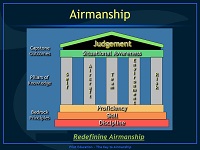 1.8.1 What is airmanship? The definition of airmanship is somewhat indistinct. With the introduction of computerised control systems, the application of airmanship is certainly more broadly based and complex now than 50 years ago. Some might say it involves pilot proficiency, flight discipline, aircraft system and airworthiness knowledge, and skill in resource management, plus being fully cognisant of every situation and exercising excellent judgement. A few years ago someone did say — in relation to the management of airline transport aircraft — airmanship is "the ability to act wisely in the conduct of flight operations under difficult conditions". If that is valid then the three-pilot flight-deck crew of Air France Flight 447, with 20 000 flight hours experience, failed their crucial airmanship test on June 1, 2009. The author's definition is reasonably applicable to sport and recreational aviation: Good airmanship is that indefinable something, perhaps just a state of mind, that separates the superior airman/airwoman from the average. It is not particularly a measure of skill or technique, nor is it just common sense (i.e. the normal understanding and judgement we should all have). Rather, it is a measure of a person's accumulated learning — their knowledge and awareness of the aircraft and its flight environment, and of their own capabilities and behavioural characteristics; combined with good judgement, wise decision-making and attention to detail in the application of that learning; plus a high sense of self-discipline. Airmanship is the cornerstone of pilot competency. Competency has been defined as the combination of knowledge, skills and attitude required to perform a task well or to operate an aircraft safely — in all foreseeable situations. For example, here is an extract from an RA-Aus incident report: "The aircraft, with instructor and student on board, was returning to the airfield when a pitch-down occurred. Not known to them the elevator control horn assembly had failed. Control stick and trim inputs failed to correct the situation, but a reduction in power did have some influence, though not enough to regain level flight. A satisfactory flight condition was achieved by the pilots pushing their bodies back as far as possible and hanging their arms rearward. A successful landing at the airfield was accomplished." A flight operation, even in the most basic low-momentum ultralight, is a complex interaction of pilot, machine, maintenance, practical physics, airspace structures, traffic, weather, planning and risk. When every flight is undertaken, it is not only the aircraft that should be airworthy; the total environment — flight planning, airframe, engine, avionics, atmospheric conditions, pilot condition and aircraft handling — should allow for the safe, successful conclusion of each operation. It is the perception — founded on the acquired underpinning knowledge — of the state of that overall flight environment and its potential threats that provides the basis for good airmanship and safe, efficient, error-free flight. Insufficient perception and insufficient self-discipline create a pilot at risk. The bulk of sport and recreational aviation is undertaken by 'amateur' pilots (using the original meaning of the term; i.e. a lover of a particular activity or pastime), but such pilots must still approach aviation with the continuing diligence of a professional. Less experienced pilots must acquire levels of airmanship consistent with their progress along the aviation learning curve. Ensuring engine and/or airframe airworthiness prior to flight is a prime component of airmanship. Owner-pilots are totally responsible for the continuing maintenance of their aircraft, be it a hang glider or a high performance aeroplane. However — for the person accepting an aircraft they do not own/operate — airworthiness, unfortunately, is a matter of faith in the operator, and in the accuracy and completeness of the aircraft's maintenance record. Daily inspections and pre-flight checks cannot assure airworthiness — the pilot does not know what is hidden under the skin or within the engine. Just as the term 'seamanship' implies a full appreciation of surface wave action and sea movement, so 'airmanship' implies a full appreciation of atmospheric waves, eddies, thermal activity and turbulence. 1.8.2 Risk management Most sport and recreational pilots accumulate only a small number of hours each year; about two-thirds of powered aircraft fly less than 60 hours. Perhaps such annual hours is enough to maintain physical flying skills learned at the ab initio flight school — if the pilot has established a program for self-maintenance of that level of proficiency — but maybe not enough to maintain a high level of cognitive skills; for example, situation awareness, judgement and action formulation. In addition, having completed flight theory studies sufficient to pass the basic aeronautical knowledge test and achieve the RAAO's Pilot Certificate, it seems that many, perhaps most, pilots leave it at that — so failing to expand their knowledge by further in-depth studies of flight dynamics and the application of the acquired knowledge; possibly because it involves sometimes difficult detail rather than the broad-brush approach of the flight school. Or, perhaps, assuming that the necessary knowledge will be acquired through subsequent flight experience, also assuming (I guess) that they will survive every learning experience in a condition to continue flying. However, many pilots are just continually repeating the same flight experience — each year is the same as the last — so all they accumulate is a repetition of one year's experience. They have no program of deliberately advancing knowledge and skills, nor have they really absorbed the safety basics that should have been drummed into them over the years — never turn back following EFATO; always maintain a safe airspeed; if the engine has been misbehaving never take off until the problem is identified and fixed; if the engine goes sick in flight don't try to make it back to base, land ASAP; don't continue into marginal conditions — turn back; and so on. So a safety problem exists with some pilots. Many are just not ensuring that they accumulate adequate post-certificate knowledge and skills. In short, they never really learn much about flight dynamics and the atmosphere (and some of their accumulated beliefs are dangerously false); they lack other pertinent knowledge; and worse, they are just not listening or hearing. Be assured that every pilot needs to know more. The sound pilot must understand how the environmental parts relate and interact with each other, and judge the likely consequences of any action, deliberate non-action or random event. A systematic approach to continuing improvement in airmanship, plus an ability for self-appraisal, is necessary to achieve that understanding. The Flight Manual or Pilot's Operating Handbook for the powered aircraft model being flown must be fully understood, and the content recollectable when needed in an emergency. Every flight should be conducted correctly and precisely, using procedures appropriate to the airspace class and without taking shortcuts, even if just a couple of circuits and landings are contemplated. To paraphrase Louis Pasteur's 1754 observation: 'Chance favours only those who have prepared'. Pilots should be aware that fatigue, anxiety, emotional state — or flying an aircraft that stretches their skill level or just flying an aircraft they don't like — will affect perception and good judgement. See the "I'M SAFE" checklist. Most studies of aircraft accidents or incidents reveal not a single cause but a series of interrelated events or actions that, being allowed to progress without appropriate intervention from someone, lead to an unplanned termination of the flight. A U.S. Navy pilot once wrote "In aviation you very rarely get your head bitten off by a tiger — you usually get nibbled to death by ducks." However, U.S. Navy pilots are well-trained, well-informed, self-disciplined individuals who do not expose themselves to those situations where eventually the tiger WILL bite your head off. Many years ago, the gliding community demonstrated that there were two main cyclic periods (for them) where people were accident prone. This was about the 100-hour mark, where pilots were beginning to think they were immortal, and about 200–250 hours when they were sure they were; being survivors of the incidents of the first period. Dr Rob Lee, the then Director of the Australian Bureau of Air Safety Investigation, wrote in 1998: "Over 40 years of investigation of General Aviation accidents by BASI and its predecessors clearly shows that while the immediate circumstances of each accident may well be unique, the underlying factors are always drawn from the same disturbingly familiar cluster — pre-flight preparation and planning, decision making, perception, judgement, fuel management and handling skills". A study of the factors contributing to fatal general aviation accidents in Australia for the ten years 1991–2000 showed that inadequate flight planning was a factor in 38% of the accidents, aircraft handling errors in 30%, and fuel starvation or exhaustion in 10%. 1.8.3 Situation awareness (The Australian Civil Aviation Safety Authority's 2009 publication 'Safety behaviours - work book for pilots' © CASA includes airmanship and situation awareness text from this page.) Being situationally aware means to be fully cognisant of the big picture at all times, by continually collecting and judging information from sources inside and outside the cockpit. In flight, a pilot has to be thinking several minutes ahead of the aircraft, not several seconds behind it — to perceive what's going on and be able to impose sound judgement on every change, from a minor distraction to a major in-flight emergency. Stress may build rapidly in an emergency situation and the pilot will tend to unconsciously focus on a very few aspects of the situation, without noticing that other aspects are degrading — airspeed or attitude for example. Good handling of any unusual situation — particularly the first major emergency — provides a basis for confidence in abilities. Poor handling of an emergency will undermine confidence. (Note: I have used the term 'situation awareness' throughout the various guides rather than the more commonly seen 'situational awareness'. This is to accord with the official documents CAAP 5.59-1(0) , CAAP 5.81-1(0) and the CASA day VFR syllabus – aeroplanes (PPL and CPL). CAAPs provide recommendations and guidance to illustrate a method, or several methods by which legislative requirements may be met. ... JB) There is much written on the ways to improve situation awareness but it boils down to a few basics: Assimilate an adequate knowledge base. To enable appropriate judgements and manage threats — or your errors — you must have sufficient underpinning knowledge of all relative aspects of flight, of human limitations and of the aircraft you are flying. Plan well in advance with a properly researched weather forecast and flight plan. Pre-flight planning may start days before a flight. Even local flying should be preceded by looking at a met forecast the evening before — to compare against the conditions you find and how the sky really looks. You must know the aircraft's take-off and landing capability in the existing or expected environment. Continually monitor flight progress against that plan, re-evaluating where necessary and implementing alternatives as soon as the need becomes apparent. Develop and use a scanning technique that takes in engine instrument indications, flight instrument indications, aircraft heading, flight path (60° left, ahead, 60° right, above, below), time, map and ground. Develop a scanning pattern that covers everything without becoming superficial but also allows time to be allocated to individual scan segments according to your perceived needs. For scanning techniques read 'Eye on the sky' in the September – October 2003 issue of Flight Safety Australia. For a research report on the limitations of the VFR unalerted 'see-and-avoid' principle read this 1991 ATSB report. For a description of the pilot's role in collision avoidance read the FAA advisory circular AC90-48C. Project ahead and rehearse your actions — for example: "The next checkpoint will be in sight in …" "If the next checkpoint doesn't appear as scheduled I will … " "If the cloud is not as high as it appears or there is more of it than there appears I will …" "If an aircraft appears on a straight-in approach I will …" "If the engine packs up soon after lift-off I will …" "If the engine packs up above 200 feet I will …" Avoid locking on to a problem, a task — or, for instance, your intended landing point — for too long, don't keep your head in the office, keep the scan going, be aware of the relative position and movement of other traffic, hold the heading and fly the aircraft at a safe airspeed appropriate to current atmospheric conditions and your height above the surface and obstructions. When operating at or in the vicinity of airfields, use a radio transceiver to communicate your position and intentions to other aircraft. Listen out for those key words that indicate other aircrafts' positions and intentions. Be aware that not all aircraft will be radio-equipped and even those that are may not be listening out on the appropriate frequency. Project ahead to plan safe and orderly traffic separation — most light aircraft mid-air collisions and near-misses occur in the vicinity of an airfield. In short — be well informed, plan well in advance, fly to that plan, continually monitor flight progress, use a scanning technique and be aware. Know where all other aircraft are and their intentions, communicate when appropriate, project ahead and, above all, don't be distracted — fly the aircraft and fly it at a safe speed and within your limits and the aircraft's performance limits. 1.8.4 Self-discipline The reason for choosing to ignore the established rules is usually to save time or money, coupled with the belief that they will get away with it because 'It can't happen to me' or 'It'll be okay'. Sometimes, particularly when they flout the laws of physics or aerodynamics, it is either pure bravado or wanton disregard (i.e. plain stupidity), or maybe it is just lack of knowledge. There are — fortunately only a few — rogue pilots in the various aviation communities who believe that the rules, written or otherwise, are stupid or unnecessary, and so determine to flout them. Such people ignore the trail of injury and death, stretching back over most of the 20th century, which formulated the rules and conventions. Each conscious infraction of those rules further dulls good judgement until crunch time finally arrives and, unfortunately, such rogues often take others with them. All pilots have a moral responsibility to inform a passenger, intending to fly with a person known to engage in illegal or doubtful activities (e.g. unauthorised low flying or inappropriate manoeuvres around the airfield), that flight with that person is inadvisable. If a person is known to consistently indulge in illegal or dangerous flight then there is a responsibility to inform an appropriate authority — police, CASA, RA-Aus, HGFA, etc. All pilots must occasionally ask themselves the question: Am I maintaining a fully disciplined approach to all flight and pre-flight procedures? And if not — why? Good airmanship cannot co-exist with poor discipline. A self-evident truth is that a pilot lacking the appropriate self-discipline is an accident in preparation. Discipline overrides panic and reinforces the ability to maintain/regain control of the aircraft when faced with a serious flight situation. 1.8.5 Rules, regulations and common sense Not even the most experienced pilot, flying maximum hours every year, can judge the probability of all likely outcomes in any situation, expected or unexpected, and make the appropriate decisions. For that reason, among others, a system of regulations, rules, conventions, practices and standard procedures exists for recreational and sport aviation — and all other aviation communities — to follow. Once acquainted with them, these rules and procedures, plus commonsense practicality, generally provide an acceptable level of protection. But far too often, pilots and others — all of whom should know better — deliberately choose not to follow them and thus abandon that inherent protection. 1.8.6 Personal operating procedures Standard operating procedures (e.g. joining the circuit, completing a flight note) are not included in the RA-Aus Operations Manual. However, every pilot should develop and follow their own set of personal operating procedures and apply them, where applicable, to each flight operation: e.g. a procedure to be followed if unsure of position on a cross-country flight; or turn-back if you find yourself flying toward rising terrain and a lowering cloud base; or having the self-discipline, when under time or other pressures, to decide whether you should take-off in the first place! If there is doubt about the weather, the wise pilot leaves the sky to the IFR-rated pilot in the IFR-rated aircraft. A non-IFR pilot caught out in instrument meteorological conditions [IMC], or dark night conditions, will be very lucky to survive. The dedicated pilot flies accurately, using approved technique, knowing the performance (i.e. the best rate) airspeeds for the aircraft being flown and consistently maintaining such airspeeds — and the chosen altitudes and headings. She or he will know the minimum safe speeds for various angles of bank when turning in level, climbing and descending flight — and at varying weights and cg positions. The pilot will know the aircraft's glide performance and, during flight, will be continually monitoring the ground for possible safe landing sites should the engine fail. Such pilots will have developed a set of tolerances for personal performance assessment; e.g. airspeed consistently within 5 knots, altitude within 100 feet or heading held within 5°. The dedicated airman or airwoman aims to fly with style, making smooth, timely and balanced transitions when turning, climbing, descending or levelling off so that the flight path flows, rather than being seen as a string of loosely connected manoeuvres. Every landing is a gentle arrival that doesn't strain any part of the aircraft. 1.8.7 Human factors training The term 'pilot error' appears extensively in safety investigation reports but is generally a most unsatisfactory summation of an event and its causal factors. In the 1980s the International Civil Aviation Organization [ICAO], the administrative authority for the world's international air transport system, finally accepted the inevitability of human failure in flight, maintenance and other aviation operations. Consequently, in the late 1980s ICAO introduced 'human factors' [HF] training and assessment requirements for pilots (and others), and circular 227-AN/136 'Training of operational personnel in human factors' was issued. Effective August 2008, RA-Aus introduced human factors training to the flight training syllabus; consequently, from August 2008, all student pilots study HF in their training and, by 31 August 2010, all existing Pilot Certificate holders must complete an RA-Aus HF course or pass the RA-Aus written HF examination, or show other evidence of meeting the required competencies of the RA-Aus Operations Manual, section 3.09. The Australian Civil Aviation Safety Authority [CASA] also decided that, from 1 July 2009, threat and error management will be added to the existing human factor aeronautical knowledge examinations within their day VFR syllabus. The Civil Aviation Advisory Publication CAAP 5.59-1(0) 'Teaching and assessing single-pilot human factors and threat and error management' was published in October 2008 and is recommended reading. CAAP 5.59-1 links human factors with deficiencies in airmanship. The CAAP defines human factors as 'Optimising safe flight operations by enhancing the relationships between people, activities and equipment. This means: achieving the safest outcome for flight operations by the most effective use of people, and what people do when operating in the aviation environment and the equipment they use.' The 2009 CASA safety behaviours publication 'Safety behaviours: Human Factors for Pilots' is available. The pack consists of: Safety behaviours – resource guide for pilots (183 pages plus a CD) Safety behaviours – work-book for pilots (111 pages) Safety behaviours – facilitator's guide (15 pages) Guidance material – extract from CAAP 5.59-1(0) (42 pages) The pack can be purchased from the CASA online store for the cost of postage (one copy per person only). Further reading The online version of CASA's magazine Flight Safety Australia contains some articles relating to airmanship, which are recommended reading. A categorised index of articles of interest to recreational pilots contained in Flight Safety Australia since 1998 is available on this site. The articles are listed within ten categories together with a very short summary of the content. 1.8.8 A CFI's viewpoint The late Tony Hayes, once CFI of Brisbane Valley Leisure Aviation Centre — and the inaugural holder of the RA-Aus Meritorious Service Award — published this airmanship interpretation. "Airmanship" — aviation could not exist in a responsible manner without this apparently intangible component. Let us define airmanship exactly so you do know what you are searching for to make your own, and thus achieve personal protection, pride, and protection of others, in your own standards of what you do, or propose to do. The big intangible is our personal attitude to flying — why we do it, how we do it. Do you care to define an individual's personal attitude to both flying and the environment in which that person's flying is conducted? Many things form our attitudes and we need to consider these if we wish to see airmanship as it really is — get a handle on it and make it our own. That is easy enough, but before we start — accept that airmanship is something that grows. It grows on experience whether shaped by training or by personal exposure to what you do. You cannot learn airmanship only from a book or an instructor, you are as much guided there by exposure to those circumstances, encountered with growing experience, which require airmanship. Whether it be flying training or airworthiness training — only the basics can be established. Like the runner in a relay race taking the baton — you have the potential winning element in your hand, it is up to you if you win or not, take on what you have been given, and make it work for both yourself and the others with whom you share the skies. Winning the airmanship race is not simply about staying alive or not bending yourself or aircraft — it is walking off the airfield relaxed, knowing you have not simply performed but have crafted an activity, and being totally aware you have enjoyed the sum of that and owe nothing to anyone. Let us start with a target to shoot for. Airmanship — a definition 'A personal and situational management state required to allow a human being to enter and exit, in safety, an environment which they were not naturally designed to inhabit. This state comes into being immediately a decision is made that an aircraft is going to be flown and continues until you walk away from the completed flight and correctly secured aircraft.' That continuation may require an instinctive willingness to assess, between flights, the lessons that have been stated by the flight just completed. Airmanship is as much a ground-based attitude as it is an air-based one. Airmanship structure We are now going to look at the basics upon which airmanship is formed and therefore can be understood. We have already touched upon one — PERSONAL ATTITUDE — now we must put this in context with the others: KNOWLEDGE — SKILL — CONFIDENCE — RESPONSIBILITY. These four are then applied by personal attitude. The application of airmanship can be defined to three areas: the airworthiness of the aircraft the operation of the aircraft and the environment in which the aircraft operates. We will briefly examine each of these requirements and applications. All four requirements are intimately interconnected with each other and with applications, so cannot be treated entirely as stand-alone subjects. Knowledge • AIRWORTHINESS. You do not have to be a mechanical engineer to be a pilot but you do need to know sufficient about the aircraft structure and systems to enable you to safely pre-flight it and adequately monitor its continued satisfactory operation. The degree of knowledge required will depend upon the complexity of the machine and the range of environments in which the machine is capable of operation. (See the 'home builder' comment below.) As pilots do not have to be engineers, there is therefore a supporting mechanical and engineering system to which the pilot will generally interface, via documentation, which revolve around periodic servicing and in-service defect reports. Understanding this system is part of the knowledge requirement such that you do appreciate whether the aircraft is provisionally serviceable or not — subject to pilot inspection. • OPERATIONS. These are very much the pilot's responsibility and sufficient knowledge must be present for the safe operation of the aircraft within the parameters for which it has been designed. This knowledge must extend adequately from flight principles through to understanding of systems operation. All of this must then interface with the environment within which the aircraft will operate and this in turn requires understanding and application of airspeed limitations, manoeuvres permitted, weather minima (e.g. maximum crosswind limits), etc. • ENVIRONMENT — Meteorology. The forces exerted by the ever-changing atmosphere upon an aircraft are far removed from those weather considerations we have knowledge of when we exist only on the ground. The pilot has to be able to read the sky like an advertisement, interpret current conditions and identify changing conditions along with the rate and degree of change. Decisions so made then have to be balanced with aircraft operational limits and the pilot's personal skill limits — usually this is a forecast being responded to before the situation has moved beyond estimated limitations. — Behaviour controls. In simple terms this is knowing the 'rules of the road' in terms of rules of the air. From simple basics such as 'give way' rules, to airfield marking systems, to airspace restrictions — these are all designed to enable the present huge variety of aircraft to share airspace safely. They must be understood and instinctively applied by the pilot. — Regulation. Partly from lessons learnt the hard way in the past, and partly due to an ever expanding population both in the air and on the ground — the information resource of who does what to whom is bound into regulation. The pilot needs to know this regulation as applicable to his or her operation, respect that others have different parameters they must follow and make allowance accordingly, plus have the regulation available and currently updated to suit the operations being conducted. Skill This is an area determined, at least on the surface, by our ability to perform certain actions and procedures. But you can teach a bird to talk — that does not mean the bird understands what it is doing or can hold a conversation. Skill is underpinned entirely by knowledge and from this skill may be put in context and is capable of organised development based upon growing experience. • AIRWORTHINESS. The degree of skill in this area depends upon the level of airworthiness control you intend to apply. In pilot pre-flight terms, the skill will be certainly underpinned by a healthy element of curiosity — does it actually work and is it likely to stay in place! As we move further into servicing and repair, then hand and machine skills (adequately supported by appropriate knowledge) increase. For both control and convenience, divisions are made as to the degree of work which may be undertaken via various airworthiness maintenance approvals, each requiring higher knowledge and skill levels. • OPERATIONS. As the aircraft you have access to become more complex then so the further you are removed from basic stick and rudder skills to new skills that are mainly founded upon systems operation and changing operating parameters. Those basic skills have to be totally and automatically in place, with sufficient competence of application supported by knowledge, such that the new skills may be safely founded. With this foundation, you may move from a simple aircraft to a slightly more complex one with some confidence and further acquisition of systems and operating parameters — but you should instinctively stop if you are clearly going beyond your existing knowledge and skill base until you have corrected that situation. There is another element to skill and that is currency. None of us, no matter how much we have flown, are any better than our next arrival on the ground. If we are not current (particularly with more complex aircraft, which require confident fluidity in the checks and procedures with their operation) then we could just be rolling the dice on the basis of 'been there, done that — she'll be right'. But even the simplest of aircraft will severely bite the 'out of practice' pilot. How much out of practice is 'out of practice'? The airman instinctively knows. Situational appraisal, how long out of practice, so many other things — all come into play here. As a command pilot, the airman will make a valid decision based on information and assessment, and react accordingly and safely. • ENVIRONMENT. In this situation we are less concerned about the tirades of the weather (although that has an obvious control upon how skill is intended to be employed). In airmanship terms we are more interested in the human environment of peer group pressure, personal needs to achieve a task, or (for some pilots) pressure applied by employers. Too often, a flight becomes driven by emotive pressure and/or need to complete a flight for personal gain (in so many forms). Emotion and personal gain are the two biggest killers yet invented by our race. Every year the figures continue going on the board in terms of deaths and wrecked aircraft — ran out of fuel, weather out of parameters, flew into lowering cloud base and rising ground. It still happens every year! As human beings we are never more vulnerable than when our skill is being questioned or challenged by others — or even ourselves, particularly in situations where by its very nature flying begins being interpreted as some 'personal courage combined with ability' thing. The true airman, with knowledge present and supporting skill in place, is dispassionate and evaluates situations on known and observed circumstances. Too often for some, tomorrow may indeed have been soon enough, but was not! Confidence Confidence can be underpinned by one simple control statement — 'If in doubt, don't'. If there is doubt, then confidence by definition does not exist. If you are not confident then you should not go. Confidence is formed by adequate levels of knowledge and skill. The airman has these in constant balance and sees a flagging of confidence as a natural warning bell — there is yet more work or revision to be done so that confidence is truly there. When those warning bells sound then it does not matter if the doubt concerns whether the aircraft is serviceable, or if you are up to the flying you are undertaking — time to take pause and look for additional abilities. There is also another element to confidence, and that is overconfidence. In this situation, even adequate knowledge and skill is being superseded by an emotive form of confidence. Once with a Pilot's Certificate achieved, the need to satisfy an instructor's discipline may fade, knowledge becomes steadily forgotten as a stimulus to what must be, and skill currency may go the same way. With the demand strictures of flying training now past, near enough may be good enough — forgotten is the need for why those original standards were set. Overconfidence meets its true ground in exhibitionist flying. In this situation the pilot is driven by ego, deliberately in front of an audience (which is mandatory) to show they are more than mortal and can really 'fly'. Unfortunately, the accident records confirm that such people are indeed mortal. Those tend to be the 'headlines' examples — but the run-of-the-mill situations are the greater number of people who bend themselves and/or aircraft — or — the much larger majority who narrowly avoid disaster, and hopefully become airmen as a result of that new demonstration of their inadequacy. Responsibility If confidence cannot exist without knowledge and skill then the exercise of responsibility cannot exist without all three. Here the airmanship pattern may be disrupted and two opposites meet. A totally trained, knowledgeable and skilled pilot, under the influence of irresponsible behaviour, can be as discounted as the worst non trained aerial lout. Ultimately we are human. We are subject to human drives. So maybe there is another definition to airmanship — the self-discipline and wisdom to rise above our human condition and just be practical about what we do and where we do it. Homebuilders Within the ultralight community we have a sector of effort which is, via particularly CAO 95.10, but within overtones of 'amateur built' — an area where airmanship principles themselves may be seen by reflection. In this area, the intending pilot does have to embrace sufficient elements of the designer, engineer and aircraft constructor. The requirements for knowledge and skill are self-evident. Confidence will ultimately be expressed by a preparedness to fly the finished machine. Responsibility will be expressed by understanding that sufficient knowledge and skill was present to build the machine to an airworthy standard, but there is also equal knowledge and skill present in the operations area to ensure that the proving flights are conducted safely, responsibly and with validity. Near enough is never good enough on a new aircraft type. So the ultimate definition of airmanship, when seen in context with allied disciplines, comes down to quality of performance within prevailing circumstances — backed by quality of personal intent. Flying is fun — a pile of wreckage is neither. Between those two extremes is the ultimate expression of airmanship." The following document is an extract from the BVLAC flying training manual written by the late Tony Hayes. (The flying school has since ceased operations.) "For all my exposure to aviation — which extends over my entire life from my birth next to an operational bomber airfield in World War 2 — when I came to pilot training myself I met a term so commonly used yet nowhere could I find actually defined and explained, Airmanship. So I will fix that right now in my own flying training manual. The problem is understood once Airmanship itself is actually understood. It is very real and manifestations of it may be seen at every airfield or places people come to fly aircraft. Yet Airmanship is an intangible, for it is a state of mind, personal convictions and self discipline expressed in our actions and attitudes. It is the prudent operation of a machine, and the management of circumstances surrounding that operation, within an element we were not naturally designed to inhabit. Airmanship appears in every flying area and sets aside the airman from the aircraft driver. It is founded firmly in basic training where mental attitudes to flying are forged, and sometimes in self training where a pilot learns the hard way about what is prudent or not, gets away with it, and elects to make more sensible decisions at the right time, next time. Under growing experience airmanship may grow and blossom into a comfortable protective cloak, resting light upon the shoulders, worn perhaps with pride, but never in vanity, and giving the protection of 2 inch armour plate. The very need for its presence is a reminder that we are privileged to transit from our natural element into another. There may be a high price for such transition if that act is made in scorn or ignorance. But we may go there safely if we acknowledge the limitations of ourselves and our machines, so generating a curious mixture of humility and confidence which is expressed in the very form of airmanship. Airmanship may be performing a proper pre-flight check of an aircraft rather than a casual look-around. It is something as instinctively looking before turning. It is actually doing pre take-off and pre-landing checks — not mouthing the words. It is sensible pre-flight planning — either for a circuit or going over the horizon. It may be as simple as looking at the windsock before hitting the 'loud' lever, or as complex as interpreting a changing weather pattern. It is the essential personal and situational management difference between being up there wishing you were down here, rather than being down here wishing you were up there. But, founded on flawed training, or growing experience driven by a different pride, airmanship may wither into a deadly weed of contempt for those who slavishly obey 'regulation' or are not deemed 'good enough' to sort out situations as they happen. People driven by such views, in their ignorance, inhabit a perilous place of their own making wherein they have become an accident looking for somewhere to happen, and so ensure that it will happen. The non-airman will discount that the 'officious regulation' is (in the main) a book written in the blood of people who found out the hard way and handed down to us methods of avoiding their fate. In discarding that knowledge so is generated the certainty of the same fate, standing in the shadows, waiting. The airman is a person who maintains a valid skill and knowledge currency such that when the unexpected does happen there is ability and composure enough to manage the situation into safety. He or she, is a person with a sense of balance and intelligence enough to heed the lessons of the past, apply them in the present, and so ensure a future to be able to fly again, and again, and again. You will be hearing a great deal more about airmanship in your time with us, and now you know what we are actually talking about." Tony Hayes, CFI; Brisbane Valley Leisure Aviation Centre The next module in this 'Joining sport and recreational aviation' series concerns pilot maintenance of RA-Aus aircraft. STRICT COPYRIGHT JOHN BRANDON AND RECREATIONAL FLYING (.com)
 -
1.7 Advanced flight training – power-driven, 3-axis control aeroplanes
Admin posted a tutorial in Getting Started
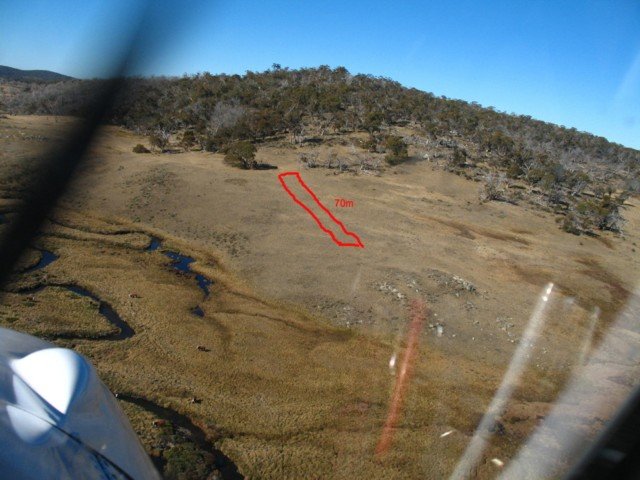 1.7.1 Post-certificate learning The airmanship learning curve follows two contiguous paths. One is the airworthiness path where knowledge is sought — and accumulated — of the engine, airframe, propeller, avionics and instruments for each aircraft type encountered plus the skills and procedures required to maintain and repair airframes, engines and componentry. Thus the pilot is always able to assure an aircraft she/he intends to fly is fit for the operation, without being totally reliant on the opinion of others. Many people find advancement along this path most satisfying because it may eventually lead to building — possibly designing — your own aircraft. The other path is advanced flight training within the selected aircraft group, where knowledge should be sought about each aircraft's safe flight envelope and the safe handling practices required in various work and/or atmospheric and/or airfield environments. Some of this knowledge will be accumulated through ongoing experience and contact with others (via club membership, for example), much through self-instruction and experiment, but normally some has to be garnered through a fee-for-service provider. The providers are the Flight Training Facilities and the airworthiness training facilities that may be associated with an FTF. Basically any pilot has three choices. One, continue to do much the same type of flying experienced at the ab initio training school, i.e. fair weather, light winds, familiar places, similar aircraft and gentle flight. There is no increase in the quality of experience or competency — just an increase in quantity of time spent in the air — until it becomes uninteresting. Enjoyment and challenge cease, the learned skills then slowly erode and you remain a novice in aviation. The second choice is to perhaps expand your field of interest within the entire field of sport and recreational aviation. For example a 3-axis aeroplane pilot might opt for weight-shift control experience in trikes or powered hang gliders, or gain an understanding of rotorcraft by learning to fly ASRA gyroplanes. The only reasons for a newly-fledged pilot to do so at such an early stage of their development might be economic, or a realisation that you don't much like your current aircraft group, or you don't find the type of flying thrilling enough and would like to get into something more personally challenging, perhaps sport parachuting for example. Developing professionalism. But if you, the newly-fledged pilot, recognise that, up to this point, an instructor was guiding a process of learning to fly safely and now, what you are really getting with the Flight Crew Certificate — having being judged that you can do it safely — is license to continue to learn by yourself. Then you can opt to become a responsible, professional pilot. 'Professional' is not meant to imply a commercial career, rather it implies that you set high personal standards of airmanship and competency in flight — and associated operations — and accept that improvement and training is never complete, no matter how many and what type of flight hours are in your log books. This professionalism entails broadening your knowledge base so that you can set appropriate personal standards, stepping up flight discipline, acquiring additional flight skills, honing techniques and accuracy, gaining new experience and sharpening judgemental skills; perhaps undertaking a program resulting in an instructor certificate. Self criticism. You must evaluate your performance after each flight and identify the most poorly performed phases, determine how to improve them and then concentrate on those phases during subsequent flights until you have achieved your current required standard in that aspect of flight operation. In short, developing professionalism implies disciplined, continually advancing flight training, mostly personally planned and conducted but with occasional input at appropriate times from a Senior Instructor, CFI or Pilot Examiner. It does not imply that you have to become highly skilled in all aspects of flight; rather, you should be comfortably skilled in most applicable aspects and you keep raising your performance standards. We will discuss it a little more in the airmanship, flight discipline and human factors module of this guide. Flying, like driving a car on the public roads, is inherently risky and most unforgiving of poor discipline. One can avoid the risks by not venturing on the roads or in the sky, but if you choose to do so, then best reduce the risk by utilising defensive driving or risk management piloting techniques. The latter is integral to advanced flight training. The advanced training programs that you might undertake at a Flight Training Facility will ensure that you achieve that school's minimum requirement for safe flight, but the programs will not bring you up to your full potential — that is entirely up to you. Remember that in all fields of aviation, some 80% of accidents and incidents are attributed to human error. And usually not just a single act of stupidity or gross indiscipline, where both regulations and commonsense are flouted, but a series of small errors or misjudgements — not individually critical — often made by more than one person and often attributable to the applicable system. 1.7.2 Self-training sequences All humankind's accumulated knowledge is published somewhere in print or electronic form so read everything that you can lay hands on that appears pertinent and authoritative — remembering, however, that your aircraft hasn't read them (nor has the atmosphere in which we fly) and responses may not be according to a particular book or an internet document – such as this one. There are many learning sequences that can be undertaken without assistance. Here are just a few associated with flight at slow speed, but if you are contemplating doing the following in a home-built aircraft make sure it has been through its full flight test program. Arm yourself with a pad and a pencil, fly to an adequate height and appropriate location and do 20 stalls in straight and level flight with varying pitch, roll and yaw attitudes and with varying power settings — remembering that stall recovery must be completed by 1500 feet agl. Note the pre-stall warning behaviour of the aircraft. What minimum easing of stick back pressure will unstall the wings? Which wing drops? How long before the nose drops? How many degrees does it drop? Can you stall it and recover without losing measurable height? What happens when you take your hands and feet off the controls? Ensure that your situational awareness is maintained at all times. Repeat the same observations with the aircraft in a balanced level turn, at varying degrees of bank, and in balanced climbing and descending turns. Rule of thumb: with your arm fully extended in front, the width of a finger is about two degrees, that of your palm is about 10 degrees and it is about 20 degrees between the thumb tip and the little finger tip of a spread hand. Repeat the same observations, at a safe height — at least 4000 feet agl — with the aircraft in a simulated descending turn to final approach and in a simulated departure climb with varying degrees of slip and skid. Gain an understanding of arrival and departure stalls. Repeat all the prior exercises with varying weights and cg position. Chart all your observations and produce a summarised reference table. 1.7.3 Maximum performance sequences There are other learning sequences whose aim is to make you aware of your aircraft's capability and to help you fly accurately and smoothly. Some take you to the outer limits of the aircraft's certificated safe manoeuvring flight envelope. It is advisable that these manoeuvres are first demonstrated to you by a person skilled in their execution who can then point out to you the inaccuracies of your initial attempts. For example: steep power turns accurate chandelles lazy eights steep spirals. In addition, there are some ground reference manoeuvres designed to enhance ability to fly the aircraft safely and precisely while attention is divided between possible traffic, the flight path and a ground reference point — and at the same time analysing and correcting for the effect of wind: constant altitude/constant radius turns around a ground reference pivotal altitude turns — pylon turns and eights on pylons 1.7.4 Tailwheel/tailskid/nosewheel endorsements If you learned to fly in a nosewheel configuration aircraft and you want to expand the aircraft types you can fly safely, then learning to handle tailwheel and tailskid-equipped aircraft is essential. Taildraggers can be a lot of fun but a few hours tuition in landing and ground handling technique is essential — even then you will find some taildraggers may be much more touchy than others. Conversely, a taildragger experienced pilot should get a little tuition in handling a tricycle undercarriage aircraft, but the transition in this direction is said to be easier. 1.7.5 Flap or flaperon-equipped aircraft Pilots who have had no formal flap training should never attempt to operate a flap-equipped aircraft before receiving professional instruction in the use of flaps — in an aircraft having similar characteristics to the aircraft you intend to fly. The act of lowering or raising flaps results in substantial changes in aircraft attitude, trim, lift and drag — perhaps even stability. During familiarisation the aircraft is first flown flapless (if possible and practical) for a few take-off and landing circuits. Exposure to flap operation is then explored at height, with particular reference to the consequent change in attitude/airspeed combinations and the change in stalling speed, for approach speed calculations. Then take-offs, landings and go-arounds are conducted at various flap settings, wind conditions and airfield conditions. Experience in the degrees of flap and the airspeed to be used, in strong crosswind conditions, is vital. Some training in other systems, such as carburettor anti-icing and variable-pitch propellers, will expand competence and experience. You may find some light aircraft fitted with retractable undercarriage in which case a retractable endorsement is required. 1.7.6 Single-seater flying There are many types of single-place aircraft included in the RA-Aus CAO 95.10 register. In many cases there will be just a single copy of an owner-designed and built aircraft. Flying such an aircraft is a big moment for any pilot, if only because you cannot be shown how to fly it, only be told how to fly it, and trusted to do so. However, flight in a particular aircraft should not be undertaken lightly. Most likely there will be no aircraft flight manual or pilot's operating handbook and you, personally, must ensure the aircraft is airworthy. First flights should only be undertaken from airstrips and in conditions that offer a completely adequate safety margin. Take heed of the placard in the cockpit that states: 'WARNING THIS AIRCRAFT IS NOT REQUIRED TO COMPLY WITH THE SAFETY REGULATIONS FOR STANDARD AIRCRAFT. PERSONS FLY IN THIS AIRCRAFT AT THEIR OWN RISK.' If you have not flown a single-seat ultralight with similar flight characteristics to the type you contemplate flying then it is advisable to get your first experiences under the supervision of a flight school. 1.7.7 Low-inertia/high-drag aircraft Although many ultralight types would be classed as 'low-momentum' aircraft because of their high parasite drag profile and low mass, there is a significant variation in drag characteristics throughout the range. A newly certificated pilot, whose experience has been in the slippery end of the sport and recreational aircraft spectrum — the aircraft made from fibre-reinforced polymer materials — will find that the energy management characteristics of a 'fabric and tube' aircraft are substantially different. It is advisable to receive some demonstration of flight characteristics and handling techniques. This is one reason why experienced pilots with a GA licence are required to accumulate 5 RA-Aus hours, preferably in a 'draggy' aircraft, before the RA-Aus pilot certificate is approved. Similarly, a pilot experienced only in draggy aircraft should receive dual instruction in the flight characteristics of the more slippery aircraft before acting as pilot-in-command. This particularly applies to single-seaters constructed in fibre-reinforced polymer materials with quite high aspect ratio wings, where the closest two-seat equivalent is a sailplane. 1.7.8 General type flying This adds significantly to your experience base, to the number of types in your logbooks and acts as a buffer against encroaching boredom. Before undertaking a flight in a new type, there are a few key points that should be scrupulously followed, remembering that you can't know too much about any aircraft you intend to fly: carefully read the pilot's operating handbook for that aircraft if there is no pilot's operating handbook, aircraft flight manual or owner's manual, ensure you receive a thorough pre-flight briefing from a competent person familiar with the aircraft ensure that valid cockpit check-lists are available for the new type, take them with you and use them completely familiarise yourself with the cockpit layout before you start the engine. 1.7.9 Other Pilot Certificate endorsements; seaplanes and formation flying There are other advanced flying techniques that can only be learned from a school and instructor approved by the RAAO for these operations; for example, waterborne operations and formation flying. The former is undoubtedly the most pleasant way to operate a light aeroplane, combining flight and 'mucking around in boats' but be warned, the ground and water handling techniques for amphibious floatplanes differ substantially to those for the same aircraft equipped with a normal wheeled, shock-absorbing undercarriage; and, of course, you must also obtain the recreational boat operator licence applicable in your home State. The schedule for the floats or floating hull endorsements can be found in section 2.07 items 23 and 24 of the RA-Aus Operations Manual issue 7. The Seaplane Pilots Association Australia has about 450 members around Australia; membership is free. Website is www.seaplanes.org.au, download their Code of Operation. Formation flying means that two or more aircraft fly so close to each other that, in all manoeuvres, much the same relative position is maintained and the aircraft are seen to be in complete unison. Unless the pilots involved hold the formation endorsement, no RA-Aus aircraft can fly closer than 100 feet to another aircraft. 'Close proximity' flying is not formation flying. The photo is a formation of 16 Sea Furies with a lone Firebrand behind them, three Seafires 15s on the left and two Sea Hornets on the right. Your author remembers he was relegated to the Firebrand that day — probably thought safer for all. The schedule for the formation endorsement can be found in section 2.07 item 12 of the RA-Aus Operations Manual issue 7. 1.7.10 STOL — short take-off and landing aircraft True STOL light aircraft, like the Slepcev Storch or the Zenith CH701 STOL, are excellent work vehicles and great fun to fly. However, to exploit their STOL ability these aircraft often need to be flown at the 'back end' of the power curve; i.e. very high lift coefficient (thus very high angle of attack), low velocity and high power to counter induced drag. Power is increased to fly slower, rather than decreased as in normal flight at the 'front end' of the power curve. STOL aircraft are provided with flap settings and high-lift devices that can provide a big increase in CLmax with a comparatively low increase in drag. They have a propeller that is efficient at low forward speed, a low design wing loading, and feature good stability and control at very low speeds. They can maintain steeper angles of climb and descent. Pilots have to be aware of those control characteristics particularly at slow speeds in turbulence. This is an area only for the trained STOL pilot, attuned to the operating environment and an individual aircraft's foibles. STOL capability may additionally be defined by the runway length needed to take-off and to land over a 15-metre high obstacle or the length of the ground roll. Utilising a very small area on the top of a hill for take-off and landing is not a capability of the average pilot. STOL techniques are not applicable to non-STOL aircraft. The photo below indicates a one-way landing area that is definitely only for experienced STOL pilots flying a tough taildragger STOL aeroplane. Denis Vanzella: "My first flight into Snowy Plain was a leg shaker but I've got it pretty pat now — touch wood. The one-way 'strip' is about 70 metres long with 20% slope at an elevation around 4850 feet. Best conditions are in southerly winds below 10 knots. West to north-west winds around 10 knots become vicious with a big roll off the main range that not even the Slepcev Storch can outclimb at low levels." Apart from STOL, there are various 'short field' and 'soft field' take-off and landing techniques applicable to every aircraft and airstrip condition, which are touched upon in Pilot Certificate training. Such techniques can be refined with advanced training. 1.7.11 Advanced navigation Navigation provides an excellent field for self-instructed professionalism, particularly with the advent of low-cost global positioning system [GPS] receivers, airfield and airspace data-bases, flight planning software, moving map software, Electronic Flight Bags and online meteorological information. Prudent airmanship dictates that these advanced techniques are always regarded only as an additional aid to the basic VFR navigation techniques of pilotage and dead-reckoning. 1.7.12 Instructor rating Once a recreational pilot has accumulated 100 hours of experience as pilot-in-command, a training course for the instructor rating may be undertaken. There are different requirements for persons with experience in aircraft other than ultralights. Refer to section 2.08 of the RA-Aus Operations Manual issue 7 for information about the instructor rating. The next module in this 'Joining sport and recreational aviation' series defines 'airmanship' and considers flight discipline and human factors training. STRICT COPYRIGHT JOHN BRANDON AND RECREATIONAL FLYING (.com)
 -
 1.6.1 Effective teaching strategies Strategy One: Using adult learning techniques Adults learn differently from children and have different learning needs. They come to pilot training with years of experience and successful achievements in other fields, and need to be given respect for their abilities in their own field of expertise. Instructors have to recognise that adults are goal-oriented and expect to know what they will learn and why it is important. They need to know that the instructor has a plan for their learning and will ensure they progress. They expect a goal for every lesson and they need to know how they have progressed in meeting the goal. Learning to fly puts some adults into a psychologically vulnerable position. The aircraft is an environment that is unfamiliar and complex. Self-esteem and ego are put on the line, and learning is hampered if the environment is not seen as supportive or safe psychologically. In learning to fly, adults have to feel comfortable in expressing confusion and misunderstandings. My best instructors made me feel psychologically safe in the environment. At no time did I hesitate in asking them to explain something again, or clear up my own misconceptions. They treated all my questions with dignity and respect. I was never made to feel incompetent or stupid. Strategy Two: Finding another way to explain the same concept Occasionally it was a struggle to wrap my brain around a particular concept. The good instructors found multiple ways of explaining the same idea. They drew pictures, they called on metaphors, they told stories, they put me in the cockpit, or they used information I already knew. The store of different ideas they called upon to help me understand seemed limitless. I remember I had difficulty working out why the ball went to the right when I put too much rudder into the left turn. Alan asked, "What happens if you put an orange on the dash board of your car and you turn sharply to the left? The orange of course rolls to the right". I will never forget that now because he found a way to connect a flying concept to something I understood. All three instructors could do that. None of them ever resorted to saying, "But I told you that yesterday!" Strategy Three: Limiting the cognitive load The capacity of our working memory is limited. We can only 'attend' to and 'process' so much information at one time. In the working memory, duration is short (about 5 to 20 seconds) and information can be lost unless you keep rehearsing it mentally — like saying a phone number over and over. Poor instructors put you in the aeroplane, get you in the air and try to tell you everything in one flight. That's like pouring water in a glass. Instead of stopping when it is full, you continue to pour but the water just runs over and is wasted. Working memory acts like that. Too much information at one time means most of it may be wasted. Additionally, if you become stressed or the information is too complex, you will have less mental space to process it. I used to go 'unconscious' when I was on short final because too much was happening, so my brain literally gave up. I could see, hear and communicate, but I didn't know what to do. The best instructors recognised the problem straight away and limited the amount of information I had to deal with. In the case of landing, Paul worked the rudders, and I worked the throttle and the stick. Gradually, more and more of the controls were relinquished to me when I was ready to deal with them. This kept me learning and conscious without overloading my brain and frustrating me. Strategy Four: Scaffolding student's learning A scaffold is a temporary support. In education terms, scaffolding is providing temporary supports for learning by 'giving information, prompts, reminders and encouragement at the right time and in the right amounts'. This is different from telling a student the answer. Students may not understand the answer. They may misunderstand the answer. They may forget the answer. They may get into the habit of waiting for the instructor to tell them the answer. Scaffolding is a defensible educational technique. It involves prompting the student to use their own brain cells to make connections and to work things out, but is given just enough assistance to help the process. I remember doing circuits in rough air conditions and worrying about my landings so much that I would forget my downwind checks. Instead of telling me to do them, Keith would ask, "What leg of the circuit are we on?" and when I answered "downwind" I would remember that I had to do my checks. In flight, if I had forgotten to turn off the fuel pump, he would ask if I had sufficient fuel. This would trigger the brain into checking everything to do with fuel and I would discover the fuel pump was on and turn it off. By using this technique, he forced me to do the thinking and problem solving rather than continually relying on him to do the thinking for me. Strategy Five: Focusing on priorities and key ideas There is a lot to learn when you begin your flight training. Everything you see, everything you touch in the cockpit, everything you are told, everything you read is important. The amount of information you must attend to and the number of tasks you must complete seem astronomical. Alan talked to me one day about priorities in flying. He made me work out what the main priority was for each stage of the flight beginning with the pre-flight. For example, the most important priorities in takeoff were oil and fuel. The most important priority on final was airspeed, and so on. This exercise was a great assistance in flying because although one tries to keep track of everything, if you have to let something go, the things you continue to look after are the priorities. When I transferred my training to Cooranbong, I was faced with the challenge of mastering procedures in an aerodrome with contra circuits (one side for GA, the other side for ultralights), in a CTAF with two other aerodromes and LOTS OF TRAFFIC. I was used to Temora where a busy circuit was me and one other aircraft. My first flight at Cooranbong was very stressful because I could hear masses of radio calls but I didn't know where the aircraft were or what they were saying. After the flight, Keith told me to listen for key words in the radio calls from other aircraft (that signified position) rather than try to listen to everything. He then followed up this advice by making me sit and listen to the calls on his radio and practise working out where the aircraft were. That was such a simple idea, but so effective in helping me unravel the mysteries of aircraft positions in the new CTAF. Now I am a pilot. I have my cross country, radio and passenger endorsements. I finally made it to this point because I had some instructors who helped me learn and did it in a way that did not destroy my dignity. I feel really pleased with myself. Alan, Paul, Keith and some of the other instructors can feel pleased with themselves too. My success is linked in a great part to their use of effective teaching strategies. 1.6.2 Ineffective teaching strategies Not all of my training was helpful. Sometimes other instructors engaged in practices that frustrated my learning, and made it more difficult and time-consuming for me to attain my pilot certificate. Unhelpful instructor attitude There are many factors that affect how we as adults learn. They include our level of ability, intelligence, motivation and financial resources, as well as the skill of our instructors and their ability to analyse the problems students are having and devise ways to help the students overcome those problems. The instructor's attitude and way of communication to the student is paramount in assisting or frustrating this learning process. An instructor who has the 'if you can't learn it the first time I say it, there is something wrong with you' attitude will lose students or at least affect their attempts to learn. For example, when I began learning, I trained with a GA instructor in the US for a month. I used to fly twice a week but it was a debilitating experience. (In fact, I stopped training for eight years because he made me feel so incompetent.) When we began to practise circuits, I had trouble with the landings. As usual, I went practically unconscious on short final. I forgot ALWAYS to put the last 10% of flaps down. When I tried to land the Cessna, I would kangaroo down the runway. (I got very good at perfecting the kangaroo hop.) The instructor never tried to hide his disgust at my efforts. "That's horrible! I've told you what to do!!!", he would scream at me. Circuit after circuit I would kangaroo and he would yell. I actually knew the landings were horrible. I was desperately trying to do what he told me. His yelling at me did not EVER improve the situation. "Scan the runway, scan the runway" he would scream. Well, I didn't actually know what "scan the runway" meant. What was I supposed to be seeing, and what was I supposed to be doing? These were never explained. When we stopped, he would depart the aircraft in a huff, storm back to the office and disappear. So much for paying someone to teach me how to fly. Of course I gave up. At that time, it never occurred to me that he might share some of the responsibility for my poor performance. I just assumed that I was incapable of learning. Another unhelpful attitude is the "I'd rather be an airline pilot, not an instructor" attitude. The instructor in the US was definitely not interested in training me or possibly anyone else. He wanted to get his hours up so he could be a real pilot and this was one way to do it. Briefings were fast and furious and most of the content was never absorbed by me before I got into the aircraft. Consequently, I was unable to implement the information he gave me. If he noticed my mistakes, he ignored them, if he didn't he prefaced his remarks with "I TOLD you this before we left" as if TELLING someone something beforehand, out of context, and in an unsupportive environment is going to result in actually implementing the action in the aircraft. This attitude did nothing to help me learn, and did a lot of damage to my self-esteem and my perception of my own ability. The "you'll get it eventually" attitude is one that is most annoying to me as an educator. The number of hours I have clocked up in the log book for circuits is embarrassing now to me as a pilot. Some of the instructors I had stopped giving me instruction on landing very early in the training because they had the "if you do enough of these you will get it eventually without me saying anything" attitude. Their rationale followed along these lines. "I can't give you any visual cues for the circuit because each circuit is different, wind conditions are different, aerodromes are different. You just have to figure out if you are too high, too low, too fast, too slow, whether to put power on or not, watch your airspeed, etc. etc." So I made new mistakes every single circuit for months. I used to despair. I had so many questions and no answers. A couple of instructors sat beside me and watched me do everything wrong for circuit after circuit. Finally, I began asking for input for the WHOLE circuit. I decided I wanted input until I was ready for them to stop. I used to argue with some instructors' "you'll get it eventually" attitude. That may be how some pilots think. And that technique may work with some students, but certainly not all students. It certainly wasn't working with me. That is NOT how good educators think. Educators give input until they see the student doing a task correctly CONSISTENTLY, then GRADUALLY withdraw instructional scaffolding. The problem with allowing students to continue to make mistakes, is that some students perfect mistakes and consolidate their bad habits (want to see my kangaroo hop down the runway?). A better way to teach is to give LOTS of input, EVERY time until the picture becomes ingrained in the student's eye and the control input becomes connected with the picture. My last three instructors worked hard at helping me consolidate the 'picture' of the runway on downwind, base and final, and consolidate in my mind the control input needed to keep the picture right. Because they put in the information and the time, I progressed rapidly and learned to land well. Inadequate record keeping and preparation time Some of my instructors trained pilots as a full time job. Some of the instructors had other full-time employment and only trained as an interest. Some kept scrupulous records of my training and consulted the records before each flight. Some kept records, but never looked at them. Some kept no records. When I changed instructors, the records didn't come with me. That meant that the new instructor had only my log book (with sketchy information on the hours I had attempted certain skills) to make some decisions about my ability and my level of piloting skill. This amount of information was inadequate for the instructor, I realise now. As a student paying for instruction I assumed that all of my instructors would know what I had to learn and would take steps in my training to help me progress. But often they made assumptions about what I could and couldn't do that were not based in fact. When a person changes doctors, medical records are transferred to the new doctor. It would be good if detailed records followed the students who were learning to fly. Even if records did follow students, there is the problem that instructors have so little time to devote to reading them, that keeping track of students' progress can be a problem. There were occasions when instructors would ask me questions like, "Have you done any precautionary landing work?" or "Have you done any short-field take-off and landing work?" as we got into the aircraft. I know everyone is busy. And I do believe that students have to take some responsibility for keeping track of their own learning. But I also know that flight training is expensive and most students would expect that the instructor is keeping track of their progress. I know good educators have a plan for their students' learning. Pilot training is education and therefore the instructors need to find a few minutes before the flight to keep themselves up to speed on the individual plan for each student. Wrong assumptions The best instructors insisted that I talk out loud as I flew so that they knew what I was thinking. The best instructors also ASKED me WHY I made certain decisions so that they could discover the rationale behind my actions. Having students talk out loud or 'self-talk' can give the instructor valuable insights into novice thinking. Vygotsky, one of the most influential educational theorists of the 20th century, believed that 'self talk' helps to regulate our thinking and guide our learning. For the student, self talk can be helpful in focusing, reminding, solving problems, directing attention and forming concepts. Most instructors never asked me to think out loud. They never asked WHY I had made a decision. Perhaps they thought they knew the answer. Perhaps they were right, but perhaps they were WRONG. How can anyone work out why a student has taken a particular course of action unless they ASK them? Once the good instructors knew why I had completed a task in a certain way (that always made perfect sense to me), they were able to point out the flaws in my thinking or give me additional information that would assist my understanding. Another wrong assumption held by some instructors is that students will automatically understand why instructors insist on something being done in a certain way. Because it is perfectly clear to the instructor, perhaps they think it is perfectly clear to the student. This is not always the case. For example, I learned the start-up and run-up checklists by rote, but I didn't know for a long time WHY I had to do some of the tasks. I just knew they had to be done. Do what I say, not what I do This really sounds like stating the obvious, but students tend to copy the behavior and the attitude they see modelled by the teacher. Remember the old saying, "You remember 10% of what you are told, 60% of what you see, and 80 % of what you do"? I had an instructor very early in my training who told me to taxi at the speed of walking. Like so much information that is TOLD to you, its shelf-life in my brain was very brief, especially when I watched him taxi at nearly lift-off speed all morning. When I got in the aircraft, I remembered what I saw vividly and only dimly remembered what he had said. So I too taxied as fast as I could and still stay on the ground. Of course, I got chipped for that, but my reply was, "but you have done this all morning". Other examples include instructors not giving the mandatory radio calls, not entering the circuit properly, telling me to always put the carb heat on final, but not doing it themselves and so on. For students this is confusing and I always thought, "Why is it important that I learn to do something a certain way when a REAL pilot doesn't do it?" Of course they all had good reasons for doing something differently. However, with novice students, it is important for the instructor to maintain consistency between what they teach the student to do and what they model themselves. If the rules are changed, students have to know the circumstances in which a change in the rules can occur. 1.6.3 Expertise in teaching This article is not about instructor bashing. I have had some wonderful instructors. This article is about starting and continuing a professional dialogue with instructors concerning their teaching and the learning of their students – taking into account feedback from students. It's about raising an awareness of some of the teaching strategies instructors may use that are unhelpful from, at least, one student's point of view. Instructors are good pilots, but good pilots are not necessarily good teachers. Teaching takes as much skill and as much expertise as flying. Each student is different, each set of problems that student brings is different, and each student's learning style, aptitude and intelligence is different. Expert teachers in any field have "elaborate systems of knowledge for understanding the problems" of their students. They recognise common problems that students encounter and have a wealth of strategies they can call upon to help students overcome learning difficulties. Expert teachers also recognise that student decisions can be based on misinformation or misunderstanding and find ways of correcting these. Expert teachers are reflective practitioners who think about student learning problems and actively engage in thinking of alternatives to assist their students. They reflect on their own teaching and assess how effective their teaching strategies are in helping students achieve learning outcomes. And they are prepared to change their teaching to ensure that students learn what they need to know. I know my best instructors not only displayed expertise in teaching but also displayed a genuine desire to improve their practice; a sure sign of a professional who takes teaching seriously. 1.6.4 Take responsibility for your learning One pilot (James) told this story about his training. "When I did my pilot training, I remember I was a bit overawed by the whole idea of learning to fly. I knew absolutely nothing about flying, only knew I wanted to fly. So I took a very passive role in my training. I just went along and did what the instructor told me –nothing more. Consequently, it took me longer to catch on that it should have. If I did it again, I would probably take a more active role in my own learning." Pilot training is expensive and time-consuming. How long it takes to learn to fly, really depends on how long the student needs to be competent in physically handling the aircraft and understanding the theories associated with flight. For adults, training is an addition to a generally already frantically busy life. Many responsibilities compete for the time available to adults. However, there are a number of strategies that adult student pilots can employ to facilitate their learning – many take very little time and can be done mentally, while waiting for the wife or husband. Learning to be a pilot is the result, not so much of what the teacher does, but what cognitive processing is occurring in the student's mind. Student pilots should not leave all the responsibility for learning to the instructor or expect that learning is the result of an instructor pouring their expertise into a student's passive brain. Learning is an active construction of integrating new information with information we already know. The student is the only one that can do that. Remember the saying "You can lead a horse to water, but you can't make him drink"? The instructor can give a student all the good oil in the world, but the student has to actively engage in making sense of the information. This article forwards a number of strategies that may help student pilots to facilitate their own learning. These strategies were solicited in interviews with pilots and instructors, and have a theoretical basis in educational learning research. They have been organised into three sections of actions students can take: before the flight, during the instructional time and after the flight. They all follow the same theme, "Take Responsibility for your Learning". Pre-flight preparation Flying is a combination of physical and mental development and understanding. The student can help himself by reading the theoretical aspects of flight that will be the focus of the next lesson. While reading, the student should note any questions that occur. These questions can then be addressed by the instructor in the course of the lesson. When learning new information, it is not uncommon for individuals to have to revisit some concepts more than once for them to make sense. Reading the theory beforehand helps this process of learning because it establishes a cognitive framework that can be reinforced through instruction and implementation. There are other kinds of mental preparation that students can employ to prepare them for their flight besides reading the theory. One technique that some find useful is visualisation. If a student is going to do circuits, for example, she or he can fly the circuits in their mind, going through all the checks, motions and radio calls that they will be required to do in the aircraft on each leg of the circuit. If the student is going on a navigation exercise, she or he can fly the nav several times at home in a chair, looking at the chart, practising calls and changes of heading, and so on. Visualisation of a process or procedure can help students to implement them more effectively and efficiently when faced with the real thing. Another useful technique is physical preparation. One instructor suggested that students who have difficulty sorting out their circuit directions could practise them at home by drawing a circuit on the garage floor and walking the various legs of the circuit until the crosswind, downwind, base and final legs were clear in their mind. This technique has also been used for learning how to position the aircraft nose relative to the wind on different legs of the circuit. This represents a kind of kinaesthetic rehearsal — a technique that sportsmen use to 'practise' various aspects of their sport when they are not on the field. This technique can also be used early on in training to become familiar with the position of the controls and avionics while sitting in a parked aircraft. Sitting in the stationary aircraft and rehearsing emergency procedures for engine outs, engine fires and electrical faults can also be a good preparation for the real thing when students say the process and physically touch the controls and switches that need to be turned off or used. Writing down the terminology and the order for making radio calls and practising them at home is another good way for novices to learn to give their radio calls before they get to the aerodrome. There is another kind of physical preparation that is important before the lesson. This falls into the category of "Am I fit to fly today?" One instructor told the story about a training session that ended up being very ordinary because the student had played Rugby Union the day before and was physically not up to the rigours of flight training. Unless students are alert and ready for the flight physically, they may not get much out of that particular lesson. The classic example is the person who had a big Friday night at the pub and then arrives at 8 am the next day to fly ? not a pretty sight. Self-motivation and study to prepare for the lesson are essential, but having your body ready is also very important. Instructors do not always have the time in the lesson to explain all areas of the syllabus in great detail. Information on engines, propellers and weather conditions is important. Student pilots should show some initiative and do some reading in these areas to supplement the actual learning that occurs when they are in the aircraft. A final useful technique is for students to make a list of learning priorities for their own lessons. This helps to focus attention and mental energy, and helps students to actively engage in those aspects of the lesson that contribute to their priorities. Instructional time Being a good pilot requires knowledge not only flying but also a thorough knowledge of the aircraft, its capabilities, limits and procedures for handling on the ground as well as in the air. It's a good idea to arrive at the aerodrome early and read the aircraft manual so you are familiar with the technical specifications unique to that aircraft. It is also a good idea to assist the instructor in activities like refuelling, moving the aircraft and finding out where to do engine start-up procedures. Flying is such fun and the temptation is to enjoy every minute in the cockpit at the expense of doing the work well. One of the instructors said that students need to understand that learning to fly is 'work', not 'play'. Students need to keep their mind on the tasks at hand and actively engage in establishing and improving their skills. Their 'head' needs to be in the cockpit and not on what happened last night or will happen tonight. The operation of the aircraft requires the full attention of the novice aviator. A good technique to help focus attention to tasks and problem-solve is 'self-talk'. This allows thinking to be clarified by the instructor. Talking out loud also clarifies thinking for the student. Students should also be quick to ask the instructor for advice or input when they are unsure of a procedure or an instruction. Flying regularly at short intervals is more useful than flying once in a while or at long intervals. There is a certain amount of re-learning that has to occur unless the student pilot is preparing for flights by engaging in visualisation or other mental and physical preparation between flights. After the flight Student pilots need to be proactive in searching out the information they need and clarifying the information they don't understand. Instructors can assume that students are following their explanations unless the student gives feedback to the contrary. Student pilots should ask questions about flying, about training, about the expectations of the instructor, about the readings they need to do and about their progress. Students can also engage in reflective thinking about the flight. In fact, flying the lesson again in their mind can help them to realise what actions they took that resulted in various outcomes. They can examine their actions and the thinking they engaged in when performing those actions to determine what they would change or vary the next time they fly. Learning to fly takes a lot of physical and mental energy and effort. Even though most students live busy lives with spare time at a premium, time put aside for preparation is well worth it. The more mental and physical preparation a student engages in before, during and after the flight, the more they will achieve. Students who take responsibility for their learning will reap the rewards and maximise their training. References Section 1. Lieb, S. (2000). Principles of adult learning http://www.hcc.hawaii.edu/intranet/committees/FacDevCom/guidebk/teachtip/adults- Sections 2-4 Woolfolk, A. (2004). Educational psychology 9th edition, Sydney: Allyn and Bacon STRICT COPYRIGHT JOHN BRANDON AND RECREATIONAL FLYING (.com)
 -
1.5 Learning to fly: RA-Aus organisation, facilities and clubs
Admin posted a tutorial in Getting Started
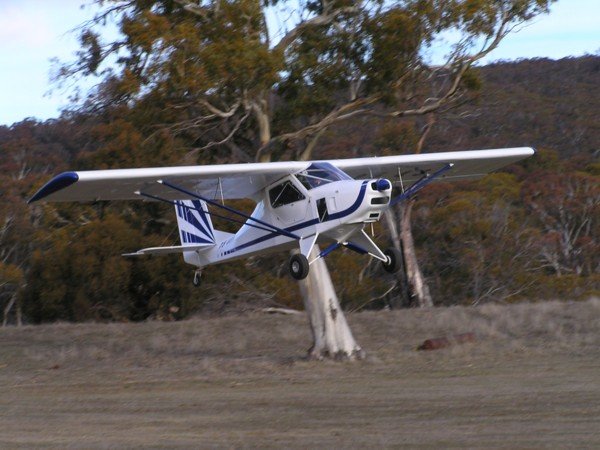 1.5.1 The RA-Aus flight training organisation The RA-Aus Operations Manager is responsible to the Chief Executive Officer, the member-elected RA-Aus Board, and the Civil Aviation Safety Authority, for the maintenance of a continued high level of safe training practices and methods, general flying and safety standards and pilot competency throughout RA-Aus. There may be Assistant Operations Managers taking some of the load for a particular area. To implement these duties and responsibilities, the Operations Manager approves and initially appoints suitably qualified Chief Flying Instructors [CFIs] as Pilot Examiners [PEs], who then undertake that responsibility for maintaining the high level of ultralight training practice and the general flying standards usually within a particular region. Pilot Examiners carry out the following routine tasks: conduct ground and flight examinations for issue or renewal of Senior Instructor and Instructor ratings conduct ground and flight examinations for issue or renewal of Chief Flying Instructor approvals or Pilot Examiner Certificates conduct training and refresher courses for CFIs and PEs, or candidates for those appointments and monitor, on request from the Operations Manager, the training standards and practices of specified flight training facilities [FTFs]. If approved by the Operations Manager, a PE (and a CFI or Senior Instructor) may also conduct ground and flight training courses for instructor rating candidates. Regional Operations Coordinators [ROCs] are also appointed to assist the Operations Manager. An ROC has all the duties and responsibilities of a Pilot Examiner and additional responsibilities, which are specified in section 1.04 of the RA-Aus Operations Manual issue 7. See the listing of ROCs (PDF document). Lee Ungermann, then RA-Aus Operations Manager, lifting off from former CEO Paul Middleton's Dog Plain International. The aircraft is Lee's Australian LightWing. (photo - Paul Middleton) RA-Aus flight training facilities [FTFs] There are about 180 approved FTFs currently operating at about 200 locations throughout Australia; all have a minimum training capability up to and including the cross country, passenger and radio endorsements. See the flight training facility location list with telephone contacts. There are other trike schools approved by the Hang Gliding Federation of Australia. Flight training personnel There are around 300 members whose Pilot Certificate is endorsed with a currently valid senior instructor rating. Abot 60% of the senior instructors also hold an RA-Aus document of approval to act as the Chief Flying Instructor [CFI] of a particular FTF or FTFs, thereby being held responsible for the operation, administration and control of the nominated FTFs. Note: in USA aviation the 'CFI' initialism is the shortened form of 'Certificated Flight Instructor' or 'Certified Flight Instructor' and describes every flight instructor rather than the senior instructor responsible for flight operations, administration and control at a particular flight school. Various document listings of the personnel associated with flight training are also available. The following provide names and contact means by location. • Senior Instructors with current Chief Flying Instructor role. • Other Senior Instructors • Instructors The clubs associated with RA-Aus members About 35% of members belong to one, or more, of the 100 or so RA-Aus recreational aviation members clubs. The primary role of those clubs is to provide the social and competitive impetus for the development of recreational and sport aviation, and of their pilots. A second, but very important, role is supportive — the training, nurturing and care of less experienced pilots. Unlike the Gliding Federation of Australia clubs, the RA-Aus member clubs have no authoritative role in the administration of recreational aviation. Some RA-Aus flight training facilities have an associated club — or a close association with a co-located club. The clubs usually provide a range of services to members, from advice and assistance in all aspects of flying and owning a recreational and sport aircraft, to hangarage and perhaps hiring of club owned aircraft — for both training and pleasure. About 50% of the clubs are themselves 'affiliated members' of the RA-Aus. Generally most club members would also be RA-Aus members. Some RA-Aus clubs tend to specialise in a particular category of aircraft, i.e. 3-axis aeroplanes, weight-shift control trikes or powered parachutes. Conversely, others include a wider range of interests, including general aviation aircraft and pilots. Other clubs may focus on particular interests, for example, constructing aircraft from commercial kits. Clubs may provide on-site accommodation for non-local members, varying from individual rooms, or bunkhouse, to caravan or camping. Membership may entail a small joining fee and an annual fee. Some clubs may offer family membership to cover the non-flying family members. Social activities might include regular fly-ins, flyaways and handicap flying competitions. The hangar barbecue tends to be a regular monthly event at which visitors — and potential members — are always welcome. See the RA-Aus website for their list of affiliated clubs and contact information. STRICT COPYRIGHT JOHN BRANDON AND RECREATIONAL FLYING (.com)
 -
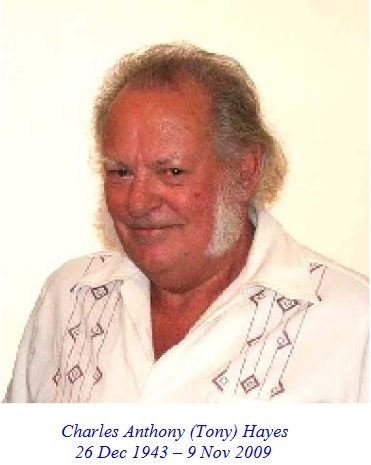 1.4.1 Medical, health and clothing The basic medical requirement is that your health meets the requirements necessary to hold a car driver's licence. This significant concession allows people to fly who would otherwise be grounded in General Aviation. RA-Aus flight instructors, however, must hold a valid General Aviation pilot's medical certificate. General health considerations are basically commonsense. Do not fly when under the influence of alcohol or drugs. Some medications present no problem but consult your doctor if in doubt. You should avoid flying when taking prescription drugs that affect your orientation, vision or alertness, for example some antihistamines cause drowsiness. If you wear bifocal glasses, or have just changed your glasses, it may be wise to check that your vision is OK. This is not particularly visual acuity but more about any impairment to perception of height (and changing height) near the ground. At our own school, clothing is not too much of a problem. During the summer, slacks and shirt sleeves are normally OK with possibly a light pullover or jacket early in the morning. In winter, a warmer jacket and light gloves may be required early on. Communication headsets are provided by the school. However, note that clothing is dependent on the ultralight type. Very exposed cockpits require suitable clothing in the form of padded flying suits, very warm footwear and gloves, plus helmets. Our school's aeroplanes have semi or fully enclosed cockpits so there is less of a problem, plus Queensland is generally warm all year around. 1.4.2 What are your goals? You should spend a little time reflecting on why you want to learn to fly or convert to ultralight flying. This is important for practical reasons I will come to, but overall the objectives people start out with often change after they have some practical experience. Having a reasonable idea of what you want to do, and why you want to do it, should have an important bearing on the school you choose for your training. In addition, the following section briefly discusses different types of ultralights — and there are many. This should also influence your decision on what type you train in. Finally, we strongly suggest that you do not buy an aeroplane before you have ample practical experience by which your personal goals can firm up a little. 1.4.3 What type of recreational aeroplane? A little time will be spent on this one because your personal conception of what a recreational aeroplane is may be a long way removed from that which any particular school has to offer for training. If you do not train on something matching what you want to eventually do, then you could waste a great deal of money, be generally unhappy in training and so not learn as well as you might. You may also find you are up for considerable extra training to reach your personal target. Recreational aeroplanes fall into two main categories — '3-axis control' (normal aeroplane control with stick, ailerons and rudder) and 'weight-shift control' (where the aeroplane is steered as a result of moving the pilot's weight relative to the wing). In the latter case there are two main recreational aeroplane categories — the powered hang glider (usually known as 'trikes') and the powered parachute (or Aerochute). In both cases the crew pod and engine are suspended below a wing or canopy. These are generally rather slow and exposed aeroplanes and are also a bit physical in how they are controlled. In the 3-axis area there are again broadly two sections. We may term one 'traditional style' ultralights which by, nature, are high drag and low inertia or low momentum aeroplanes. The other we may term 'de-facto GA' and these tend to be larger, heavier, cleaner and more expensive. In three short paragraphs I have given you five major choices — for you will now face what trainers are available to learn to fly on at the schools you can reach. There is not much point learning to fly on a fast, glass fibre Jabiru 3-axis when your leanings are towards the trike style of flying — the controls work the other way around for a start. At the same time, if your concept of a recreational aeroplane is a Jabiru, then you are going to be less than happy with meeting a trike. Just because a school is an RA-Aus school does not mean it has the aeroplane type that matches your personal goals. Generally, there are trainers about for the various main categories. There are fewer trike schools than 3-axis and equally there are very few powered parachute schools. The majority of people go for 3-axis and there are a couple of wrinkles here to consider. The considerations again depend on your personal goals. If you are aiming at low-cost, simple, local flying then you need a 'traditional' style ultralight trainer to prepare you for this. If you train on something more slippery and heavier, then you may need additional training to prepare you for what you later buy. If you train on a traditional trainer with your eventual sights on something more up the ladder, then your conversion to the larger and faster machines is far easier. If your intention is to get something relatively large or fast, or just continue hiring the school aeroplane after you have achieved the pilot Certificate, then you should look for schools that provide the class of aeroplane you are interested in. You should also be aware that 3-axis aeroplanesaeroplane, as a group, are divided into two quite separate additional categories, no matter their price, size, etc. — this is nosewheel and tailwheel aeroplane. In the former, the aeroplane stands on the ground in a level attitude with its weight supported by a largish nosewheel and two mainwheels further aft. The tailwheel (or 'taildragger') has two main wheels well forward, a light tailwheel, and sits on the ground in a tail-down attitude. This may not seem of much consequence, but it is. The nosewheel aeroplane is considerably easier to land and to handle on the ground. The taildraggers can be a handful without the correct training. If you learn on a taildragger, you can convert straight into a nosewheel. If you learn on a nosewheel, you may require several hours more training for a safe conversion to a taildragger. A good parallel is in driving. If you learn on an automatic car you will have trouble adjusting to a manual gear change car and will require some practice. If you learn on a manual, you can get straight into an automatic. At our school we have deliberately aimed for the middle ground. The tailwheel aeroplanesaeroplane we operate are the most exacting trainers in the RA-Aus training fleet. They are not easy but we have a lot of ways to enable you to tame them in a similar time to anything else. However, if you learn in our taildraggers you are pretty much equipped for anything. You can move down into the lower weight and simpler aeroplanesaeroplane, or up in performance to the larger, heavier and more expensive types. Either way, your training will be totally valid, and later when your personal goals may change, our training will support your new decision. 1.4.4 The trial instructional flight If I have given you too much information and you are now unsure of exactly what you want to do and what you want to do it in, then there are practical means of making your mind up. Visit a couple of schools, see what aeroplane they have and try an air experience or trial instructional flight [TIF]. There is free temporary membership of the RA-Aus available for TIFs so there is no outlay other than the flight cost. However, be warned; the TIF can be translated as trial introductory flight, which is little more than a sampling joy ride. At our school we give you a 20 minute pre-flight briefing and 25 minutes in the air, most of which you will spend on the controls. Our intent is to enable you to sample our instruction as much as our aeroplane and airfield. When you start training you may have three hours flight instruction before you make a decision to continue. At that point you must join RA-Aus or give it away. Your actual training will depend on three main elements: (a) what you want and if local schools can supply the aeroplane category; (b) how much you can afford; and (c) how much time you have. 1.4.5 Some practical hints on training The following is written by a person with 35 years experience of recreational flying training instruction in three different aviation disciplines. You would do well to give the following words more than a passing glance. You basically have three choices: (a) you will train via 'casual' visit to a local school (perhaps visit once or twice per week or fortnight); (b) if you cannot get what you want locally you will go somewhere else, perhaps a distance away, and stay for a period of intensive training (maybe one, two or three weeks); and (c) you strike a compromise and perhaps start with a short course for basics, continue with casual training locally, then finish off with a further short course. Do not fall into the trap of just dividing the minimum 20 hours flying training by days available. You have fatigue levels and in our experience you will not withstand much more than 2 hours intensive basic flying training per day in conjunction with the ground lectures we give and the homework we also give. You can certainly do more, but it will not be value for money training — only flying time. The bottom line is not how many hours you have done but the competency standard for what you are doing — how well you are doing it. It is the competency standard that has to be reached, not just the minimum hours, and you will have to do as many hours as that takes — without adding non-productive hours to it. You should also think of the 'two steps forward one step back' if you are casual training. Regularity of attendance is critical to your training progress. This makes you more vulnerable to weather. If you lose two consecutive weeks due to bad weather on your 'flying day' then it will actually be nearly a month between flights. Flexibility in attendance is important when casual flying to keep you current and progressing. On courses you should also think of the 'skills most quickly learnt are those most quickly lost' aspect. You should structure your finances so when you return from a course you can continue keeping in regular flying practice. Bear in mind that an aeroplane is not a car — you cannot pull over and have a think about things, once you go then you have to complete a flight and the consequent landing, which requires you to be in practice. Holding a pilot's certificate is only a demonstration of competence reached, not an assurance that you can have a big lay-off and be as good as you were when you were flying every day, at least not until you have a great deal of experience. Another important factor in your flying training — in terms of both value for money and your eventual standard — is support training. Most people do not realise that maybe 90% of flying instruction happens on the ground where there is time to ensure your understanding and preparation for the intensive bursts of time you actually spend in the air. It is essential that your flying is fully supported by lectures, and pre-flight and post-flight briefings. In turn, these should be conjoined with reference and study material so you can learn and revise at your own pace in your own time. Weather conditions also have a large bearing on value for money and progress. Recreational aeroplanes are light so they get bounced around in turbulence. When you are coming to terms with controlling an aeroplane you need to be able to clearly see the results of your inputs without the atmosphere obscuring the situation by making the aeroplane do the opposite to what you are attempting. A good pointer to how well any school actually understands and controls training is the length of each flight lesson. The majority of human beings have learning limitations, which result in a marked slow-down of absorption, and an increase in error, after about 35 minutes engaged with the current exercise. You obtain far more value by getting out for a break after 35–40 minutes in your basic training and then having another session. At our school we offer both casual and course flying, and tailor the training to individual requirements — you will only get what you need. We use powerful conceptual instruction methods in conjunction with lectures, briefings and the school's integrated briefing note series. Our airfield is large but the design ensures you do not waste heaps of time taxiing and it is normally quiet, so you can get on with repeat circuit work without being slowed down by other traffic. 1.4.6 Choosing a school The main problem any new student faces is that, by definition, they will know very little about flying and particularly the mechanics of flying training. This does not put you in a very good position to make decisions when you are just about to invest a fair amount of your money. As students have little choice, assumptions tend to be made. The most common one is that all schools and instructors are fundamentally the same — therefore a choice can be made (for example) based on the most attractive price, whereas actual value for money should be the determining factor. Certainly all schools have to meet the stipulated standard, but how they do this is very much up to them. The foregoing notes will have given you some ideas on key areas that will affect the value of your training in standards, money and human terms. We will now give you some general advice on how you can employ that information. Your most valuable information source is word-of-mouth referral from people who have similar goals and outlooks to yourself. They have been 'hands on' and will know how the interface with the school felt like subjectively as well as objectively. If you do not have such an information source then you will have to make decisions for yourself. The first step is finding a school that has an aeroplane type suitable to your intentions and which has a location to meet your travel and time needs. You now need to get a 'feel' for how the school will work for you — is it a bit cold and commercial, or friendly and 'clubby', or somewhere between. You could take a TIF to try them out, but also spend some time watching the operation and studying the general activity on the airfield. See how they handle their students and talk to those students yourself to get their impressions. You may not be able to do much assessment by visit if you intend travelling some distance to a course. In this case, an important factor is to assess how much the school is trying to inform you and help you versus how much 'selling the product takes precedence'. In our case we are rather blunt. We would sooner take the time to give you information, to make valid decisions on, than have you here for our product when you do not actually need it. That would only waste your time and ours — better to sort it out now. In addition to the above you should be given a reasonable idea of what is going to happen to you. At our school you will receive one-on-one training with the same instructor and possibly flying with another for just isolated exercises for a change of pace. You will either be on your own or with one other person, usually one of our casual students who will be different on a day-to-day basis. We will require you to fly early mornings (6.00 am) and we usually operate (on average) until around midday, depending on the time of year. When you arrive we will sell you a copy of the school's briefing notes and then put you in a co-ordinated program of lectures, briefings, flying and then homework using the notes for revision or initial penetration of new exercises. These programs are individually designed for your particular needs as a person in conjunction with whatever stage you may have reached. We seldom fly late in the day partly from fatigue reasons from the long day (you will get tired and we have to watch this), and mainly because on most days we have a brisk sea breeze come in just as the convective turbulence is beginning to ease. We will not fly you in the turbulent middle of the day until you are virtually at Certificate stage and have confidence in how the aeroplane responds to your own inputs and can therefore work out how the turbulence is affecting the machine. Note, however, that some inland schools (approximately 50 miles or more from the coast) do not get sea breezes, and late afternoon and evening can provide good training conditions. Another important point in assessing a course is the mundane matters like toilets, showers, food and a bed, and the distance away some or all of these may be. A lot of schools leave this entirely to the student. So do we to an extent, but we can steer you in the right direction and make arrangements for you. 1.4.7 Conversions from general aviation aeroplanes or from GFA sailplanes Please note that some general aviation pilots become confused about RA-Aus aeroplanes. The PPL allows flight in aircraft below 5000 kg but this means a VH-registered aircraft under the CASA control system. The licence does not allow you to go and fly a balloon or glider, neither does it cover an RA-Aus aeroplane. The recreational aeroplane is controlled by the RA-Aus system, carries RA-Aus registration and has its own legal ordinance. Part of that ordinance requires you to be an RA-Aus member and carry an RA-Aus Pilot Certificate to fly an RA-Aus registered aeroplane. If you have prior gliding or General Aviation experience to the extent of 20 hours of which 5 hours are as pilot in command, then the minimum requirement becomes 5 hours experience on RA-Aus aeroplanes of which 1 hour must be as pilot in command. You must also satisfy an RA-Aus Chief Flying Instructor that you are conversant with the flying training syllabus, particularly the handling of high-drag, low-inertia aeroplanes. If you already carry radio operator and/or cross country endorsements then RA-Aus will accept these without further training or testing if they are from a recognised source. ... Tony Hayes, CFI The next module in this 'Joining sport and recreational aviation' series is is an outline of the RA-Aus flight training organisation, facilities and the clubs associated with RA-Aus members. STRICT COPYRIGHT JOHN BRANDON AND RECREATIONAL FLYING (.com)
 -
This topic has been locked, thank you for your contributions on the subject...this is an aviation site so to discuss politics etc please feel free to engage is discussion on the Off Topic site Social Australia .com.au Thanks for your understanding
-
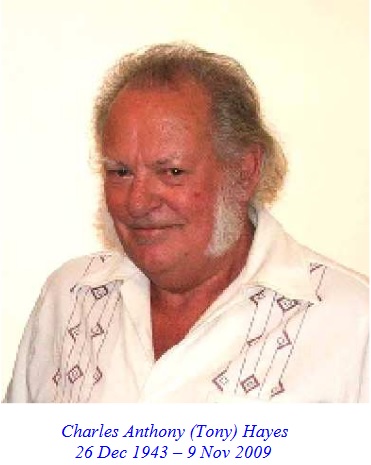 1.3.1 What is an air experience or trial instructional flight? In essence, an air experience flight is a trial instructional flight [TIF], a way of sampling flight training without making any commitment to joining the movement or continuing with sport and recreational flying. Please be aware that a TIF is not a so-called 'joy flight' — although you will enjoy it. Our world of sport and recreational aviation is not permitted to fly for hire or reward, except payment in return for flying training services; therefore 'joy flights' are strictly a no-no! To obtain maximum benefit from a trial instructional flight, invest a few minutes reading the following. RA-Aus flying training can only be provided by an approved flight training facility [FTF], which has to meet certain operating standards at regular inspections. The flying is provided in a certified and registered, fully dual-controlled, approved training aircraft — 3-axis control aeroplane, weight-shift control trike or a powered parachute — maintained by the holder of a level 2 maintenance authority. The training is given by authorised flying instructors, who themselves are checked regularly. Do not be put off by all the approvals and controls — they are there to ensure safety and quality of participation. You are not heading for something that seems like a QANTAS appraisal for new staff. What comes out the other end in our environment is a friendly, maybe even apparently 'laid-back', recreational flying ambience you will easily fit into and become part of. Sure, the backbone is there, but it remains under the surface. So if we cannot give you a 'joy flight' we can give you something better, from which you will obtain a much greater insight and enjoyment — the TIF. 1.3.2 How does the TIF work? You do have to be an RA-Aus member to participate but this can be at no initial cost to yourself. The FTFs have a book of simple dockets that can be filled out on the spot — you are then an RA-Aus member for a 28-day trial period. There are a number of components to a good quality TIF — it is not a simple case of just hop in and have a go! The objective is to give you a good and fair sampling of what recreational flying feels like, plus an insight into the flight training process. The TIF follows the same sequence as a normal instructional flight: Pre-flight briefing You will usually spend a little time in a classroom being convinced, in simple non-technical terms, that you do not have to be some kind of supernatural being to be a pilot and that an RA-Aus aircraft is much the same as any other flying machine. The aircraft essentially works all by itself and you are there to control it — make it take you where you want to go. It is just another vehicle to learn to control; like a push bike, car or boat. Aircraft pre-flight inspection You will be shown around the aircraft and while it will be clear that the machine is inspected prior to flight, you will not be involved in any technicality at this stage. You will be shown how to get in, adjust the seat so you are in optimum control position and how to strap in. The cockpit equipment will be briefly outlined to you, as well as the actions to be taken in an in-flight emergency. Much like the pre-flight briefing by the cabin crew when flying as a QANTAS passenger. Flight procedures Your flight will be in the vicinity of the airfield and for usually about 25 minutes total. During the flight you will be exposed to the sensation of being both in a very light aircraft and aloft in a very personal form of aircraft. You will be shown the airfield from the air, the local scenery and points to orientate yourself by. You will spend more than 50% of the time with control of the aircraft in your hands, under the guidance of the instructor. No need to be alarmed about this — it is a simple matter of being shown how to raise and lower the nose, plus bank and level the wings. This will give you a 'feel' for the machine in its natural environment and you will find it surprisingly easy. You will only be asked to do things the instructor knows you can easily accomplish and absorb. Nothing odd or abrupt will happen. Your instructor will give you advance notice if the engine note is going to change or if the aircraft is going to change attitude, plus what it will be doing. You will not be subjected to aerobatics or unusual attitudes — you are primarily orientated to a two-dimensional world and we make the transition into the three-dimensional world of flight understandable, progressive and comfortable. Post-flight debriefing Your instructor will answer any questions you have and underline a few of the main points of the exercise in which you have just participated. Your options on where you go from there will be explained to you, partly verbally and partly with literature the FTF provides for new members. Then it is your decision. There is very little 'hard selling' in Recreational Aviation — nobody should be pressured into learning to fly — you should WANT to, deep down within yourself. If you are still unsure then you can obtain three hours actual flying training from the school, within the 28-day trial period, before committing yourself to full membership of RA-Aus and applying for the RA-Aus Student Pilot Certificate. If you wish, you can download the "Application for membership — Student Pilot" form from the RA-Aus applications page. 1.3.3 How do I get best value from a TIF? TIFs are not expensive but you can get additional value from them if you plan your TIF and you know what to look for. The apparent quality of the flight school, the instructors and the airfield will figure in your decision on where you want to fly, what you want to fly, and who you want to fly with. The TIF gives you a look at all of these and assists your decision. Start asking yourself questions. The TIF will give you a flight, but what do you want to do with your intended future flying? Just 'fly a recreational aircraft' is not a sufficient answer — that is easy enough to arrange — but there are some things of which you need to be aware. 1.3.4 RA-Aus aircraft types We have a number of quite different aircraft categories (which we touched on in the previous module) and you may already have a preconceived idea of what a recreational aircraft is supposed to be. Make sure you go for a TIF in a type that matches your personal goals — even if they are not yet fully formed. Some of your considerations are not just what you want the aircraft to do, but also the initial and on-going costs of possession and maintenance (in Recreational Aviation you will be able to service your own machine for personal use — will the complexity be too much for you?); and will your goals outgrow the machine? Although we have looked at the types of RA-Aus aircraft in the preceding module, it may help to reiterate a little. Three-axis control aeroplanes For fixed-wing aircraft with conventional flight controls, refer to the relevant groundschool flight theory section. The three-axis aircraft have two landing gear configurations — nosewheel or tailwheel. The latter is a little harder to learn on but far more suited for rougher operating strips. The nosewheel aircraft are easier to take-off and land, but if you gain your RA-Aus Pilot Certificate solely in such aircraft then you will need a further five hours or so training to then convert to the tailwheel layout. Traditional ultralights These mainly have a tubular metal main structure and fabric covering with three-axis control. They are often with open or semi-open cockpits. The usual operating range is up to 200 nautical miles (360 km) and cruising speeds of 55 to 65 knots (100 to 120 km/h). Usually they have two-stroke motors, but four-strokes are being increasingly introduced. Newer types These are heavier, faster and more expensive than the traditional low-momentum ultralights. Often they can be optionally registered with the Civil Aviation Safety Authority as a general aviation aircraft, or with RA-Aus as a sport and recreational aviation aircraft. They usually have fully enclosed cockpits. Range is around 250 to 500 nm and cruising speeds are 70 to 120 knots. Generally they have 80–100 hp, four-cylinder, four-stroke Jabiru or Rotax engines. (Cheetah, Jabiru J120, Lightwing.) Weight-shift control This means an aircraft controlled primarily by shifting the pilot's weight in relation to the wing attachment point — these include RA-Aus trikes and some powered parachutes and also the HGFA hang gliders. See 'Hang glider and 'trike' wings and carriages' in the groundschool flight theory section. Trikes These look like a large 'powered hang glider' but are now in a class of their own. They comprise an open cockpit pod suspended below a 'Dickenson' wing (no tail unit) and are controlled by a 'trapeze bar' in front of the pilot. Range is up to 300 nm and cruising speeds are around 50 to 70 knots. They have two-stroke and Rotax 912 four-stroke engines, see the Airborne website. Parawing control - Powered parachutes This is a large, steerable parachute canopy with an open, two-place, 3-wheel carriage below it, suspended by shroud lines and steered by control lines. Power is usually a Rotax 65 hp two-stroke engine. Range is about 60 nm and they have a constant speed around 25–30 knots. Refer to the relevant groundschool flight theory section and see the Aerochute website. There is another version of the powered parachute, the Group F foot-launched, powered parachute or powered paraglider. The power pack is strapped to the pilot's back. Obviously this has to be a single-person vehicle and no dual control instruction can be given; such vehicles are only suitable for an experienced powered parachutist. 1.3.5 How do I arrange a TIF? Having made a decision (no matter how broad) on where you think you want to go in flying, then study the complete list of FTFs. Pick a school and give them a bell. It is better to book rather than just turn up. If you are unsure of whether you want to progress with a particular school, or on a particular type of ultralight, then take a few TIFs at different places and/or on different types — you are not wasting money, you are probably saving it — plus broadening your experience base. The most important person in the world of aviation is not the most experienced instructor — it is the rawest beginner, because the future of aviation will be partly in your hands. Unfortunately the beginner is by definition the least equipped to make decisions on what to do. We trust the words above will help you make those decisions. Tony Hayes — inaugural holder of the RA-Aus Meritorious Service Award. The next module in this 'Joining sport and recreational aviation' series is another article authored by the late Tony Hayes about getting flying training underway. STRICT COPYRIGHT JOHN BRANDON AND RECREATIONAL FLYING (.com)
 -
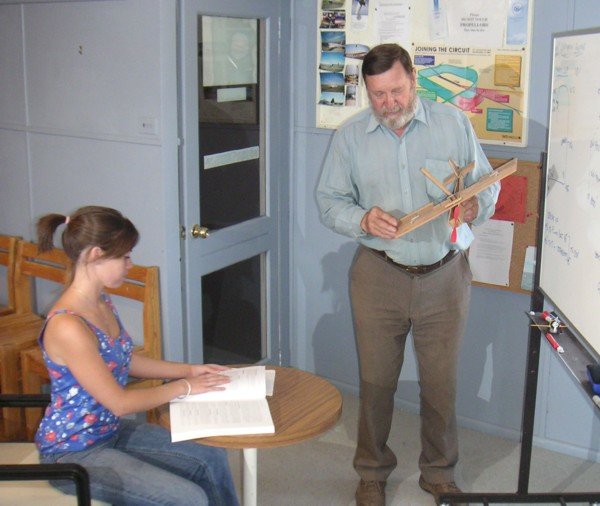 1.2.1 Student entry conditions A student cannot fly as pilot-in-command of an RA-Aus aircraft (i.e. fly solo) until she/he has attained the age of 15* and until a Student Pilot Certificate is issued. Up to three hours dual instruction can be undertaken before applying for a Student Pilot Certificate and a further six hours dual instruction may be flown while waiting for the document. However, an intending student can apply for RA-Aus membership and issue of a Student Pilot Certificate, before selecting a particular flight school, by downloading the form Application for membership – Student Pilot Certificate from the RA-Aus website and returning it to the RA-Aus office. If the applicant is under 18 years of age a parent must also sign the application. *Note: thus a person would have to be at least 14 years old before it is practicable to commence flight training; in all Australian states the minimum age for a learning to drive permit is 16. Generally, as long as you are in reasonable physical and mental condition — equivalent to that needed to hold (and maintain) an Australian private vehicle driver licence — you can become a member of a sport and recreational aviation association and learn to fly an Australian sport and recreational aircraft, just for the fun of it, and at your own pace and convenience. Your medical fitness does not need to be confirmed by a designated aviation medical examiner, nor do you need a medical certificate from your own general practitioner; but you must sign a declaration that your medical fitness is at least equivalent to that needed for the driver licence. For more information on the physical condition required for the private vehicle driver licence see 'Assessing fitness to drive'. A student pilot must possess a RA-Aus Operations Manual (which will be issued automatically by RA-Aus on joining) and a log book, and it is recommended that a study manual is also purchased. There are a number of titles available or you can use the tutorials on this website. You may also wish to purchase maps and other reference materials. When you start training, the school should issue you with a training package that contains flight notes produced by the school including a Pilot's Operating Handbook* or aircraft Flight Manual for the training aircraft and a study manual. *Note: a Pilot's Operating Handbook is a basic form of aircraft Flight Manual established by the United States General Aviation Manufacturer's Association in 1975. The RA-Aus Operations Manager may refuse to accept an application for a Student Pilot Certificate or a Pilot Certificate if it is known that the applicant has a history of aviation regulation contravention or flying activities that might bring the good name of RA-Aus and its members into disrepute. 1.2.2 Ground and flight programs at flight training facilities All forms of flight are potentially hazardous, but the skills of safe flight can be readily mastered by anyone who has the necessary enthusiasm and motivation, and consequently willing to devote some effort to it. Remember the regulations expect that you are an 'informed participant'; being a person aware of the risks involved in a particular form of sport and recreational aviation and willing to accept those risks. The training programs at flight training facilities [FTFs] comprise a ground study program and an in-flight program, but much of the ground study program is usually done in your own time, under direction from your instructor. The principles learned on the ground are assimilated in the flight program so that you, the student pilot, should always be comfortably aware of the consequences of each of your actions, or inactions. Each in-flight lesson entails flight time of about 45 minutes plus pre-flight and post-flight briefings; thus the total time at the FTF for each flying lesson will be about two hours. Flight training will be conducted in both the airfield circuit area and a local training area designated by the school; except if a cross country navigation exercise [navex] is involved. The flight time for a longer navex may be 90 minutes or more. You can of course opt for two flying lessons in each day; i.e. a full time schedule. More than two in-flight lessons in one day is probably unproductive, as are lesson durations that exceed 45 minutes — excepting an advanced navex. 1.2.3 Outline of the flight training program The Australian Civil Aviation Safety Authority [CASA] Flight Instructor Manual issue 2 (December 2006) is available in PDF format (89 pages) and although it is intended primarily for flight instructors, a student will find it is well worth studying. The manual is written for 3-axis fixed wing aeroplanes but the programs for weight-shift trikes and powered parachutes are similar. The exercise sequence outlined in the CASA manual is as follows: Familiarisation with the aeroplane and air experience Preparation for flight Taxiing Operation of controls Straight and level flight Climbing Descending Turning Stalling Sideslipping Take-off Approach and landing Spin prevention and spiral dives First solo Emergency and special procedures Pilot navigation Instrument flying Night flying The RA-Aus syllabus is similar, though the last two items covering instrument flying and night flying are not included in any sport and recreational flight training program because such aircraft are prohibited to fly in meteorological conditions that mandate flight by instruments only, nor may they be flown after last light or before first light. The ground study program, though broad-ranging, does not require any particular educational qualification except for reasonable proficiency in spoken and written English. It covers — in general terms — the theory of flight, the atmosphere and aviation meteorology, aircraft instruments, engine handling, radio communication procedures, flight planning and navigation, air law and basic (level 1) aircraft maintenance plus coping with emergencies. The diagram below shows an indication of the practical and exam components required to attain the Pilot Certificate. Note that the hours shown represent the legal minimum required. More often than not, most student pilots will take longer than this to achieve competency before they can first fly solo, and before they can attempt the Pilot Certificate flying test. The end of the ab initio training period could be regarded as reaching a competence level equivalent to that required for the day VFR private pilot licence; i.e. Pilot Certificate plus the navigation, communications and passenger endorsements. Perhaps you should not aspire to acquire extra endorsements until you have around 50 hours solo experience in your logbook – unless there is a pressing need to do so. Note that the HP (high performance) and LP (low performance) endorsements listed in the image under 'Other endorsements' are no longer relevant. 1.2.4 Competency, ground and flight tests All aspects of your performance and progress should be measured objectively, and continuously, against a competency standard required by RA-Aus. There are only three ground examinations and one formal flight test involved in the initial program. The first ground examination is a simple test on the rules of the air (i.e. the traffic rules), which must be passed before your first solo flight. The second is the RA-Aus Basic Aeronautical Knowledge (BAK) test, which must be passed before the Recreational Aviation Australia Pilot Certificate can be issued. Also prior to issue of a Pilot Certificate, the student pilot must pass the RA-Aus examination on human factors, airmanship and decision-making. The written examinations are generally 'multiple choice', which require you to select one clear answer from three or four possible answers. Your instructor will endeavour to make sure you know your subject beforehand. Also, the flight tests are only undertaken when your instructor believes you have acquired the necessary competencies and recommends to the facility's Chief Flying Instructor [CFI] that you are ready, so you will not be undertaking a flight test unless you are most likely to pass. The flight test is conducted by the CFI to formally assess your airmanship and ability to manipulate the aircraft safely. The Chief Flying Instructor is responsible to the association's Operations Manager — and to you of course — for your ground training, your flight training and your safety at all times. After success in the flight test and BAK you are qualified, in one of the three major RA-Aus aircraft groups (i.e. Group A 3-axis, Group B weight-shift trikes or Group D powered parachute) to fly within a radius of 25 nautical miles from the airfield. You are not yet qualified to carry passengers. There are two other Pilot Certificate aircraft group ratings; Group F for foot-launched backpack engine-powered parachutes with an empty weight exceeding 70 kg (HGFA are responsible for the aircraft of 70 kg or less) and Group C for combined control (i.e. combined weight-shift and aerodynamic control inputs) aircraft. Incidently, Australia has a long history in flight training. The first pilot or aviator's certificate was issued 17 November 1911, by the Aerial League of Australia, to William Hart for satisfactory completion of the certificate flight test — five continuous figure eights within a 500 metre circuit. It wasn't until 1921, after the 1921 Air Navigation Act came into being (and the establishment of a network of 60 landing grounds for the aerial mail services was commenced), that government-controlled civil pilot's licence and aircraft register systems were introduced "to reduce reckless flying and the number of air fatalities". The first Commercial Pilot's Licence was issued in 1921, by the newly established Department of Civil Aviation, to Norman Brearley, ex-WW1 pilot and founder of Australia's first regular airmail and passenger service — West Australian Airways which later became Australian National Airways and, finally, Ansett-ANA. 1.2.5 Certificate endorsements When a newly qualified, 3-axis group A pilot receives their Pilot Certificate, it may carry endorsements reflecting the configuration of the aircraft type in which the person trained or is qualified. Those initial endorsements may be: tail wheel; for aircraft with a tail wheel or tail-skid undercarriage rather than the normal nose wheel undercarriage; and perhaps two-stroke engine; if training in an aircraft with a two-stroke engine rather than the normal four-stroke. If you wish to undertake flights that will take you more than 25 nautical miles from the original point of departure you must get a navigation or cross country endorsement. This entails both a flight test and a written examination covering flight planning, meteorology, navigation, and flight rules and procedures. Also you must have accumulated a minimum 10 hours cross country navigation flight training including a minimum two hours solo navex experience. You need to gain some familiarity with the control, advisory and information services available from the various air traffic service units of Airservices Australia. Instruction will be provided in the on-line acquisition of weather briefings and current advisory notices to airmen [NOTAM] from Airservices Australia and the Bureau of Meteorology. For safety all pilots should obtain a radio operator endorsement, which also allows you more freedom, and ease, of flight — for instance if you want to visit our annual fly-in. It only entails some study of the radio communications procedures in Class G airspace and at non-controlled aerodromes, and a written and oral test by an RA-Aus instructor. In most FTFs you will start learning some radio procedures from your first flight. You can qualify for a passenger carrying endorsement to your Pilot Certificate after you have a total of 10 hours solo (i.e. as pilot in command [PIC]), which must include two hours in a RA-Aus two-seat aircraft. The CFI has to be convinced of your personal maturity and you also have to do a flight test to check that you know how to look after your passenger. The pre-flight planning of fuel requirements, passenger and baggage arrangement, assessment of runway and air density conditions, calculation of aircraft weight and balance, and the physical pre-flight airworthiness checking of the aircraft is emphasised, to ensure the flight will be operated safely. All RA-Aus flight training facilities offer the navigation, passenger and radio endorsements. At the conclusion of the basic program you, as a certificated RA-Aus pilot, will be fit to carry out the level 1 maintenance; to check the aircraft's airworthiness by reviewing the maintenance release and maintenance log; to do the daily and pre-flight inspections of the aircraft. If you also have the cross country endorsement then you can also fly — in daylight and reasonable weather under the visual flight rules [VFR] — anywhere within Australia. Generally you will be restricted to fly below 10 000 feet above mean sea level, to stay within Class G airspace unless you fulfil some specific requirements of Airservices Australia (the air traffic management organisation), and not fly over towns in some recreational aircraft categories, or designated remote areas, or other prohibited or restricted areas. For fuller airspace information see RA-Aus/HGFA/ASRA powered aircraft flight operations and the other material on that web page. 1.2.6 Fees charged by the FTF The flight hours required by an individual vary, particularly according to the flight frequency, i.e. generally someone flying just three or four hours each month will need more hours than someone flying three or four hours every week. Most people, not undertaking a full-time schedule, achieve the Pilot Certificate within 3–5 months. For a person who is not the holder of a valid International Civil Aviation Organisation (ICAO) pilot licence (which in Australia would be a CASA licence), RA-Aus regulations require a minimum 20 hours general flying training, including a minimum of 5 hours flying as pilot in command, i.e. solo, before the Pilot Certificate flight test and if this minimum was achieved then the total flying costs would be around A$3000 to A$4000 including the Australian Goods & Services Tax. (The schools charge from $150 to perhaps $220 per flight hour depending on the type of aircraft employed and other factors.) But the typical student time is 15–20 hours flying with an instructor and 8–10 hours solo flying and, like learning to drive, a few students will take a lot longer to achieve a satisfactory competency level in all the required training sequences. The costs you will incur depend chiefly on flight hours and the aircraft type flown. Check the flight training facilities for the FTFs near you, or near where you plan to take a vacation. Accessing the flight school websites may provide comparative information on rates for their types of training aircraft. Instead of charging an hourly rate, some FTFs may offer a fixed-price package, or a package negotiated to fit your needs, which you should assess carefully — bearing in mind the range of qualification times mentioned in the preceding paragraph. There will also be out-of-pocket expenses for purchase of study manuals and navigation materials. Perhaps you should also consider purchasing your own helmet and communications headset early in your training period. In this guide I have included the text of a brochure issued to prospective clients by a flight training facility. You should read this document, which rightly points out that when selecting a flight school, there are aspects other than fees to be considered. Advice is given on setting goals, picking aircraft types to train in, getting started, selecting a school and hints on how training actually happens. Not particularly highlighted in the school brochure is the need for the student to be happy with the instructor's personality and training style — not easy to assess on initial contact. The training should reinforce your view that your decision to learn to fly is a wise one and not be a de-motivating experience. Expect value in return for your expenditure — if you are not happy with the customer service provided by the FTF, inform the CFI of your needs; if you are still dissatisfied, take your custom to another school. It is also important that the student takes responsibility for their own learning and, with that in mind, I have included a document, titled "Learning to fly: a students viewpoint", written by Dr Carol Richards, a recreational aviation enthusiast and former RA-Aus board member who did much to develop the Airservices Australia–RA-Aus flight training scholarship program for young people. 1.2.7 Costs charged by Recreational Aviation Australia Before you can be issued with an RA-Aus Student Pilot Certificate or Pilot Certificate you must be a member of Recreational Aviation Australia and carry the third party legal liability insurance protection. This has been arranged by RA-Aus to cover members for damage to other people's property or person. The RA-Aus fee schedule issued July 2014, including GST, is: Student pilot joining fee: $210.00; which includes the issue of the Student Pilot Certificate, third party insurance cover, Operations and Technical Manuals, first 12 months RA-Aus membership and 12 months subscription to the monthly Sport Pilot magazine. This journal is the official means of RA-Aus board and executive communication to the members of the association. Issue of Pilot Certificate on qualification: no charge Pilot Certificate endorsements: no charge Annual Pilot membership renewal: $210.00 (which includes third party insurance cover, amendment service for the Operations and Technical Manuals, and the annual subscription to the monthly journal Sport Pilot.) 1.2.8 Airfield security ID An aviation security identification card [ASIC] must be worn by all persons who need access to the secure parts of some Australian aerodromes. A flight school will advise if students need an ASIC and the RA-Aus staff will handle an ASIC application. The RA-Aus fee for this members-only service is $200, which includes the service charges from the various police, security authorities and the card manufacturer. Download the application form. 1.2.9 After you get your Pilot Certificate Most pilots do not buy their own aircraft initially but prefer to join a club where members can hire an aircraft from an associated school, usually paying a flight time hourly charge. One thing about joining a club, you will be well entertained when the members get together to swap tall stories! There are quite a number of sport and recreational clubs in Australia but they normally tend to focus on one aircraft class — 3-axis powered aeroplanes, sailplanes, gyroplanes, hang gliders, trikes, powered parachutes and so on. Your initial RA-Aus Pilot Certificate usually covers only that aircraft group rating in which you qualified. If you wish to extend the category of recreational aircraft that you are qualified to fly you will need further instruction in the chosen group before that aircraft group rating can be added to your Pilot Certificate. You can also add endorsements for formation flying, waterborne/amphibian operations and others — so there is ample potential to spread your wings. I will cover this in the advanced flight training section of this guide. To continue holding an RA-Aus Pilot Certificate you must remain a financial member of RA-Aus, remain medically fit and undertake a biennial ultralight flight review [BFR] with a Senior Instructor or Pilot Examiner. This two-yearly review helps pilots identify any deficiencies in competency which may have developed. See the Operations Manual section 2.07, subsections 4–5. Whether you extend your qualifications or not, you will experience a whole new world of fun with many varied activities within the recreational aviation community. Some of the internet discussion forums may provide rewarding participation. 1.2.10 Pilot licence or pilot certificate? To compare the RA-Aus training program with the general aviation program for their Private Pilot Licence we recommend you visit CASA's Learning to fly page. While there, look at the 'Licence Requirements and Entitlements' section. Some Australian-designed aircraft, such as the Jabiru, may be registered as a sport and recreational aviation aircraft or as a general aviation aircraft. In fact, many Jabirus are used in flying training organisations from both camps so it is easy to compare the cost of attaining a Private Pilot Licence with that of attaining an RA-Aus Pilot Certificate. It is interesting to note that in September 2004, the United States Federal Aviation Administration [FAA] introduced their Sport Pilot Certificate which seems to be having a beneficial impact on US recreational aviation and the associated aircraft manufacturing/distribution industry, with more than 5000 SPCs current in early 2014. The FAA Sport Pilot Certificate is very similar to the RA-Aus Pilot Certificate — the same driver's licence medical standard, the same minimum dual (15) and solo (5) training hours before qualification, and the same concept of only one passenger and maximum aircraft weights — 600 kg for a landplane, 650 kg for a seaplane. Since about 1998 CASA has been proposing the introduction of a Recreational Pilot Licence (RPL) within the General Aviation environment. This came into being on 1 September 2014. The RPL is, in many respects, similar to the RA-Aus Pilot Certificate and might provide an alternate path for those who might wish to join sport and recreational aviation without going along the RAAO path. This is not the 'parallel path principle' laid out in the proposed CASR Part 103, implementation of which has also been expected for a number of years. The proposed RPL is based on the USA's existing (but most unsuccessful) Recreational Pilot Certificate, where only about 200 US pilots (just 0.03% of all US pilots) were still certificated 22 years after the introduction of the classification. The FAA's Sport Pilot Certificate has been much more successful. Note: the International Civil Aviation Organisation (ICAO) documentation uses the term 'pilot licence' and the British Commonwealth nations of Canada, Britain and Australia employ the 'licence' term for the various pilot qualification documents issued by national airworthiness authorities — such as the Australian Civil Aviation Safety Authority. A 'licence' is a permit from a government authority to do something, which could be to go fishing or to go flying. The United States Federal Aviation Administration uses the term 'airmen certification', e.g Sport Pilot Certificate, Recreational Pilot Certificate, Private Pilot Certificate etc. A 'certificate' is a document issued by an authority that formally attests to the fulfilment of the requirements — or the achievement of the proficiencies — necessary for certification. The Australian recreational aviation administration organisations issue Pilot Certificates on qualification. 1.2.11 Procedure for holders of a valid pilot licence Holders of a valid aeroplane pilot licence (e.g. PPL, CPL, ATPL) who wish to obtain an RA-Aus Pilot Certificate can undertake conversion training at an RA-Aus flight training facility to gain familiarity with the flight characteristics of very light aircraft. Prior to undertaking the flight test for the issue of a Pilot Certificate and endorsements, an applicant must complete such dual training as deemed necessary by a CFI and, in any case, shall have not less than 5 hours experience, in an aeroplane registrable with RA-Aus, which shall include a minimum of one hour solo. Of course, licence holders converting to powered parachutes or weight-shift aircraft may need considerably more than five hours of training. Holders of a pilot licence which is no longer valid because the period of effectiveness of the last biennial flight review or class 2 medical certificate has lapsed, are also eligible to apply for the Pilot Certificate, however it is likely that lack of recency will affect the conversion flight time necessary. An aviation medical certificate is not required but an RA-Aus pilot must be medically fit to a standard equivalent to that required to hold a private motor vehicle driver's licence in Australia. For more information on the physical condition required for a private vehicle driver licence see 'Assessing fitness to drive'. It is the responsibility of all Pilot Certificate holders to report to RA-Aus any change in their health status which would cause them to be below that minimum health standard required. Persons who have not completed their PPL training may utilise their GA training hours towards the RA-Aus Pilot Certificate. However, this depends on acquiring in excess of the minimum 20 hours experience including a minimum of 5 hours solo and the candidate must also demonstrate to the CFI that they successfully meet the standard for the issue of an RA-Aus Pilot Certificate. It may also be necessary to do the RA-Aus Basic Aeronautical Knowledge written test. Read paragraph 2 of the Flight Crew Certificate document in the Operations Manual. Email the RA-Aus Operations Manager or telephone 02 6280 4700 to discuss your needs. 1.2.12 Airservices Australia — RA-Aus flight training scholarship program The aims of the Airservices Australia/RA-Aus joint scholarship program are to: introduce young people to the sport of recreational aviation develop responsible and safe flying attitudes offer a basis of aviation knowledge for advancement and careers in recreational, military or general commercial aviation assist young people to complete their flying training at minimal cost encourage young people to become active long-term members of the recreational aviation community. For more information visit the RA-Aus GYFTS page. The next module in this 'Joining sport and recreational aviation' series is an outline of the 'air experience flight'. STRICT COPYRIGHT JOHN BRANDON AND RECREATIONAL FLYING (.com)
 -
Hi, I have enhanced the Editors box with some extra features that I hope you may find useful: From the left we now have: Font - different fonts Size - font sizes A - text colour A - text background colour B - bold I - italics U - underline S - strike through "Chain Link" - add or remove a text link " - quote some text <> - used when adding any computer language code "Smiley Face" - available emoji to use in posts - bullet point - numbered list "Left Align" - align text to the left (default) "Centre Align" - centre align text "Right Align" - right align text "Justify" - justify text "Increase Indent" - indent the text "Decrease Indent" - reduce the text indent "Scissors" - cut content "Copy" - copy content "Paste" paste content GIF - select or search for animated gif to insert "Table" - insert a table...add a table and with the curser in the table press Ctrl and right click the mouse for more options "Page" - split the post into pages...this will add a page "Eye" - insert a spoiler into your post "Left Image" - left align an image with text flowing around the image "Right Image" - right align an image with text flowing around the image "Map" - insert a Google Map for a location "Left Arrow" - undo "Right Arrow" - redo Tx - remove formatting from selected text "Magnifying Glass" - preview your post Hope the above helps you to create some amazing posts

-
They will return very soon...I have a copy of the solution to install but there are known bugs so I am waiting for the update that was supposedly to have been released last week to be completed. I will chase up again
-
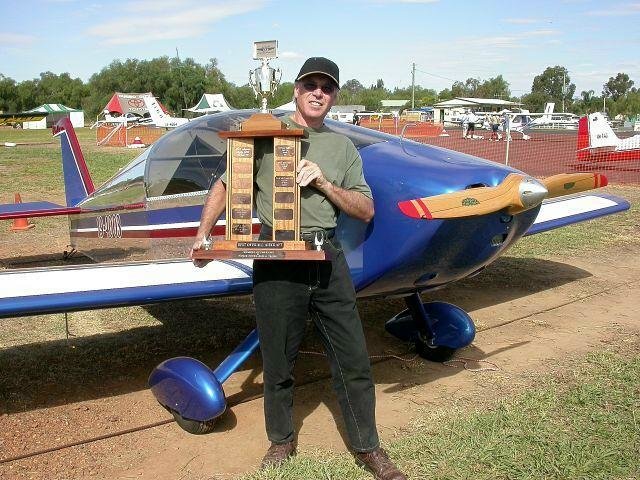 1.1.1 Can I learn to fly a sport and recreational aviation aircraft? Of course you can. Generally, as long as you are in reasonable physical and mental condition — equivalent to that needed to hold (and maintain) an Australian private vehicle driver licence — you can become a member of a sport and recreational aviation association and learn to fly an Australian sport and recreational aeroplane, just for the fun of it, and at your own pace and convenience. Your medical fitness usually does not need to be confirmed by a medical certificate, but you must sign a declaration that your medical fitness is at least equivalent to that needed for the driver licence. For more information on the physical condition required for the private vehicle driver licence see 'Assessing fitness to drive'. However 'reasonable fitness' is all that is required to fly a hang-glider or paraglider and the backpack-motorised versions of those gliders that have an empty weight less than 70 kg. You may start flying training at any practicable age but for powered aeroplanes there is an age restriction requiring a person to be at least 15 years old before they can make their first most memorable flight — as 'pilot-in-command', i.e. 'to go solo'. Consequently the minimum age for commencing powered aircraft flight school is at least 14 years. There is no upper age limit — for those who maintain their private vehicle driver licence fitness level. 1.1.2 What sort of aircraft are included? Aircraft categories An 'aircraft' is defined as 'any machine or craft that can derive support in the atmosphere from the reactions of the air, other than the reactions of the air against the earth's surface [i.e. hovercraft]' and includes 'lighter-than-air' craft [e.g. non-powered hot-air balloons and powered airships] and 'heavier-than-air' craft. The latter includes the power-driven aeroplanes, helicopters and other rotary wing craft, the non-powered gliders and sailplanes plus power-assisted gliders and sailplanes. Australian sport and recreational aviation offers a considerable range of aircraft categories, in any of which you can commence, or expand, your flight experience. There is a wide range in the acquisition cost of an aircraft, ranging from around A$4000 for a secondhand hang-glider in airworthy condition to perhaps A$150 000 for a top-of-the-range, carbon-fibre structure, two-place aeroplane fitted with up-market electronic flight instrumentation, navigation and communications systems. The following aircraft class descriptions, particularly the weights, are in accordance with Australian regulations; other nations will differ: the lighter-than-air aircraft — non-power-driven hot-air balloons and power-driven hot-air airships the unpowered gliders — hang gliders, paragliders and sailplanes (in the regulatory context, a sailplane is a glider whose empty weight exceeds 70 kg) the power-driven heavier-than-air aircraft spectrum: the very light-weight end (empty weight 70 kg or less) — the small framed wing, one-person, foot-launched, motorised harness (i.e. the engine is not attached to the frame) — plus the light-weight, wheeled cart — powered hang gliders (PHG) and the backpack-motorised, foot-launched powered paragliders (PPG). The PPG and PHG motors are typically 100-200cc, 12-30hp 2-strokes weighing around 16-27 kg and consuming 2-4 litres of fuel per hour. in the middle — the one- and two-place, wheeled carriage, powered parachutes (PPC) low-momentum, single-place, three-axis control, ultralight aeroplanes or weight-shift control trikes; that may be factory-built, or privately-built from commercially-supplied kits or plans, or privately-built from your own design; and must weigh less than 300 kg fully loaded the fixed-pitch rotor, home-built or factory-built, light gyroplanes at the top-weight end — one- and two-place, power-assisted sailplanes and 'motor gliders'. the heavier (up to 600 kg fully loaded), weight-shift control trikes the two-place, rotary-wing gyroplanes (which may be factory-built or home-built from factory-supplied kits) that conform to a 'Light Sport Aircraft' airworthiness certification standard and weigh less than 600 kg fully loaded the generally two-place, fixed-wing, three-axis control aeroplanes* (which may be factory-built or home-built from factory-supplied kits) in various classes that could weigh up to 650 kg fully loaded *Most sport and recreational aeroplanes are designed as 'landplanes', being equipped with a shock-absorbing, wheeled undercarriage for take-off and landing on solid surfaces. However many of those landplanes can be readily converted to 'seaplanes' by replacing the wheeled undercarriage with a pair of fixed, non-shock-absorbing, strutted floats; thus providing the buoyancy required for waterborne operations — at the cost of perhaps a 20% decrease in performance due to the weight and drag of the float undercarriage. This seaplane configuration is usually described as a 'floatplane'. Aeroplanes specifically designed for waterborne operations generally do not have floats, rather the fuselage underbody is shaped as an enclosed, high-speed, hydrodynamically-efficient boat hull; thereby achieving buoyancy with a minimum increase in weight and drag. They utilise small wing-tip floats for waterborne stability. Such seaplanes are flying-boats and, like the floatplanes, are single-engined. A very few seaplanes are mono-hulled floatplanes, see the Lazair electric floatplane. Many seaplanes are also equipped with wheeled landing gear, repositionable into cavities in the hull or the floats during both flight and waterborne operations, while providing an 'amphibian' capability for launching into water, climbing ashore or for solely land operation. There is another unpowered aircraft category — gyrogliders — that are not regarded as 'free-flying' aircraft because they are towed behind a land vehicle. They obtain their lift by the reaction of a rotor and are often referred to as 'rotor kites'. Parasails are similar and are also towed but usually by a boat. Both parasails and gyroglider operations are limited by CAO 95.14 to heights not exceeding 300 feet above surface level and there is no requirement for membership of any administration organisation or for formal training. The aircraft flight control and power control systems To achieve low cost, light weight and high performance the aircraft design, structural engineering and manufacturing processes involved in producing the airframe, power systems, flight instruments, navigation and communication electronics may be quite complex, but the aircraft operating systems are not. The basic flight control systems of the aircraft range through: none for the hot-air balloons; rudder steering control only for the hot-air airships the hang gliders have 'weight-shift control' (i.e. body shift) by the pilot moving their body fore-and-aft or sideways relative to a simple, fixed, triangular control bar and frame system rigidly attached to the wing. The pilot's harness is attached to a hang-point on the tubular metal wing keel structure the microlights/trikes have a similar but more complex 'weight-shift control' system that entails the movement of the whole carriage (that is attached to a suspension joint on the keel of the wing) relative to a control bar. the paragliders (PG and PPG) and powered parachutes have a very simple ram-air parawing system — hand-operated steering/braking toggles or foot-operated steering pedals plus limited weight-shift assistance the sailplanes, aeroplanes and gyroplanes have foot-operated rudder pedals and a hand-operated control column or 'stick', that together provide the three-axis (yaw, roll and pitch) aerodynamic moving control systems. The chemical energy control systems employed are: the propane-burner buoyancy (thus height within the wind gradient) valve system/s of the hot-air balloons and hot-air airships; and the petrol-engine controls of the airship for speed control. the petrol-engine controls of the powered, propeller-driven aircraft, providing their ability to maintain height or to climb, without dependence on atmospheric uplift plus their ability to select an airspeed within a performance range. Once a sport and recreational petrol engine has been started the basic engine operating control is a hand-operated or foot-operated throttle – the same as a road vehicle. Currently there is considerable testing of battery-powered electric motors for aircraft propulsion. Persons with physical disabilities should note that — unlike a road vehicle — the placement of the hand/foot operated aerodynamic controls usually cannot be changed in the training aircraft, though it may be possible in your own aircraft. Weight-shift controlled aircraft have only the hand-operated flight control bar; steering when on the ground is normally foot-controlled, but this can be altered to hand-control in your own aircraft. See David Sykes solo England-Australia trike flight. 1.1.3 Who runs sport and recreational aviation? The role of the Civil Aviation Safety Authority 'The primary function of the Civil Aviation Safety Authority (CASA) is to conduct the safety regulation of civil air operations in Australia and the operation of Australian aircraft overseas by means that include, amongst other things, developing, promulgating and implementing appropriate aviation safety standards and effective enforcement strategies to secure compliance with those standards, conducting comprehensive aviation industry surveillance and regular reviews of the system of civil aviation safety, and carrying out timely assessments of international safety developments. CASA also has a range of other safety-related functions, including, amongst other things, providing safety education and training programmes and aviation safety advice designed to encourage a greater acceptance by the aviation industry of its obligation to maintain high safety standards; fostering an awareness in industry management and the community generally of the importance of aviation safety and compliance with the civil aviation legislation; and promoting consultation and communication with all interested parties on aviation safety issues.' There are five Australian recreational aviation administration organisations (RAAOs) – each with specialist knowledge and insight into a particular sector of the sport and recreational aviation industry – that provide the flight training for their sector. The RAAOs operate under a deed of agreement [i.e. a contract] with the CASA for the self-administration of that sector. The organisations 'exist to oversight member activities and assure CASA that activities are being conducted safely and in accordance with CASA approved procedure manuals. CASA needs to be fully confident that RAAOs have the risk treatment and governance capacity to provide the safety outcomes required. The Sport Aviation Self Administration Handbook 2010 provides further detail on CASA's expectations for RAAOs and their board members in ensuring that self administration is providing a safe environment for sport aviators*, as well as other airspace users and people and property on the ground.' (*Note: sport and recreational aviators and the single passenger allowed, are regarded (in a regulatory sense) as informed participants in the activity being pursued. An informed participant is aware of the risks involved in a particular form of sport and recreational aviation and is willing to accept those risks. How do you make a passenger aware of the potential risks inherent in sport and recreational aviation so he/she can make an informed decision about their participation? Various warning placards must be displayed in the aircraft cockpit but that's hardly sufficient. What if the passenger is legally a child, how can children be considered 'risk-informed'?) The arrangement with CASA is that the RAAOs are responsible for the day to day enforcement of standards and operational rules in accordance with the individual RAAO's CASA-approved rules and procedures manuals. Such rules and procedures are designed to meet CASA's required safety outcomes for the 27 000 association members. CASA oversights the RAAOs via their sport aviation office, the Self-administering Sport Aviation Organisations Section, which is part of the Office of the Director of Aviation Safety. That oversight includes creation, and monitoring of, systems for the enhancement of RAAO governance and of safety effectiveness. RAAOs set the training and skill standards required of flight instructors and of student pilot members; the latter to qualify for issue of a Pilot Certificate and subsequent endorsements to the certificate. RAAO Pilot Certificate holders are not required to hold any type of CASA Pilot Licence. You cannot learn to fly — or continue to fly once qualified — unless you are a financial member of the relevant organisation. Unfortunately this means that if your interests extend over several sectors, you will have to be a paid-up member of several RAAOs. Generally RAAO members won't come into contact with CASA officers, however, officers from the Self-administering Sport Aviation Organisations Section do carry out 'ramp check' inspections on pilot and aircraft after landing or before take-off at any airfield where sport and recreational aircraft are operating; see 'Staying within the rules'. The flight training recreational aviation administration organisations RAAOs are 'not-for-profit' associations of like-minded individuals that administer their sector for the benefit of Australian recreational and sport aviation in general and their membership in particular. The regulatory authorisations involved may be: acceptance of a factory-built or home-built/kit-built aircraft type into their jurisdiction issue of the certificate of registration required for aircraft over 70 kg empty weight issue of aircraft airworthiness certificates (where applicable) issue of pilot certifications and other qualifications issue of aircraft maintenance qualifications ongoing approval of associated flying training and maintenance training facilities oversighting membership activities enforcement action where members are in breach of the rules. The five ab initio ('from the beginning') flight training RAAOs are: The Gliding Federation of Australia (GFA) was formed in 1949 and became Australia's first national aviation self-administration organisation in 1953. GFA administers the higher performance, higher cost sailplane sector — recreational and regional/national/international competitive soaring*. GFA is an organisation of about 86 clubs contained within five regions with a total membership around 12 000. The clubs have a considerable authoritative role within GFA, on top of their supportive and social roles. About 1200 sailplanes, power-assisted sailplanes and motor-gliders are associated with the GFA. The sailplanes are the only 3-axis control aerobatic aircraft in the RAAO administered sector of sport and recreational aviation. *Soaring is the art of using only atmospheric uplift (orographic ascent, convection or solitary wave and lee wave motion) — that is greater than the aircraft's sink rate in normal circling flight — to gain height. The aircraft may then glide some distance losing height until another source of lift is used to regain it and so on until a considerable distance has been travelled — thermal soaring for example. If a source of orographic lift is available from a raised topographic feature such as a coastal cliff, escarpment, hill, ridge or mountain, then height can be maintained for a considerable time, but within one location — ridge and hill soaring. The paragliders, hang gliders and sailplanes have soaring ability and the competitive nature of gliding produces finely honed pilots who have a high appreciation of atmospheric motion, as sources of lift (i.e. ascending air) but also as sources of risk. The Hang Gliding Federation of Australia (HGFA). Formed in 1978, administers the lower performance, lower cost glider sector — hang gliding and paragliding (including motorised hang gliding and motorised paragliding). HGFA is also one of the two RAAOs (RA-Aus is the other) that administer powered weight-shift control trikes or microlights — occasionally used for tug-launching of hang gliders. There is a strong national and international competitive FAI hang gliding scene. HGFA has about 2500 members, 44 commercial flight schools and 50 clubs located throughout Australia. The Australian Ballooning Federation (ABF). Formed in 1978, administers recreational, adventure and competitive FAI lighter-than-air private balloon flying. ABF is also responsible for hot-air airships. There are about 350 hot-air balloons on the Civil Aviation Safety Authority's aircraft register, equally split between private and commercial ownership. There are 5 regional associations/clubs. Recreational Aviation Australia (RA-Aus), formed in 1983 (see the history), administers the powered light recreational aeroplane scene in Australia, including seaplanes, weight-shift control trikes and powered parachutes (PPC). The weight-shift control trikes are also administered by the HGFA. There is no FAI competitive flying or Colibri badge program. RA-Aus has grown to a membership of around 10 000 persons who own and operate about 3400 aircraft with a current market value around $135 million. There are commercial flight schools in about 180 Australian locations with some 450 instructors. There are about 100 recreational clubs, performing a supportive and social role, which — unlike the GFA and HGFA organisations — act quite independently of RA-Aus, although many are affiliated with RA-Aus. See the RA-Aus mission statement. Note: in September 2014 CASA introduced their Recreational Pilot Licence (RPL) which is based on the United States Federal Aviation Administration's* Recreational Pilot Certificate and very similar in concept to the RA-Aus Pilot Certificate. The RPL authorises a person over 16 years of age to pilot a single-engine aircraft that has a maximum certificated take-off weight of not more than 1500 kg, by day under the visual flight rules – if the aircraft is engaged in a private operation. The aircraft must be listed on the Australian civil aircraft register, not an RAAO aircraft register. The same Australian private vehicle driver licence medical conditions apply. Persons on board is generally limited to one passenger plus the pilot. For more information see the CASA RPL information brochure. A Recreational Pilot Licence holder may not act as pilot-in-command of an RA-Aus registered aircraft unless that pilot is also a RA-Aus member and a RA-Aus Pilot Certificate holder. *The Recreational Pilot Certificate was introduced by the FAA in 1989, following pressure from the American Aircraft Owners and Pilots Association, but was never successful; after 22 years there were only about 200 recreational pilot certificates in existence, about 0.03% of the 625 000 FAA certificated pilots in the USA. The experience in the USA perhaps indicates that the RPL may not be a resounding success though, in Australia, it is a stepping-stone on the way to qualifying for the Private Pilot Licence (PPL). Also it does provide the means by which an RA-Aus pilot certificate holder can readily obtain a CASA pilot licence. The Australian Sport Rotorcraft Association (ASRA) administers gyroplanes and gyrogliders. Although the term 'rotorcraft' encompasses both gyroplanes and helicopters, the organisation administers gyroplane operations only. There are about nine regional clubs associated with the organisation with about 40 flight instructors in the clubs. Sport aviation RAAOs and associations within General Aviation The term General Aviation (GA) describes the sector of Australian aviation that includes both private flying and commercial aviation (but not scheduled airline transport) and thus a significant number of professional pilots. GA is mostly administered directly by the CASA. GA aircraft operate both within controlled airspace and outside controlled airspace and under the 'visual flight rules' or the 'instrument flight rules'. There are several GA groups with some association with sport aviation. The Australian Parachute Federation (APF) RAAO was formed in 1960 to administer and represent Australian Sport Parachuting. Skydiving clubs were first formed in Australia in 1958. There is much to learn in the sport — skydiving (i.e. stable, controlled freefall), formation skydiving, wingsuiting, canopy formation and other variations. APF states that some 70 000 people undertake 'tandem' jumps each year. The Australian Warbirds Association Limited self-management organisation was incorporated ' to bring together aircraft owners, operators, restorers, maintainers, historians and enthusiasts to share their passion for ex-military aviation and to promote and preserve Australia's proud military aviation heritage.' AWAL is the very successful self-administration body for around 400 warbirds in the 'Limited' certification category, ranging from Tiger Moths to jets. Some owners offer 'Adventure Flying' to paying passengers. The Sport Aircraft Association of Australia (SAAA) RAAO is an association of around 1400 'aviation enthusiasts assisting each other to build, maintain and operate sport aircraft. We educate members to continuously improve safety outcomes.' The members aircraft are registered by CASA in the Experimental category. The association has similar aims to, but not the same breadth of, those of the US Experimental Aircraft Association (EAA). The Australian Aerobatic Club (AAC) was 'formed to foster interest in the sport by providing opportunities to train and compete. The AAC is responsible for the administration of the sport of aerobatics in Australia' and is affiliated to FAI via its ASAC membership. The Seaplane Pilots Association of Australia is an independent organisation with about 450 members around Australia; membership is free. General Aviation pilots predominate but RA-Aus pilots participate. Other sport and recreational aviation RAAOs and associations The Model Aeronautical Association of Australia (MAAA) RAAO is the Australian governing body for aeromodelling and is affiliated to FAI via ASAC. In a regulatory sense model aircraft are regarded as small unmanned aerial vehicles (UAVs) used for sport and recreational purposes only. The ABF, GFA, HGFA and APF are members of the Air Sport Australia Confederation (ASAC), which was formed in 1989 as a national confederation of sport and recreational aviation organisations to act as a lobbying body in respect to Commonwealth and State goverments and Commonwealth aviation authorities. ASAC is also Australia's representative on the Fédération Aéronautique Internationale. ASRA and RA-Aus are not ASAC members. FAI: the world air sports federation Founded in 1905, FAI is the Fédération Aéronautique Internationale; the international governing body for air sports and aeronautical world records. Participation in FAI-recognised competitions requires entry of pilot particulars into the FAI data base and issue of an FAI sporting licence number — if a pilot wants to be included on the FAI World Pilot Ranking. The FAI Sporting Code consists of the General Section and a number of specialised sections, one for each air sport. The Code deals with three major areas: firstly, organised sporting events such as championships and competitions, secondly, records, and thirdly the validation of specified performances for Certificates of Proficiency or Colibri badges. See FAI Sporting Code section 10 ' Microlights and Paramotors'. Balloons and airships Aeroplanes Gliding Aeromodelling Parachuting Aerobatics Hang gliding and paragliding Astronautic records Rotorcraft Microlights* and paramotors Human powered aircraft Unmanned aerial vehicles Solar-powered aeroplanes *In FAI classifications a 'microlight' is defined as a fixed- or flexible-wing, powered aircraft with gross weight not exceeding 300 kg if single-place and 450 kg if two-place plus stall speed not exceeding 65 km/h (35 knots). National interpretations of the term vary considerably, though the European Joint Aviation Authorities' definition is the same as the FAI. 1.1.4 Where can I fly? Normally, aircraft administered by one of the five flight training RAAOs may freely operate over land under the day visual flight rules [VFR] and outside controlled airspace [OCTA] at heights below 10 000 feet above sea level. The total volume of airspace available for sport and recreational aviation (included between the average land mass elevation of 1100 feet and 10 000 feet above sea level) is some 20 million cubic kilometres. Of course sport and recreational pilots usually would not choose to fly over densely forested, mountainous terrain (except at the periphery) or through any dangerously remote inland areas. Flight over cities and towns is generally forbidden. However, the problem is to locate suitable aircraft operating areas at a reasonable distance from home. Unpowered hang gliders and paragliders tend to operate in groups with ground crews and generally need elevated sites for foot-launching, coupled with suitable areas for landing that also provide reasonable road access for the recovery crew. Powered hang gliders, powered paragliders and powered parachutes don't need an elevated site for launching, only a suitable, but not large, open field for launching and recovery and it is feasible for flights to be operated independently. Sailplanes must operate from fairly large, open airfields suitable for aero-tow, vehicle-tow or winch launching and there must be a well-drilled group from the club ensuring that all aspects of every launch and recovery go smoothly and are completely safe. GFA regulations do allow for 'independent operators' (motor-gliders for example) but they are still tied to a club. Sport parachutists must operate in groups and in drop zones authorised by the Civil Aviation Safety Authority. Aeroplane, gyroplane and trike pilots tend to operate quite independently (perhaps 20% are club members), occasionally arranging joint flights, 'get-togethers' or 'fly-ins'. All such aircraft can operate from normal airfields, most can operate from reasonably large and smooth paddocks, some — the short-landing and take-off (STOL) aeroplanes — can operate from small, rough, sloping sites, see the Snowy Plain airstrip. 1.1.5 The 'exemption' legislation enabling recreational aviation Aviation in Australia is a highly regulated activity but in sport and recreational aviation much of the day-to-day enforcement of standards and operational rules is undertaken by the RAAOs. So eight Civil Aviation Orders (CAOs) exist to provide recreational aviation with the necessary operating exemptions from some sections (listed within each CAO) of the Civil Aviation Regulations but, of course, all other current legislation could apply to RAAO registered aircraft and RAAO certificated pilots. Excluding CAO 95.14, the content of the seven remaining CAOs has been made as uniform as possible. These exemption CAOs are: CAO 95.4 for GFA sailplanes CAO 95.8 for HGFA hang-gliders and paragliders (including powered variants) CAO 95.12 plus CAO 95.12.1 for privately operated ASRA gyroplanes with empty weight not more than 250 kg (95.12) and maximum gross weight not more than 600 kg (95.12.1) CAO 95.14 for parasails and gyrogliders (membership of an RAAO is not required ) CAO 95.54 for ABF hot-air balloons and hot-air airships CAO 95.10 for RA-Aus and HGFA low-momentum ultralight aircraft between minimum 70 kg empty weight and 300 kg maximum loaded weight at take-off CAO 95.32 for RA-Aus and HGFA weight-shift controlled aeroplanes [aka trikes or microlights] and for RA-Aus powered parachutes, with variable gross weights up to 650 kg CAO 95.55 for the larger 3-axis controlled RA-Aus aeroplanes, with variable gross weights up to 650 kg. If you are interested in the structure of Australian aviation legislation read the document 'An overview of the legislative framework enabling recreational aviation'. 1.1.6 Becoming a member of the RA-Aus powered light recreational aviation community The self-administered RA-Aus aviation community is distributed Australia-wide; chiefly operating throughout rural and regional districts and, naturally enough, with a concentration in the eastern states. The safety and the rights of 10 000 members are the core concern of the association. Membership is drawn from most socio-economic groups, the average age is around 50, with a preponderance of males throughout all age groups. The low participation rate of younger Australians in all forms of powered sports and recreational aviation is a national shortcoming that RA-Aus recognises and aims to improve. See the RA-Aus — Airservices Australia flight training scholarship program. If you don't know anyone associated with RA-Aus recreational aviation then it is probably best to make the acquaintance of a club or training facility or you could contact an RA-Aus state representative or a staff member to discuss your introduction into our community. More information is available in the RA-Aus flight training outline section of this guide. The members' monthly journal 'Sport Pilot' will give you some insight into sport and recreational aviation. Available on the RA-Aus website or posted to members, it is the official medium for communication to the membership, containing the President's report on policy implementation progress and monthly reports from the CEO, the Operations Manager or the Technical Manager plus the latest Airworthiness Notices and Service Bulletins. It also contains articles of general interest and a 'members aircraft for sale' section.The magazine is available to non-members via annual subscription from the RA-Aus on-line shop. Another opportunity to get a broad view of this form of recreational aviation is at NATFLY, the annual four-day Easter (Friday through Monday) get-together at Temora aerodrome in New South Wales. Around 25% of the 3400 RA-Aus registered aircraft attend the event. The national fly-in also provides a venue for Australian manufacturers and importers to introduce new and forthcoming aircraft and aviation products. NATFLY allows the opportunity for home-builders to display their finished projects and, perhaps, win one of the achievement awards. Also view the history of the 'Come and Get It Trophy' for an insight into some 10 000 km flights (within Australia) undertaken by sport and recreational pilots. The typical RA-Aus member is a 50-year old male who has always wanted to experience 'seat-of-the pants' flying, is now relatively free of family, work pressures have reduced somewhat, has some mechanical or practical aptitude, enjoys reasonable health and lives in a rural, regional or outer capital city area where there is a non-towered airfield in the district or there is suitable space for an airstrip. There is a tendency for that typical member to have had some past association with the defence forces and quite a few are, or have been, general aviation or airline pilots. But of course there is a wide variance from the 'typical' within the 10 000 RA-Aus members. Should you decide to join RA-Aus you can download the necessary Application for Membership – Student Pilot' and return it to the RA-Aus office — or a flight school can provide the form and process the paperwork. The RA-Aus sister self-administration association, the Hang Gliding Federation of Australia, also supports powered light recreational aviation in the form of CAO 95.10 and CAO 95.32 trikes and as self-launching gliders — hang gliders with a lightweight, perhaps 15 hp, two-stroke engine plus propeller in the rear of the harness boot (hang-motors), paragliders with a backpack engine and propeller (paramotors), and lightweight trikes (nanolights). The empty weight of machines in the self-launching group must be under 70 kg to avoid classification within CAO 95.10 and CAO 95.32. Recreational aircraft amateur builders About 40% of RA-Aus members are owners, co-owners or owner-builders of sport and recreational aircraft. Nearly half the aircraft with current RA-Aus registration are homebuilt and, at any time, there are a substantial number under construction. Such aircraft are either designed by the builder; for example, Daryl Patterson's 'SE5A', built from plans — Peter Franks' 'Jenny', or built from commercially supplied kits — Peter Loveday's 'Storch'. Home builder, and RA-Aus Life Member, Lynn Jarvis's Sonex aircraft received the award for best overall aircraft at NATFLY 2004. The balance of this 'Joining sport and recreational aviation' guide describes learning to fly in the sector of aviation administered by Recreational Aviation Australia Incorporated. That sector includes home-built or factory-built, 3-axis control, single-engine aeroplanes including seaplanes, weight-shift control 'trikes' and powered parachutes. These aircraft may be one- or two-place with a gross weight up to 600–650 kg. The next module in this series is an outline of flight training for pilot certification in RA-Aus 3-axis aeroplanes, trikes or powered parachutes including an estimate of costs. STRICT COPYRIGHT JOHN BRANDON AND RECREATIONAL FLYING (.com)
 -
Three Near Disasters At Airport Opening In Wellington, New Zealand
Admin commented on Phil Perry's video in Accidents and Incidences
 That took a lot of divers
 -
I also seem to have experienced that and I am not sure what has caused it. I will continue to look into it however you can click the "Mark site read" link at the top right corner under the header which will mark everything read and start with a clean slate
-
I will look into it
-
All the videos have been migrated across from the old software to the Video Section here now...don't forget to keep populating the section with any videos. You can add videos from any of the popular video hosting sites like YouTube, Vimeo, DailyMotion etc...just add the web address of the video in and the software here will pull the video down and add it in for you...it's easy Sorry about the flood of videos in the Whats New view but the Whats New will always get flooded when I migrate stuff over
-
 Courtesy FAA Airport Signs, Markings and Procedures Your Guide to Avoiding Runway Incursions
 -
 Inlet air filters are critical when it comes to keeping dust and dirt from entering the engine, but not all FAA-certified air filters are created equal. In this video, Larry Anglisano from Aviation Consumer magazine looks at three competing filters to see how they compare.
 -
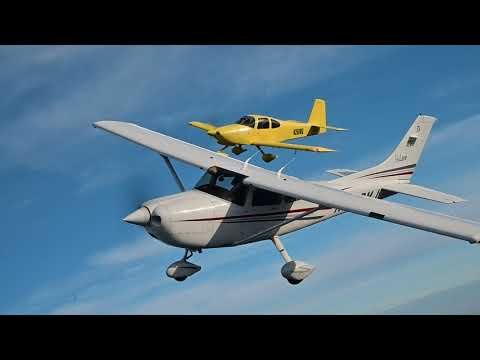 When pitted against each other, which aircraft prevails? The Cessna 182 Skylane or the Van’s RV-10? The Aircraft Owners and Pilots Association‘s Dave Hirschman reveals the answers in this short video.
 -
 Hand Propping - RESPECT required to not get hurt or killed!
 -
 I'm moving my trike from ESNU to Harrlanda . This is the flight to the new home base ..
 -
 This was a magic evening, still air and a friend in the back of the trike. What more can you ask for..
 -
 I once looked at getting one of these many years ago and even went over to Italy to look at its testing and was extremely impressed however the company went broke and the design was sold to other manufacturers
 -
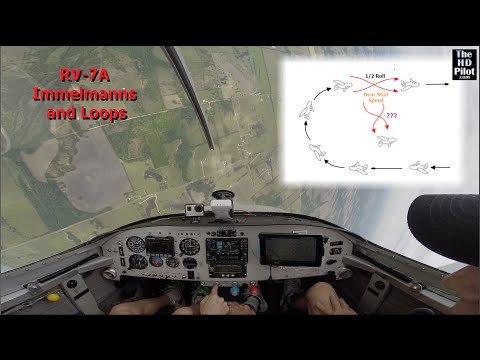 Flying Immelmanns and Loops in my RV-7A with former SR-71 Blackbird pilot Rich Graham * Please be aware that I am not an instructor and the video is not intended to be used as instruction on how to fly or perform manoeuvres in an airplane. The video is for Entertainment purposes ONLY * Richard Graham has flown F-4 Phantoms in combat over Vietnam, the SR-71 Blackbird on reconnaissance missions during the Cold War, the KC-135 StratoTanker, and the T-38 Talon. He was also awarded the Distinguished Flying Cross!