

onetrack
-
Posts
8,095 -
Joined
-
Last visited
-
Days Won
101
Content Type
Profiles
Forums
Gallery
Downloads
Blogs
Events
Store
Aircraft
Resources
Tutorials
Articles
Classifieds
Movies
Books
Community Map
Quizzes
Videos Directory
Posts posted by onetrack
-
-
Looking good, there, NT5224. I love that region around Adelaide River/Pine Creek, and remember camping overnight in our motorhome at Robin Falls back in July 2007 or 2008 (have to check the diary on exact year).
Absolutely stunningly beautiful spot, wasn't crowded either, we virtually had it to ourselves.
I thought you could've maybe found a WW2 airstrip, and upgraded it?
 Bit of a shame so many of those great WW2 airstrips along the Stuart are abandoned, and returning to the jungle.
-
 2
2
-
-
Turbo, I can't see vertical plunge damage here, with the typically concertinaed cabin. The cabin here appears to be folded underneath the fuselage, seeming to indicate the nose went in at a low angle, dug in, and then folded under.
There was no cloud involved here, conditions were reported as fine and clear, with light winds. It would appear that simple spatial disorientation in the dark, sucked him into terra firma.
(photo courtesy of Simon Cross)
-
I reckon he flew it straight into the ground, at cruise speed, because he thought there was air in front of him. That's no stall result.
-
Good God, I don't think I've seen an ultralight destroyed so thoroughly, for a very long time. This has to be a high speed impact, surely? - the Brumby can't be that light in its construction, that it collapses like a pack of cards on impact.
-
Batteries in EV's pose no more fire threat than perforated petrol tanks.
The vehicle designers smartened up their act probably 3 decades ago, in relation to improving fuel tank protection, after quite a number of lawsuits related to fuel tank fires, caused by poor placement of fuel tanks, and inadequate tank protections.
The same design criteria are applied to battery placement in the EV's, it is well protected, and will only get badly damaged in the very worst of high speed major collisions with solid objects, or head-on collisions.
-
If the crash timing from the reports is correct, it would have been near total darkness. Official Sunset at Leigh Creek is 17:28, Last Light 17:55.
The caravan park manager witnessed the flight, just prior to the crash, and could only identify a "green light" - and thereby presumed it was an aircraft. It was that dark, he couldn't see the aircraft itself.
Not much chance of sun in your eyes at final approach height, nearly an hour after sunset.
One would have to rate spatial disorientation due to darkness, as a major contributing factor. Why do people continue to do this?
-
 1
1
-
4
-
-
No, the SA police are giving out even less information than the News.com.au website. They are obviously trying to locate and contact NOK.
Isn't there pilot training being done with Brumbys at Leigh Creek? I am having trouble trying to find any information about it, apart from one article that stated that the pilot training was proposed.
-
Here's the 2016 Jabiru Maintenance Manual - which I understand is the current document, and which Jabiru states, applies to all models of Jabiru engines.
On page 19, the CHT limits are listed as a maximum of 200°C for climb, and 180°C for continuous (cruise) operation.
I don't know why Jabiru have changed their recommendation for maximum CHT from 150°C for earlier engines, for continuous operation, to 180°C now, for all engines.
This seems like Jabiru are using a dartboard for maximum CHT choices. After all, nothing would have changed in earlier engine/head designs that are in use, yet they suddenly get another 30°C leeway in maximum CHT.
https://jabiru.net.au/wp-content/uploads/2018/05/JEM0002-7.pdf
-
I don't think anyone will ever want to use the "MAX" nomenclature, ever again, in aviation. It's just got that awful smell about it.
It's funny how these ugly-looking things still get the job done effectively and efficiently, in practical terms, without the "ooh-ahhh" looks, and voluptuous curves of their beautiful sisters.
It's the same as regards car design. The older shapes were practical and efficient, the shapes of today leave so much unusable room with their styling curvatures - all to gain a slight reduction in drag coefficient.
-
The "8" figure is supposed to be the degree sign. I think it comes about, due to programming conflicts between Apple Pages to MS Word (and vice-versa) document conversions.
The Jab 2200 installation manual that I found, is an MS Word document converted to PDF, the original has probably been an Apple Pages document.
I trust it's an official Jabiru document, it doesn't list authorship, but it has the Jabiru emblem and corporate address located alongside the drawings.
I just noticed it's also dated 2002, so perhaps there have been more modifications, and changes in specifications since that time, particularly where the Gen 4 engine is concerned.
[/url]http://web.aeromech.usyd.edu.au/AERO1400/Jabiru_Construction/Manuals/SP-UL/Engine%202200/Installation%20Manual%202200_Issue%203_.PDF
-
Is it just the angle of photography, or do those wings look awfully skinny, to provide any lift over about 120kts?? The thing looks like it's designed for Mach 1 speeds.
"The computer will take care of your yaw correction". Yeah, right, just like MCAS did for pitch-up on the 737 MAX.
-
How does Pat English get on? It would be costing him a kings ransom to land at Cairns on a regular basis. Is he doing it every day, as he wanted? - or has the Mareeba Council knocked him back again?
I guess he could just be passing the Cairns airport charges onto his clients?
-
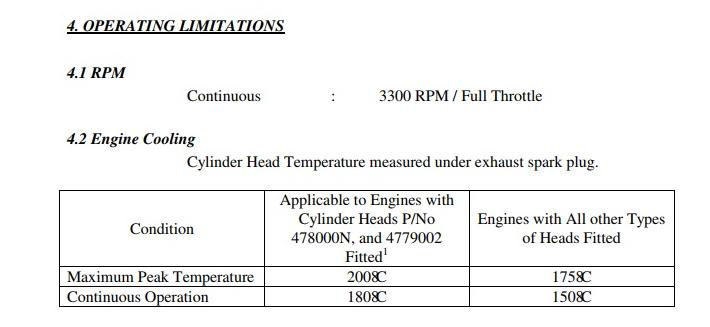
The Jabiru 2200 installation manual states the following, as regards CHT's ...
*Cylinder heads P/No 4779002 and 478000N have more cooling fin area, and a different construction.
It would pay to utilise an independent temperature testing method, to ensure that what you're seeing on the gauges, is the true figures.
Don't forget, either, that the Jabiru 2200 ignition coils are rated at a maximum operating temperature of 100°C. If the heads are running at over 200°C, then the coils are likely to be overheating as well.
-
The closest private airfield I can currently find for sale is a grass strip at Port Douglas - and they're very coy about pricing for the sale. I just love this "EOI" terminology, in real estate double-speak.
[/url]https://www.raineandhorne.com.au/mossman/properties/6312-captain-cook-highway-port-douglas-4877-queensland
Read, "We hope to find some idiot with more money than brains, to pay X squillion for this place, because people who own aircraft, are loaded".
-
some bare flat paddock
Hmmmm ... this is Cairns we're talking about, isn't it? From my infrequent visits, that's the place where areas of bare flat paddock are at a premium?
-
They are not O.K., the aircraft crashed with two fatalities.
-
Oil is only as good as the additives added to it. All base oil stock currently produced, is pretty well guaranteed to be relatively even, in todays worlds of modern catalytic cracking in refineries, and synthetic oils.
It's not like the old days, when the origins of the basic crude, was what guaranteed a "good" oil, or a "bad" oil.
In those far-off days, Pennsylvania crude was the world standard, and there were a lot of inferior crudes from other countries that contained a lot of "nasty" products, such as high levels of sulphur, salts, water, waxes, heavy metals, and suspended solids.
As a result, the oil industry uses the terms, "sweet" crude, and "sour" crude. The terms came simply from the fact that early oil drillers actually tasted the crude oil from the well, to see if it tasted sweet or sour.
The drillers also smelled it, to determine if it was "sweet" or "sour".
Pennsylvania crude was "sweet" crude - "sour" crude contains over 0.5% sulphur and needs additional refining, adding to refined oil production costs.
You can still get easily "sour" crude, but it brings lower prices, and the refineries will often blend it with "sweet" crude to enable lower refined product production costs.
There are on average, 7 additives added to the refined base oil stock, to produce the product you buy from the oil companies and oil suppliers.
These are - anti-corrosion inhibitors, anti-foaming agents, anti-wear agents, oxidation inhibitors, dispersants, detergents, and oil viscosity improvers (which are high-viscosity long chain polymers).
All these additives have individual jobs to do in oil, which all add up to keeping the oils lubricating ability in the range where the engine operates in, and to treat the undesirable by-products of combustion.
Each oil type is specifically formulated to the engine application, ambient temperature range of operation, and the severity of use.
Paying a lot more money for a supposedly superior oil is not always the best option.
There's a lot of marketing hype in the sales of lubricating oil, as evidenced by smooth advertising, highly attractive packaging, and product description wording that runs into the showmans area of expertise.
The only way we consumers can gauge an oils performance, is how well it does its job on the motorised equipment we own.
If you are getting sludge buildup, gums and varnishes on engine components, and engine damage that can be sheeted home to lubrication failures, then it's time to upgrade your lubricating oil to one with proven superior additives.
-
4
-
 1
1
-
-
Welcome Wrongway61. Trying to get airborne safely for $300 is not something that too many people would recommend.
I suggest you find a local ultralight group, and make some new friends there - sounds to me like you're gonna need them.
-
 1
1
-
-
I don't think the bloke is ignoring the laws of physics, he's just showing everyone what you can do with a little aircraft, within the limits of physics. If he was breaking the laws of physics - well, that's something else.
It just goes to show what an aircraft is capable of, if it's very light, very strong, and has a huge amount of power for the light weight.
In the real world of full-size aircraft, and carrying a pilot, it's currently not possible to perform the stunts this bloke is performing, due to aircraft weight, and the current strength limitations of materials, and the power output of current engines.
Maybe someone, one day, will make a breakthrough with super-light material weight with enormous strength, and new engines with hugely-increased output, and light aircraft will make some major performance gains.
But that scenario is rare, most technological increases or steps forward in design, are measured only in small percentages. The bottom line is, the weight of a pilot and any pax, is a serious amount of weight to carry in a light aircraft.
-
A mate bought a steel 30 foot ex-fishing boat with a 6 cyl Perkins diesel in it - just because he loved going fishing.
He lived on an estuary and was able to moor the boat not far from his house, where he could still see it. One morning he got up, and he couldn't see it, it had disappeared overnight!
He raced up to the mooring, only to see the top of the cabin about 2 feet below the water level!
During the night, a cooling system hose had burst, and flooded the hull - and she promptly sank like a rock!
He did recover it and fixed it up, but by then, he was starting to realise the old boat ownership story, about a hole in the water, etc etc ....
-
1
-
-
Could've been worse - they could have launched it, without the drain bungs inserted.
I remember a burly mate ("Col") telling me how he and several mates of the same build, were standing around watching with interest, in the late 1970's when a bloke with a near-new Lancia Beta (front-wheel-drive), was trying to pull his boat and trailer up the boat ramp.
The Lancia was slipping and spinning due to loss of traction on the wet ramp, and with all the weight on the wrong end (rear end).
So the bloke got out and asked Col and his friends if they could lend a bit of weight to the front end, by sitting on the front of the car. The four mates duly obliged, and the boat owner got back into the Lancia, and "gunned it".
Col reckoned the Lancia moved forward a little, and then suddenly - there was an almighty BANG!! - from under the car!
They all promptly jumped off, and peered under the front of the Lancia, only to see litres of transmission oil, gushing out onto the boat ramp!!
Further inspection revealed (much to the Lancia owners consternation), a gaping hole in the side of the transmission (alloy) casting!
What had happened, was the intense torque generated by full throttle in 1st gear, coupled with no wheel slippage (thanks to Col and his mates), meant that the intense torque, tore one of the transmission mounting lugs, clean out of the transmission!! (it was a Citroen transmission, after all!)
Col said they sympathised with the Lancia owner - but then they wandered off, and left him to it! - because there was nothing they could do, any more - and they only did as the owner asked!
-
Once the EU bureaucracy starts to write up EU standards demanding a CE tick for VTOL operations - that process will ensure nothing gets off the ground - literally - for the next 25 years.
[/url]https://www.news.com.au/finance/work/at-work/france-paid-30-public-servants-to-do-nothing-for-25-years/news-story/3db733ebea2e21708d82e22b414027d4
-
A motorised attendance module is simply a school bus.
-
If you thought your fuel bill with your aircraft was bad, wait until you own a boat!!
 Bit of a shame so many of those great WW2 airstrips along the Stuart are abandoned, and returning to the jungle.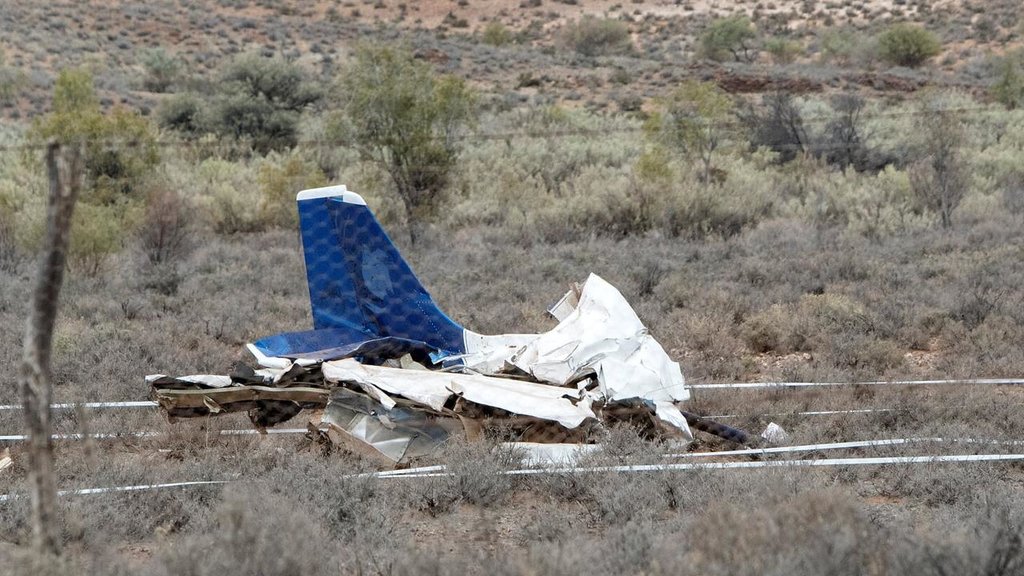




Another Lancaster snippet
in UK/Europe General Discussion
Posted
Too few people today realise the courage these WW2 airmen exhibited, on a constant basis - to take off, often well overloaded, into the night, and often into dreadful weather, with minimal guidance, and with the knowledge that often a quarter or a third of their flight wouldn't return. I often wonder if any of todays Instagram/selfie generation would ever be able to produce those levels of courage. I personally doubt it.