

onetrack
-
Posts
8,094 -
Joined
-
Last visited
-
Days Won
101
Content Type
Profiles
Forums
Gallery
Downloads
Blogs
Events
Store
Aircraft
Resources
Tutorials
Articles
Classifieds
Movies
Books
Community Map
Quizzes
Videos Directory
Posts posted by onetrack
-
-
Working just fine for me. Thanks, Ian.
-
 2
2
-
-
-
In the early 80's I was contract working with my equipment around Ravensthorpe (W.A.) and regularly spotted this tray-top Landrover around town and nearby, that was bent in the middle!
The chassis was bent downwards several inches in the centre, and I surmised that the farmer had seriously overloaded the old Landrover at one time, resulting in the big bend in the chassis!
One day I got the chance to pull up alongside him at the Motel and queried the reason for the bend, and what he'd put on it, that caused such a severe bend?
He replied, "Oh, I haven't overloaded it - I was hit from behind!! You know those XXXXX Bros?" (local contracting brothers who were noted as speed merchants, and who owned a Valiant Drifter van)
"Well, I was just checking the sheep in the paddock from the road (the South Coast Hwy, the major coastal highway), just doing about 15kmh! - when one of those mad XXXXX brothers ran right up my backside with his Valiant van, doing about 120kmh!! It shocked the Bejeesus out of me!! I banged my head on the back wall of the cab, and everything on the tray ended up on the bonnet of his Valiant!! And of course, it bent the chassis on the Landrover!!

I could hardly contain myself from laughing at my minds eye vision of a young speed merchant in his Drifter van, coming around a bend in the highway at full speed - only to find a farmer in an old Landrover, checking the sheep from the highway at 15kmh!!
Many farmers have trouble "getting up to speed", both mentally, and on the highway, when they leave their paddocks!! This bloke certainly learnt a big lesson about the difference between "property speeds" and "highway speeds".
-
Asian people who have been brought up learning and speaking Asian languages, who then have to learn to speak English, are some of the most difficult-to-understand people I have come across.
It's due to their native languages requiring a completely different tone inflection to English, and this is extremely hard for them to "unlearn" - particularly when they're still primarily speaking their native language.
I don't know what the solution is. Perhaps voice recognition programmes may come into their own in the future, whereby the programme is attuned to the individuals style of speech, and re-transmits it as clear English?
-
1
-
-
Pmmccarthy's stunning early jet prototype is just what we'd expect from the Italians! - an Ambrosini Sagittario!
Only one built, produced in Jan 1953, and powered with a Turbomeca Marboré turbojet.
-
1
-
-
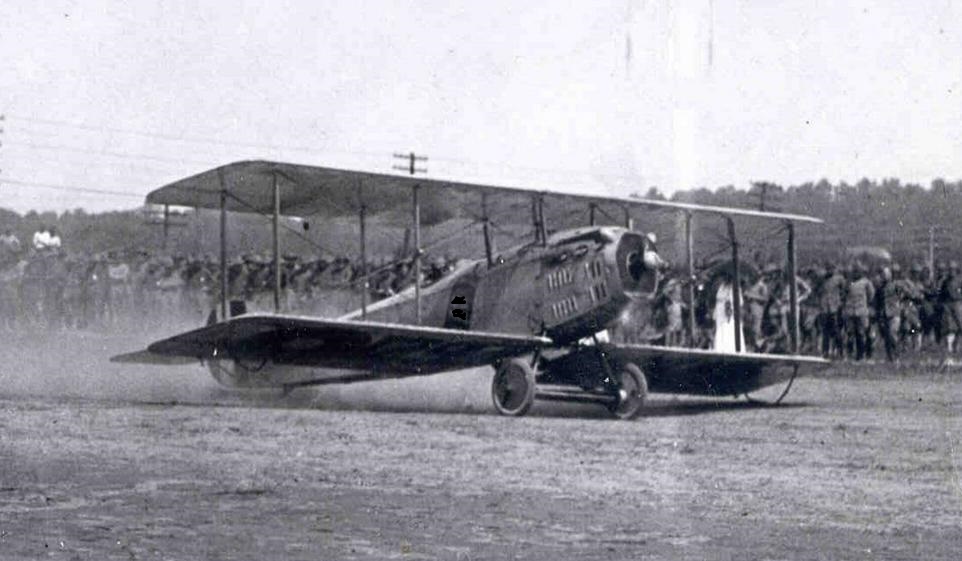
Bingo!, on the Standard JR-1B. The first dedicated U.S. Post Office Dept (USPOD, as it was known in 1918) Air Mail plane. 6 were ordered by USPOD and delivered Aug 6, 1918.
The JR-1B was powered by a U.S.-built Hispano-Suiza V8, reportedly producing 170HP (some descriptions say 150HP, there may have been variations in engine HP).
Based on the Standard J-1 trainer, which was based on the Standard SJ aircraft, the J-1 was produced to supplement the Curtiss JN-4 as a WW1 military trainer. The J-1 utilised the 4 cyl Hall-Scott A-7 engine.
The early Standard SJ models featured an interesting "tricycle" undercarriage, with a nose wheel, as well as a tail skid. The nose wheel was intended to aid in protecting the main undercarriage and airframe from heavy impact landings.
An "improved" model, called the JR, was offered with the 6 cyl Hall-Scott A-5 engine. Initially, optimistically-named as the "Pursuit", the nomenclature was changed to simply Model JR. Only 6 JR's were built.
But the Hall-Scott engines suffered from vibration, and the 4 cyl A-7 vibration was so bad, it not only shook the aircraft apart - they were also prone to catch fire in flight!
The Standard J-1 was finally grounded due to an excessive number of crashes caused by the Hall-Scott engine. Curiously, Curtiss bought quite a number of new (grounded) Standard J-1's, and converted them to an improved design.
The U.S. Army initially flew the USPOD Air Mail service from May 1918, utilising hastily converted Hispano-Suiza-powered Curtiss JN-6H's - but the arrival of the Standard JR-1B saw the USPOD take over and run the U.S. Air Mail service with their own specifically-ordered aircraft.
At this point, WW1 was still being fought, and all American aircraft were military production, overseen by the Bureau of Aircraft Production.
There was obviously still a lot of Army and military control in the aviation arena, and it appears the military preferred the DeHavilland aircraft - because of its simple construction, the much more powerful (400HP) "all-American" Liberty V12 engine, and because of the ready availability of hundreds of DH-4 aircraft. As a result, the next order for mail planes from USPOD, was for 100 of the DH-4 aircraft - also specially built to carry mail.
The reason for the cockpit being so far back on the JR-1B is, as the Standard was originally built as a two-place trainer, Standard simply utilised the front cockpit as a mail hold, and the pilot operated from the rearmost position.
The Standard JR-1B could carry 200 lbs of mail and had a 280 mile range, which was very good for its time. In addition, the JR-1B was quite fast, cruising at 100mph.
The Hispano-Suiza V8 turned the Standard J series into a very good aircraft, and the Hispano-Suiza was a superbly-built engine, that was superior to the Liberty V12. The early Liberty engines were quite unreliable.
But the military obviously "leant" on the USPOD, and only 6 Standard JR-1B's were built for the USPOD, and then USPOD went over to the DH-4 aircraft as the standard mail plane. There are no survivors of the 6 USPOD JR-1B's.
I read a report yesterday (and can't find it again, now) that stated that one of the U.S. Mail pilots took a JR-1B to an unofficial record of 29,200 feet.
He only stopped going higher due to the bitter cold and frostbite which affected 4 of his fingers - and no doubt, difficulties with breathing. 200 climbers have ascended Mt Everest without Oxygen, so I guess the pilots claim is achieveable.
https://about.usps.com/who-we-are/postal-history/standard-plane.pdf
http://flyingmachines.ru/Site2/Crafts/Craft25900.htm
https://www.popularmechanics.com/flight/a20524415/the-history-of-airmail/
https://www.gettyimages.com.au/detail/news-photo/six-jr-1b-mail-service-planes-exclusively-built-for-mail-news-photo/92935377
-
I don't know that they used any Spad parts at all. They probably copied the Spad styling somewhat. I'd say the V8 engine led to the styling. The original model was powered by a 4 cyl American engine that was notorious for vibration.
C'mon fellas, I was sure you'd nail this by now! This aircraft's job, led to the major commercialisation of aviation in the U.S.
Another Hint: The 6 aircraft were ordered by a division of the U.S. Govt.
-
Nope, not Curtiss, either. This one was built in New Jersey - Curtiss' manufacturing operation was in New York.
Hint: The engine is a European-design liquid-cooled V8, that gathered great renown during WW1. The engine was built in the U.S. under licence. All 6 units in the order were delivered on Aug 6, 1918.
-
The Subaru Upper Engine Cleaner makes no claim to decoke combustion chambers, only to clean the intake tracts.
-
 1
1
-
-
It's not a Spad, it's not British, not RR powered - it's American, and it was a pioneer in aviation. Only 6 were built (in this particular configuration, for the specific job the purchaser wanted it for). Correct on the liquid-cooled engine.
-
-
They were the aircraft for oil barons, and I doubt whether anything so magnificent, aviation-wise, came out of the 1930's. There's still 17 survivors, and even one or two for sale.
Listen to the ones on YouToob doing a startup, talk about music to your ears!
-
We're in a Recession - officially. I personally believe we were almost into Recession before the COVID-19 virus hit - the virus just accelerated the Recession.
In times like this, values of nearly everything are declining, making people unsure of which way to move. Spending is on the back burner, as people seek to bolster their financial position to a more secure spot.
No matter what it is, the value of nearly everything has declined - from property to superannuation, to shares, to "collectables". Some areas have declined more than others.
Many would-be sellers are holding on to the items they would like to sell, fearing they may not get "a decent price" for it. They will eventually have to re-adjust their ideas of a "decent price".
People just "sit tight" in recessions, until they can see things starting to improve, economically. I personally believe the whole of 2020 will be a recessionary period, and we will not see signs of economic recovery for at least 12 mths.
After that period, people will regain confidence again to start investing and risking spending. In 2 years time we will probably be back to more normal economic activity.
We can only look to previous periods as to events and results. Directly after WW1, there was a major Recession (some called it a Depression), a direct result of the War, and compounded by the Spanish Flu epidemic.
In general, the post WW1 Recession lasted about 2 years, approximately from 1920 to 1922. Interestingly, it affected different major countries for different periods.
This was possibly as a result of the slowness of travel, slowness of communication, and the manufacturing time lag in that period. Britain ended up with 17% unemployment, a major Recession by any measure.
By 1923, economic activity had largely recovered satisfactorily, although Britain was still badly affected with economic malaise right through the 1920's. A major reason for this was the U.K.'s poor monetary policy of the time.
In comparison, in America, economic activity boomed through the 1920's, due to easy credit, a major increase in technological innovation and mass-production techniques, largely based around the booming transportation industry (cars and trucks).
But the American credit bubble of the 1920's went into the share market, and when that bubble burst in Oct 1929, the whole world was affected, far beyond anyones imagination or economic forecast.
Deflation is the terrible fear of economists and politicians. When deflation is on the rampage, economies shrink, values plummet, unemployment rises, and people refuse to spend.
The "top end" of the economic spectrum is relatively unaffected by Recessions or Depressions. When you have enormous wealth, losing a portion of it, doesn't bother you.
Manufacturers still sold numbers of extremely luxurious cars and aeroplanes during the Great Depression, when unemployment reached over 30% in many countries
https://en.wikipedia.org/wiki/Post%E2%80%93World_War_I_recession#:~:text=In%20North%20America%2C%20the%20recession,depression%2C%20began%20in%20January%201920.
https://www.economicshelp.org/blog/5948/economics/uk-economy-in-the-1920s/
-
2
-
-
Spot on! You blokes are too good!
-
Dear NES readers - It's unfortunate that Cappys memory is so faulty nowadays, it's probably due to years of sniffing Castor Oil fumes, from the period when he flew biplanes.
The apron picture he has chosen to display, and which is the one he recalls wearing, is not the one he wore on the day of the Fly-In.
The apron he actually wore, which led to a mass exodus from the Fly-In - thereby making Moses Exodus out of Egypt look tame - was this one, below .....
-
-
That's some achievement in weight reduction for 1909!
-
.... also smears huge amounts of margarine on it - which melts and runs down his chin, on a regular basis. As a result, he's not invited to too many social gatherings, because his table manners are just a little too repulsive for the genteel folk.
But fortunately, Cappy is welcome at most club BBQ fly-ins (avref), because he brings a lot of food with him. However, he cunningly ensures it's food only he likes, and no-one else likes - with the result being, he can have a feast by himself, without sharing anything.
However, at one of the Club BBQ fly-ins (avref again), Cappy made a right spectacle of himself, when he lit the BBQ and promptly........
-
Avro Triplane from 1909 with a 9 HP JAP engine. The Avro name came from the builder, A.V. (Alliot Verdon) Roe. This triplane was his first successful triplane, he had previously built a biplane.
He went on to build more and better triplanes, but each one was effectively a prototype. The next model of his triplane was powered with a 20 HP JAP engine.
-
Funk B85C?
-
Spot on, SP! Well done.
-
......unsold Landcruisers left in the whole of Australia. So, orders were put in to Toyota to increase Landcruiser production to meet the massive demand.
"We can't do that!", said Akio Toyoda - "We'll end up with everyone driving Landcruisers, and they'll lose their pose value and resale value, and they'll end up like Hyundia Accents!"
So, the Govt was stuck with a thorny problem. Excessive demand for a high-quality product, which was in short supply. Dan called on Turbo. "Turbo, we have a problem, and I know you're the man to fix it".
"How about you start a manufacturing enterprise here, producing Australian-built Landcruiser equivalents, to meet this huge demand? It will solve the problem of a lack of bogan Commodores and Falcons, and fix the unemployment problem!"
Turbo scratched his chin. This was an entirely new challenge. Speedway and trucks he could handle, but 4WD's were a whole new manufacturing arena that he had to learn fast. Then there was the patents and registered designs problems.
There was only one thing to do. He put in a call to his West Aussie mate, Ahmed Al-Quokka. Al-Quokka was known as the "Fix-It" man, whenever problems needing smoothing. The phone rang, and it wasn't Ahmed who answered. It was......
-
Sorry about the graffiti, the rego was too clear on this one ...
Only 13 of these built, as I understand.
-
Oil monitoring has been used by the earthmoving and mining industries for over 40 years, to prevent major losses caused by failures in very large and very expensive diesel engines.
It is effective, it is comprehensive - but it's dependent on two things. One is, a baseline must be established to determine "normal" levels of specific metals contamination (chrome, copper, lead, tin, aluminium, iron, etc).
Second, you need to know and understand the specific metals makeup of the particular engine you're examining - and where those metals are located in the engine.
Once you have someone with that specific experience, the oil monitoring process can be quite effective. But it is isn't cheap -and Facthunters recommendation is the primary method, and the cheapest solution.
-
2
-
 2
2
-
1
-
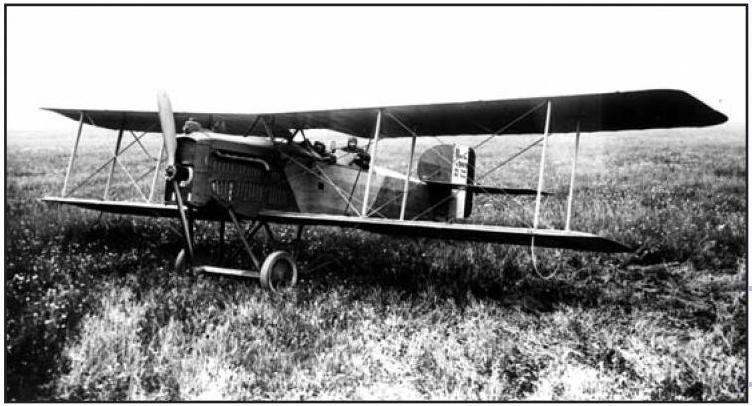




Guess This Aircraft ?
in AUS/NZ General Discussion
Posted
SP - We'll pay out on that one, as there were so many Breguets. The one in the pic is a Breguet 14 A2, a day bomber.
Louis Charles Breguet really was a brilliant aircraft designer, he changed the game completely in WW1 with his metal-based construction, instead of wood.
The Breguet biplanes were much more durable than their wood counterparts, were highly regarded, and were built well into the late 1920's.
Even the Americans were impressed, such that they ordered 600 Breguets, and equipped 16 of their Squadrons with them.