


onetrack
-
Posts
8,094 -
Joined
-
Last visited
-
Days Won
101
Content Type
Profiles
Forums
Gallery
Downloads
Blogs
Events
Store
Aircraft
Resources
Tutorials
Articles
Classifieds
Movies
Books
Community Map
Quizzes
Videos Directory
Posts posted by onetrack
-
-
I've found wild variations in small battery life and we certainly need some good comparison sites, outlining technologies used, and average lifespans.
I went over to reputedly, high-quality, Japanese-brand, NiMh AA and AAA batteries a few years back, and found they did not meet performance expectations, and were not good value.
Their lifespan was shorter than claimed, and they didn't produce the useage life after charging, that I expected they would produce. They went flat quicker than alkaline batteries.
I went back to disposable batteries (which appear to have reduced in price since rechargables appeared), and find that the "known brands" generally provide superior performance to the "unknown brands".
I bought alkaline AA and AAA batteries from Target because they were the cheapest around, and they didn't provide the performance and life I expected from alkaline, so I've gone back to the "known brands".
I notice some disposable battery manufacturers are now promoting their "green" credentials by claiming their batteries are made from recycled batteries.
I often wonder what their long-term performance is like, as compared to batteries made from virgin materials. Currently, they're running at 4% recycled material, they claim that will go to 40% by 2025.
As always, the end-user will be the test bed for battery life in batteries made from recycled materials, and it may take several years for the differences to show up.
http://batteryrecycling.org.au/energizer-launches-a-aa-battery-with-4-recycled-batteries/#:~:text=ABRI%20News-,Energizer%20launches%20the%20first%20alkaline%20battery%20made%20from%20recycled%20batteries,contains%204%25%20recycled%20battery%20material.
-
I've got an '84 WB Holden 1-tonner that is metric fasteners from the firewall forward in the body and panels, and inch fasteners from the firewall back. The engine and drivetrain is all imperial. Sure makes for interesting repair work.
I think I was fortunate enough to go through a schooling system (high school) which ran in imperial measures, but which taught metric measures as well. I can think in both metric and imperial, and slip between the two with relative ease.
I spent all my working life (and still spend my semi-retirement), owning, operating, and repairing plant, equipment and machines that are either wholly American origin or based on American designs.
As a result, the largest percentage of my workshop tools are inch measure tools, and the largest proportion of my fasteners and thread repair equipment is inch equipment. But I do have some metric tools and fasteners.
Inch measure stuff isn't going to go away anytime soon, because of the vast amount of equipment, machinery, plant, housing, and other structures, that were built in inch measure, and which use inch-based components.
In fact, a lot of replacement items need to be still made in inch dimensions, so all this stuff can be maintained and repaired.
But I hate it when someone provides the "metric equivalent", which doesn't mate up properly, and which item always seems to be a little smaller in dimensions.
Online and phone calculators today do make life easier for the conversions between inch and metric. But I still prefer to think of numerous measures in Imperial measure, such as PSI, it seems simpler.
MPG was easier, I think I've only just got my head used to "litres per hundred kms". What a PIA measure that is. At the end of the day, for the bulk of my fabrication work, I still prefer this measuring device .....

-
 2
2
-
 2
2
-
-
.... go to the Virgin Islands, we're sure to find some there". But Nobu chimed in, "I no wanna go to Gleek Islands. Gleek Islands too far away. Zeelo has not enough fuel tanks, and we have to fly over bandit country! I'd rather fly to Tasmania, just a few less bandits there!"
"I can't go anywhere, anyway," said Turbo. "We're still in lockdown, and we don't know how long this lockdown is going to last! It could run into next year!!
"Ahhhh, now you all wish you were in the West," said Onetrack. "You know, the land where we've conquered the virus, and it's full speed ahead - apart from a few dozen lawsuits from Clyde Parma hanging over our head!"
"Yess! Yess!!", cried Nobu. "Lestern Austlalia, the place to be! No flying listrictions, I think I will fuel up the Zeelo and head West!"
"You forgot one little thing", said Turbo. "No-one gets into W.A. at present, they've got a hard border!"
"Hard blorder no problem to crafty old Japanee!", crowed Nobu. "All I have to do is land in some lemote W.A. airstrip and say I'm delivelling a message from the Emperor! They'll think I'm a WW2 refugee airman who still thinks WW2 is running! They'll welcome me, and forget all about.....
-
The latest news flash is that thieves have nicked the local Police Station toilet. The Police have nothing to go on.
-
 2
2
-
-
Let's not start on tyre sizes!! A mixture of metric and inch sizes all rolling along happily!! (until they go flat, of course).
-
Metric threads were just fine in original European specifications, until the Japs decided they needed their own metric system - the JIS. It just means less standardisation, which is what I thought metric was all about.
-
1
-
-
I think the saddest thing is the good name Western and European manufacturers who have prostituted themselves on the altar of Chinese manufacturing.
1. About 20 years ago, I went to a hydraulic jack repair shop and spotted a pile of almost new Snap-On hydraulic floor jacks in the back of the building. I asked the owner what the story was, and he said, "Oh, Snap-On went and got all these floor jacks made in China. The Chinese substituted all the specified high-grade rubber and synthetic seals and o-rings in the jacks, with cheap, hard plastic seals and o-rings!
They've all started leaking like sieves within 6 mths of purchase! These are all warranty repair jobs, it has cost Snap-On a fortune!"
2. The missus wanted a domestic high pressure washer to clean up the paving around the house. She wanted to buy it herself, and didn't want to pay too much - $200 maximum.
We went and bought a (Chinese-made) Ryobi pressure washer - single phase, reputedly 2000 psi output. First, the hose coupler (that held a water filter), exploded after the machine ran for less than 20 minutes. I replaced the coupler with a brass coupler. After another 20 minutes, the thread on the inlet housing stripped clean, and the brass coupler blew off.
We took it back to Bunnings and they gave us a new one, giving us the standard reply, "Oh, we've never seen this happen before! (Yeah, I bet you haven't). Took the new unit home, used it for half an hour. As the missus let the trigger go, the main pump housing exploded in a pile of shattered plastic, with water going everywhere. Took it back, told Bunnings we wanted a full refund, and No Thanks, we don't want any other Ryobi replacement model!
3. We went to Total Tools and picked out a domestic-grade Karcher. Made in China. Also single phase and reputedly 2000 psi. Used it for less than an hour, I let the trigger go to shut it off, and the main pump housing exploded apart on that, too!
Took it back and got a refund, with the standard response, "Oh, we've never seen this happen before!". Yeah, right.
I reckon none of these pressure washers even remotely reach 2000 psi output - except for when you let the trigger go, and the back pressure builds to 2000 psi, which their crappy plastic housings can't cope with.
4. I wanted a replacement good pressure washer for the workshop, so I said to the missus, "I'll go and buy a good quality unit, and you can borrow it any time you need to do something around the house".
So I went and bought a Husqvarna PW 450. Not surprisingly, not made in Sweden - but made in Italy. Three times the size and weight of the Ryobi and Karcher and still only rated at 2000 psi - but it produces a genuine 2000 psi, all the time its working. Metal housings and quality build all through, with thoughtful design.
The difference is, the Husqvarna cost me $899, the Ryobi was $139, and the Karcher was $199. But I'll wager the failure rate of the Chinese units is horrendous, and it's costing the manufacturers a heap of money.
Age old story, I guess - you want quality, you simply have to pay for it. You want a cheap outlay, you pay out your minimal amount of money, and you take your chances it might do the job.
-
2
-
-
.... because they said "Bung It-In" on the head - even though the bolt grade was better, and the numbers were actually readable. Ah Send said to his nearest helper, Bee Gend, "What we leely need here is a fully qualified airlo engineer who can actually understand and lite Inglish. That way, our conversions to Mandarin and Pinyin will become more undlastandable to peasant workforce!"
Bee Gend, in the interim, was doing his own conversions from Chinglish to Pinyin, and arriving at some odd instructions. "Install elevator upside down not working" became 倒置安装电梯不起作用, which led to much merriment amongst the labourers who were doing the assembling of the Zhongshen wings, and the production levels were then starting to.....
-
Your last sentence is exactly where the problem originates from. The products are made for the American market, our merchandise buyers simply buy them because they are generally offered cheaper. "You want metric labels? That costs more."
Some indication of the purchasing power of America, is that Walmart buys more on an annual basis, from the Chinese, than the entire Australian nation does annually.
The whole problem stems from Australia becoming the 51st State, what with American spelling creeping in constantly via our computers, phones and American-origin software programmes, clothing styles slavishly following American fashion, and American entertainment "stars" featuring more prominently on a regular basis, than any local "stars".
News is slanted towards American news and problems, American politics, and American issues. Hopefully the COVID-19 situation will provide more potential for our development as Australia and Australians, and ensure we don't continue to become overwhelmed by American culture, styles, measurements, and spelling!
Interestingly, I was advised, around about 30 years ago (by a person involved in high-level manufacturing engineering, with experience both here and in the U.S.), that all the larger and well-known manufacturers in the U.S. had set up to convert to metric manufacturing at the drop of a hat, and were expecting America to move to metric measurements in the near future.
They obviously didn't count on the stubbornness of the American Govt and many Americans, to continue to resist metrification, with the U.S. Govt continually taking the line, that conversion would be an unbearable cost to small businesses, and many individuals seeing metrification as a French plot to subvert their economy to a European-centred one.
-
2
-
-
My Scottish auntie (Mothers sister) lived in Townsville for 35 years. But she'd still go into a shop and say, "I'll ha' a pirn o' threed, and a pund o' tatties"!! (a reel of cotton thread, and a pound of potatoes).
-
Graphite is one of the most inert and non-reactive products in the chemistry world. It is added to polymers, resins and composites to improve wear resistance, and to add benefits such as anti-static properties.
-
The Chinese rely on the customer doing the QC, it's that simple. They are prepared to punch out vast numbers of the product, with the accent on total production numbers, rather than the consistent quality of the product.
You will see the Chinese manufacturers offering their goods on websites such as Alibaba, and typically, an MOQ is in the thousands. They don't want the buyers who only want a dozen or three dozen items.
There's a good book available, written by an American, who worked in Chinese manufacturing for a long time. The book is called "Poorly Made in China", by Paul Midler.
The book was originally written around the late 1990's, and Midler produced an updated and revised 2nd Edition in 2009. It makes good reading, and it should be compulsory reading for every Westerner.
In essence, Midler outlines how the Chinese specialise in "Quality Fade". They will produce an initial product that meets specifications, but once in production, the specifications will be lowered, due to corruption and profit-chasing.
Midler points out that the Chinese place profit much higher than any consistency in product quality, or in producing products that meet exact (Western) specifications.
-
 1
1
-
1
-
-
....Premier Palacechook gave updated instructions to only shoot down Victorian-origin aircraft, and perhaps the odd Taswegian aircraft that also looked suspicious.
"But how are we to know the difference?", said the CO of 77 Sqdn (based in Williamtown, for the benefit of "those who came in late") - "and what about if there's even some Croweaters amongst them? We can't shoot down.....
-
Oh, dear - from the Living Legacy Forest site (who insist that tree planting for a Legacy, is better) ....
"Untreated cremation ashes have a pH of 12 which is the same as bleach and oven cleaner, and have been proven to cause detrimental effects on tree health" ....
Then there's ....
" In Western Australia, it is recommended that you obtain approval from the relevant controlling authority, before scattering ashes over public or private land.
If you are thinking about scattering ashes, it is always safest to research the area first, and speak to your funeral director, as they can assist you."
-
Welcome back! What happened the First Time?
-
Ooooh! That one definitely went, SPLAT! I'll wager there was a lot of cracks in many wooden parts!
-
........UUUUUUUUHHHHHHHHHH, and ERRRRRRGGGGGGGGHHHHHHH, which grunting sounds immediately identified him as a Taswegian from a remote part of the Island, where American Rednecks are welcomed with open arms as kinfolk, and refugee..........
-
The patents, and the "registered design" rights on certain parts, of the Honda OHV industrial engine, have long expired - and it's entirely possible many patents and registered design rights on the Rotax have expired, as well.
Most of this stuff is covered more by registered design rights, than by patents. Patents last for between 14 and 20 years, depending on the type of patent and the country it originates in.
Registered design, however, only lasts for 6 years. Because there's generally no ability to patent a component that uses commonly-known principles, registered design is generally all the manufacturer can do, to prevent copies appearing soon after release of a product.
To get a full patent, you must have a design that is innovative, entirely new in principle, and which meets the requirements of the Patent Act. Vast amounts of manufactured products simply utilise known principles and designs, called "prior art".
The concern about substitution of Zhongshen components for genuine Rotax components is certainly of great concern. A concern regularly shared by many other manufacturers, who suffer from an onslaught of copied parts and components.
-
1
-
 1
1
-
-
....tendency to shoot first and ask questions afterwards - which traits immediately identified him as a former American police trooper. Who this person actually was, remained very unclear, until he spoke, and said.....
-
IBob, you asked way back, as to PayPal charges/fees. They're listed below. They're not much different to the men in striped suits for reaming you out.
-
1
-
-
That's the simple reason why any flying car or personal air transportation system will have to be completely autonomous, with a "self-flying" system. It will come.
Maybe not within 20 years, but like every other system, someone will make it a reality one day.
If you brought someone dead back from, say, even the 1970's, imagine their stunned response to current vehicle technology in the form of automatic headlights, ABS, lane-control steering, and anti-rear-end collision systems - or even airbags.
-
Some form of immediately-applicable reverse thrust could overcome that problem - but there's no need to come to a stop in the air if avoidance systems are perfected.
-
The API publish the Terminal Gate prices for ULP and diesel, for every major city, weekly. This is the price that virtually all fuel retailers pay. Compare the TGP to what your local servo is selling at, and that's their margin.
There are exceptions to the TGP of course, heavy fuel users get far better prices, and the likes of Costco buy direct from refiners, thus they don't pay TGP prices.
If you want to build or lease your own terminal storage, you too can buy whole shiploads of fuel from refiners, at very attractive prices.
-
1
-
-
The problem with Chinese products is purely and simply one of adequate and traceable QC. The Chinese have three distinct traits when it come to manufacturing products.
One Chinese trait is rampant corruption and bribery in China, the second trait is lack of attention to detail by Chinese workers, and the third trait is using relatively-poorly-trained people with poor English skills in manufacturing, where good English skills are vital.
The English language is the language of Science, Physics, Chemistry, Technology, Construction and Manufacturing. Conversion of instructions and details between English and Chinese is fraught with potential errors.
Rampant bribery and corruption often means critical material specifications, and tight tolerances are not met - because the supplier has "engineered" a "mate" to get a deal. This usually involves a kickback and a lowering of specification standards.
The Japanese have got to their leading position in manufacturing thanks to their anal approach to manufacturing and assembly detail. They beat the Americans in that respect.
The Chondas are cheap, and have the reputation to match. Their failure rate is much higher than the genuine Honda - the piston rings in particular, are not up to scratch.
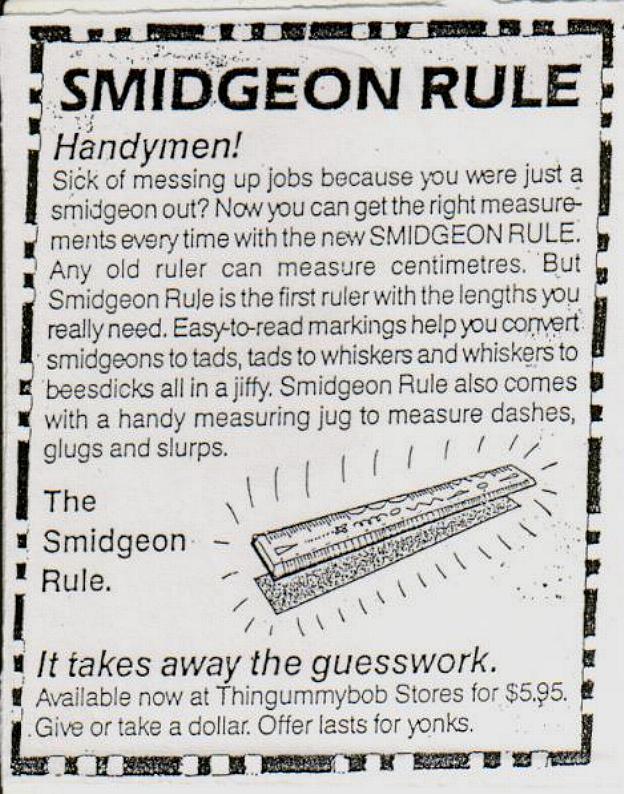
Australia is being de-metricated!
in AUS/NZ General Discussion
Posted
OME - And with the last sentence, you opened another can of worms - fastener grades and classes, and the differing grades between metric and inch fasteners - and even differing grades between various brands of inch fasteners!
Caterpillar utilise a Grade 9 fastener, which is outside "normal" grades of fasteners. This is the highest grade of fastener you can buy, it's 180,000 psi (1240 MPa) tensile strength, and is used for track shoe bolts.
Unbrako manufacture their Allen-head set screws to 10,000 psi (69 MPa) more tensile strength, than the specifications demand, and run wider radii in the thread root, and at the shank-to-head juncture, to make much stronger fasteners.
The sites below provide some very extensive information, as regards fasteners.
https://www.fastenermart.com/understanding-fastener-grades-and-classes.html
https://www.boltscience.com/index.htm?