


onetrack
-
Posts
8,094 -
Joined
-
Last visited
-
Days Won
101
Content Type
Profiles
Forums
Gallery
Downloads
Blogs
Events
Store
Aircraft
Resources
Tutorials
Articles
Classifieds
Movies
Books
Community Map
Quizzes
Videos Directory
Posts posted by onetrack
-
-
Let's see how good Google really is ...

-
Well, we are on the internet here, and we all regard the internet as our own big library right at hand. But Google is not always 100% right, as pmccarthy says. And I can stuff up Google searches by altering an internet photo, so Google algorithms don't recognise it.
Remember, these are the same Google algorithms that the marketers use, that direct you to a personal vibrator ad, immediately after you've gone on a search for a "vibrating roller".
-
 1
1
-
-
....any additional drag created by certain conditions - such as sliding over saltbush at low altitude in ground effect, would create unacceptable strain to the powerheads, resulting in catastrophic failure after less than 15 mins at full throttle.
The end result of catastrophic powerhead failure under these conditions, cannot be anything other than total destruction of hundreds of metres of verdant saltbush, leading to severe penalties, as the sheep fail to gain condition.
However, this total destruction can be easily avoided, if maintenance facilities educate themselves as regards the AD, and the recommended modification of simply replacing the above-numbered powerheads with........
-
The Sikorsky S-21, also known as the Sikorsky Russky Vityaz (Russian Knight), the world's first 4 engine aircraft, built in 1913. It was powered by 4, 4 cyl, 100HP Argus engines.
In the finest Russian fashion of making things strong, like Vodka! - it was built in the Russian Baltic Railroad Car Works!
Igor initially designed it as a twin-engine aircraft, but it was seriously underpowered, and failed to get airborne! So he just added 2 more engines! - whereupon it flew, and flew quite well.
The size of the Russky Vityaz led to debate about it being a hoax perpetrated by the Russians - as, at that early stage of aviation, no aircraft of those massive dimensions had ever been built - let alone flown.
The Russky Vityaz was 20M long, had an upper wingspan of 28M and a lower wingspan of 20M. It could carry 7 passengers - but its flying speed at 49kts was "leisurely", to say the least.
In line with the incredible machines construction, it was also destroyed in an equally incredible manner. Whilst parked, an engine fell off a passing Morane single-seat aircraft that was landing, and the engine fell right onto the S-21, causing so much damage to it, Igor chose not to waste large amounts of time rebuilding it - and went on to his next design, the Ilya Muromets.
https://babel.hathitrust.org/cgi/pt?id=pst.000063000085&view=1up&seq=284
-
 1
1
-
 1
1
-
-
.....Simmons let rip with another anal expulsion of poorly-digested Gumbo. Then suddenly, Const Simmons screamed, "Someones stolen mah steerin' wheel!! Call da cops! - Call da cops!!"
Const Doubtfire replied, "You haven't got a steering wheel, because you're not in America any more, and the steering wheel is on this side! And why would we call the cops, when we ARE the cops?"
"Whhhoooo boyy!", sighed Simmons, "for one moment dere, I wus sure I wus back in Noo Orleans, and we had......
-
Redex is still available - but not from the Redex Company, which was bought out long ago. It's now owned by Holts Lloyd and they produce a range of Redex fuel treatments.
I still have some of the original Redex, in an original Redex gallon tin!
Golden Fleece products were exceptionally good. Their oils were top-notch, I used GF oils and greases and fuels in bulk for many years, in the '60's, 70's and early '80's
-
 1
1
-
-
Soaking in plain cold water is one the best and simplest ways to soften carbon deposits.
Then there's "Redex", too. Brush it on and leave it for a day - then the deposits will come away easily with a brush and some petrol, just like magic.
-
1
-
-
Glen, don't forget that valve guides can get worn oval, and measuring them for ovality, as well as for high spots and low spots, is important to ensure you end up with guides that are within specification.
-
I hope you've got some kind of permanent warmth being applied to that engine, to prevent corrosion buildup.
Oil largely drains off surfaces over a few months, and those surfaces lose any protective oil coating, thus allowing corrosion to start.
Even just a couple of permanently-lit 100W incandescent globes situated in the enclosed engine bay, will produce enough heat to reduce corrosion-inducing, wide temperature ranges, and moisture/condensation levels.
-
1
-
-
Glen - Stems are harder than guides, and guides are usually where the wear is. Valve guides are made from a wide range of materials - with cast iron and bronze being in the majority.
Cast iron is "hard" and bronze is "soft" - but you're not looking for hardness in valve guides, you're looking for wear resistance. Most importantly, you have to be looking at surface finish of a guide, so that it allows just the right amount of oil through, between stem and guide, to allow lubrication - without allowing excessive amounts of oil through, that causes oil burning and combustion chamber coking up.
The desirable surface finish for a guide is between 30Ra and 80Ra. Ra is Roughness average. Also known as the arithmetic mean, this measurement represents the average of all peaks and valleys. Lower numbers indicate a smoother finish.
-
I seem to recall someone on here previously mentioned the Rotec water-cooled heads conversion for the Jab engine - and the general opinion was, the gains were minimal, for a big increase in complexity.
Look at that huge pile of coolant hoses! Every one of them, a potential engine failure in the making.
EDIT: - I found the thread ...
https://www.recreationalflying.com/topic/36284-watercooled-jabiru-2200/
-
..... constantly saying to offenders, "Ya'll betta naht do dat heah! - 'cos mah Woadie is packing heat! - an' she ain't 'fraid tah use it!!"
On top of that, Constable Doubtfire was getting a little sick of Const. Simmons cooking gumbo and jambalaya for breakfast lunch and dinner. And also, when he lapsed into Creole, saying things on the radio, such as "Whoo dat?", and "Where ya' at?", and the one that stunned everyone, when he jumped into the Hilux and yelled out, "Laissez les bon temps rouler!"
It all went wrong for Const Simmons when he arrested a drunk, and he said to him, "Hold it raight dere, Mista! - or I'll put mah gris-gris on ya!!" - and the offender yelled out, "Hey!, this blokes a............
-
......couldn't believe that anyone could be so dumb, and not see the trees for the sky. And to top it all off, to be completely ignoring a raging shopowner in a Commodore, seeking retribution, and he could see it was not going to end well.
So OT decided it was time to take some action to help out Turbo in his predicament. He banked around and made a low pass, head-on, over the Commodore. The Commodore owner thought he was, "going to die!!", as he later told the assembled media ratpack.
He swerved to avoid what he thought was surely a terrorism attack on his Commodore and himself, and he managed to hit one of the large Eucalyptus that Turbo had miraculously missed.
The Commodore folded up (as Commodores are wont to do), and OT flew away, happy in the fact that he had saved Turbo's skin from a savage attack of Commodore-owner road rage.
But Turbo had missed all this, as he never even bothered to look behind him (in his normal boating, driving, and flying styles), and as he gaily boated along, oblivious to all but........
-
.....Turbo's compass arguments were a big part of the reason why he was perennially lost. However, there was general agreement that Turbo had done a wonderful job of rebuilding the Drifter with floats and Evinrudes, so he was well-equipped for landing anywhere on the face of the Planet, when he was lost.
In fact, Turbo had gone to enormous lengths to re-shape the Drifters fuselage into a comfortable boat shape - and added a rear engine and prop, inline with the front one, to ensure a very satisfactory level of powerplant redundancy.
However, there had been a problem with the weight creeping up, and this had pushed the Drifter outside RA-Aus registration - so Turbo elected to register it as a boat, instead.
When he was questioned about the fact his boat had wings, and looked like an aircraft, Turbo became quite animated, and went to great lengths to explain.....
(Dear NES Readers - just to add definition to the description, OT has found a photo of Turbos flying boat, and here it is, in all its dual-prop, dual Evinrude glory [Note: - the dual Evinrudes are carefully concealed behind those large sponsons] ...)
-
If you're holding (now-heated) air in the fins, and not letting it out, I fail to see what you're trying to achieve. The fins are there to distribute heat to the surrounding air, for cooling purposes, are they not?
-
The fact that CASA can't even produce a figure as to how many aircraft and of what type would be adversely affected by this proposed change, is typical of an underworked major bureaucracy trying to make more "oversight" work for themselves, without even running the basic numbers, and producing a benefits study.
-
2
-
2
-
-
There's no immediate community threat and the fire and emergency authorities appear to have it under control.
http://emergency.vic.gov.au/respond/#!/warning/15662/moreinfo
-
I wouldn't do it. If the exercise is to improve cooling, the silicone or o-ring material is going to reduce the fin cooling surface area, and the proper transfer of heat from the fins to the surrounding air.
Go with some shaped metal shrouding that is a distance away from the fins. You don't want to stop airflow around fins, you're defeating the whole purpose of finning for heat transfer.
I've worked on quite a number of air-cooled engines, and none of them ever had anything like this in their cooling design. Close-fitting metal shrouds in some places, but always fast-moving air flow.
-
2
-
-
...at that point, he decided to do a quick outlanding, and go for a Ferris Wheel ride - as he hadn't been on one since he was 8 yrs old, and could still remember the pleasure he got from it, back then.
Besides, riding on the Ferris Wheel would give him the ability to scout out the surroundings, to regain his bearings - because he was actually, completely lost.
It didn't help that his Ipad battery was flat, and he no longer carried paper charts, deeming them, "so 19th century", much to the chagrin of Ratty, who still carried every paper chart he'd ever picked up, in a fine leather bag.
The fact that Rattys leather bag weighed 23 kgs due to the weight of all the charts, and the same bag being a major factor in the poor performance of every aircraft Ratty hopped into, was completely lost on Ratty. He deemed them indispensable, and wouldn't be seen dead without that bag.
Meanwhile, Turbo had reached the top of the Ferris Wheel, and had pulled out his 10x50 Tasco's to see if he could spot any identifying, outstanding, nearby features - such as a large mountain.
But alas, the countryside around the Ferris wheel was as flat as a boardroom table, and there wasn't an identifying geological feature to be seen.
The Ferris Wheel moved forward, and Turbo sighed - it was time to put the Tasco's away, and ask someone......
-
1
-
-
Yes, the acetone and methanol mix does a great job of stripping any petroleum-combustion-origin, buildup, or deposits.
-
Always upgrade if you can afford it. Mechanical items of equipment get "old" very quickly, with the rapid passing of years. With the reference to "old", I mean - parts get harder to acquire, blueprints are thrown out, buyers become more scarce when your item of machinery is deemed "old". 20 years is a general guide to "old", as regards mechanical items.
Yes, you can still run them at 30 and 40 years old, but they are then classed as "antiques" - or in more kindly terms, "classic" - but nothing gets around the fact that they have been superseded, technologically, and design-wise.
Then there's the reliability factor of older items of equipment. Yes, you can spend big $$$'s making them as new as possible, mechanically, and electrically, and electronically - but often, it's the little annoying small non-critical things that break with age, that cause holdups and lack of availability.
I'd sell what you've got, and go for a newer machine that is fitted with the nicer and newer options, that you're looking for. Bugger the cost, it's only money - you forget about that angle when you're getting lots of pleasure from your new toy.
-
There are only two ways to soften epoxy potting mix, that I've found. One is SCA Throttle Body & Carby cleaner. This is a mix of Acetone and Methanol. The problem is, it liquifies most plastics, and all paints.
Number Two is a heat gun. Probably a better option. Use a pointed tip if you have a gun with a choice of tips. Good heat guns have a range of changeable tips.
-
You've got to get heat colouring showing in steel, before you change its heat-treated properties. So if you see straw colours appearing on the surface, you're approaching steel-strength changing temperatures.
-
1
-
-
Glen - The last review, and the last answer to the last question, below, are quite revealing. The manufacturer indicates the unit must be sent back to the factory for repair. This indicates it is repairable.
I've never had any luck in removing potting mix, the epoxy is usually designed to never be removed. Maybe Kuntzleman has some special solvent to dissolve it.
https://www.aircraftspruce.com/catalog/elpages/kuntzsc103.php
- Ron.
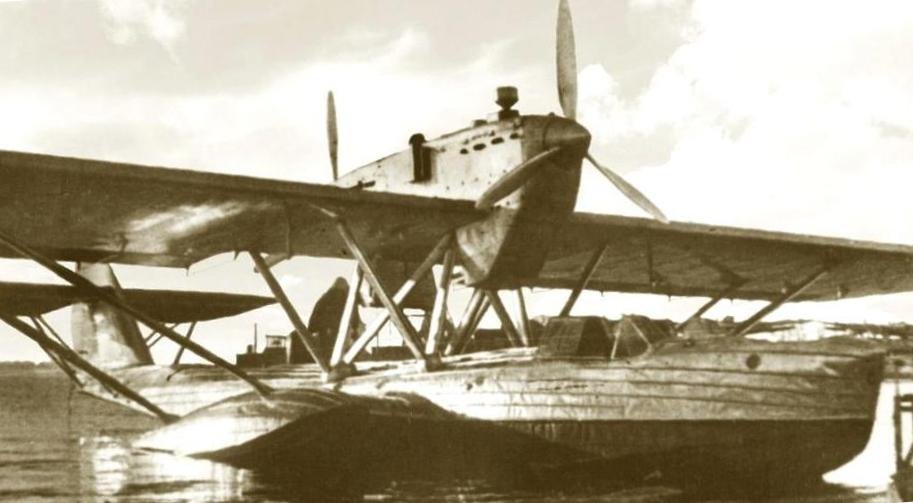
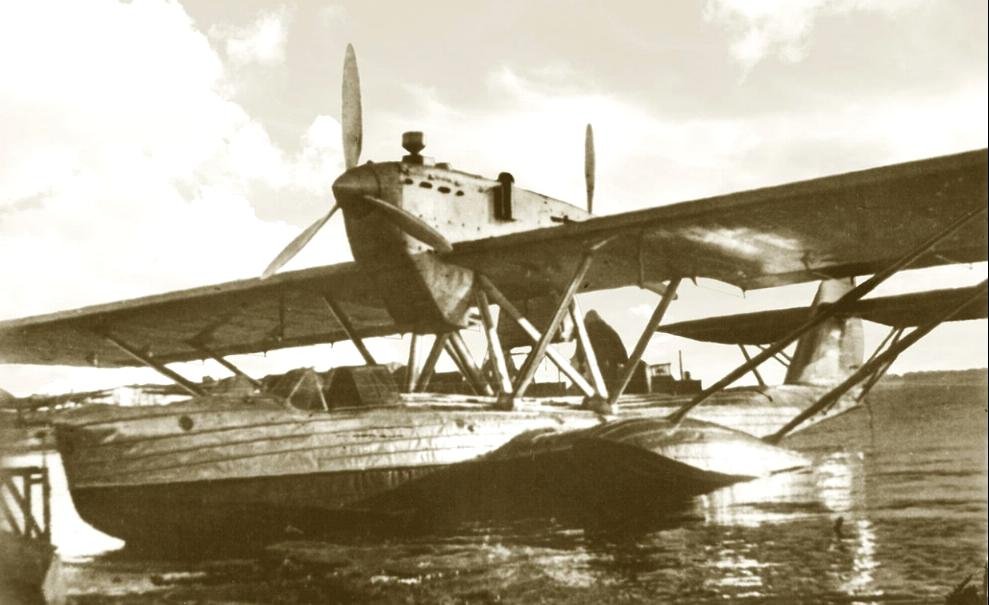
Guess This Aircraft ?
in AUS/NZ General Discussion
Posted
Nope, not English. Designed in the mid-1930's to be a Polar Exploration aircraft, only one prototype was built, it performed well, with the ability to land on both snow and water.
But the Govt of the day, after initially placing an order for 5 aircraft, then canned the project, for reasons unknown (political, or impending war, being the possible reasons for the about-face).