


turboplanner
-
Posts
24,363 -
Joined
-
Last visited
-
Days Won
159
Content Type
Profiles
Forums
Gallery
Downloads
Blogs
Events
Store
Aircraft
Resources
Tutorials
Articles
Classifieds
Movies
Books
Community Map
Quizzes
Videos Directory
Posts posted by turboplanner
-
-
It's OK, you're off the hook, you didn't accuse us Christians......
-
I had a look for Wicko's Titan P51 with the Chev 350, seems no one has You Tubed it after all those shows - it gives the Merlin a run for its money for tone.
-
I certainly wasn't talking about you Geoff; thanks for the update - it inserts some reality into the equation.sorry about that................ -
You can't wait for deaths these days; you have to take immediate preventative action if you control something even if it means going bankrupt. Since you and I reacted immediately when such a mild hit caused a releated fire, many others would know more.
So this could get very interesting. Furthermore, since a person of reasonable intelligence close to the developing issue would have known that what he was doing was wrong, criminal charges may apply, and these cut through any public servant and politician's protecion.
-
 1
1
-
-
I'll read the book.
What's your opinion of Les Carlyon's version John?
-
 1
1
-
-
I agree - potential over-reaction is the most concerning thing and it would be nice for RAA to start pro-active discussion ahead of any automotive based blanket standards.
Ironically GA pilots have a better chance of not getting caught up in this.
-
Well the topic was "Oh not another one" about a crash, but it seems to have been hijacked.
-
VFR, my point was that the people whose property has been damaged, who've been injured, or have been killed because of negligence have grown to such a proportion that the laws were changed to protect them.
For example, from memory 40,000 Australians a year are hospitalised because of food poisoning - where someone who has cooked and given them or sold them food, but has been negligent in it's preparation.
The problem with the new laws is that they only kick in when there's an accident, and it's hard to prove you were not negligent when there's someone lying on the ground.
The "I fly by myself and the risks are mine" story comes up quite a lot, but I was pointing out that even then you could be unlucky enough for a part of the aircraft to fall on a house or a person, or to collide with a fully loaded Dash 8.
So any allegation that age reduces the safe operation of an aircraft below the Industry's cutting edge standard needs to be addressed if we are not to finish up with an over-reaction.
-
 1
1
-
-
Absolute safety might be an illusion, but it is prudent that one of the highest risk areas gets the nest design and materials.
The downside of something failing could be a spray of fuel under pressure leading to a fire in the air.
In building and racing cars, I've seen line failures and fires as a result of corners being cut with a lot of laughs all round since no one was hurt and the operations were ground based.
Aside from the vibration and heat issues, another consideration is the relatively high pressure, where the elasticity of plastic fittings over time leads to cracks. My experience is this occurs usually on the inside of 90 degree bends.
As a minimum I always fitted reinforced lines, but in drag racing where the fuel line is about the side of a garden hose, and to make 12,000 hp the flow is about the same, lines are reinforced by woven steel to take care of the elasticity.
Because of the potential for an airborne leak, I would be recommending steel reinforced lines and threaded steel/brass fittings.
-
3
-
-
VFR is not taking current public liability laws into consideration; they are what's driving this - prohibiting the CWA from selling cakes unless they have completed a food handling course etc.
Even if you fly by yourself and only kill yourself, property may be destroyed, other people may be injured, and your estate will be sued - so loved ones could finish up destitute.
Negligence has to be proved in a Court, so the cases driving this aren't frivolous.
-
Diabetes restrictions
It looks like this has just been changed in March 2013. I'm not familiar with the levels, so don't know whether the latest version is good or bad.
Embedded in this link is a link to the Austroads site detailing the changes from the March 2012 version
http://www.diabetesvic.org.au/living-with-diabetes/driving-and-diabetes
-
Given that RAA by its nature has older pilots, then it's critical for RAA itself to be proactively working to achieve appropriate medical standards rather than just piggybacking on whatever broad-based standards are applied to car drivers.
-
Or the ridiculous hair splitting changes by CASA.
-
You'll be waiting because, although I know I have to bring myself up to date anyway, I haven't got the time to do it right now.Would it be so hard for Jabiru Phil just to look up the current regulations, and get it 100% right, rather than just rely on what someone "does", or worse, take the advice of someone posting superseded information because they hadn't kept up their recency.Point me to the page if you knowI think I spelt out my concerns in English. What does this forum do if you can't ask a question.
I shall await a response
Phil
It unfortunately is not a matter of one page. To be sure, it's probably two or three hours work.
For example, I've learnt not to just trust the Visual Flight Guide, and there is always the situation where one CASA document is up to date and contradicts another which has yet to be updated.
For people flying every day this is not an issue, they might screw up and be told on the radio, or there's talk around the office and they get seamlessly updated with the many changes.
For people like you and I, who fly for recreation it's a nightmare, and the hardest part I find is unlearning the previous procedure.
In my opinion CASA are contributing to an unsafe situation by having multiple streams of regulation information, "guides" which don't have the complete information, and sometimes conflicting advice which makes it so hard finding answers to the sort of question you raised.
I grew up with full reporting, so you did make the calls you refer to and you could pretty much place every active aircraft in your sector and know when an RPT was headed your way, but we are at the other extreme now, and I'm of much the same opinion as you. I fail to see have someone broadcasting into a fifteen minute silence could be cluttering up the airwaves. If not anything else it used to confirm that your radio was still transmitting and receiving.
If you are lucky, your instructor will outline the nesting of CASA documents, so at least you have a place to start, and documents to search and tick off, even if it does take a long time, but the days of memorising Air Leg and Radio like we used to do are gone. You instructor will also stress going through those documents to get information on updates, and to keep yourself current. RAA seems to fall down in really keeping up the tuition beyond circuit flying and basic aircraft handling which is why we have so many Radio, Nav, Performance and Operations and Planning questions with so many varying responses.
Of course there is no reason you can't ask a question - but the problem is as PIC, if you get a Dash 8 through the right ear by doing the wrong thing you can't claim you read the procedure on a forum, and the reason for the accident could well be incorrect information on the forum.
In just reading this thread, let alone a few of the other radio threads, you will see advice to use superseded procedures, and totally opposing advice. The reason I reiterated hitting the books is that none of us other than daily flyers would really be able to separate correct information from incorrect.
-
Being self critical will save you from a lot of incidents, because you tailor your behaviour to your present capabilities - these people often go through life with virtually no accidents.I know myself, in relation to riding dirt bikes, I still do it, just not as often as I used to, and as I've aged( I'm over 40), I have lost a lot of the edge, (the sharp judgement and quick instinctive reflex) that I used to have when I was younger.What you are saying could be correct, but also the cause could just be the lower frequency of riding - so if you returned to doing it as often as you used to, it's possible you could get right back in the groove. My own experience with racing was that if I was building a new car and away from the track for 12 months, I was hopeless and had to start all over again to get in the groove. It only took two or three heats, but I always made sure I ran rear of field.
Again, this self critical attitude in my opinion is a much bigger factor than is generally recognised and stops you from opening that throttle wide and getting into trouble. I can tell my driving is off after two beers, and become more cautious accordingly.I still ride road bikes regularly, even then though, I can detect, a difference in my riding after a few weeks off the bike, and as I've aged, that difference has become greater. I can still outride, many younger riders, but, I can pick the difference in myself.It might also be that as I've got older I've slowed down in reflexes and I have to accept that as a fact, but I've mitigated this by reducing the number of borderline situations. It would be interesting to include this factor in crash investigations.
What I found from extensive studies of race crashes was that speed was only incidental (since we were encouraging the drivers to break records), but environment saved lives (removing solid objects from the field, providing a concrete safety fence and catch fence, allowing some progressive crumple but preventing driver crush, securely restraining the driver, providing fire resistant clothing, arm restraints, neck braces, head protection, and equally important - controlling driver behaviour.
Most of this is not applicable to pilots, not the least reason being there's a low incidence of impact from predicable directions.
However behaviour does transfer, and will save lives.
-
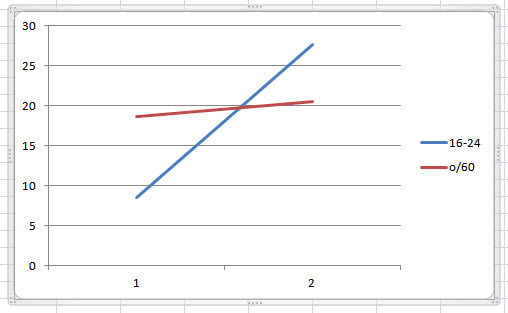
16-24 year olds are 8.53% of the population but were the driver/rider in 27.7% of crashes which involved a fatality & 38.3% with serious injury
60+ year olds are 18.61% of the population but were the driver/rider in 20.5% of crashes which involved a fatality & 12.8% with serious injury

These are your figures for fatals only. The young people are over-represented for their number, and the over 60's are over-represented slightly.
This is consistent with National and State figures I've seen through the years, and results in governments throwing big dollars at education programs for young people, which so far have missed the mark. Young people are on the road a lot more, and often partying, which introduces the influences of alcohol and fatigue as causal factors.
What would be helpful here if older people were to be accurately assessed would be a similar analysis by year of the over 60's group.
But given the low over-averaging it wouldn't save a lot of lives.
I've been involved in assessing race car and truck figures in finer detail, and one particular year in Victoria the State had managed to achieve a record low fatality figure, which included 47 deaths. Since we almost knew who they were, we analysed every one, and found that about 43 deaths resulted from going to sleep at the wheel - all out on country roads. Several years later the end result of a lot of effort by a lot of people was a set of stringent fatigue regulations and a formal chain of responsibility path, where if the distribution manager ordered a truck to get goods into Adelaide "by 6 am or else!" and the driver was speeding or fudging his log book, the distribution manager was charged. Within three years of this legislation biting we are seeing a measurable drop in truck fatalities.
I mention this to show that if you do the research methodically and it does show up a trend, then corrective action will produce tangible results.
Conversely, if you don't get the research right, and just target a population group randomly, you get a lot of angst and no reduction in accidents.
So FV I think your figures do point us in the right direction and do tell us that the "older pilot" issue needs to be approached methodically.
-
 1
1
-
-
Great to see the decisive action taken, shouldn't be too long before all are back in the air again safely.
-
2
-
-
I’m making a response to Jaba Who's post not necessarily because I disagree with him – probably neither of us have the time to pull research records and source the data, but because RAA Certificates are linked to Driver’s Licence medical standards and some unusual and unfair knee-jerking is occurring at the political level which could end the flying days of a lot of older people.
The Police repeatedly come to the defence of older drivers, quoting accurate accident data which shows them in a minority, but this focus by certain sections of the community on older people will have a bigger effect on flying because most of the people who can afford aircraft or hourly rates are right in the sensitive age bracket.
So I’m posing some questions on what Jaba wrote – his post is in blue italics.
We are now using technology (functional MRI and PET scanning) to measure brain activity when people undertake repetitive tasks, new tasks and assess situations that are familiar, new and illusory. And the outcomes are scary
When we test reflex timings, cognitive interpretation, spinal arc times and flash image interpretation (and a whole array of things) after age about 43 EVERY human being has degraded responses. The loss is then logarithmic as age advances.
The key interest for motorists and pilots is not necessarily the brain response, but the response time to conclude correct action.
So for example, we can train ourselves by regular flying to respond instantly with throttle to windshear without even thinking. Our average time to response conclusion might be 50/100 second, fast people might be 25/100 second.
If we are affected by alcohol, and this can be as little as one glass of beer, or if we have a restless night our reflex reaction time can double.
But if we haven’t been flying for a few months, or have only flown in good weather conditions about once every month or so, we lose the reflex reaction, have to revert back to thinking about what to do and analysing what to do first – so our response time to completion can be around two or three seconds – six times as long, and with that delay, a number of actions in a number of cases will be too late and there will be an accident.
If something happens which we never expected, such as a huge bird flying into our flight path, or a vehicle driving across the runway, there is a “disbelief” factor which can stretch the delayed reaction by quite a few more seconds as the brain overco9mes its disbelief and shock, and comes up with a plan of action. Most of us have witnessed this in some form of action where we willed the person to do something but he just continued frozen into the accident.
In relation to the research you quote, what I would like to see is how it fits in with what I’ve outlined, and where it would be applicable.
For example what is the magnitude of degradation?
If it is 25% then the difference is not going to be more than the natural reaction time difference between slow and fast people.
If it is 50% that the response time to correct action is one second – still half the reaction time of a 20 year old pilot who hasn’t been regularly flying.
In that instance there’s not a case for pulling the licence of the older person.
Now I am not saying that there are not individuals who have lost LESS than others. There are but the majority, by far and away follow a pattern of loss which is testable and predictable. And coupled to that is the loss of the ability to interpret that the deficits exist. Often the greater the loss the less the individual is capable (or willing) to accept the loss exists. Sort of like the brain decides it needs to hide the loss from itself lest it all be too depressing..
What I meant with my earlier comments, is the ones who have lost less, or who meet the minimum standards should be allowed to drive/fly.
The decision, particularly in the light of the second part of the paragraph, is that the test should be external and ongoing at a known interval.
It has been repeatedly shown that if the situation that is before a person is familiar (and true) they are able to rely on memory, habit and training. The problem arises when the response is required rapidly (to prevent degeneration of the situation) or the situation is unusual, or is unfamiliar or changes rapidly or requires interpretation or contains any scope of illusion that can be misinterpreted. There is a direct correlation with age and decreasing capacity to "work on the fly".
This test, if applied to a complete age cross section I’d suggest, will produce two groups – those who respond accurately under pressure and those who don’t.
A person can often adapt to this with a pre-planned response. For example, my grandmother could never seem to learn how to do a handbrake start – even when she was young. When approach her ‘80’s and subjected to regular testing, she always arranged the test for a neighbouring town in flat country. The Police got wind of this, and next time round she was told to do the test in her home town, and the cop took her to the steepest hill and told her to park there. She said “But I’d never park here”, and he let her off.
I accept that pre-planned responses can mask the ability to react to an emergency, but in that case we need to test their response to an emergency – they may be in the first group I mentioned above.
They include the hugely experienced 80 year old who went to sleep and flew through Melbourne controlled airspace on auto-pilot and woke up when he exited the other side and ATC saved the day.
Was this age related or Human Factors related?
I hit a post at the age of 18 after falling asleep at the wheel, a lot of others under 25 in my district died. You would need the data on whether he regularly fell asleep as a direct result of age.
The 70 year old who finished his home built after 10 years and crashed it on not only its first flight, but then again on its first flight after he repaired it! His families intervention and illness finally stopped him having another go.
We’re about to see a crash I suspect from someone who is old, but the cause will be that he is hard headed and will not let a professional test the aircraft. The question about the example is whether he followed procedure and had the aircraft flown by a test pilot to iron out any design or build faults and the answer is a telling “No”. The second question is what was his recency, training and hours on type, and we don’t know.
The 80 year old who suffered a number of heavy landings and dubious in-flight issues, and who only stopped because his arthritis stopped him getting into his plane. We all have seen or heard the stories and thought some-one should stop him, but what can you do?
Same again, from this report we don’t know, but it might well be that the family knew his skills were deteriorating.
Conclusion
We need to start to examine this subject and find some answers before anyone else does, because it is not as clear cut as some people think.
I had stereotyped “too old” as being when drivers put their foot on the accelerator instead of the brake and went straight through a shop. It seemed very straightforward.
I thought it had come to me one day pulling in to a Bunnings car park when the car failed to slow down as I put my foot on the brake. I pushed harder and the car tried to accelerate, and I finished up against the concrete divider looking at a nice new BMW standing on the brake with the engine roaring, at which time I turned the ignition off.
This was a “disbelief” situation which had taken 3 or 4 seconds.
I thought the throttle had jammed open, so shaking, I set the transmission in park, pulled the handbrake on and gingerly started the engine. It just idled.
Luckily the same thing happened a couple of days later but on an open road coming up to an intersection, and I had time to see what was going on. I had progressively been braking further and further out on the brake pedal until only half my foot was on it – so when I pressed harder my foot contacted the throttle pedal. I few days forcing myself to use a less comfortable position ensured I’ve driven like a young person ever since.
We always need to investigate before we make snap decisions on people’s livelihood or quality of life
-
1
-
-
Jaba, I think the age issue is so important that you should split it away from this thread and give it its own space untainted from any suggestion age applied here.
We are at odds in some areas, but others I find very interesting, and they should be discussed and lessons taken away.
We have to be careful that we get it right, and don't penalise a section of the community as was done with the coming Diabetes laws which will deprive many of their drivers licences, also taking out some competent RAA pilots. The decisions there were not made based on accident statistics but by a leap to conclusion. They did involve the medical profession, but the medical information didn't match the driving safety requirement. The end result will be an added expense for diabetics to provide continuous test results, and where someone's blood test is out of the arbitrarily chosen limit for, I think three months in a row the licence will be cancelled. So a large chunk of the diabetic population will lose their mobility, and the side effect could be more community losses, not less.
-
Would it be so hard for Jabiru Phil just to look up the current regulations, and get it 100% right, rather than just rely on what someone "does", or worse, take the advice of someone posting superseded information because they hadn't kept up their recency.
-
I used the ignore button and it gave you an informative!
The next step from your assessment is to get an amendment through the Commonwealth Parliament to require an investigation on every aircraft crash which produces a fatality or major injury.
I'm not sure of the Labor Party system, and not 100% sure of the current Liberal system, but it would probably involve a submission being made to your local Liberal Branch, for them to adopt it, preferably while you stayed in the room with a big stick in your hand, which would send it to the State Conference who hopefully would adopt it and send it as a request to the Federal Parliamentary members, who if they agreed would raise it in the Parliament. A long trail I know, but most new laws pushed by the Liberal Party follow this path, and you would be looking at about a year to 18 months.
-
1
-
-
If you'd taken the trouble to spend a short time searching for previous accident investigation threads on this site, you would have information on the way RAA works.I don't have much information regarding the way that RAAus works, other than that it appears to be totally different to the way things operate with the CAA, BMAA and LAA in this country and so it's difficult to compare, if indeed, a comparison would be fair in any event AND,. . . I've noticed in the last couple of days that if someone questions what's going on, especially implying any sort of criticism, ( Of Anything. . . whether jokey or otherwise. . .) then the wagons are circled, and a proverbial cricket bat strikes the proponent very hard on the back of the neck. And this is a sad state of affairs.Before going on to RAA, some years ago a decision was made to cut the funding on general aviation (GA), in areas such as full reporting, detailed flight plans, personal met information, and crash investigation - stupid decisions in my opinion.
This also led to the Australian Transport Safety Bureau cutting back on its investigations, with detrimental results to pilot education.
This was an ad hoc decision, and had nothing to do with Australia's population or political system, and no relationship to any other country.
RAA is a quasi self administering body, quasi meaning that the Department of Infrastructure and Transport re-assumes chain of responsibility by requiring RAA pilots and maintenance personnel to comply with its regulations. It can also meddle in crash investigations if and when it wants to.
RAA, like boating, motor racing, horse riding and other organizations has no legislation for self investigation, for a variety of logical and legal reasons, and crash investigations come under the umbrella of Police in six states and two Territories.
Their operations nest with the State and Territory Coroners.
The two disadvantages of that are that Police never release their investigation details other than their evidence to the Coroner, and the Coroner's duty is to find the cause of death ie. fractured skull, rather than the whole picture which is what we would be interested in i.e. incorrect cable was used leading to a control loss.
So unless an RAA incident is considered so significant that ATSB is tasked to investigate it, we have to search for Coroner reports, and in many cases they teach us nothing because of the different objectives.
The end result is that generally with an RAA fatality we never officially know the cause, however this is offset to a degree by debate in the social media, which while not necessarily accurate, often produces brilliant training information for life.
RAA do report minor crashes such as engine failures, runway excursions etc. which appear every month in Sport Pilot magazine. They can be criticised for either cavalier presentation - where they know the details but don't publish them, or simply not asking a few pointed questions. For example, just saying that on landing an aircraft departed the runway in incident after incident, pointing to either faulty design or faulty technique, doesn't give is the information to upgrade our skills.
As for the rest, when a pom, paper or not, calls Australia a banana republic on ANZAC day, after we gave 60,000 lives in WW1 and 40,000 lives in WW1 to help Britain, we are going to get mildly agitated and not see the funny side for some time.
-
3
-
2
-
-
It's about decision making, judgement and reflexes and older people in many cases retain all three. I can't understand why this subject is being regurgitated without any evidence to go on. The other part could have a bit of smoke to it, but no one is talking.
-
Given a recent thread where someone was even suggesting using British radio procedures, and others put forward procedures superseded up to three times, it might pay you to do some study on this (me too by the way). There was a South Australian company producing a Radio CD which gave all the mandatory broadcasts and the correct phrases. You may have to first find out who is selling it, then whether it is fully up to date.
Instructor question
in Student Pilot & Further Learning
Posted
Jimmy, a bit depends on how many hours you've done, but if it's only a couple and the instructor is one of the few who think it clever to scare the sh$t out of a new student with severe wing drop before he's even given you the basics of control, then just remember, you're the customer and you can walk.
Having said that, I'm in no way implying that you shouldn't be able to pick up a wing in the stall - it's something you have to learn to do to ensure safe flying once you go solo, but you certainly can build up the degrees of wing drop a lesson at a time as long as you carry the exercise right through to the accepted standard before going solo.