

turboplanner
-
Posts
24,367 -
Joined
-
Last visited
-
Days Won
159
Content Type
Profiles
Forums
Gallery
Downloads
Blogs
Events
Store
Aircraft
Resources
Tutorials
Articles
Classifieds
Movies
Books
Community Map
Quizzes
Videos Directory
Posts posted by turboplanner
-
-
We still need a battery break-through to make cruising feasible; the break-through s have been announced for the last 30 years- from the mid '80s.
The upper surfaces of an aircraft, and the fact that it cruises in clear conditions make solat powers very attractive distance extender.
-
 1
1
-
-
That could be, but the last time I had a look at the FAA regulations, the carefree era was over there too and they were adopting ICAO standards as fast as we were.Ah yes ICAO harmonisation, the road to the death of GA in Australia.-
1
-
-
This is in the wrong forum.
-
If the NAIPS forecast is for 3500 metres visibility against the legal requirement for 5000 metres, and the NAIPS forecast is for overcast (solid cloud) at 200 feet against the legal requirement to fly above 500 feet (and maintain the legal vertical distance from cloud at that minimum height), I would be considerably short of my legal obligations on either one and there's no possible way I would be committing to flight. (We would not be flight planning to take off from the safety of the ground and fly below 500 feet due to stress of weather; that's there for when the weather was legal at take off but closes in en route).After a relatively quick (2 hours) search of the regulations, all I could find to determine VFR conditions and if it is legal to take off for Day VFR is as follows;1. Forecast - If you can obtain a forecast then cloud must be at least 1000' AGL above the highest obstacle 10nm either side of trackIf no forecast then pilot is satisfied that the weather at the departure point will permit the safe return within 60min.
2. Alternate - The forecast cloud must be Scattered or less, 1500' AGL and 8km vis (not applicable if less than 50nm)
3. Takeoff/Enroute/Landing - Class G: below 10,000' - 1000' vertical, 1500m horizontal, 5km visibility. AT or below 3000' AMSL/1000'AGL; clear of cloud and in sight of ground or water, 5km visibility - MUST HAVE a radio and used on appropriate frequency.
4. Reg 157 may fly below 500' due stress of weather.
For IFR the take-off minima is black and white, but for VFR it can be down to interpretation; for example, there are no TAF's for my departure, destination or any airfields along my track. The ARFOR that I have obtained shows cloud above 1500' and visibility of 8km. However at my departure the cloud is low and I estimate that it is 800' and I guess visibility to be 5km and I'm satisfied I can make a safe return. I do not need an alternate due to forecast. I jump in the plane and take off. At 600' I start entering cloud, I drop to 500' and can see the ground and if need be due to press of weather I can fly less than 500' if I need to so I head off to my destination. Have I broken any Visual Flight Rules?
Please provide references to any rules that have been broken.
-
 1
1
-
-
This thread is about RAA reports.
-
2
-
-
-
.There were 821,500 workers in South Australia as of 16/3/17.I read recently that SA now has more QA, safety and training people than they do actual workers, and we can see how that's panning out for them -
Any dreamers out there who think they can wing it or gamble that OH&S matters can't touch them might be interested in what's happening at the Hazelwood Power Station in Victoria:
-
1
-
-
Hazelwood's French operator to stand trial over 2014 fire in open cut coalmine
This story refers to a Worksafe trial; what the victims do comes next.
This case is on about the usual timeline; the surprise expressed by the Operators is interesting, because you would expect such a large operation to be aware of the process.
-
-
-
Wrong; OH&S goes massively beyond box ticking, and has evolved into a safety culture, which is many cases is resulting in increased productivity at the same time as reduced injuries.Pick almost any non-governmental company. The fact that the box is ticked means they comply, what is there to find?The regulators and their safety reps all like to believe that the world would collapse without them, reality is that most people are smart enough to work safely anyway and you can't help those that aren't no matter how hard you try.That'a what's happening right around Australia.
-
1
-
 1
1
-
-
Crystal ballHow did you come to that conclusion?-
1
-
1
-
-
Correct, but I don't believe 50% are no reporting.Not quite true. If the half not reported were the Rotax failures then the would be a problem but if the under-reported was across the band then the analysts could do some extrapolation. The fact that something happened is as equal importance as the rate of occurance for some events. -
He and the aircraft could be IFR rated.A Tobago is the type of plane that would be IFR equipped, and You don't buy one of those as a first plane. I'm guessing that the pilot was IFR rated. Isn't that a requirement for pilots who volunteer to carry out this sort of flight for the charity involved?OMENot sure about the requirement, the one which went down at Horsham was flying VFR from memory.
-
The news media have reported delays to commercial traffic at the time, and on another forum someone reported a Rex doing a missed approach.
Someone claimed that the Met report at the time was visibility 3400 metres and overcast at 200 feet. If correct, that would make it an IFR flight requirement.
-
1
-
-
Barring a major change in the laws of every State and Territory, RAA don't have to make a major change in investigating fatalities, and accidents or a series of accidents where a State Coroner decides to step in.To do the analysis properly you would need quite a lot of flying experience probably with an emphasis on training and accident investigation plus the skill to evaluate the risk factors evident in the event. In some events there won't be enough information to associate the outcome with a definite cause particularly if the pilot is deceased. "Our" planes don't have the usual recorders but they do often have a GPS operating which should be encouraged. On board camera's would help too. Witnesses testimony varies depending on skill and knowledge as to whether it's much value. NevThis leaves incidents which may or may not produce no injury or damage, and accidents.
There would be quite a few RAA members out there who fit the description you're recommending, and the recording equipment you're suggesting would fit into a $20,000 to $150,000 budget for aircraft ownership.
With a will by RAA, there's no reason they couldn't get to where you're suggesting.
With the current company structure there's less chance of setting up a voluntary Compliance and Enforcement group to cover all districts, as other sporting organisations do, but this may come after a particularly bad set of fatalities.
-
1
-
-
No, I'm just responding to what you said.Are you saying the membership are driving it? Now that's a bold assumption -
Care to enlighten us on where or which industries these companies might be found?The fact that box ticking is a poor excuse doesn't meant that's not what it is. There are thousands of companies out there with Safety Management Systems and accident/incident reporting that are doing it solely because they have to tick that box, just being seen to have done something. It's just another means of corporate arxe covering, which wouldn't be necessary if we didn't a counterproductive legal system awarding dills massive payouts for not thinking.There are State and Territory bodies inspecting, enforcing and investigating to make sure none exist.
-
Who said CASA require it? I would be checking before I relied on a lazy assumption of FT.And that's the point. Because casa require it without being able to point to the value added means...... -
It has an SMS needs to minimise injuries and fatalities. If the reports are up to the standard of Pilot Notes, you can get quite a lot of information which will make you safer, e.g. Engine choice, excessive runway excursions etc. However a lot depends on you; RAA can only report what you tell them. If one claim here is correct - that only 50% of incidents are reported, that's cuts the usefull database down by 50%. If you lie in your report that could contribute to someone else being killed or spending their salary fixing a problem they should have been warned about.But if they really are not interested then what's the actual purpose of capturing the data or having a safety officer ? Please ignore box ticking as the answer because that's a very poor reason for the association to spend its money on. -
Total Labour force April 2005: 9,934,700 - May 2017: 12,097.000 - Increase 21.7%OH&S has prevented a lot of accidents: mainly certain people getting accidentally sued (because they were seen to be "doing something") and I suspect a lot of workers have lost their jobs due to the rapid increase in the cost of building anything these days, so therefore accidents have been prevented. Remember empty workplaces are safe workplaces.Unemployment: April 2005: 5.2% May 2017: 5.9% - Increase 9.6%
The employed are expanding faster than the unemployed.
-
"it was scheduled to fly to Adelaide Airport at 9:50 am
"..due Adelaide Airport just before 11:30 am
"It was then expected to fly from there to Murray Bridge at 12:10" - Adelaide Now
-
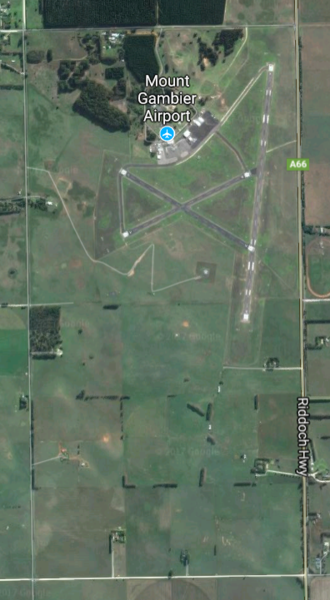
The location is the intersection in the bottom LH Corner

Electric Aircraft interest?
in Aircraft Building and Design Discussion
Posted
Sometimes you can guess it; more often you can't but the potential customers often come up with pointers.
I've now been a part of, and studied what constitutes the RA community, in Australia, for about a decade, and it's interesting that it's in quite a different and more conservative space today than it was even a decade ago.
If you look at the products being sold, they are predominantly conventional configuration aircraft which are suited to local flights, and an occasional cross country adventure; the oddballs such as the flying inflatable boat, and the various extreme designs, have fallen away.
The Facet Mobile was presumably named from the facets of a gemstone, but has Oregami origins. This design, and flying wings, flying saucers etc, I would call close-coupled. They have the ability to pitch faster and more severely than something with a tail-plane a comfortable length away from the wing, able to apply much finer control.
However, there will always be people who go after the unique; you will often see one or two of these designs in RC clubs, usually flown by one of the most skillful operators, because it takes a high degree of skill to keep ahead of what this type of aircraft can do in an instant.
The demographic of RA pilots is people who have come from all walks of life, often late in life, and who "just want to fly". Often, they don't want to have to learn the principles of flight, they don't want to learn navigation, they don't want to learn radio, they don't want to learn Met, they just want to fly.
This points toward a conventional aircraft, designed to be as foolproof as possible.
Electric, as others have mentioned removes the in-flight variation in weight distribution, and also opens up the possibilities with a lighter motor, and power modules which can be shaped, to optimise weight distribution, and in some location, form the outer skin for cooling.
There is also a huge solar catchment area on the top and side surfaces; and that opens up the concept of an aircraft designed to take off, cruise, and descend on solar only, with batteries held in reserve for an emergency landing. Have a look at the history of the World Solar Challenge, a car race from Darwin to Adelaide, where 30 years ago, the first cars were streamliners with in some cases, push bike wheels, and they got faster until the NT 130 km/hr speed limit had to be built into the rules, and then upright seating was mandated to add wind resistance, and more lately solar panel area has had to be reduced to try to stop the cars running the full distance at the maximum NT/SA speed limits.
This is an ideal opportunity for thinking outside the square.