

turboplanner
-
Posts
24,363 -
Joined
-
Last visited
-
Days Won
159
Content Type
Profiles
Forums
Gallery
Downloads
Blogs
Events
Store
Aircraft
Resources
Tutorials
Articles
Classifieds
Movies
Books
Community Map
Quizzes
Videos Directory
Posts posted by turboplanner
-
-
this is from wikipedia, not sure how accurate it is TP, I'd love to see you data. Archerfield is the biggest GA airport in Se.QLD[ATTACH=full]54062[/ATTACH]
The data is direct from BITRE, and has a top ten calculator on the spreadsheet, so should match up with yours.
-
This link, from BITRE (Bureau of Infrastructure, Transport, and Regional Economics) shows passenger movements and airport movements from 1985/86 to 2016/17
You can open the excel file, select the airport you want to study, and see for yourself the current state of GA at each of these airports.
You can see steady growth at Airports like:
Albany
Armidale
Charleville
Coffs Harbour
Longreach
Wagga Wagga
In each of these there is a market influence like tourism or business driving the figures
You can see the mining industry growth, and current turn down at Airports like:
Emerald
Karrathta
Port Hedland
Townsville
The fortunes of these places are driving by the mining industry and the government's policies.
Your can see another group which have a fluctuating curve; some years they have increased volume, others decreased volume.
And on the first page you can see the overall trends.
The big drop in the graphs, was around around 1999/10 to 2002/3.
https://bitre.gov.au/publications/ongoing/files/WebAirport_FY_1986-2017.xls
-
That makes a lot of sense. QANTAS had previously announced they wanted to get a bigger share of the Chinese market, and the numbers of aircraft would be big.I bet you this is aimed directly at the Chinese market! They have already stated that they are in desperate need for pilots, so what better way to cash in! :) -
So where did the current QANTAS intake come from?
-
Well if GA is stuffed, the QANTAS decision isn’t going to make any difference is it.Excellent detective work thereMost in the GA industry know that GA is stuffed, CASA and a few other factors like you mentioned are responsible for the decline! -
Very good strategy; it produced an immediate inquiry!
-
 1
1
-
 2
2
-
-
Whatever the reason is for the current level of activity there is in GA, there is a current level of activity.
Within that level, student pilots have been progressing from PPL to CPL, providing a source of instructors as they build their hours up, and then going on to commercial activities, like charter to mining areas to build up enough hours and experience for the likes of Qantas to be interested in hiring them.
This announcement of Qantas to set up their own in - house training, could mean that prospective airline pilots will go straight to Qantas to be trained in Qantas corporate requirements from the very start of their flying.
This is likely to have an impact on the current level of activity of the GA sector, because the pipeline of training which resulted in Qantas placements is likely to dry up, unless Qantas does not intend training all pilots.
-
For a GA pilot hiring a GA aircraft?I think it's not as much fun. Too much regulation. It IS much more paperwork than it was. People don't hang around aero clubs and when I go past Benalla there's hardly any activity. Same at Porepunka and Wangaratta.. Dead. Nev -
Thanks for the detail; some of these are generic, some are individual issues. I’ll go right through them but out on the road now. I did an exercise a while back and found a new C172 with glass was around $350,000 - about the same amount of weekly wages it was in the 1970s.Can't fly in a GA plane less than 30-40 years old at most aero clubs.Can't fly at my local airport without paying 600/hr for circuits IN MY OWN PLANE.Can't add an experimental EFIS to a certified plane without CAR21M EO, which leads to;
Can't fly behind an EFIS at most aero clubs, stuck with antiquated vacuum gauges.
Require TSO'd GNSS position source for ADS-B. Can't use Dynon/Garmin solutions for experimentals.
Can't import a US plane at a reasonable price due GST being applied to landed cost and exchange rate.
Can't buy a reasonably-priced NEW aircraft anymore, though this is a worldwide problem now...
Airports closing, being sold off, or otherwise being rendered inaccessible due cost/insurance/admin issues.
Can't owner-produce parts for certified aircraft.
Can't owner-maintain certified aircraft for private ops.
Can't access an RPT airport without an ASIC. Which you now have to renew in person....at whatever cost every 2 years.
Can't get hangarage at reasonable rates at an awful lot of airports due council/owner/insurance costs stifling investment.
And I'm sure others will have plenty more examples.
-
What is it that you can’t do, or are restricted from doing KR?Of course it matters. Australian GA is dying - and has been for years. These students that Monash - and others - are training do not go on to fly in Australia, they bugger off back to their respective home countries and fly there. Additionally IMHO, there's a huge difference between the likes of these sausage factories with their international students and integrated courses that are propping up the movement figures, vs your average weekend warriors that either no longer fly themselves, or are not being replaced by the current Gen Y'ers and Millenials.Have a look at your average aero club - there aren't an awful lot of young folk coming through these days, most members seem to be at least 50 or older...And that's been the case since I first joined the DDAC 20 years ago! I reckon it'd be an interesting poll on RecFlying, if we asked everyone their age bracket. -
I must see if I can find the book; he described what they did which included casting a new piston. By then, country blacksmiths would have been milling gears and turning up pistons for steam engines and pumps, wouldn’ t think they were into weights yet, operating rpm would still have been very low.Don't tell me, ....... ' and got it weighed on the local butchers scales' !.... Bob -
It doesn't matter; Monash University went through income doldrums, and started marketing overseas, Monash now process a huge volume of students from Malaysia, Singapore, China etc, and is prospering with the money to build its own Cyclatron. They got out and made it happen.How many of those Moorabbin movements are training foreign students though?The Moorabbin management is not dissimilar, although there's a little too much emphasis on building commercial facilities, which affects aviation safety.
I have a book somewhere written by a South Australian pioneer aviator who started out at Glenelg in the early 1920s. He bough an aircraft, and started in the aviation business, which at the time was almost totally centred around giving joyflights. To get new customers in the operators had to fly from town to town like circus performers, and maintain the aircraft themselves. He describes one weekend at Clare or Kapunda where, late in a day of successfull joyflights, his engine seized. He pulled off the cylinder, and went to the local blacksmith's where he had a new piston cast and machined, fixed the engine and went on his way. Later on he described how there was less and less business and the industry looked like it was coming to a close as a temporary wonder. Fortunately not everyone took that view.
-
 1
1
-
-
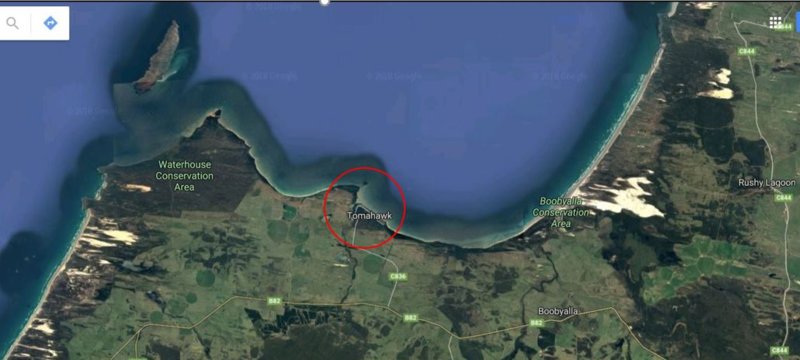
And there was a very good wind indicator at Tomahawk that day.In reference to my post #16 an ALA is an AUTHORISED landing area which would meet the standards and description specified by the Department of Civil Aviation at the time. A PROPER specifically designed windsock does give reliable information of wind both as to the existence of gusts and the WIND VELOCITY . The fact that many strips don't meet the requirements of an ALA means that lesser standards are being used more and more. You often get a windsock on roads where winds could affect caravans. Surely a plane is more responsive to wind than a caravan being towed along a sealed road . Doubtless a good windsock would have significantly acted to prevent this tragedy.. If there's one handy, a glance at it late on approach provides useful information even with larger aircraft.. One at each end of the strip is useful too.in that respectRAAus type planes flying across country at relatively low altitudes should be aware of winds from every possible indicator to aid navigation and to be useful if doing an outlanding. Dust smoke and surface ripples on dams etc help to maintain a wind awareness in flight. Local winds due to sea breezes anabatic and katabatic effects and and the available synoptic (MSL pressure isobars) met information will give a good idea of likely winds in the area of your flight. The drift you encounter confirms the forecast IF it's correct.. Some cloud patterns indicate an approaching cold front. Fronts usually have associated wind events that affect aviation. Nev
-
 1
1
-
-
Two things:contrast that with the population growth, nearly 9M more people across that graph and still a decline1989 16.8M2007 20.8M
2016 24.13M
1. The claim was GA is finished as we know it; just a simple check of Moorabbin movements shows stability of movements. If you want to add SE Melbourne’s population increase, that line will go down slightly, however;
2 Moorabbin would be getting almost none of the new mining income. A stand alone terminal was built for Bass Strait commercial helicopters, and traffic has increased massively at Queensand and WA mining markets, so a total Australian GA graph may in fact be going up.
-
 1
1
-
-
Could well be for your circumstances, but others have been able to move and adapt to current demand.GA alive and well? 40 yrs of driving planes for me mostly commercially, trust me GA is finished as we know it!! -
I'm not so sure about this - 5 or 6 aimless orbits"?, no normal circuit - even if they'd made a mistake about wind direction?, two experienced pilots, one with over a thousand hours, just wandering around?. That part seems very odd to me.
-
5
-
-
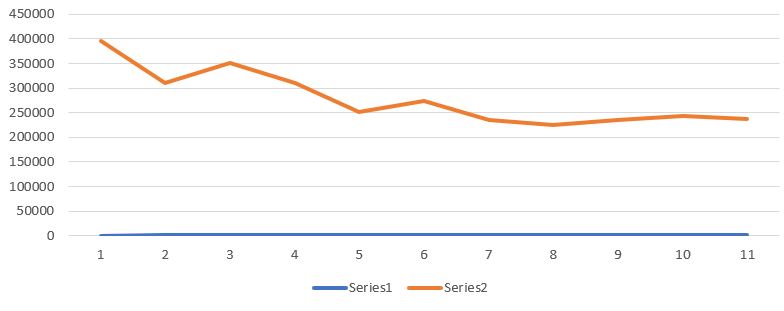
The graph shows aircraft movement per year at Moorabbin.There's nothing to abandon anymore, GA charter is all but dead, has been for sometime. The traditional route to heavy metal these days will cease to exist altogether in the not too distant future thanks to our wonderful CASA!!With the MPL concept traditional training will be a thing of the past.Year 1 is 1989, about the last of the heyday of the Schutt, Civil Flying Services era.
Years 2 onwards are the yearly figures from 2007
These show the impact of Jetstar/Virgin/Tiger etc. where flying by RPT then Hire Car was a fraction of the cost of Charter, and often faster, followed by a very stable set of years at around the current level.
Contrasting this is the explosive expansion of private and charter operations to the mining areas, where 45 passenger luxury coaches drive around town picking up passengers.
GA is alive and well, just in areas we don't normally see.
-
Not only that but legal visibility angles for 95th percentile man began in the 1960s for cars.
-
1
-
-
In-House training has the potential to affect the viability of the GA recreational and charter scene.
It would be interesting to know why they abandoned the flying schools around the country, and whether they will even start student pilots off on today's light aircraft.
-
You’re right, but I think there are some people who don’t know what that means, and that’s part of the problem.If you stick to the altitudes for making turns you should not be able to be criticised. Large circuits waste time and money. Extending downwind for separation almost needs a new flight plan. approval. Regardless of the size and speed the same number of planes will cross the fence. Nev -
Just at the moment it is because the training syllabus, which includes 1 in a million examples of a pilot diving under the sea then coming to the surface, jumping into an aircraft and climbing thousands of feet into the air, is not going to relate to someone who tries to take off with the brakes on, turns the fuel OFF instead of in the pre start checks, leaves the gear down despite the warning horn etc.I would suggest though, that the current trend of labeling incidents "Human Factors Related", is just as useless as "Pilot Error". -
Maybe, maybe not. The first one I saw was on downwind in Las Vegas and he was sitting in a plastic chair on a piece of 2” round tube; he lived.I'm surprised at how expensive cheap ultralights are. My fascination in ultralights began with ''Those Magnificent Men in Their Flying Machines''.Can anyone recall the Frenchman I think it was who flew sitting under the wing in between a pair of bicycle wheels.The aircraft was wood, wire and cloth of some sort probably powered by a motorcycle engine or something.I always imagined to build something like that would be cheap.
As a kid I remember my father bought me a go kart with a Victor lawnmower motor on it. People soon starting putting twin Mc Cullough? motors on them and priced us out of the fun of a family sport that anyone could afford.
It seems the same thing has happened with DIY aircraft.
Surely there is alternative motors to the Rotax etc what with the high revving high torque lightweight motorcycle motors available today.
Surely we can replicate those sort of flying machines cheaply.
Even home builders now use aluminium, Dacron? and Rotax motors. (Hence what I call not cheap)
Can't we use timber, lightweight canvas, bicycle wheels and a motorbike/lawnmower engine of some sort?
What are your views?
Maybe you know of aircraft built in this fashion.
Google ''Cheap Ultralights'' and you'll see that the cheap ones are all aluminium etc and still expensive.
I read of ultralights you can build in your backyard using materials and tools available in your local hardware store.
To my way of thinking a cheap ultralight should be able to be built for around $3000 and then that aircraft would qualify as cheap.
Or am I in fairyland?
-
I just quickly summarised the list into:Student training HAS been relatively safe over a fair period of time in RAAus. Arthur The term "pilot error" is really misleading and an oversimplification. and doesn't have a great standing in accident and incident analysis. People make errors for a lot of reasons. They rarely set out to make errors. IF they haven't been trained properly or fully Pilots will do more things that can be called errors..IF certain trends emerg, design changes or flying techniques get revised. or modified. If you just put it down to "pilot error" nothing gets changed. .No improvement happens. NevTechnique - 12
Procedures - 9 including one Instructor, and recommended retraining on communications for one CFI
Radio - 1
All of these relate to either failure in training, or failure to absorb the training the pilot was given, so all are relevant to the OP question, and his question is valid.
There are some locations which come up multiple times.
A lot blamed the aircraft
One blamed wet grass for skidding into the end fence, and compounded that by extending the undershoot and overshoot areas. Most telling was the addition of a new wind sock, possibly indicating why he floated over most, if not all of the strip.
One wasn't used to the non-centering steering, and you'd have to wonder why, if he'd had any training.
These issues certainly don't apply to all RA instructors. Two that I had were the best in the business, and I use things they taught me every flight, but as others have said, not all are at that standard.
Re the discussion about preference for an Instructor with 250 hours of Foxbat experience vs thousands of hours airline experience, when you look at the list of incidents I posted:
1. You're going to want to avoid some of the damage to your aircraft that some of these incidents produced
2. You're going to want to know about some Foxbat characteristics that featured in incidents (and you can go back much further on the RAA site)
3. I had an ex airline instructor with around 20,000 hours at one stage in a Jab J170, and after spending the cost of three one hour lessons with him, during which he just repeated I was doing well but didn't show me anything, I saved myself more expense and went for a Jab guy. I was floating, same as some of the guys in the Foxbat incidents, and the next instructor retrained me from my low wing technique to one which suited the Jab.
-
Please go back and read the OP post; this thread is not really about Foxbats, it's about people, and the research I did shows the OP was very astute to ask the question he did.
The OP either owns a Foxbat, or intends buying one, so he has no question about the aircraft, or how easy it is to fly.
Student training is the safest time for pilots, so I didn't expect to see any serious accidents, but what struck me was the sheer number on the RAA records, and this was just more or less one year.
Fine in theory but will it work
in Engines and Props
Posted