pylon500
-
Posts
1,418 -
Joined
-
Last visited
-
Days Won
9
Content Type
Profiles
Forums
Gallery
Downloads
Blogs
Events
Store
Aircraft
Resources
Tutorials
Articles
Classifieds
Movies
Books
Community Map
Quizzes
Videos Directory
Everything posted by pylon500
-
Requirements For Glider Towing Endorsement
pylon500 replied to sseeker's topic in Student Pilot & Further Learning
Back in my GFA days, I remember that to be a tug pilot, you also had to have a certain number of hours as a glider pilot (at least solo I think). This may have changed over the years, but still sounds like a good policy. I do remember being towed by a pilot that did some pretty wild things that scared the $#!t out of me !!! Arthur. -
Achieving more balanced turns?
pylon500 replied to Gnarly Gnu's topic in Student Pilot & Further Learning
As stated in the video and elsewhere, rudder is generally used to balance the adverse yaw caused by the ailerons. But consider this, when you roll into a turn, you only need hold aileron until the desired angle of bank is achieved. Once banked, the ailerons come back close to central (varies with aircraft), this means you only needed the rudder to co-ordinate while rolling in, once rolled the rudder should also return close to centred. Here's a clue, if you find you are holding aileron out of the turn because the aircraft feels like it wants to roll in further, you're probably still holding a bit of rudder (ball out of the turn), Another point to consider, when rolling back OUT of the turn, you will often need more rudder to co-ordinate than you used to go in. This is generally because while in the turn you are holding a bit of back stick, which gives a higher angle of attack, which exaggerates the adverse yaw when rolling out. To roll out, I tend to teach leading with rudder (once again varies with aircraft) followed by applying aileron and lowering the nose at the same time. 'Rolling on a point' is a good exercise, difficult to perfect (practice etc) and will show that you need to vary rudder inputs to achieve a balanced roll, usually a strong input to begin reversing a roll but easing off as the aircraft comes past level. Other rudder things to watch would be variations of amount of rudder needed depending on power setting at the time. At full power and in climb, you will need to be holding a bit of rudder to keep the ball central, if you do a turn while climbing it may be a case of not applying rudder in the direction of the turn, but more an easing OFF of the power rudder to allow the turn. ie; If flying a Jab or 912 powered tractor (pulling, not pushing) aircraft, you will be holding a bit of right rudder to stay straight. If you then go into a typical LEFT circuit turn, you may only need to ease off the right rudder while rolling to stay balanced. Just remember when you get to the base turn with reduced power (idle if you're with me!) then you will need left rudder to co-ordinate. Arthur. -
I get the impression the rudder on the J230 has sufficient authority with the longer tail moment, all it needs now is rudder pedals tall enough to exert enough leverage to move it, and the nosewheel. Maybe independent brakes would help too? While we're at it, how about an elevator big enough, and with enough throw to handle full flap when two up in the J230? (Lights blue touch paper, and runs away!)
-
Sorry Ozzie, but a few corrections; The original BD-5 was designed to be powered by a 60hp Hirth two cylinder two stroke, (a few flew like that) which was then replaced with a Zenoah three cylider two stroke around 75hp. The story is that the motor companies would not sell him the engines for liability reasons (this was the middle of the 70's with everybody suing everybody). Hardly any of the kits received their power trains, and most never got finished. Some people experimented and fitted Honda auto engines, made it heavier but the 100hp sure helped. A few managed to get VW engines in there, one even just bolted a VW to the nose, Bottom right of page 75. As for the jets, nearly a dozen have been finished and flown over the years (a few have crashed). A jet powered version was even built here in Australia by one of our own AUF members, before selling it back to the States. There are even a few turbo-prop versions out there. Lots of info here. As for the crashed on above, there is some great footage of it (and another) flying around Serpentine in WA on Arthur.
-
Still brave to do even if planned, only take a bit of tangled clothing to pull him into the prop!
-
I dare him to look 'UP' while he's doing that. (what happened to the BARF icon?) Arthur.
-
Reading the post from the beginning, I was getting the impression Jabiru was trying to correct a crosswind handling problem and wanting better rudder authority. But as I read on I find it's more to do with low speed directional stability. Either way, the answer is more more vertical surface area, BUT, having more fixed area will lesson control authority as mention by SPIN. One thinks the better correction would have been to produce a bigger rudder, and retro out to owners on the same swap deal (they could keep all the old rudders for the 160's). A suggested correction below... Arthur.

-
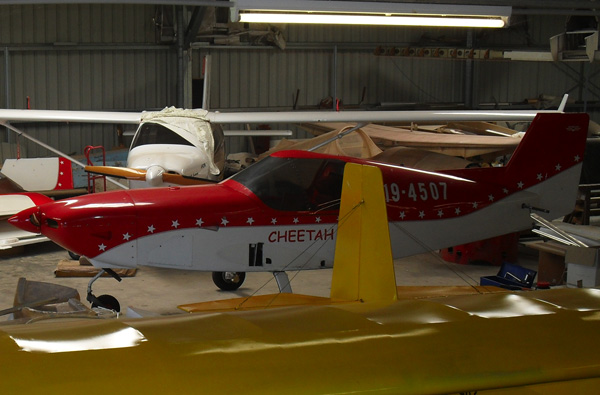
Can confirm that 19-4507 is still for sale, presently de-rigged, and hiding in my hangar. Arthur.
-
Interesting that someone would discuss with owners, read the pilot handbook, be aware of the aircraft's habits, then buy one and complain about it. Anyway, of the six Sapphires I've flown, I've always known of this handling characteristic and flown accordingly. There have been a few Sapphires modified by adding an anti-servo tab system to them. Not a problem on a 10 or 19, I just guess owners of 25's have to decide for themselves. :csm: Should be interesting to see another Opal flying again. ps; Titan Tornados have an anti-servo tab system.
-
Our club had a policy of exchanging our 582 at 500 hours (before the 300 TBO intro). Most were changed still running, but we did get the odd one that died before 500... We then went to 912's because of the following comparisons; 582:- $5000 replacement, 300 TBO, 17Lts per hour training (Lightwing). 912:-$17000 replacement, now 2000 TBO at 14Lts per hour. The net result is that in 2000 hours of operation, you will buy 6x 582's ($30K) and use more fuel and oil or just one 912. (These are quick rough figures..) Arthur.
-
Two things, the interference between the wing and fuselage would cause a fair bit of drag, and if you study the 'Custer Channel Wing' you will see he derived extra lift not so much from the airflow through the channel, but the pressure difference outside the curved surface trying to get to the low pressure area within, thus causing lift. Your inverted channel will do just that, lift inverted! (downwards that is). Now, if you put the wing on the bottom......... Arthur.
-
This reminds me of a glider checkride I had many years back that included spin recovery. With the instructor in the back of the Blanik, we had released tow, flown straight and level while varying speed, then flown varying bank turns at a common speed followed by a common bank and varying speeds. We then slowed to a stall, recovered into a turn to stall into an incipient spin/wing drop to the right, whereupon the instructor called for a full one turn spin and recovery to the left. As the speed was washing off I looked for a reference point to recover and pulled the stick back and applied full left rudder. The wing and nose began to drop, the canopy view filled with ground as the Blanik rolled over on it's back to begin spinning. Quickly, there was an odd 'Woosh' as the nose rotated at the ground then suddenly pitched up to the horizon? A glance at the ASI showed about 20kts (normal) when the glider rolled over on it's back again. At this point the instructor yelled "Hold it IN", which I did as the windscreen filled with ground again, but within two seconds the nose was on the horizon again. As the Blanik rolled over for a third time I initiated recovery imputs just as the instructor was calling for same from the back seat. The recovery went up near 90kts just as I was considering reaching for the brakes, but all returned to normal and we both just sat there asking each other, "What the hell was THAT?" Later on the ground after discussing with those watching from below, and piecing it all together, it was determined that in the entry to the spin, although the aircraft was decelerating rapidly, was still at around 40kts (stall is around 32kts) when I applied full spin controls, and that we had 'Snap Rolled'. As the aircraft stalled inverted and fell through, still with full back stick, this initiated another snap roll which pulled the nose up the horizon thence repeated until recovered. As per the original story, when suddenly everything was different, there was that hesitation and W.T.H. moment before getting back under positive control...... Arthur.
-
This is an interesting comment?! Having done about 15 years in a GR582 before going to a GR912, I found the performances to be as different as they are the same. The GR582 is lighter but with less power, so it notices changes of weight more. ie; One up, a great climb, two up, a noticeable drop in climb. A GR912 has more 'grunt' and the one up-two up climb is more similar. Having more grunt, the GR912 can drive a coarser prop and get a better cruise speed. Some other GR582 'pros' would be, very docile ground handling due to the undercarriage dynamics and a much lighter 'feel' overall. The 'cons' to a GR582 would be, the noise, the vibration and the fuel consumption. The 'pros' to the GR912 would be the smoother ride, better fuel economy and better TBO time. The 'cons' to the GR912 would be the poor glide and noticeable stall (due to weight and balance problems) and the nasty ground handling due to the undercarriage layout (it's a long story). If wanting to buy a Lightwing, one needs to decide what you want to do with it. If you want to weigh up the dollars to performance to resale ideals, then the GR912 is the better plane. But if you just want something that is a lot of fun to throw around the place, cant get in and out of smaller spaces, handle rough terrain and is generally easy to fly and land, then you want a GR582. As for the motors themselves, a 912UL is a good motor as is (but a 912ULS is better) but if going for a Rotax 582, make sure it is oil injected and avoid running Avgas. Arthur.
-
My only concern with full covering would be the possibility of hiding 'damage' on the airframe, more so on a composite structure. Arthur.
-
Progress of the Airports Amendment Bill 2010
pylon500 replied to a topic in AUS/NZ General Discussion
Finally a Government with insight. Just reading via the EAA website, of battles for airports going on in Canada. Finally a Government has sat up and helped to protect the existence of airports both major and regional, and overturned attempts to close some... Read here. How do we bring this sort of policy to the attention of our so called government for the people? Arthur. -
I guess I'd be willing to go back to staying below 5000ft if the regs could be amended to only having all this electronic gear fitted if flying above. Maybe we could get VTC's drawn up with dedicated climb/decent lanes to all RPT airports, and all of us RAAus and GA just keep out of the lanes except while in circuit? There must be some way of introducing a form of sanity to all our combined operation? Arthur.
-
UM, did you happen to have a look at the attachment? The aircraft is so basic, it's not likely to have flaps, possibly doesn't even have ailerons (uses secondary rudder) Remember, on most aircraft, FULL flap is more for drag than low speed lift. As for the SportStar, you need to remember it doesn't have flaps, just a big split airbrake, probably a good idea to close that if the motor stops! Arthur.
-
Residential "Through The Fence" access to airfields
pylon500 replied to johnprop's topic in AUS/NZ General Discussion
I have this set up where I am, and I'm trying to keep it quiet so as not to screw up my half million investment. The local council is currently upgrading the surrounding security fencing in line with the knee jerk security being imposed by the government. Geez, life's hard enough just trying to keep regional airports open without the likes of DOTARS and other self interest groups scaremongering us into buying ASIC cards and the like just to keep flying. Arthur. -
Looks like we'll all have to move to central Australia and just do 500 ft circuits around our own privately owned paddock :baldy: :kboom: Arthur.
-
RE: Bankstown Ultralight Crash
pylon500 replied to sseeker's topic in Student Pilot & Further Learning
Thanks for the audio upload/download, had a listen on media player. The controller sounded more annoyed than concerned. Found a picture of said Lightwing here (Going off topic here...) Looked at photo's of Bindoon growth, doesn't really show that what used to be about three sheds in amongst the trees is now about fifteen or so? The photo link earlier is of a thing called a Eurowing, basically a copy of a Catto Goldwing. I think it was owned by a guy named Ian Beatle or Beadle. Very easy to fly, had a real good glide. Arthur. -
...with the golden locks, hidden under the cake tin along with....
-
RE: Bankstown Ultralight Crash
pylon500 replied to sseeker's topic in Student Pilot & Further Learning
That would be great. I've installed RealPlayer on a previous Mac, and when it came time to update it, I then found out how big it is and how it spreads though your computer taking up space and trying to dial out all the time. I know, I can switch off some of this in the preferences file, but I'm happy with just QuickTime and iTunes. Hey, I see your at Bindoon(link), flew there about 20 years back, I hear it's getting bigger now. Arthur. -
RE: Bankstown Ultralight Crash
pylon500 replied to sseeker's topic in Student Pilot & Further Learning
Wish I could find an mp3 version of it as I wont allow 'Real player' near my computer! As for Basair having/using the audio, it could be for radio training purposes, or maybe they no longer like anything that could be perceived as an ultralight after their fleet of Technams fell to bits... Arthur. -
RE: Bankstown Ultralight Crash
pylon500 replied to sseeker's topic in Student Pilot & Further Learning
In the beginning of registering ultralights (it was the AUF then), there were only two classes, 95:10 (single seat homebuilt)and 95:25 (single and two seat production ultralights). Their rego's started with '10' and '25' and each had it's own 'sequence' of numbers starting from 0001. It was therefore possible to have two aircraft on a field with the same sequence number but a different class number, ie; I had a single seater rego'ed 10-0159 and one of our instructors had a Sapphire rego'ed 25-0159. To ease radio callsigns, an alphabetic was assigned to the various classes, and you only needed to call the last three digits of your number. The 95-10's used callsign 'Alpha' (I was 'Alpha 159') and the 95-25's started at 'Papa' (the Sapphire was 'Papa 159'). Once the numbers got beyond 1000, each class moved to the next alphabetic, ie; 'Bravo' and 'Quebec'. This system was eventually abandoned and subsequent registrations all came from a single list regardless of the class. With the changes to our radio procedures, that Lightwing would now be called 'Lightwing zero six niner two' As for the recording, I vaguely remember this as a combined GA/AUF instructor (?) flying South past Warnervale without refueling hoping to make it to The Oaks before it got 'too' dark, but then running low on fuel and landing on a golf course somewhere. Fingers were smacked ! No, it wasn't me.. Arthur. -
You don't really need a newer plane, you just need a lighter instructor, then try something like a Foxbat or if you want to learn to fly a real aeroplane, try a Lightwing. These modern 'thingeys' are too easy to fly..... Arthur.