pylon500
-
Posts
1,423 -
Joined
-
Last visited
-
Days Won
9
Content Type
Profiles
Forums
Gallery
Downloads
Blogs
Events
Store
Aircraft
Resources
Tutorials
Articles
Classifieds
Movies
Books
Community Map
Quizzes
Videos Directory
Everything posted by pylon500
-
I cant find one of my good drawings to show, but I will try to explain; This is a project I have on hold, that was to use a R503 mounted upright with the gearbox also upright, and having cheek cowls like a flat motor. On one side is the carbi's and filter(s), on the other side is the exhaust. These items are more or less in line with the prop shaft so the effect is quite neat. More of this project at; https://plus.google.com/photos/113292981019876413104/albums/5194978509871592929?banner=pwa I'll get back to it one day. Arthur.

-
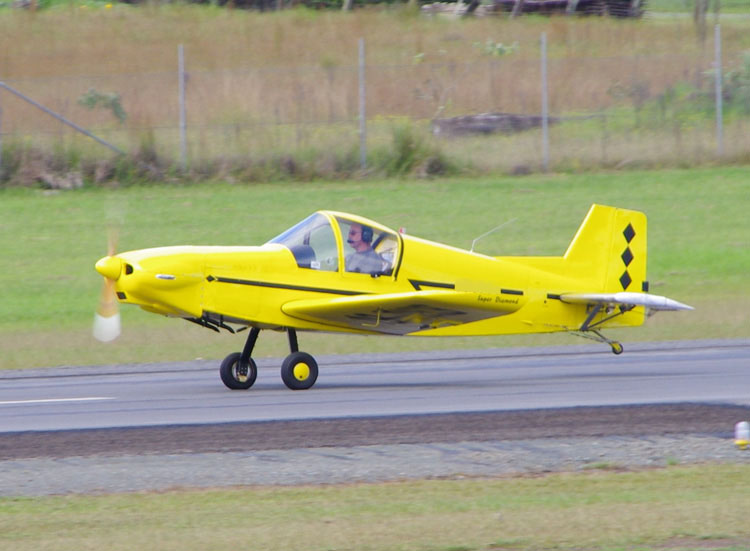
Not quite sure I understand if this is to be a full VW, or a 1/2VW? Or is this the anticipated total cost? If it's a full 4cyl, with start and dual mags, it will be very heavy and as ugly as that black and yellow thing (sorry to the owner, but look at the front of that thing ) Next point, if it's to be a 1/2VW, you will be lucky to get 25hp out of it, really! Dave King and Brian Gabriel before him could both see the only way to go is a 2 stroke. You can probably get a reco'ed 503 cheaper than the VW(which will also be reco'ed), it will be lighter and it will put out 50+hp. It wouldn't take a lot of work to clean up the exhaust setup. The weight saving of a 503 would offset some larger tanks in the centre section to avoid CofG changes. I've recently been trying to test fly a machine designed for a 503, that was fitted with a Revmaster, it's not looking good. The motor feels like it's putting out about 40hp, and the aircraft came out a bit heavy. The net result is minimal performance. Just found another two stroke Hummel here in Oz; http://www.lmacrc.com/Photos/2006/Home Built.htm I think some large side cheeks could hide the exhaust on one side, and the carbi's on the other side...... Dont get me wrong, the half VW Hummels are out there and working, BUT, the good ones have no electrics, are hand start, and take off from 1000 ft of concrete. I rest my case; Arthur.
-

Another impossible dream. Maybe not.
pylon500 replied to Deskpilot's topic in Aircraft Building and Design Discussion
Can't say I've actually looked up what this is (I'll get around to it), but just from a basic aerodynamic layout,it looks OK. Some points though, yes I agree with the others re the billy cart steering. I built a trike many years ago, but as a normal aircraft pilot, the idea of billy cart steering didn't appeal, so I made a pedal arrangement that pulled from the bottom of the pedal hence turning the nose-wheel fork in the right direction. As a bonus I mounted an inverted T shaped item just in front and above the tire, held off the tire by a large spring. Thus if I pressed one pedal, it pulled the fork to steer, if I pressed both pedals (against the spring) the T bar pulled down onto the tire, giving me brakes! Now, other points; Had you thought of a tail dragger? Symmetrical section, pro's and con's, no pitching moment (good); Flies at higher angle of attack (how much rotation clearance do you have?); Thicker (how thick do you need?) With the area your looking at, I would stick with a semi lifting section, look at a Foxbat section, has good stall habits, low pitching moment and a bit of thickness. Power plant setup, a long toothed belt like that will have a lot of 'whip' which needs to be controlled, and if running from a two stroke, will need reduction, so how about an upright motor behind you on the bottom using a toothed (or poly V) up to the wing with twin sprockets on the same shaft running chains in tubes to the prop shafts? Sounds ancient, but remember chains have less losses than rubber belts, and you've absorbed the impulses back at the reduction point. Looking at your 'cutaway' of the tail, why bend or break the main tail spar, and then only support upwards with cables? Remember, there is a download on a tail inflight and the joining brackets to hold angled tubes would be wasteful in weight terms. Maybe a tail half up the fin with cables top and bottom Still don't see the point in the angled tip fins? Would be better to hang the ailerons on the lower wing, less complicated to connect, and just use end plates for tips. Is the prop spacing to get them in clean air, or just look good? I know you don't intend to get asymmetric thrust, but if put as close to centre as possible, is lighter and more controllable if you do lose one. You also have not shown any drag (thrust) bracing within the wing to hold the props Any intention to wire brace the wings, or just use big tubes? The end fins wouldn't do anything to support the wings so you need a strut or wires (or big tubes, I'm talking around 4"Ø here) Do you really need that square tube for the nose? Just continue the twin tubes all the way, have a look at the Mitchell P-38. Please don't think I'm trying to shoot you down. I think your onto something, (although I designed something similar many years ago, look in top right here; https://plus.google.com/photos/113292981019876413104/albums/5212775815502683841/5213148201835122130?banner=pwa). I'm in a position that once I've seen something, then I can see where improvements could be made. Arthur. -
Another impossible dream. Maybe not.
pylon500 replied to Deskpilot's topic in Aircraft Building and Design Discussion
OK, the concept shows promise. Tend to agree with others that the props are not going to be in a comfortable position. Could they be pushers behind the top trailing edge? Point 2, a V tail will have a lot of trouble trying to handle asymmetric thrust. Also at that short a wingspan, the V tail will give you a lot of adverse ROLL with rudder application, an inverted V tail can solve this. Personally, I would go with a flat tail with twin fins, or a simple T tail. Does the end plate joining the wingtips really serve any purpose? Short wings like that could be cantilever, and simple tip plates will give you apparent extended span. Would be a lot less complex with a single pusher, but I see we're doing this just to be different..... If we want LITTLE, have a look at this; This was hard to find, but have a look here;http://chuckisawesome.org/?p=996 Arthur.
-
As a previous glider pilot, I am also not a fan of Frieze ailerons for the drag reason, and also not a great fan of flaperons because of the adverse yaw problem ( he says while spouting praise for the Foxbat ?!?!) so we are on the same page.
-
This mainly applies to faster aircraft when flying at low speeds, like take off and landing. While twist (washout) can have some structural problems at higher speeds, this doesn't really apply to us, so we are better off just having a bit of twist. It's also lighter than flaps. No, not really, the gazelle system is more akin to what Junkers was using back in the 30's. The AN-2 uses a sort of Frieze/Fowler type flap and aileron, much like the Foxbat uses today. For the picky, the more 'remote' the hinge point is, the more Fowler it is. The real difference is more to do with the underside of the trailing edge of the wing in front of the surface, if it's square like a Cub or Spitfire, it's a Frieze. If the underside is rounded to allow smooth airflow up over the surface, like the flap area on a Cessna or the Foxbat (regardless of hinge point), then it's a Fowler. (That's my view anyway..) Arthur.
-
In lay terms, if the wing stalls in the middle first, then the aircraft is being supported by it's wingtips, which would be stable. If the wingtips stalled first, chances are one would stall before the other, making that wing drop and roll you over on your back. Not what you want close to the ground! Various means are used to ensure the centre of the wing stalls before the tips; 1. Washout built into the wing, which is twist along the wing giving the tips less angle of attack than the centre. 2. Change of wing section type along the wing, where the tip section is given a higher lift coefficient than the centre, which means the centre looses lift before the tips. 3. Aerodynamic devices added to the wing to either maintain lift to a lower speed towards the tips (cuffs, fences, vortex generators), or other devices to actually destroy lift near the centre at low speeds (stall strips). 4. The use of flaps will have the same effect by changing the angle of attack between the flapped area, and the non flapped area. With all this in mind remember, if you are close to the stall and/or at a high angle of attack, use of the ailerons will usually cancel the effectiveness of all these devices, and you will end up on your back again!! How to create and use ailerons or flapperons at low speed is another lesson........ Arthur.
-
Sleepy Air Canada pilot thought Venus was a plane
pylon500 replied to fatmal's topic in Aircraft Incidents and Accidents
Interesting to see that they are allowed to sleep for 40 minutes.....? "This is your Captain snoring, ZZZZZZZZZZZZZZZZZZZZZZZZZZZZZZZZZ" Yeah, I know it was the FO.. -
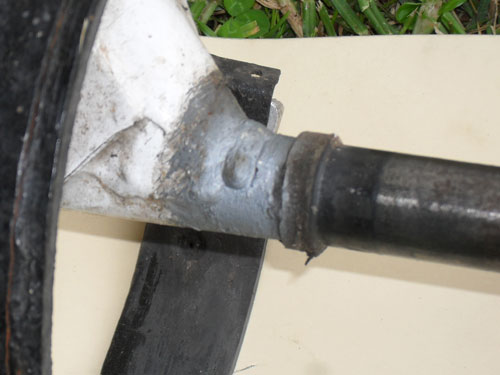
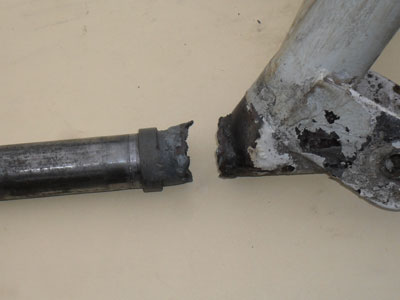
G'Day Ross, You are right in that there was a weld repair at the point the axle broke. Why it was re-welded is unknown, nothing in the logs, but it had been welded on both sides, see photo; This is the other side and was only found after the accident. The reason I comment is that about 20 years ago, we had the exact same failure occur on our club GR582. Examination of the axle showed that it had been cracked for some time, we suspected since new, but being on top of the axle, it was being held closed by the weight of the aircraft. The crack propagated over the years until a slightly heavy landing caused it to fail (same as mine). That GR582 was serial #5, mine is #83 and still had the thin wall axle and no solid plug inside? Some axles look solid, but actually have blanks welded on the ends (like mine). Something to watch for...... Arthur.
-
Another point worth inspecting is the base of the wheel axles. Remove the wheels and look VERY closely at the top of the axle between the bearing collar and the welds to the legs. Dont get me wrong, these are great planes, but this is something to watch for... Arthur.
-
Looks like we're trolling at the same time, just looked at the picture and thought "looks like a Renagade", did a quick search and got, http://www.regosearch.com/aircraft/au/LFZ
-
Put this 'sherlock holmes caricature' into Google, then click on image....
-
Engineering advice
pylon500 replied to fly_tornado's topic in Aircraft Building and Design Discussion
OK, just looked at photo's. You're on the right track, but the critical part in hinges is the hinge line, you need to know exactly where it is to get it right. You need enough material to to create patterns of ALL the hinge pieces, not just one and reproduce it, (Titan may have done this with a jig, but you always get movement). As for the rolled hinge being a bit open, before separating, lay the hinge on top of a vice with the roll in the gap, and gently close the hinge. 1.Number all your pieces, as you have done, then separate all the hinges. 2.Cut up your extruded stock into the sizes required and NUMBER. 3.Using some form of clamp (duckbill grips, G clamps, even a vice), clamp a piece of hinge (new or old) onto your template material, can be plastic but a bit of alloy sheet is probably better (and cheaper), this is the guide hinge. 4.Take an old hinge and using the pivot pin rod, mesh the old with the piece that is clamped and fit pin. 5.Drill the holes of the old hinge into the pattern material, try using a drill with a fairly flat point, or it will walk around in the hole. 6.NUMBER the new hinge and put aside. 7.Unclamp the guide hinge and move to a new area and re-clamp as per step 3. 8.Repeat steps 3 to 7, remembering to NUMBER all new pieces. You will end up with a bit of pattern material that looks like swiss cheese, but each hinge piece will be a perfect copy of the original hinge. As for assembly, a good trick would be to rivet every piece of hinge in it's respective place with ONE rivet in the middle, then fit the hinge pins. Now hold the aileron up at 90°, and install the other rivets, this will keep the hinge line straight. See how you go.... Arthur. -
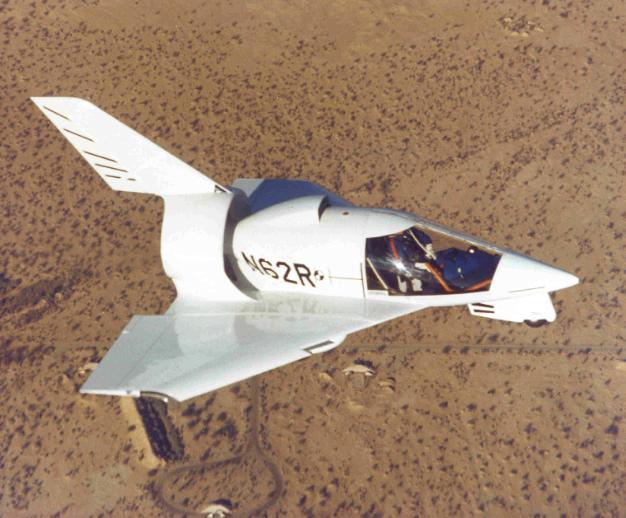
Not sure that the OPEL, as a straight flying wing, has many similarities to a delta This would be a bit closer in concept; Read about it here; http://fraseraerotechnologycompany.com/Rohr_2-175_Fan_Jet.html. Arthur.
-
I first joined forums at an American Homebuilt site, and was already calling myself 'pylon500', so I created a little pylon racing gif with a program I had called 'Animation Maker'. A bit rough and pixelated, but does the job; Usually have the slogan 'Go Fast, Turn Left' under it. Arthur.
-
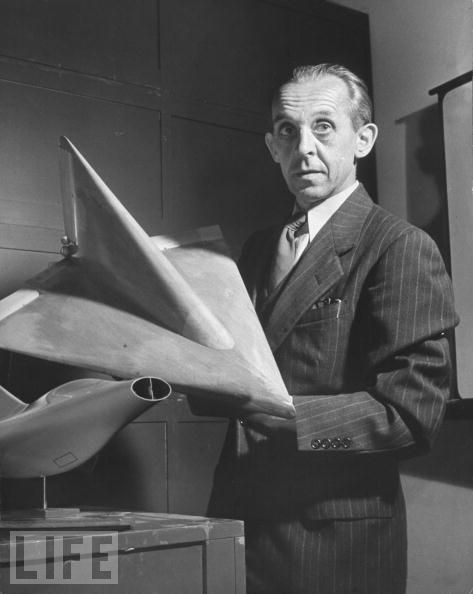
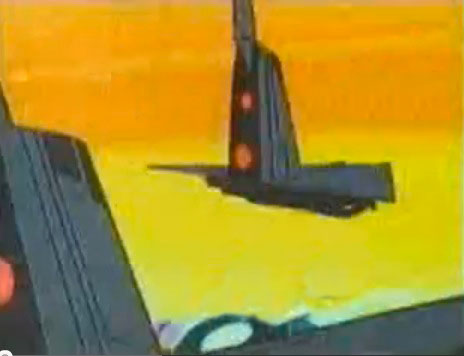
Inspiration from here maybe? Alexander Lippisch; Or maybe this french cartoon from the 80's, 'ROBOSTORY; Not knocking, looks like a lot of fun.
-
I think that quote is actually attributed to 'Woody' from Toy Story
-
Just tried to look at this thread, but got an odd redirect..?
-
Jetstar pilots botch landing at Melbourne
pylon500 replied to HeadInTheClouds's topic in Aviation Enthusiasts
I had a similar experience a few weeks back returning from Melbourne to Willytown on a Jetstar 320. Arrived off the coast of Willy at around 5,000 ft, and heard something mechanical being deployed, but couldn't see anything move, I was back around row 19. Figured it was the gear in an effort to slow down, which we did. We turned inland and crossed the coast at about 3,000 ft, north of Willy and began to pitch up to slow further when I realised that the Leading edge flaps had been deployed, but no main flaps? We then turned left again at about 2,000 ft and crossed overhead Willy, still decelerating and still no main flaps! By now I'm beginning to worry that maybe the boys up front were being distracted by the Hornet activity and had forgotten flaps (not supposed to happen in the computer flown Airbuses) and started to think 'What do you do if you think something is going wrong, and can't tell anyone?' At about 1,500 ft we turned mid down wind, feeling quite slow and nose high and finally a bit of flap started coming down, so I got out of the brace position and watched the rest of the landing. The gear actually started coming down on base and more flap was added on final and the landing was completed with a fairly sudden overpitch resulting in a good bounce, which was as suddenly dropped by the deployment of the lift dumpers. Probably a good thing I wasn't about to have my blood pressure checked at the time. In their defence, there was a fairly good (15~25 kts) wind blowing partly across the strip. I guess I've been watching too many of those aircrash investigation shows..........? Arthur. -
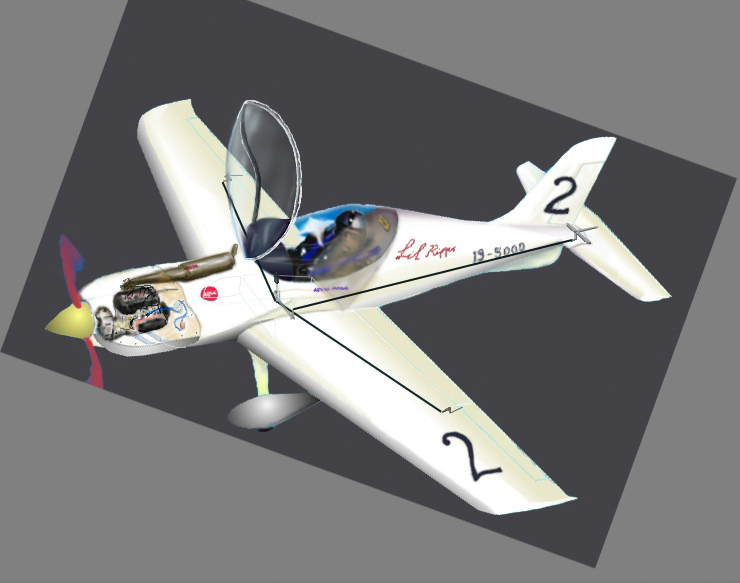
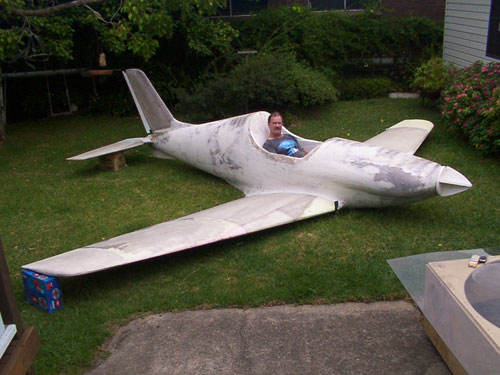
My avatar is me sitting in the plug I used to make the moulds for my racer; project, https://picasaweb.google.com/113292981019876413104/BuildingTheLR2 A little photoshop has been used to add a canopy and U/C leg with wheel spat. Unfortunately this project has been shelved for a while as other projects, with the promise of being finished quicker (?) have taken precedence. This is the original photo. Arthur.
-
Have a look out around 'The Oaks' just West of Camden, and contact http://srfc.org.au/web/.
-
The Foxbat is rapidly becoming the training ultralight for those not wanting to struggle with the local plastic offering. It follows in the footsteps of the Gazelle, and the Lightwing before it, pity the A-22 is not available as a taildragger. And the visibility has to be seen to be believed.
-
A lot of those could go in the 'Guess the Plane' thread. I did recognise the prototype 'Rivets' racer near the end.
-
We want to see it on youtube!
-
Old Bar Ferris Wheel Incident
pylon500 replied to aaron roberts's topic in Aircraft Incidents and Accidents
Has anybody started a discussion somewhere else about this? It would appear to be an oversight from RAAus that has come out of the investigation so far. A list of which aircraft are actually under LSA would be interesting......