pylon500
-
Posts
1,423 -
Joined
-
Last visited
-
Days Won
9
Content Type
Profiles
Forums
Gallery
Downloads
Blogs
Events
Store
Aircraft
Resources
Tutorials
Articles
Classifieds
Movies
Books
Community Map
Quizzes
Videos Directory
Everything posted by pylon500
-
SIDS Inspection on Cessna aircraft
pylon500 replied to dazza 38's topic in Aircraft General Discussion
Interesting story in the latest EAA magazine about Cessna circumventing the FAA AD system and getting caught..... Cant find a link, but it's out there somewhere. Look for stuff on Cessna 210 lower wing spars. -
SIDS Inspection on Cessna aircraft
pylon500 replied to dazza 38's topic in Aircraft General Discussion
Interesting story in the latest EAA magazine about Cessna circumventing the FAA AD system and getting caught..... Cant find a link, but it's out there somewhere. Look for stuff on Cessna 210 lower wing spars. -
Must admit I was unaware of this, and I wonder how many of the media people are aware of it? I don't think we have those restrictions here yet, as I see many news reports obviously shot from a drone, but; a, I haven't been following the local reg's much, and; b, I don't have a drone anyway. Not saying this will not happen, but, I have lost a spinner, and seen others let go, and they generally just damage a blade or two, leaving splits, chips, nicks and the like. The amount of inertia behind a typical wood or solid composite blade will instantly destroy a glass spinner, however, the lightweight composite blades like Bolly, Arplast and Kiev, I'm not so sure...?
-
Must admit I was unaware of this, and I wonder how many of the media people are aware of it? I don't think we have those restrictions here yet, as I see many news reports obviously shot from a drone, but; a, I haven't been following the local reg's much, and; b, I don't have a drone anyway. Not saying this will not happen, but, I have lost a spinner, and seen others let go, and they generally just damage a blade or two, leaving splits, chips, nicks and the like. The amount of inertia behind a typical wood or solid composite blade will instantly destroy a glass spinner, however, the lightweight composite blades like Bolly, Arplast and Kiev, I'm not so sure...?
-
The irony here is that the media will get hold of this and beat it up (as usual), but the incident with the forrest fires, was actually media quad-copters getting footage for the news!!! As usual, the originators of the hobby, aeromodellers, will bear the brunt of accusations, even though the problem will come from the over the counter freelancers and those using them for commercial purposes without being properly informed, or holding the required training or paperwork. As mentioned though, generally the quad-copters are hovering or travelling slowly, so while not saying they are not a problem, one can only hope that when the first impact occurs, it will have minimal effect on what it hits (or what hits it, as the case would be) I guess the best bet would be to mandate that all these machines come with BIGGER warning notices, including the value of FINES that could be incurred. Maybe a centrally advertised website for purchasers to go to, to discover all the problems (fines) they could be in for, if they don't play by the rules, then get the media to advertise the site... ps, for the modellers out there, I'm on your side, I've been flying models for years, and don't want to see us suddenly become the equivalent to drug dealers, politicians, pedophiles or what ever the current anti-flavour of the moth is.
-
The irony here is that the media will get hold of this and beat it up (as usual), but the incident with the forrest fires, was actually media quad-copters getting footage for the news!!! As usual, the originators of the hobby, aeromodellers, will bear the brunt of accusations, even though the problem will come from the over the counter freelancers and those using them for commercial purposes without being properly informed, or holding the required training or paperwork. As mentioned though, generally the quad-copters are hovering or travelling slowly, so while not saying they are not a problem, one can only hope that when the first impact occurs, it will have minimal effect on what it hits (or what hits it, as the case would be) I guess the best bet would be to mandate that all these machines come with BIGGER warning notices, including the value of FINES that could be incurred. Maybe a centrally advertised website for purchasers to go to, to discover all the problems (fines) they could be in for, if they don't play by the rules, then get the media to advertise the site... ps, for the modellers out there, I'm on your side, I've been flying models for years, and don't want to see us suddenly become the equivalent to drug dealers, politicians, pedophiles or what ever the current anti-flavour of the moth is.
-
likes optimism creative and the rest
pylon500 replied to driftamark's topic in AUS/NZ General Discussion
That's true enough, and the posts usually end with...:loopy:or:scratching head:or:hide:very often:angry:, sometimes think I should use:insane:,but after many of my comments, I can just see:duck for cover:coming. -
Missed this thread somehow, but came upon the 915 via write-ups from Oshkosh. The best comment I saw was "Rotax have taken all the most expensive bits of all their engines, and combined them into one engine!" I think that will pretty much sum up the price when we get it.... Was a shame the Rotax V-6 never went anywhere, and I've always thought they made an engineering error by not making the 912 with full crossflow heads. The move from a flat four to a flat six would have been a non event. Imagine, 1.8 litre, turbo'ed, 150/160hp, and turbine smooth...... Would it be a 918, or a 924?
-
likes optimism creative and the rest
pylon500 replied to driftamark's topic in AUS/NZ General Discussion
Maybe it's the negativity in me, but when talking the 'likes' icons, I still think there should be the odd questioning, doubting and outright WTF? icons. -
You may also note that the later versions of the Ops manual now require ten hours (minimum eight dual, two solo) of cross country training for the endorsement, as opposed to the five hours in the past. Not a real problem to most, except for the cost of course, but I'm having to check out a student in his Drifter during winter....
-
its has to be very wide to accommodate a large prop[/color=black] Generally your tailplane would be between the booms, and most tails are wider than your typical prop diameter.[/color=red] your control cables and pulleys have to travel a long way, out the wings, then down the booms.[/color=black] Only a couple of extra turns, usually not much more than going down a single tube.[/color=red] you have to coordinate 2 rudders[/color=black] If your rudders are run by cables, it's a closed loop requiring an just extra cable to join the two, or a slave pushrod from the driven one to the other.[/color=red] the wings need to support the tail[/color=black] Hopefully, the wings are usually pretty strong, an offset is that usually twin booms associate with a centre section which should fairly stiff, and generally has outboard wing panels which, if un-strutted, have a lower attach point load.[/color=red] From a manufacturing stand point you are building a lot more stuff into your airframe without a lot of benefit.[/color=black] On the Vampire, the twin boom concept allowed a more rigid, self supporting jig system, just by adding one more tube, the tailplane could be built lighter as it was not so much of a cantilever structure, AND you get all the aerodynamic benefits of bigger prop, better thrust line arrangement, less torsional problems than a single boom, and finally a public protected prop![/color=red] Lot of little inefficiencies add up after a while. The conventional lower boom with T tail is a lot less engineering.[/color=black] [/color=red]Much as I like the Aeroprakt products, the A20 had torsional stiffness problems with the T tail on a single boom.[/color=red] I think the ION tail system is more for show than any real practical reason, I guess it stops it being called a Vampire?[/color=blue] Here, here.(that means I agree)[/color=blue] ? OK, don't know what's happening here, all the HTML coding is going strange?
-
Tail wheel flying - gusting crosswinds
pylon500 replied to red750's topic in Student Pilot & Further Learning
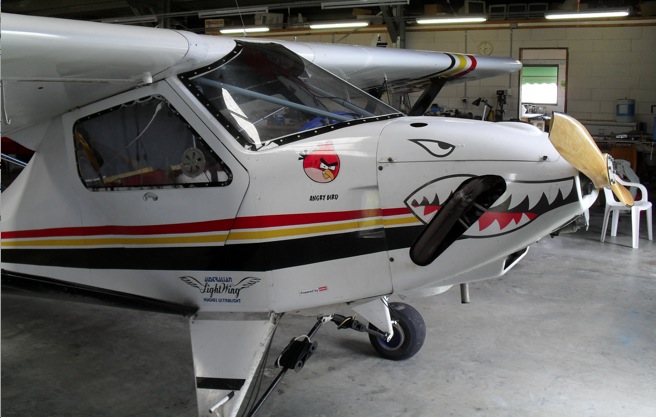
There is a very old Lightwing there, that is privately owned, which could do with a bit of TLC. I've got a GR582 up here at Taree if you're up this way....
-
Tail wheel flying - gusting crosswinds
pylon500 replied to red750's topic in Student Pilot & Further Learning
There are three Lightwings out at the Oaks, two with the Sydney Recreational Flying club, and I think Dave's flying School still has one. There was a Drifter out there at one stage...? -
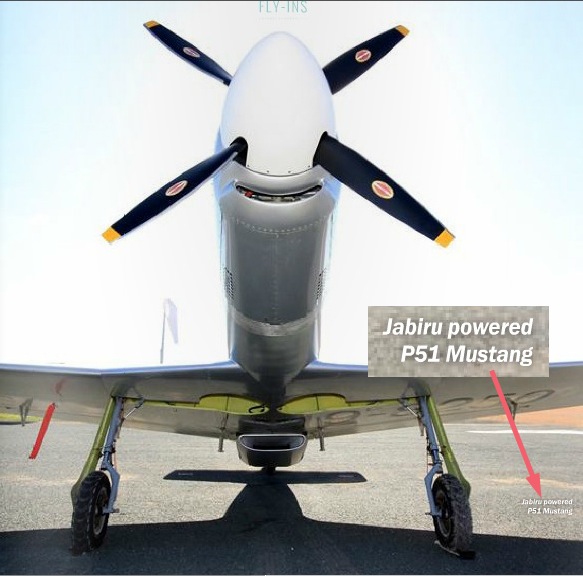
OK, now I'm getting confused? The latest Sport Pilot pictures the Titan Mustang and Spitfire, claiming both in the photo and in the text (page 15), that the mustang is powered by a Jabiru 6? I guess the numbers (weight, supposed power, etc) could add up, and would explain the tiny prop. Just hope he can keep it cool, maybe he's using the Rotec water cooled heads? Interesting to note, I got my hardcopy Sport Pilot yesterday, but could not find the link to the digital version on the RAAus website? It is available on the ISSUU site; http://issuu.com/raaus/docs/sport_pilot_aug_2015
-
In doing more research I found an existing thread from a few years back; http://www.recreationalflying.com/threads/sadler-vampire-production-in-aust.7068/
-
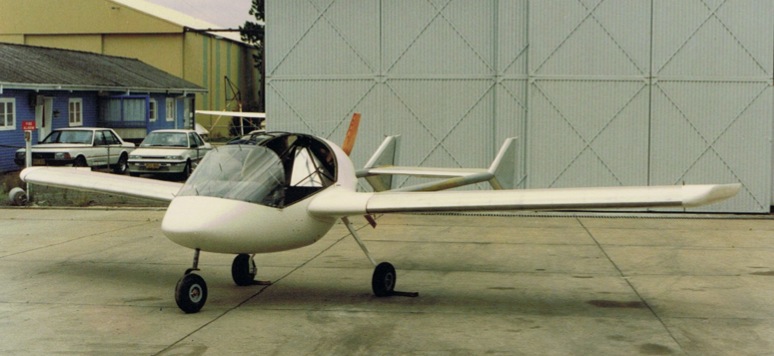
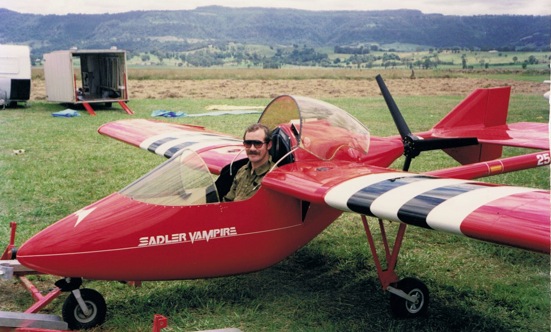
Although I worked at the Vampire factory for a couple of years, I wasn't going to get into this thread, but I'll just mention a few things. At some point while I was there, a large fibreglass pod arrived, which was the beginning of the first attempt at a two seater. It was dragged around to some of the shows, attached to a dummy centre section and booms, before actually being worked on in earnest. Not a lot of thought went into it, just longer wings and beefed up booms, with little consideration for the centre section. When ready to test, the DOT (CASA then) boys were invited, by the boss, to watch. There followed some embarrassment when the centre section collapsed at 1.5g! I should have taken more pictures, but back in those days photos were still expensive From there, a new engineer was contracted to redesign the two seater from the ground up. Many problems from the single seater were addressed, primarily the way the main U/C works the centre section when taxying, and the sloppy telemorse control system. To that end, the centre section and cabin were combined into a single unit made from chrome-moly tube, the glass pod going back to being a shell. The main undercarriage became a leaf spring attached to the inboard of the centre section, and all controls became alloy tube pushrods (I think?) As for the CofG problems of having one/two people in front varying the balance point, this was partially solved by sweeping the wings back giving an apparent wider MAC (mean average chord) to lessen the effect, as well as longer tail booms for better moment arm. The project got to the 'on wheels' stage before the company folded. This prototype later appeared in Melbourne, owned by someone who wanted nothing to do with the original company, and renamed the aircraft the Kingfisher (I think again...?) I don't think Bill Sadler had anything to do with this project, and we at the original factory, tended to take some of his advice with a pinch of salt..... The single seat Vampires built in Australia, were quite different to the original American versions. Ours had shorter wings, more power, thicker materials, suspension all round, a structural Kevlar/glass pod and probably some things I can't think of right now. As for flying qualities, I found them easy enough to fly, if a little under powered with the Rotax 447 driving the flat bladed Ultra-Prop. Some later machines ended up 503's and Brolga blades in the Ultra-Prop hub, these went really well. Although they were fairly short coupled, they did have a big elevator, and a semi-symmetrical section with a low pitching moment. Full flap was best used with a bit of power, but as for thrust powering the elevator, our demo/test pilot would regularly finish the routine with a dead stick landing and roll up the taxiway with the canopy open. Aircraft always made an attention getting bang when shut down in flight from over run fuel in the muffler (no idle cut-off). The company also sponsored a 'club' demo aircraft that could be flown if you were a member and checked out by the company demo pilot. I think about five of us flew it..., this is a VERY old photo
-
Don't know if this has been posted before, but definitely worth re-watching; Actually a bit scary!
-
- 3
-

-

-
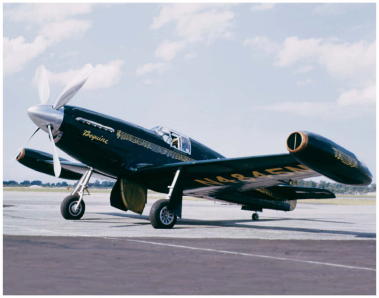
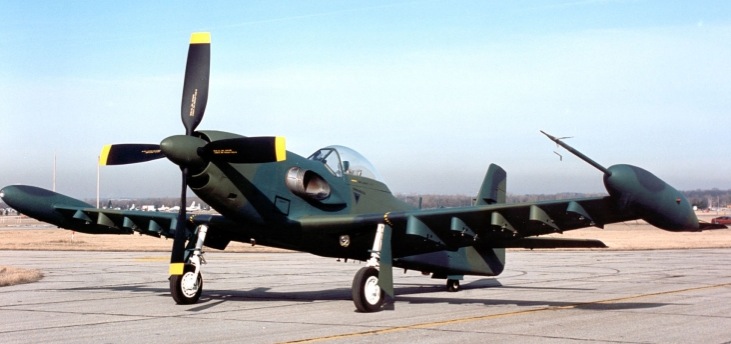
Other 'Non scooped' Mustangs; Cooling systems in tip scoops. Turbine powered, not much to cool...
-
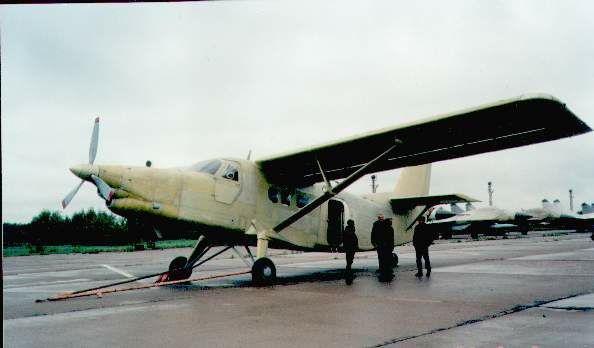
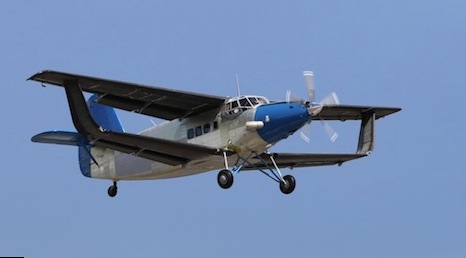
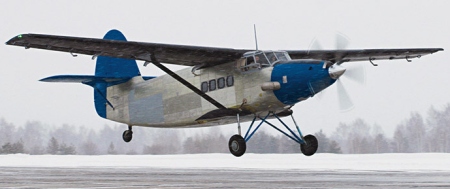
There have been various attempts to modernise the AN-2 over the years; Watch the video here;
-
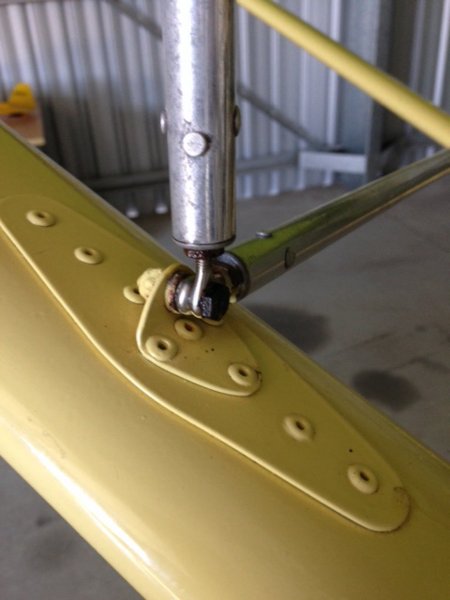
Just as a point of interest, the only strut here that is really going to do anything is the vertical one, during (heavy?) landings. As such, it should be up against the riveted tang, and then the horizontal strut. As shown above, the vertical strut has a bit of leverage at bending/breaking the bolt. I also think that only a thin, if any, washer should be put between the tang and the eye fitting, keeping the shear as close as possible. Just my 2¢ as an L2...
-
Who were you asking?
-
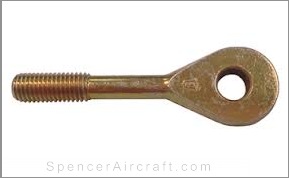
As mentioned by TEX, the (broken) part you have, was the single eye end of a stainless steel boating turnbuckle, typical hardware for early ultralights. What you should be replacing with is a cad plated steel turnbuckle pin eye, as opposed to a cable eye, which has a bigger hole. If you have a 10/32 (3/16th) thread, and a 3/16th hole for the joining bolt, you would be looking for an AN165-16RL. If you enter this number into the Aircraft Spruce website, the image you get looks like the stainless steel version. If ordering, try by phone, and just check you are getting the cad plated version. Have a look here; http://spenceraircraft.com/ms21254-3rl-turnbuckle-eye-end-for-pin-clip-locking-10-32-right-long-alt-an165-16rl.html Not cheap unfortunately. There is a shorter version, which would be an, AN165-16RS.
-
If you're thinking of Ollie's Hornets, he's actually in the silver hangar next door, followed by a parachute operation, then Gary Morgans hangar (yellow doors). There used to be a Harvard living in the blue hangar, but haven't seen it for a while, just an almost finished Esqual/Lightning and one of Ollie's customer Hornets awaiting delivery. In front of those hangars is the new space for more hangars (if you've got the money....)
-
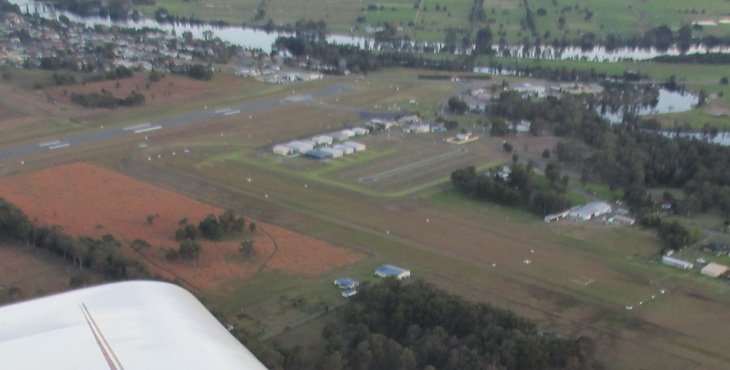
Not trying to gloat (especially for people with long trips just to get to a strip), but I just walk out the back door, up to my hangar, and when ready just taxi out onto Taree Airport and go. Compared to others, I guess I can't complain about the grass runway next to my hangar continually being closed... My place is the blue roofed house and hangar in foreground.
- 49 replies
-
- 10
-

-
-
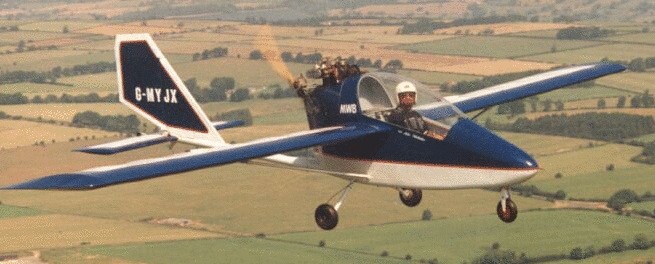
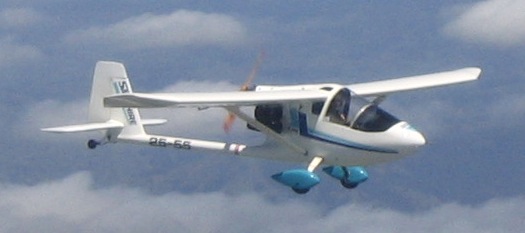
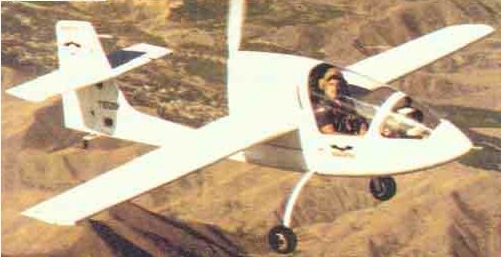
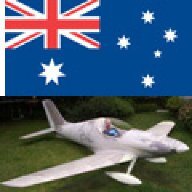
Can't find any photos of the Cri-Cri being towed aloft. Bit disappointed to learn that, but as I've noted in other posts, all the Hoo-Har is a bit moot when Maccready did it without batteries back in 1981! Stumbled upon the MW-8 the other day by accident, and was intrigued. It's now hanging up in a museum somewhere, and looked good till I found some close-ups (glasswork is a bit ratty). Don't know about the power/drivetrain problems?, just looked like a Rotax 503 to me. It also only looked like a single seater, not a lot different to our Sapphire. MW-8, and a bit of story; http://www.homebuiltairplanes.com/forums/soaring/16667-practicality-ultralight-glider-6.html Winton Sapphire. There's even a bit of resemblance to the Sapphire follow-on, the Ultrabat. The MW-8 may have been a bit more stable with a higher, or T tail. OK, back to thread...