pylon500
-
Posts
1,423 -
Joined
-
Last visited
-
Days Won
9
Content Type
Profiles
Forums
Gallery
Downloads
Blogs
Events
Store
Aircraft
Resources
Tutorials
Articles
Classifieds
Movies
Books
Community Map
Quizzes
Videos Directory
Everything posted by pylon500
-
Some more info here; http://www.gonzoaviation.com/clanok/projekt-ul-39
-
Ahh, but do they get to live on the typical Ozzy/Kiwi, quarter acre block...?
-
?, I hadn't heard this, and looking at the videos of the landing I'm trying to figure out how it did a 'go round' without the previously removed jet engines in place? Yes, it started with jets fitted to it, and all test flying was done just like an aeroplane, circuits and all, but when finally launched (unmanned) to orbit, the jets had been removed..

-

Plane crashes at Redcliffe in North Brisbane
pylon500 replied to ZeroAlpha's topic in Aircraft Incidents and Accidents
Not sure about instructors and free beers (and it's not just that I'm a non drinker), but any bad flying by a student/early solo, really has to be some sort of reflection on the instructors abilities. Yes, I take some of the blame for a student wrecking my Lightwing.... -
Remember the forum rules; No pictures, then it never really happened........
-
Plane crashes at Redcliffe in North Brisbane
pylon500 replied to ZeroAlpha's topic in Aircraft Incidents and Accidents
And to think neither of these were real aeroplanes (taildraggers), and they still could land them?! I guess some people just shouldn't fly (themselves). -
"Missed a Darwin Award by that much!" (Said in a Maxwell Smart voice.....)
-
Has anyone built one of these yet {lol}
pylon500 replied to Narrabeenrick's topic in Aircraft General Discussion
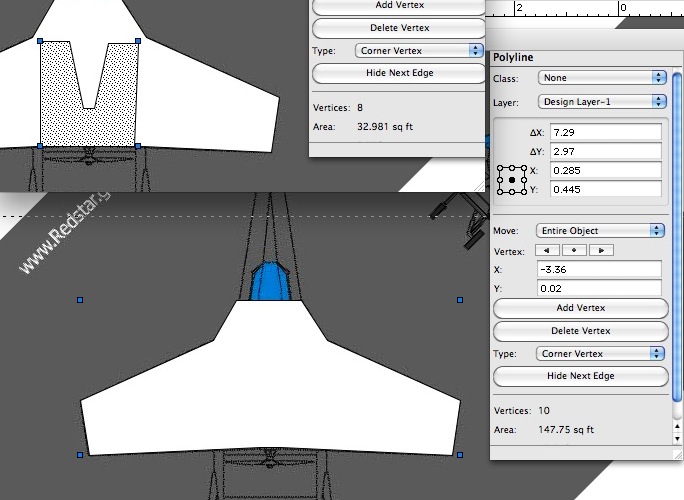
Just fed the drawing into my CAD program, remember the top of the fuselage on this is also part of the main wing, which appears to have around 147.7 sq ft (13.7sqm) of area, which is way over the maximum required 10 sq m for 95:10, and if you add the lower wing which is another 32.9 sq ft (3.0sqm), this is easily a 95:10 aircraft.
-
Has anyone built one of these yet {lol}
pylon500 replied to Narrabeenrick's topic in Aircraft General Discussion
Really? You've only got to look at the way it flies to see it's only an ultralight. 300kg gross weight with a 503, and remember, you can count the area of the lower biplane wing (inside the fuse), so it probably complies with 95:10! And could easily be built into 101:55/19-xxxx. -
Was trolling around youtube looking at some of the latest ideas in flying cars and found this; Looks like it got developed and produced even further than the Molt Taylor Aerocar, but got killed by bureaucracy.
-
DooMaw - building a STOL
pylon500 replied to Head in the clouds's topic in Aircraft Building and Design Discussion
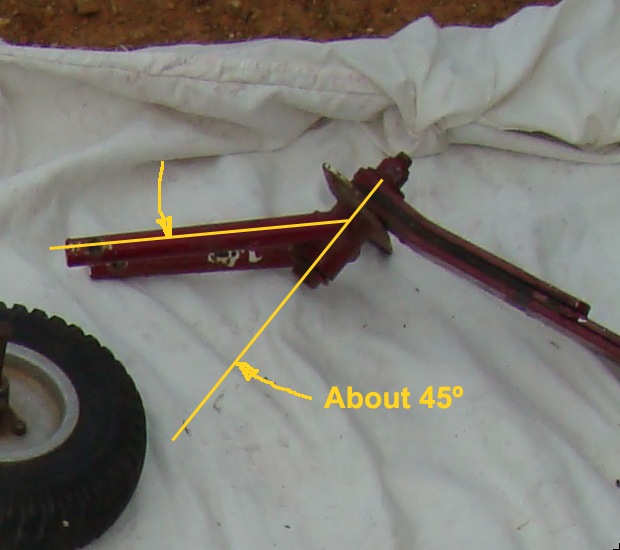
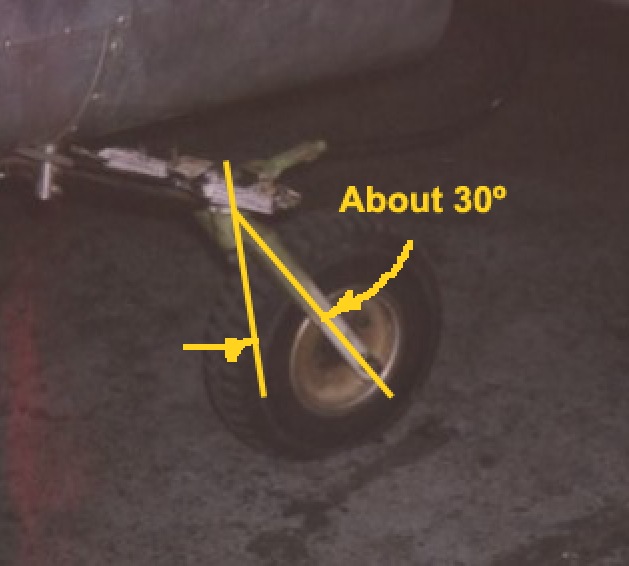
G'Day HITC, been following the thread off and on and must say I love your manufacturing skills an attention to detail. Having said that, I now and then spot something which, from an outside perspective, I have a little head scratch about but is usually solved by reading the text a little more closely. However, I spotted the detail for your tail wheel drawing as well as the photo of your proposed plastic tailwheel, and feel I should comment again... Being an avid tailwheel driver, I do find people thinking of tailwheels as 'just the little wheel down the back', and then running into problems with them. Obviously when you think about it, a tailwheel is equally important as a nosewheel, as it does the same job, so all it's load factors and dynamics need to be considered as closely as is a nosewheel. To start with, I wouldn't trust the plastic tailwheel hub as far as I could throw it, with or without good roller bearings. While the moment arm of a tailwheel will give it better leverage over the mass of an aircraft compared moment arm/side loads imposed on a nosewheel, the side loads are still significant to be imposed on a plastic hub. I know many use them and get away with it, but I get the impression the 'DooMaw' is being aimed into the STOL/Bushplane operation so robustness is somewhat of a requirement. My other concern is the layout of your tailwheel fork hinge line dynamic. I see these serious 'aft' trail tailwheel on a regular basis, and always question their use...? When asked, designers using them tell me that having a lot of 'trail' in a tailwheel helps keep the plane straight, supposedly by resisting any sideload !? While this sounds about right, what really happens is these tailwheel will happily follow wherever the fuselage is going, unfortunately if there's a crosswind or the aircraft has decided to head off into a ground loop, then the sideloads on this type of layout make it nearly impossible to stop a ground loop without the use of brakes. I find the reality is, these aircraft are usually hard to turn when taxying, being very heavy on the pedals and usually requiring the use of brakes to assist turning. I am also sometimes told long trail tailwheel are less susceptible to shimmy, but I don't believe that, only that the shimmy frequency is lower (but just as damaging). My own 'Stollite' (https://picasaweb.google.com/113292981019876413104/BuildingAndFlyingTheStollite#) uses a modified Lightwing tailwheel where I reduced the amount of trail, and it is very easy to taxi in strong crosswinds without the use of much brake, which is just as well as the brakes (cable operated) are not the best. The pictures show (sort of) the difference in rake or trail in the forks, between a standard Lightwing (red) and the modified (white) forks as used on my Stollite. Sorry for the long winded description of what most people think is a simple item.
-
Has anyone built one of these yet {lol}
pylon500 replied to Narrabeenrick's topic in Aircraft General Discussion
Update; it now has retracts; http://www.gonzoaviation.com/clanok/sf-1-archon-dostal-zatahovaci-podvozok I've got to stop looking at this thing or I'll get too interested and start building one... -
Has anyone built one of these yet {lol}
pylon500 replied to Narrabeenrick's topic in Aircraft General Discussion
Yeah, I've looked closely, and it's a bit rough, but still not a bad effort for (probably) an amateur. One assumes the kits have been tidied up a bit? It does make a good starting point for improvements like a decent bubble canopy and maybe retracts, followed by balancing of the controls (watch the elevator bouncing while taxying), and better flaps, and maybe do away with the struts. -
Has anyone built one of these yet {lol}
pylon500 replied to Narrabeenrick's topic in Aircraft General Discussion
I just love the irony of how it would be described as compared to how it looks.... LOOKS; Single seat jet fighter in appearance. DESCRIPTION; Fixed undercarriage, strutted biplane, twin boom pusher! If you find the right videos, you can see down the intakes and realise the bottom of the fuselage/intake area is actually another wing with a pusher engine driving an normal size propellor that protrudes below the fuse (a little) behind the top and bottom wing trailing edge. The sides of the 'intake' area become a pair of booms either side of the prop, with the two fins and the tail mounted at the end. All in all a bit clever to give it the appearance it has. -
The downside to these 'List' sites, is that they are usually full of advertising and pop-ups, that take forever to load. And that's aside from the fact that half these site have wrong or misleading information, ie; the FIRST aeroplane...! But it's hard to resist them sometimes...
-
I see where you are going with this Geoff, but they have the internet as well...
-
Wow, just read the whole CT forum mentioned earlier; http://ctflier.com/index.php?/topic/3621-flight-design-insolvency/ It's 9 pages worth, took me an hour or so (with interruptions) to read, with some answers starting to appear about page 7. It does tend to show that the old adage of how to make a small fortune in aviation, holds true, only this time it could appear to be a whole heap of little things catching up with them. Currently, if you wanted a CT, you would probably have to order it through the USA, as they are finish building them from Taiwanese supplied hulls. As an aside, there was a very good comparison done between the CTLS, and the Pipistrel Virus SW (my choice), but only to show that there is always small differences that can't always be compared. The CT forum is like any other including it's lurking protagonists, just like our Favorite Thing.... Hopefully the German administration team can smooth the financial problems at Flight Design (FD) Germany, and keep the type available.
-
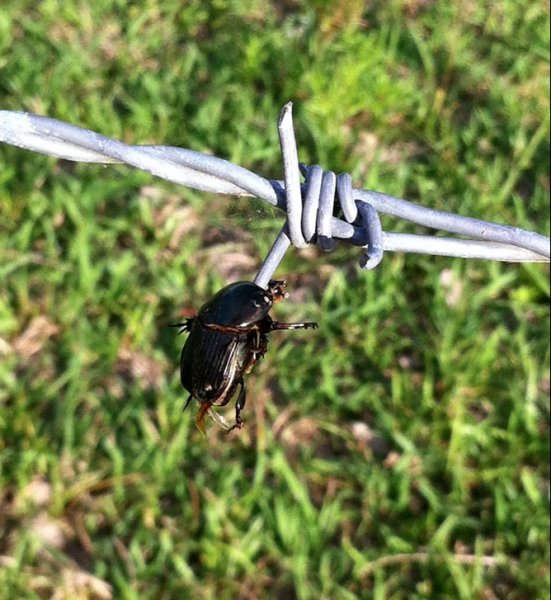
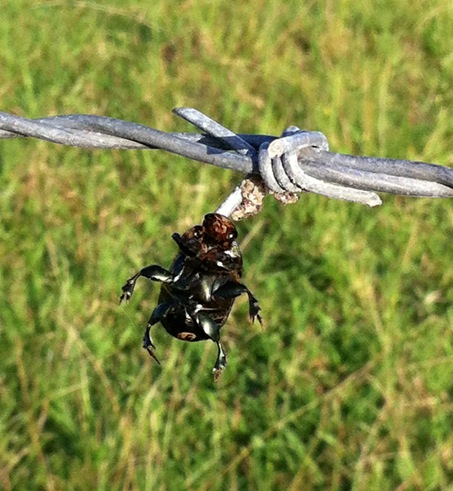
And for "Something completely different", a seriously unlucky bug..... Believe it or not, I found two other impaled beetles walking around my three acre property! Usually referred to as Christmas beetles, and they tend to swarm just on dusk.
-
Although the concept of 'Area Rule' is supposed to be aimed at high-sub, to trans-sonic speeds, many designers will still look at creating a situation where the largest cross sectional part of the fuselage occurs aft of the wing centre of pressure (usually spar), nearer to the trailing edge. It will be interesting to see how this effects the speeds of the Sonex? By widening ahead of the wing, this will be creating a greater 'whetted area' ahead of the wing than the original (drop in directional stability?) and thereby enhance the suddenness of the sectional area drop-off near the trailing edge. Another point could be that the original, having an increasing sectional area from the nose to the seat-back bulkhead, is steadily increasing the air velocity towards the this sudden taper point, enhancing laminar flow down the rest of the fuse. If the wider forward fuse stabilises the flow before the seat-back bulkhead, there may be the possibility of separation past this point, adding drag and/or possibly reducing directional stability...? All the above points are personal conjecture, and only likely to have an effect of no more than say 2% on aerodynamic efficiency?
-
A Flat Spin in a Tipsy Nipper. Video / AAIB report.
pylon500 replied to Garfly's topic in AUS/NZ General Discussion
I wonder how many times he's spun it since? -
RV4 Canopy Builders?
pylon500 replied to Adam.Cas's topic in Aircraft Building and Design Discussion
It's been a few years now (10~15?), but there was a guy down Mandurah way that was blowing canopies, not far from the highway, amongst all the boat companies...? -
How to land a 737, like if the pilots cark it
pylon500 replied to Gnarly Gnu's topic in Aviation Enthusiasts
"We're all gonna die!!" But seriously, any Joe Bloggs off the street having watched that video, is going to be hard pressed to get the aircraft on the ground anywhere near the strip, let alone smoothly. Some of us experienced ultralight pilots (1000+ hours) are still going to be working hard to have a flyable aircraft after the landing...... -
Just been doing a search on the Penrite TS40C (after I found half a bottle amongst my engine collection) only to find it discontinued. This post popped up during the search, but I can't really add any more info since the last post in 2009. The Penrite explanation was unavailability of a raw material, while others cite a backdown from an insurance problem (threat?) It is interesting to note Penrite's Technical Bulletin stating they have two replacement formulation oils, but neither is suitable ultralights; 91 NEW HI PERFORMANCE TWO STROKE OIL.pdf 91 NEW HI PERFORMANCE TWO STROKE OIL.pdf 91 NEW HI PERFORMANCE TWO STROKE OIL.pdf
-
Interesting to note one report states 'A visiting Australian pilot', wasn't Ray Clamback (again)?
-
Pro-Seal fuel tank sealant
pylon500 replied to olegusan's topic in Aircraft Building and Design Discussion
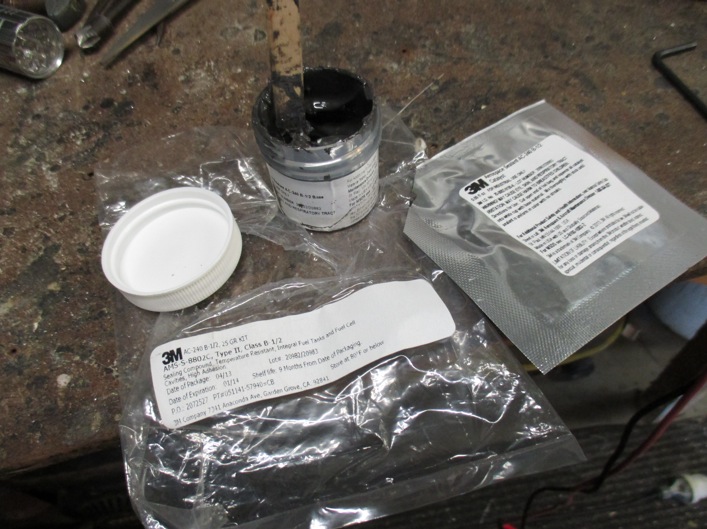
There is also Aviall (in each state including Victoria), probably with a similar range to Spruce; <https://www.aviall.com/frontdoor/locations/australia/> There is also a 'mini' pack available with, like a half cup of sealant, good for little repairs, but as mentioned, BEWARE, the fast set sealants cant be quite fast! The usual part numbering system will be something like 'PR1422', then go onto either A or B, then ½ or 2. A is quite runny, while B is thick. The ½ or 2 is hours of cure time. I used the 3M product 'AMS-S-8802C, class B½ to seal in a fuel drain, and only just got it done before it went off! I bought this kit at Bankstown for around $12. (That's a 'pop'stick, stuck in the little cup)