skippydiesel
-
Posts
8,276 -
Joined
-
Last visited
-
Days Won
84
Content Type
Profiles
Forums
Gallery
Downloads
Blogs
Events
Store
Aircraft
Resources
Tutorials
Articles
Classifieds
Movies
Books
Community Map
Quizzes
Videos Directory
Everything posted by skippydiesel
-
I have no idea what Wal charges to zero time a Rotax 912 BUT if its $13K which you can probably get (if not more) for the TBO engine, this is money that can be put towards a new engine. The new engine will be up to speed with all Rotax upgrades/changes and have no reused (suspect?) components ie if the change over cost is say $5K why not purchase the new. TBO Rotax 9 engines regularity appear in the classifieds - most are from flight schools and are between 1 - 2 K hrs, well sort after by home builders looking for a cost effective power plant.😈
-
My limited understanding; From an administrative/legal perspective - If you zero time an engine , it is effectively a new engine, so it's not surprising the (certified/factory built) aircraft can continue to be used for hire/reward. Note: for zero time the engine must be rebuilt by a authorised service provider and there must be documentation confirming its rebirth, as an almost new engine. While it may be possible to zero time a Rotax, I am lead to believe, it is more cost effective to sell the TBO engine (for use in an experimental aircraft) and purchase a new replacement for your factory/certified aircraft.t😈
-
Read the desertion - there are too many variables' for accurate repeatability. eg Air pressure & volume, engine temperature, operator technique, etc The primary objective of the leakdown test, is to compare it with subsequent tests, using the same equipment, under as as close to the same conditions each time. The reason for calibrated equipment is simply conformaty ie any tester, conforming to the same standard, will give similar results. Alternatively, use the same (non calibrated) equipment each time for similar result. The proceeding debate had two camps, the certified/calibrated/expensive equipment and the cheap/knock of/ equipment. It s clear that similar information can be obtained from both, subject to careful informed use.😈
-
I stand to be corrected - A factory build can become experimental, subject to CASA/RAA approval. The approved aircraft is likly to be subject to operational limitations eg not for hire/reward😈
-
Constant Speed Prop Dynamic Balance
skippydiesel replied to skippydiesel's topic in Engines and Props
I liked the idea - testing in flight, just not sure I can do it BUT will definitely explore further. Should it prove possible, with my engine/cowl clearances', it will be very interesting to see how the ground based testing/adjustment translates to the flying aircraft. Still waiting for the prop manufacturer to get back to me.😈 -
Thought I might resurrect this debate, as I found an interesting/enlightening Wikipedia document on the subject: https://en.wikipedia.org/wiki/Leak-down_tester The comments on repeatability and accuracy are particularly enlightening😈
-
Started a spare parts list
skippydiesel replied to danny_galaga's topic in Aircraft General Discussion
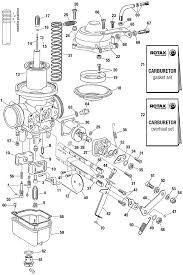
Metric fixing for your Rotax. As part of my 200hr service & inspection of my Rotax 912ULS, I wished to have a look at the carburettor jet needle, slide/piston & diaphragm condition. To make the visual inspection, the Chamber Top must be removed. With a little care, this can be done in situ. The Chamber Top is held in position by two stainless steel (SS), 316 grade, Philips head screws. The front screw (No 28) is a Mushroom head M5 x 0.8 x 20mm. The rear (No 25) is a Countersunk M5 x 0.8 x 12mm In my case, one of the rear screws has managed to seize (not uncommon when SS screws are into aluminium) and the Philips head rounded out - it's going to be a devil of a job to get out (story for another time). You can purchase a replacement rear/Countersunk screw (kept in stock as a frequent sale item) from reputable aircraft suppliers for about $6Au /screw + delivery. OR You can go down to your friendly specialist nut & bolt supplier and pick up them up for about 12C each. I have decided to replace both Phillips head (x2) carburettor Chamber screws, with Allen key socket heads and will add a dab of SS anti seize to each screw. I am hoping that the combination of Allen key head and anti size will prevent the problem happening again.😈
-
Constant Speed Prop Dynamic Balance
skippydiesel replied to skippydiesel's topic in Engines and Props
"....for best results you must do the balance at cruise rpm AND cruise pitch, most probably while flying ?" I am using a DynaVibe dynamic balancer. There are practical difficulties with conducting the balance in the air, primarily fitting the cowling over the sensors.😈 -
Methinks the Americans may also "dispose of" of troublesome individuals - how did Epstein come to die no conveniently?????😈
-
"Dew point and temp were even. I believe I might have had a bit of carby icing. On the ground fast idle is 3000 rpm and smooth as silk. Today coming in to land dropped it to 3000 a couple of times and it stumbled and ran rough. Had to bump it up to 4000. Back on the ground it was fine." A good reason to carry power on descent, unless practising engine outs😈
-
Constant Speed Prop Dynamic Balance
skippydiesel replied to skippydiesel's topic in Engines and Props
Please expand. How might your theory impact on vibration analysis/correction/balance??😈 -
Six Aviation Bluetooth Headset Interface
skippydiesel replied to skippydiesel's topic in Instruments, Radios and Electronics
I realise that noise cancelling headsets are all the rage however the extra purchase cost + parodic batteries, may not be value for $$$$. Befor noise cancelling , passive noise reduction did the job perfectly adequately (in most cases). Assess the noise levels in the cockpit, before making that $KK purchase, it just might be that a passive headset will do the job. I have an old David Clark noise attenuating headset. With my last (composite) aircraft I only ever used the noise attenuation occasionally on long trips. With my new (metal) aircraft I use it all the time. My favorit passive headset is a Peltor (now 3M) -sooo comfortable & lightweight😈 -
Designated Remote Areas, Au
skippydiesel replied to skippydiesel's topic in AUS/NZ General Discussion
Thanks Onetrack, Unfortunatly the story cut off part of the DRA northern boundary - since found.😈 -
All aircraft should be "trimmed" for straight & level flight in Cruise. This can be done with fixed trim tabs &/or adjustment of flap position. This is just dandy for single seater aircraft but is of limited benefit for two seaters, particularly the side by side design. Fill the passenger seat with a human or other load & the aircraft will no longer be in trim ie the pilot will have to continually fly with one or more correction inputs (aileron & rudder). The solution is some sort of inflight adjustment. This can be an electric, mechanical actuated movable trim tab or spring loaded device acting on one or both flight controls.😈
-
Tell us about your first solo
skippydiesel replied to Admin's topic in Student Pilot & Further Learning
I know nothing of the Xair . I stand to be corrected -"..... raaus rules forcing us into flying school aircraft" I don't think this is correct. Certainly there are rules about what aircraft you can be taught in. I believe it's got more to do with the status (factory built, home built) of the aircraft than who owns it. I believe you can be taught in your own factory built and the aircraft you built (subject to finding an instructor who will agree to do so). You can not be taught in a home build, that you did not build. 😈 -
The DB instructions for my constant speed prop, advise that the DB be done, at Cruise RPM, with the prop on the fine pitch stop. Having followed the instructions, I thought I may digress and see what happens when the prop is turned to a Crusie pitch setting. The vibration increased marginally - still well within the recommended level. I have writen to the prop manufacturer, asking why the prop is not balanced at the Cruise prop setting, where I spend most of my flight time - early days, yet to have a reply. I thought this might be a good topic for the Forum to discuss/nut out. Any thoughts? 😈
-
Designated Remote Areas, Au
skippydiesel replied to skippydiesel's topic in AUS/NZ General Discussion
Thanks Mkennard, I have a vague idea for a flight north, staying out of DRA to Khancoban. - Entering DRA to Adaminaby. (Paralleling Canberra eastern CTA boundary - . Out of DRA) - Braidwood Percheron - Mittagong - Spectacular country. Highest point Jagungal 6788' Extremely weather dependant - will have an alternate, further west (low country) route.😈 -
Where to find a map showing Vic/ NSW Designated Remote Areas (Snowys)? 😈
-
Warbirds over Scone - 28-29 March 2026
skippydiesel replied to Marty_d's topic in Trips/Events/Seats
Thanks for the info. Marty_d. Tad pricey @ $57.65/day ($88.25/2day) ticket, plus landing fees and the cost of flying in. There should be a concession for fly-in's, as we provide some of the attraction ("... drool over your plane!"). Strangely the Gold Pass price is the same as the proletariat price. Arrivals between 08:00-10:00. No departure advise, however air show ends at 16:00 so presume anytime after this. 😈 -
About half way through my 200hr service. Part of the service is to "dry lube" all the control systems moving parts - to this end all inspection covers will be removed / replaced (ugh! - far too many screws, will have RSI by the time I'm done) including the whole seat pan. Removal of the seat pan will expose the cockpit flight controls linkages/rods/etc. This will give me a chance to work out, the bungee cord routing, location of pulleys & cam cleats. If it's possible, I will have a bungee on the left rudder system & on the right aileron / up. It's going to be tight - will let you know.😈
-
Never mind the fancy war machines, Russia has along a bloody history of using its own as cannon fodder - doing much the same against Ukraine. Ukraine can not hope to win against Russia. The best they can hope for, is to repel the invader, even this won't happen, without boots on the ground help from the West.😈
-
Six Aviation Bluetooth Headset Interface
skippydiesel replied to skippydiesel's topic in Instruments, Radios and Electronics
In resents times (last 3 months or so) my little airfield has been sloooooow. In part weather but also reduced activity by possibly the most active of two flight schools. In short, not too many people arround.😈 -
"what is the best prop for cruise and top speed. i always believed 2 blades to be more efficent than 3 and 4 blades. i am talking fixed pitch or ground adjustable." Like you I have been told, over the years, where clearance, tip speed and power can be accommodated, two blades are the most efficient = converting given power into forward/flight speed. I believe the type of airframe (draggy / slippery) and the intended mission objectives (STOL / high speed cruise) are likly to need to be considered in the prop selection process. I would always go for ground adjustable over a fixed pitch, as it seem to me that even within a known airframe/engine combination, there will be variants in operational conditions, that the pilot/maintainer can fine tune the prop for eg advantage take-off, for short or compromised strips. In resents times the E-prop would seem to be gaining a strong following. I still find it astonishing that the "toothpick" blades that characterise this prop, can deliver the reported performance improvements over more conventional shaped prop blades. 😈
-
"Realistic temps might be seen on full power ground runs." They may or not. I speak as someone with an experince, where satisfactory ground temperatures, were not translated to flight. The first test flight was cut short due to excessive in flight temperatures. We tried all sorts of cowling mods, ducting, etc with only minor success. In the end, a complete cooling system rethink/design was sucessful. In your favour, you are building well know/tested aircraft. If you have not strayed to far from the plans, all should be well. If on the other hand you have allowed your inner experimenter to take hold, be prepared for the unexpected.😈