


old man emu
-
Posts
5,297 -
Joined
-
Last visited
-
Days Won
78
Content Type
Profiles
Forums
Gallery
Downloads
Blogs
Events
Store
Aircraft
Resources
Tutorials
Articles
Classifieds
Movies
Books
Community Map
Quizzes
Videos Directory
Posts posted by old man emu
-
-
On 03/01/2023 at 9:48 AM, facthunter said:
DH 82 A
It's easy to make a typo when the keys for the numbers are so close together. The aircraft involved was a DH 89A.
-
 1
1
-
 1
1
-
-
First consider the word "bunt". Its etymology harkens back to meanings implying a push by the head or horns as many animals do in a fight, and it may be related in concept to "butt" from Anglo-French buter, Old French boter "push, shove, knock; thrust against". That would account for the first action of the manoeuvre - pushing forward on the control column to push the nose down.
Next we have to account for the aileron movement. Early in its development, the Merlin engine's lack of fuel injection meant that Spitfires and Hurricanes, unlike the Bf 109E, were unable to simply nose down into a steep dive. This meant a Luftwaffe fighter could simply "bunt" into a high-power dive to escape an attack, leaving the Spitfire behind, as its fuel was forced out of the carburettor by negative "g". RAF fighter pilots soon learned to "half-roll" their aircraft before diving to pursue their opponents. There's the reason for the aileron movement by Spitfire pilots, and once the technique has been developed, it becomes the standard.
Finally we have the rudder movement. The best explanation I can find is one that is an extension of the effects seen in an aircraft with a conventional landing gear (tail dragger) when the tail is being raised during the takeoff roll. This change in pitch attitude has the same effect as applying a force to the top of the propeller’s plane of rotation. The resultant force acting 90° ahead causes a yawing moment to the left around the vertical axis. Seen from the pilot's point of view, the Merlin engine spins in a clockwise direction, so during a normal takeoff right rudder would be applied to counter the left hand yaw. In an escape situation, moving the rudder to the left would enhance the rate of yaw so that the escaping aircraft would reverse direction causing the pursuer to overshoot.
Once the bunt was completed it might have been possible for the pilot to complete a 360 turn and end up chasing the original pursuer.
-
1
-
-
1 hour ago, SSCBD said:
What is the medical standard required for the proposed 760 kg weight increase?
At 760 kg you are morbidly obese according to Body Mass Index standards, unless you are 5.4 metres tall.

-
1
-
3
-
-
I was speaking to a bloke at Ausfly a few months ago. He said he was in partnership with the original owner and that the local council had OK'd the concept of an airpark development. Since I'm not in that neck of the woods anymore, I'm not up to date with what is going on.
-
I have heard that approval has been given for one at The Oaks.
-
51 minutes ago, pmccarthy said:
am trying to visualise what the plane would actually do in a bunt
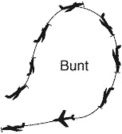
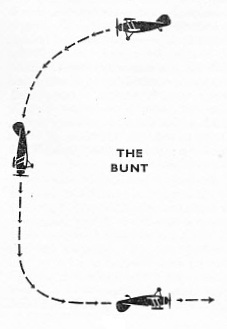
Looking into this, I think there is a problem of semantics. What exactly does "bunt" describe? The “bunt” is really the first part of an outside loop. The pilot pushes the nose down from level flight to the vertical and then to the inverted position.
Easiest to do if you have model in your hands. Simply move the model to the response each control surface would cause, taking into account the "further effect" . This is the Aresti symbol in aerobatics for a bunt.
English bunt Half an outside loop starting from upright, straight and erect level flight. (The pilot pushes the stick forward and draws a half circle in the sky from the top down). 
-
 1
1
-
-
36 minutes ago, Blueadventures said:
If CASA alter medical requirements for certain VH flying then RAA would not really need 760 to be available.
It seems to me that those qualified in medicine at CASA who are setting medical standards have chosen to ignore the great advances in medicine since the mid-20th Century. They also ignore the medical requirements of all other forms of powered transport.
-
3
-
1
-
-
17 hours ago, sfGnome said:
Getting them to scan for other aircraft would be well worth adding to my standard spiel.
A grain of Good coming from this incident.
If you do, remember good practice is to implement a procedure, then review its effectiveness it attaining the goal it was introduced to achieve. If it falls short, anend, implement and go through the process again.
-
1
-
-
19 hours ago, coljones said:
Your subject line should have been "Do we need ASICs for an event at Tooraweenah?".
I'm too old and ugly to be chick bait, so I use clickbait to attract.
-
2
-
-
2 hours ago, skippydiesel said:
The only thing ASIC does is cause annoyance to pilots,
Well, I began this thread because the question "Will volunteers working airside for this event need an ASIC card?" had to be answered so I could organise the running of a flying event. I think creating the thread was worse than playing pinata with a hornets' nest.
By the way, my question has been answered - ASIC not required.
-
2
-
-
3 hours ago, flying dog said:
but that "tap" looked more like a "Hey, can you ......." type rather than a "Huston we have a problem" tap.
I agree. It is impossible to interpret what the passenger meant. Fortunately, I think that he is alive to ask.
-
4 minutes ago, RFguy said:
does the ATSB have court of law style compel-to-answer style powers ?
The Transport Safety Investigation Act 2003 (TSI Act), allows the ATSB to investigate transport safety matters in the aviation, marine and rail transport modes within the Australian Government's constitutional jurisdiction and, to release transport safety information, including investigation reports that detail the findings and significant factors that led to a particular transport safety occurrence. ATSB Transport Safety Investigators exercise statutory powers delegated by the Chief Commissioner in accordance with the provisions of the TSI Act. These powers allow ATSB investigators to interview anyone involved directly or indirectly in a transport safety occurrence.[16] A comprehensive regime of provisions within the TSI Act is in place to maintain the confidentiality of, and legal protection for, a range of sensitive safety information gathered by ATSB investigators.
TRANSPORT SAFETY INVESTIGATION ACT 2003 - SECT 32
ATSB may require persons to attend and answer questions etc.
(1) Where the ATSB considers it necessary to do so for the purposes of an investigation, the ATSB may:
(a) require a person to attend before the ATSB and answer questions put by any person relating to matters relevant to the investigation; or
(b) require a person to produce specified evidential material to the ATSB.
TRANSPORT SAFETY INVESTIGATION ACT 2003 - SECT 47
Self-incrimination not an excuse
(1) A person is not excused from answering a question or producing evidential material in response to a requirement under this Part on the ground that the answer, or the production of the material, might tend to incriminate the person or make the person liable to a penalty.
(2) However, if the person is an individual, then:
(a) the answer or the production of the material; and
(b) any information or thing (including any document) obtained as a direct or indirect result of the answer or the production of the material;
are not admissible in evidence against the person in any civil or criminal proceedings.
-
2
-
-
Porepunkah looks like one of those airpark developments.
-
1 minute ago, onetrack said:
There's a shortage of high quality, experienced investigators
First job qualification for aircraft systems investigators is that the applicant has the technical qualifications and aircraft maintenance experience on type or similar types
There's a terrifying shortage of experienced AMEs an L2s just to maintain the current fleet. The vacancies being left by retirement and other factors are not being filled by the younger generation in number to either maintain current requirements or to handle fleet expansion.
So if there's not enough AMEs and L2s to handle the demand for service now, where will you draw the ones needed for investigation come from?
-
1
-
-
I wonder if this thread would have reached page four if the aircraft involved had been a C-150 or PA28-140.
-
2
-
1
-
-
1 hour ago, Flightrite said:
Wonder why the heli driver was in the L/H seat?
That ATSB guy has been working flat out since before Christmas. Slip of the tongue, maybe? I would not make too much of it at this stage.
-
1
-
-
3 minutes ago, RFguy said:
(OME the thing hanging out is the oil catch can)
To get it to come loose would require a good whack in the direction of force I indicated, and a good deal of oil in it to give it the inertia to stay put while the firewall moved away from it.. Even if it did, how do you explain the unhinged cowl?
-
1
-
-
Let's get back to the initial post. I ask: "Where did BirdDog get what he posted from?" To me it reads like a media release - therefore I am suspicious of "The 'Jabiru' ultralight lost power". That reeks of ignorant journalism.
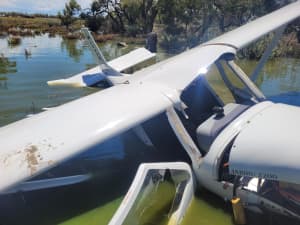
Now, let's inspect the aircraft. Am I wrong in suggesting that the flaps were extended to a degree? That the elevator position indicates a controlled flare? I'll concede that the position was caused by the twisting of the rear fuselage that could have shifted the control connections. Are they cables to the elevator and rudder? Wing position in relation to the cabin seems normal.
The plane clipped trees That mark on the leading edge of the right wing looks more like a slap than a whack, and a single impact with something - tree, not "trees". I can't see a likely tree back along the approach path.
Can a Jab pilot tell me what the yellow thing hanging out of the engine bay is? That cowl is held in place by the axle of a piano hinge. I can't see the hinge having been broken at impact. I surmise that the cowl was opened by the Evidence Eradication Team "to disconnect the battery to prevent a fire".
The distortion to port of the lower engine cowl tells me that a force was applied from front starboard side to the rear port side. I surmise that it was as a result of the nose wheel hitting the ground under the water. That force, acting on the aircraft forward of the CofG would induce an anti-clockwise rotation to the airframe, resulting in the bending of the rear fuselage to starboard. The rotation could account for the separation of the left wing at the root.
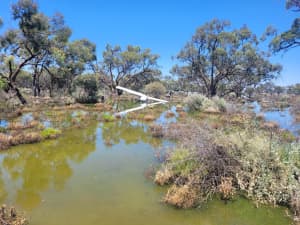
This final photo doesn't take us any further in the analysis, except to say that the pilot got selecting the best place to land correct.
-
 1
1
-
-
20 minutes ago, coljones said:
It is almost as if politicians and public servants hate Australia.
Thirty pieces of silver?
-
1
-
-
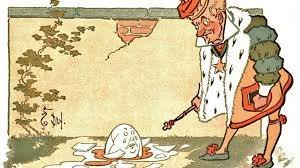
I don't think that it is fair to be dissing the Jabiru engine in 2023, based on the pre-2010 products. That engine was in development pre-2010. If Jabiru had not continued development to correct identified faults, the company would be like Humpty-Dumpty at the base of the wall.
Do you think that the first Rolls Royce Merlin was perfect in every way? In a lecture to the de Havilland Aircraft Technical Department in November 1945, Mr A.C. Lovesey told the attendees that "It is well known that a completely new design of piston engine takes nearly five years from the date of its inception until it can start quantity production." And he was referring to design and development by a company that had (in 1935) been building engines successfully for thirty years. And the 1935 Merlin was a doddering grandfather to the later 51 different Marks of that design. And that development was kicked along by a savage war. http://www.wwiiaircraftperformance.org/merlin-lovesey.pdf
It's probably wise not to place one's absolute faith in one of the early Jabiru engines, compared to a 2022-built one. However, if that early engine is still performing within specs, then I'd say the owner has scored a good'un.
We go on and on about these engines suddenly stopping, but you must consider all the possible ways to stop an engine, from catastrophic component failure to an insect blocking a fuel line.
-
2
-
2
-
 1
1
-
-
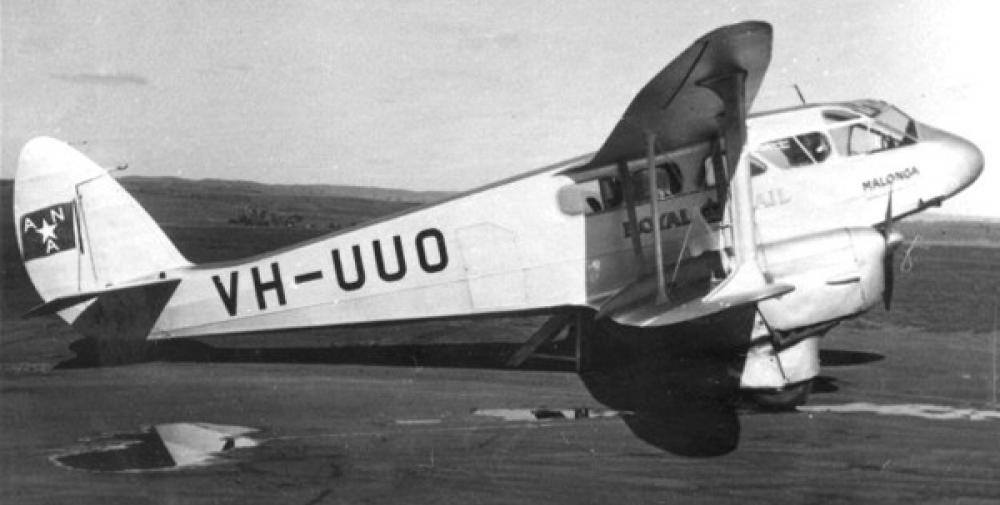
Butler Ait Transport lost a DH82A in the Warrumbungles on May 23, 1952 at 1730 LT.
The official record of the incident reads: While approaching Tooraweenah from the north, the pilot encountered poor weather conditions with heavy rain falls. He elected to make an emergency landing when the aircraft crashed in flames in a dense wooded area located in the Warrumbungle Mountain Range, about 18 km north of Tooraweenah. The airplane was destroyed by fire and all five occupants, among them pilot Keith Brown were injured.
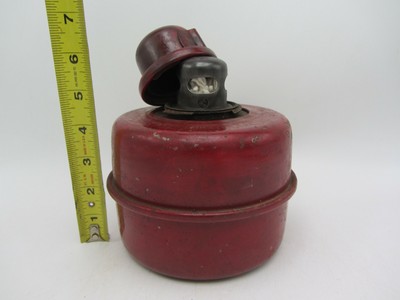
The local history is that the weather was crappy, and last light on that day was about the time of the crash. Knowing that the plane was due to arrive from Baradine, it is probable that the ground staff had set out the kerosene lamps to mark the runway.
Unknown to everybody was that a farmer had been clearing trees and had pushed them into piles, in lines. The farmer chose that day to set the timber of fire. According to a passenger on the Rapide, "We took off in a clear sky but in a few minutes you could hardly see anything for the mist. Most of us dozed. When I opened my eyes I thought we were at Tooraweenah Aerodrome. Down below I could see what looked like flares. The pilot too seemed to think this." The crash did not seem to put the passengers off flying with Butler Air Transport. After being checked over by a doctor in Gilgandra, they were back at Tooraweenah the next morning to join the DC-3 flight to Sydney
https://trove.nla.gov.au/newspaper/article/112850228/11510351
VH-UUO, Construction No. 6259 was built in the English summer of 1934 and registered as ZK-ACO and named Tainui (the first Maori war canoe to reach NZ) for entry in the Melbourne Centenary Air Race, where it carried race number 60 and on 3/11/34 Reached Melbourne, the ninth and last race aircraft to cross the finish line. Total time 13 days 18 hours 51 mins with a flying time 85 hours 42 mins. Came fifth in Speed Section and sixth in Handicap Section. On 14/11/34 it Departed RAAF Richmond NSW for a direct flight to NZ, with the same three crew. Landed at Palmerston North NZ after 12 hours 14 mins flying time. They carried extra fuel in 4 gallon cans which they emptied into a feeder tank in flight.
Publicised at the time as the first aerial crossing of the Tasman Sea by NZ born pilots.That's enough for here. If you want more, come to the Arthur Butler Aviation Museum
-
1
-
2
-
-
I had a look at this https://www.goodall.com.au/australian-aviation/dh84-pt2/dh84-dragon-pt2.htm
What I got from it was that the Gypsy engine was not the most reliable thing ever built. But one could say that about any engine - aircraft, motor vehicle or boat - from that time. Although I'm sure that the manufacturers could quite easily meet the design tolerances of the engine parts, the problem probably stemmed from the metallurgy involved.
1 hour ago, Bruce Tuncks said:I reckoned it was because Robert Menzies was an Anglophile
That's one I don't think you can lay at Pig-Iron Bob's feet. In 1946 it was Chifley who was PM then. Chifley, who tried to nationalise air transport by forming TAA and created a Constitutional storm in the process. Chifley who stifled even the purchase of the most modern British aircraft of the time. There's a lot of aviation political history that has been forgotten.
-
1
-
1
-
-
36 minutes ago, Cyrano said:
55-3342 should be a clue Baldrick.
Sir, I have a cunning plan ....
-
1
-
-
3 hours ago, Ironpot said:
I am starting to suspect that somebody may have been knocked back for one here?
No. I started the thread to find out if volunteers helping to run a flying event needed an ASIC card because they would be working airside. As usual, and it is the nature of the beast, the initial enquiry has been answered, but respondents have moved off on another track. That's the beauty of this informal site. Doesn't worry me that it has happened. In fact I'm probably one of the leading signpost twisters.
Now back to following red herrings.
Cost of ASIC card is $110 for the Auscheck security check and the card must be renewed every two years. I have a Working With Children approval. That lasts five years and cost me $80 in 2019. I'm sure that any of the specific offences that lead to the refusal of a WWC approval would jump out during the basic criminal history check. Offences that would lead to the refusal of an ASIC card would also jump out. So why does an ASIC card run out at $275 for five years while the WWC is only $80? The answer is simple - The government has outsourced the work and everyone knows that when government work is outsourced, the cost doubles or trebles. Smaller Government payroll = Greater taxpayer expenditure.
Why is there a need for the stringent checking for the ASIC card twenty or more years since the need for greater security arose? As Facthunter said:
3 hours ago, facthunter said:ALL should have a sunset clause and be continually JUSTIFIED to continue being valid.
A sunset clause might not be the best thing, however continual review is essential. That review can answer the question, "Is this rule still justifiable? - Yes/No) As an example of laws gathering dust without review, around 1912 each State of the Commonwealth passed an Act to prohibit the manufacture, sale and use of white phosphorus. That Act was the "White Phosphorus Prohibition Act". It remained on the books until repealed in 2013. The Act itself was repealed, but white phosphorus is dealt with in other Acts.
-
1
-
1
-



Bunting
in Warbirds, Vintage and Classic Aircraft
Posted
Which one are you referring to - PMC's or mine?
I'd say that the "bunt" part was the full forward stick which would rotate the aircraft around its lateral axis. Any other movement of controls would be methods to affect the direction of the aircraft after it had rotated 90 degrees around the lateral axis.
But don't as me about doing aerobatics. I get airsick everytime I go up in an elevator.