


old man emu
-
Posts
5,297 -
Joined
-
Last visited
-
Days Won
78
Content Type
Profiles
Forums
Gallery
Downloads
Blogs
Events
Store
Aircraft
Resources
Tutorials
Articles
Classifieds
Movies
Books
Community Map
Quizzes
Videos Directory
Posts posted by old man emu
-
-
I think that there are more videos of Cri-Cri's than there are Cri-Cri's built.
-
 1
1
-
 3
3
-
-
Marty_d
This mob Cutting Tools, Fasteners and all your Hardware Needs | Bolts & Industrial Supplies is located about 10 minutes from my place. I get lots of fasteners from them for my bike. They'll sell you from one to one million. If they are out of stock, they will order in.
-
My son (late 20's) recently sat on a jury. The allegation was that the defendant had detained and tied up the complainant, hence the charge was kidnapping. The defendant was a male the complainant was a female.
Sounds like anti-domestic violence campaigns would give the Prosecution a lay-down misere. However, the jury soon picked up on the fact that the complainant was using the system to get back at a former partner as her evidence and the evidence of non-police prosecution witnesses had more holes than a pair of laddered fishnet stockings. The jury was in favour of a "Not Guilty" verdict at the first meal adjournment. Unfortunately, they had to sit through a couple of days of faked stories that were clearly prepared and rehearsed before they were asked to give a verdict.
At least they didn't make their views obvious. They waited until all the jurors had attended to Nature, then returned to the Court.
-
I love the way people, when discussing the application of Law, provide examples that make the discussion reductio ad absurdum . The Law might say black or white, but before you make that call, you have to erase the gray.
In facthunter's first two examples, an intelligent examination of the situations would lead an adjudicator to conclude that the actions were reasonable for the safety of the occupants of the aircraft. No offence. In the second paragraph, the situation is clearly unsafe. Offence.
-
The reason for "When was your last drink?" is to ensure that there is not alcohol in the mouth when the breath is tested.
Technically, one is in one's legal right to refuse that answer that question because any answer is self-incriminating.
The correct questioning should be:
Tester: "In order to obtain a reliable result from the screening test, I need to know if you have consumed alcohol in the past fifteen minutes. Have you consumed alcohol in the past fifteen minutes?"
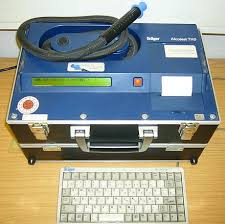
Please note that the test carried out in the field is a test to see if "there may be present in your blood the prescribed concentration of alcohol" is simply a screening test. You are either under or over the line. The only acceptable evidence in a prosecution comes from the testing of the breath by an approved breath analysing instrument, which is something that looks like this:

-
2
-
 1
1
-
-
CAR 228 - When is an aircraft "in flight"?
I raise that question in relation to the discussion of the King Air fatal we have been discussing in another thread.
-
The obvious place to start is with an engine number enquiry to Lycoming. That will tell you when it was first built. But that probably does not help tracking its usage.
Facthunter is on the mark with an estimate of $30K to get it overhauled, but as I said, that would give you a Zero Time engine, and an engine log book. You never know, once the engine was stripped down, it might be found to have had little or no use and the rebuild could be a lot easier, but I'd still go for a replacement of seals etc. If it turns out to be beyond economic repair, you could always advertise if here
https://www.boatsales.com.au as a boat anchor.
-
1
-
-
In that condition, as a usable aircraft engine, it is worth about the same price as a boat anchor.
BUT, for someone who was prepared to spend the money to pay for an overhaul, it is a gold nugget if it could be picked up for a song.
If you have the Doe,Ray,Me, I suggest you buy it ; put some elbow grease into it to make it look pretty, then on-sell it if you don't have the money to overhaul it. Don't forget that once overhauled, it is a zero time engine and is worth good money.
Plus you get an engine support stand!
-
1
-
-
There are three major factors in a traffic collision:
- The Roadway
- The Vehicle
- The human Factor,
Since the 1980's There has been massive improvement in the collision risk due to poor road design. Passive safety has been designed into vehicles. That just leaves the human factors.
Since the introduction of RBT, driver behaviour has changed greatly. The numbers of alcohol intoxicated drivers may not have changed on a pro rata basis, but the level of blood alcohol in affected drivers seems to have dropped significantly. Without doubt, many drivers in the 1980's were weed-affected. Those intoxicants have been replaced by the use of stimulants by the wider community. (In the 80's it was mainly long distance transport drivers who were on the 'beans'.)
Dropping the annual road toll from 1300 for NSW in the early 80's to the mid-300's now is a great result for the money spent on road and vehicle design and RBT. There will always be a background number of road fatalities. The problem for safety authorities is to identify what constitutes an inevitable fatality and what are the causes that can be reduced. For example, there will always be the elderly who walk into the paths of vehicle. There will always be the child behind the reversing car. There will always be the motorcyclist who leans across the centreline of a curve into the path of a vehicle coming the other way. There will always be the suicide made to look like a road accident.
-
1
- The Roadway
-
99.7% negative RBT tests over a twenty year sampling period doesn't seem to be an improvement over the 99.92% negative tests I saw in the mid-1980's. However, I will concede that the figures I looked at were from tests done in the Goulburn area where most of those tested were travelling between cities. I imagine that most of the 0.08% were locals going home from the pub. However, you cannot discount the massive effect RBT has had on social behaviour. How many of us now stop off for a schooner or three after work? Now we have to be aware of the drug affected young driver who has used stimulants.
If CASA published the type of persons who have been detected 'over the limit', I'd bet that most were airport laborers like baggage handlers and cleaners, not AMEs, refuellers, and flight crew.
-
Have a relaxing long weekend!
-
1
-
-
I accept that the thought can be shown to be incorrect
Next theory!
-
Of course, a simple way to dismiss that idea would be to indicate passenger seating positions. If no passengers was seated in the right hand seat, then I accept that the thought can be shown to be incorrect.A "thought", that is fanciful, unlikely and not based on any fact.onetrack,
It's not OK to defame a passenger, but without undeniable proof it is OK to defame the pilot?
You have to agree that the investigation of the pre-impact behaviour of the aircraft, and the post-impact inspection of its systems leads to a high possibility of pilot error, but is not absolutely conclusive.
-
1
-
-
I often wonder what sort of illegal immigerms arrive in Australia on and in sealed packaging from Asia. Should we wear rubber gloves and a face mask when opening our latest 'bought it on eBay?
-
I still go back to my thought in Post #24 - Non-pilot smart-arse playing with the knobs and switches after pre-takeoff checks completed.
-
I didn't mention high powered War Birds because not many of us get to fulfill our dreams.It's not only a multi engine aircraft. with engines offset. Single engined fighters (Piston) preset a lot of trim prior to commencing the take-off roll. If you set it the wrong way you may, (probably will) crash. as you will lose directional control.. Nev -
The authority to test for alcohol and other drugs (AOD) is common in transport-related occupations. 99.9% of workers in these occupations do not do their work while intoxicated. It is that 0.1% that are a danger to everyone else.
Education and experience are great modifiers of behaviour. I remember when RBT was introduced. It was common to detect drivers with blood alcohol concentrations (BAC) above 0.250. Now, years later, I would suggest that the common top mark is around 0.180, and that High Range PCA offences are a lot less than they were back in the day.
I remember reporting on the number of tests my HWP unit had done and the number of positive tests. At the time the PCA level was 0.08. It was a coincidence that the number of positive tests was 0.08% of hundreds of tests conducted.
Nowadays, we should not be so concerned with alcohol intoxication in the workplace, but Other Drugs.
-
Who was the first to visit Jack Newton in hospital?
Joan Armatrading.
-
 2
2
-
-
Not a dumb question.Dumb question perhaps but why do you need rudder trim in a twin engine aircraft?Apart from the same reason that there is a rudder trim on any aircraft to deal with rigging problems that could induce a yaw in cruise configuration, multi-engined aircraft have to deal with the problem of unequal power from engines to the left and right of the Centre of Mass. It is simply explained by considering the principle of levers - which you know from Weight & Balance calculations.
If each engine is located 'r' metres from the Centre of Mass, and each engine produces 'F' Newton-metres of force, then the torque, 't' of each engine is:
t = r x F
as shown in this diagram: (ignore the L = r x p)
If an aircraft has an engine on each side of the Centre of Mass, then, at equal power output, the torque on the left side equals the torque on the right side, and there is no force to produce a yaw in either direction. Rudder trim is set at "Centre".
If one engine is a bit more worn than the other, it might produce a tad less power that the other. The two forces would be unbalanced, setting up a yaw about the Centre of Mass towards the lower powered engine. The rudder trim would be used to counter the yaw by setting the rudder to turn the aircraft towards the more powerful engine. This relieves the need for the pilot to hold in the rudder pedal, which is fatiguing for the pilot while cruising.The greater the difference in power output of the engines, one side or the other, the greater this torque effect.
That is why a big part of converting from a single-engined aircraft to a multi-engined one is learning to respond to an engine loss of power on take-off. At this time, the engines are producing lots of power and there's not much airspeed or altitude. If an engine goes out, then the aircraft will quickly begin to yaw. If the yaw is not controlled, the wing on the side with the working engine will develop more lift, because the air flow is faster. This can induce a roll and put the aircraft on its back. Recovery from that attitude at low altitude would not be possible.
-
My thought: A group of guys over here on holiday. Plenty of yahooing. Hey! Let's mess with the knobs and buttons while the pilot is not looking at them.
Who was sitting in the front right hand seat? Was he a clown who decided to prank the pilot?
You can't prove otherwise.
-
You've seen what happens when an over-height truck tries to go under a bridge.
Here's what happens when you forget how high your Super Guppy is.
-
 1
1
-
-
That's the trouble with American Very Basic, Low powered aircraft. They all seem to have been developed on the Great Plains where once you clear the trees, there's not much need for more terrain clearance ability. Much the same in Great Britain. With the majority of Australia's population living between the Great Dividing Range and the coast, we need the power to get to 3 -5000' a bit quickly if we want to do anything more than short local flights.
-
But will a 5K Thruster handle my bulk?
-
Here's a back-to-basics plane that has had a lot of thought put into it. Especially the massive pilot weight allowance - 300 lbs (130 kg)
 I accept that the thought can be shown to be incorrect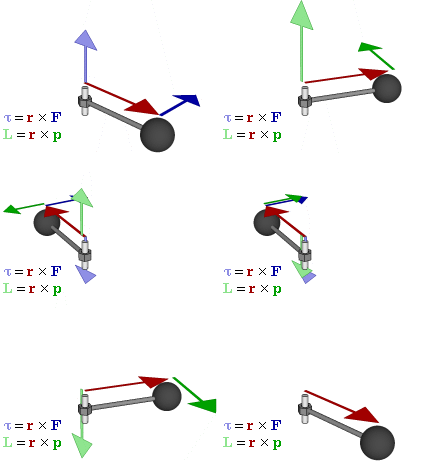
Cri Cri
in Aviation Videos
Posted
Most of the video clips of this aircraft's flight are followed by inane comments relating to the engines, their heat output, and the effects of insect ingestion. What a lots of ignorant put downs!
I see this as an example of experimental aviation at its best. The prototype flew with two 2-Stroke engines driving propellers, and most made since are prop-driven. The 2-stroke engines weigh about 17 kg each. The turbojets weigh 4.37 kg each. The ICE powered aircraft cruise around 90 - 100 kts. During the videoed flight the pilot claims a top speed of around 140 kts, so the cruise could easily be 120 kts. The fuel burn ranges from 4.25 oz/min to 22 oz/min at full power. Let's say that fuel burn is about 15 fl.oz/min in cruise. That's 0.44 litres per minute, or 26.4 litres/hr.
Colomban Cri-cri - Wikipedia
PBS - Aerospace - TJ 20 Turbojet Engine
Notice that the aircraft in the video is Australian. The owner comes from Leeming in W.A. Can Any of you Sandgropers identify the airfield the video was recorded at?