


old man emu
-
Posts
5,297 -
Joined
-
Last visited
-
Days Won
78
Content Type
Profiles
Forums
Gallery
Downloads
Blogs
Events
Store
Aircraft
Resources
Tutorials
Articles
Classifieds
Movies
Books
Community Map
Quizzes
Videos Directory
Posts posted by old man emu
-
-
There's a difference between the effect of aircraft noise on property values on the approaches to Kingsford-Smith and Badgerys Creek.
Kingsford-Smith started out being used by the size of aircraft that currently use Bankstown and Camden. The noise they produced, and the volume of traffic would have been minimal. Over time, as aircraft became larger flightpaths extended further over established residential areas. With the change from piston engines to turbines and turbofans, noise increased. From the 1960s traffic volumes increased. Those affected by noise from aircraft operating from Kingsford-Smith can justifiably say, "We were here first."
On the other hand, operations from Badgerys Creek will overfly land that is currently not developed for residential purposes, or is located at the edges of the noise gradient. If the surrounds do get developed for residential use, then the airport users can say, "We were here first. Caveat emptor." Buyers of residential land cannot complain if they haven't been diligent in examining the pros and cons of the area.
-
Quite so. But you have identified my point - "GOOD mechanics", not " lame brains hoons".And most GOOD mechanics can wring a few more horses from a lot of "mass produced" motors. spacesailer -
-
-
Yes, the AN 173 to 175 series are used in very particular circumstances as you point out, but for the everyday general fastening of things together, the bit of tolerance in the diameter allowed is about 0.003" (0.0762 mm), or not quite a bee's dick.
-
I agree that there is a lot of work in setting up systems to make sure that the workplace is safe; that the conduct of the work does not do more damage than necessary to the environment. However, once the system is in place, it only requires an hour or two each month to check one or two points of the system. By doing a little, often, the whole system can be checked over the space of a year.
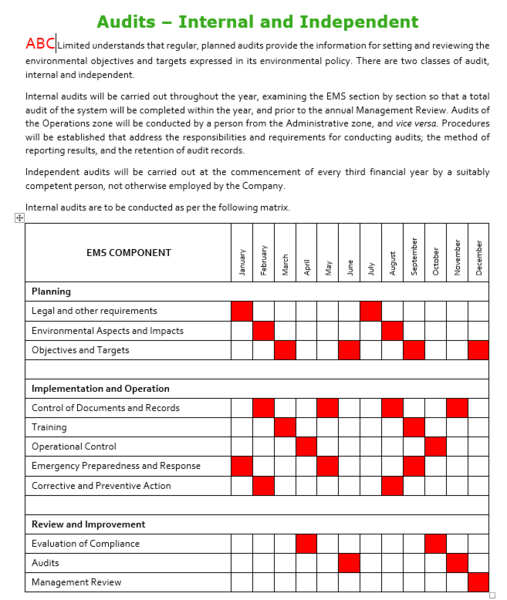
You don't have to check each Chapter and Verse of the system at the one time. The idea that you have to is what deters people from implementing systems. This is what my clients have in their environmental management system document:

The checking of the operation of other management systems can be set in a similar matrix, allowing a number of systems to be checked on the same day. One day a month - 12 days per year - problems are soon identified and steps taken to reduce their effects.
-
 1
1
-
-
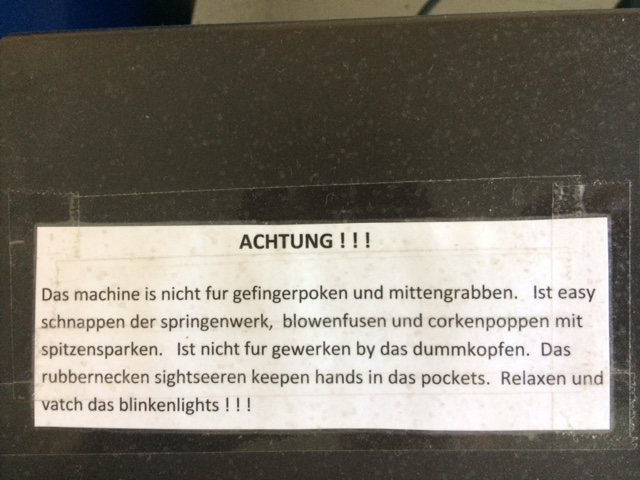
And that, my friends, is the reason for my writing that warning message to my clients. Try this next Monday, If you are still numbered amongst the working masses. Contact your superior and ask how the following is done in your workplace:To this day there are people who don't understand they are responsible, totally responsible for ensuring no one is injured by anything under their control.Division 4 Duty of officers, workers and other persons
27 Duty of officers
(1) If a person conducting a business or undertaking has a duty or obligation under this Act, an officer of the person conducting the business or undertaking must exercise due diligence to ensure that the person conducting the business or undertaking complies with that duty or obligation.
(5) In this section, due diligence includes taking reasonable steps:
(e) to ensure that the person conducting the business or undertaking has, and implements, processes for complying with any duty or obligation of the person conducting the business or undertaking under this Act, and Example. For the purposes of paragraph (e), the duties or obligations under this Act of a person conducting a business or undertaking may include:
• reporting notifiable incidents,
• consulting with workers,
• ensuring compliance with notices issued under this Act,
• ensuring the provision of training and instruction to workers about work health and safety,
• ensuring that health and safety representatives receive their entitlements to training.
Then watch them squirm.
-
Sew they can pull a thread.
-
1
-
-
Yenn,
If A = pi.r^2
for a 6 mm bolt A = 28.274 mm^2
for a 1/4" bolt A = 31.67 mm^2
The 1/4" bolt has a 12% larger cross-sectional area. Therefore, its resistance to shear would be greater, if the bolts were made of the same material. So a 1/4" bolt would be a safer choice in an airplane.
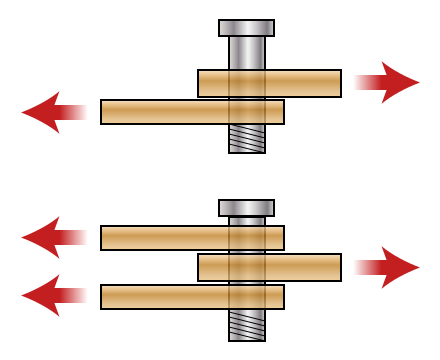
Diagram of the cross section of a bolt in shear, top figure has the bolt in single shear, bottom has the bolt in double shear
The question is: "What are the things that the bolt is fastening together?" That is going to determine the suitable accuracy of the holes that the bolt goes through. While it would be Utopian to have the diameter of a bolt hole exactly equal to the diameter of the bolt, that is not often the designer's requirement.Hi OME Is there any information about the reaming of 6mm holes to 1/4" in aircraft; pros and cons etc. MikeIn situations where one wants to be able to lubricate the joint (e.g. an elevator hinge) you would use a Clearance Fit, where the bolt diameter is a smidgen less than the diameter of the hole.
If you wanted to join crankcase halves together with dowels you would use an Interference Fit, where the diameter of the down is a tad larger than the diameter of the hole and you have to whack the dowel into the hole.
Have a read of this: http://ignou.ac.in/upload/Unit-3-62.pdf
If you wanted to use 1/4" bolts where a part had been manufactured for 6 mm bolts, you could always try fitting a 1/4" bolt into the hole to see if it goes through. If the things being held together by the bolts are not critical to the safe design of the aeroplane, then you could run a 1/4" HSS drill through the hole to widen it for the 1/4" bolt.
You should also consider the torque to be applied to the bolts. Have a look at this chart : http://www.norbar.com/Portals/0/downloads/TorqueValueGuide.pdf
If you compare a 6 mm bolt with a 1/4" UNC you will see that the UNC bolt will take a higher torque. That's because its cross-sectional area is greater.
-
I wouldn't trust metric stuff in an aeroplane simply because no supplier can provide traceability for metric stuff like they can for AN, MS and NAS stuff that you get from an aircraft hardware supplier. You can't guarantee the quality of metric stuff.
Have a look at this:
6mm = 0.2362198 1/4" = 0.25" Metric is smaller by 0.014"
If you can drill a hole that is exactly 6mm in diameter, no more; no less, then a metric bolt will be an interference fit. You only have to be out by 2/1000" in drilling your hole to be able to fit a 1/4" bolt. How much tolerance is in the shaft of a drill bit?
The plans might call for metric sizes in hardware, but there is ample fudge factor for quality, certified, aviation hardware to be used.
PS. I'm not in the business any more, but give QED Hardware a call on 02 46551514.
-
Mongrel sizes:
Bolt:
6mm - 0.2362198 " = (3.77)/16 Approx 1/4" = AN4-XX
30mm = 1.181099" = 1- (2.89)/16 Approx 1-3/16 = AN4-12 (Overall length 1.281")
35mm = 1.377949" = 1 - (3.02)/8 Approx 1-3/8" = AN4- 13 (O.A.L. 1.406")
40mm = 1.574798" = 1 - (9.2)/16 Approx 1-9/16" = AN4- 15 (o.A.L. 1.656")
Nut:
AN310-4 Castellated, Full Height
AN320-4 Castellated, Low Height
MS17825-4 Castellated,Locknut, nylon insert
-
The majority of businesses overlook, or are ignorant of, the fact that planning a system for safety (or management or environmental risk) in the workplace follows the same procedure:
====> [Express the organisation's policy and goals the system will bring about]
====> [Develop plans to reach the goals]
====> [implement the plans]
====> [Monitor the effectiveness of the plans]
====> [Review and modify plans in light of their effectiveness]
The methodology for this procedure is given in publications from the organisation, Standards Australia.
1. AS/NZS ISO 9001 - Quality Management Systems - Requirements
2. AS/NZS 4801 - Occupational Health and Safety Management Systems (now ISO 45001)
3. AS/NZS 9001 - Environmental Management Systems
From what I have seen, very few who are responsible for developing plans for ensuring the smooth running of business activities have any knowledge of these standards (CASA included).
Anyway, here is a short clip that helps explain what an audit is.
-
A lot of sailors there. Maybe it was at Nowra.
-
 1
1
-
-
Ha! I can Cut & Paste with the best of 'em.Well stated Emu! -
Too true.When everyone on a site is wearing HiViz clothing and one person turns up in ordinary clothes, that person stands out like the proverbial.
Very believable. Have you ever missed seeing an approaching dark coloured car on a sealed road on a dull day?I have seen a stop/go person have to jump out of the way. Wearing orange hi-viz in front of hundreds of orange witch's hats and red signs and waving his red sign, he wasn't very visible until it was almost too late.-
1
-
1
-
-
Wouldn't the mere fact that the engine is constantly moving through "fresh" air, bum first, provide the same amount of cooling as if it was going head first? The engine area is not cowled. Also, wouldn't the operation of the propeller result in air movement? After all, in a tractor set-up, you can get stone chips on the leading edges of the prop due to debris being drawn up from the ground.Don't know how you cool a pusher Jabiru. engine. Perhaps it can be done. Nev. -
The Civil Liability Act 2002 (NSW) s 57(1) says:
A good samaritan does not incur any personal civil liability in respect of any act or omission done or made by the good samaritan in an emergency when assisting a person who is apparently injured or at risk of being injured.
A ‘“good samaritan” is a person who, in good faith and without expectation of payment or other reward, comes to the assistance of a person who is apparently injured or at risk of being injured’ (s 56).
To be a good Samaritan the person has be
1) acting in good faith;
2) without expectation of payment or other reward
3) to assist a person who is
4) apparently injured or at risk of being injured.
Nothing in that list says anything about ‘acting within one’s qualifications’. The assertion that a person would ‘forgo protections under the Good Samaritan Act if one goes beyond his or her current certification to deliver first aid’ is quite simply, wrong.
-
1
-
 1
1
-
-
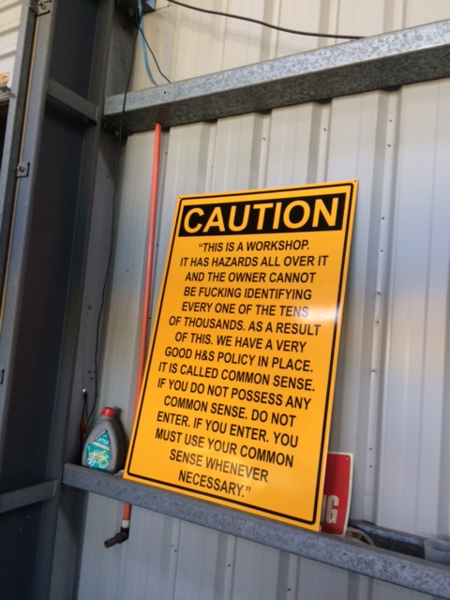
Yenn, here's what the WH&S Act says about using common sense, or something like it, in relation to safety:
Subdivision 2 What is reasonably practicable
18 What is “reasonably practicable” in ensuring health and safety
In this Act, reasonably practicable, in relation to a duty to ensure health and safety, means that which is, or was at a particular time, reasonably able to be done in relation to ensuring health and safety, taking into account and weighing up all relevant matters including:
(a) the likelihood of the hazard or the risk concerned occurring, and
(b) the degree of harm that might result from the hazard or the risk, and
© what the person concerned knows, or ought reasonably to know, about:
(i) the hazard or the risk, and
(ii) ways of eliminating or minimising the risk, and
(d) the availability and suitability of ways to eliminate or minimise the risk, and
(e) after assessing the extent of the risk and the available ways of eliminating or minimising the risk, the cost associated with available ways of eliminating or minimising the risk, including whether the cost is grossly disproportionate to the risk.
Later it says,
29 Duties of other persons at the workplace
A person at a workplace (whether or not the person has another duty under this Part) must:
(a) take reasonable care for his or her own health and safety,
I'd say that, unless full clothing covering and wearing of safety helmets was the only way to protect a person from damage to health, then go ahead and roll up your sleeves and loosen your collar.
Safety Officers have gone overboard in demanding HiViz clothing in a lot of cases. I was working in a building where to only equipment used to move things was trolley jacks or had trucks. It was a requirement to wear HiViz inside the building. The logic was where?
-
1
-
-
I was going to get all hot under the collar about these comments, but I have just dropped the article into the Hemmingway editor. It gave the piece a readability of 14 (desired readability: 9) It also said that 16/22 sentences were hard to read. If I have one excuse is that I did do a bit of cut and paste from the online newspaper. When I ran a sample of text from the same reporter through Hemingway editor, it came back with a readability score of 8.Did you have to sound so stilted, and use so many zombie nouns and unnecessary words? For example, "Quite clearly this inquest has brought into the open the fact that" could have been left out. Instead of "place a great deal of reliance [zombie noun] on", you could have said, "rely [verb] on". You are changing how you audit - which is humble and self-reflective - but the way you announced it made you sound pompous.The sentence you wrote has you doing two things: adopting a style and writing. The sentence only needs to have you doing one thing: writing in a style. The phrase "the fact that" can usually be removed. You can direct the reader to something without telling them that the thing is a thing: one thing, not two.Looks like I'll have to do more proofreading and editing with my more serious writings.
Thanks for the helpful advice!
-
1
-
-
I disagree with Yenn that it is all a matter of ticking boxes and nobody is supposed to fail".
There is no pass or fail. If people, especially auditors, understand its purpose then the effect of an audit is to point out if an organisation has followed or strayed from its intended course of action. If it has strayed, then the audit shows that fact and that some sort of remedial action is required to get it back on track. If it hasn't strayed, then there's a tick in the box and the auditor moves on.
How does an organisation pass an audit?
1. Management determines a desired result for an activity.
2. Management develops and documents procedures for achieving those results.
3. Management informs the affected parties what is involved in the procedures and how to implement them.
4. Management observes and records if the procedures result in the achievement of the desired result for the activity.
5. Management adjusts the procedures using the result of the analysis of the records.
6. The auditor comes in as an independent set of eyes and checks that steps 1 to 5 have been completed.
As for Yenn saying "In my last few years at work I found that if I failed the computer based safety questionnaires, I was still given the "whatever" card to let me go onto industrial sites." That is not a fault of the system. That is the fault of the person determining your competency and knowledge. They did you wrong. How would you feel if, having attended a training session, you showed that you did not have the necessary level of competency to complete a task, but were given a "whatever" card and people suffered as a result of your lack of competency?
That's what the poor young girl who did not know how to shut down the ride is suffering now.
-
 1
1
-
-
What style do you want me to adopt when I am writing to business owners? Shud eye youse leetspeak?Did you have to sound so stilted, and use so many zombie nouns and unnecessary words? . -
He's a lucky duck. That amount of damage usually results in the crew leaving the scene in body bags. Wish him a complete recovery from his injuries.
-
1
-
-
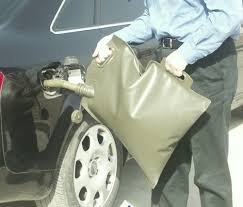
I take it that this is the type of thing you are talking about:
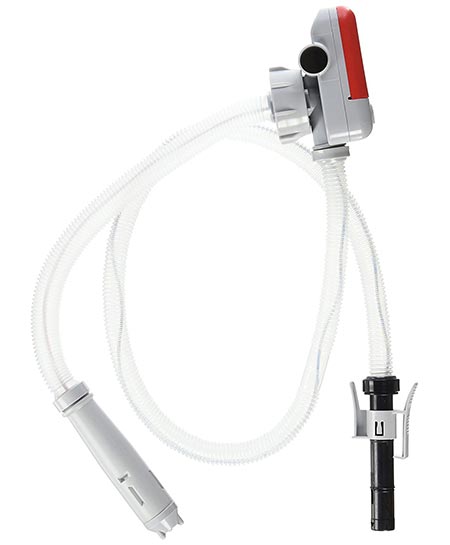
This looks like a good pump to go with it: 11 litres per minute and holds its own power supply.
6. TeraPump A-TRFA01-001 TRFA01 2nd Generation Battery Powered Fuel Transfer Pump – 4AA Battery, 3 GPM
TRFA01 - Battery Operated Fuel Transfer Pump with Auto Stop and Leak Protection - All Products
And you can get it in Melbourne
MOUNTABLE BATTERY POWER FUEL TRANSFER PUMP 9Lpm AUTO CUT OFF Fit Fuel Jerry Can | eBay
-
1
-
-
That is quite correct, but there are two points in your comment.A trainee may well have understood the training and demonstrated at the time of the training that they were competent in performing the task they were trained to do, however, in a real-life emergency situation where seconds can determine the outcome, for various reasons the trainee might not respond in the manner they were trained to respond! Frank.1. The employer has the duty to provide clear and concise training to employees. Part of that training is having the trainee demonstrate competency in performing the task.
2. An individual is highly likely to be incompetent in carrying out a task in an emergency setting.
My point in sending a cautionary note to my clients is that, if they don't
1. Develop and document procedures for carrying out a task, and
2. Communicate the procedures to their employees, and
3. Ensure that the employees are competent, and remain competent in carrying out the task, and
4. Record the fact that the employees have been provided with training, and are deemed competent,
then if the poop hits the fan, the employer will be held responsible for any injuries suffered.
Regular review by employees of the procedures, including completing simulations, is the only way to maintain competency (remaining current). That's why batsmen and bowlers spend hours at the nets.
Yes it was, but the testimony suggests that the employees were not trained or competent in its use. This could have been a factor in the failure to respond, along with the emotional disruption caused by seeing the event unfold.Off topic...Why wasn`t the ride at Dreamworld designed with a safety device/s that would automatically shut the ride down?Frank.

DreamWorld and the importance of training records.
in AUS/NZ General Discussion
Posted
My thread. My drift.