


old man emu
-
Posts
5,297 -
Joined
-
Last visited
-
Days Won
78
Content Type
Profiles
Forums
Gallery
Downloads
Blogs
Events
Store
Aircraft
Resources
Tutorials
Articles
Classifieds
Movies
Books
Community Map
Quizzes
Videos Directory
Posts posted by old man emu
-
-
Les Foster was a mate of mine back in the 70's in Dubbo. We used to fly Dubbo Flying School's PA-28 Arrow, and PA28 (VH-WES - which is not based at Camden). Les also used to be a tug pilot at Narromine, flying a Piper TriPacer. We also used to fly over to George Campbell's at Mudgee for Sunday bar-b-ques. In the early 80's, Les took himself over the Miami and got his commercial licence. He returned to Australia and got a job with DCA in Papua-New Guinea assessing landing strips and writing up approach plates for them.
I lost contact with him when I joined the Police and moved to Goulburn. I'd like to locate him to rekindle our friendship. I've tried a simple Google search; Linkedin, and the white pages without success. If anyone knew or knows Les, I'd appreciate any information that could help me track him down.
Thanks
Old man Emu
-
I have just read a book about the 1940 Canberra crash of the RAAF Hudson which killed three members of Menzies' Cabinet as well as several high ranking military men. https://www.newsouthbooks.com.au/books/hudson-a1697_the-plane-crash-that-changed-australian-history/
The book does not delve into the crash itself, but the political ramifications of the deaths of the three Ministers, Geoffrey Street, Sir Henry Gullett and James Fairbairn which destabilised Robert Menzies’ wartime government. The book describes the political goings on, such as Menzies' trip to Britain and his trying to get himself a seat in the Commonwealth War Cabinet. It also outlines Menzies' career from the beginning of WWl until his defeat by the Curtin Labor government.
Menzies comes out from the description as more British than the Union Jack, and less Australian than a Kiwi fly-half. As a law student at Melbourne University, he had "a reputation as an "unusually bright and articulate member of the undergraduate community", and was known as a skilful debater. However, he had also begun to develop the traits of pomposity and arrogance that would cause difficulties later in his career. His fellow law student and future parliamentary colleague Percy Joske noted Menzies as a student "did not suffer fools gladly [...] the trouble was that his opponents frequently were not fools and that he tended to say things that were not only cutting and unkind but that were unjustified"
-
-
Is that a 'long stroke' engine?
-
The Labor Governments supported the car industry. Under whose government did the multi-nationals walk out of that industry?
-
Unfortunately, it's in the spars.
This Cat has been sitting outside Air Ag at Bankstown for years.

-
I recall that when we were talking about this incident back in March, the consensus was that putting obstructions beside the runway was asking for trouble.
I hope that Mr Dovey has good records of the content of the briefing, or other pilots have good memories of it.
-
 1
1
-
-
The hardest part of fixing a fouled plug is finding the one that is fouled. That's if you go down the 'remove, clean, replace' track.
-
Sounds like the proposed AD arises from that investigation.
-
1
-
-
Obviously you 15 hour's experience 25 years ago and your current 5 hour's has placed you at a level of knowledge and experience far above the rest of us, mere mortals.
I can only suggest that to move in your elevated peer group, you take the advice contained in the penultimate line of this well-known ditty
https://www.ivebeeneverywhere.com.au/the-song/australian-version/
-
 1
1
-
-
I didn't call you "silly". I said you were "being silly". There's a vast difference between the two concepts.
-
Now you are being silly! The first time early in your piloting career that you do a tailwind landing will be the time you find out how much your rectum holds.I am happy to learn about dynamic circuit decisions.And just to irritate you all, I will try and work out how much earlier I have to start the turn to base depending on how big the tailwind is!
-
1
-
-
After R101 crashed and burned in France, en route to India on 5 October 1930, the Air Ministry ordered R100 grounded. She was deflated and hung up in her shed at Cardington for a year whilst three options were considered:
- a complete refit of R100 and continuation of tests for the eventual construction of R102;
- static testing of R100 and retention of about 300 staff to keep the programme "ticking over";
- or retention of staff and the scrapping of the airship.
In November 1931, it was decided to sell R100 for scrap. The entire framework of the ship was flattened by steamrollers and sold for less than £600.
-
1
-
 1
1
- a complete refit of R100 and continuation of tests for the eventual construction of R102;
-
After reading a few of your posts about your experiences while getting your pilot training, I'm motivated to suggest that you find somewhere else to obtain your training. You seem to be involved with some shonky operators.
-
What a beautiful piece of easily comprehended writing that proposed AD is. And don't you love the inclusion of estimated costs for the various stages of the job? ($US85 = $AU120 today).
I bet if CASA wrote up this AD it would sound something like this:
-
 1
1
-
1
-
-
It is a big problem for famous planes that are held by "general knowledge" museums which don't have conservators who have an intricate knowledge of the composition of the exhibit.
An example of this is P.G.Taylor's Frigate Bird at the Powerhouse Museum in Sydney. It's hanging from the roof, slowly corroding away. There's no way to get it down to treat the corrosion.
-
You're probably right about the Cessna. Old Timer's strikes.
-
Even though Houdini was an entertainer, and no doubt brought his airplane to Australia as an entertainment prop, he can still claim the first powered, heavier-than-air flight in Australia.
https://www.airspacemag.com/videos/category/history-of-flight/houdini-in-australia/
By the same reckoning Joseph Dean can claim the first balloon ascent on 1st February 1858 at Richmond, Victoria. George Coppin owned an entertainment park called Cremorne Gardens. On a talent finding trip to London, Mr Coppin enticed experienced balloonists Charles Brown and Joseph Dean to Melbourne. Brown brought his home-made 18-metre-high muslin balloon, the "Australasian". Both Brown and Dean were supposed to ascend in the balloon, but a leaking canopy and strong winds forced Brown out of the basket, leaving Dean to rise for a 25 minute flight, landing
-
1
-
-
-
I did my training in a high winged aircraft. I was told to keep the runway-side wingtip going along the near edge of the runway, and to make the turn onto Base when the end of the runway was visible 45 degrees over my shoulder. I think that wingtip position works for low winged aircraft, too. The flight across Base, whenever you are going to land into wind, will be with the flight path angled slightly towards the centreline of the runway to allow for the wind from abeam moving the aircraft away from the runway. After turning Finals, I was taught to maintain the flight path along the centreline of the runway with rudder, and to correct any movement to left or right of the centreline by "steering" the aircraft down like I would do in a car. (I learned on a Cessna).
That latter part of the landing approach was the technique I was shown to use because I couldn't get a handle on cross-wind landings. The method works just as well in still wind; wind down the centreline, and wind from right or left. It is just the amount of control input that varies with current conditions.
I was also taught to identify the sight picture of the flight path to the aiming point (piano keys, numbers, or bare patch) and use a point on the instrument panel combing as a rear sight. Once established on that constant path, maintaining it is done with the throttle. If the aiming point seems to drop lower in the sight picture, add power until the correct sight picture is obtained, then come back to approach revs. If the aiming point rises, reduce power until the situation is recovered, then go back up to approach revs.
-
Go to this - http://www.flybetter.com.au/ to see this interview to get an idea of the philosophy behind Kruse's training methods. His comments about tenseness in student pilots struck a chord with me.
-
1
-
1
-
-
-
Sorry. I was using the simplest situation - flapless. You are correct, of course, that the use of flaps will produce a much steeper slope. I doubt if any RAAus airplane would fly a finals starting 10 miles out and from 3000 AGL.
The Aircrew Bulletin takes some time, pen and paper, and a set of trig tables to fully understand.
-
Just doing some simple trigonometry.Hi AllThe JF recommends a 3 degree approach. That is equal to about 1:20. So, if you start the final at 500 ft, you will be at 10 000 ft from the threshold. (2 NM is 12 000 ft. 10 000 ft is about 3km.) (I can see where 10 000 ft is on Google maps.) That is a long way out. Too far? Circuits too big?
The Foxbat is at 50 kts on final. That equates to 5000 ft in exactly a minute. (At 60 kts you would go 1 MN in 1 minute.) That equates to descent at 250 fpm. Too slow?
The glide ratio of the Foxbat is 11:1, so the JF puts one out of gliding distance. Too risky?
If you do a glide approach at 50 kts and 10:1, you descend at 500 fpm and about 6 degrees.
If an aircraft is at 500' AGL and flies a constant descent angle of 3 degrees, then, in still air, it will travel 9540' before it contacts the ground.
TAN 3 = OPP/ADJ = 500/x
x . TAN 3 = 500
x = 500/TAN 3
x = 500/0.05240778
x = 9540' (1.57 nm)
If you are flying a circuit that puts your aircraft 1.57 nm from the threshold at the Base/Finals intersection, you are just nicely placed. If your aircraft was at 500' AGL, and 1.57nm from the threshold, then with a still air ground speed of 50 kts, it would take [1.57/50] = 1.8 minutes to descend 500'. That's a rate of 277 fpm. If, under the same conditions, you did a 500 fpm descent, your airspeed would be 94 kts.
Airspeed on Finals.
You have made a mistake here. You have confused Indicated Airspeed with Ground speed.
Your airplane needs to have the speed of the air over the wings and control surfaces to be 50 kts for best controlability. However, that 50 kts does not necessarily relate to speed over the ground. You could be trying to land into a 50 knot direct headwind, and the thing will never get onto the ground. Your IAS would be 50 kts, but your ground speed would be zero knots. The 50 kts approach speed is the still air approach speed.
(We could go on about IAS -v- TAS. As I write this, Camden air temp is 39C; QNH 1009.6; Density Altitude at 500' AGL is 3435' and 50 kts IAS is 53 kts TAS)
Glide Ratio.
Your glide ratio is 11:1. That's one foot drop for every 11 feet horizontal.
TAN X = OPP/ADJ
TAN X = 1/11
TAN X = 0.0909
X = 5.1 degrees
From 500 ' AGL
TAN 5.1 = OPP/ADJ
TAN 5.1 = 500/X
X . TAN 5.1 = 500
X = 500/TAN 5.1
X = 500/ 0.0909
X = 5500 ft
5500 ft = 0.9 nm.
You can see that by using Best Angle of Glide, instead of 3 degrees, you halve the distance you have to travel to descend from 500 to the threshold. At 50 kts (still air) ground speed, it will take a smidge over one minute to descend 500 ft.
That's a good reason not to turn your circuits into cross-country excursions. Fly close. You'll get more landings per lesson that way.
-
1
-
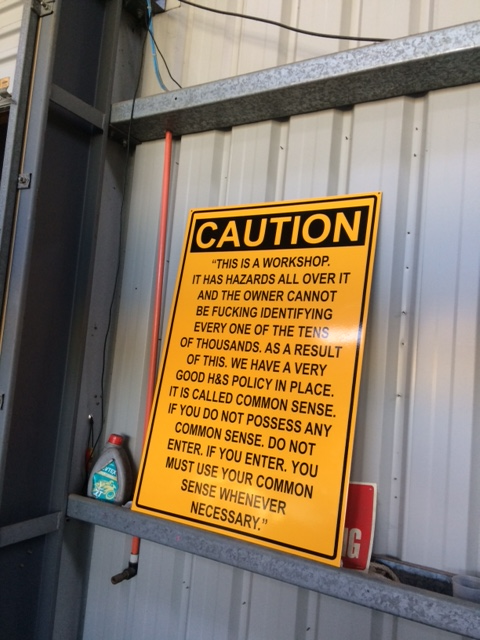
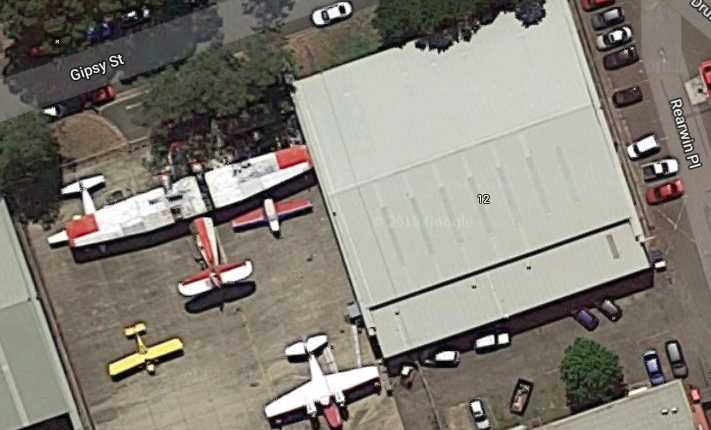

Silly aviation pictures.
in Aviation Laughter
Posted