
kgwilson
-
Posts
4,893 -
Joined
-
Last visited
-
Days Won
142
Content Type
Profiles
Forums
Gallery
Downloads
Blogs
Events
Store
Aircraft
Resources
Tutorials
Articles
Classifieds
Movies
Books
Community Map
Quizzes
Videos Directory
Posts posted by kgwilson
-
-
Jabiru 3300, 3rd gen.
-
I have had this Chinese Go-Pro knock off for ages but never created an edited video with music etc so I thought I'd have a go. I just installed a new Bolly Bos 5 2 blade prop so this was the test flight. Very pleased with the performance.
-
 3
3
-
-
Most action cameras are pretty wide angle. Mine is 170 degrees & mounted above head height on the bulkhead to my right it sees everything in front and a lot to either side plus my whole panel & even my feet on the rudder pedals. I have painted the top of the bubble canopy to stop my head being cooked & it sees the underside of that as well.
-
I know the area well having flown in to Raglan many times. If the aircraft was coming from the South as reported and the wind was Westerly he would have flown around Mount Karioi, an extinct volcano 2500 feet high on the seaward side, flown up the entrance of the harbour, overflown the aerodrome descending to circuit height from the dead side and where the aircraft came to rest is basically where he would have been turning on to base for landing on RWY 23. Possibly a stall in the turn and there was insufficient height to pull out, hence the description of a death barrel roll but landing on its belly.
-
 1
1
-
-
This seems to happen more often to those who portray the high moral religious ground. He voted against same sex marriage, and stated that he was a strong Christian. Sounds like he should have become a Priest. Based on what has been unearthed about a multitude of those he'd be right at home.
-
3
-
 1
1
-
 1
1
-
-
Turbo said.
Which list are you referring to?
(a) The data obtained by CASA employees who visited RAA facilities and collected it?
(b) The list supplied by a person within RAA some months later, which contained items such as fuel exhaustions, which clearly were not engine failures, and was quoted publicly by the CASA Public Relations officer?
It was reported on the Pro Aviation website at the time (28 November 2014) in an article entitled "Indecent Haste" written by Paul Phelan & stated that an unedited list had been obtained from RA-Aus.
-
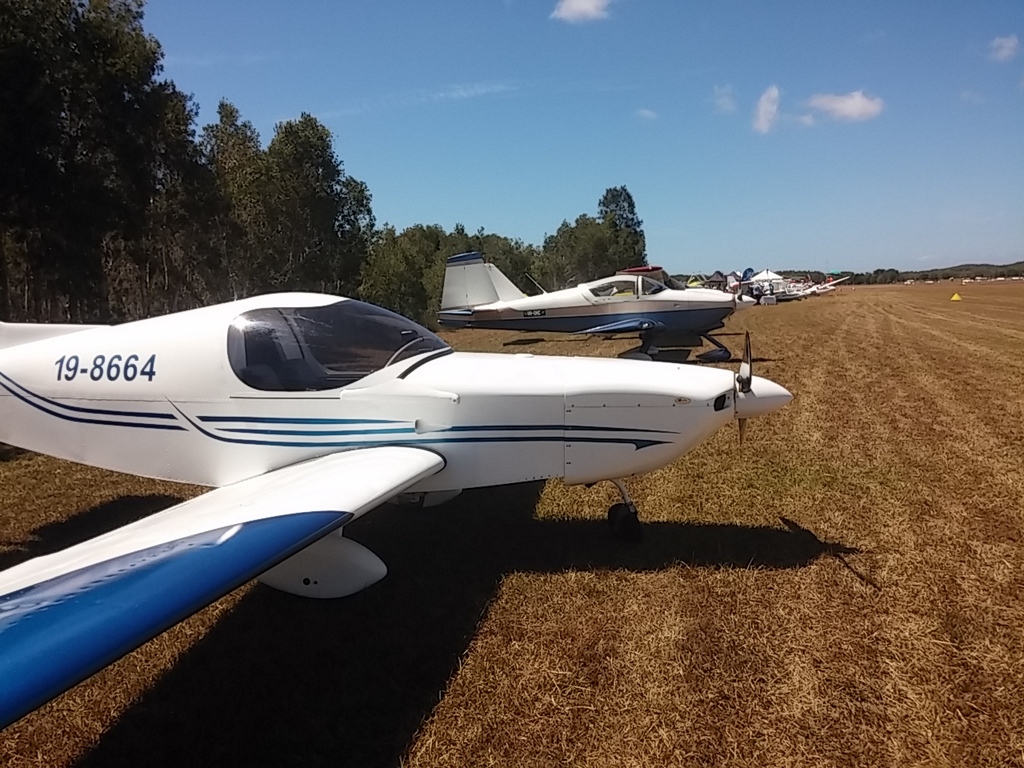
My homebuilt was registered in September 2015 & is 19-8664. I could have asked for a different number if it was available either lower or higher but there was a fee, I think $100.00 so I just took what they gave me. Kasper did mention 19.
-
The original CASA list of 40 in flight engine failures came from an unedited list of incidents supplied by RA-Aus. When this was checked and in fact several more were added to make the total 46, all the incidents relating to fuel pump & oil leaks plus running out of fuel etc were removed to end up with 12 in flight engine failures resulting in forced landings. This was in 93,000 flights and 43,000 flying hours. When the 12 forced landings incidents were fully analysed, most were in flying schools and corrective measures had been in place for almost all of the 12 which had been implemented since 2011. There were no fatalities or serious injuries suffered as a result of the 12 forced landings.
Another interesting point is that the ATSB report showed that the Jabiru engine failure rate dropped after 2012 while the Rotax engine failure rate increased in the same period.
-
1
-
 1
1
-
-
Old thread with lots of old BS. The local school here did the same. At 2000 hours a new engine as it was cheaper than overhauling the old one which had been maintained to Jabiru specifications throughout its life.
-
 1
1
-
-
BB have a read of my post #17. Hangar owners pay 98% of costs, landing fees from visitors 2%.
-
1
-
-
I think VH experimental would be reasonably competitive from a self maintenance perspective although I think there are some things you can't do. Required equipment is another thing. Everything has to be TSOed which adds to the cost. In RA amateur built means you can do all your own maintenance and modify the aircraft as original owner/builder and put any non TSO equipment in. A VH registered Jabiru must be equiped with a transponder whereas a RA one does not have to be, though many do have them.
-
Agreed. With my aircraft, 1000 foot circuits are way smaller than when I was flying GA Cessnas & Pipers so my turn on to base is a descending wide 180 degree turn to line up on final at 4-500 feet with power back to idle on a light wind day so basically a glide approach. High wind day, same approach but may need a bit of power if my circuit is not tightened up quite enough. Usually though I have excess height so a sideslip sorts that out.My base to final turns are usually always circular. I have never liked the square turns. Probably a hangover from my gliding days. I have found it to be far more accurate to do the round turn as it is easily adjusted for overshoot or undershoot-
2
-
-
My PPL training also did not include side slipping or spins. I was taught power/flap stalls with a wing drop and recover (incipient spin) but never taken through a complete rotation. If I was high I was taught to do S turns to reduce height or in a 152 just put the nose down with flap & height would bleed off really fast without much increase in air speed.
Real spins and side slips came later when I asked about it & the CFI took me through the process & then I carried out some solo practice. Side slipping though is a very useful function to lose height quickly as in short field or high obstacles etc and everyone should be taught and practice this. It is also an essential skill flying an aircraft without flaps. As Nev said slipping with flaps can be hazardous depending on design as Vfe can be exceeded quickly
-
Yes I believe it is only 3 or 4 knots slower that a Cessna Citation with about half the fuel consumption.Perhaps not its best angle, but at 400 knots it must be doing something right if a little unconventional. -
Not my favourite. Looks like it has a moustache or is flying backwards.Piaggio Avanti
-
I think you will find that the reference is a few years out of date. $200 is about the base rate these days with an instructor.
-
1
-
-
It will never happen but what should happen IMHO is that
- Aviation legislation is completely overhauled.
- CASA be totally updated, the name changed back to CAA & all the current mob get made redundant.
- A new system based on the US FAA system be implemented
- Redundant staff (& outside applicants) apply for roles within the new organisation & be selected by a panel of pragmatic experts from the US, UK Canada & NZ.
- Commercial and Recreational flying be separated
- A single registration process be implemented. e.g all aircraft VH.
- All recreational licencing be replaced with a single system with endorsements eg CTA, multi engine, type etc
- Self declared medical fitness based on car licence requirements.
Problem solved.
-
4
-
3
-
2
- Aviation legislation is completely overhauled.
-
Good video. I was taught "Opposite Rudder" & it just seems instinctive to me, but whatever floats your boat & works for you is the best.
-
1
-
-
Councils being selective on charges for use of facilities is a bit on the nose.
At our aerodrome we charge a $5.00 fee for RA & $10.00 for GA single engine and it is an honesty box system. The hangar owners operate the aerodrome and it costs us around $50,000.00 a year. This includes lease costs, rates, insurance, maintenance & a bit put away for capital expenditure to cover runway resealing etc & all labour is by volunteers. Some people still don't pay but the majority do. We usually get $900.00 to $1,000.00 a year from this & while it is only about 2% of our costs every bit helps and is much appreciated.
-
Well a great propaganda news article for the You Ess of A. Meanwhile Russia, Ukraine, India, Indonesia, Malaysia & a few others have Sukhoi Su 30 - 35 family which which have been in production since the 1990s & while not a stealth fighter can out manoeuvre anything the Yanks have and are far more capable in almost every department plus you can get 3 or 4 of them for the price of 1 F35. Stealth doesn't stop you from being shot down anyway as the yanks found out when they lost a F117 stealth to a SAM in the Bosnia/Croatia conflict in 1999.
-
1
-
2
-
-
I've just finished watching all 3 parts. Tony did his best but was unable to articulate his thoughts into simple meaningful language that the senators could understand. Ferrier was hopeless & got it wrong anyway. Monke & Linke would have been way more professional. I don't think Mark really knew why he was there & Hill was fairly ineffective though had a couple of pointed comments at the end. CASA just lied again & had no response as to why the risk (likelihood) altered when entering CTA. They were just as hopeless (& lied about the number of engine failures etc) during the Jabiru engine limitations enquiry. AOPA won the day hands down. Will this and the subsequent CASA grilling change anything? From previous history the answer is No though O'Sullivan had interesting comments about his dealings with CASA in relation to its (Toxic) culture.
-
Watched part 2 so far. I agree that Ben Morgan is exceptionally well informed and very articulate. The committee chair Senator Barry O'Sullivan, is the person who chaired the inquiry into the Jabiru engine limitations fiasco a few years ago and he was very scathing of the CASA BS back then. Again he knows most of the answers but needs documented and verifiable evidence. The problem was and still is, that the government of the day does NOTHING. Even when they accepted 37 of the 38 recommendations of the Forsyth report they did NOTHING. CASA just lies and says they are implementing changes and then everyone goes away and all is eventually forgotten. There is no report card. There is a change of government and Ministers and so the merry-go-round begins again.
-
1
-
-
If I was about to be Rogered I'd respond Negative.Just be sure to get an Affirmative before you Roger...)-
1
-
1
-
-
-
1
-

YAK 3 pilot sueing
in Warbirds, Vintage and Classic Aircraft
Posted
There is culpability on both sides here. Yes he has a point that the cherry pickers should not have been there or at the briefing that fact should have been clearly communicated to the display pilots & the grass be out of bounds. There was room though but he chose to land to the right. He is the pilot and is responsible for ensuring that his landing area or runway is clear of all obstacles. At the short final approach the nose would have been high so his view if the runway ahead would have been restricted, however after turning on to final he would have had a good view of the whole runway for some considerable time. A Yak 3 like all WW2 tail draggers with V12 engines is a heavy beast and requires a pretty long final approach. The lawyers as always will be the winners.