

kgwilson
-
Posts
4,893 -
Joined
-
Last visited
-
Days Won
142
Content Type
Profiles
Forums
Gallery
Downloads
Blogs
Events
Store
Aircraft
Resources
Tutorials
Articles
Classifieds
Movies
Books
Community Map
Quizzes
Videos Directory
Posts posted by kgwilson
-
-
I used the inclinometer (part of Smarttools app) on my phone to set the angle of my prop when I levelled it on the bench before installation, calibrated the inclinometer when I got the hub perfectly level with my spirit level & set both blades. The next day I came back to the hangar & before installing the prop checked the details and got different results. I don't know why, maybe it was the temperature, humidity, barometric pressure or something else but that was when I decided to go with a method that uses measurements that can't be changed by electronics.
-
A straight stick or good straight edge (eg aluminium angle) and a tape measure is just as accurate, maybe even more so. Use your phones calculator to check your numbers.
Just level the thrust line, get the prop blade horizontal, measure the distance from trailing edge of the blade to the ground at 75% of blade radius. Use a set square to draw a line on the back of the blade with a texter or use a bit of masking tape. Mark the stick so all blades will be consistent, mark the ground vertically below the TE, Divide the distance by 60. Multiply the result by the blade angle you want & mark the ground that distance rearward.
Example. Distance to ground = 1200mm divided by 60 = 20. Blade angle required = 20 degrees. 20 x 20 =400, so the distance from the mark below the TE rearward is 400mm.
Then loosen the blade & with the stick on the flat back of the blade at 75% radius adjust the angle till the bottom of the stick is on the rear mark. Nip up the blade clamp nuts & repeat for all blades. Easy. I set mine at 75% of blade radius. Bolly say to be sure check at 50%, 75% & 90% but it doesn't matter so long as all blades are exactly the same as you will decide by flying whether to increase or decrease pitch.
-
 1
1
-
 1
1
-
 2
2
-
-
You can buy an endoscope with 6 LED lights and a 2 metre cable that connects to the micro USB on your mobile phone for as little as $8.00 on Ebay. You can get much longer cables for a bit extra & there are 2 diameters, 5.5mm & 7mm. They come with a button on the cable that you use to take photos for checking later.
-
1
-
-
I watched it and it did. I guess the guys at Bolly can't spell.
-
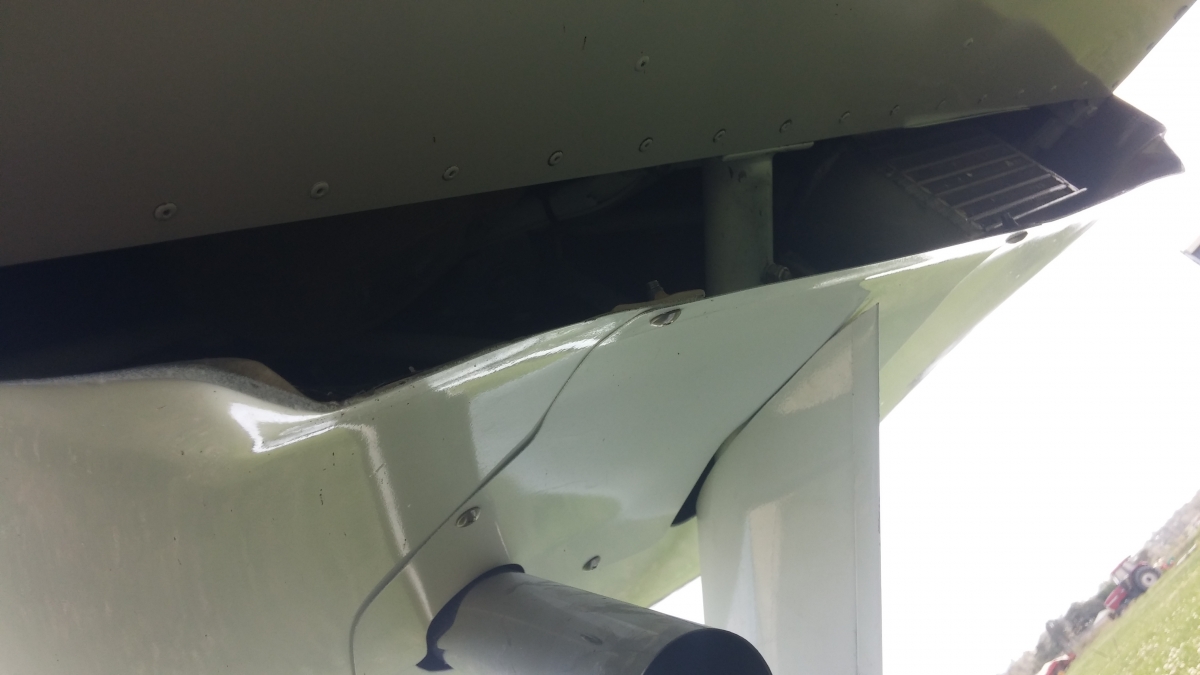
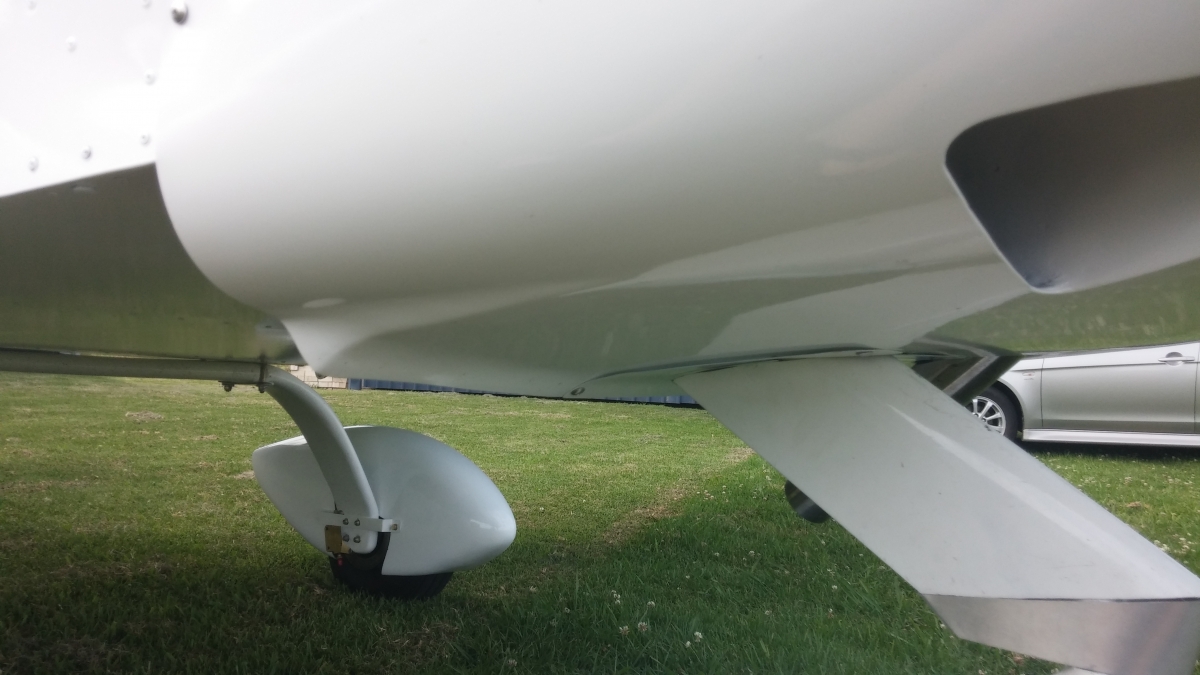
The jab plenums force the air to go down between the fins. There is nowhere else for it to go. I have small baffles between each cylinder in the plenum at the top which diverts air downward between the cylinder heads. Having over a metre wide air exhaust with a lip creating suction which pulls the air through is the major contributor to the low temps. A separate NACA duct completely separate from the rest of the engine for the 7 row Positech oil cooler also helps. EGTs are around 900 deg F in cruise & the CHT is almost always at the bottom of the green. I usually climb out at 70 knots at about 1500 fpm then increase speed to about 80 knots and about 1000 fpm. It runs cooler than any other jab engine installation I've seen. My oil stays quite clean and I have never had to top up between changes which I do at 25 hours. The numbers were higher with my old wooden prop but the bolly has what they call a taurus (I always thought that was a bull) which is a twist in the very last inboard inch or so of the trailing edge of the prop which is designed to aid airflow into the engine.
 Air exhaust is the full width of the airframe with a suction generating lip. Oli cooler on the rightSeparate NACA duct feeding cool air direct to the oil cooler
-
1
-
-
No-one seems to like the Australian Microair M760 but I've never had a problem with mine & it has good features like built in intercom, 99 programmable memories, priority selection, memory channel sort by name, 2 channel monitoring & is small & light & fits in a 2 1/2 inch hole. Ian sells them.
-
I agree. Jandals was trademarked in 1957 & is the Kiwi word for Flip Flops as Thongs is the Aussie word for them. The original owner was impressed by the footwear called Zoris used by the Japanese swimming team, coined the term and stared a very successful business which is still going. The term Flip Flops was given to them by the British & Americans who brought them back after WW2 and they became popular during the 1960s with the rise of Californian beach culture. I don't know how they became to be known as Thongs in Australia. Poms & Yanks think it is funny. Looks like the Kiwis won that contest as well, just like the Pavlova." In Summer I fly in Thongs. It is just too hot for footwear."Don't you mean "too hot for underwear, (ladies from South America wear Thongs )
I like the word NZ uses, Jandals (spelling (Japanese made sandals ))
spacesailor
-
My first solo was in a Seagull III Rogallo Hang Glider in 1974. You either flew or crashed. I flew & then continued for the next 20 years until I decided to spend some serious money. First solo was in a C152 with the Waikato Aero Club in NZ. The instructor got out & said "You can do ONE circuit on your own, just ONE". I can't remember the plane being any different or feeling lighter as I was busy at the time. Everything went well except the touchdown which was OK but I bounced and settled down, taxiing back in with the standard "First Solo Grin" on my face. The tradition was you had to shout everyone who was at the bar a beer. Another instructor was there & she congratulated me on a good landing & when I told her I'd bounced, her reply was "Well they were both good landings". Luckily there were only 8 people in the bar so it didn't cost me much.
-
2
-
-
I have not noticed any difference but then it may be that it is my connection that is the limiting factor. That said I get on average 12 Mbps on ADSL2, not NBN.
-
When I built my aircraft I did a fair bit of research in to air cooled aero engines. The original Jabirus had an awfully designed air flow with a very small air exhaust. Eventually they came up with an extraction kit with a big downward facing lip to generate suction.
NASA produced a very comprehensive 151 page report in 1981 called "Experimental Investigation of the Aerodynamics and Cooling of a horizontally opposed, air cooled aircraft engine installation". This is a very thorough document and you can understand the reason why the exhaust has to be a minimum of 3 times the volume of the intake. It is much easier to suck the air through than to try and blow it through. Good sealing around the intake and plenum chamber(s) is pretty important. My engine runs cool even when the temperatures are in the mid to high 30s. You can read the report or download it at https://ntrs.nasa.gov/search.jsp?R=19810013485
-
1
-
1
-
-
In Summer I fly in Thongs. It is just too hot for footwear. I am prepared to take the risk. I have heard a number of instructors advise students to discard shoes to get a better feel for the rudder. I would be wary of that advice if the session was at the end of a hot Summers day as the fumes may be overpowering.
-
 1
1
-
-
That is a very old SB related to engine tuning in 2009 and was cancelled entirely by JSB018-3 in 2014.Hi Kevin, it will be interesting to see if your egt increases when you coursen the prop as per Jabiru SB 18-2. -
Hi Graham,
I still have the nose leg on that I got from Ray Tolhurst but the bend is about 10 deg too little so when I turn tightly the nose drops down quite a lot and it is very hard to straighten up again. I removed the spat as its nose drags on the ground when I pull the plane into the hangar.
The bend is 40 deg and needs to be about 50 deg. I have a length of Chromoly tube but could not find anyone is the area to bend it but when I was at Evans Head the other week spoke to a bloke from Inverell who gave me a contact in Gen Innes who can do it & heat treat it after as well so I'll organise to get him to bend it up for me. I've got enough tube for 2 legs so will get him to bend both ends & I'll cut it in half & have a spare.
-
Really well. It is quiet and ground adjustable. At 60" it is 3" smaller in diameter that the wooden one I had. When I destroyed my original wood prop I pulled the engine out & checked the flange runout & it was perfect & replaced the flywheel bolts but there was nothing wrong with the bolts I removed. the new ones have nordloc washers which is better than the original loctited in bolts.Hi Kevin. I’m looking for a new prop after destroying mine in a ditch at Bathurst. Mine is close to the ground so something not too long maybe. Wood is good for the motor when this happens so I am reluctant to go glass. How does the bolly perform?To fit the new prop I had to move the whole cowl assembly back 15mm which sounds easy but with all the ducts etc having to be cut down it took a while. The main reason is the spinner backing plate flange faces rearwards & Garrys faced forwards. Also the prop has what they call a taurus at the inboard trailing edge to improve airflow through the intake nacelles. I was amazed at the difference to my EGTs & CHT. In cruise it was around 1100 deg F & now it is 900. CHT is barely in the green & that is now when it is hot. I initially had the pitch way too coarse & could only pull 2800rpm S&L. I adjusted it to the Jabiru scimitar (Bolly) prop manual & it was way too fine. After coming back from Evans Head I adjusted it again. Now it is still a bit too fine. It is now 60 x 60 & in the mornings when the temperature is in the low 20s I am still climbing out at 1500 FPM & the engine will over rev S&L so I am going to coarsen it up a bit more till I get the right balance with at least 1000 to 1200 fpm climb on full power & 3300 rpm flat out S&L.
I was forever fixing stone chips on the wood prop but have had no chips at all to deal with so far.
-
The magnetic North pole can move about 80 km in a day but it moves in a loop so the actual movement is about 40 km per year. In the last 150 years the North pole has moved 1102 km.. One day soon North and South will flip. Who cares, its just what happens & now as we have been for a long time, we are on to it.
-
I still can't work out why they didn't scrap them & recover the alloys like titanium, magnesium, aluminium & probably some other expensive elements etc.
-
For 50k I'd sooner buy a whole aeroplane that actually flies.
-
4
-
-
Jabiru have mentioned that there are around 1000 Jabirus operating in Australia. Of the 6500 engines produced there was a large contract with a US based UAV company for some years. I don't know if this is still happening
-
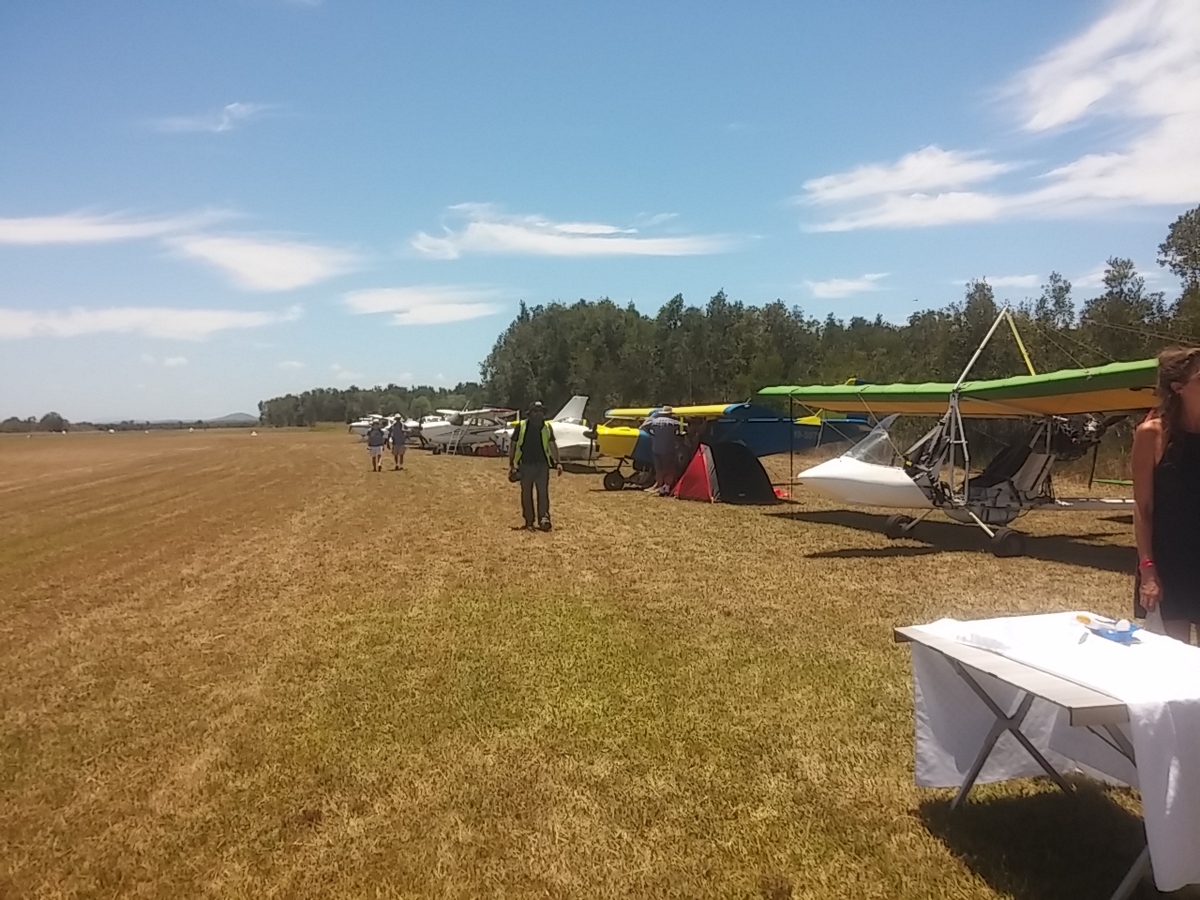
I must be the only person on this forum that went to Evans Head. The weather was perfect. I took off from South Grafton at 8:02am & arrived at Evans Head at just before 8:30am. I switched to the event frequency & made a 10 mile call. There was no other traffic. Then a minute or so later with about 7 miles to run there was a call from an RV from the north. He joined down wind for 36 & I joined crosswind for 36 behind him. Another pilot who didn't seem to be listening radioed he was straight in on final for 36 at 1 mile. I'd called joining crosswind, downwind & base, The RV pilot advised I was in the circuit. He was just on the ground. I immediately called final put the nose down & aimed at the piano keys, then slowed in ground effect for ages & put down just at the cross strip, braked & turned off the runway. The other bloke was right behind me. He only made the 1 call.
I had a chat with the RV pilot when I parked. We agreed that there are still plenty of dickheads flying. By 10am it was very busy with planes landing almost every minute or 2.
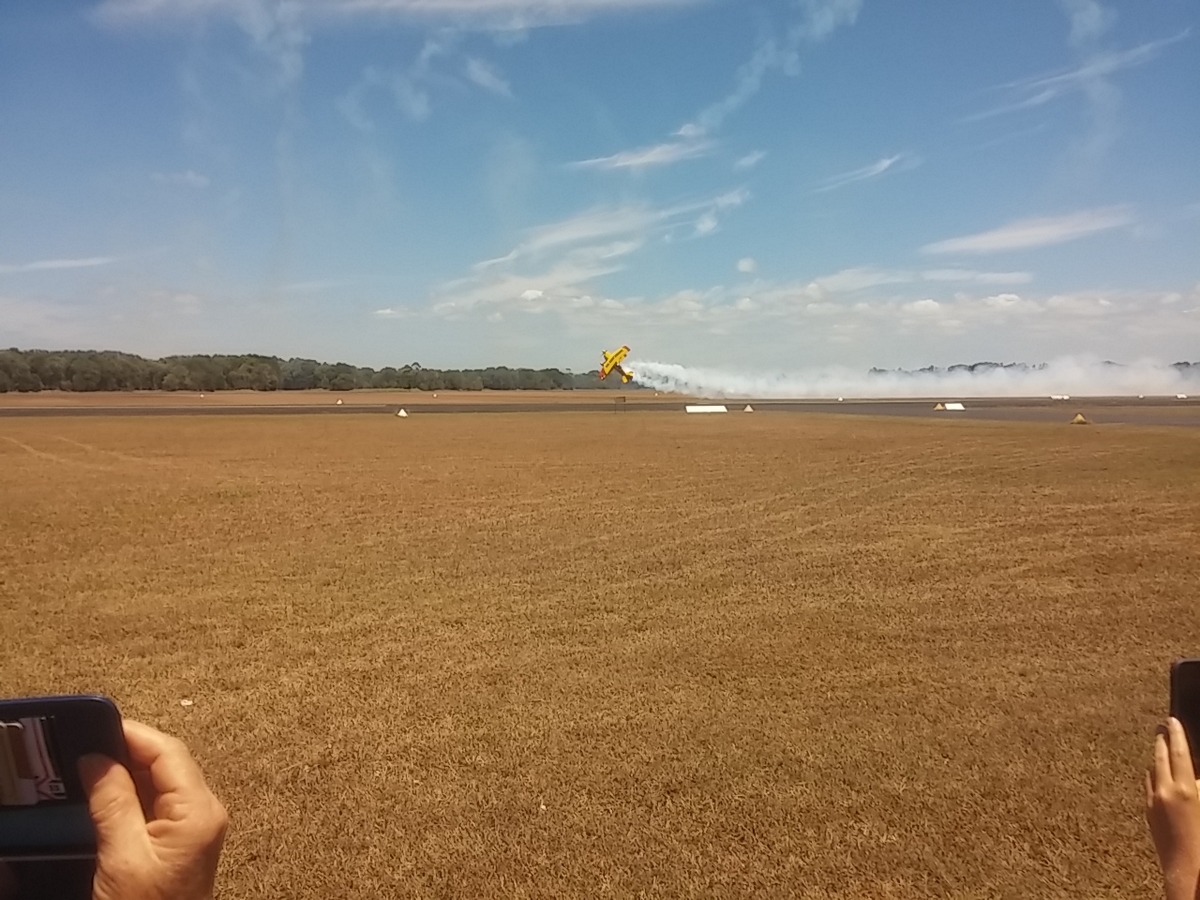
There seemed fewer campers than when I was last there 2 years ago but otherwise it was very much standard Great Eastern Fly-in. Good coffee, good food, lots of market stalls & the displays were pretty good. Matt Hall's was outstanding as always. I met a few people I know & met some new pilots I didn't know, had lots of good conversation. RA-Aus had a table under the main covered seating area. Gap Aero had a Sling 2 & 4 and an Evolution there. I thought it a bit odd that the Evolutions top cruising speed of 165 knots is the same as VNE. There was also a Bush Cat. The whole event is pretty laid back with no obvious security. There were signs saying no access along the flight line but it wasn't policed and plenty of people just wandered past photographing aircraft & chatting to owners.
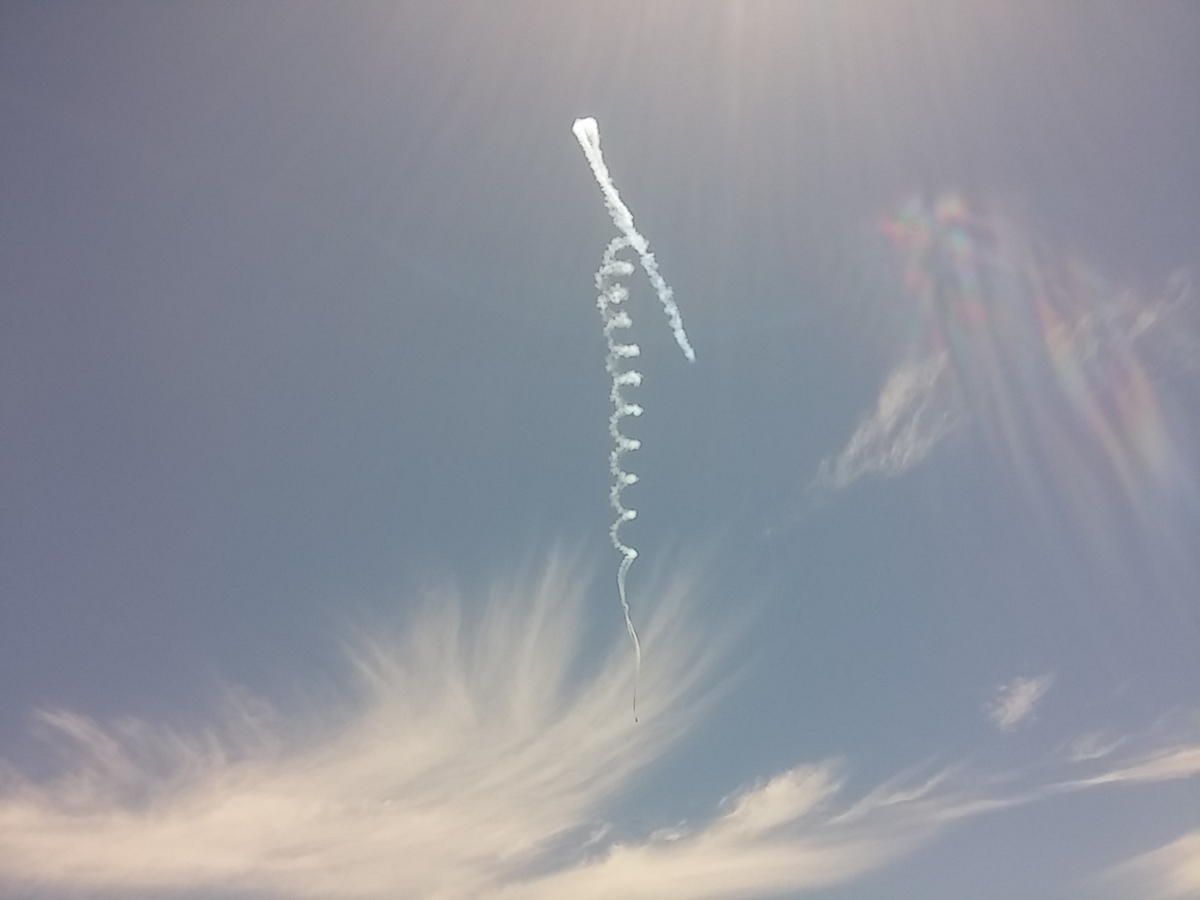
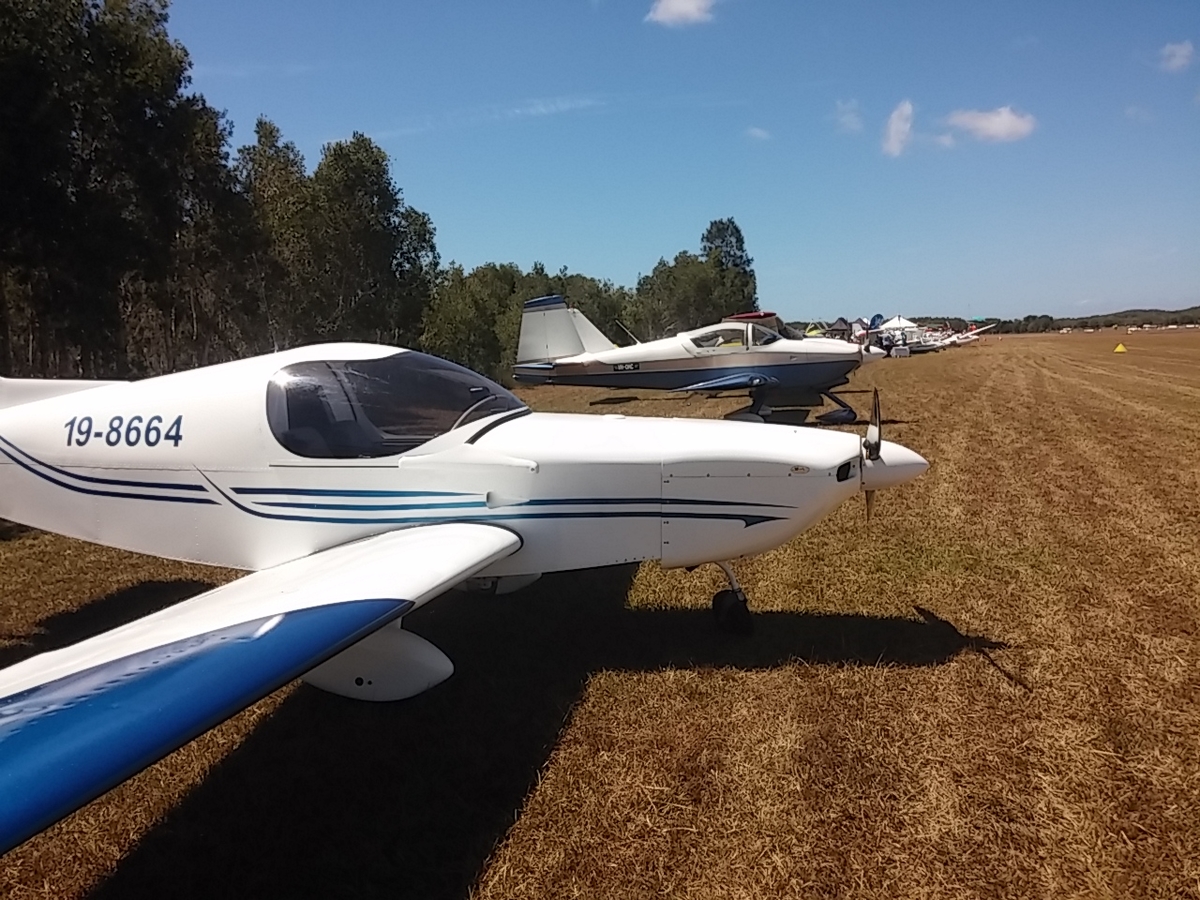
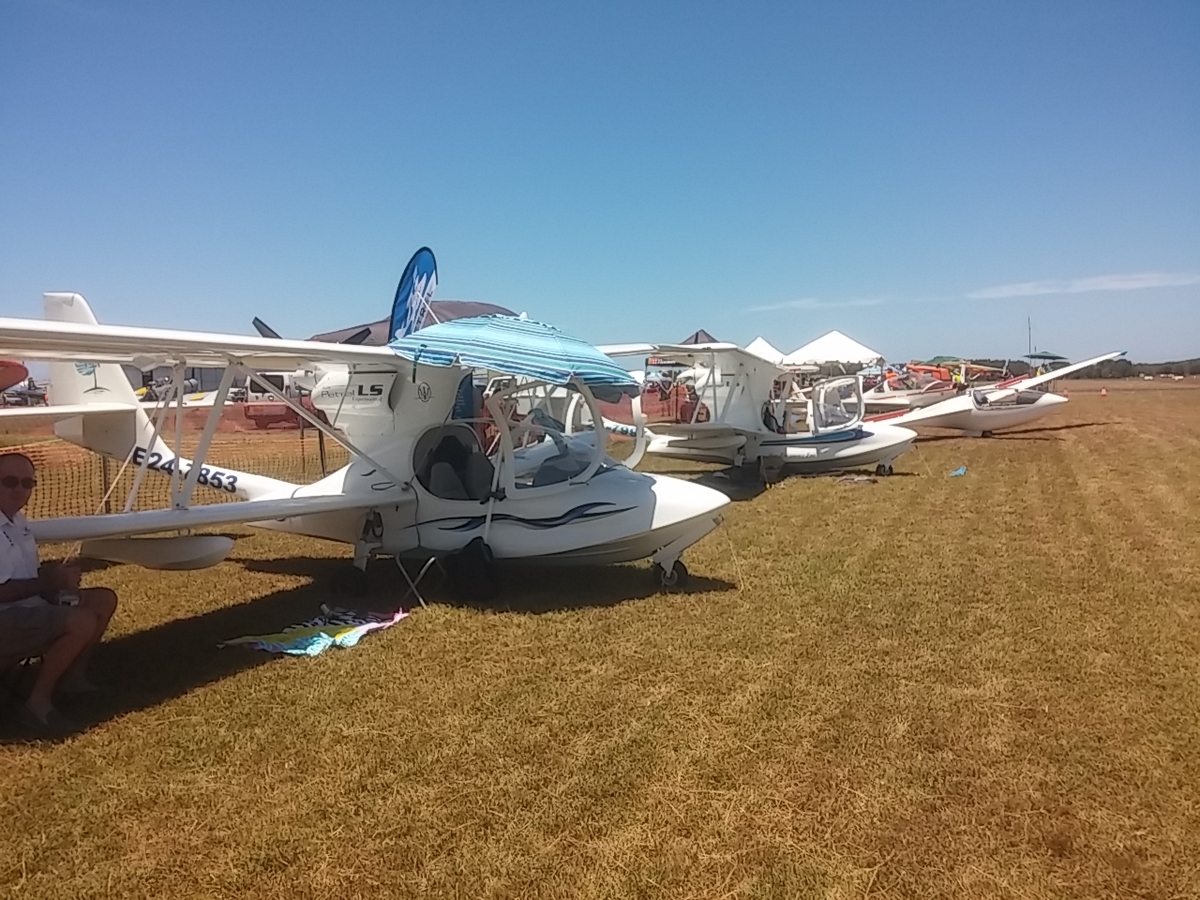
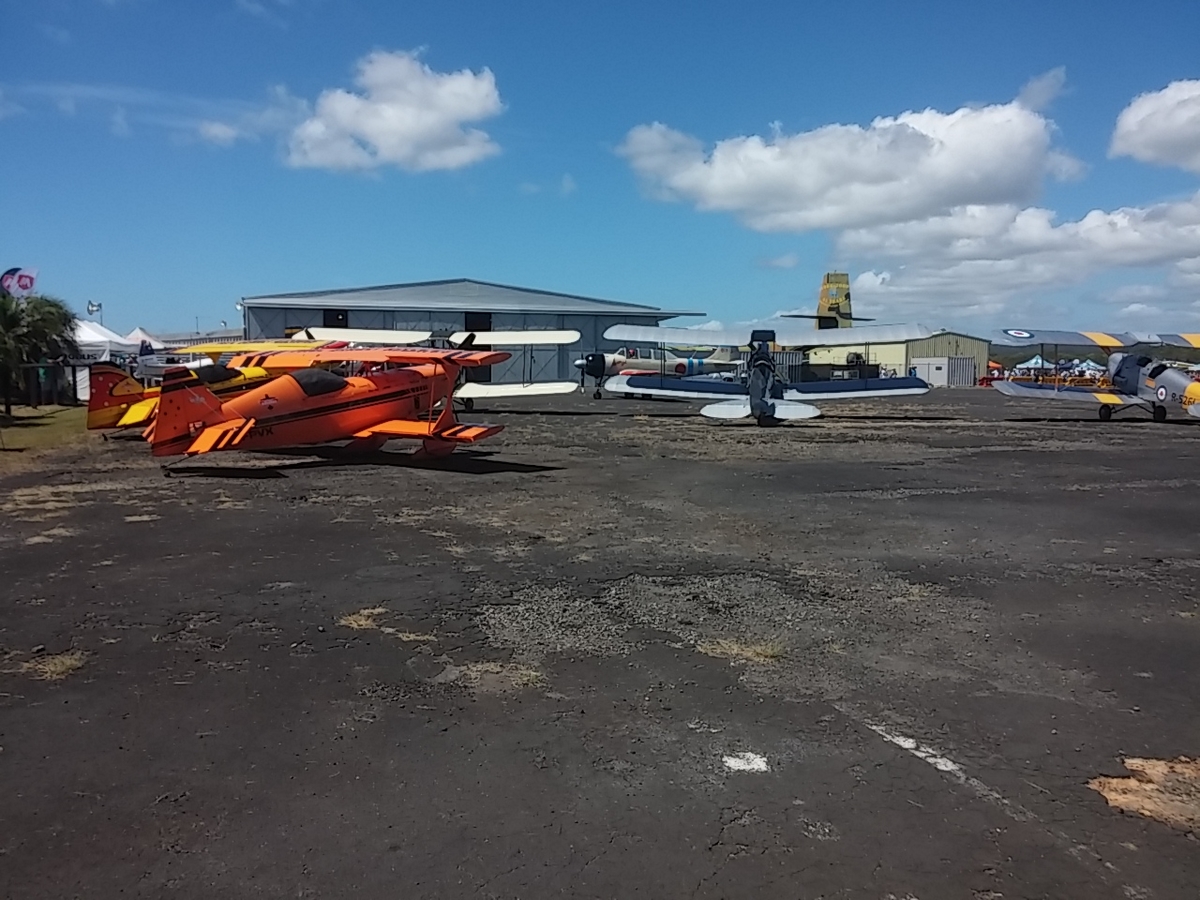
Here are a few photos
Matt Hall doing the corkscrewI chose a shady spot on the flight line but that disappeared quicklyMatt Hall againSeaplanes & Glider-
3
-
-
When the Facet fuel pump starts pumping air it makes quite a racket which I can hear above the sound of the engine with my headset on. That and the time it takes is a pretty good indication there is nothing left in that tank.
-
When I built my aircraft I installed 2 wing tanks along with the standard fuselage tank. I then started adding fuel 5 litres at a time and recording the result on a sheet and photographing the fuel gauge. The main tank which was supposed to take 95 litres actually took 100 litres to the absolute top. The tank has a sump that holds about 4 litres & the gauge didn't move even after adding 15 litres. It was just off empty after 20 litres and 1/8 full after 25 litres when in theory it should have shown 1/4 full. 1/4 was 35 litres & so the inaccuracy continued when it showed full at 95 litres & 100 litres. I made a calibrated dipstick about 400mm long & also did the same with each 35 litre wing tank. The wing tanks pump into the main tank with an auxiliary electric fuel pump. It takes 27 minutes to transfer 20 litres, 56 minutes for the whole tank.
The only time I know how much fuel I have is when my aircraft is parked on the level & I dip the tanks. In the air the gauge (main tank only) becomes inaccurate with attitude & bank angle etc as you would expect so I use it as a rough guide only, preferring my fuel burn mental calculation to work out what I have left. On a recent flight the gauge was showing empty but I knew I had at least 45 minutes left (I don't work on the new 30 minute reserve requirement). I landed put the plane away & the gauge went up to 1/8 full. When I dipped the tank it showed 24 litres. That was the last flight before my 50 hourly & annual. I drained the tank to check for possible crap in it & also I was fitting a new fuel filter & it filled my 20 litre container almost to the top. When I fill that container at the pump it takes 24.38 litres to the filler neck. Anyone who believes a fuel gauge has rocks in their head.
-
2
-
-
All of the Jabirus & Foxbats I know of in Flying Schools are not LSAs. They are factory built 24 registered Ultralights.
-
Is anyone planning on going to this years Great Eastern Flyin? I am planning to fly over on Saturday morning (12 January). Of course it is only a half hour flight from YSGR. Note that there is a new discrete frequency of 127.9 from 8am Friday till 5pm Sunday to reduce congestion with the normal frequency of 124.2 which is shared by Ballina, Lismore & Casino
-
As far as I am aware the aircraft must be a RAA-Aus approved factory manufactured aircraft and be 24 registered. Maintenance is therefore by L2 or higher. The only exception is if you build your own aircraft to an approved design or kit and it is 19 registered, you and only you can be trained in this aircraft.
-
1
-
1
-
Bolly
in Engines and Props
Posted