cscotthendry
-
Posts
2,131 -
Joined
-
Last visited
-
Days Won
22
Content Type
Profiles
Forums
Gallery
Downloads
Blogs
Events
Store
Aircraft
Resources
Tutorials
Articles
Classifieds
Movies
Books
Community Map
Quizzes
Videos Directory
Everything posted by cscotthendry
-

Radio help please
cscotthendry replied to biggles5128's topic in Instruments, Radios and Electronics
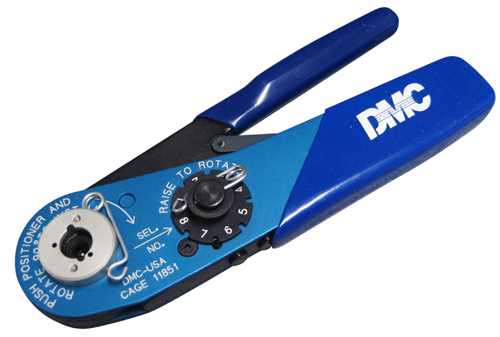
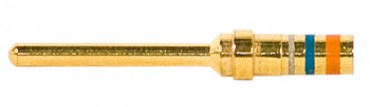
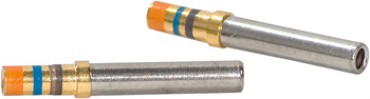
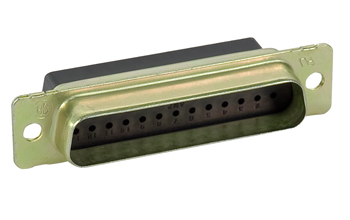
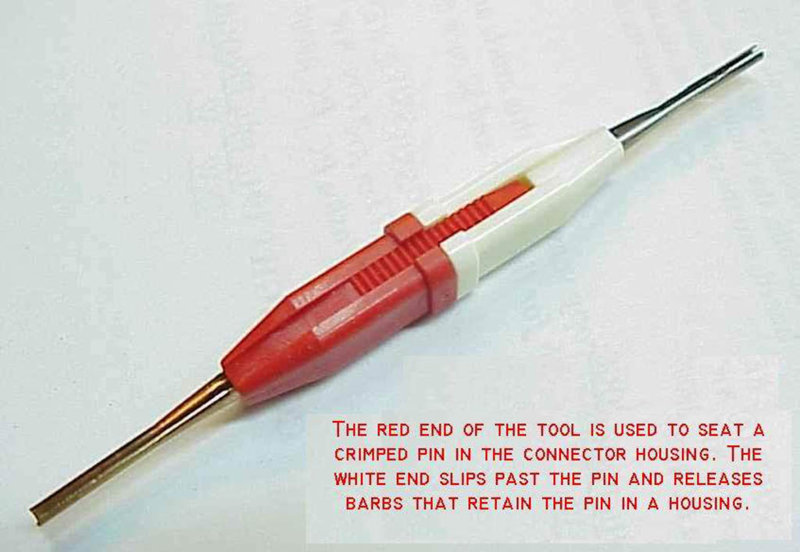
Biggles: LOL, the crimper is not really tiny, but it's understandable that someone might guess that it is. The crimper crimps the pins on the wire before they are inserted into the plug. There is also a special plastic tool for removing the pins from the plug. This is what the crimper looks like It has 4 pins inside that close on the socket of the pin and secure the stripped wire end into the socket of the pin. These are what the pins look like Male and female pins And this is what the connector looks like And here's the pin removal tool WARNING, the crimper is very expensive (around $300.00US) so it's best to borrow one or get someone to do the crimping for you.
-
Radio help please
cscotthendry replied to biggles5128's topic in Instruments, Radios and Electronics
Biggles: Nope, that would not be fair to assume. The reason being that radios sometime have multiple power and ground pins in the connector, for the purposes of carrying the extra current requirements during transmission. If one of the power or ground pins was broken or had strands broken, this reduces the current input capability, but wouldn't necessarily completely de-power the radio when you transmit. Also, heat shrink can be useful stuff, but it can hide a lot of nasties too. If the pins are heat shrinked, I'm betting the connections are soldered rather than crimped. While you have the connector out, it might be a good time to re-do it with a crimped pin connector. Unfortunately, they are not as cheap nor as readily available as soldered connectors, and they require the used of specialist crimping tools. -
All great advice above. The thing to remember is that the format is specified so that what is said is predictable to other pilots who also have a lot on their mind. The radio calls follow a cadence that you get used to in time and are able to filter out the important ones from those which don't concern you. Case in point is 126.7 . When you're operating into an airfield that uses that frequency, there WILL be other airfields that use the same frequency within the range of your radio and you will hear pilots doing calls at those fields but you can ignore them within a couple of words of the start of the transmission. For example, if I'm overflying Kilcoy, and I hear "Gympie traffic..." my brain switches that call off straight away. In any case, don't get too heavy on yourself, it will come with practice and time.
-
THE FLY! Beware ...
-
The wierdest thing....Canberra
cscotthendry replied to rrogerramjet's topic in Aircraft Incidents and Accidents
A Harrier perhaps? -
Radio help please
cscotthendry replied to biggles5128's topic in Instruments, Radios and Electronics
Biggles: If you've swapped ou the radio, headsets and antenna cable there is not much else. This could be a simple case of too much mic gain. If there is a setting in the radio for mic gain, try adjusting that to see if it improves things. If you are using non-ANR headsets, you will get noisier transmissions than using ANR headsets. However, ANR headsets sometimes have powered mics which might overwhelm the input to the radio. Also, you didn't mention if your aircraft has a separate intercom system. If it does, try adjusting the mic gain and output levels to the radio on that. You listed several aircraft on your profile, but I'm guessing the Jab is the only one with a microair radio. Was the radio always this bad or has it just started? (Or have you just found out that you probably always were transmitting garbled?) Another possibility is a poor ground connection to the radio. This will be a bit harder to check as you will have to dig into the wiring and visually inspect the wiring to the radio. I've forgotten how the Microair radios are connected, but I think it is with a computer style DB25 connector. That being the case, there will probably be 2 or more pins used for ground connections into the plug. They should ALL have good solid wires on them and the wires should be connected to the main aircraft ground bus bar or common grounding point. When airband radios are transmitting they draw more current than when receiving, so they need good solid power connections with plenty of current capability. -
Wow! 3,000 hours in 5 years is serious flying. Welcome Vlad. Hope to see you in Oz soon.
-
Nev: It is indeed a ridiculous claim to say that his routine was "practiced" rather than "skills". For a start, practice is what creates "skill" and for seconds, I'd like to ask that peanut if he ever asked any other aerobatic pilot whether they just went up and did aero routines without "practicing" first! A very tissue thin excuse for a*se covering by a bureaucrat if ever I saw one.
-
I'm guessing you're probably doing your training at Hervey Bay. Also worth calling Dave Cookman in Noosa (HGFA), and also speak to Crezzi (John Cresswell RA Aus) at Caboolture for second and third (not in any particular order) opinions. You can never have too much advice. Just follow what you think is right (generally where the majority agree). Dave was my instructor and I also did some flying with Crezzi. Both solid, honest guys.
-
Wow! RIP one of the world's greatest (if not THE greatest) aviators. He will be soaring effortlessly among the clouds now.
-
Bugsy: You asked for advice on the Redback. IMO, If you can stretch the budget a bit, go for the four stroke trike (I think it is the Outback). Two stroke engines require more care and attention to maintenance than four stroke engines and for a beginner, it's one (big) less thing to have to come to terms with. If you already have good knowledge of two stroke engine maintenance, disregard the above. Happy flying, blue skies and tailwinds to you.
-
A trike is a 2 axis machine and as such is a bit simpler in some ways to learn to fly than a 3 axis aircraft. Don't be fooled though, handled wrongly, a 2 axis machine can kill just as quickly. As Skeptic said, the wing's the thing. Generally, the strutted wings require a bit more care to fly than the kingpost wings, and in my experience, strutted wings are a bit heavier on the controls. Definitely take your instructor's advice on which wing would be good for your experience and ability. I learned to fly on an XT912 with a cruze wing. The trim speed of the Cruze wing was about 48-50kts when set the trim was set to the fast setting.
-
Agree with Crezzi. If you're careful, thorough and sensible, you can pick up a good second hand trike for a very affordable price.
-
how do i get tomorrow's weather?
cscotthendry replied to cooperplace's topic in AUS/NZ General Discussion
For longer range weather predicts, I use the Meteye function from the BOM and als the Interactive wind and wave forecasts also from the BOM. I've found a fair bit of differences between Willyweather, weatherzone and a few others. Windyty is also useful, but causes problems on my iPad mini. -
The weakened wire would have effectively caused the equivalent of ground faults. Ground faults are the most common cause of problems in any electrical system, but most particularly in cars where everything is grounded through the body. That's part of the reason that in aircraft wiring the standard practice is to run a seperate ground wire from every electrical device directly to a common bus bar and also have a good sized connection between the bus bar and the battery. I'm intrigued that you say the connections are soldered to the battery in your aircraft! Can you post a pic of the type of battery you are using pls? Also, you might or might not be aware that soldered connections are usually avoided where possible in aircraft wiring, in favor of crimped joints. Soldered connections make the end of the wire very stiff and vibration causes metal fatigue at the joint.
-
This deserves a thread of its own
cscotthendry replied to red750's topic in AUS/NZ General Discussion
That would have taken some doing to get all those guys back together again from all corners of the globe. Great effort from whoever did this.- 1 reply
-
- 3
-

-
"The ground must be down there somewhere" ahh, I'm sprung. You saw me shut my eyes just before touchdown in my videos, obviously.
-
Whoa! This is getting out of hand... I can see I'm gonna have to post a pic of the fly!
-
Not on the same scale as being stung by a bee on late final, but I had a fly land on my sunglasses lens, right in the middle of my vision when about a foot off the ground landing at William creek. Nedless to say, my landing wasn't pretty.
-
Yenn: Very good point. There is no way to make flying, or driving completely fool proof, with the emphasis on Fool. They are among us, they breed and worse yet they drive, fly and vote!
-
TMI
-
OME: Roger that! Find and watch the movie "Maiden heist" if you want a giggle. One of my faves (howzat for an 'Mericanism?)
-
Scuze me? Aussies have to be the worst spellers in the English speaking countries!
-
That looks like an Antonov AN-2
-
From my experience, this is not what is taught by RAA instructors. I believe it is what pilots do who rarely use their radio and are unsure of their calls, so they over compensate. The answer? Practice, practice. practice and if in doubt, consult an instructor. Instructors are not bogey men waiting to catch you out and criticise you. They are a valuable reference source and if you treat them like that most will respond very positively.