Ian
-
Posts
519 -
Joined
-
Last visited
-
Days Won
11
Content Type
Profiles
Forums
Gallery
Downloads
Blogs
Events
Store
Aircraft
Resources
Tutorials
Articles
Classifieds
Movies
Books
Community Map
Quizzes
Videos Directory
Everything posted by Ian
-
New Aussie Turboprop engine (200 HP) introduced at Sun 'n Fun
Ian replied to Garfly's topic in AUS/NZ General Discussion
The idea of running on turbine fuel or diesel appeals to me. More easily available in both the short and long term. -
I'd be happy with any fuel that is environmentally sound, is low cost and provides equal range to existing liquid fuels. I won't miss the racket if it was electric however I can't see batteries improving 10x or hydrogen becoming a fuel. Hydrogen just too big and expensive, liquifying it costs even more and we can't make it efficiently.
-
New Aussie Turboprop engine (200 HP) introduced at Sun 'n Fun
Ian replied to Garfly's topic in AUS/NZ General Discussion
There's a nexus of cost issues when flying, the initial buying price, airframe maintenance costs, engine maintenance costs, fuel costs and then storage airfield costs. Everyone needs to make their own choices in this space. While turbine engines have wonderful TBO maintenance and virbration characteristics unless their efficiency improves radically I can't see one really appealing unless I decide that I must use a turbine. Fuel from both a greenhouse gas and political instability point of view is likely to stay high so that's going to be on peoples minds. I came across the PDF "Stratified Charge Rotary Engine", where they achieved a BSFC .375 running on turbine fuel, the progress that NASA made with stratified charge Rotary engines was significant. The engine weight was 480lbs for 400HP dry. While rotaries have never had enormous lifetimes they don't have many moving parts and their motion is closer to a turbine than a reciprocating engine. -
New Aussie Turboprop engine (200 HP) introduced at Sun 'n Fun
Ian replied to Garfly's topic in AUS/NZ General Discussion
Their fuel consumption is pretty poor even by turbine standards. There is an paper on how they might be made more efficient. I think that this one states that JetCat overstates their thrust figures significantly as well. -
New Aussie Turboprop engine (200 HP) introduced at Sun 'n Fun
Ian replied to Garfly's topic in AUS/NZ General Discussion
Going small with turbines is hard work without the support of deep pockets realise high compression and turbine temperatures. Looking at this I came across NASA's analysis of rotaries where the power to weight and low vibration were seen as being very attractive. While rotaries are thirsty they're still better than small turbines. -
New Aussie Turboprop engine (200 HP) introduced at Sun 'n Fun
Ian replied to Garfly's topic in AUS/NZ General Discussion
Back to the topic at hand, I'd be interested to know what the ballpark price is for this engine and it would be great if someone could really upset the current status quo in the current market. I'd like to understand the SFC figures a bit more, the fuel flow figures are quoted at 150HP however optimum cruise is 180 HP, I don't know enough about recuperators to know how this moves the optimal power settings. -
New Aussie Turboprop engine (200 HP) introduced at Sun 'n Fun
Ian replied to Garfly's topic in AUS/NZ General Discussion
Maybe :-), not sure about the high temperature properties though if you were using it in a hot sections. The key message was that I don't think that going from wood to metal was a quantum leap, it was just a bit easier to engineer. The key problem with wood as an engineering material is its lack of consistency compared to a metal alloy and the associated fudge factor required when building. Laminates reduce this factor allowing more of an engineered approach and allowed their use in the Mosquito. Rotol propellers for the spitfire were also made of wood in WW2. Certainly wooden props are far easier to certify than their metal brethren and they don't have the nasty fatigue issues associated with metal props. MT Propellers manufacture their "Natural Composite" line of constant speed propellers. For instance MT-Propeller natural composite blades are certified for unlimited life and can be repaired in the field or at 60+ overhaul shops worldwide. Australian Hardwoods especially are significantly stronger than traditional northern hemisphere timbers and massively undervalued. For example Grey Ironbark has a tensile strength about 3x that of Oak, the traditional symbol of strength. Another less well understood property is dampening which the graph below shows. -
New Aussie Turboprop engine (200 HP) introduced at Sun 'n Fun
Ian replied to Garfly's topic in AUS/NZ General Discussion
Wood is actually has a pretty good strength to weigh ratio, generally equivalent to aluminium and used correctly can provide excellent results. For example the de Havilland DH.98 Mosquito, in 1941, it was one of the fastest operational aircraft in the world. 😉 and called the wooden wonder. It also has a much lower radar cross section so you can claim that its stealth. -
New Aussie Turboprop engine (200 HP) introduced at Sun 'n Fun
Ian replied to Garfly's topic in AUS/NZ General Discussion
While I really like ceramics and I hope that you're right in terms of cost, they're a bear to machine. CMCs have been used for combustor and turbine housings however turbine blades are precision components with very high tolerances. The materials being considered are hard like SiC in ceramic matrices often of equal hardness. Very hard compared to metals. I suppose cost is a relative thing, when you're an airline fuel savings may drive their introduction. Ceramic disks are relatively cheap in comparison however I don't see many cars with them. -
New Aussie Turboprop engine (200 HP) introduced at Sun 'n Fun
Ian replied to Garfly's topic in AUS/NZ General Discussion
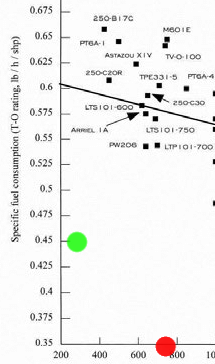
However I suspect that the end result will be a staggering increase in cost far beyond the budget of the people on this list, exotic materials = high costs. The PT6A-66 (as used on the Piaggio P.180 Avanti) has a fuel comsumption of 380g/KW whereas the Junkers Jumo 204 used in the Junkers Ju 86 uses 211g/KW. As the image below shows as soon as you go below 1000hp your fuel consumption for any commercially available turbine is pretty poor. I've created a red dot which shows what a two stroke compression ignition engine built in WW2 achieved, (Junkers Jumo 204). The green dot is an O235 for comparison.
-
New Aussie Turboprop engine (200 HP) introduced at Sun 'n Fun
Ian replied to Garfly's topic in AUS/NZ General Discussion
Hi Geoff, do you have any information on the relative efficiencies of smaller low cost turbines and their ability to throttle? Based upon this specific fuel consumption table anything small has pretty horrible fuel economy and this is at maximum efficiency not part power. One of the reasons why jets fly at high altitudes is to achieve the best angle of attack because they can't throttle efficiently. An aircraft that can throttle efficiently can achieve maximum range regards of altitude, you simply need to slow down to achieve the best angle of attack. Flying higher reduces trip time but does nothing for efficiency. (However you might gain some by flying lower) I'd actually like to see someone makes a smaller Junkers Jumo 204 even in 1940 the fuel numbers were pretty good. I don't think that supply issues will constrain the transition to away from fossil fuels for vehicles, supply is easy to fix. Issues associated with dispatchable power and distribution will have a greater impact. As soon as you have to pay for carbon capture instead of polluting those EVs start to look really good. For instance the cost to supply Singapore with intermittent Solar from the NT was ~40B to supply 20% of their power needs some of the time using HVDC. -
New Aussie Turboprop engine (200 HP) introduced at Sun 'n Fun
Ian replied to Garfly's topic in AUS/NZ General Discussion
In relation to cars, this isn't a view being borne out by industry except Toyota whose strategic direction is increasingly at odds with the market. IC cars are going the way of the dinosaur like it or not, to believe otherwise is a bit niave. Your concerns relating to limited availability of materials don't really stack up. While copper's a prime choice for things like engine windings materials like aluminium are generally more cost effective and available, yes you lose some size and efficiency advantages. This is why the power cables near your house are aluminium and not copper. It's also why everyone doesn't use 98 octane fuel. Lithium is a finite resource however there's actually a lot of it about and it's an industry in its infancy. You can also make Sodium Ion batteries which don't really have the same resource constraints. I can't see electric planes for anything except training platforms where the pilot does 10 circuits and then lands or short hop metro flights. Trucks are also another matter however I'm expecting a bit of a resurgence in rail freight in the coming decades. I wish the builder well and I'd like to see turbine engines going forwards however I think everyone struggles with fuel costs and turbine efficiency generally means higher costs unless you've been unusually clever. The other problem with turbines is that they don't throttle well so you don't get the chance to reduce that fuel burn once your at altitude. That being said there are a number of markets where a cost effective turboshaft engine would be very attractive. -
Jabiru and Jetstar near miss by 600ft
Ian replied to Admin's topic in Aircraft Incidents and Accidents
The response from ozrunways is fatuous. They don't want to share purely for commercial reasons. Government should simply require that all EFBs share relevant information directly with a Government forwarding service. ie directly from the device in a standard format, not via their processing centres. Ozrunways devices gets positioning information from GPS satellites. It comes with a timestamp provided by an atomic clock. So they can send a message with a timestamp, and a vector describing location etc and identification. The network delay in a signal being sent back to the provider is less than 50ms (1/20th of a second) assuming that the sender is in Perth and the receiver is in Melbourne or Sydney. ie the worst case network creates a delay of half the time it takes to blink. It take virtually no time to duplicate and forward messages of this type, it's done all the time in centalised logging systems capable of processing hundreds of thousands of messages a second on commodity hardware which would allow for many years of growth for Australian or US air traffic. It's the processing and sending consolidated updates to users which takes time. This isn't needed by either party, they have their own processing. The network is unreliable so the messages don't need sent reliably just information like last known location, then a view like the following can be displayed with the last known location. https://www.lightningmaps.org/#m=oss;t=3;s=0;o=0;b=0.00;ts=0;z=6;y=-37.5968;x=144.0582;d=2;dl=2;dc=0; -
Recreational aircraft landing fees - feedback needed please.
Ian replied to waraton's topic in Aircraft General Discussion
In many cases the solution similar to Grafton is good outcome. You have a low cost lightweight airfield which caters to smaller planes and GA and a high cost airfield which caters to RPT. The GA airfield is not security controlled and runs with minimal interference and keeps the costs low. The costs associated with the requirements of RPT are clearly only associated with the requirements of RPT flights. Contrast this with Canberra Airport which has created a situation where real estate interests actively compete with aviation businesses. Bunnings, Costco and Government offices dominate the landscape and google maps show over 20 aircraft parked outdoors in the weather. The closest airports are Goulburn 100km or Cooma airport 130km both of which aren't GA friendly. For example a "grass light recreational aircraft permit" fee is charged regardless as to whether the aircraft is parked on the grass or in a hangar, and the fee is over $3000 per financial year. The local government doesn't wish to change this status quo even though there's a demonstrated requirement to control fires in the national park to the southwest and firefighting aircraft have had incidents over the city itself. ACT Government has essentially become captive to property development and is committed to squeezing as many people into the smallest slum possible. -
Recreational aircraft landing fees - feedback needed please.
Ian replied to waraton's topic in Aircraft General Discussion
A number of single engine planes have gone across the pacific. Lots of water there too. A Long-ez would have the range. Not that I'd be that comfortable doing it in a single. -
Recreational aircraft landing fees - feedback needed please.
Ian replied to waraton's topic in Aircraft General Discussion
If you ever get to Christmas Island you won't get a joyflight around the island. I was wondering why until I looked into the charges. Basically a light plane is charged the same as a 20T airplane per movement. A 750kg single engine piston plane landing at Christmas Island would be charge a landing fee of $300.00 A 1500kg twin engine piston plane landing at Christmas Island would be charge a landing fee of $300.00 So a single landing and takeoff is $600.00 You'd think that the Government would be trying to encourage local business and get tourists to spend their money on this type of thing, the island is beautiful and to see if from the air would be great. Also a helicopter or a plane might have been beneficial when the refugee boat crashed into the island. Apparently the fees are equivalent to the following airports, however I suspect that their grasp of maths isn't that spectacular because a 5 minute search turned up the following. A 750kg single engine piston plane landing at Kalgoolie would be charge a landing fee of $0.00 A 1500kg twin engine piston plane landing at Kalgoolie would be charge a landing fee of $19.75 A 750kg single engine piston plane landing at Geraldton would be charge a landing fee of $0.00 A 1500kg twin engine piston plane landing at Geraldton would be charge a landing fee of $25.50 A 750kg single engine piston plane landing at Learmonth would be charge a landing fee of $7.50 A 1500kg twin engine piston plane landing at Learmonth would be charge a landing fee of $35.47 A 750kg single engine piston plane landing at Port Hedland would be charge a landing fee of $17.95 A 1500kg twin engine piston plane landing at Port Hedland would be charge a landing fee of $35.89 -
Jabiru and Jetstar near miss by 600ft
Ian replied to Admin's topic in Aircraft Incidents and Accidents
The key message is that the existing controls based upon humans and radio calls are inherently weak and do lead to accidents. ATSB is making it clear that they acknowledge this deficit and that existing measures should be upgraded. Technologies such as ADSB provide significantly improved situational awareness to all parties reducing the likelihood of accidents. However the weakness of this approach is that not all parties have these devices and in the interim alternative approaches should be considered. -
Jabiru and Jetstar near miss by 600ft
Ian replied to Admin's topic in Aircraft Incidents and Accidents
The key issue associated with most collisions is visibility. Radio calls are for visibility both current state and future actions but they're a pretty blunt instrument, you only need to review the number of errors and retransmits of radio calls. There is opportunity, capability and moral imperative to increase visibility to ensure safety. All EFB type services with Internet connectivity should be required to log to a central Government which in turn provides a feed an integrated feed or the current state in real time, rather than to their own fragmented proprietary systems. The value of networks inherently relates to the number of participants, fragmenting them reduces their value. Imagine if your mobile phone could only call people on the same network as your provider. In terms of the timeliness of the information GPS systems get their time from atomic clocks so temporal accuracy is easy. From a transactional level there's not that much information, even single instances of spatial systems can scale to hundreds of thousands of transactions per second which should cater to the Australian concurrent traffic demand well into the future. The bottom line is that this would cost a fraction of the cost of towered airspace and provide greater benefit. -
Jabiru and Jetstar near miss by 600ft
Ian replied to Admin's topic in Aircraft Incidents and Accidents
The key point is that we can do better. People will continue to make mistakes. Increasing visibility or all types of flying vehicles be they A380s, ultralights or drones is a good idea. While it would be nice to get ADSB on all aircraft even a simple app on a mobile phone apps which reports position to a Government service would be beneficial as numerous airport have mobile coverage especially those in congested areas. That more responsibility accrues on those with the highest risk would imply that RPT transport would have an obligation to check these sources as part of their standard ops. I know that it would be far from perfect however often the perfect is the enemy of the good. The key considerations should be: Is it better than the status quo Is it accurate enough to provide useful information. Is it ubiquitous enough to make a difference without being onerous While devices like SkyEcho2 are great, they're still too expensive for some to be ubiquitous. I'm willing to be that all involved parties in this incident had mobile phones with reception and accurate enough to make a difference. Technically, in many ways aviation is probably one of the most backward industries on the planet. People still comment on flat screen displays the size of a shoebox when every house and workplace has hundreds of similar displays many times the size. The processes associated with flying are incredibly mandraulic, error prone and expensive and this reality is evidence by accidents like this one. We really should be doing better however the reality is that similar incidents will continue to eventuate. -
Jabiru and Jetstar near miss by 600ft
Ian replied to Admin's topic in Aircraft Incidents and Accidents
All Aircraft should have a cheap and inexpensive ADSB in and out. Open source hardware/software implementation should be sponsored by the Government. ADSB should also include an identifier based on the pilots id and a nonce to stop replay attacks. The current implementation is just a bit dumb and prone to spoofing. -
C/S prop installation on Jabiru 2200 &fuel injection
Ian replied to lyle janke's topic in Engines and Props
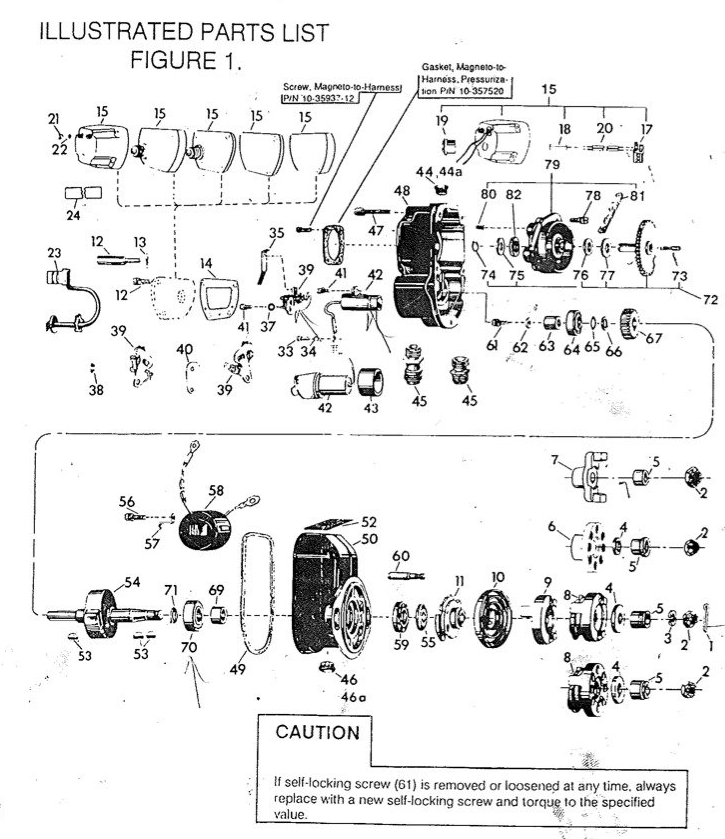
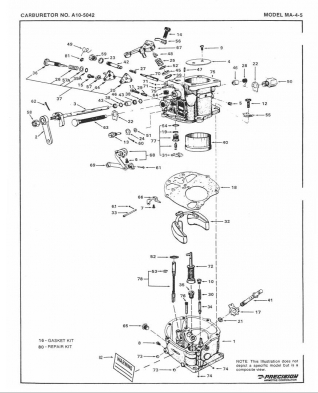
For many people the answer is yes. Cost and effort is another manner. It provides the following advantages effective control of the fuel ratio in each cylinder, the reliability of solid state ignition, programmable ignition advance, The ability to use features like oxygen sensors to automatically optimize combustion, Strong spark for better starting, Not having to get magnetos services every 500 hours, significantly lighter in weight. Modern engines are more reliable and flexible than old engines because they use solid state technology with fewer moving parts. By comparison, wouldn't it be nice to get rid of something as complex as this with many moving parts and possible failure modes and this
-
MOGAS and UL98 in Rotax 912 - Real experiences?
Ian replied to PommyRick's topic in AUS/NZ General Discussion
Running mogas doesn't necessarily depart from the recommendations of the manufacturer. There are a number of older and newer engines from Lycoming which run fine on Mogas the link below provides a from the horse's mouth view. https://www.lycoming.com/sites/default/files/SI1070AB Specified Fuels.pdf Note that Mogas is included. From a technical point of view the majority of GA aircraft will run on Mogas without an issue. There are some higher compression and turbocharged aircraft which currently require Avgas however these aircraft are in the minority. Essentially the GA industry has been subsidizing those aircraft for decades at enormous cost. If there is a significant swing towards using mogas the whole economics of the avgas industry will collapse. The problems with all of the replacement AVgas fuels is that they're more expensive and consumers don't want that. -
MOGAS and UL98 in Rotax 912 - Real experiences?
Ian replied to PommyRick's topic in AUS/NZ General Discussion
There are simple tests which detect ethanol in fuel. Food colouring can be used. Supplying fuel in Australia which doesn't meet standards is an offence. https://www.legislation.gov.au/Details/C2021C00266 Stating that mogas supplied in Australia doesn't meet standards is nonsense. It is just as likely as avgas not meeting standards. The same companies are involved using similar processes. -
Considerations in Engine Cowl Design
Ian replied to skippydiesel's topic in Aircraft Building and Design Discussion
Radiator cowling design is an extremely difficult subject and most of the work in this space was done in WW2. If you can find someone with a moderately good solutions it's probably the right one unless you have a lot of time to burn. What most people don't realize is that a really good radiator design can develop thrust (meredith effect), the P52 radiator design is probably is probably one of the best, however this really only works when your airspeed is pretty high. However at the very least good cooling duct design can be advantageous if you have the space available. The lower the airspeed through the radiator the lower the drag. Aerodynamic drag increases as the cube or the airspeed and drag due to the radiator size increases at the square of airspeed. So you can exchange radiator area for reduced drag. The duct should be divergent/convergent and there are maximum rates of change in the angles which can be used. Also the duct needs to be slightly larger post radiator as energy has been added to the airstream. -
Does anyone know if the protocol is extensible to include basic security? From what I've know, ASD-B is inherently vulnerable to spoofing and replay attacks, and where there's a vulnerability someone will eventually exploit it for fun or gain. I can imagine in a few years ADS-B-v2 with message integrity will appear after someone equips a drone with a spoofing device and generates thousands of ghosts around busy airports to get back at the Government. At that point we'll be told that we need to buy newer hardware to support the capability.