


johnm
-
Posts
1,127 -
Joined
-
Last visited
-
Days Won
5
Content Type
Profiles
Forums
Gallery
Downloads
Blogs
Events
Store
Aircraft
Resources
Tutorials
Articles
Classifieds
Movies
Books
Community Map
Quizzes
Videos Directory
Posts posted by johnm
-
-
The following is purely in the interest of Tecnam chatter:
Went to Blenheim NZ - Omaka strip - the other day and flew a Tecnam Sierra twice - always wanted to. I have 200 hours on a Bravo so wanted to see the difference. Not much difference really - the main one being the wing is low and the prop is high - this seems to keep the nose wheel firmly on the ground - whereas the Bravo the wing is high and the prop is low - so the nose comes up fast
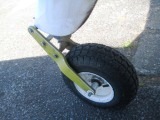
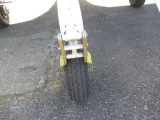
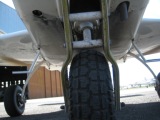
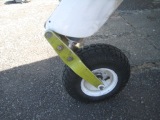
The Omaka aeroclub had a collapsed nosewheel so they beefed it up - photos attached - but they show 2 plates each side with 3 horizontal 12 ? dia steel members - it is robust construction - the factory made nose wheel assembly on the Tecnams seems a bit light. Mind you, every forum seems to talk about nose wheel assemblies (even the mighty Jabiru) so its a common thing - maybe even a bit of pilot paranoia
Anyway all said and done - I still think a Tecnam is a good plane and worth the 'extra' you have to spend to fly one
From memory the flying rate was $ 120 - $ 150 NZ for the Sierra - in comparison they had some Piper Tomahawks - they where $ 180 / hour
This particular Sierra was solid with power on, but when reducing power there was this marvellous murmuring and grating coming from the front end - this unkown noise was obvious to the instructor that was with me also - I pass no comment but its a reminder that the Rotax / reduction gearbox has a minimum idle rpm to avoid any wear - approx 1500 ? minimum idle - I once have had the minimum idle adjusted to 2000 - but that was to high - the plane did not want to land
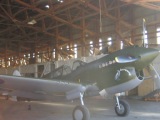
While preflighting the Tecnam I heard a shout saying 'can you give us a push' - went there and pushed out a P40 Kittyhawk ? - this one is based at Masterton - Hood aerodrome. I think that day he took 7 passengers for a half hour ride - $ 1300 each ride. I can now say I have pushed a P40 (but have not flown one yet)

-
merry xmas tecnam owners. hope I am not dwelling on it but ..............
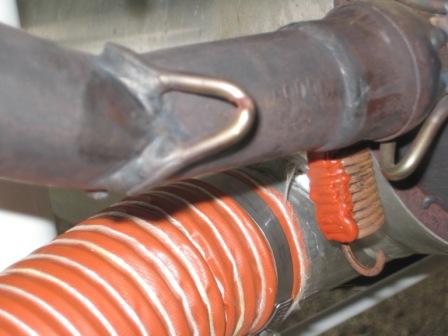
this is the tag that was 'cut' by an exhaust spring - probably about 65% of tag remained and 35% had gone - a spot of stainless steel weld and gound flush - costed $ 10 so its back to the salt mines for another 2 weeks - installed 'Locktite 717' as recommended (don't forget the bloody red mastic)
the intent of starting this post was for you 'exhaust spring pilots' to check this wear - have a look if you have not looked yet
interestingly it only occured on one tag (pilot side front piston - tag closest prop) - all the others OK. Even the tag at the opposite end of the spring was OK. Trusting Locktite 717 is the answer (oh and I have n't forgetten the bloody red mastic)
-
I've got my aircrfat costs on MYOB - this might help some purchasers - cost forthe previous 12 months - say $ 21,000. Fianance 41% Insurance 18%. Fuel 14%. Other (hanger rent, repairs, license, levies etc) 27 %
Plane costs $ 130 k and say a tad over 100 flight hours per year
So in theory fuel is the cheap bit - a private plane probably burns more cost (in relation to fuel) just sitting there - if its financed and insured
I think I am referring to planes in excess of say $ 40 k to $ 60 k value - having said that - those private planes (> $ 40 - $ 60k) would probably not exist if they were not financed and insured ?
__________________
john m
-
ps..they are not petty crimes either...they include drink driving, and posession of narcotics...to name a few...
Oh my god ....... by the definition above ........... I'm a criminal
-
C180 PHOTO
'ere tis - I hope
-
CESSNA 180 - MOTOR MISSING
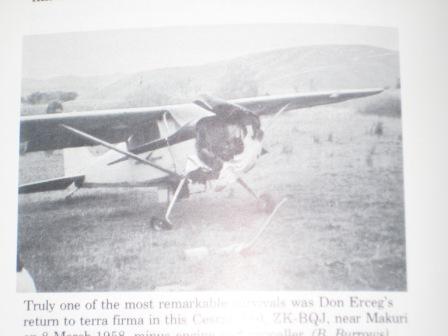
On that theme that any plane could loose a motor - the following appears on page 202 of 'The Topdressors' - NZ ag pilots
So the story goes ........ 1958 - C 180's were then good workhorses (there were problems with the propellor hubs)
Mr Ecberg just had the engineer check an engine vibration and the engineer said 'fly it'
Pilot flew it away to work - after some time motor then left plane - cut half of one wing strut and slashed tyre - you might see bent leg from landing - in grainny picture
Pilot said plane went into a vertical snap roll - he cracked his helmet on inside of cabin - with full flap he landed it !
So the story goes ........ pilot was a man of few words, he rang the engineer to inform him the motor was missing - have you checked the plugs ? was the reply - it took some time for the engineer to realise the motor was in fact .... 'missing'
Attached Thumbnails
-
There was no plumbing installed in the aircraft - this option not installed (and I doubt whether available)
I am told however, if there was such plumbing installed - it would of been put to great use
-
photos
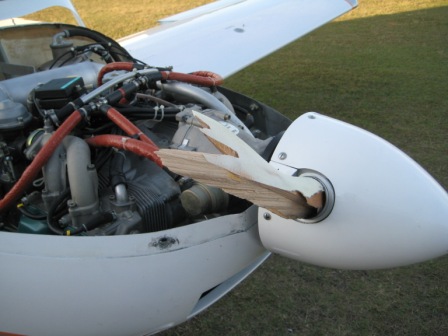
I think there will be 2 photo's attached to this email
One shows the broken blade
One shows carbbies pulled from engine - by forces when blade broke
This is not a reflection or comment about the 'aircraft and hardware' used in this thread - it just shows you what could happen up front
-
Come on guys, concentrate (some are)
91.5979993 % know about mastic on / in / near / around the exhaust spring and subsequent lack of spring breakage
The issue is wear of the spring and tag - until one day ther is nothing left to hang your spring from
Or is the answer big mobs of mastic - no harmonics - no wear - is that what you exhaust spring pilots are trying to say ?
JM
-
tecnamman
Next time ? you add to the thread please advise the 'maker' for the nickle product - sounds like a good idea
This Rotax done 340 hours - air switch
Interesting to hear that you say 'the spring eye is worn' - I'm sure mine was only the tag - I'll recheck
Interesting to hear that I'm not the only one with this issue - I'm wondering if the grade of steel used in the tag could be something to consider
The rest of you 'sprung held together exhaust pilots' might also want to check
JM
-
Help .....................
Anyone replaced the tags that the exhaust springs grap on (8 springs - 16 tags)
I'll find out from Rotax the optimum stretch 0f the spring and therefore distance between tags ?
I reckon the tags on my Rotax were installed to far apart and the springs have cut a fair portion of the tag - I'd say up to 40 % of tag is cut
I'm thinking - remove the whole exhaust - assemble it - mark desired location of tag - weld new tags and put it all back - what traps lie waiting when you do this ?
If you have done this - your advice would be appreciated
Thanks
JM
-
Personally, I think that tank fuel drains are a good idea and as a result of our visit to the Tecnam factory last week, we will shortly see fuel tank drains as an option on new UL and LSA aircraft.
Regards
Bruce Stark
TECNAM Australia
Thanks Bruce
You state above that they are optional - in the interim I'll take the 'not installed option'
JM
-
FUEL TANK DRAINS
I need more tecnam chatter
If you read the AD / AN forum it says fit fuel drains to wing tanks - per revison 1 and 2a - where do you find these bits of paper ?
What is entailed, how much bother and time involved ?
thanks for any advice
JM
__________________
john m
-
-
timshel - good idea this insurance info - I have a tecnam insured for 128 k and premium is $ 4300 - insurer seems to be 'Vero' - this is about my 3rd year and has reduced some - I have 600 hours and a $ 1,500 excess
the ratio of the 2 premiums are about the same - so I think (I guess) you have a good deal for the hours you say you have flown
no doubt all us 'insured' hope our 'insurers' will reduce their premium each year - if we have been good - I suspect for one reason and another and after a while it does not reduce much past a base level ?
-
FUEL COCKS
in Tecnam
summary ?
I know that if you keep the black tooth in the middle of the happy face (slip indicator ?) then flight is balanced ......
Even if I lie - the question remains the same - what happens towards the end of fuel supply ? To say you would n't use your 45 minute fuel reserve (or whatever reserve you are comfortable with) is something you can't say. Circumstances may make you want, or have to, keep flying and consume what fuel (or reserve) you have.
True, a record of actual flight time helps
I am not talking about airmanship or fuel stains on flaps
I'll try and find the technical answer and post it (the answer might be that fuel exhastion of both tanks occurs at the same time - towards the end of their volume they evenly empty at the same time
) -
FUEL COCKS
in Tecnam
Irrespective of what the operation manual says ?? - with the 2 fuel cocks in a high wing Tecnam, what happens when the fuel contents get real low ?
If you fly for say 2 1/2 hours, fuel consumption will be virtually from one tank - 1/4 full - whereas the other tank can still be say 3/4 full.
The fuel gauges also seem to read more fuel used than what is actually used - safety no doubt
So what say you had 2 1/8 full tanks (say you had to ...... or wanted to keep flying) - I'd bet the fuel gauges would be reading 'all but zero' - but with 25 litres you could fly for another 1.50 hours
Will all the fuel be consumed from both tanks before she 'splutters' - with both fuel cocks on ?
Has anyone had some 'real time' experience managing fuel with 'all but zero' fuel gauges ?
-
ozzie chasing plane in aircraft factory - very funny
Me 20 years bacl - kiwi - was in NZ and I did a quick flight before a flight exam test - Cessna 152 (or thereabouts). Flew for about 20 minutes and when landed noticed huge amounts of oil down, along and under the fueslage
Up till that point I had not even thought the that oil filler cap would have been loose or not in correct position
Into the hanger it was to hide from the visitng testing officer of the 'air' - all cleaned up and then pushed out ready for flight exam test - not a word was said to anyone - which in hindsight was pretty bad (there must have been some oil still on the stick so the decision was ........ get it ready !)
Past the flight test as well - I imagine the preflight was better the 2nd time round !
-
Cost ?
Guessing ........................
1.3 Sportastars
2.2 Jabirus
3.7 new Commodores
16.5 x 2001 Ford AU's
............... Plus wing struts
-
?
Looks like a Tecnam Bravo - P2004 - with remodelled windows and a main wing strut
I guess the smaller Cessnas have wing struts so Tecnam might as well have 'em too
I wonder what the diffrences and design philosphy are between the Bravo and this new model ?
-
Bums on seats
True - seats and bums should be equal - as always there are variations
Look at overloaded untes in the outback - rolling over.
Go to Vanuatu and see where people hang off utes
I can remember my Dad saying - in a De Hav Beaver - he flew it - him (the pilot) - the loader driver - a young me in the back behind the hopper - and 3 of my friends - I think thats 6 - theirs only 2 seats in a Beaver - plus the last load of superphophate for the day - completed the last spread and then went home
Its all a learning experience to stay on the right side of the regulation
JM
-
That would be an interesting survey and good info, and, for the benefit of all - even the insurance companies might think this, I suspect - might be good for competition - after all, all aircraft owners have this information .........
Tabulation of:
Hours P in C - total hours - aircraft type - sum insured - insurance co - premium per year, etc, etc
Wouldn't know how to set the survey up though .......
???
JM
-
paul
Tony - gympie aircraft maintenance - ph - 07 5483 5170 - queensland ! - has the technology
Gympie to far ? - Tony will probably know of closer
JM
-
Thanks aviators
I think the early concensus is - costs some money - not much extra top end speed (if any ?) - better take off and climb - smoother ride - more drag when you want it - lower cruise revs so less gas
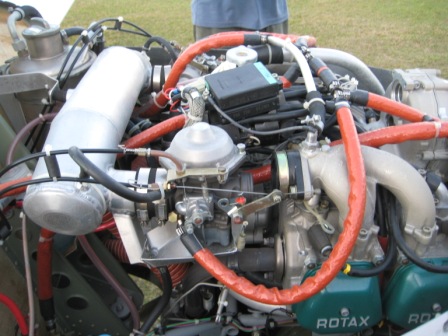
I do 2 x 300 nm trips in a Bravo (Roatx 912) every month - for the past 20 months - and have found that 5200 rpm seems the best setting. The 300 mile trip from go to wo is usually 3 hours - so I'm happy about how I get there and always enjoy whats happeing outside the window
I'll sit back and watch the subject 'props' develop - and maybe make a change when the ball stops rolling - if it ever does
The best thing about these forums is that the 'user' can comment - and can be heard by lot's of others (users and potential users)
JM
 )
)
Worst article ever written!
in AUS/NZ General Discussion
Posted
find Lou
To a degree I agree with the posts
But, lets not be too hard on Lou, her written words are probably the public perception of flying anyway (pk screws on the tarmac, oil globules under the fueslage, steam and smoke from the engine bay, wing panels rattling, imminent death seconds away, pilot reading handbook as the plane airpockets and tail spins to earth)
If there is any truth in her statement that emails and phone calls were not returned by RAA, then that does not help this public perception - but then I don't know if we can afford or employ a public relations contact at HQ ?
I reckon let's find Lou and take her for a fly - see if she can match her words with the experience we give her - whoever does the 'fly', make sure they do a good job
Wait a minute - I'm forgetting - anyone qualified to take Lou will do a good job - as they achieved and demonstared the required proficiency